Dog health problems by breed: Essential guide for proactive care
Explore dog health problems by breed and learn practical tips to prevent issues and keep your dog healthy.

Being aware of the health issues common to your dog's breed is one of the most powerful things you can do for them. All those years of breeding for specific traits—the ones we adore in our dogs—have a flip side: they've also created a genetic roadmap for potential health problems. Knowing what's on that map helps you stay one step ahead.
Your Dog's Breed Is a Health Blueprint
Think of your dog’s breed as a genetic blueprint. It’s more than just a guide to their looks and personality; it’s a peek into the health challenges they might encounter in their lifetime. This isn’t about being worried—it’s about being prepared.
For centuries, dogs have been bred for specific purposes. A Dachshund's long, low body was perfect for tunneling into badger dens. A Pug's flat face was prized for its companionable, human-like expression. But the very same traits we’ve selected for can come with built-in health vulnerabilities.
The Double-Edged Sword of Breeding
When you select for one thing, you often get something else along for the ride. By focusing on a specific look or function, breeders narrow the gene pool, which can accidentally concentrate the genes responsible for certain medical conditions.
- Structural Problems: A German Shepherd's classic sloping back is a great example. While it gives them their distinctive look, it also puts them at a much higher risk for hip dysplasia because of the lifelong stress on their joints.
- Breathing Difficulties: Brachycephalic (that’s the term for flat-faced) breeds like French Bulldogs often have trouble breathing. Their compressed airways are a direct consequence of being bred for that cute, squished-in face.
- Metabolic Issues: Some breeds, like the Miniature Schnauzer, are just more likely to develop conditions like pancreatitis. It points to a genetic predisposition in how their bodies handle fats.
Understanding this genetic legacy is like getting a cheat sheet for your dog's health. It lets you focus on prevention where it counts. For example, if you know your pup's breed is prone to joint problems, you can start them on joint-supporting supplements and stick to low-impact exercise from the get-go.
The link between a breed's physical traits and its health risks is crystal clear. For flat-faced dogs, the trade-offs are especially tough. The features that make Pugs and English Bulldogs so recognizable are the same ones that cause significant welfare challenges.
The numbers are pretty sobering. These flat-faced dogs are 20 times more likely to get painful eye ulcers compared to their long-snouted cousins. In the most severe cases, their median lifespan is just 8.7 years, while other dogs live an average of 12.7 years. Bulldogs consistently top the charts for reported health problems, a direct result of their unique anatomy. To dig deeper into the data, the RSPCA provides a lot of great information on breed-specific health.
Health Profiles of the 5 Most Popular Breeds
Knowing a dog's breed is like having a blueprint to their health. Now, let's roll up our sleeves and see what that blueprint looks like for five of America's most popular dogs. When you understand what to look for, you can stop worrying about what might happen and start taking smart, proactive steps to support your best friend.
This is what we mean by a health blueprint—it's the unique combination of genetics, breed traits, and potential risks that make your dog who they are.
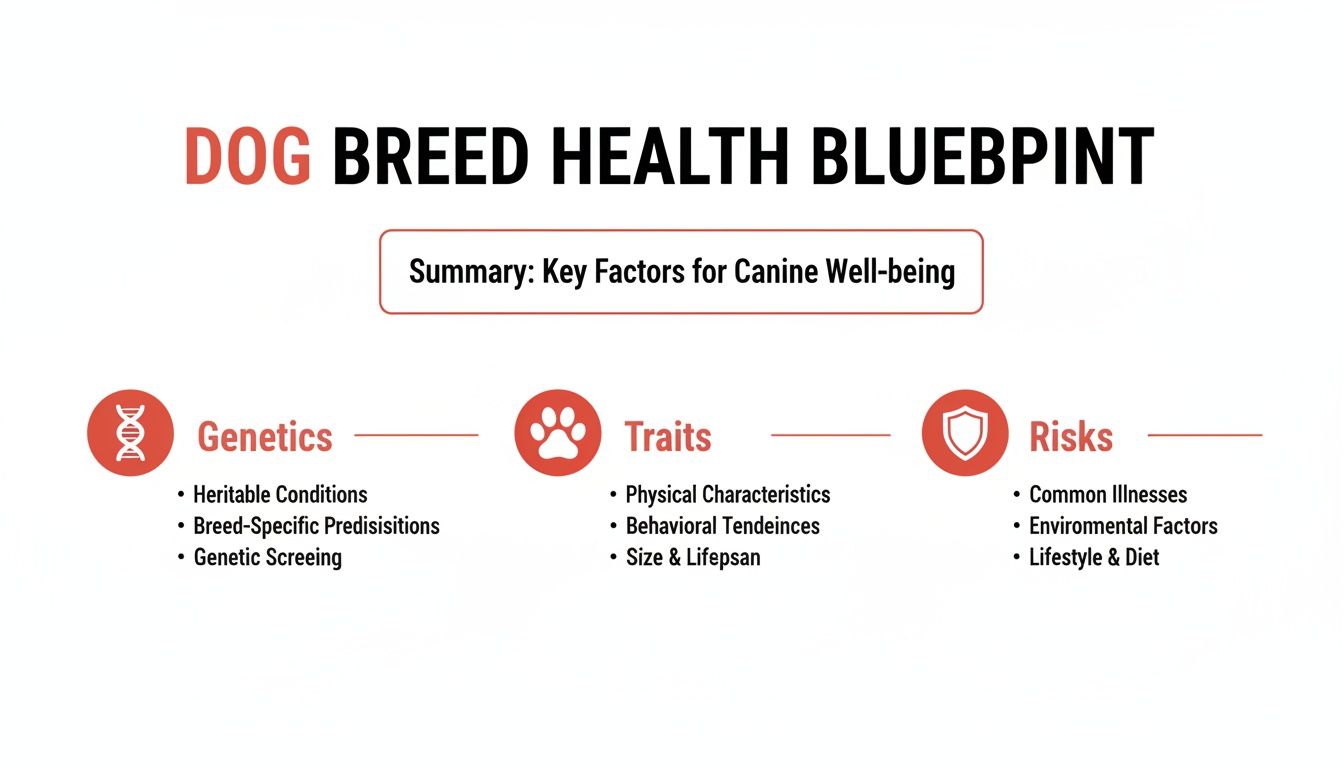
The goal isn't to fight your dog's genetics. It's to understand and work with them to give your dog the longest, happiest life possible.
French Bulldog
There's no denying the charm of a French Bulldog. Their big personalities and compact size have made them incredibly popular. But those adorable features, especially their signature flat faces, are directly linked to their biggest health hurdles.
The main concern for Frenchies is Brachycephalic Obstructive Airway Syndrome (BOAS). Picture their airway as a normal garden hose that's been squashed and bent. It's much harder for air to get through, which causes real problems.
You'll see BOAS show up as:
- Loud snorting and snoring: This isn't just a cute quirk; it’s the sound of obstructed airflow.
- Struggling with exercise: They get winded fast, especially when it's warm, because they can't pant effectively to cool down.
- Gagging or spitting up: This can happen when their soft palate, which is often too long, partially blocks their windpipe.
Beyond breathing, keep an eye on their skin. Those cute facial folds can trap moisture and gunk, creating the perfect breeding ground for yeast and bacteria. A gentle daily wipe-down of those folds is a non-negotiable part of keeping them comfortable.
Labrador Retriever
Labs are the quintessential family dog—friendly, active, and full of life. But their boundless energy and love of food can set them up for a few common problems, especially obesity, which makes everything else worse.
Joint trouble is notorious in Labs, specifically hip and elbow dysplasia. This is a genetic condition where the ball-and-socket joints don't form correctly. Think of it like a poorly fitting hinge that wears down over time, eventually leading to painful arthritis.
The first signs can be subtle—a little stiffness after a long nap, or not wanting to jump in the car anymore. Supporting their joints with the right diet and avoiding punishing, high-impact exercise when they're growing puppies can make a world of difference later on.
A 2023 study confirmed what many Lab owners already know: their number one issue is ear infections, thanks to floppy ears that trap moisture. You can dig into the full study to see how other common Labrador health issues were ranked, including osteoarthritis and dental problems.
Golden Retriever
Just like their Labrador cousins, Golden Retrievers are often plagued by hip and elbow dysplasia. Their large frame and fast growth put a ton of pressure on their developing joints. Honestly, one of the best things you can do for a Golden is to keep them lean their entire life.
But a far more serious shadow hangs over this breed: a high risk for certain cancers. Two of the most common are hemangiosarcoma (a cancer of the blood vessel walls) and lymphoma (a cancer of the immune system).
With Goldens, you have to be vigilant. Regular vet check-ups, including hands-on exams and blood work, are your best tool for catching these things early when there's more that can be done.
Another condition to be aware of is hypothyroidism, where the thyroid gland slows down and doesn't produce enough hormones. The symptoms—weight gain, low energy, and skin issues—are easy to dismiss as normal signs of aging, so it often goes undiagnosed.
German Shepherd
German Shepherds are brilliant, athletic, and fiercely loyal, but their distinctive body shape—especially that sloping back—is also their Achilles' heel.
Hip dysplasia is the health problem most people associate with the breed, and for good reason. That iconic sloped silhouette puts unnatural stress on the hip joints. It’s a genetic reality that has to be managed carefully.
To keep a German Shepherd moving comfortably, focus on:
- Low-impact exercise: Swimming is fantastic because it builds muscle without pounding the joints.
- Joint supplements: Ingredients like glucosamine can help support cartilage health.
- Weight management: Every extra pound is more pressure on those vulnerable hips and spine.
Another devastating condition is Degenerative Myelopathy (DM), a progressive and incurable spinal cord disease. It starts with weakness in the hind legs, almost like the dog is wobbly or dragging its paws. While there’s no cure, physical therapy can help maintain muscle and quality of life for a while.
These dogs are also known for having sensitive stomachs and can even develop Exocrine Pancreatic Insufficiency (EPI), where they can't produce the enzymes to digest food. A healthy gut is truly the foundation of a healthy German Shepherd.
Poodle
Poodles of all sizes—Standard, Miniature, and Toy—are prized for their sharp minds and low-allergen coats. They're a pretty sturdy breed overall, but they have a few genetic weak spots.
A common problem is patellar luxation, which is just a fancy way of saying their kneecap can pop out of place. You might see your Poodle suddenly skip a step or run on three legs for a moment before it pops back in. It’s not always painful in mild cases, but severe luxation can require surgery.
Standard Poodles, with their deep chests, are at a much higher risk for Gastric Dilatation-Volvulus (GDV), or bloat. This is a terrifying, life-threatening emergency where the stomach fills with gas and twists on itself, cutting off blood supply.
Bloat is a five-alarm fire. If you see a swollen, hard belly, unproductive retching, and a dog in clear distress, get to an emergency vet immediately. Every single minute counts.
Poodles can also be prone to Addison's disease, an endocrine disorder where the adrenal glands don't produce enough hormones. Its symptoms are maddeningly vague—lethargy, vomiting, shaking—and can mimic a dozen other illnesses, earning it the nickname "the great pretender."
Before we wrap up, here’s a quick-reference table to pull all this information together.
Health Snapshot of Popular Dog Breeds
This table offers a bird's-eye view of the key health concerns for these five popular breeds, making it easier to spot potential issues and provide targeted support.
Understanding your dog's unique genetic map is the first step toward a lifetime of wellness. For any of these breeds, a daily routine can make a huge difference. Supplements like FORMA, for instance, are made with ingredients that can help promote gut health—critical for a German Shepherd—or support a calm demeanor, which benefits any dog.
By knowing the specific health problems your breed is prone to, you can stop guessing and start giving them the targeted care they need to thrive.
How Size Shapes Your Dog's Health Risks
Beyond their specific family tree, a dog’s size is one of the best clues to the kinds of health challenges they might face down the road. This is a rule of thumb that holds true for almost every dog out there, including our beloved mixed breeds. Whether you have a tiny companion trotting at your heels or a gentle giant lounging on the couch, their physical frame creates predictable patterns of health risks.
Thinking about these size-based trends helps you look beyond just breed-specific issues and take a more complete view of your dog's well-being.

Small Breed Health Concerns
Don't let their delicate appearance fool you. Small dogs like Chihuahuas, Yorkies, and Shih Tzus are tough and often boast the longest lifespans in the canine world. But their small-but-mighty anatomy comes with a unique set of vulnerabilities for owners to watch.
One of the biggest culprits is dental disease. Imagine trying to fit 42 teeth into a tiny jaw—overcrowding is pretty much guaranteed. This creates the perfect environment for plaque and tartar to build up, quickly leading to gum disease, decay, and even serious infections if ignored.
A small dog's mouth is a high-risk zone. It's estimated that over 80% of dogs show signs of dental disease by age two, a statistic driven largely by small breeds whose crowded teeth are a setup for trouble.
Another common issue is tracheal collapse. The windpipe is held open by cartilage rings, but in many small breeds, these rings are just genetically weaker. It's like a vacuum cleaner hose getting sucked flat—it causes a very distinct "honking" cough, especially when they’re excited or pulling on a leash.
Finally, "trick knees," or luxating patellas, are something vets see all the time in smaller dogs. This is where the kneecap literally pops out of its groove. While it might not seem painful at first, this instability eventually leads to arthritis.
Medium Breed Health Realities
Medium-sized dogs, from Beagles to Border Collies, often seem like the "just right" Goldilocks of the dog world. They’re generally well-built and manage to sidestep the extreme health issues that affect the smallest and largest breeds. Still, they aren't completely in the clear.
Many of these breeds are known for being athletic and sturdy, but that high-energy lifestyle can lead to more soft tissue injuries, like cruciate ligament tears. Genetically, they also fall into a middle ground for certain inherited conditions.
Epilepsy, for instance, is more common in certain medium-sized breeds like Beagles. This neurological disorder causes seizures and usually requires lifelong medication to manage. A calm, stable routine is incredibly helpful for these dogs, and a daily supplement like FORMA, which supports a sense of calm, can be a great addition to their wellness plan.
Large and Giant Breed Challenges
It’s hard not to be captivated by the majestic presence of large and giant breeds like Great Danes and German Shepherds. Unfortunately, their impressive size puts enormous strain on their bodies, which often means shorter lifespans and a specific set of health problems.
The most infamous risk for deep-chested large breeds is Gastric Dilatation-Volvulus (GDV), or bloat. This is a terrifying, life-threatening emergency where the stomach fills with gas and twists on itself, cutting off blood flow. There's no time to waste—immediate veterinary surgery is the only way to save a dog with bloat.
Orthopedic issues are also practically a given. The rapid growth spurt in large-breed puppies puts immense stress on their developing skeletons, making them vulnerable to conditions like:
- Hip and Elbow Dysplasia: A malformation of the joint sockets that is a leading cause of painful arthritis.
- Osteoarthritis: Simple wear and tear on a heavy frame means arthritis often shows up earlier and hits harder in big dogs.
Supporting their structural health right from the start is non-negotiable. This means feeding a diet made for large-breed growth, avoiding high-impact exercise during puppyhood, and keeping them at a lean weight. Proactive care that builds a resilient foundation, including supplements to support immunity and gut health, is one of the best ways to tackle the dog health problems by breed size.
Building a Proactive Wellness Toolkit
Knowing your dog's genetic roadmap is one thing, but acting on that knowledge is where the real magic happens. Instead of waiting for a health issue to pop up, a proactive wellness plan helps you build a strong foundation of health right from the start. This toolkit is all about three core pillars that work in tandem to shield your dog from common dog health problems by breed.
Think of it like building a fortress for your dog’s health. A strong fortress isn't just one thick wall—it's a smart combination of sturdy materials, a clever layout, and regular upkeep. In the same way, your dog’s resilience comes from the powerful interplay of diet, exercise, and targeted supplementation.
The Power of an Anti-Inflammatory Diet
So many breed-specific issues, from arthritis in Labradors to skin allergies in Frenchies, are driven by chronic inflammation. An anti-inflammatory diet is your first and best line of defense, helping to cool that internal fire before it can cause real damage.
This isn't about some fancy or expensive meal plan. It’s simply about leaning into whole foods that are naturally packed with anti-inflammatory goodness.
- Omega-3 Fatty Acids: Found in fish oil and flaxseed, these are absolute superstars for soothing inflamed joints and promoting healthy skin.
- Antioxidant-Rich Foods: Think vibrant foods like blueberries, spinach, and sweet potatoes. They are loaded with antioxidants that fight off cell-damaging free radicals.
- Lean Proteins: High-quality protein from sources like chicken, turkey, and fish provides the essential building blocks for tissue repair, without adding unnecessary fat.
By making these ingredients a priority, you're giving your dog's body the exact tools it needs to keep inflammation in check.
Tailoring Exercise to Protect Vulnerable Spots
Exercise is so much more than just burning off energy—it’s about building strength where it matters most. A one-size-fits-all workout plan can actually cause more harm than good, especially for breeds with known structural weaknesses. The real key is to customize their activity to protect their most vulnerable areas.
Take a Dachshund, for example. Their long spine makes them prone to intervertebral disc disease (IVDD), so high-impact activities like jumping off the couch are a huge no-no. Instead, you'd want to focus on exercises that strengthen their core without stressing their back, like steady leash walks or even swimming.
Or consider a German Shepherd, who is often predisposed to hip dysplasia. Long, pounding runs on hard pavement should be off the table, particularly when they're still growing. It's much better to stick with low-impact activities like hiking on soft trails, which builds supportive muscle around their joints without the harsh wear and tear.
The goal is to create a fitness routine that builds your dog up, not one that breaks them down. Smart, breed-appropriate exercise is one of the most effective long-term strategies for managing genetic health risks.
Smart Supplementation for Targeted Support
While diet and exercise are the foundation, smart supplementation can give your dog concentrated support exactly where they need it. Think of it as providing extra resources to help their body fight back against its genetic weak spots. Daily supplements like FORMA offer an incredibly simple way to weave these powerful ingredients into your dog's daily routine.
A few key compounds can get to the root of many common breed-specific problems:
- Probiotics: A healthy gut is the heart of a strong immune system. For breeds known for sensitive stomachs, like German Shepherds, probiotics help keep their gut bacteria in balance, which improves digestion and helps them absorb more nutrients from their food.
- Glucosamine and Chondroitin: These are the essential building blocks for healthy cartilage. For large breeds prone to joint issues, they help cushion the joints and can slow the progression of arthritis.
- Calming Agents: Natural ingredients like L-theanine can help take the edge off for high-strung breeds, promoting a sense of calm that contributes to their overall well-being.
By weaving these three pillars—diet, exercise, and supplements—into your daily life, you create a powerful routine that actively works against your dog's genetic predispositions. You’re not just hoping for the best; you’re setting them up for a longer, healthier, and happier life.
Recognizing Breed Specific Red Flags
Daily wellness habits are your dog's first line of defense, but knowing what a real emergency looks like is just as crucial. Some breeds are simply hardwired for certain sudden health crises where every single second matters.
Knowing these urgent red flags isn’t about being anxious; it’s about being prepared to act fast when your dog needs you most. Think of it as knowing the fire escape plan for your dog’s unique health risks. You hope you never have to use it, but you'll be incredibly glad you know it if you do.

Emergency Signs in Deep-Chested Breeds
For dogs built like Great Danes, Standard Poodles, and German Shepherds, the emergency that keeps owners up at night is bloat, or Gastric Dilatation-Volvulus (GDV). This is a terrifying condition where the stomach fills with gas and then twists on itself, cutting off its own blood supply. It is always a life-or-death situation requiring immediate surgery.
Keep an eye out for this dangerous combination of symptoms:
- A swollen, hard belly: Their abdomen will look visibly distended and feel tight, almost like a drum.
- Trying to vomit, but nothing comes up: You'll see them retching or gagging without producing anything more than foamy saliva.
- Obvious signs of pain and distress: This can look like pacing, restlessness, heavy panting, or even collapsing.
If you even suspect bloat, do not wait. This is one of the most time-sensitive emergencies in veterinary medicine. Get to an emergency vet clinic immediately.
Urgent Signals in Flat-Faced Breeds
Brachycephalic (flat-faced) dogs like Pugs, Frenchies, and Shih Tzus already have a compromised airway. While their daily snorts and snores are normal, you need to learn the difference between their usual sounds and genuine distress.
Serious respiratory trouble is an emergency. Get to the vet right away if you notice:
- Loud, frantic gasping for air: This is labored, noisy breathing that is a world away from their typical snoring.
- Blue or purple gums and tongue: This is called cyanosis and it’s a clear sign they are not getting enough oxygen.
- Collapse or an inability to stand up: A severe lack of oxygen will quickly lead to weakness.
Pay extra close attention to this during hot weather. These breeds can't pant efficiently to cool down, making them highly susceptible to deadly heatstroke.
Red Flags for Dogs with Spinal Risks
Breeds with long spines and short legs, like Dachshunds and Beagles, are prone to Intervertebral Disc Disease (IVDD). This happens when one of the cushion-like discs in their spine ruptures or herniates, putting intense pressure on the spinal cord.
Seek immediate vet care for these signs of a spinal emergency:
- A sudden yelp of pain followed by paralysis: They might cry out and then suddenly lose the ability to use their back legs.
- Dragging their hind limbs: You may see them trying to move by pulling themselves forward with their front paws.
- Loss of bladder or bowel control: This is a sign of severe spinal cord compression and requires urgent attention.
Knowing these specific red flags empowers you to be your dog's best advocate, turning panic into swift, life-saving action.
Common Questions About Your Dog's Breed and Health
When you're trying to do the best for your dog, it's natural to have questions, especially when it comes to their specific breed. Let's tackle some of the most common ones that pop up for dedicated dog owners.
Getting clear, straightforward answers helps you move forward with confidence, knowing you're making the best decisions for your companion's well-being.
Are Mixed-Breed Dogs Really Healthier Than Purebreds?
You’ve probably heard the term “hybrid vigor”—the idea that mutts are automatically healthier because of their diverse genes. There's some truth to it! A mixed gene pool can definitely dilute the risk of some inherited conditions that are common in purebreds.
But it's not a get-out-of-jail-free card. A mixed-breed dog is still a cocktail of its parent breeds, meaning it can inherit health problems from both sides of the family.
For instance, a German Shepherd-Labrador mix could still be at risk for the hip dysplasia that plagues both of those breeds. And at the end of the day, every dog, purebred or mix, can face common issues like dental disease or weight gain. Knowing your dog's likely background is a great clue, but it doesn't replace a solid wellness plan.
When Should I Start Thinking About My Breed’s Health Risks?
The best time is right now. Prevention is always better than cure, and it should start from the moment you bring your puppy home.
It’s far more effective to build a strong foundation in their early years than to wait for problems to show up when they're older. Many conditions, especially developmental ones like hip dysplasia, are much easier to manage if you get a head start.
This doesn't have to be complicated. It's about creating simple, consistent habits:
- Smart Nutrition: Feed them a high-quality diet that’s right for their breed, age, and energy level. This is the cornerstone of healthy growth.
- Right-Sized Exercise: Protect those developing joints! Avoid intense, high-impact activities while they're still a growing puppy.
- Early Support: Getting them used to healthy habits early, like daily wellness supplements, sets them up for a lifetime of good health.
Can a Supplement Actually Help With Genetic Problems?
This is a great question. While a supplement can't magically rewrite your dog's DNA, it can be a huge help in managing how those genetic tendencies show up. Think of it as giving your dog’s body the tools it needs to fight back against its built-in weak spots.
For example, if your dog's breed is known for joint inflammation, ingredients that protect cartilage and ease discomfort can make a world of difference in their mobility and happiness. Or, if they’re prone to a sensitive stomach, probiotics can help keep their gut balanced and their immune system strong.
A daily superfood chew like FORMA is a perfect example of this. It brings together ingredients that support gut health, encourage a calm mind, and strengthen the immune system—tackling the root causes of many breed-specific issues to help your dog live a long and vibrant life.

Karolis is the Founder of FORMA, a pet wellness brand focused on longevity and daily nutrition for dogs. Writes about supplements, canine health, and helping pets live longer, healthier lives
Join thousands of pet parents getting science-backed health insights and natural care advice