Finding the Best Dog Treats for Training Success
Discover the best dog treats for training your puppy or adult dog. Our guide covers high-value, low-calorie, and natural options to boost focus and results.
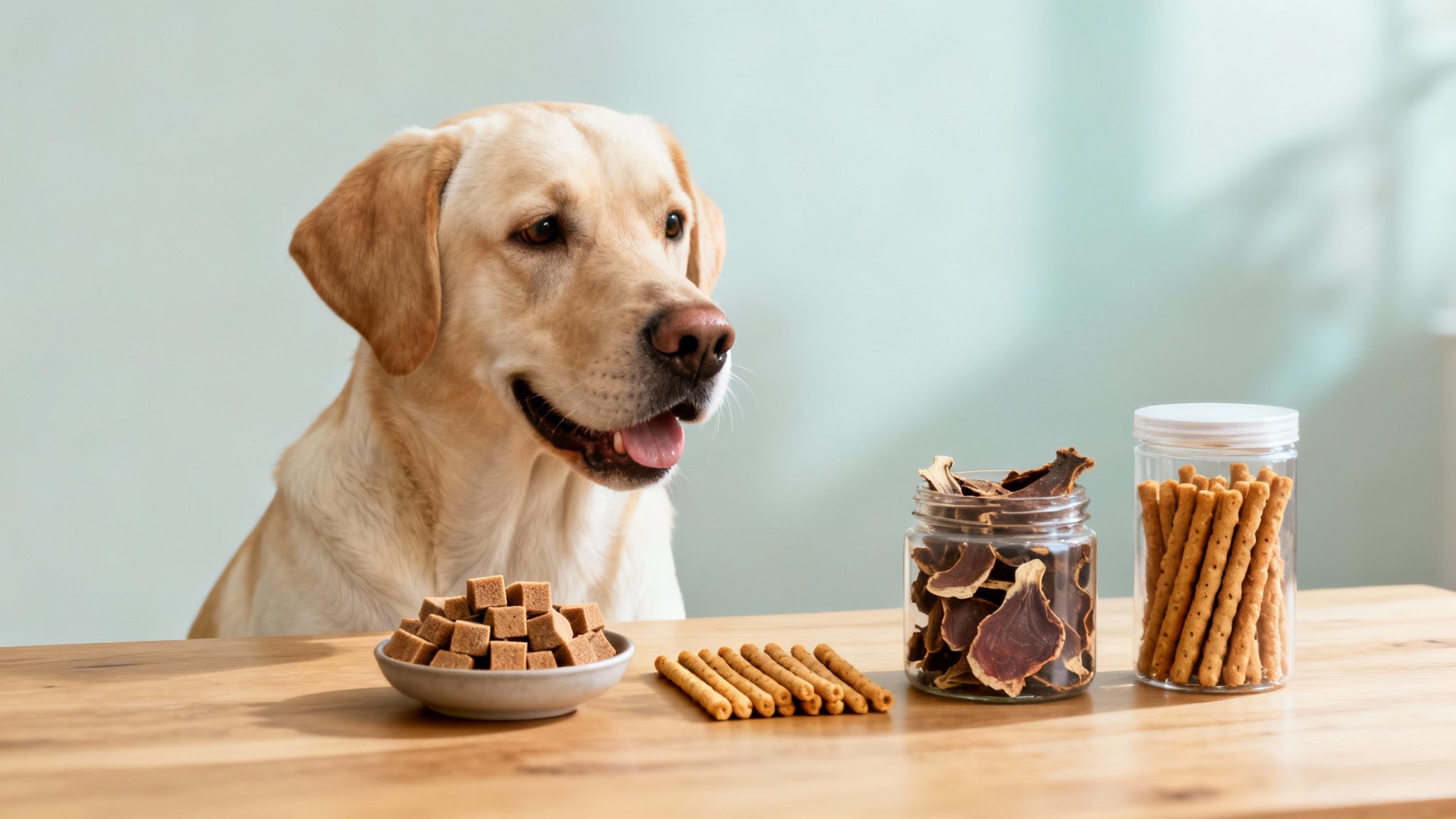
The secret to great training isn't just about what you teach, but how you reward your dog. The best treats are small, soft, and smell amazing—they grab your dog's attention in a split second and don't slow down the lesson. Think of them as your training superpower.
High-value goodies like freeze-dried liver or chicken are perfect for nailing those tough commands, while simple, low-calorie options are great for everyday practice. When you find the right treat, your dog gets excited to work with you, and every session becomes a fun, positive step forward.
Why the Right Treat Transforms Your Training
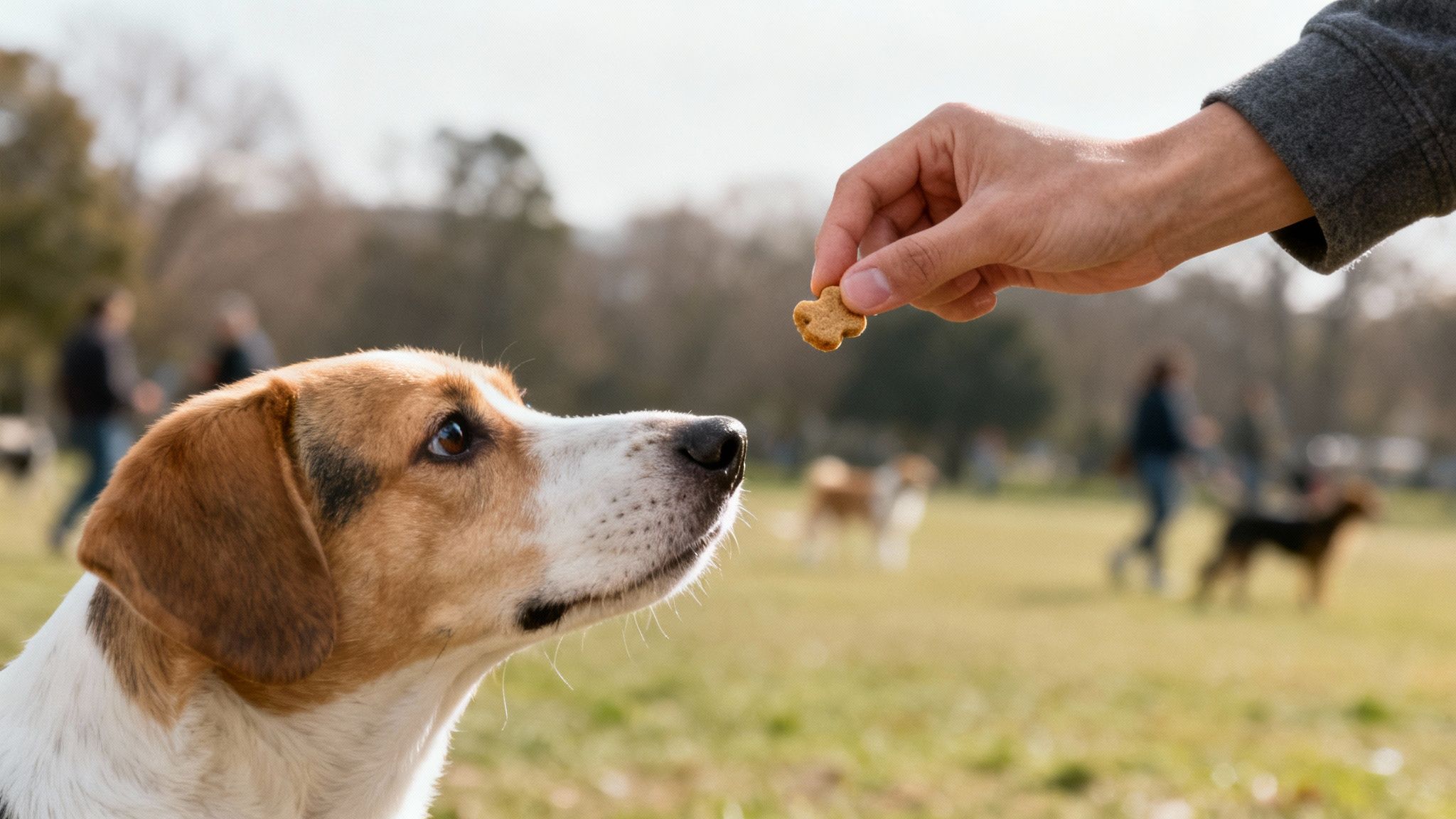
Picking a training treat is about way more than just handing over a snack. It's about speaking your dog's language.
Think of it like this: treats are your dog's paycheck for a job well done. You wouldn't work as hard for a pat on the back as you would for a nice bonus, right? It's the same for your dog. A simple "sit" in your quiet living room might only earn a standard, everyday treat. That’s a fair wage for an easy task.
But what about asking for a rock-solid "come" at a busy park, surrounded by squirrels, other dogs, and a million fascinating smells? That’s a much bigger ask. For that, you need to offer a serious bonus—something like a piece of freeze-dried salmon. Its powerful scent and incredible taste cut straight through the chaos, telling your dog that listening to you is the most rewarding thing they could possibly do in that moment.
The Power of Motivation
When the reward is right, your dog genuinely gets excited to learn. Training stops feeling like a chore and turns into a fun game they actually want to play. This positive vibe not only speeds up learning but also strengthens the bond between you and your dog.
This isn't just a theory; it's a shift we're seeing across the entire pet industry. Dog owners are ditching the empty-calorie junk and looking for premium, healthier options, because they see that treats are powerful tools, not just filler.
The global pet snacks and treats market is on track to hit USD 138.73 billion by 2034, and dogs make up over 68% of that. This boom shows a clear trend: pet parents are moving away from basic biscuits and toward high-quality, functional rewards that help with training and support overall health. You can learn more about these pet treat market trends.
This move toward better ingredients proves that owners get the connection between good nutrition, focus, and behavior. By choosing the best dog treats for training, you're not just rewarding one good "sit." You're investing in a more attentive, motivated, and happy companion for the long haul.
How to Read a Dog Treat Label Like a Pro
Walking down the dog treat aisle is… a lot. The sheer number of colorful bags, all shouting about how much your dog will love them, can be completely overwhelming. But the secret to finding the good stuff isn't on the front of the bag; it's on the back, in the fine print.
Learning to read a dog treat label is a game-changer. It gives you the power to instantly tell the difference between high-octane training fuel and what’s basically sugary junk food for dogs. Think of it as your new superpower.
First Glance: The Big Three
Before you even start squinting at the ingredient list, you can tell a lot about a treat just by its physical characteristics. There are three things I always check first.
Size Matters: The best training treats are tiny—think pea-sized. Why? Because you're going to be dishing out a lot of them in a single session. A small treat is gone in a second, which means your dog can immediately shift their focus back to you for the next cue. A big, crunchy biscuit brings the whole lesson to a screeching halt while they spend a minute chewing.
Texture is Key: Go for soft and chewy. They're the gold standard for a reason. They're easy for any dog to eat quickly (even seniors with sensitive teeth!), and they're usually smellier, which is fantastic for keeping your dog’s attention locked on you.
Calories Count: Training involves a ton of repetition, and those calories add up faster than you'd think. I always look for treats with fewer than 5 calories a pop, but my sweet spot is just one or two. This lets you be generous with rewards without worrying about your dog's waistline.
These three elements work together. A small, soft, low-calorie treat keeps the training momentum high and the reinforcement positive and seamless.
When a treat is gone in a flash, your dog's brain stays in "learning mode." A treat that requires significant chewing time can act as a "session ender," signaling that the fun part is over for now.
Decoding the Ingredient List
Okay, so a treat has passed the size, texture, and calorie test. Now it's time to flip the bag over and play detective with the ingredients. My personal rule of thumb is pretty simple: shorter ingredient lists are almost always better. You want to see real, recognizable food.
Green Flags (What to Look For):
- Single-Source Protein: The very first ingredient should be a specific meat, like "chicken" or "beef," not some vague term like "meat by-products" or "meat meal." This tells you you're getting a quality protein source right off the bat.
- Whole Foods: Seeing things like sweet potatoes, carrots, or blueberries in the list is a great sign. These add natural nutrients without a bunch of unnecessary fillers.
- Natural Preservatives: Look for names like mixed tocopherols (which is just a form of Vitamin E) or rosemary extract. These are much better than a bunch of artificial chemicals.
Red Flags (What to Avoid):
- Artificial Colors and Flavors: Does your dog care if their treat is bright red? Nope. Dyes like Red 40 or Yellow 5 are purely for us humans and can cause sensitivities in some dogs.
- Fillers: Corn, wheat, and soy are common cheap fillers that just add bulk. They offer very little nutritional value for your dog.
- Chemical Preservatives: I always steer clear of BHA, BHT, and ethoxyquin. They're controversial additives that just aren't worth the risk.
When you focus on treats with clear, simple, and wholesome ingredients, you're not just rewarding a behavior—you're supporting your dog's overall health. That makes every training session a true win-win.
Building Your Dog's Treat Toolkit
Not all treats are created equal, and honestly, the "best" one really depends on the job at hand. I see it all the time—owners using the same old biscuit for every single task. That’s like trying to build a house with only a hammer. If you want to train effectively, you need a full toolkit of rewards.
Thinking like a trainer means matching the treat's value to the difficulty of the task. This is the secret to keeping your dog engaged and preventing them from getting bored or tuning you out. It’s all about having the perfect incentive ready, whether you're practicing a simple "sit" at home or a rock-solid "stay" at a busy park.
It seems like more and more dog owners are catching on to this. Natural and premium dog treats are now the fastest-growing part of the pet treats market, which tells us people are looking for cleaner, healthier options, especially for training. You can read more about the growth of natural dog treats if you're curious about the trend.
Low-Value Treats for Easy Wins
Think of these as your dog's base salary. They're perfect for everyday practice in easy, low-distraction spots, like your living room or backyard.
- What they are: This is usually your dog's regular kibble or small, crunchy, low-calorie biscuits.
- When to use them: Pull these out when you're reinforcing commands your dog already knows well. They're also great for long training sessions where you'll be giving out a ton of rewards, as they keep your dog working without piling on the calories.
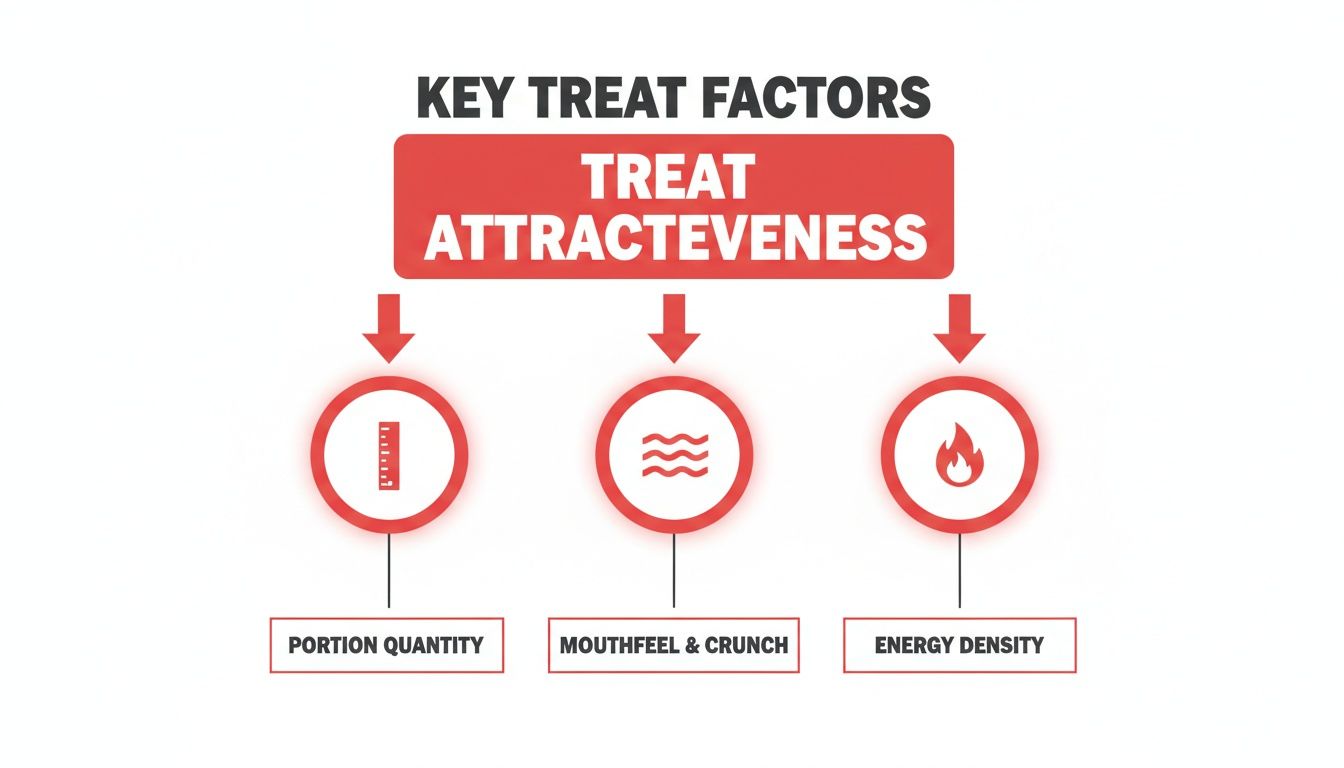
These three elements—size, texture, and calorie density—are the building blocks for creating a treat hierarchy that keeps your dog motivated in any situation.
Medium-Value Treats for Everyday Training
These are the reliable workhorses of your treat pouch. They’re a definite step up from kibble and are perfect for most of your day-to-day training.
They offer a little more excitement without being so over-the-top that your dog loses their mind.
Pro Tip: Medium-value treats should be small, soft, and a bit smelly. The soft texture is key—it means your dog can swallow it quickly and immediately refocus on you, which keeps the training session flowing smoothly.
Good examples are those soft, chewy training morsels you see in stores. They're literally designed for quick rewards. These are fantastic for teaching new behaviors in a familiar place or for group obedience classes where you need to hold your dog's focus. They're tasty enough to keep your dog interested but not so special that they become a distraction in themselves.
High-Value Treats for Big Challenges
Okay, these are the jackpot rewards. The big-time bonuses you save for the toughest jobs. High-value treats should be reserved for teaching a difficult new skill, working through a fear, or rewarding a perfect recall when a squirrel is running by.
- What they are: Think intensely smelly and delicious. We're talking freeze-dried liver, small pieces of plain cooked chicken, or tiny cubes of cheese.
- Why they work: Their powerful smell and amazing taste cut right through distractions, making listening to you the most appealing choice your dog has.
When you create this "hierarchy of value," you give yourself the flexibility to pay your dog appropriately for their effort. It keeps them on their toes, prevents boredom, and makes training a much more dynamic and successful process for both of you.
Practical Tips for Using Treats Effectively
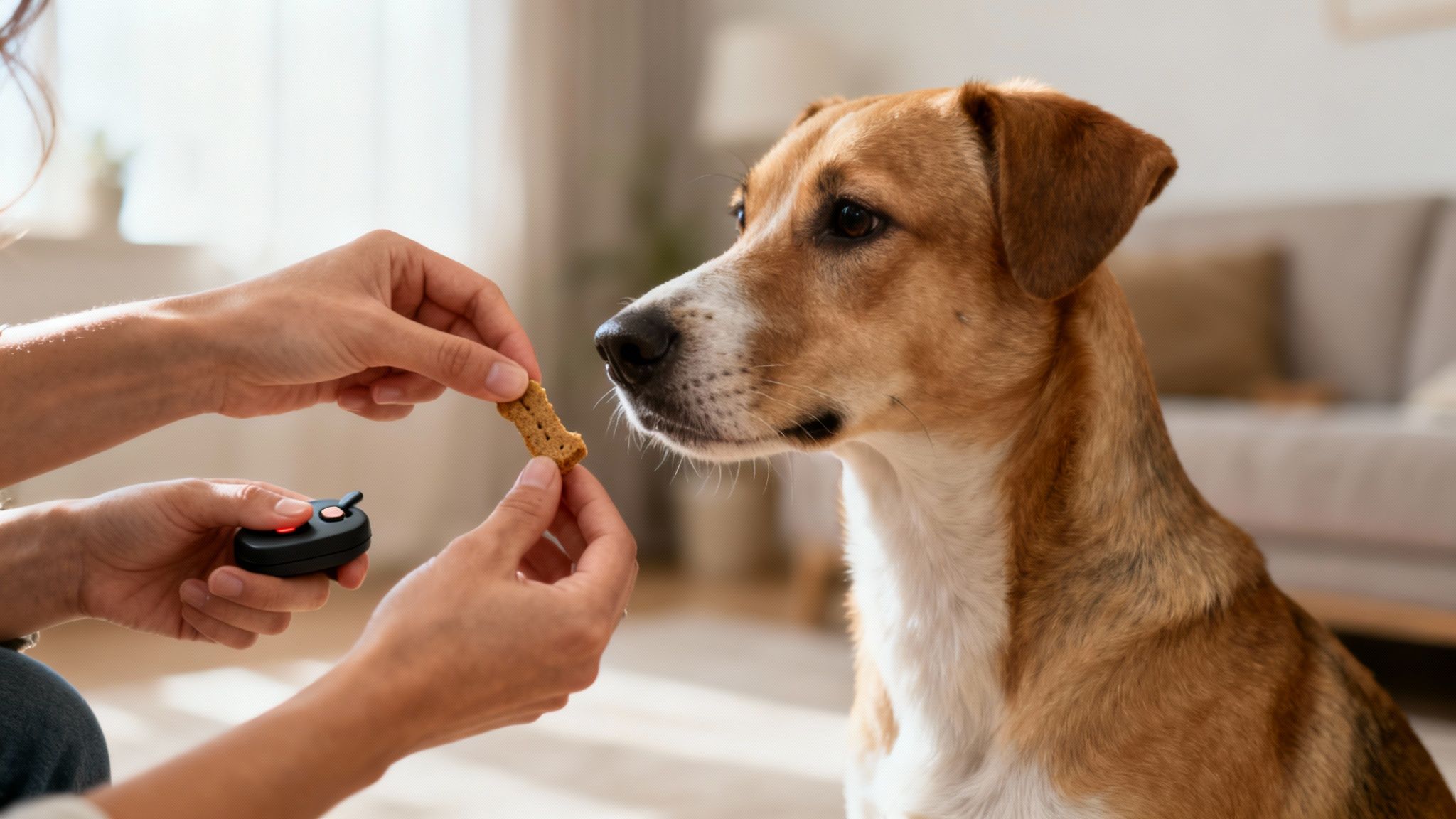
Having the right treats is a great start, but it's only half the story. The real magic happens when you know exactly how and when to use them. That’s how a pocketful of snacks becomes a powerful way to communicate with your dog and build a wonderful relationship.
The two skills that make all the difference are timing and placement. Think of yourself as a photographer trying to capture a perfect, fleeting moment. You have to reward the behavior the instant it happens—not a few seconds later. That immediate feedback is what forges a crystal-clear connection in your dog’s mind between what they did and why they got a reward.
Placement is just as critical. Instead of just handing over the treat, you can use it to guide your dog's body. For example, once your dog sits, deliver the treat at their eye level. This encourages them to hold the sit, rather than popping right back up to snatch it out of your hand.
Master Your Reward Strategy
Just like us, dogs get bored. If they know precisely what they're getting every single time they do something right, the reward can start to feel a little stale and lose its motivational punch. The secret is to keep things interesting.
Mixing up the value of your rewards is a simple but incredibly effective technique. It’s like a slot machine—that occasional big jackpot is what keeps you pulling the lever. So, mix in some of their regular kibble (low-value) with some tastier soft treats (medium-value), and save the really good stuff, like freeze-dried liver, for those "wow" moments when your dog nails a new skill or performs exceptionally well.
This element of surprise keeps your dog engaged and on their toes. They'll work harder and focus more, always wondering if this next "sit" is going to earn them a standard paycheck or a huge bonus.
Avoid Accidentally Bribing Your Dog
This is one of the most common pitfalls I see. It's easy to accidentally bribe your dog instead of rewarding them. What’s the difference? A reward comes after the behavior. A bribe is shown beforehand to coax them into doing it. If your dog only sits when they see you reach for the treat bag, you've got a bribe on your hands.
The goal is to get your dog to respond to your cue (a word or a hand signal), not the sight of the treat. Here’s a simple way to fade the lure:
- Hide the Goods: Keep the treats out of sight in a pocket or a training pouch.
- Lure at First: When teaching something new, it's fine to use a treat in your hand to guide them, like leading their nose up to get them into a sit.
- Empty Your Hand: After a few reps, make the exact same hand motion but with no treat in it. When they sit, reward them with a treat from your other hand.
- Add Your Cue: Once the empty-hand signal works reliably, start saying your verbal cue, like "Sit," right before you give the hand signal.
This step-by-step process teaches your dog that your cues are what matter, and the treat is just a fantastic surprise for a job well done.
This approach is clearly catching on. Consumable treats now make up about 65.4% of the booming pet treats market, showing just how much owners rely on them for training. If you're curious, you can read more about how online channels are reshaping the pet treat industry and making great training tools easier for everyone to find. By mastering these simple techniques, you'll make sure every treat you give is a step toward better communication.
Integrating Wellness into Your Training Routine
Great training isn't just about nailing a 'sit' or 'stay.' It really begins with a dog who feels calm, focused, and healthy enough to learn in the first place. A dog who's anxious or uncomfortable simply can't absorb new information, no matter how tasty the treat is.
Think about it like this: have you ever tried to study for a big test with a pounding headache? It’s next to impossible to concentrate. The same goes for your dog. If their mind is buzzing with anxiety or their stomach is upset, their ability to tune into a training session plummets.
This is where we need to start thinking about wellness as a core part of our training plan. By making sure our dog is in a good headspace, we're building a solid foundation for success before we even pull out the treat bag.
The Brain-Gut Connection in Dogs
It might sound strange, but a huge part of your dog's mood and focus is tied directly to their gut. The gut is often called the "second brain" for a good reason—it produces a massive amount of the body's serotonin, a key chemical messenger that helps regulate mood, stress, and happiness.
When a dog’s digestive system is out of whack, it can throw everything else off, creating real roadblocks for training.
- Heightened Anxiety: An unhealthy gut can make a dog feel more stressed and nervous.
- Poor Focus: If your dog is dealing with tummy troubles, it's hard for them to concentrate on you.
- Low Motivation: When a dog just doesn't feel good, their desire to work for rewards can disappear.
This link shows us that sometimes the best dog treats for training do more than just mark a good behavior—they can actually support the very systems that make learning happen.
When you look beyond simple rewards and start thinking about your dog's internal state, you shift from just managing behavior to proactively building a more resilient, focused, and capable training partner.
Using Functional Ingredients for Better Training
This is where functional chews and supplements can be a game-changer. Adding products designed to support calmness and gut health, like FORMA's daily superfood chews, can help get your dog's mind and body ready to learn. Ingredients like L-theanine can help a dog feel calm without making them drowsy, while probiotics get to work supporting a healthy gut.
By making wellness part of your daily routine, you aren't just giving a supplement. You’re setting the stage for more effective training sessions down the road. A calmer, more comfortable dog is a dog that’s ready and eager to learn, which makes every lesson more successful and strengthens the bond you share.
Got Questions About Training Treats? Let's Dig In.
Even with the best treats in your pouch, you're bound to have questions. That's totally normal. Getting the hang of how to use treats the right way can feel a little tricky at first, but a few solid answers can clear things up fast. Here are some of the most common questions I get from dog owners, answered.
How Many Treats Are Too Many?
This is the big one, because it's all about keeping your dog healthy. The golden rule here is the 10% rule.
It's a simple concept: treats should never make up more than 10% of your dog's total daily calories. Your first step is to chat with your vet to figure out your dog's ideal daily calorie count. Once you have that number, just do the math—that's your daily treat budget.
If you’re planning a longer training session, you'll want to use super low-calorie options or break bigger treats into teeny, pea-sized bits. And don't forget to trim their regular meals back just a bit to make room for those extra calories. This is the secret to preventing weight gain and keeping their nutrition on track.
Can I Just Use Human Food?
Absolutely! In fact, sometimes a little piece of "real" food is the most exciting reward you can possibly offer. Tiny bits of plain cooked chicken, lean beef, or a small cube of low-fat cheese can be way more motivating than a store-bought biscuit.
But—and this is a big but—safety has to come first. You need to be 100% sure you're not offering something toxic. Steer clear of these at all costs:
- Grapes & Raisins: Known to cause kidney failure.
- Onions & Garlic: Toxic to their red blood cells.
- Chocolate: Contains theobromine, which is poisonous for dogs.
- Xylitol: An artificial sweetener found in tons of sugar-free stuff (like peanut butter) that is incredibly dangerous.
Anytime you introduce a new human food, start with a tiny piece to make sure it agrees with their stomach. And, of course, these special goodies still count toward that daily 10% calorie allowance.
What Are the Best Treats for Puppies?
Puppies are a special case. They've got the attention span of a gnat and a digestive system that's still under construction. The perfect puppy training treats are small, soft, and easy to swallow in a flash. This keeps them locked into the training lesson instead of getting distracted by a five-minute chewing project.
Look for treats made specifically for puppies, or even better, go with single-ingredient options like little flakes of freeze-dried chicken or liver. They're pure motivation without any of the junk fillers.
A quick pro-tip: Ditch the hard, crunchy biscuits for puppy training. They take too long to eat, breaking the rhythm of your session, and can be too hard on their baby teeth. Sticking to just one or two high-quality, soft treats is also a great way to keep their tummy happy.
What if My Dog Just Isn't Food-Motivated?
It happens! While most dogs would do backflips for a snack, some just aren't that into food. If your dog sniffs a delicious treat and walks away, don't sweat it. The goal is to find what they truly value.
For a lot of these dogs, a special toy that only appears during training is the ultimate prize. A favorite squeaky ball or a quick game of tug can work just as well as a piece of cheese. For others, it’s all about praise and affection—an excited "Yes!" and a good ear scratch might be their jackpot. The principle is exactly the same: find what lights your dog up and use that to mark the moment they do something right.

Karolis is the Founder of FORMA, a pet wellness brand focused on longevity and daily nutrition for dogs. Writes about supplements, canine health, and helping pets live longer, healthier lives
Join thousands of pet parents getting science-backed health insights and natural care advice