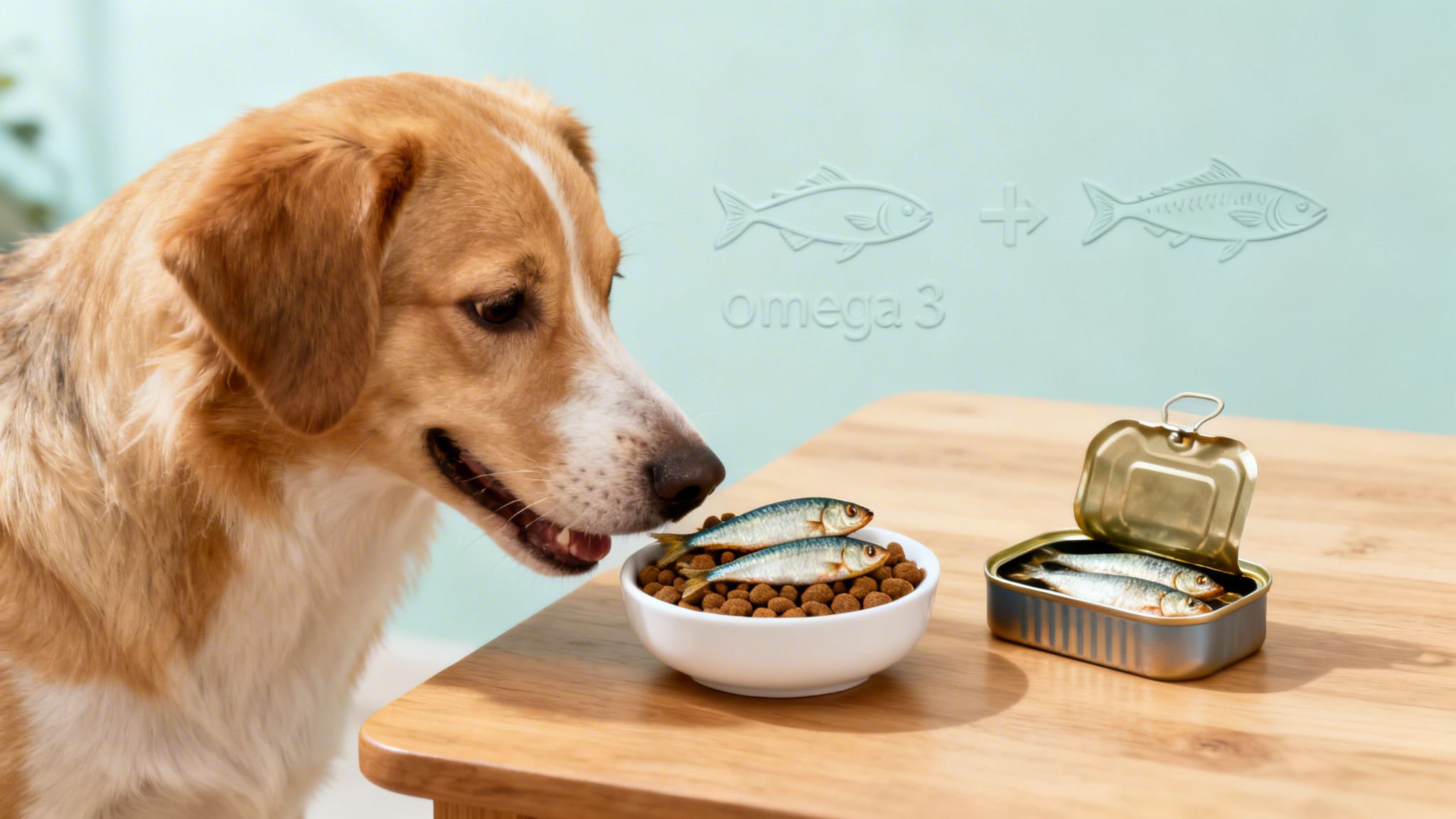
Best Human Grade Dog Food: best human grade dog food picks for a healthier pup
Discover the best human grade dog food options, learn how labels work, and pick safer meals that support a healthier, happier dog.

The very best human-grade dog foods are made with ingredients you’d recognize in your own kitchen—think real chicken, beef, and sweet potatoes. These meals aren't just using better ingredients; they're made in facilities that are actually certified to produce food for people. That means they're prioritizing transparent sourcing and ditching all the junk: fillers, artificial additives, and those questionable feed-grade by-products.
What Human-Grade Dog Food Actually Means
It's easy to hear "human-grade" and think it's just another slick marketing term. But it’s not. This label is tied to a strict, legally defined standard that puts this type of food in a completely different league from most of what’s on the pet aisle. It's about a whole different philosophy for safety and quality, from the farm to your dog's bowl.
Here's a simple way to think about it. The food in your own pantry—the chicken breast, carrots, and rice—is produced and handled under intense safety rules. For a dog food to earn the "human-grade" label, it has to use those exact same ingredients and be made in a facility that follows the same FDA and USDA standards.
This is a world away from traditional "feed-grade" kibble. The regulations for feed-grade products permit ingredients that would never be allowed in human food, including parts from animals that were diseased, dying, or disabled before processing.
When you choose human-grade, you're picking a meal for your dog that was made in a human food facility, with ingredients you could buy at the grocery store, and held to the same safety standards as the food on your own plate.
This difference is a huge reason why so many dog owners are making a change. After years of concerning pet food recalls that have shaken consumer trust, people are actively looking for safer, more honest options. Wanting high-quality nutrition for our dogs isn't a niche idea anymore; it's become a mainstream priority.
The Driving Force Behind the Switch
The move toward human-grade dog food comes from a deeper understanding of what our pets need to thrive. Today's dog owners, especially millennials who see their pets as part of the family, are applying their own health-conscious values to their dogs' bowls.
The numbers back this up. The global human-grade pet food market hit USD 2.77 billion in 2024 and is expected to grow to USD 4.58 billion by 2030. You can discover more insights about this pet food market growth and see how North America is at the forefront of this trend.
This shift isn't just about avoiding nasty ingredients. It's about proactively choosing a healthier life for our dogs. People are drawn to the best human-grade dog food for a few key benefits:
- Improved Digestibility: Whole foods that are gently cooked are typically much easier on a dog's digestive system. This can mean less stomach upset and better, firmer stools.
- Higher Nutrient Bioavailability: Because the ingredients are higher quality and less processed, the nutrients are easier for your dog’s body to actually absorb and use.
- Enhanced Safety and Quality Control: Making food in a human-grade facility dramatically lowers the risk of contamination from dangerous bacteria like Salmonella or E. coli.
- Better Palatability: Let's be honest, real food just smells and tastes better. Many picky eaters who turn their noses up at dry kibble will happily dig into a bowl of fresh, whole-food ingredients.
At the end of the day, opting for a human-grade diet is about building a foundation of clean, safe, and nutrient-rich food that directly supports your dog's long-term health and energy.
How to Decode Labels and Find True Quality
Walking down the pet food aisle can feel totally overwhelming. Every bag seems to scream about "premium," "natural," and "gourmet" ingredients, making it nearly impossible to figure out what's genuinely good for your dog. But here’s the secret: learning how to read the label is your single best tool for cutting through the marketing noise.
Your first move should be to scan for one specific, legally regulated term: "human-grade." This isn’t just some fancy marketing buzzword; it’s a standard with real teeth. It guarantees that every single ingredient is safe for people to eat and that the food was made, packed, and stored in a facility that meets the same strict rules as human food production.
This is worlds away from vague claims like "made with human-quality ingredients." That phrase might sound nice, but it offers zero guarantee about the other ingredients or the safety of the facility where it was all mixed together.
The Power of the Ingredient List
The ingredient list is where the real story is told, and it’s always organized by weight before cooking. The best human-grade dog food will have recognizable, whole-food proteins and carbs listed right at the top.
You want to see specific named meats like "chicken," "beef," or "turkey"—not mysterious phrases like "meat meal" or "animal by-product." Seeing real foods like sweet potatoes, carrots, and brown rice right after the protein is another great sign you’re looking at a quality formula. These are ingredients packed with nutrients your dog’s body can actually use.
This chart can help you visualize the simple questions to ask when you're deciding between a truly human-grade option and a traditional feed-grade food.
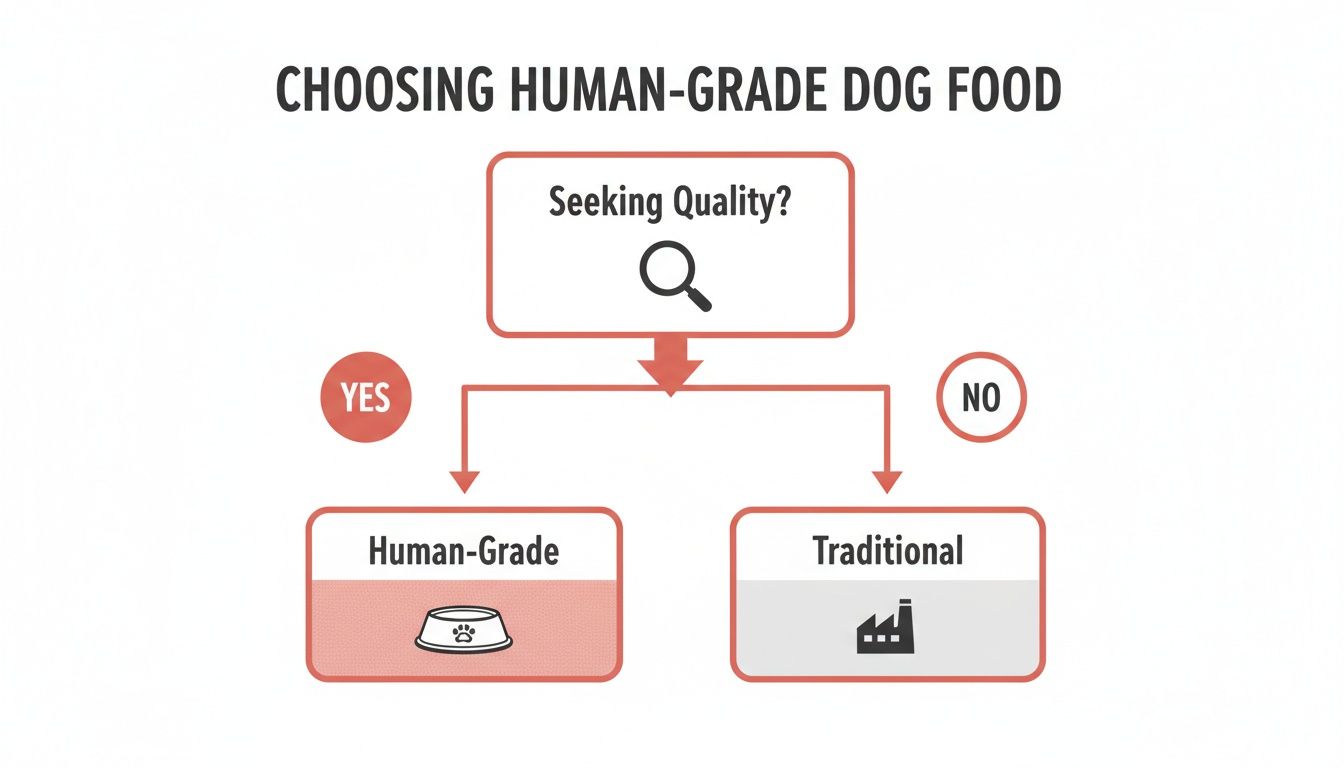
As you can see, the path to real quality starts with two simple steps: confirming the "human-grade" claim and prioritizing whole, identifiable ingredients. This approach takes the guesswork out of the equation and points you toward a safer, more transparent choice for your best friend.
Decoding the Dog Food Label
Understanding the language on a dog food label is crucial. A simple word can mean something completely different depending on whether you're looking at a human-grade or feed-grade product. This table breaks down some common terms to help you spot the difference.
Being able to spot these differences is a game-changer. It helps you look past the pretty packaging and focus on what's actually fueling your dog.
Understanding the Guaranteed Analysis
Next to the ingredients, you'll see the Guaranteed Analysis. This box can look a bit technical, but it gives you some great clues about what's inside the bag by listing the minimum and maximum levels of key nutrients.
Here’s what to look for:
- Crude Protein (Min): This tells you the minimum protein percentage. For most adult dogs, somewhere between 18-30% on a dry matter basis is a healthy target. Puppies and very active dogs will need more.
- Crude Fat (Min): Fat is a key energy source that also supports a healthy coat and skin. Look for a minimum of 5-15% from high-quality, named sources like "chicken fat" or "salmon oil."
- Crude Fiber (Max): Fiber is essential for good digestion. A max of around 5% is a good benchmark for most dogs, as too much can sometimes get in the way of nutrient absorption.
- Moisture (Max): This simply shows how much water is in the food. Dry kibble usually sits around 10% moisture, whereas fresh or canned foods can be 75% or higher.
Keep in mind, you can't compare the percentages on a bag of kibble directly to a can of fresh food. You have to convert them to a "dry matter basis" first to get a true apples-to-apples comparison of the protein or fat content.
Red Flags to Watch For on the Label
Knowing what to look for is only half the battle; you also need to know what to avoid. When you're on the hunt for top-tier human-grade food, keep an eye out for these red flags.
- Unnamed Meat Sources: Terms like "meat meal," "animal digest," or "bone meal" are purposefully vague. They could come from any number of animal sources, often of very questionable quality. Steer clear.
- Artificial Preservatives: Avoid chemical preservatives like BHA, BHT, and ethoxyquin. Quality brands use natural alternatives like mixed tocopherols, which is just a form of vitamin E.
- Artificial Colors and Flavors: Your dog doesn't care if their food is bright red. These additives are only there to appeal to you and provide zero nutritional benefit.
- Cheap Fillers: While ingredients like corn, wheat, and soy aren't necessarily evil, they are common allergens and are often used as cheap fillers instead of more nutrient-rich options.
- Ingredient Splitting: This is a sneaky trick manufacturers use. They'll list one ingredient in multiple forms (e.g., "peas," "pea flour," "pea protein") to push it down the ingredient list, hiding just how much of the food is made up of that one cheap component.
At the end of the day, the best brands aren't afraid to be transparent. If a company makes it easy to find out where their ingredients come from and how their food is made, it’s a fantastic sign they have nothing to hide.
What Are the Real-World Benefits of a Human-Grade Diet?
Switching your dog to a human-grade food isn't just about following the latest trend. It's a genuine investment in their health, and the changes you can see—and your dog can feel—are often pretty incredible. This is where the connection between high-quality ingredients and a vibrant, happy dog really becomes clear. It’s less about spoiling them and more about giving them the clean, biologically appropriate nutrition they were meant to eat.
The idea of "pet humanization" has completely reshaped the pet food industry. In North America alone, where there are over 85 million dogs, the human-grade pet food market hit $1,314.9 million in revenue in 2024. This isn't surprising. After seeing recall after recall for feed-grade products, owners are demanding safer, more transparent options that look a lot like the healthy food on their own plates. You can dive deeper into these market trends here to see why so many people are choosing real ingredients over highly processed pellets.
Better Digestion and Gut Health
One of the first things people notice after making the switch is a huge improvement in their dog's digestion. It makes sense, really. Diets made with whole foods like real meats and fresh vegetables are simply easier on a dog’s system. The ingredients are more bioavailable, which is just a technical way of saying the body can actually absorb and use the nutrients.
Think of it this way: heavily processed kibble is like asking your dog’s gut to solve a complicated puzzle. A gently cooked, human-grade meal is like handing it a set of simple, pre-sorted building blocks. This makes a world of difference.
- Firmer, smaller poops: When your dog absorbs more nutrients from their food, there's simply less waste to come out the other end.
- Less gas and bloating: Easily digestible ingredients don't sit around fermenting in the gut, which means a much more comfortable pup.
- Fewer tummy troubles: For dogs with sensitive stomachs, getting rid of common fillers and artificial additives can be life-changing.
When you give your dog ingredients in their natural, whole form, you’re setting their digestive system up for success. A healthy gut is the foundation for everything else.
A Shinier Coat and Healthier Skin
Your dog’s skin and coat are a mirror of what’s going on inside. If you're seeing a dull, flaky coat or dealing with itchy, irritated skin, it often points back to their diet. Human-grade recipes are naturally rich in the high-quality fats and oils that are critical for healthy skin.
Ingredients like salmon oil, chicken fat, and flaxseed deliver a healthy balance of Omega-3 and Omega-6 fatty acids. These nutrients help reduce inflammation, nourish skin cells, and promote that beautiful, glossy sheen we all love to see. It’s common to hear from owners that all that frustrating scratching and licking finally stopped once they changed their dog's food.
More Energy and a Healthier Weight
We all know that for us, not all calories are created equal—and the same is true for dogs. Many traditional kibbles are packed with cheap, starchy fillers that cause energy to spike and then crash. This can leave your dog feeling sluggish or contribute to weight gain over the years.
Human-grade diets, on the other hand, focus on lean proteins and complex carbs that provide steady, sustained energy. Because the food is so much more nutrient-dense, you can often feed smaller portions while still giving your dog everything they need. This makes it a fantastic way to help your dog reach and maintain a healthy weight, which takes so much pressure off their joints and supports their long-term health. You're swapping empty calories for real, powerful fuel.
Choosing the Right Type of Human Grade Food
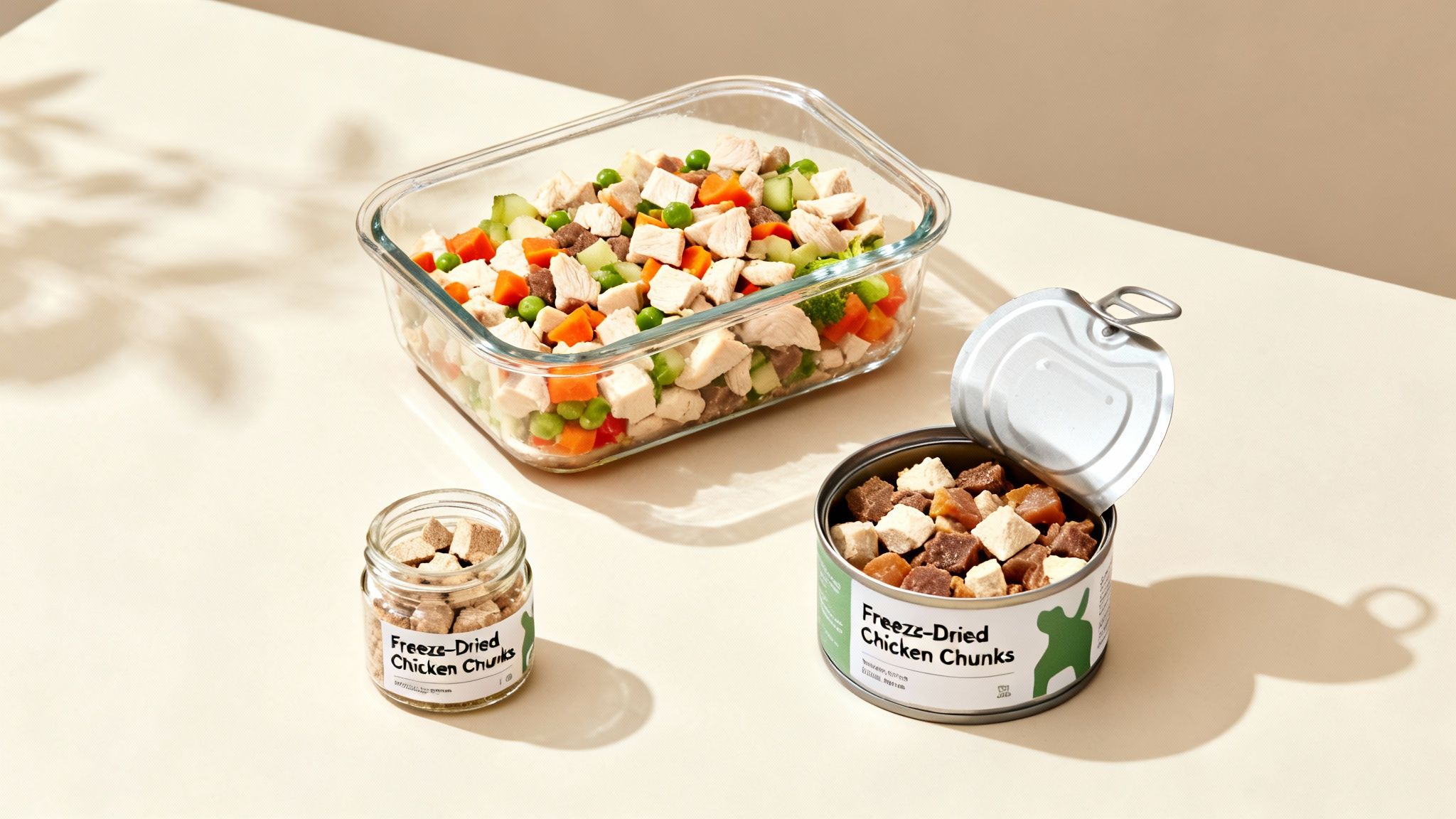
So, you're ready to make the switch. That's great! But you’ll quickly find that "human-grade" isn't a single category. There are a few different formats on the market, each with its own quirks and benefits. The best human grade dog food is simply the one that clicks with your dog's health, your lifestyle, and your budget.
Think of it like feeding yourself. Some nights you might cook a beautiful meal from scratch, and other nights you need a healthy, high-quality prepared meal you can trust. It's all about finding that sweet spot between top-tier nutrition and what's actually practical for your daily life.
Fresh Refrigerated Dog Food
This is probably what you picture when you hear "human-grade." These are meals made from whole-food ingredients, gently cooked, and then refrigerated to keep them fresh and packed with nutrients. They usually arrive in pre-portioned packs, often delivered right to your door.
Pros:
- Maximum Nutrient Retention: Because it's gently cooked, this food holds onto the vitamins, minerals, and enzymes that high-heat processing can destroy.
- High Moisture Content: Fresh food is naturally hydrating, which is a huge plus for kidney function and your dog's overall health.
- Seriously Tasty: The smell and texture are a magnet for dogs, making it a fantastic solution for picky eaters.
Cons:
- Requires Fridge/Freezer Space: This is a big one. These meals need to be kept cold, which can be tough if your fridge is already packed.
- Shorter Shelf Life: Just like your own leftovers, it has to be used within a few days of opening the pack.
- Higher Cost: Let's be honest, this is usually the most expensive option due to the fresh ingredients and cold-chain shipping.
Fresh food is an amazing choice if your top priority is nutrient density or if you have a dog who turns up their nose at everything else. Just be prepared for the commitment to managing storage and serving schedules.
Freeze-Dried and Dehydrated Options
For anyone who loves the idea of a fresh or raw diet but can’t deal with the refrigeration hassle, freeze-dried and dehydrated foods are a game-changer. Both methods work by removing moisture, which makes the food shelf-stable while locking in the good stuff. All you have to do is add a little water to bring it back to life before serving.
Freeze-drying is a pretty cool process that uses low temperatures to remove nearly 98% of the water, while regular dehydration uses low heat over a longer time. Both do an incredible job of preserving the nutritional power of the original ingredients.
Freeze-dried food gives you the nutritional punch of a raw diet with the grab-and-go convenience of kibble. It's a powerful way to deliver premium nutrition without sacrificing your pantry space.
This format is perfect for busy owners, people who travel with their dogs, or even just as a nutrient-packed "topper" to sprinkle over your dog's current food.
High-Quality Canned Food
Don't write off the canned food aisle just yet. While it has a mixed reputation, a new wave of genuinely high-quality, human-grade canned foods has changed the game. We're not talking about the mystery-meat pâtés of the past—these are often full of chunky, recognizable ingredients you can actually see, all swimming in a savory broth or gravy.
What to look for in a good canned food:
- Read the Label: Make sure it explicitly says "human-grade" and doesn't contain carrageenan, a common thickener that can cause gut inflammation in some dogs.
- Look for Whole Ingredients: You should be able to see actual chunks of meat and vegetables.
- BPA-Free Cans: Always go for brands that use cans without this potentially harmful chemical lining.
Canned food has a long shelf life and is packed with moisture, making it a super convenient and hydrating choice. It can be a fantastic middle ground if you're looking for an affordable and easy-to-find human-grade option that still delivers on nutrition and taste. Ultimately, picking the right format is all about finding what works for both you and your dog, so you can bring the benefits of a cleaner diet into your home without any added stress.
How to Supercharge Your Dog's Diet
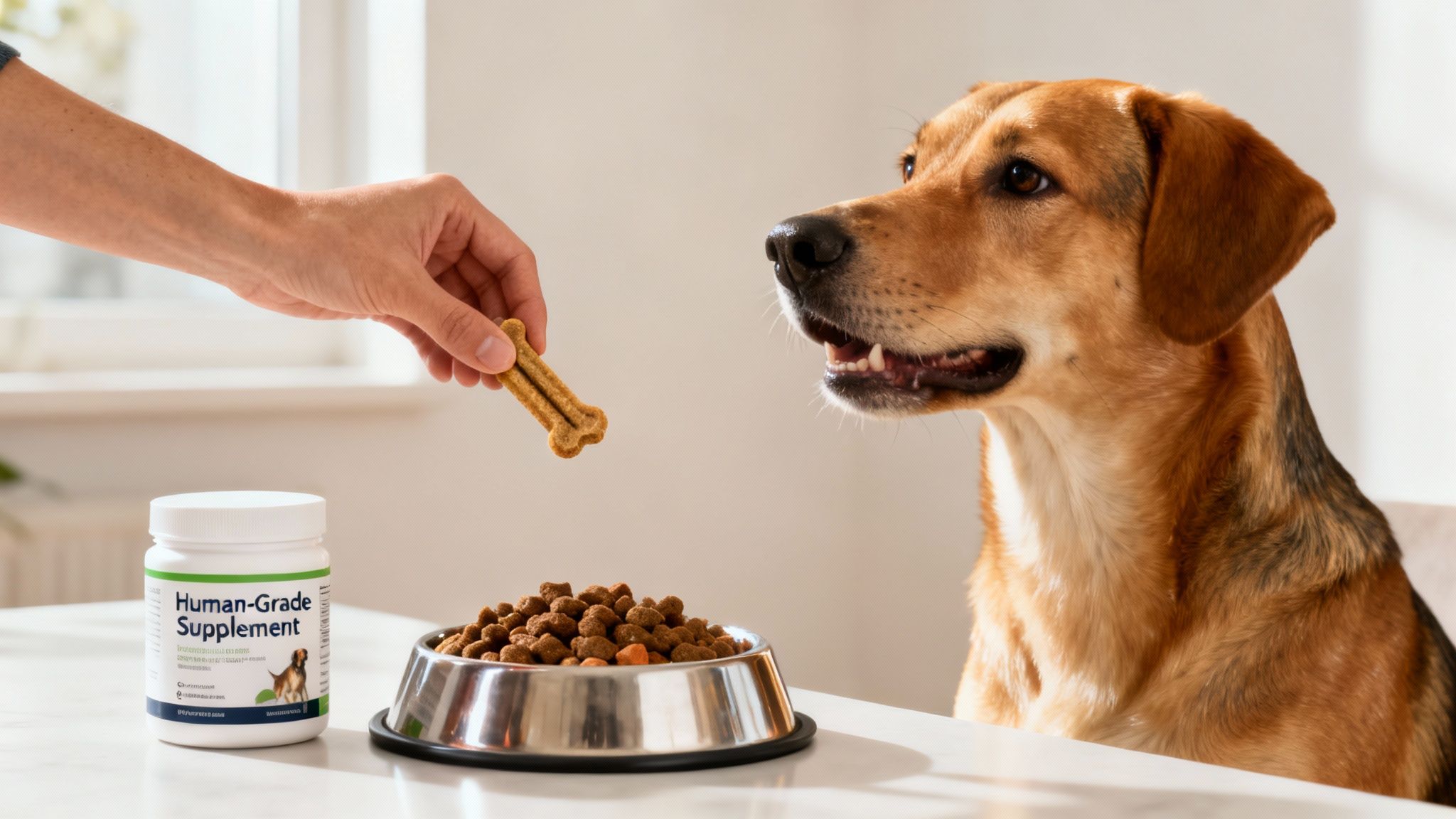
Switching to a top-tier human-grade dog food is a fantastic start. You've essentially laid down a solid foundation for your dog's health by moving away from heavily processed kibble to real, whole-food ingredients. But what if you could build on that foundation to create something truly exceptional?
That's where targeted supplementation comes into play.
Think of it this way: their high-quality food is the healthy, balanced meal. A daily superfood chew is like a specialized multi-vitamin or a green smoothie on the side. It’s designed to fill in any gaps and provide focused support where your dog needs it most, from calming an anxious mind to supporting aging joints.
Why a Daily Superfood Chew Makes a Difference
Even the best diet can't do it all. Some dogs, due to their breed, age, or lifestyle, simply need a little extra help. Functional ingredients can deliver targeted benefits for common issues that food alone might not completely solve.
We’re seeing this shift in what pet parents are looking for, too. The demand is growing for products that directly support things like calmness and a strong immune system. One report noted that the human-grade trend is now expanding beyond meals into supplements that round out a complete wellness plan. You can read the full research about these market trends to see how smarter investments are leading to healthier dogs.
This is exactly the role a daily supplement like FORMA is built for. It isn't meant to replace their food—it's meant to make it work even better.
A daily superfood chew is the perfect partner for a high-quality diet. It allows you to build a proactive, holistic wellness plan that addresses your dog's unique needs from the inside out.
By adding a single, science-backed chew to their daily routine, you can introduce powerful ingredients that support their health in very specific ways, creating a more complete wellness picture.
Creating a Complete Wellness Routine
The ultimate goal is a seamless routine that supports your dog's health from every angle. A superfood chew is the perfect companion to a human-grade diet because it delivers concentrated, functional ingredients in a format your dog will actually enjoy.
FORMA’s human-grade, science-backed formula was designed with this exact philosophy in mind. It provides targeted support in four crucial areas:
- Promoting Calmness: With ingredients like L-theanine and chamomile, it helps ease anxiety and encourage relaxation without making your dog drowsy.
- Boosting Gut Health: A smart blend of probiotics and prebiotics supports a healthy gut microbiome, which is the cornerstone of good digestion and nutrient absorption.
- Supporting Immunity: Powerful antioxidants and other compounds help strengthen your dog’s natural defenses to handle everyday stressors.
- Enhancing Longevity: By supporting cellular health and keeping inflammation in check, these ingredients help your dog stay vibrant for the long haul.
This simple addition transforms mealtime from just feeding to a comprehensive wellness ritual. Their food provides the core nutrition, and the daily chew acts as the supercharger, ensuring they have everything they need to thrive. It’s a simple, powerful, and proactive way to work toward a longer, happier life together.
Your Top Questions About Human-Grade Dog Food, Answered
Deciding to upgrade your dog's diet is a big step, and it's totally normal to have questions. The idea of "human-grade" sounds great, but what does it really mean for your wallet, your dog's tummy, and your daily routine? Let's clear things up.
This is your go-to guide for those practical, real-world questions that come to mind when you're thinking about making the switch. We'll tackle everything from the price to the transition process, so you can feel confident you're doing the best for your pup.
Is Human-Grade Dog Food Really Worth the Extra Money?
Let's be honest, this is usually the first question on everyone's mind. And yes, you'll notice that human-grade dog food carries a higher price tag than that big bag of kibble. But it helps to think of it less as an expense and more as an investment in your dog’s long-term health.
That higher cost is a direct reflection of what’s inside the bag. You're paying for real, whole foods—think actual chicken breast and fresh sweet potatoes—instead of mystery "meat meals" and cheap, starchy fillers. You're also paying for the peace of mind that comes with food made in a human-grade facility, which drastically cuts down the risk of contamination.
So many dog parents I've talked to find that investing a bit more in food upfront can mean fewer vet bills down the road for things like skin allergies, upset stomachs, and other chronic issues. It’s about playing offense with their health, not just defense.
If your budget is tight, don't feel like it's an all-or-nothing decision. A great strategy is to use human-grade food as a "topper" on their current kibble. Just adding a scoop on top is an amazing way to boost their nutrition without completely overhauling your spending.
What's the Right Way to Switch My Dog to a New Food?
Slow and steady wins the race here. If you switch your dog's food too quickly, you risk upsetting their digestive system, which can lead to gas, diarrhea, and a very unhappy pup. The key is to give their gut a little time to adjust to the new ingredients.
For most dogs, a simple 7 to 10-day plan works like a charm:
- Days 1-3: Start with a mix of 75% old food and 25% new food.
- Days 4-6: Shift to a 50/50 split of old and new.
- Days 7-9: Now, go for 75% new food with just 25% of the old stuff.
- Day 10: You should be good to go with 100% of the new food!
Pay close attention to your dog during this period. How are their energy levels? What does their poop look like? If you notice any stomach trouble, just pump the brakes and stay at the current ratio for an extra day or two. A gradual transition makes the whole experience a positive one for everyone.
Can't I Just Feed My Dog Food from My Plate?
This is a really important distinction to make. While the ingredients in a human-grade dog food are safe for people to eat, that does not mean your dinner leftovers are a safe or healthy meal for your dog. They are two completely different things.
Proper human-grade dog foods are formulated by veterinary nutritionists to be "complete and balanced" for a dog's unique needs. This is a scientific way of saying they contain the exact right amounts and ratios of protein, fats, vitamins, and minerals your dog needs to thrive.
Our food, on the other hand, is often full of things that can be harmful, or even toxic, to dogs.
A Few Dangers Lurking in People Food:
- High Sodium: Can cause high blood pressure and put a strain on their kidneys.
- Too Much Fat: A rich, fatty meal can trigger pancreatitis, a very painful and serious inflammation of the pancreas.
- Toxic Ingredients: Onions, garlic, grapes, chocolate, and the artificial sweetener xylitol are all big no-nos.
- Spices: Many of the seasonings we love can cause major stomach upset for dogs.
By sticking with a professionally formulated human-grade dog food, you give your dog all the benefits of high-quality ingredients without any of the risks that come from an unbalanced and potentially dangerous diet.

Karolis is the Founder of FORMA, a pet wellness brand focused on longevity and daily nutrition for dogs. Writes about supplements, canine health, and helping pets live longer, healthier lives
Join thousands of pet parents getting science-backed health insights and natural care advice