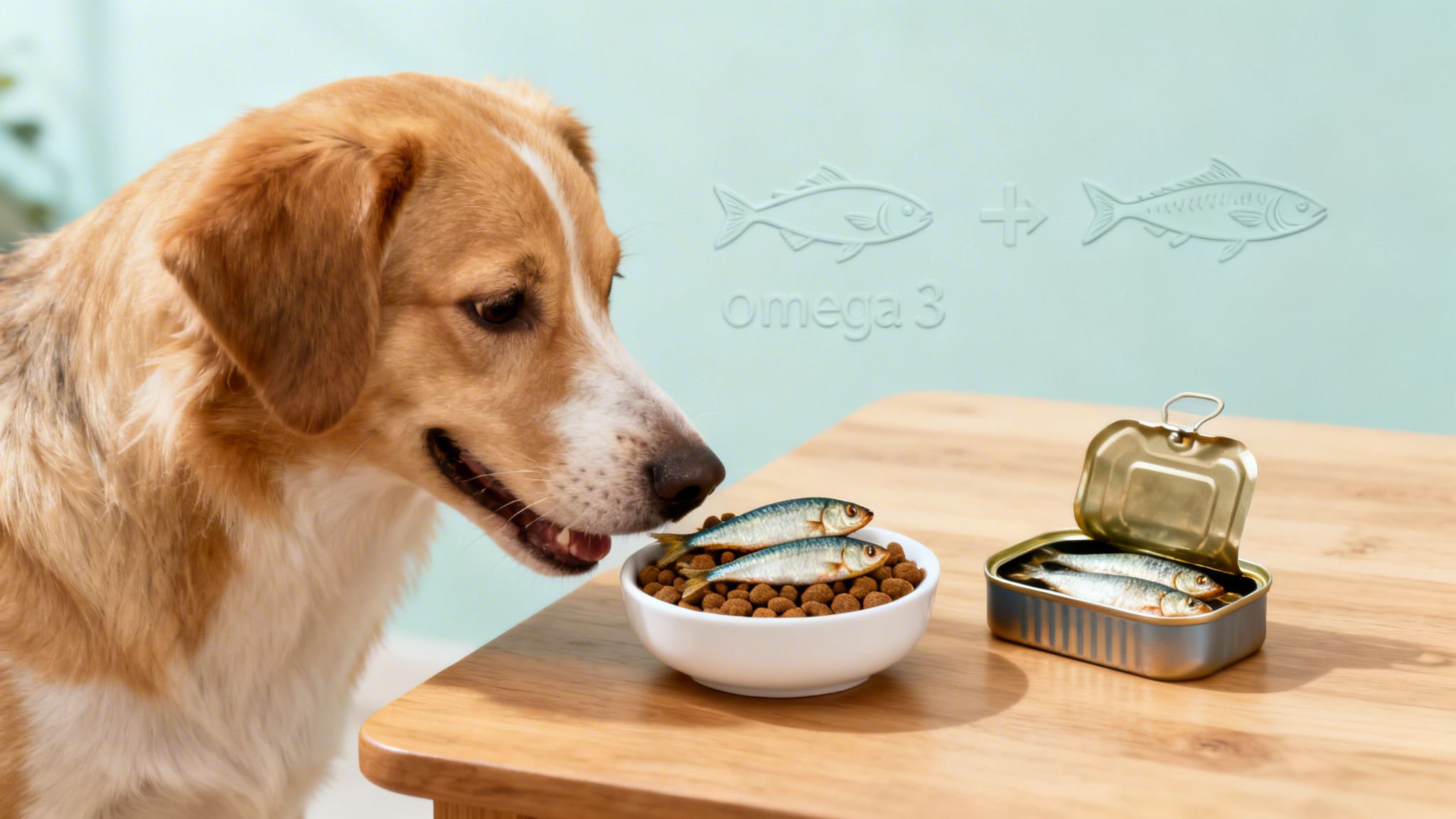
Best vitamins for older dogs: Essential nutrients for aging joints
Learn what the best vitamins for older dogs can do for joint health, mobility, and brain function, plus tips for safe supplement use.
When it comes to the best vitamins for older dogs, the focus should be on supporting their joints, cognitive function, and digestive health. Essential nutrients like glucosamine, chondroitin, omega-3 fatty acids, and probiotics are the cornerstones of a great senior supplement, as they directly address the most common challenges aging dogs face.
A New Wellness Plan for Your Senior Dog
It's tough to watch a once-bouncy companion start to slow down. That spring in their step might not be what it used to be, or maybe they seem a little stiff after a nap. It’s a reality every dog owner faces. But this isn't just about "getting old"—it's a clear signal that their body's nutritional needs are changing.
Just like us, our dogs need different kinds of support as they get older. Their bodies aren't as efficient at producing certain compounds or absorbing all the nutrients they need from their food. This is where the right supplement stops being a "nice-to-have" and becomes a fundamental part of their daily wellness routine.
The 3 Pillars of Senior Dog Health
A smart wellness plan for an older dog really boils down to supporting three key areas where age-related decline hits hardest. If you can proactively support these pillars, you can make a huge difference in their quality of life, helping them feel more like their younger selves.
- Joint and Mobility Support: Think of ingredients like glucosamine and chondroitin as the building blocks for healthy cartilage—the natural cushion that protects their joints.
- Gut Health and Immunity: A healthy gut, supported by probiotics, is the command center for nutrient absorption and a strong immune system.
- Cognitive and Emotional Wellness: Nutrients like omega-3 fatty acids are fantastic for reducing inflammation in the brain, which helps maintain mental clarity and a sense of calm.
These three areas—joints, gut, and mind—don't operate in isolation. They're all interconnected, and supporting one often has a positive ripple effect on the others.

To help you pinpoint exactly what your dog might need, here’s a quick-glance summary of the most important nutrients, their benefits, and the signs to watch for.
Essential Nutrients for Senior Dogs at a Glance
This table breaks down the most critical vitamins and supplements for aging dogs, what they do, and how to tell if your dog might be lacking them.
Looking at this, you can see how a single issue, like a dull coat, might actually trace back to poor gut health and nutrient absorption. It's all connected.
Supporting Mobility and Easing Joint Discomfort
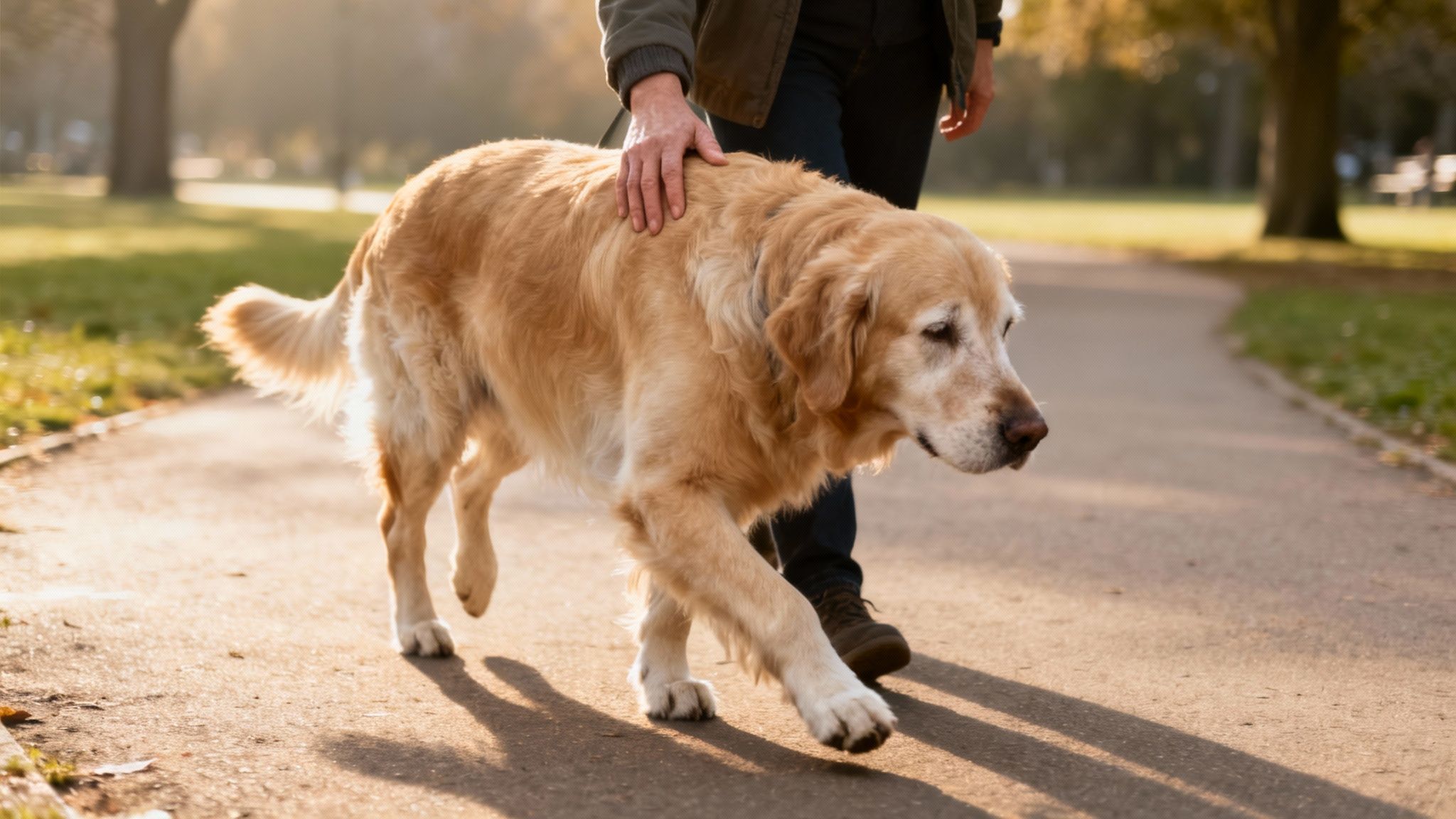
Watching your once-bouncy dog think twice before hopping on the couch is a tough reality for any pet owner. That hesitation, the stiffness you see when they get up from a nap—it’s more than just a sign of getting older. It's often the result of years of wear and tear on their joints.
Think of it like a trusty door hinge that starts to creak after years of use. Without a little oil and maintenance, it just doesn't move as smoothly as it used to.
In your dog, the "hinge" is their joint, and its smooth function relies on healthy cartilage and joint fluid. As dogs age, the cartilage that cushions their bones thins out, and the fluid that lubricates everything starts to diminish. This is where the right nutrients can make all the difference, acting like the oil that quiets that creaky hinge and brings back easy movement.
The Dynamic Duo: Glucosamine and Chondroitin
When it comes to supporting those creaky joints, two names stand out: glucosamine and chondroitin. They work together as a powerful team to get to the root of joint discomfort, not just cover up the symptoms.
- Glucosamine: The Cartilage Rebuilder. This compound provides the raw materials cartilage needs to repair itself. Think of it as sending a construction crew into the joint to patch up the worn-out cushion, making every step smoother and less painful.
- Chondroitin: The Cartilage Protector. While glucosamine is busy rebuilding, chondroitin acts like a security guard. It helps block the destructive enzymes that break down cartilage and also helps the cartilage hold onto water, keeping it plump and shock-absorbent.
This one-two punch is a cornerstone of senior dog care for a reason. Vets and owners alike have seen the results firsthand, which is why the global market for dog joint supplements, valued at USD 1.1 billion in 2025, is expected to nearly double by 2035. The numbers don't lie, especially when you consider that over 20% of dogs over the age of 8 deal with osteoarthritis. You can learn more about the joint supplement market trends to see the full picture.
Key Takeaway: Glucosamine rebuilds the joint’s natural cushion, while chondroitin protects it from more damage. Together, they help bring back the smooth, pain-free movement your dog once had.
By tackling the underlying problem of cartilage breakdown, you're doing more than just providing temporary relief. You’re giving your dog's body the tools it needs to maintain healthier joints for years to come.
And the best part? You'll see the difference in your dog's daily life. A little more excitement for the morning walk, less groaning when they lie down, maybe even a renewed interest in their favorite toy. These are the small victories that show their discomfort is fading, letting them live a happier, more active life right by your side.
Boosting Gut Health for Stronger Immunity
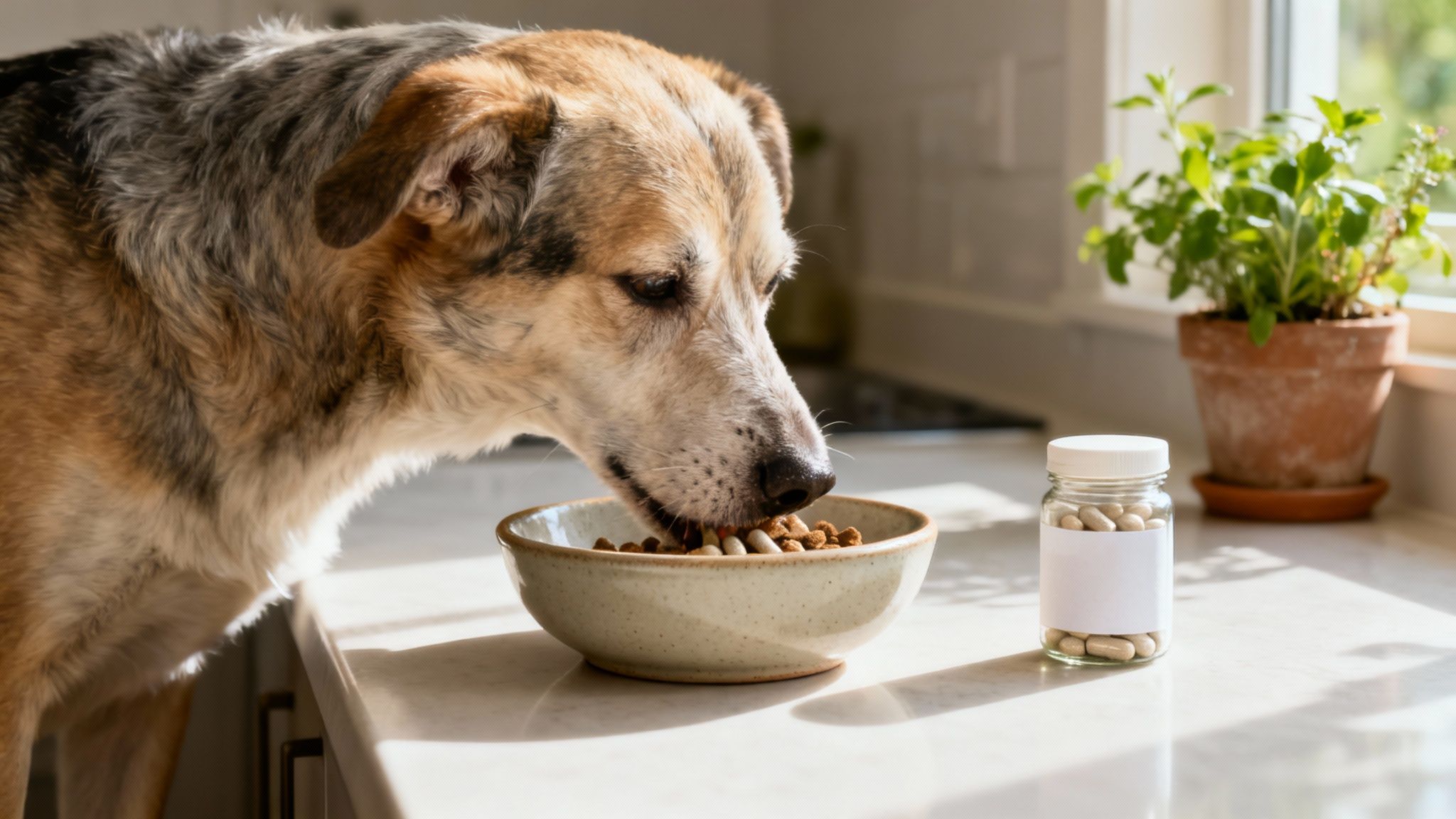
Think of your senior dog’s gut as a bustling garden. For years, it’s been working perfectly, but time can take its toll. The soil—your dog's gut microbiome—can start to lose its vitality, and this is a big deal because a healthy gut is ground zero for a strong immune system.
In any good garden, you need the right mix of beneficial organisms. In your dog's gut, those are probiotics, the friendly bacteria that keep everything running smoothly. When these good guys are thriving, they help your dog absorb nutrients and build up their natural defenses against illness.
But as dogs get older, things like stress or even a slight change in diet can throw that delicate balance off. Harmful bacteria can start to creep in, leading to those all-too-common senior dog problems: upset stomachs, gas, and unpredictable poop. When their gut is out of whack, it’s much harder for their body to pull the vitamins it needs from their food.
The Gut-Immunity Connection Explained
It's amazing how closely a dog's gut health and immune system are tied together. A huge part of their immune response is actually located right there in their digestive tract. So, if the gut isn't happy, their defenses weaken, leaving them more open to getting sick.
This is exactly why probiotics and digestive enzymes are game-changers for older dogs.
- Probiotics are like bringing in a fresh batch of good bacteria to help restore order. They help push out the bad stuff, which often leads to firmer stools and a calmer tummy.
- Digestive Enzymes are the little helpers that break down food. As dogs age, their digestive system can get a bit sluggish. Enzymes make sure they wring every last bit of nutrition out of their meals.
Digestive troubles are incredibly common in older dogs, affecting up to 40% of dogs over age 10. It’s no surprise that the pet supplement market is growing so fast—it’s expected to reach USD 6.61 billion by 2035, with gut health being a top priority for dog owners. You can read more about the growth of the pet dietary supplement market and the demand for these solutions.
By getting your dog's gut back in balance, you’re doing more than just soothing an upset stomach. You’re rebuilding their immune system from the inside out. That means more energy, a shinier coat, and a happier, healthier dog.
At the end of the day, focusing on gut health is one of the most effective ways to boost your senior dog's quality of life. The best vitamins for older dogs almost always include these digestive aids, because a healthy gut is what allows every other nutrient to do its job. It all starts from within.
Keeping Their Mind Sharp and Spirit Calm
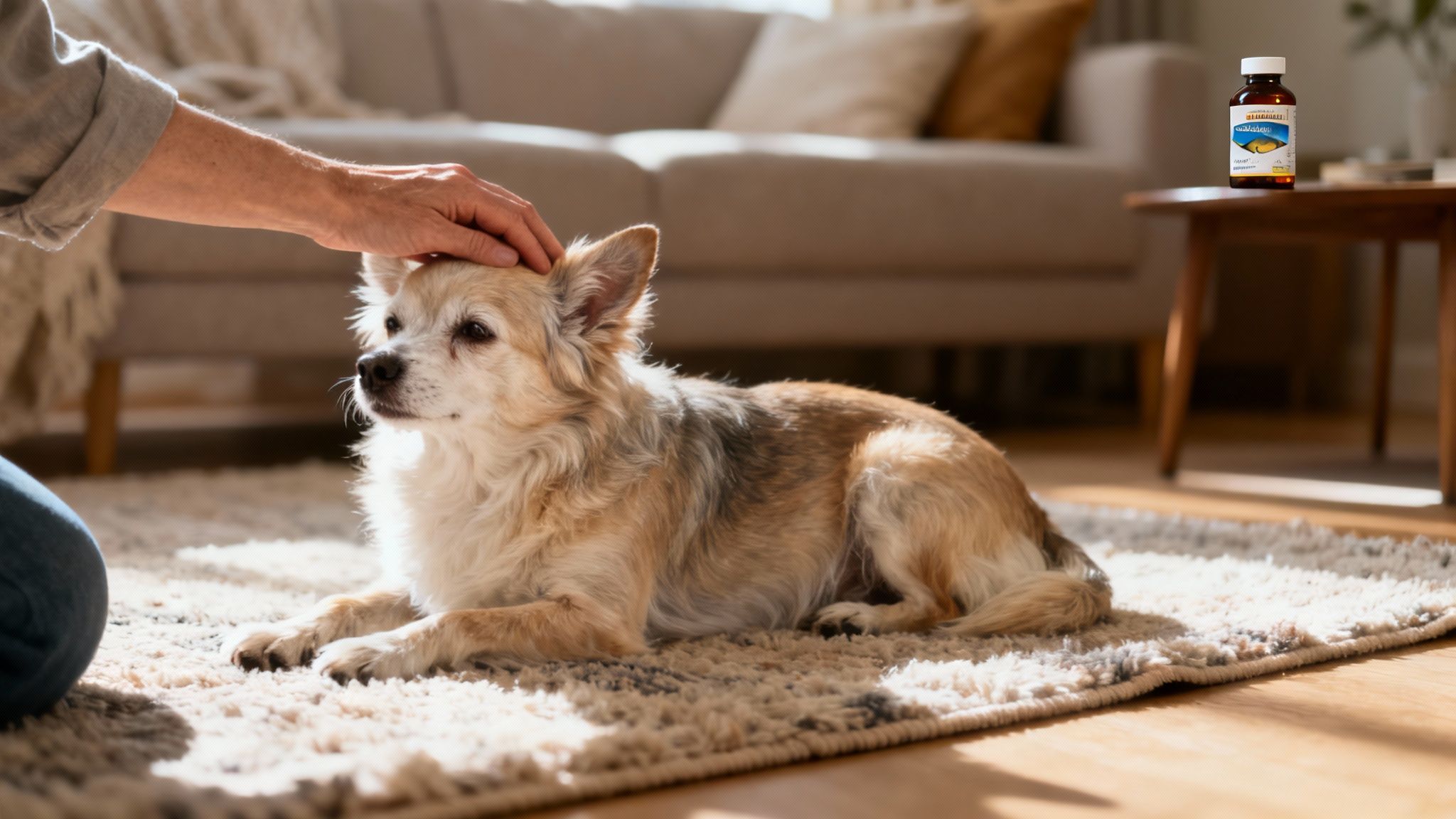
It’s easy to see the physical signs of aging—a little stiffness getting up, a slower pace on walks. But the changes happening inside your senior dog’s mind can be much quieter. Maybe you’ve noticed new anxieties creeping in, like pacing during a thunderstorm. Or maybe there are moments of confusion where they seem to forget where they are, even in your own home.
These aren't just random quirks of getting older. They’re signs that their brain, just like their joints, could use some dedicated nutritional support. Cognitive decline and anxiety are real challenges for older dogs, but the right vitamins can go a long way in keeping their personality bright and their mind at ease.
The Building Blocks of a Healthy Brain
Think of your dog’s brain as a busy city’s electrical grid. For messages to travel quickly and reliably, all the wiring needs to be in perfect shape. A couple of key nutrients are crucial for keeping that system running smoothly.
- Omega-3 Fatty Acids: These are like the protective coating on the electrical wires. They help quiet down inflammation, a big source of "static" or cognitive fog, which lets nerve signals travel clearly and efficiently.
- Antioxidants: Consider these the brain's personal rust-proofing crew. Over time, a natural process called oxidative stress damages cells, a bit like how metal rusts. Antioxidants step in to neutralize that damage, protecting brain cells and promoting their long-term health.
The need for this support is very real. Studies show that over 30% of senior dogs show signs of anxiety. We also know that nutrients like B-vitamins are vital for nerve function, and omega-3s can cut down on inflammation by a whopping 25-50%. It’s no surprise, then, that the U.S. pet supplement market is expected to hit USD 2,660 million by 2035, as more of us look for ways to help our aging pets thrive. Discover more insights about the pet supplement market.
By nourishing the brain, you're not just putting a band-aid on symptoms. You’re supporting the very foundation that helps your dog feel confident, engaged, and mentally present day after day.
What Better Brain Health Looks Like at Home
When you start giving your dog vitamins designed for cognitive health, the changes you see are often small but incredibly meaningful. This isn't just about slowing down decline; it's about making their life right now better.
You might find your dog is less rattled by loud noises or less frantic when you leave the house. They might seem more present during playtime or more excited to greet you at the door. Instead of confused wandering, you see a dog who is more settled, calm, and clear-headed.
Ultimately, supporting their mental wellness is about preserving that special bond you share. It helps ensure they stay the same loving, quirky companion you’ve always known, just with a little extra help to navigate their golden years with clarity and peace.
How to Choose a Safe and Effective Supplement
Walking down the pet supplement aisle can feel overwhelming. Every bottle seems to make a bigger promise than the last, and it's tough to know who to trust. So, how do you cut through the noise and find a supplement that's not only safe but will actually help your old friend?
The secret is to ignore the flashy marketing and become a bit of a label detective. You're looking for quality, transparency, and a formula that makes sense.
Choosing the right vitamins isn't just about finding the longest ingredient list. It's about knowing that each one of those ingredients is high-quality, responsibly sourced, and made in a facility that takes safety seriously. This is especially important because the pet supplement world can be a bit like the Wild West—it isn't regulated with the same eagle eye as human products. That puts the power, and the responsibility, right in your hands.
A quick heads-up: The FDA doesn’t approve pet supplements before they hit the shelves. This means companies are largely responsible for their own quality control, and frankly, some are better at it than others. Your dog is counting on you to pick a good one.
Look for the NASC Quality Seal
So, what's the first thing to look for? My go-to shortcut is the NASC Quality Seal.
Think of the National Animal Supplement Council (NASC) seal as a stamp of approval from a group that really cares about pet health. It tells you the company didn't just decide to make supplements one day; they've committed to a higher standard.
To earn that seal, a brand has to pass a tough, independent audit every two years. This audit confirms they’re doing things right, including:
- Strict Quality Control: Making sure that what goes into batch one is the same as what goes into batch one hundred.
- Honest Labeling: The ingredients listed on the label are exactly what's inside—no more, no less.
- A Real Monitoring System: They have a process in place to track and report any problems.
Spotting that little seal is a huge first step. It immediately tells you the company is serious about safety and isn't cutting corners.
Take a Hard Look at the Ingredients
Once you’ve found a brand with the NASC seal, it's time to zoom in on the formula itself. A great supplement for a senior dog should have its active ingredients listed in meaningful amounts, not just a "fairy dusting" to make the label look good.
Be wary of products loaded with cheap fillers like corn, wheat, soy, or artificial junk. Your dog doesn't need that stuff. Instead, you want to see a clean label with ingredients you can recognize and understand.
This is where an all-in-one formula really shines. A single daily chew that combines support for joints, digestion, and even a calmer mind is so much simpler than juggling three or four different bottles. It’s not just more convenient; it also reduces the risk of accidentally giving the wrong dose.
A well-made, multi-benefit chew makes your life easier and ensures your dog gets a consistent, balanced dose of support, day in and day out. And when it comes to keeping our senior dogs happy and healthy, that consistency is everything.
Common Questions About Senior Dog Vitamins
Even after doing all the research, you might still have a few questions rolling around in your head. That’s perfectly normal. Deciding to add something new to your dog's daily routine is a big deal, and you deserve to feel completely confident about it.
Let's walk through some of the most common questions we hear from pet parents who are thinking about vitamins for their older dogs. The goal here is to clear up any lingering doubts so you can move forward with total peace of mind.
When Should I Start Giving My Dog Senior Vitamins?
The general rule of thumb is that most dogs hit their "senior" years around age 7. For bigger breeds, it can be a little earlier. The best approach is to be proactive and start giving them that extra support right as they enter this new phase, even if they aren't showing obvious signs of slowing down yet.
Think of it like preventative care for their body. Introducing nutrients like glucosamine and chondroitin early on can help protect their joints for the long run. Of course, every dog is an individual, so a quick chat with your vet is always the best way to pinpoint the perfect time to start.
Can't My Senior Dog Get Everything From Their Food?
A high-quality senior dog food is an excellent starting point, but it's usually not enough to tackle specific age-related issues. Commercial dog foods are designed to meet basic nutritional needs for general health, not to provide the potent, targeted doses needed for things like joint cushioning or cognitive function.
A good supplement isn't just more food—it’s a concentrated dose of active ingredients like glucosamine, probiotics, and omega-3s. It's designed to go above and beyond daily nutrition to actively support their aging body.
Are There Any Side Effects I Should Worry About?
For the most part, high-quality supplements made specifically for dogs are incredibly safe. The most common issue—which is still quite rare—is some mild tummy trouble as your dog’s system gets used to the new ingredients.
An easy way to avoid this is to start with half the recommended dose for the first week before working up to the full amount. Always stick with trusted brands that are open about their ingredients and manufacturing process. And, as always, run it by your vet before starting anything new to make sure it's the right choice for your dog's unique health profile.

Karolis is the Founder of FORMA, a pet wellness brand focused on longevity and daily nutrition for dogs. Writes about supplements, canine health, and helping pets live longer, healthier lives
Join thousands of pet parents getting science-backed health insights and natural care advice