Guide: can dogs eat white rice? Practical insights for your pup
Wondering if can dogs eat white rice? This guide covers safety, portion sizes, risks, and better alternatives for your pup.

Yes, dogs can absolutely eat plain, cooked white rice. In fact, it's one of the first things veterinarians often recommend for a dog with an upset stomach. It’s gentle, easy to digest, and can help get their system back on track.
But think of it as a short-term fix, not a permanent part of their diet.
Why White Rice is a Situational Food for Dogs
When a dog owner asks if white rice is okay, the answer isn't a simple yes or no. It’s more of a "yes, but..." It's a fantastic tool to have in your dog-care toolkit for specific situations, much like you might reach for a plain cracker when your own stomach feels off. It serves a very specific purpose but isn't something you'd build a healthy diet around.
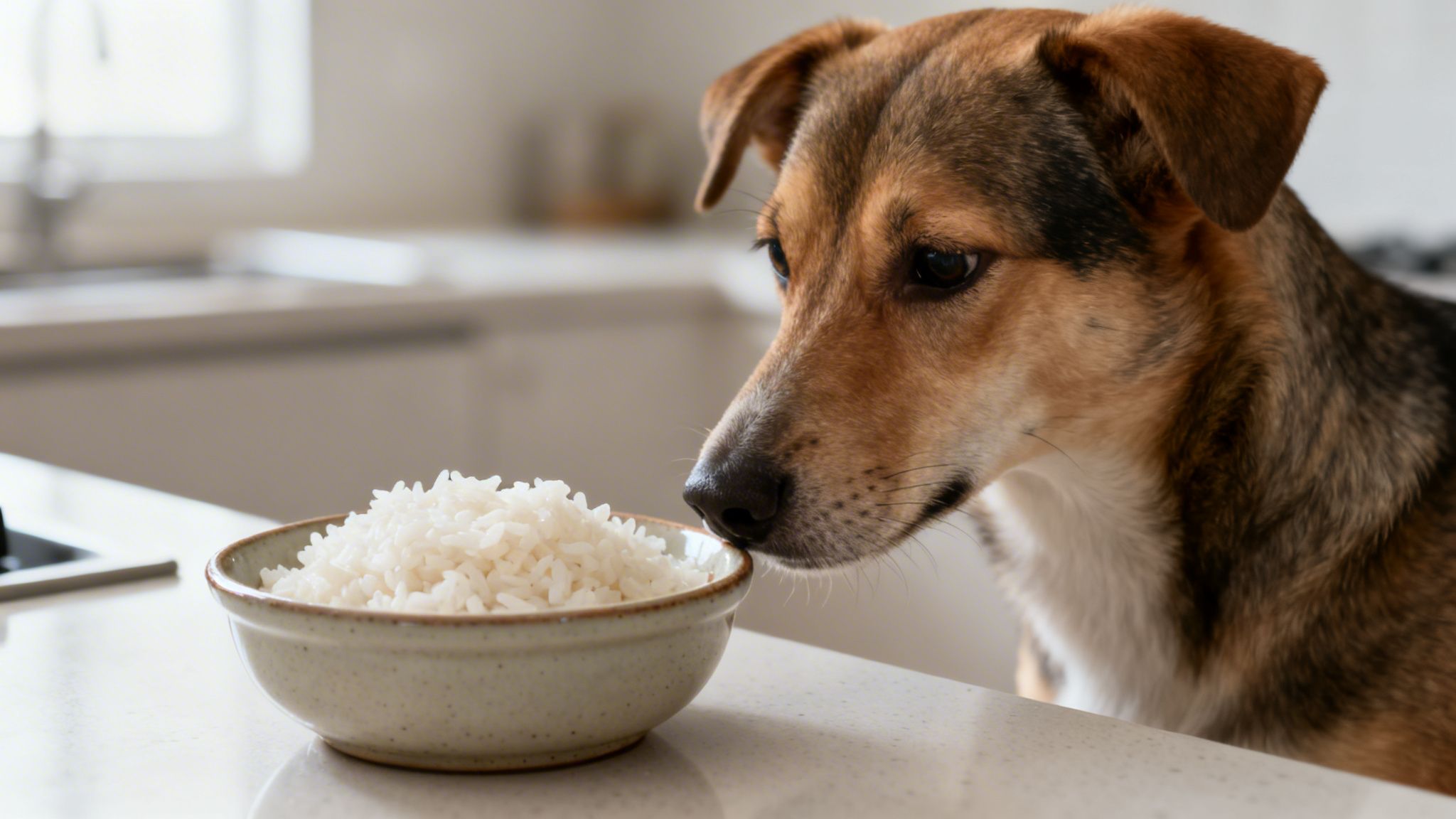
The main reason vets suggest it is because it’s so digestible. The process of making white rice strips away the tough outer layers—the bran and germ. This removes most of the fiber and other nutrients, leaving behind a simple starch that's incredibly easy on a dog's gut.
Understanding the Trade-Offs
That ease of digestion comes at a price. Stripping away the bran and germ also removes most of the good stuff. What's left is mostly just quick-burning calories.
This brings us to a big consideration: its high glycemic index. Simple starches like white rice can cause a rapid spike in blood sugar. That spike forces the pancreas to work harder to produce insulin and bring things back to normal.
Because of this effect on blood sugar, experts advise that white rice should make up no more than 10% of a dog's daily calories, except when used briefly as part of a bland diet for gastrointestinal issues.
This makes it a poor choice for a daily meal, especially for dogs who are overweight, diabetic, or not very active.
So, while white rice is safe and incredibly helpful when your dog is recovering from a bout of diarrhea or vomiting, it’s best viewed as a temporary dietary aid. It helps soothe an irritated tummy but can't replace a balanced, nutrient-dense diet designed for your dog’s long-term health. For a deeper dive into how different foods affect canine health, you can find great information from the experts at Dogs Naturally Magazine.
What White Rice Actually Offers Your Dog
When you spoon some white rice into your dog’s bowl, what are you really giving them? At its heart, white rice is a source of simple carbohydrates. Think of it as a quick, easy-to-burn fuel source.
A good analogy is that it’s the doggy equivalent of a plain soda cracker for us. It’s gentle on a queasy stomach and doesn’t ask much of the digestive system, but it’s not exactly a nutritional powerhouse.
This simplicity is intentional. To get "white" rice, the original brown rice grain is milled, a process that strips off its tough outer layers—the bran and the germ.
This makes the rice much easier to digest, but it’s a trade-off. Those removed layers contain the lion's share of the grain's natural fiber, vitamins (like B vitamins), and minerals (like magnesium and manganese). What’s left is mostly the starchy part, the endosperm.
The Impact of Simple Starches
Because white rice is mostly starch, your dog's body converts it into glucose (sugar) very quickly. This is why white rice has a high glycemic index. For your pup, this means a pretty rapid spike in their blood sugar.
That quick burst of energy might seem like a good thing, but it’s often followed by a crash, which can leave your dog feeling sluggish. More importantly, frequent blood sugar spikes can put a strain on the pancreas, which has to work harder to produce insulin to manage it all.
This is a big reason why white rice isn't a great choice for dogs with diabetes or those who are overweight. Their bodies are already struggling to manage blood sugar, and a food like white rice just makes the job harder.
The lack of dense nutrition is exactly why white rice is a temporary fix, not a long-term meal plan. It works wonderfully for a short-term bland diet but doesn't have what it takes to be a staple.
A Nutritional Snapshot
So, let's get down to specifics. A cup of cooked white rice provides plenty of calories for energy, but it’s missing the crucial building blocks for lasting health.
Here’s a look at what’s in a typical serving:
- High Carbohydrates: Mostly simple starches that provide a quick energy boost.
- Low Protein: It contains very little protein compared to meat, fish, or even other grains.
- Very Low Fiber: The milling process removes nearly all the dietary fiber, which is important for gut health.
- Minimal Vitamins and Minerals: Only trace amounts are left after processing.
This profile makes it clear why a diet that leans too heavily on white rice can create nutritional gaps. It can fill your dog's belly without delivering the amino acids, fatty acids, and vitamins they need to truly thrive.
So, while white rice is a perfectly safe and useful tool for specific moments, like when your dog has an upset stomach, it’s a nutritional lightweight. Its real value is its digestibility, not its nutrient density. For everyday health and wellness, nothing beats a balanced diet built on high-quality proteins, healthy fats, and more nutrient-rich carbohydrate sources.
When Vets Recommend White Rice for Dogs
White rice might not be a superfood for your dog's everyday meals, but it absolutely has its moment to shine. Think of it as a go-to tool in your doggy first-aid kit. Vets recommend it for one main reason: it’s the perfect base for a bland diet to calm an upset stomach.

When your dog is struggling with diarrhea or vomiting, their whole digestive system is irritated and working overtime. A bland diet is like hitting the reset button. It gives them the calories and basic nutrients they need without making their gut do any heavy lifting, giving it a chance to rest and recover.
Since all the fibrous outer layers of white rice have been removed, it’s incredibly easy for a dog’s stomach to process. That gentle quality is exactly what an ailing pup needs.
The Classic Bland Diet Recipe
The most common bland diet you'll hear about from your vet is a simple mix of lean protein and a simple starch. The time-tested recipe? Boiled, skinless chicken breast and plain white rice. No seasonings, no fuss.
Here's how to whip it up for your dog:
- Cook the Protein: Start by boiling some boneless, skinless chicken breast until it's cooked all the way through. Let it cool down, then shred it into small, easy-to-eat bits.
- Cook the Rice: Prepare plain white rice just like you normally would, but here's the important part: add absolutely no salt, butter, or oil.
- Combine and Serve: Mix the shredded chicken and rice together. A good ratio to start with is one part chicken to two parts rice (for instance, 1/2 cup of chicken mixed with 1 cup of rice).
A quick pro tip: Always serve the meal at room temperature. A sick dog’s appetite is already finicky, and food that’s too hot or cold can be off-putting or even cause more tummy trouble.
Portion Sizes and Feeding Schedule
Figuring out the exact amount depends on your dog's size and normal daily food intake. But the real key here is feeding small, frequent meals rather than one or two big ones. This strategy keeps their sensitive stomach from getting overwhelmed.
As a rule of thumb, you can feed about the same total volume of the bland diet as you would their regular food, but divide it into four to six small meals spaced throughout the day. So, if your dog usually gets two cups of kibble a day, you might offer them about half a cup of the chicken and rice mixture four times a day.
Most of the time, dogs only need this special diet for two or three days. Once you see their stools firming up and the vomiting has stopped, you can start the slow process of mixing their regular food back in over the next few days.
Other Scenarios for Using White Rice
While an upset tummy is the number one reason to reach for white rice, it can pop up in a few other situations.
- Weight Gain: If you have an underweight dog that needs to pack on some pounds safely, adding a little white rice to their meals can provide an easy-to-digest calorie boost.
- Picky Eaters: Is your dog turning their nose up at their food? Sometimes, just a spoonful of warm white rice mixed into their kibble is all it takes to spark their interest.
- Post-Surgery Recovery: After surgery, vets sometimes suggest a few bland meals. Anesthesia can cause nausea, and this simple food helps ease them back into their normal eating routine.
What Are the Health Risks of Too Much Rice?
While plain white rice can be a lifesaver for a dog with a temporarily upset stomach, it's not a long-term solution. Think of it like eating toast or crackers when you're feeling unwell—it’s a short-term fix, not a sustainable diet. A truly healthy diet for your dog needs to be much more complete.
One of the biggest concerns that comes up with long-term rice consumption is arsenic. Rice plants are particularly good at absorbing this heavy metal from the soil and water they grow in. An occasional small serving isn't going to cause problems, but if rice becomes a staple in your dog's diet, that exposure can add up over time.
A pilot study from Finland actually found that dogs eating rice-based commercial foods had noticeably higher arsenic levels in their hair compared to dogs on rice-free diets. The amounts were still small, but it's a good reminder that variety is key to preventing the buildup of any single substance. You can read the full study from the University of Helsinki for more details.
Nutritional Gaps and Weight Gain
Beyond potential contaminants, a diet heavy in white rice can create some serious nutritional holes. Because the milling process strips away most of the fiber, vitamins, and minerals, you're left with a simple carbohydrate. It fills your dog’s belly but doesn't give them the comprehensive nutrition they need to truly thrive.
This can lead to a few issues down the road:
- Empty Calories: Every bowl of rice takes the place of more nutrient-rich foods like lean protein, healthy fats, or vitamin-packed vegetables.
- Weight Problems: As a simple carb, white rice is packed with calories that quickly turn into sugar. This can easily lead to weight gain, especially for dogs that aren't very active.
- Blood Sugar Issues: The high glycemic index of white rice can cause rapid spikes in blood sugar, which is a real problem for diabetic dogs or those at risk.
It's so important for us as pet owners to be aware of all the things that can pose a risk, from diet to household items. This even includes unexpected dangers like Marijuana Toxicity in Dogs and Cats. Knowing what to look out for is half the battle.
The Bottom Line: The main risk with white rice isn't that it's toxic. It’s that relying on it too much can lead to long-term imbalances, from weight gain and nutritional deficiencies to potential heavy metal exposure.
It all comes down to balance. Using white rice as a tool when your vet gives the green light is perfectly fine. But for everyday meals, your dog will be much healthier and happier with a well-rounded diet full of nutrient-dense ingredients.
Exploring Healthier Alternatives to White Rice
While plain white rice is a go-to for settling an upset stomach, it’s not the best choice for your dog's regular meals. Think of it as a temporary fix, not a long-term nutritional staple. Once your dog is feeling better, upgrading their carbohydrate source can pack a lot more nutritional punch into their bowl.
It’s like the difference between a plain saltine cracker and a hearty piece of whole-grain bread. Both provide quick energy, but one is loaded with fiber and nutrients. The same thinking applies to your dog’s diet when you're aiming for long-term health, not just short-term digestive relief.
Brown Rice: The Whole-Grain Upgrade
The most obvious swap is brown rice. It's the same grain as white rice, just with its nutrient-rich outer layers—the bran and germ—still intact. This means it delivers a whole lot more dietary fiber, B vitamins like B1 and B6, and important minerals like magnesium. For a healthy, active dog, brown rice is the clear winner from a nutritional standpoint.
So, why do vets recommend white rice for tummy troubles? That extra fiber in brown rice, while beneficial for a healthy gut, can be tougher to digest. White rice is stripped down and simple, making it easy on a sensitive system. But for everyday feeding, brown rice is a much more robust option.
Other Nutrient-Dense Grains
Don't stop at brown rice! A whole world of grains can add variety and different nutritional profiles to your dog's diet. Rotating through a few different carbohydrate sources is a great way to ensure they’re getting a broad spectrum of nutrients.
Here are a few excellent grain-based options:
- Quinoa: This is a true powerhouse. Quinoa is a "complete protein," which is rare in the plant world, meaning it contains all nine essential amino acids your dog needs. It’s also packed with fiber and minerals.
- Oatmeal: Plain, cooked oatmeal is fantastic for digestive health. Its high soluble fiber content helps keep things moving along smoothly. Just make sure it’s completely unsweetened—no sugar or artificial sweeteners.
- Barley: This chewy, satisfying grain is another great source of soluble fiber, which is known to support a healthy gut microbiome and help keep blood sugar levels stable.
Powerful Vegetable Alternatives
You can also skip the grains altogether. Many vegetables make wonderful, low-calorie carbohydrate sources that are brimming with vitamins, antioxidants, and fiber. They're especially great for adding bulk to a meal to help a dog on a diet feel full and satisfied.
As a reminder, relying too heavily on any single carb source, especially rice, has its downsides.
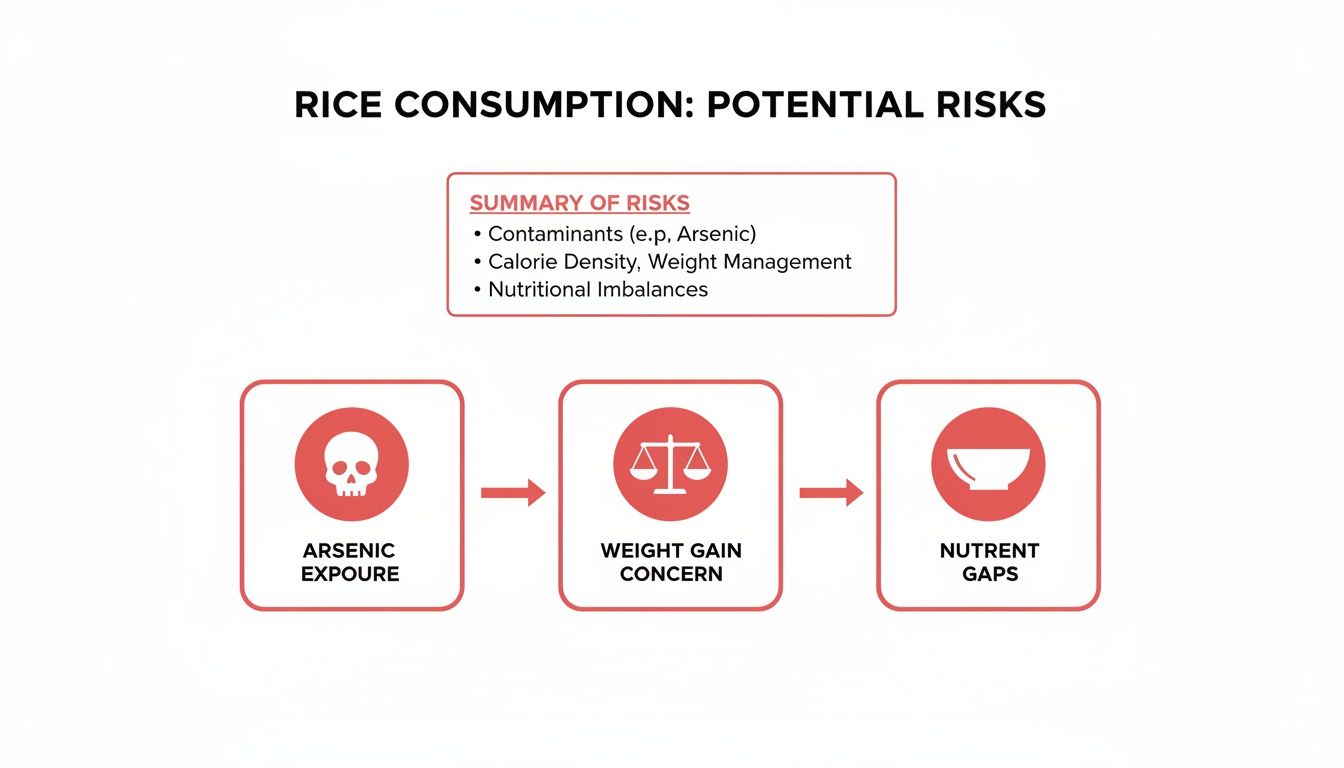
This visual is a good reminder that too much rice can contribute to weight gain, nutritional gaps, and even potential arsenic exposure, highlighting why variety is so important.
Consider mixing these veggie all-stars into your dog’s meals:
- Pumpkin Purée: A tried-and-true remedy for digestive issues, 100% pure pumpkin (never the sugary pie filling!) is loaded with fiber that can help with both constipation and diarrhea.
- Sweet Potatoes: When cooked and mashed, sweet potatoes are a delicious source of fiber, antioxidants, and Vitamin A, which is crucial for vision, immune function, and skin health.
- Green Beans: These are the perfect low-calorie filler. They’re high in fiber and can help your dog feel full without packing on the pounds, making them a secret weapon for weight management.
To help you decide what might work best for your dog, here’s a quick comparison of some popular alternatives.
Comparing White Rice to Healthier Alternatives
Ultimately, the best choice depends on your dog’s individual needs, from their digestive sensitivity to their activity level.
A quick word of advice: Whenever you introduce a new food, start small. Give just a spoonful and watch how your dog’s system handles it over the next day or two. Every dog is an individual, and what works beautifully for one might not agree with another.
By looking beyond white rice, you can build a more diverse, nutrient-rich, and exciting diet that supports your dog’s long-term health and keeps them happy for years to come.
Answering Your Top Questions About White Rice
When it comes to feeding our dogs, even simple things can feel complicated. You've got the basics down, but those practical, "what-if" questions always pop up. Let's clear up some of the most common ones I hear from dog owners about white rice.
Think of this as your quick-reference guide. No fluff, just straight answers so you can feel confident you're doing the right thing for your pup.
How Much White Rice Can I Give My Dog?
This is probably the most common question, and the right answer really depends on why you're giving them rice.
As a general rule of thumb for just adding a little something extra to their bowl, remember the 10% rule. Any treats or add-ins, including rice, shouldn't make up more than 10% of your dog's daily calorie intake. For a medium-sized, 40-pound dog, that’s about a quarter-cup of cooked rice.
Now, if you're using rice for a bland diet to soothe an upset tummy, the proportions shift. Your vet might recommend a mix that’s one part boiled lean protein (like plain chicken) to two or even three parts cooked white rice. Just be sure to start small to see how they handle it and always get your vet's specific advice for your dog's situation.
Is Brown Rice a Better Choice Than White Rice?
Nutritionally speaking, for a healthy dog, brown rice wins. It's a whole grain, which means it has all its natural parts—the fibrous bran and the nutrient-packed germ. That's where you find the good stuff like extra fiber, vitamins, and minerals that get stripped away from white rice.
But here’s the twist: that higher fiber content is exactly why it's a poor choice for a dog with digestive distress. It's simply harder for an already-irritated gut to break down.
White rice is the go-to for a bland diet because it's incredibly easy to digest, giving the gut a much-needed break. For a healthy dog getting a little grain boost in their regular meals, brown rice is the more nutritious long-term choice.
Can Puppies and Senior Dogs Eat White Rice?
They sure can, but we need to be mindful of their specific needs at these different life stages.
Puppies are growing machines and need a diet packed with precise nutrients to build strong bodies. Their food should be almost exclusively a high-quality formula made just for puppies. A tiny bit of white rice as a rare treat is fine, but it should only be a main part of their meal if your vet recommends it for a temporary bland diet.
For our older dogs, the soft, easy-to-chew texture of cooked rice can be a huge help, especially if they have dental problems. The catch is that senior dogs are usually less active, so those easy-to-digest carbs can quickly lead to weight gain. For them, portion control is everything.
Should I Worry About Arsenic in Rice?
It's a valid concern you've probably heard about, but the key here is context and moderation. The real risk of arsenic comes from long-term, daily feeding of large amounts of rice or a diet built solely on rice-based kibble.
Giving your dog a bit of white rice for a few days to calm their stomach is not a significant risk.
If you're still worried, there are a couple of easy things you can do. Rinsing the rice well before you cook it and using plenty of water (think boiling it like pasta) can help wash away some of the arsenic. The best approach for your dog's overall health is simply to feed a varied diet with different carbohydrate sources, not relying too heavily on just one.

Karolis is the Founder of FORMA, a pet wellness brand focused on longevity and daily nutrition for dogs. Writes about supplements, canine health, and helping pets live longer, healthier lives
Join thousands of pet parents getting science-backed health insights and natural care advice