A Dog Owner's Guide to the Food Elimination Diet for Dogs
Is your dog always itchy? Learn how the food elimination diet for dogs can uncover hidden food allergies and transform their health. This guide has answers.

If you've ever watched your dog scratch endlessly, chew their paws raw, or suffer from constant tummy troubles, you know how helpless it can feel. These relentless symptoms often point to a food sensitivity, and a food elimination diet is the most reliable way to figure out what's causing the problem. Think of it as a diagnostic tool, not just a diet change.
The process is straightforward: you'll feed your dog a very simple diet made from ingredients they've likely never had before (called a novel protein and carbohydrate). You stick to this for 8-12 weeks to see if their symptoms clear up. If they do, you've confirmed food is the issue. The final step is to slowly reintroduce old ingredients one by one to pinpoint the exact trigger.
Is a Food Elimination Diet Right for Your Dog?

Let’s be honest, seeing your best friend miserable is awful. When the itching and stomach issues just won't quit, it’s easy to feel desperate. A food elimination diet is considered the gold standard by veterinarians for a reason—it’s a methodical process that gives you a real, definitive answer about which foods are causing the discomfort.
While there are blood and saliva tests on the market, their reliability is often debated. An elimination trial, on the other hand, gives you clear-cut evidence based on how your dog actually responds. It takes commitment, but the payoff—a happy, comfortable dog—is worth every bit of effort.
Understanding the Signs and Triggers
Before you dive in, it's helpful to know what you're looking for. While environmental allergies can cause similar issues, problems triggered by food tend to be a year-round battle, not just a seasonal one.
Here are the classic signs that a food elimination diet might be the right next step:
- Chronic Itching: Your dog is constantly scratching, licking, or chewing their paws, face, ears, or belly.
- Recurrent Ear Infections: You're dealing with redness, funky smells, or discharge in one or both ears that just keeps coming back.
- Gastrointestinal Upset: Think frequent loose stools, excessive gas, vomiting, or what seems like a perpetually upset stomach.
- Skin Problems: Rashes, painful hot spots, or just a dull, poor-quality coat that never seems to get better.
It's also important to know we're looking for any adverse food reaction (AFR). This umbrella term includes both true food allergies (an immune response) and the more common food intolerances (a digestive issue). The good news? The elimination diet is designed to identify both.
The most common culprits in dog food allergies are proteins. In fact, beef, dairy, chicken, and wheat are behind the vast majority of reactions. That’s why the entire diet is built around finding a "novel" protein your dog has never been exposed to.
Why This Diet Is the Definitive Test
The idea behind an elimination trial is actually quite simple. First, you remove all the potential troublemakers from your dog's diet to let their body calm down and reset. Then, you reintroduce old foods one by one and watch for a reaction. This systematic approach removes all the guesswork.
By feeding a strict, simplified diet for several weeks, you establish a healthy baseline. If your dog’s symptoms get dramatically better or disappear completely, that’s a huge clue that their old food was the problem. The next phase, called the "challenge," is what confirms the specific trigger, giving you the power to create a long-term diet that keeps your dog feeling fantastic.
Getting Ready for a Successful Food Trial
An elimination diet isn't something you can start on a whim over the weekend. For it to actually work, you need to lay some serious groundwork first. Think of yourself as a detective and your home as the scene of the investigation—everything needs to be controlled to get clear answers.
Before you change a single kibble, your first stop has to be the vet's office. It’s so important to rule out other common reasons for all that itching and upset stomach. Problems like environmental allergies (think pollen and dust mites), flea allergy dermatitis, or other skin infections can look exactly like a food allergy. Your vet will do a full check-up to make sure a food trial is the logical next step.
Choosing Your Diet: Novel Protein vs. Hydrolyzed
Once your vet gives you the go-ahead, you have a big decision to make: what kind of food will you use? There are two main paths for an elimination diet, and each has its own strengths. Your vet is your best guide here and will recommend the right option based on your dog’s history and symptoms.
Knowing the difference between these two approaches will help you feel much more confident about the process. One relies on using something completely new to your dog's system, while the other uses a bit of food science to make the protein essentially "invisible" to their immune system.
Here's a quick breakdown to help you understand the two main options.
Choosing Your Diet: Novel Protein vs. Hydrolyzed
Ultimately, both are excellent tools. Your vet will help you weigh the pros and cons for your specific dog to give you the best shot at a clear result.
Allergy-Proofing Your Home and Family
This is, without a doubt, the hardest part. It's where most food trials fall apart. One well-intentioned treat or a single stolen scrap from the floor can send you right back to square one, undoing weeks of hard work. You have to treat this as seriously as a person with a life-threatening nut allergy. There are no "just this once" exceptions.
Get everyone in your house on the same page. A simple, clear cheat sheet posted on the fridge can work wonders.
- Zero Extra Food: This means absolutely no treats, no table scraps, no rawhides, no dental sticks, no food-based toys. Nothing but the prescribed diet and water.
- Lock Down Temptations: Secure your trash cans and put child-proof locks on any cabinets where other pet food or human snacks are kept.
- Inspect All Medications: Many heartworm and flea/tick preventatives are chewable and flavored with things like beef or chicken. You'd be surprised! Talk to your vet about unflavored or topical alternatives for the duration of the trial.
- Scrub the Bowls: Before you start, give your dog’s food and water bowls a deep clean to get rid of any residue from their old food.
The single biggest threat to a successful food elimination diet is accidental exposure. Total compliance from every person in the household is the only path to a clear diagnosis.
The tough reality is that owner mistakes are incredibly common. One study showed that a whopping 75% of owners admitted to giving their dog something off-plan, from tiny bites of their own food to the dog getting into the garbage. The biggest hurdle is simply sticking to the rules. This is made even harder by research showing that some commercial "limited ingredient" diets can be contaminated with proteins not even listed on the label. If you're curious, you can learn more about the challenges of diet trials and how to overcome them. All of this is why a prescription therapeutic diet from your vet is almost always the most reliable choice—it gives you the best chance of getting accurate results.
Navigating the Strict Elimination Phase
Alright, this is where your commitment really gets put to the test. The next 8 to 12 weeks are the heart of the investigation. Think of it as hitting the reset button on your dog’s system. We need to be absolutely strict to get clear answers. The entire goal is to calm everything down and create a clean slate before we start reintroducing foods.
Success here boils down to one thing: 100% compliance. I can't stress this enough. This isn’t a time for "just a little bit" or thinking "one tiny bite won’t hurt." It will. A single crumb of the wrong food can trigger a reaction, setting you back weeks and completely muddying your results.
To help you get started on the right foot, this visual breaks down the essential prep work.
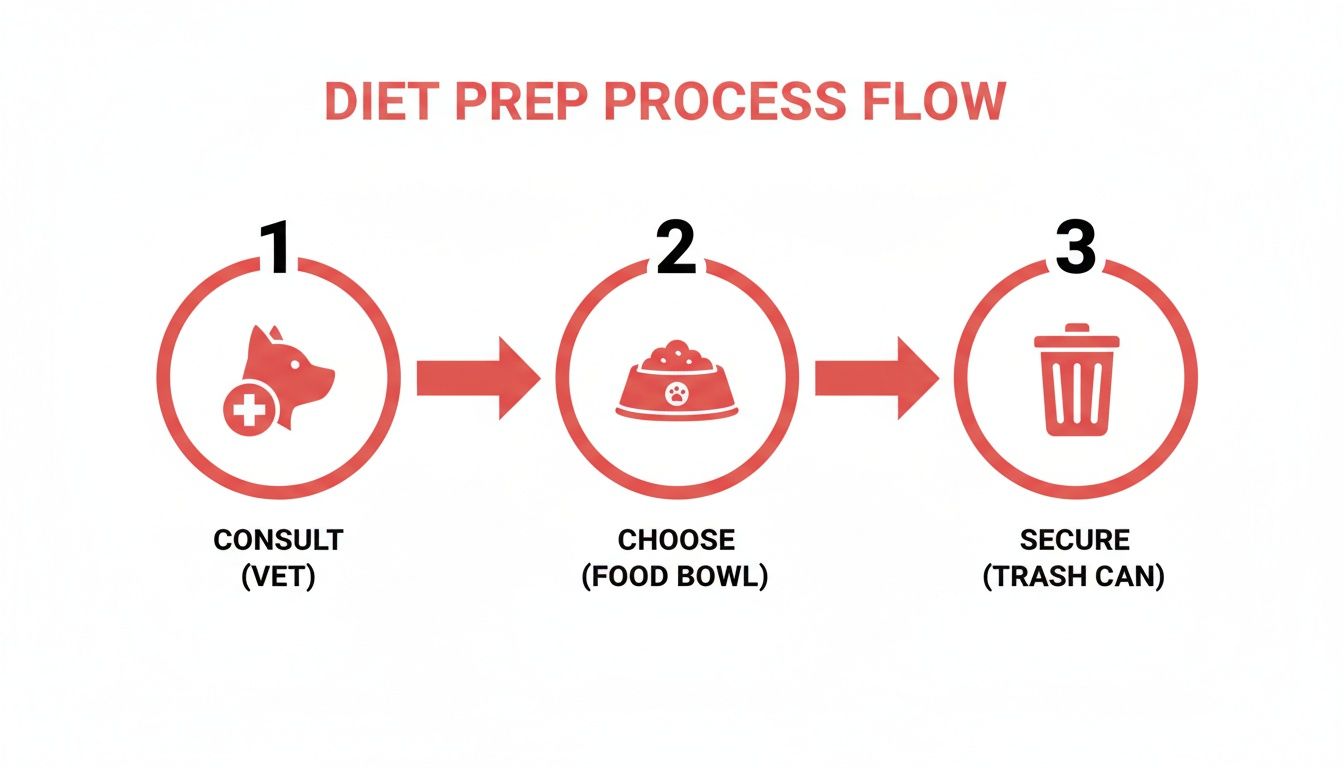
This isn't just a simple food swap; it's a controlled experiment. Following each step, from talking with your vet to securing your home, is crucial for the diet to actually work.
The First Few Weeks: The Transition Period
The first couple of weeks are all about easing your dog onto the new diet. Switching food cold turkey can cause major stomach upset, so you'll want to introduce the new food gradually over a 7-10 day period. Just start by mixing a little of the new food in with the old, slowly increasing the new and phasing out the old each day.
Your main job right now is just to observe. Don’t expect miracles overnight, especially with skin problems. Tummy troubles might clear up fairly quickly, but skin inflammation takes a lot longer to calm down. For now, just focus on making sure your dog is eating the new food and that you’ve locked down every other possible food source.
Weeks Three to Five: Seeing the First Signs of Success
Once you hit the three-to-five-week mark, you might just start to see that first glimmer of hope. This is often when real, noticeable improvements start to show up. For many dogs, the constant scratching finally begins to ease up, and that angry, red skin starts to look a little calmer.
In fact, studies show that about 50% of dogs see a significant reduction in skin issues after just three weeks on a strict diet. By the five-week mark, that number jumps to an encouraging 85%. Keep that in mind when you're feeling a bit frustrated—you're getting close.
Keep Your Eyes on the Prize: If you're feeling overwhelmed, remember why you're doing this. The goal isn't just to stop the itching for a few weeks. It's to find the root cause so you can give your dog a lifetime of comfort.
Mastering the Art of Symptom Tracking
You can't manage what you don't measure. Keeping a detailed daily journal is absolutely non-negotiable during this phase. It turns your "I think he's less itchy" feelings into hard data that you and your vet can actually use. Trust me, your memory will fail you, but a written log tells the real story.
Your journal doesn't have to be fancy. A simple notebook or a spreadsheet works just fine.
What to Track Daily:
- Itch Level (1-10 Scale): Give a daily score for scratching, licking, and chewing. Is it a 1 (no itching) or a 10 (frantic, non-stop scratching)?
- Skin Condition: Make notes on any redness, rashes, hot spots, or ear gunk. Are things getting better, worse, or staying the same?
- Stool Quality (1-5 Scale): Use a fecal scoring chart to track consistency. A score of 1 is hard pebbles, and 5 is liquid. You're aiming for a consistent "2" or "3."
- Energy and Mood: Is your dog more playful? Or are they acting lethargic? Changes in behavior are a subtle but important clue.
- Accidents: Be honest and log any time your dog ate something they shouldn't have, no matter how small.
This data gives you an objective way to see if the diet is working. Plus, you’ll have a crystal-clear baseline to compare against when you start the reintroduction phase later.
Avoiding Accidental Contamination
Accidental exposure is the number one reason these diets fail. The world is full of hidden ingredients, and you have to become a food detective to protect the integrity of your trial.
Here are the most common culprits that can sabotage all your hard work:
- Flavored Medications: Many chewable meds—including common flea, tick, and heartworm pills—are flavored with beef or chicken. Ask your vet for an unflavored tablet or a topical version instead.
- Toothpaste: You'd be surprised! Some dog toothpastes have poultry or beef flavoring. Switch to a plain, unflavored one for now.
- Food Scraps: That piece of cheese your toddler dropped? The single noodle that fell on the floor? Either can be enough to trigger a reaction and ruin your results.
- Shared Spaces: If you have other pets, they absolutely must be fed in a separate, closed-off room. Pick up all their food bowls immediately after they finish so your trial dog can't sneak a lick.
This level of vigilance feels demanding, I know. But it's temporary. The clear answers you'll get are more than worth the short-term hassle. Stick with it—you're on the path to a much happier, healthier dog.
Uncovering the Culprits with the Reintroduction Challenge

So, your dog’s frantic scratching has finally stopped. The chronic ear infections have cleared, and the digestive issues are a thing of the past. After weeks of being incredibly strict with the elimination diet, you've finally reached a healthy, symptom-free baseline. This is a huge win, but the real detective work is just about to begin.
Now we head into the reintroduction challenge, which is honestly the most important part of this whole process. This is where you’ll systematically add back ingredients from their old diet to figure out exactly what’s causing all the trouble. It requires the same patience and eagle-eyed attention you’ve been practicing. It's so tempting to rush this part, but a slow, careful approach is the only way to get the clear answers your dog needs.
The Golden Rule of Reintroduction
There is one non-negotiable rule here: you must reintroduce only one single ingredient at a time. This is absolutely critical. If you add back chicken and wheat together and your dog starts itching again, you have no idea which one was the problem, and all that hard work goes right out the window.
Here’s how you do it:
- Pick one ingredient. A great place to start is with a common protein from their old food, like chicken.
- Add a small amount. Give a small piece of plain, cooked chicken with their special diet food once a day. No seasonings, no oils, nothing extra.
- Watch and wait. Keep feeding this one new ingredient for 7 to 14 days.
- Record everything. Stay on top of your daily journal, just like you did before. Be on the lookout for any return of itching, paw licking, head shaking, or tummy troubles.
If a full two weeks go by without any reaction, you can probably consider that ingredient "safe." You'll then stop feeding the chicken, go back to just the baseline diet for a few days to make sure they're still clear, and then pick the next single ingredient to test, like beef or wheat.
Recognizing and Responding to a Flare-Up
A "flare-up" doesn't always show up as a five-alarm fire. It can be sneaky, which is why that daily symptom journal is your best friend. A reaction might pop up within a few days, but sometimes it can take almost two weeks to appear.
Common signs of a flare-up include:
- An increase in the itch score you've been tracking.
- The return of head shaking or ear scratching.
- Redness on the paws, belly, or around the muzzle.
- A change in poop quality, going from firm to soft.
- More gas or stomach gurgling.
If you spot any of these signs, you've found a trigger. The second you confirm a reaction, immediately stop feeding the new ingredient and go back to the strict elimination diet. The symptoms should clear up again in a few days to a week. Make a big note in your journal that the ingredient is a "no-go" and get your dog back to their happy baseline before testing anything else.
The success of this phase hinges on how well the elimination phase went. A comprehensive review of studies found that after 5 weeks on an elimination diet, 85% of dogs were back to normal, and that number jumped to 95% by the 8-week mark. This really shows why a solid, symptom-free baseline is so crucial before you start reintroducing foods. You can read more in the full analysis on dog elimination diet success rates.
A Smart Order for Testing Ingredients
While you can technically test ingredients in any order, being strategic will get you clearer answers, faster. It makes the most sense to start with the usual suspects in dog food allergies.
A logical sequence looks something like this:
Common Proteins: Start with the most popular animal proteins.
- Chicken
- Beef
- Lamb
- Dairy (like a small bit of plain yogurt or cottage cheese)
- Egg
Common Grains and Carbs: Once you're through the main proteins, move on to grains and starches.
- Wheat
- Corn
- Soy
- Rice
Other Potential Culprits: If you've tested the big ones and still suspect something else, look at other ingredients from their old food or treats.
- Fish (like salmon)
- Specific veggies (peas or carrots)
- Food additives or preservatives (if you can identify them)
- Seek out limited-ingredient diets that clearly state a single protein and a single carbohydrate source.
- Steer clear of labels with generic phrases like "meat by-products" or "animal derivatives," as you have no idea what protein is actually in there.
- Be extra cautious with ingredients like "animal fat." It could easily be sourced from an animal your dog is sensitive to, like chicken or beef.
- Environmental allergies (like pollen, dust mites, or mold)
- Flea allergy dermatitis
- Other underlying skin conditions
- Add a splash of warm water to create a "gravy" and release more of the food's aroma.
- Gently warming the food in the microwave for a few seconds can also make it more enticing.
By following this methodical process, you shift from being a worried owner to an empowered advocate for your dog's health. You're slowly and carefully uncovering each and every trigger, gathering the exact information you need to build a long-term diet that will keep your best friend happy and comfortable for years to come.
Creating Your Dog's Long-Term Wellness Plan
You’ve made it through the toughest part—the elimination diet is done, and you finally have some answers. Congratulations! This knowledge is the key to your dog's future health and happiness. The whole point wasn't to restrict their diet forever but to figure out what works so you can build a sustainable, nourishing life for them, free from all that itching and stomach upset.
Now, it's time to use what you've learned to create a permanent feeding strategy. You'll be moving away from the temporary diagnostic diet to a long-term commercial or home-cooked plan that completely dodges the specific ingredients you identified as triggers. This is where you really get to take control of your dog's well-being.
From Diagnosis to Daily Diet
Armed with your list of "safe" and "unsafe" foods, you can finally shop for a new food with confidence. Whether you go with a commercial kibble, a canned diet, or a home-prepared plan you've worked on with your vet, the golden rule is simple: avoid the triggers at all costs.
If you're heading down the commercial food aisle, get ready to become a pro at reading labels. Food manufacturers can be surprisingly tricky, hiding problematic ingredients behind confusing or vague terms.
This is the kind of careful attention that will prevent frustrating flare-ups and keep your dog feeling great.
Becoming a Master Label Detective
Learning to read an ingredient panel is a skill that will serve you and your dog for years. Hidden allergens are one of the top reasons a dog's symptoms mysteriously reappear even after a successful elimination diet.
For instance, a "lamb and rice" formula sounds safe on the surface, right? But a closer look at the fine print might show it’s preserved with chicken fat. Cross-contamination at the manufacturing plant is another big issue. This is why sticking with veterinary therapeutic diets or brands known for their incredibly strict quality control is often a much safer bet for the long haul.
Key Takeaway: Your job title is officially changing from investigator to guardian. Spending a few extra minutes reading every single label—for food, treats, and even supplements—will save your dog from weeks of misery.
Supporting Overall Wellness and Resilience
A successful elimination diet is about so much more than just avoiding problem foods. It’s a chance to build a truly resilient, healthy dog from the inside out. Now that their body isn't constantly fighting inflammation, you can focus on bolstering their overall health.
Think about things like maintaining a healthy gut with vet-approved probiotics or supporting their skin barrier with omega-3 fatty acids. Plenty of exercise and mental stimulation are also part of the puzzle. For a well-rounded approach, you can weave foundational dog care advice into their daily life alongside their new diet.
By building these healthy habits, you create a safety net that makes them less vulnerable to other issues down the road. You’ve done the hard diagnostic work; now it’s time to enjoy the reward: a happy, thriving best friend.
Got Questions About the Elimination Diet? You're Not Alone.
Starting an elimination diet with your dog can feel like you're trying to solve a complex puzzle, so it's completely normal for questions to pop up. Think of this as the troubleshooting phase of your investigation—getting clear answers now can save you from making a mistake that sets you back weeks.
Every detail matters in this controlled experiment. Let's walk through some of the most common questions and concerns that come up.
"What If My Dog's Symptoms Don't Improve at All?"
This is probably the biggest worry for most pet parents, but here's a different way to look at it: a lack of improvement is actually a very clear answer. If you've been 100% strict for a full eight weeks and see absolutely no change in your dog’s itching or tummy troubles, the diet has done its job perfectly. It’s telling you that food probably isn't the root cause.
Instead of feeling discouraged, you've just uncovered a huge clue. This result means it's time to pivot and work with your vet to explore other common culprits, such as:
You haven't failed. You’ve successfully eliminated a major variable, which is a massive step forward in finding what’s truly bothering your dog.
"Can I Give My Dog Supplements During the Trial?"
The short answer here is a firm no—unless your vet has explicitly approved it. During the strict elimination phase, it's crucial to pause nearly all supplements, flavored medications, and of course, all treats. Why? Because so many of these products have hidden ingredients that could completely throw off your results.
Flavorings, binders, herbs, and even the gelatin in capsules can contain the exact proteins you’re trying to avoid. That "healthy" fish oil supplement could be the very thing causing a reaction if your dog is sensitive to fish.
The whole point is to create a clean slate. Any unapproved substance, no matter how beneficial it seems, adds a variable that could ruin your hard work and force you to start over.
Always talk to your vet about essential medications. They can often find unflavored versions or even topical alternatives that won't interfere with the diet trial. Once you know what your dog's triggers are, you can absolutely bring back high-quality, safe supplements to support their health.
"How Long Until I See Real Results?"
Patience is probably the hardest part of an food elimination diet for dogs. It’s so tempting to look for a miracle cure overnight, but your dog's body needs time to cool down and heal from the inside out. The timeline for seeing results really depends on your dog’s specific symptoms.
If you're dealing with gastrointestinal issues like chronic diarrhea, you might see a noticeable difference in just one or two weeks. The gut tends to respond fairly quickly once an irritating food is removed.
Skin problems, on the other hand, are a slow-burn. The inflammation is deep in the skin layers and takes much longer to resolve. Studies show that about 50% of dogs with skin allergies show improvement within three weeks, but that number jumps to over 85% by the five-week mark. This is exactly why vets stress the importance of sticking it out for the full trial duration to be certain.
"My Dog Hates the New Food. What Should I Do?"
This is a really frustrating but common roadblock. Before you panic, make sure you transitioned to the new food slowly, mixing it with the old stuff over a period of 7-10 days. A sudden switch is often too much for a picky eater.
If a slow transition isn't cutting it, you can try a few tricks to make the food more appealing without breaking the rules.
Whatever you do, don't give in and add your own tasty toppers—that will completely defeat the purpose of the diet. If your dog is still on a hunger strike, it’s time to call your vet. They can suggest another brand of the same type of diet or recommend a different novel protein or hydrolyzed formula that your dog might actually enjoy.

Karolis is the Founder of FORMA, a pet wellness brand focused on longevity and daily nutrition for dogs. Writes about supplements, canine health, and helping pets live longer, healthier lives
Join thousands of pet parents getting science-backed health insights and natural care advice