Curcumin for dogs: Safe, science-backed guidance
Discover curcumin for dogs: science-backed benefits for joints and inflammation, and how to choose a safe, effective supplement for your pet.
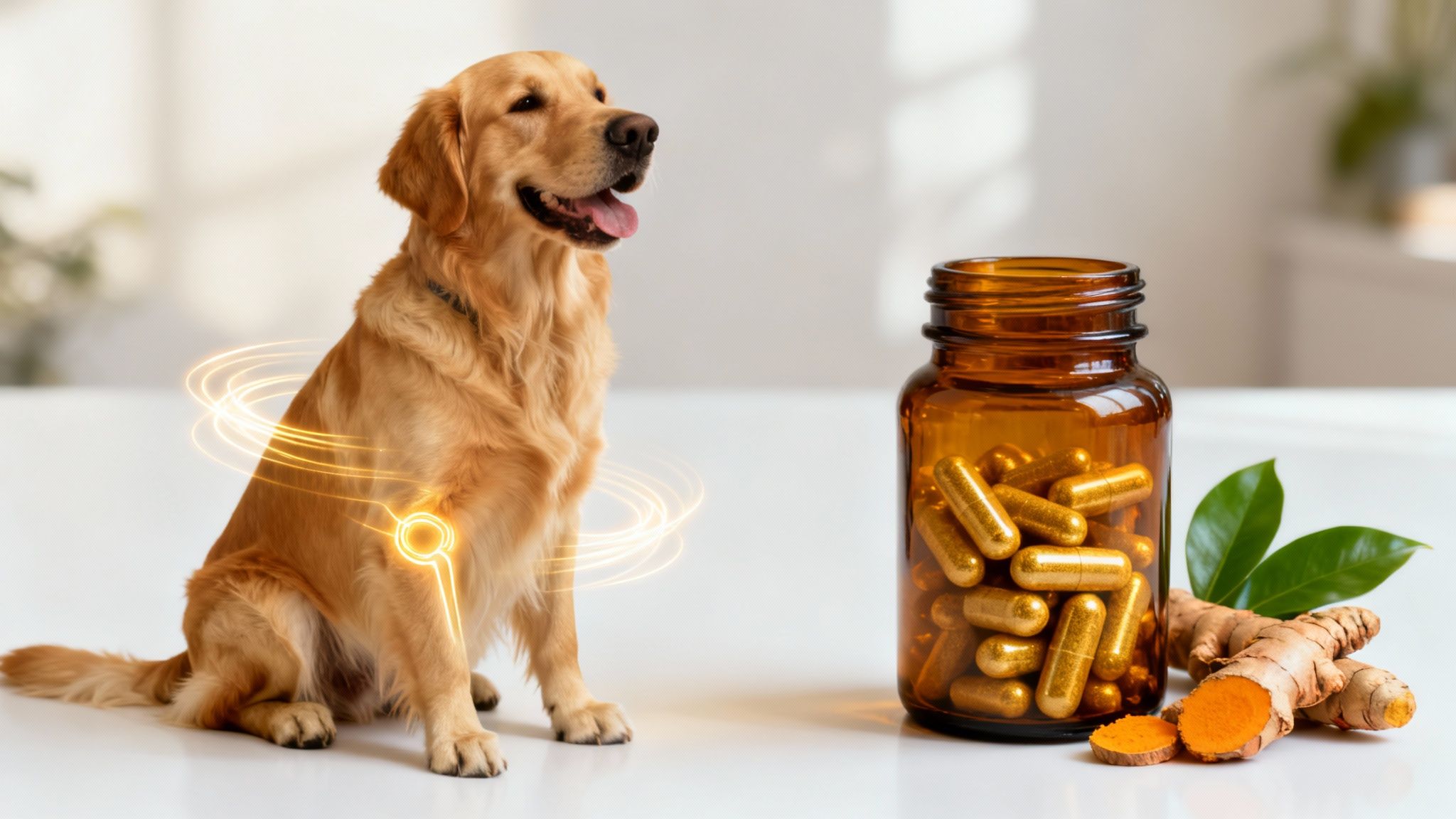
If you’ve ever looked for natural ways to support your dog’s health, you’ve probably come across curcumin. It's the powerhouse compound found in turmeric, celebrated for its powerful anti-inflammatory and antioxidant properties. Many pet owners use it to help with joint health, mobility, and general wellness, especially for their senior dogs.
The Golden Spice and Your Dog's Health
We all want our dogs to live happy, active lives. But it's tough to watch an older companion struggle with the stairs or see a younger pup seem stiff after a long run at the park. It’s only natural to search for safe and effective ways to keep them comfortable and full of life.
This is where that vibrant yellow spice, turmeric, and its star player, curcumin, enter the conversation. While you might know turmeric from your spice rack, its real magic comes from what's inside.
Turmeric Versus Curcumin
Let's clear up a common point of confusion. Think of turmeric as the whole orange, and curcumin as the vitamin C inside it. The turmeric root itself only contains about 2-5% curcuminoids (the family of active compounds curcumin belongs to).
This means just sprinkling turmeric powder on your dog's food isn't going to cut it. You'd need to use a huge amount to get any real therapeutic effect. That’s why quality supplements are designed to extract and concentrate the curcumin, delivering a potent, effective dose.
Curcumin is the primary active compound that gives turmeric its celebrated health benefits. Focusing on a curcumin supplement ensures your dog receives a consistent, therapeutic amount of this powerful ingredient.
Why It Matters for Your Dog
So, what does this actually do for our dogs? The buzz around curcumin is all about its ability to help manage the body's natural inflammatory response. This is a game-changer for:
- Aging Dogs: Supporting joint comfort and mobility as they get older.
- Active Dogs: Helping them recover after a big day of hiking, swimming, or playing.
- Overall Wellness: Protecting cells from the daily grind of oxidative stress, which contributes to long-term health.
To give you a quick overview, here's a snapshot of what curcumin can offer.
Curcumin for Dogs at a Glance
This guide is here to walk you through everything you need to know. We’ll dive into the science behind the benefits, explain why absorption is key, and give you clear guidelines on dosing. With this information, you can make an informed choice to support your best friend for years to come.
How Curcumin Actually Works in Your Dog

To really get why curcumin is such a big deal for dogs, we have to go beyond the basics and see what’s happening on a cellular level. The science might sound a little complicated, but it all comes down to two key jobs that curcumin does exceptionally well to support your dog’s health from the inside.
At its heart, curcumin is an incredible inflammation manager. It's crucial to remember that inflammation isn't always the bad guy. When your dog pulls a muscle after a spirited game of fetch, that immediate swelling and tenderness is a good thing—it’s the body's natural first-responder team rushing to the scene to start repairs.
Think of that helpful inflammation as a small, controlled campfire, bringing warmth and healing to the injured spot. The real trouble starts when that fire forgets to go out. That's chronic inflammation, and it’s like the campfire has erupted into a wildfire, causing persistent discomfort in joints and other parts of the body.
Taming the Inflammatory Fire
This is where curcumin comes in, acting like a savvy firefighter. It doesn't just show up and douse the entire area with water, because some of that "fire" is necessary for healing. Instead, it works strategically to get the blaze under control.
Curcumin helps regulate the specific proteins and enzymes that are fanning the flames of chronic inflammation. By dialing them down, it helps turn that wildfire back into a gentle, healing campfire. This is precisely why curcumin for dogs has earned its reputation for supporting joint health and mobility, particularly for older dogs or those who live an active lifestyle.
Curcumin helps modulate the body's natural inflammatory response rather than blocking it entirely. This allows the body to maintain its essential healing functions while preventing the damaging effects of chronic inflammation.
This targeted approach helps soothe stiffness and discomfort without the potential for harsh side effects that can come with some synthetic options. It works with the body's own systems, not against them. But that’s only half the story.
The Power of Antioxidant Protection
While it's busy managing inflammation, curcumin is also moonlighting as a powerful antioxidant. Every single day, your dog’s body is under attack from oxidative stress, which is caused by unstable little troublemakers called free radicals.
You can think of free radicals as tiny rust spots popping up on your dog’s cells. Over time, just like rust weakens metal, these molecules can damage cells, proteins, and even DNA. This cellular "rust" is a normal part of aging, but things like pollution, stress, and even some processed foods can speed up the process.
Curcumin is a fantastic rust-proofer, and it works in two clever ways:
- It directly neutralizes free radicals: Curcumin is great at hunting down these damaging molecules and stopping them in their tracks before they can cause any harm.
- It boosts the body's own antioxidant enzymes: This is arguably its most important trick. Curcumin actually signals the body to ramp up production of its own internal antioxidant defense force, building a stronger, more permanent shield against cellular damage.
This one-two punch of antioxidant power is fundamental to your dog's overall wellness. It helps protect their organs, supports healthy aging, and keeps their immune system in good shape. By defending cells from daily wear and tear, curcumin plays a vital role in their long-term vitality.
Ultimately, the real magic of curcumin is in this powerful combination. It’s calming the inflammatory fire while also polishing away cellular rust, offering a comprehensive way to support your dog’s comfort, health, and longevity.
What Science Says About Curcumin for Your Dog
It’s one thing to talk about how curcumin works on a cellular level, but what does that actually mean for your dog? It means seeing your older pup, who’s been stiff for months, jump up to greet you at the door again. The science is cool, but those real-world moments are what truly matter.
The benefits aren't just theoretical. They’re tangible, visible improvements in your dog's comfort and quality of life. From easing creaky joints to supporting their long-term health, curcumin offers a holistic way to help your best friend feel their best. Let's dig into what the research shows.
Soothing Stiff Joints and Improving Mobility
This is the big one. It's why most people first look into curcumin, and for good reason. Joint issues are incredibly common in dogs, whether they’re getting up there in years or are just a super-active breed. That nagging, low-level inflammation in their joints is what leads to stiffness, difficulty moving, and a sad reluctance to play.
Curcumin gets right to the heart of the problem by helping to manage the body’s inflammatory response. By calming the pathways that trigger that joint irritation, you might start to notice some really positive changes:
- Easier Mornings: Your dog might hop out of bed with a little more pep in their step, instead of that slow, careful stretch.
- Longer Walks: You could find your walks becoming more enjoyable again, with less lagging behind or needing to stop for breaks.
- More Playtime: A dog whose joints don't ache is a dog who’s more likely to chase that ball or wrestle with their buddies at the park.
A great way to think about it is that curcumin helps "oil" the joints from the inside. It’s not just covering up the discomfort; it's addressing the underlying inflammation that causes the stiffness in the first place.
And this isn't just for seniors! Active dogs and large breeds who put a lot of stress on their joints can benefit, too. It’s a great way to support healthy joint function throughout their entire lives.
Protecting Cells and Promoting Healthy Aging
Beyond the joints, curcumin’s power as an antioxidant offers a profound, body-wide benefit. Every day, our dogs are exposed to free radicals—think of them as tiny troublemakers that cause "cellular rust." Over time, this damage contributes to the aging process and can affect vital organs like the heart, liver, and brain.
Curcumin acts like a cellular bodyguard. It not only neutralizes these free radicals directly but also helps boost your dog’s own built-in antioxidant defenses. This dual-action protection helps keep cells strong and functioning properly, which is the very foundation of good health. A dog with well-protected cells is simply better prepared to handle the stresses that come with aging.
The research here is really promising. Studies have shown curcumin can make a measurable difference in a dog's health. One found that daily supplementation led to a significant jump in their antioxidant capacity. Another showed that dogs eating curcumin-enriched snacks had lower levels of biomarkers linked to inflammation and oxidative damage. It's solid evidence that it helps kickstart their natural defense systems. You can read more in the full study about curcumin's antioxidant effects on dogs.
New Insights on Gut and Immune Health
The gut-immune connection is a hot topic in canine health, and curcumin is starting to show some real potential here. A healthy gut is crucial—it's where nutrients are absorbed and it acts as a gatekeeper, blocking out harmful stuff.
When the gut becomes inflamed, that delicate balance gets thrown off, leading to digestive issues and a weaker immune system. Since about 70% of a dog's immune system is located in their gut, keeping it happy is key to their overall resilience.
Curcumin’s calming properties can help maintain a balanced inflammatory response right in the digestive tract, fostering a healthier gut environment. A healthy gut, in turn, allows the immune system to do its job effectively. While we’re still learning more, this link highlights yet another way curcumin contributes to your dog’s total well-being.
The takeaway is clear: curcumin offers more than a quick fix. It provides a foundational support system that helps manage inflammation, protect cells, and promote the very functions that let your dog live a more comfortable, vibrant, and energetic life.
Why Most Turmeric Supplements Fail Your Dog
Here’s a hard truth every dog owner needs to hear: it’s not what your dog eats that counts, but what their body actually absorbs. You could be giving your best friend a supplement loaded with curcumin, but if their system can't use it, you're essentially throwing your money away. This is the single biggest roadblock with curcumin.
Plain curcumin powder has notoriously low bioavailability. Think of it like trying to water your garden with a leaky hose—most of the water spills out before it ever reaches the plants. The same thing happens in your dog's gut. The curcumin molecule is big, clunky, and doesn't dissolve well, so most of it just passes right through without ever entering the bloodstream to do its job.
This is exactly why sprinkling a bit of turmeric from your spice rack onto your dog’s dinner just doesn’t work. The tiny amount of curcumin in there isn't absorbed well enough to make a real difference. It's a frustrating problem, but understanding it is the first step to finding a supplement that delivers real results.
The Key to Unlocking Curcumin’s Power
So, how do we patch up that leaky hose? Thankfully, smart formulators have figured out how to solve the absorption puzzle. Instead of leaving the curcumin molecule to fend for itself, they pair it with a "buddy" that helps escort it into the body.
Imagine curcumin is a VIP trying to get into an exclusive club (your dog's bloodstream). By itself, the bouncer (the intestinal wall) isn't letting it in. But when the VIP shows up with a trusted friend, they get waved right through the velvet rope. That’s exactly what these advanced delivery systems do.
Two of the most common and effective methods you’ll see are:
- Phytosomes: This clever tech binds the curcumin to a phospholipid (a type of fat). Since our cell membranes are made of fats, the body easily recognizes this little package and welcomes it inside.
- Piperine: This is the active compound in black pepper. It works by temporarily slowing down liver enzymes that would normally break down curcumin too quickly, giving it more time to be absorbed.
These methods act as both a shield and a taxi service, ensuring the curcumin survives its journey through the digestive system and gets to where it needs to go.
A Difference You Can Actually Measure
This isn't just marketing fluff; the science is solid. These enhanced delivery systems make a massive difference in how much curcumin your dog’s body can actually use. In fact, these modern formulation techniques have been a game-changer for canine wellness.
For instance, studies show that certain phytosome formulas can boost curcumin’s bioavailability by an incredible 29 times compared to standard extracts. Another study on beagle dogs found that a specific curcumin-phospholipid complex improved absorption by over 200%. You can dive deeper into the research in this scientific review on canine mobility and health.
This is precisely why picking the right supplement is so critical. A product with high bioavailability means your dog gets all the benefits from a much smaller and safer dose.
The Takeaway: A curcumin supplement's effectiveness is less about the amount of curcumin listed on the bottle and more about how much your dog can actually absorb. Always look for a product that clearly states it uses an enhanced absorption technology.
The image below shows the key areas where properly absorbed curcumin can go to work supporting your dog's health.
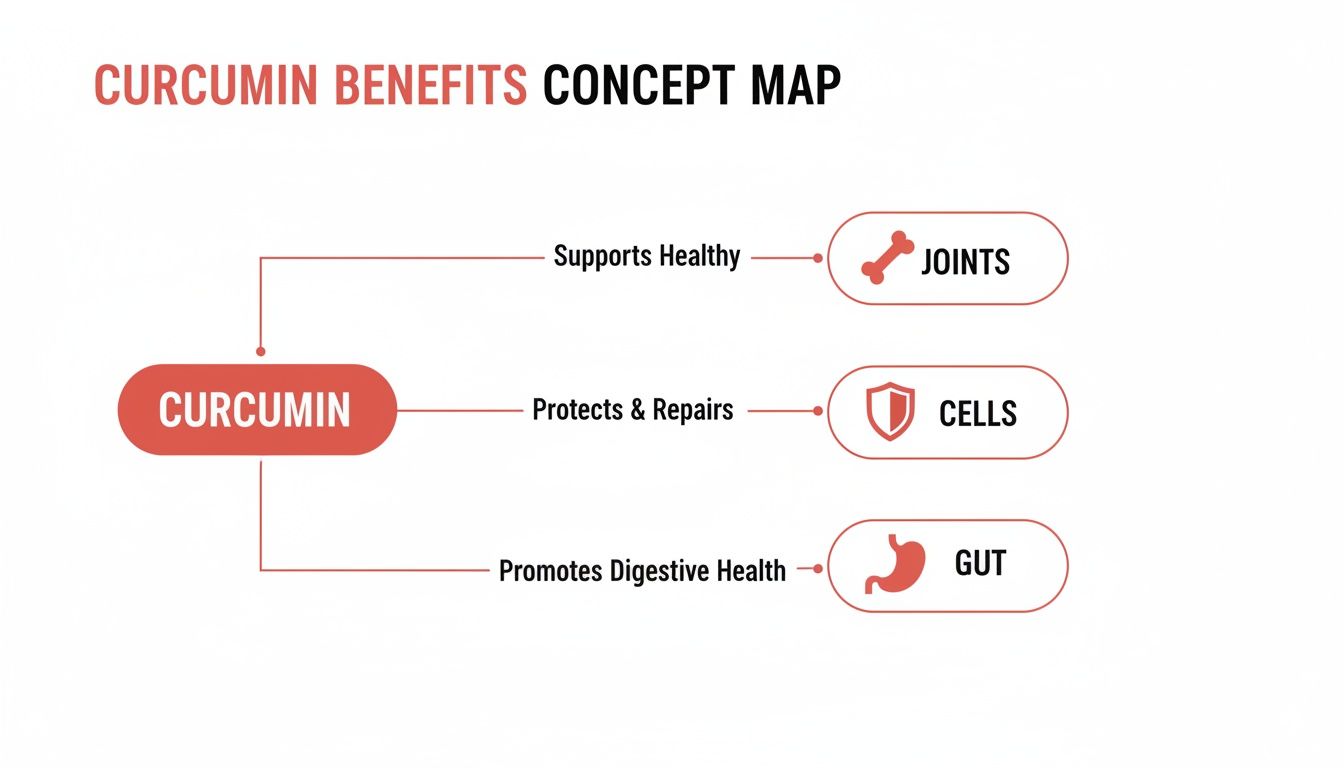
This highlights how a bioavailable form of curcumin offers targeted support for your dog's joints, cells, and digestive system. Without proper absorption, these amazing benefits stay locked away, completely out of reach.
Finding the Right Curcumin Dosage for Your Dog
Figuring out how much curcumin to give your dog is probably the most important step in making sure it’s both safe and effective. This isn’t like a prescription drug with a hard-and-fast dosage. Getting the amount right for a supplement like curcumin takes a bit more of a personal touch.
So, how much is enough? Well, it depends. The biggest factors are your dog's weight and size, but their specific health needs are just as important. An older dog dealing with a lot of joint stiffness might need more support than a young, spry dog taking it for general well-being.
And here's a crucial piece of the puzzle: the bioavailability of the supplement itself. A high-quality formula that your dog's body can actually absorb well will require a much smaller dose than a cheaper, less bioavailable one. This is exactly why you need to read and follow the manufacturer's guidelines—they’ve set their recommendations based on how their specific product works.
Start Low and Go Slow
Whenever you introduce something new into your dog's diet, the smartest and safest way to do it is with the "start low and go slow" approach. This simple method gives your dog's body a chance to get used to the new supplement and lets you keep a close eye out for any sensitivities.
For instance, you could start with just half the recommended dose for your dog's weight and stick with that for the first week. If everything looks good and your dog is handling it well, you can then bump it up to the full recommended amount. It’s a cautious strategy that really minimizes the risk of an upset stomach and helps you find that perfect dose for your individual dog.
Your veterinarian is your best partner on your dog's health journey. Before you start giving curcumin or any new supplement, have a chat with them. They can make sure it’s the right move for your dog and won't mess with any other medications or health conditions.
Honestly, this professional advice is non-negotiable. Your vet knows your dog's full health history and can give you tailored guidance, which provides the ultimate peace of mind.
General Dosing Guidelines
While the product label and your vet's advice should always be your final say, some general guidelines can give you a solid starting point for that conversation. These are typically based on body weight.
For a high-quality, bioavailable curcumin supplement, a common starting point is around 5-20 mg of curcumin per 10 pounds of body weight each day.
Let’s see what that looks like in practice:
- For a 30-pound dog: You'd be looking at a starting range of 15-60 mg per day.
- For a 70-pound dog: That range would be about 35-140 mg per day.
Remember, this is just a general framework. The exact milligram amount really hinges on the specific supplement you're using. A more potent, easily absorbed formula will likely be on the lower end of that scale, while a less concentrated one might be on the higher end.
Watching for Potential Side Effects
Curcumin is considered very safe for dogs, but just like anything new you add to their diet, it can sometimes cause minor side effects. This usually only happens if the dose is too high or if you introduce it too quickly.
The most common thing you might see is a bit of digestive upset. Keep an eye out for:
- Loose stool or diarrhea
- Vomiting
- Gas
These symptoms are almost always temporary and tend to go away if you simply lower the dose or take a short break from the supplement. If you spot any of these signs, it's best to stop giving it and check in with your vet. By starting low, going slow, and keeping your vet in the loop, you can safely add curcumin for dogs to their wellness plan.
Choosing a Supplement That Actually Works
Walking down the supplement aisle can be dizzying. Every bottle seems to promise a miracle, but how do you know which one will actually help your dog? Now that you understand the biggest hurdle with curcumin—absorption—you have the secret decoder ring to find a great product.
It’s not about flashy labels or fancy marketing. It's about looking for a few key things that prove the product is the real deal.
First and foremost, check for an enhanced delivery system. This is the non-negotiable part. Scan the label for phrases like "enhanced bioavailability," "phytosome," or "phospholipid complex." This tells you the company has solved the absorption problem, ensuring the curcumin can get into your dog’s system to do its job instead of just passing right through.
Read the Ingredient Label Carefully
Once you've confirmed the formula is designed for absorption, it's time to play detective with the ingredient list. A good supplement has nothing to hide; the label should be clear and transparent.
Here's what you're looking for:
- A Clear Curcumin Amount: The label needs to specify the exact milligram (mg) amount of curcuminoids. "Turmeric powder" isn't enough—that doesn't tell you how much of the active compound you're actually getting.
- No Unnecessary Fillers: Steer clear of products packed with artificial colors, flavors, preservatives, or vague "proprietary blends." When it comes to supplements for your dog, simpler is almost always better.
- Dog-Specific Formulation: This is critical. Never, ever give your dog a human curcumin supplement. Many contain ingredients like xylitol, which are harmless to us but can be fatally toxic to dogs.
Look for Proof of Quality
A company can say anything it wants on its label, but the best brands prove it. They go the extra mile to have their products verified for safety and potency.
The gold standard here is third-party testing. This means an independent lab, with no skin in the game, has tested the supplement to confirm it contains what the label claims and is free from nasty contaminants like heavy metals, pesticides, or microbes.
This external stamp of approval gives you peace of mind. Brands that invest in this level of quality control are usually proud of it, so look for a certificate of analysis (COA) or a mention of their testing practices on their website.
Finally, a well-thought-out supplement will have clear, easy-to-follow dosage instructions based on your dog's weight. Vague directions are a major red flag. By following this simple checklist, you can confidently pick a curcumin supplement that will truly support your dog’s health and well-being.
Got Questions About Curcumin for Dogs? We’ve Got Answers.
When you start looking into supplements for your dog, it's natural for a bunch of questions to pop up. Let's clear up some of the most common ones so you can feel confident about giving your dog curcumin. We'll tackle everything from using kitchen spices to how long it takes to see results.
Can I Just Sprinkle Some Turmeric from My Spice Rack on My Dog's Food?
That's a great question, and one I hear all the time. But the short answer is no, and here's why. The turmeric you use for cooking is mostly just ground-up root; it contains very little of the good stuff, curcumin, which is the active compound. We're talking only about 2-5%.
Even more importantly, plain turmeric isn't easily absorbed by your dog's body. So, even the tiny amount of curcumin present won't actually get into their system to do any good. Plus, spices for humans aren't tested for pet safety and can sometimes contain contaminants. A professionally made supplement designed for dogs is always the safer, more effective route.
It all comes down to absorption. A quality curcumin supplement for dogs is specifically designed to get the active ingredient into the bloodstream where it can work its magic. Your kitchen turmeric just can't do that.
How Long Will It Take to See a Difference in My Dog?
When it comes to natural supplements, think marathon, not sprint. Curcumin isn't an overnight fix; it's about building up a foundation for long-term health. For something noticeable like joint stiffness, some pet parents see their dogs moving more freely and comfortably within a few weeks of daily use.
But the real power of curcumin lies in its antioxidant benefits, which work quietly behind the scenes to support your dog’s health at a cellular level. To get the best results, you need to be consistent. Making it a daily habit allows those protective effects to accumulate and really contribute to your dog's overall vitality.
Are There Any Dogs Who Shouldn't Take Curcumin?
While curcumin is very safe for most dogs, it's not a one-size-fits-all solution. This is exactly why chatting with your vet before starting any new supplement is so crucial. They know your dog's health history inside and out.
It's best to be cautious or avoid curcumin altogether if your dog:
- Has gallbladder issues: Curcumin can stimulate bile flow, which could worsen certain conditions.
- Is about to have surgery: It can have a mild blood-thinning effect, so it’s best to stop giving it a couple of weeks before any procedure.
- Takes certain medications: It could potentially interact with other anti-inflammatory drugs (NSAIDs) or blood thinners.
Your vet is your best partner in this. They can give you advice tailored specifically to your dog, making sure that adding curcumin to their routine is a safe and smart choice for your best friend.

Karolis is the Founder of FORMA, a pet wellness brand focused on longevity and daily nutrition for dogs. Writes about supplements, canine health, and helping pets live longer, healthier lives
Join thousands of pet parents getting science-backed health insights and natural care advice