Dog Bone Broth A Simple Guide to This Superfood
Discover the benefits of dog bone broth for joints, gut health, and immunity. Learn how to make it, what to buy, and how to serve this powerful superfood.
So, you've probably heard the buzz about bone broth. It’s not just a trend for humans anymore; it’s become a go-to for dog owners looking to give their companions an extra wellness boost. But what exactly is it?
Simply put, dog bone broth is a rich, nutrient-packed liquid made by slowly simmering animal bones and connective tissues. Think of it less like a soup and more like a concentrated health supplement. It’s packed with easily digestible collagen, minerals, and amino acids that support your dog’s health from the inside out.
Why Is Everyone Talking About Dog Bone Broth?
The recent surge in popularity isn't just a fad. It's part of a bigger movement where we, as dog owners, are looking for more natural and proactive ways to keep our pets healthy for the long haul.
This demand for better nutrition has shaken up the pet food market. The global pet bone broth industry was valued at $185 million and is expected to hit $445 million by 2033. That’s a huge jump, and it shows just how many of us are searching for high-quality, functional foods for our dogs. You can find more details on this growth in a report from MarketIntelo.
More Than Just Soup Stock
It's easy to wonder, "Can't I just give my dog the chicken broth from my pantry?" The answer is a firm no, and the reasons come down to how it's made and what’s inside.
The key differences between a true bone broth and a standard cooking stock are pretty stark when you look closer.
Bone Broth vs Regular Stock at a Glance
This table breaks down the main distinctions at a glance, so you can see why one is a nutritional powerhouse and the other is just a flavor-enhancer.
As you can see, it's the long, slow simmer that makes all the difference. It takes 24 hours or more to gently break down the bones and cartilage, pulling out all those amazing compounds like collagen, gelatin, and glucosamine.
Standard stock, on the other hand, is cooked for just a few hours. While it’s fine for our soups, it just doesn’t have the time to develop that deep, restorative nutrient profile. And most importantly, commercial stocks often contain ingredients like onions, garlic, and tons of salt that are toxic for dogs.
At its heart, dog bone broth is a hydrating, restorative supplement. It’s a simple way to add foundational nutrients that support everything from joint mobility to a healthy gut, making it a true cornerstone of holistic pet care.
What Makes Bone Broth So Good for Dogs?
Bone broth isn't just a tasty treat to pour over your dog's kibble—it's a powerhouse of nutrients that can genuinely support their health from nose to tail. Think of it as a super-hydrating, easy-to-digest soup that extracts all the good stuff hidden inside bones and connective tissues.
The secret is in the slow-simmering process. This gentle cooking method breaks down tough tissues, releasing a potent mix of compounds that would otherwise be locked away. These ingredients work together to do everything from lubricating stiff joints to calming a rumbly tummy, making it a simple yet effective addition to your dog's daily routine.
For Happier Hips and Joints
One of the main reasons people start giving their dogs bone broth is for joint support. If you have an older dog or a breed known for joint problems, keeping them comfortable and mobile is a huge priority. This is where bone broth really delivers.
It’s naturally loaded with collagen, glucosamine, and chondroitin, which are the fundamental building blocks of healthy cartilage and connective tissue.
- Collagen: This is the protein that literally holds joints together, giving them structure and flexibility.
- Glucosamine and Chondroitin: These two work to lubricate the joints and act as shock absorbers, cushioning them with every step and jump.
Collagen is the real star here. Its ability to improve joint health has been a game-changer for dogs, especially those dealing with conditions like elbow dysplasia. Studies in both humans and pets have shown that consuming collagen helps, which is why it's popping up in so many pet foods. This trend has even caught the eye of market analysts, as you can see in these market insights from Fortune Business Insights. Simply adding a splash of bone broth to their bowl gives them a daily dose of these joint-protecting nutrients.
To Soothe the Gut and Aid Digestion
A happy dog starts with a happy gut. Their digestive system does more than just process food; it’s central to their immune system and even affects their mood and skin. Bone broth is a remarkably gentle way to keep their digestive tract running smoothly.
The key player for gut health is gelatin, which is what collagen becomes when it’s cooked. Gelatin works by coating and soothing the lining of the gut. Imagine it patching up microscopic leaks in a hose—it helps ensure that only the good stuff gets absorbed.
This protective layer can calm irritation, strengthen the gut wall against toxins, and make meals easier to digest for dogs with sensitive stomachs. Another important amino acid, glycine, also pitches in by helping to reduce inflammation in the gut.
To Strengthen Their Immune System
A robust immune system is your dog's best defense against getting sick. The minerals and amino acids packed into bone broth provide the raw materials needed to keep their internal army strong and ready.
For starters, bone broth is a great natural source of minerals like magnesium, phosphorus, and calcium. But it also delivers powerful amino acids like arginine and glycine, which have anti-inflammatory effects that help the body manage stress and fight off bugs. By nourishing your dog on a deep, cellular level, bone broth helps keep their immune system primed and responsive.
This makes it a fantastic supplement for a dog recovering from an illness or just to give them an extra boost during seasonal changes. It’s a simple, natural way to help them stay healthy and resilient.
How to Make Homemade Dog Bone Broth Safely
There’s something really satisfying about making your dog’s bone broth from scratch. You get total control over every single ingredient, and honestly, it’s much simpler than it sounds. Plus, the slow, gentle simmer will make your whole house smell amazing. Best of all, you know for sure that your dog is getting pure, nutrient-rich goodness without any nasty additives.
Whipping up this "liquid gold" only takes three things: good quality bones, water, and a little bit of apple cider vinegar. Don’t skip the vinegar! Its acidity is the secret sauce that helps pull all the valuable collagen, glucosamine, and minerals out of the bones and connective tissues.
Choosing Your Ingredients Safely
The heart and soul of any great bone broth is, you guessed it, the bones. The better your ingredients, the more nutritious the final product will be.
- Pick High-Quality Bones: Whenever you can, look for bones from grass-fed, pasture-raised, or organic animals. Beef marrow bones, chicken feet, turkey necks, and lamb knuckles are all fantastic choices.
- Add Apple Cider Vinegar: Just a tablespoon or two is all you need to help unlock and extract the maximum amount of nutrients during that long simmer.
- Filter Your Water: Using filtered water is a simple way to make sure your broth is clean and free from any impurities that might be lurking in tap water.
Knowing what to put in is important, but knowing what to leave out is critical. Many ingredients we use every day are actually toxic to dogs.
Safety First: Never, ever add onions, garlic, salt, or other seasonings to your dog's bone broth. These can be incredibly harmful, even toxic, to dogs and must be avoided.
Simple Steps for Stovetop or Slow Cooker
Whether you prefer a big stockpot on the stove or a slow cooker, the method is pretty much the same. The magic happens with a low and slow simmer for at least 24 hours.
- Place Bones in Pot: Lay the bones in the bottom of your stockpot or slow cooker. Make sure not to pack them in too tightly—you need plenty of room for water.
- Add Water and Vinegar: Pour in enough filtered water to cover the bones by about two inches. Then, add one or two tablespoons of raw apple cider vinegar.
- Simmer Gently: Bring everything to a boil, then immediately turn the heat down to the lowest possible simmer. If you're using a slow cooker, just set it to low. Let it bubble away gently for 24-48 hours, topping it off with more water as needed to keep the bones submerged.
- Strain the Broth: After the simmering is done, let the broth cool down a bit. Carefully strain it through a fine-mesh sieve to catch all the bone fragments and solids. Remember, never feed your dog cooked bones, as they become brittle and can splinter, causing serious injury.
- Cool and Store: Pop the broth in the fridge to cool completely. A layer of fat will rise to the top and solidify—you can just skim this off and toss it. The perfect broth will have a jiggly, gelatin-like consistency when it's cold. That jiggle is the sign of a fantastic, collagen-rich batch!
This infographic gives you a great visual of how those key nutrients from bone broth get to work supporting your dog's joints, gut, and immune health.
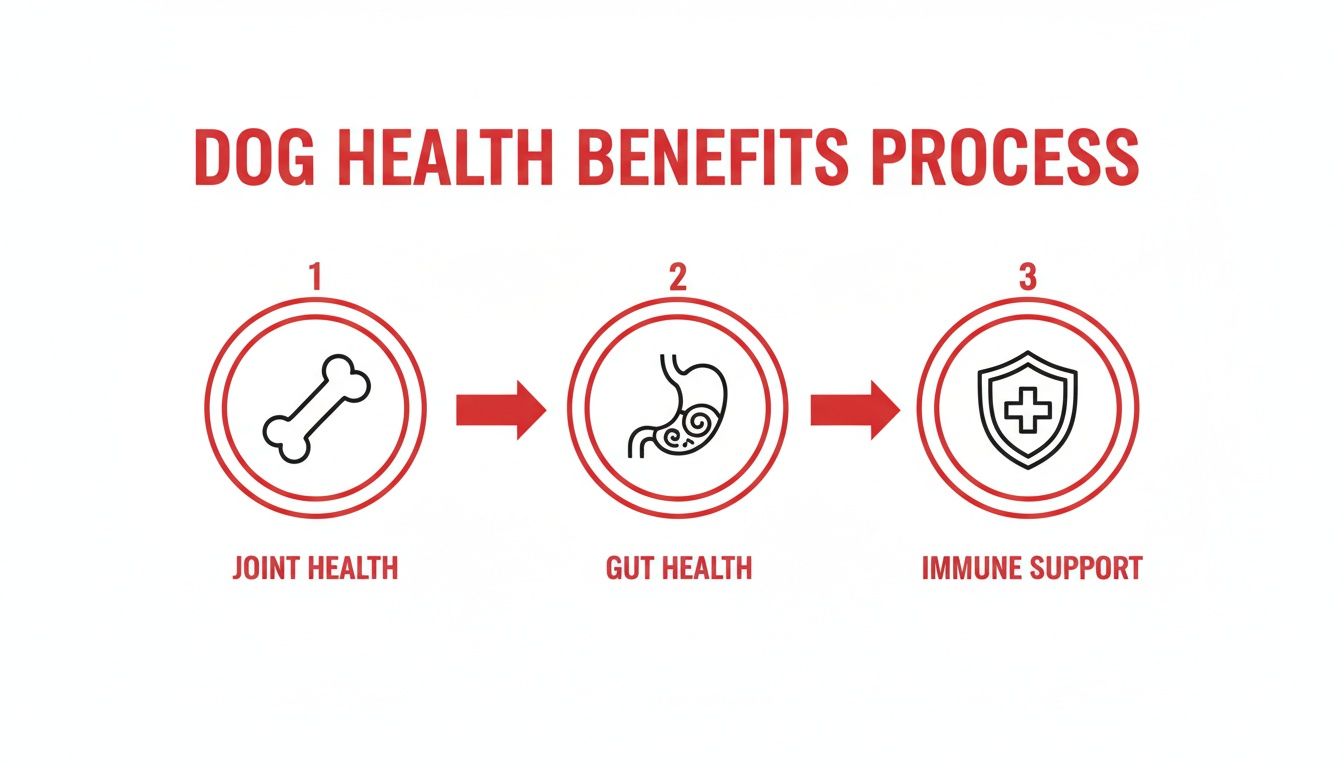
You can see the clear path: the nutrients first go to work fortifying joints, then they help soothe the gut lining, and finally, they give the immune system a boost for all-around better health.
Your homemade bone broth will keep in the fridge for up to a week, or you can freeze it in smaller portions for several months.
How to Choose the Best Store-Bought Bone Broth
Making your own bone broth is a fantastic way to give your dog a nutritional boost, but let's be real—it's a serious time commitment. For those of us with packed schedules, finding a great store-bought option is the perfect shortcut. You get all the goodness without having to watch a pot simmer for 24 hours.
The challenge? The pet food aisle is a minefield. Many products labeled "bone broth" are a far cry from the real thing. They're often watered down, packed with salt, or contain ingredients that are downright dangerous for dogs, like onions and garlic.
To make sure you're buying a product that helps, not harms, you need to learn how to read the label like a pro. Think of it the same way you shop for your own family. A quick glance at the ingredients can tell you everything you need to know.
What to Look For on the Label
Knowing what to spot is the key to picking a winner. Your goal is simple: find a broth with a short, clean, and recognizable ingredient list.
Here are a few green flags that signal a high-quality product:
- Quality Sourced Bones: Look for terms like grass-fed, pasture-raised, or organic. Better sourcing means a richer nutrient profile and a cleaner final product, free from the antibiotics and hormones you don't want.
- Simple is Best: The ingredient list should be refreshingly short. Ideally, you’ll see just animal bones, water, and maybe a little apple cider vinegar to help pull minerals from the bones.
- Formulated for Dogs: This is a big one. Human broths are almost always loaded with sodium, onions, garlic, and other seasonings that are toxic to dogs. Stick to products made specifically for our canine companions.
The Gel Test: Here's a pro tip. A truly high-quality bone broth will turn into a thick, jelly-like substance when it's refrigerated. That jiggle is your visual proof that the broth is packed with the gelatin and collagen you're paying for. If it stays watery like soup, it's likely not very potent.
Bone Broth Buying Guide Green Flags vs Red Flags
To make it even easier, I've put together a quick comparison table. Think of it as your cheat sheet for scanning labels in the store. It helps you quickly separate the good stuff from the junk.
By keeping these green and red flags in mind, you can navigate the pet store with confidence. You'll be able to pick out a safe, nutrient-dense dog bone broth that truly supports your dog’s joints, gut, and overall health. Now that's peace of mind in a jar.
Adding Bone Broth to Your Dog’s Daily Routine
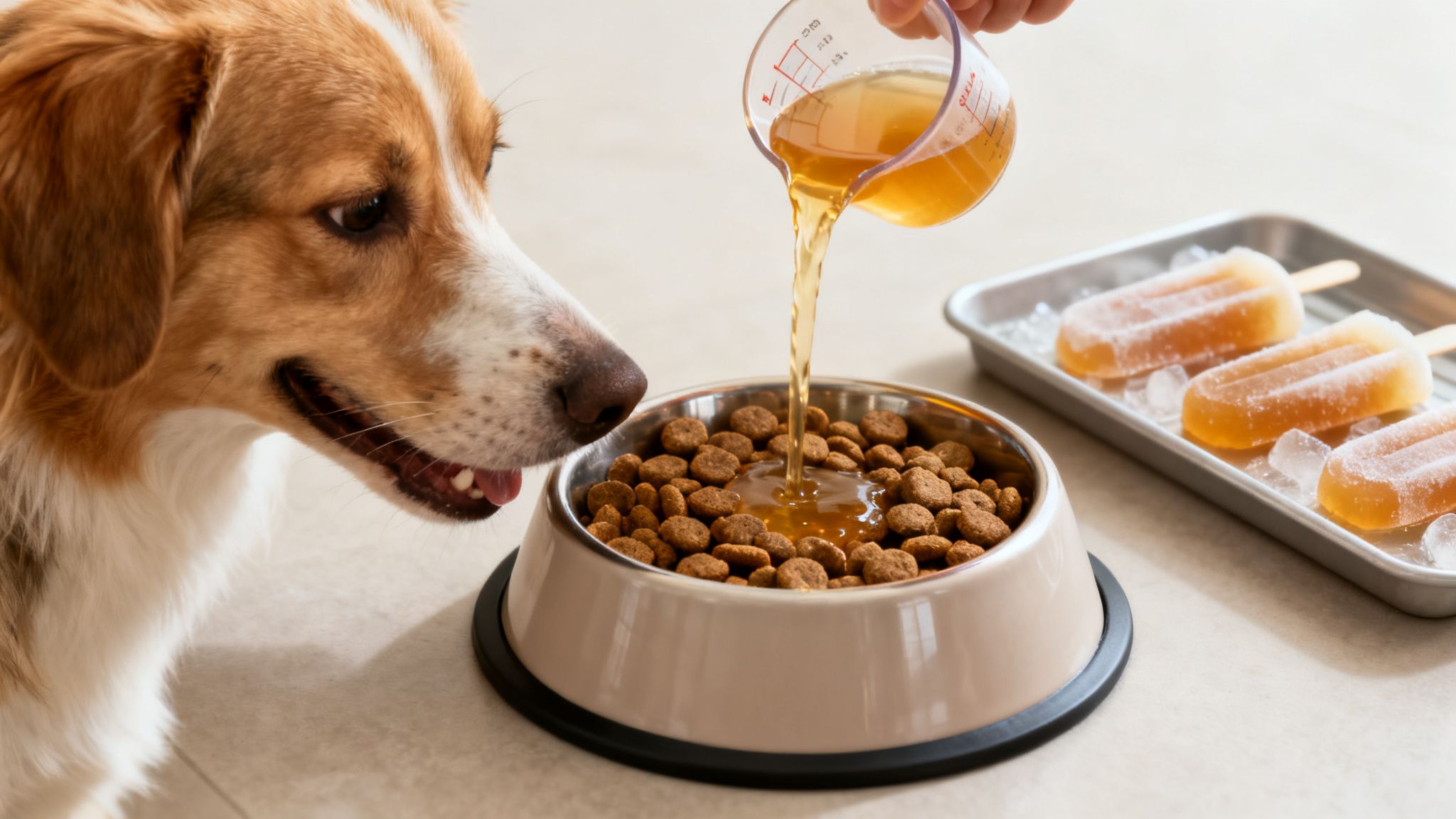
So, you're ready to add some of this liquid gold to your dog's diet? The great news is, it's incredibly easy to weave into your daily feeding habits. It’s not meant to replace a meal, but think of it as a powerful nutritional booster that enhances their regular food with extra hydration and nutrients. The trick is to start small and find a rhythm that suits you both.
As with anything new you introduce to your dog's bowl, go slow. A sudden dietary change, even a healthy one, can sometimes cause a bit of tummy trouble. I always recommend starting with about half the suggested amount for a few days. This gives their digestive system time to get used to the new addition before you move up to a full daily serving.
Finding the Right Serving Size
There's no single "correct" serving size—it really depends on your dog's weight. You want to give them enough to see the benefits without piling on unnecessary calories.
Here are some practical guidelines I use as a starting point:
- Small Dogs (Under 20 lbs): Begin with 1 tablespoon per day.
- Medium Dogs (20-50 lbs): Aim for 2-3 tablespoons per day.
- Large Dogs (Over 50 lbs): You can serve up to 1/4 cup per day.
Remember, these are just general suggestions. Feel free to adjust based on your dog's specific needs, and it’s always a good idea to chat with your vet, especially if your dog has any health conditions.
Creative Ways to Serve Bone Broth
This is where you can have some real fun. Getting creative with how you serve bone broth can make mealtime more exciting and solve common problems like picky eating.
One of the simplest and most popular methods is just pouring it over their regular food. This little trick works wonders for picky eaters by making their dry kibble more enticing, and it adds much-needed moisture to their diet at the same time.
But you don't have to stop at just a food topper. There are plenty of other ways to work bone broth into their day, each with its own perks.
Here are a few of my favorite ideas:
- Hydrate Dry Food: Pouring liquid bone broth over kibble is a game-changer. It not only adds a burst of flavor that gets fussy dogs interested in their food but also softens the kibble, which is a huge plus for senior dogs with sensitive mouths.
- Boost Your Supplements: Do you use a powdered supplement like FORMA? Mixing it with a little bone broth turns it into a delicious gravy. This makes their daily wellness routine feel less like a chore and more like a treat, and it can even help their body better absorb the nutrients.
- Create Frozen "Pupsicles": On a warm day, nothing beats a frozen treat. Pour bone broth into an ice cube tray and freeze it. These "pupsicles" are a fantastic, healthy way to help your dog cool down. For an extra special treat, try mixing in a little plain yogurt before freezing.
By making dog bone broth a regular part of their diet, you’re doing more than just making their meals tastier. You’re giving them daily, consistent support for their joints, gut, and immune system, which is a wonderful investment in their long-term health.
Got Questions About Bone Broth? Let's Dig In.
It’s totally normal to have a few questions before adding something new to your dog’s diet, even something as beneficial as bone broth. Let's tackle some of the most common things people ask so you can feel confident you're doing the best for your pup.
Think of this as the final check-in before you get started. We'll cover everything from how often to serve it to whether it's safe for your new puppy.
How Often Can I Give My Dog Bone Broth?
For most healthy adult dogs, a daily splash of bone broth is not only safe but a great way to support their overall health. Just remember, it’s a superfood topper or supplement, not a full meal replacement.
A little bit with their regular food each day is the perfect approach.
- Small Dogs: A few tablespoons is a good starting point.
- Larger Breeds: You can go up to about half a cup daily.
This daily dose provides a consistent stream of nutrients that work wonders for their joints and gut. As always, it's smart to start with a smaller portion just to see how your dog takes to it before making it a daily habit.
Can Puppies Have Bone Broth?
Yes, absolutely! Bone broth can be a fantastic, gentle addition to a growing puppy’s diet. It’s a natural source of collagen and minerals, which are crucial for building strong bones, healthy joints, and a resilient gut right from the get-go.
That said, there are a couple of ground rules. The broth must be 100% free of salt, onions, or any other toxic ingredients. Also, start small—a single teaspoon mixed into their food is plenty to begin with—to make sure their sensitive little tummy handles it well.
Any time you're changing a growing puppy's diet, it's always best to get a green light from your veterinarian first. They can make sure it’s the right move for your specific pup's nutritional plan.
Are There Any Dogs Who Should Not Have Bone Broth?
While bone broth is a wonderful supplement for most dogs, it's not a one-size-fits-all solution. A few health conditions require a more careful look at what goes into their bowl.
Dogs with specific health problems, especially kidney disease, might need to steer clear due to the high mineral content. Some dogs with food sensitivities or histamine intolerance could also react to the proteins. If your dog has any pre-existing health condition, it is absolutely essential to chat with your vet before adding bone broth to their routine.

Karolis is the Founder of FORMA, a pet wellness brand focused on longevity and daily nutrition for dogs. Writes about supplements, canine health, and helping pets live longer, healthier lives
Join thousands of pet parents getting science-backed health insights and natural care advice