Yogurt for Dogs: A Complete Guide to Safe, Tasty yogurt for dogs
Is yogurt safe for dogs? Learn the probiotic benefits, possible risks, and how to share yogurt for dogs safely without artificial sweeteners.
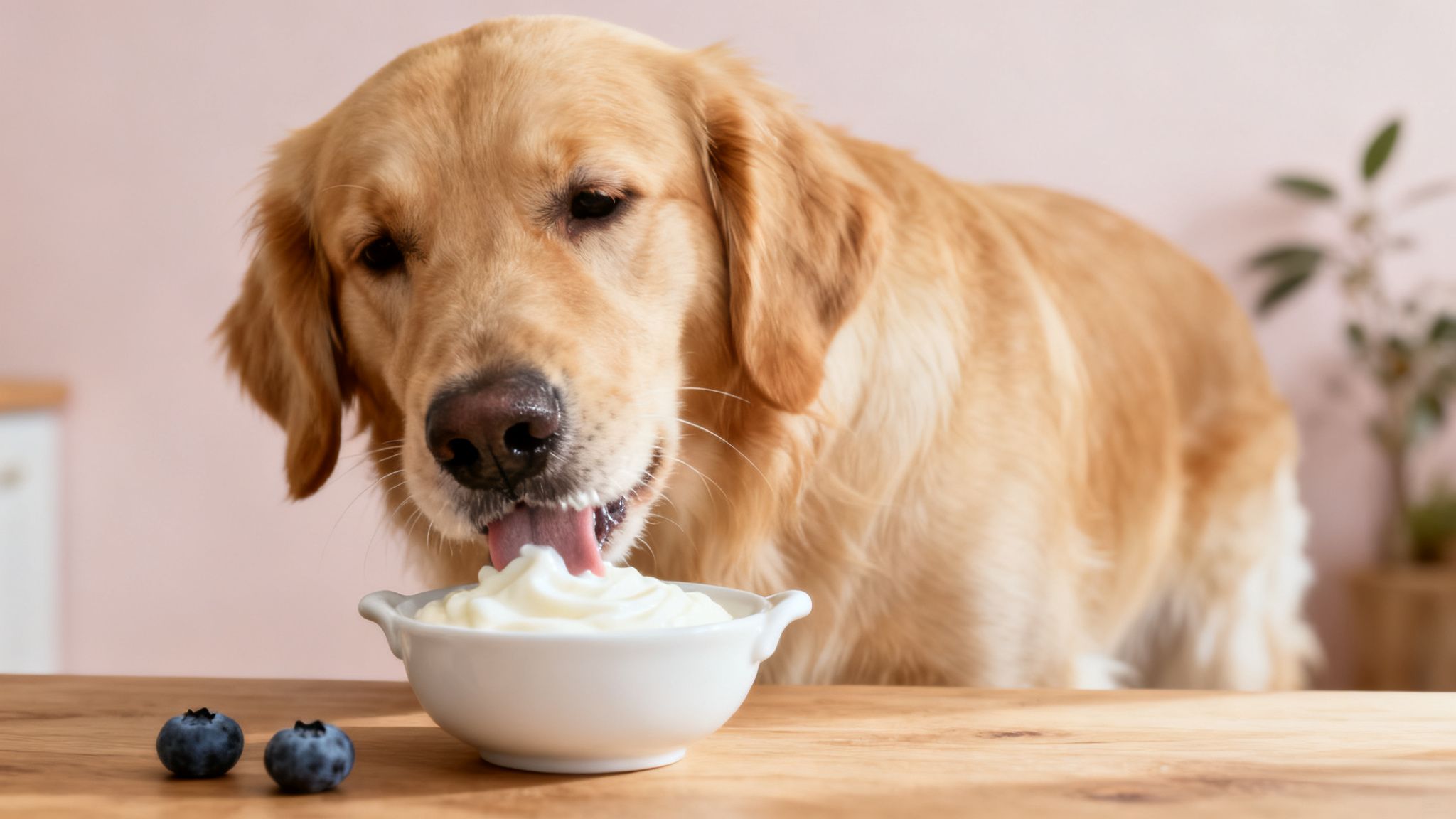
Yes, dogs can eat yogurt—but with a few important caveats. The best choice is always plain, unsweetened yogurt that contains live cultures and absolutely no artificial sweeteners like xylitol. Think of it as a special treat, not a main course.
Can Dogs Eat Yogurt? A Straightforward Answer
You're enjoying your morning yogurt, and you feel a familiar gaze. Those big, pleading eyes are staring right at your spoon, and you can't help but wonder, "Can I share this with my dog?"
The short answer is yes, but it’s not quite that simple. To make sure this snack is a healthy treat and not a recipe for an upset stomach, you need to know what to look for and what to avoid.
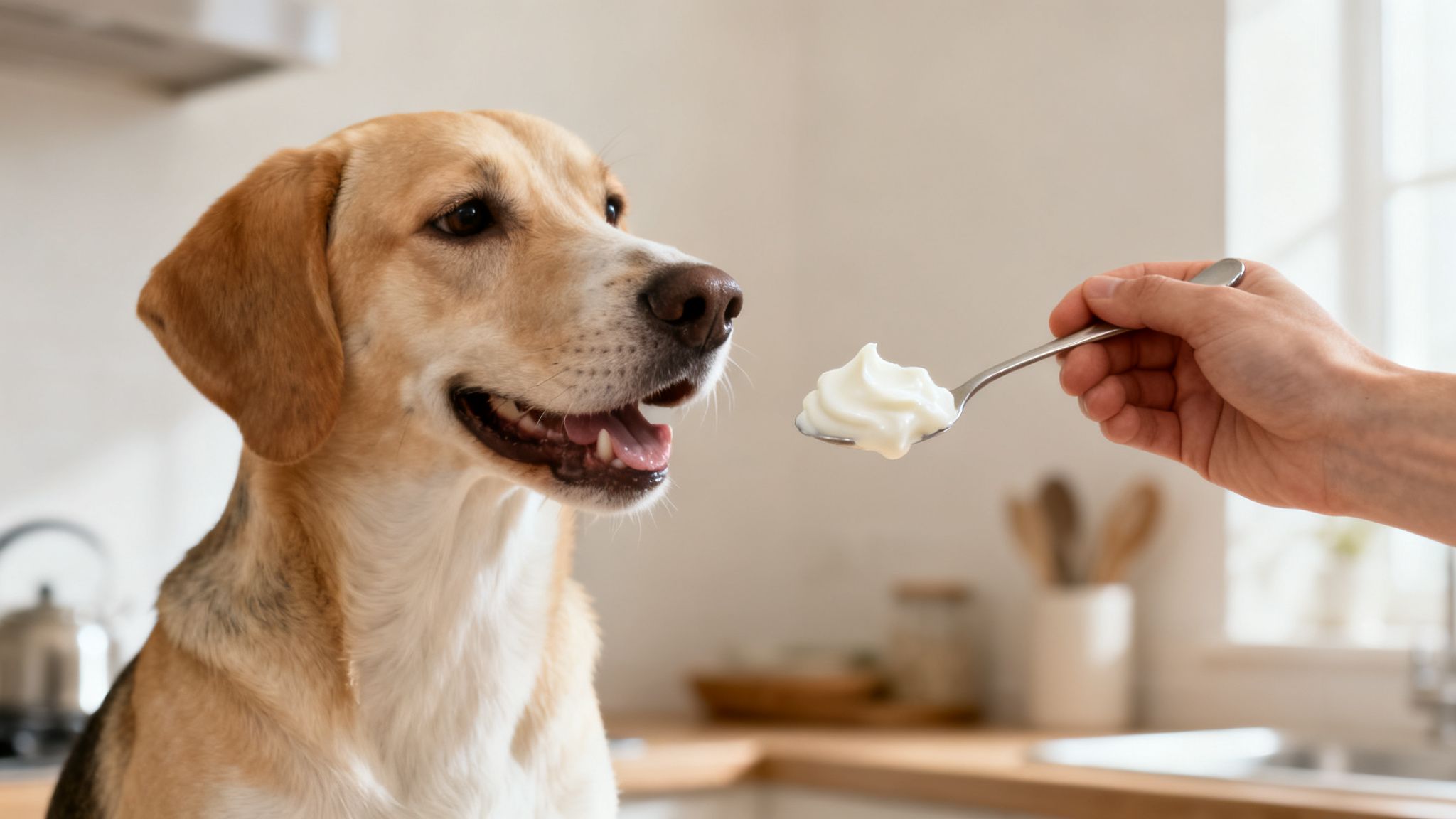
When you choose the right kind, plain yogurt is more than just a tasty dollop. Its real power comes from the live and active cultures inside—the probiotics. These friendly bacteria can be fantastic for your dog’s gut health, helping to keep their digestive system running smoothly.
The catch? Dairy isn't for every dog. Just like some people, many dogs are lactose intolerant. They don't have enough of the enzyme needed to break down lactose, the natural sugar in milk products. For these pups, even a little yogurt can lead to some not-so-pleasant side effects:
- Gas and bloating
- Stomach cramps
- Diarrhea
- Vomiting
That's why it's so important to start small. Offer just a tiny spoonful and see how your dog handles it over the next day before you consider making it a regular thing.
The Good vs. The Bad
The yogurt aisle is packed with options, and the difference between a safe snack and a dangerous one is all in the ingredients. The number one thing to watch out for is xylitol, an artificial sweetener common in "sugar-free" foods. Xylitol is extremely toxic to dogs, and even a small amount can cause a sudden drop in blood sugar, seizures, and even liver failure.
Crucial Safety Tip: Always, always read the ingredient label before sharing any human food. If you see xylitol (sometimes called "birch sugar"), it's an absolute no-go for your dog.
It’s also best to skip the flavored yogurts. All that extra sugar isn't good for your dog and can lead to weight gain or an upset tummy. Your safest bet is always plain, unsweetened yogurt with probiotics.
To help you remember the key rules, here’s a quick-reference table.
Quick Guide to Feeding Your Dog Yogurt
This common-sense approach is part of a bigger trend. More and more dog owners are looking for natural ways to support their pet’s health, leading to a boom in products like pet-safe yogurt. In fact, studies have shown that the live cultures in plain yogurt can improve canine digestion by up to 30% in dogs with minor tummy troubles. You can dive deeper into the trends shaping the pet food industry on GrandViewResearch.com.
At the end of the day, yogurt can be a wonderful, healthy addition to your dog's diet. Just be smart about it, choose carefully, and always put their safety first.
What Yogurt Can Actually Do for Your Dog
When you offer your dog a spoonful of the right kind of yogurt, you're doing more than just giving them a tasty treat. You're sharing a snack loaded with good stuff that can genuinely support their health from the inside out. The main event here is the probiotics.
Think of your dog's gut as a tiny, complex ecosystem. The probiotics in yogurt—those "live and active cultures"—are like the helpful workers that show up to keep everything in balance. These friendly bacteria, like Lactobacillus and Bifidobacterium, help keep the bad bacteria in check, fostering a healthy gut microbiome.
And why does a balanced gut matter? It’s not just about avoiding an upset stomach. It's the engine room for absorbing nutrients from their food. A healthier digestive system means your dog gets more mileage out of every meal, which can translate to better energy, a healthier coat, and more predictable poops.
Good for the Gut, and So Much More
The ripple effects of a healthy gut go way beyond digestion. A strong microbiome is directly tied to a stronger immune system. In fact, a huge part of your dog’s natural defenses is housed right there in their gastrointestinal tract.
By giving the good bacteria a boost, you're essentially reinforcing their internal security team, making them better prepared to fight off bugs. This is particularly helpful if your dog has recently finished a course of antibiotics, which can wipe out the good gut bacteria along with the bad. A little yogurt can help bring those friendly microorganisms back.
This focus on pet gut health is a big deal right now. The global pet food market is a massive $128.94 billion industry, and products that support digestive wellness are a huge part of it. For dogs with existing gut issues, the probiotics in yogurt have been linked to as much as 50% better nutrient absorption. You can dig deeper into the trends shaping the pet food market on fortunebusinessinsights.com.
It’s Not Just a Gut Feeling
While probiotics get all the attention, yogurt has a few other tricks up its sleeve. It delivers a solid mix of nutrients that support your dog’s physical strength and well-being.
Here’s what else is packed into that spoonful:
- High-Quality Protein: Protein is the foundation for building and repairing muscle, keeping your dog strong and ready for adventure. Greek yogurt is especially packed with it.
- Calcium: This is the classic building block for strong bones and teeth. A little extra calcium from yogurt is a nice bonus for supporting their skeletal health, particularly as they get older.
- Essential Vitamins and Minerals: Yogurt also brings along potassium, magnesium, and B vitamins, which are all key players in nerve function, metabolism, and overall health.
The benefits can even extend to a dog's mood. The link between the digestive system and the brain—often called the gut-brain axis—is incredibly powerful.
A healthy gut can lead to a calmer mind. Studies have shown that supporting the microbiome can lead to a drop in the stress hormone cortisol by 20-35% in anxious dogs, making yogurt a simple, natural tool for promoting a sense of calm.
At the end of the day, a small amount of plain yogurt can be a fantastic supplement to your dog's diet. It supports their digestion, bolsters their immune system, and provides some of the essential building blocks for a healthy, happy life.
Navigating the Minefield of Flavored Yogurts
While plain yogurt can be a fantastic little treat, the flavored stuff you see all over the dairy aisle is a completely different ballgame. Once you start looking at fruit-flavored, "light," or vanilla yogurts, you're entering a minefield of potential risks for your dog. Knowing what to watch out for is the most important part of sharing yogurt safely.
The number one danger, without a doubt, is xylitol. It's an artificial sweetener often used in "sugar-free" or "low-calorie" products, and that includes many yogurts. While it's harmless for us, it's extremely poisonous to dogs.
Even a tiny amount of xylitol can trigger a sudden, life-threatening drop in a dog's blood sugar, a condition called hypoglycemia. This can quickly lead to weakness, seizures, and even liver failure. It's a non-negotiable, absolute "no."
The Golden Rule: Always, always read the ingredient list before you even think about sharing a food with your dog. If you spot xylitol—which sometimes hides under the name "birch sugar"—put it back on the shelf. No exceptions.
The Trouble with Sugar and Other Additives
Even if a flavored yogurt is xylitol-free, you're not out of the woods. The high sugar content is a major problem. A single serving of a fruit-on-the-bottom yogurt can pack as much sugar as a candy bar.
All that sugar does nothing good for your dog. In fact, it can lead to a whole host of issues:
- Weight Gain: Extra sugar gets stored as fat, paving the way for obesity. That extra weight puts a ton of stress on their joints and organs.
- Dental Problems: Sugar is fuel for the bad bacteria in your dog's mouth, which can lead to cavities and painful gum disease down the road.
- Tummy Troubles: A big hit of sugar can easily throw your dog's gut out of whack, often resulting in diarrhea and an upset stomach.
And it’s not just the sugar. Flavored yogurts are often loaded with other ingredients that a dog’s system just isn't built to handle.
Things like artificial flavors, colors, and preservatives are chemicals that can cause anything from mild digestive upset to allergic reactions. The whole point of a healthy treat is to keep their diet clean and simple, and these additives do the exact opposite.
Your Go-To Ingredient Checklist
Walking down the yogurt aisle doesn't have to be overwhelming. You just need to become a savvy label detective, scanning for red flags before anything makes it into your cart.
Here’s a simple routine to follow when you pick up a container:
- Hunt for Xylitol First: This is priority number one. Scan the entire ingredient list for xylitol or birch sugar. If it's there, it's a hard pass.
- Check the Sugar Content: Look at the nutrition panel for "Added Sugars." The number you're looking for is zero. Plain yogurt naturally has some sugar from milk (lactose), but you want to avoid anything with extra sweeteners tossed in.
- Scan for Artificial Junk: Look for weird chemical names, "artificial flavors," "artificial colors," or preservatives. A short, simple ingredient list is always your best bet.
- Watch for "Natural" but Unsafe Flavors: Just because it says "natural" doesn't mean it's safe. Chocolate is a famous dog toxin, and flavorings from grapes or raisins are also dangerous.
Sticking to these steps takes all the guesswork out of it. The best, safest, and healthiest option will always be plain, unsweetened yogurt (either regular or Greek) that contains live and active cultures. It delivers all the probiotic goodness without any of the dangerous baggage. This quick check ensures that the yogurt for dogs you're offering is truly a healthy treat, not a hidden hazard.
How To Choose The Best Yogurt For Your Dog
Walking down the dairy aisle can feel overwhelming, but picking a safe and healthy yogurt for your dog is actually pretty simple once you know what to look for. The trick is to find the most basic, boring yogurt on the shelf—because that’s the one that’s best for your pup.
Your best bet is always plain, unsweetened yogurt. This version has all the good stuff, like protein and calcium, without any of the dangerous additives that can turn a healthy treat into a hazard.
Read The Label Like A Detective
The secret to choosing the right yogurt is all in the ingredient list. Your first and most important job is to scan for any artificial sweeteners, especially the highly toxic ingredient xylitol. It sometimes hides under the name "birch sugar," so be thorough.
Next, look for the magic words: "live and active cultures." This phrase is your guarantee that the yogurt contains beneficial probiotics. These are the friendly bacteria that support your dog’s gut health, aid digestion, and boost their immune system. Without them, yogurt is really just a dairy snack.
This simple flowchart can help you quickly decide if a yogurt is safe for your dog to eat.
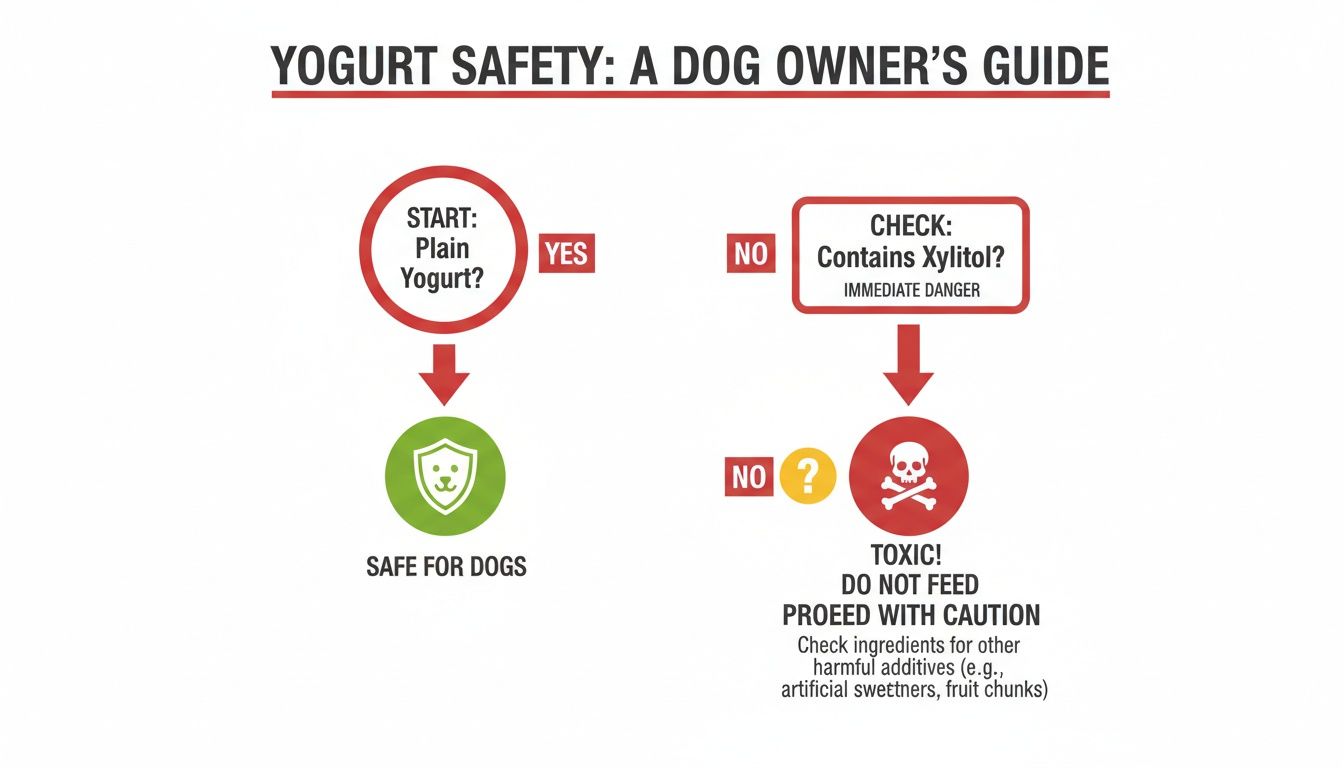
As you can see, the first checkpoint is always whether the yogurt is plain, and the second is a hard stop for xylitol. No exceptions.
Greek Yogurt vs. Regular Yogurt
You'll often see two main types of plain yogurt on the shelf: regular and Greek. While both can be good options if they're plain and unsweetened, Greek yogurt often has a few key advantages for our canine friends.
The main difference comes from how it's made. Greek yogurt is strained to remove much of the liquid whey, which changes its nutritional profile and texture. Here’s a quick comparison to help you decide.
Yogurt Comparison for Dogs: Greek vs. Regular
Because the straining process removes some of the milk sugar (lactose), Greek yogurt can be a bit easier for some dogs to digest. Its thick, creamy consistency is also less messy to serve and is perfect for stuffing into enrichment toys like a KONG.
Ultimately, whether you choose regular or Greek, the most important rules still apply. The best yogurt for your dog will always have a short and simple ingredient list.
Your Quick Shopping Checklist
To make it even easier, here's a quick checklist to run through when you’re at the store. A yogurt is a good choice if it meets these criteria:
- Plain and Unsweetened: No added sugars, fruit purees, or vanilla flavoring. Just milk and cultures.
- Contains Live and Active Cultures: This ensures you're getting those powerful probiotic benefits.
- Free of Xylitol: Double-check the ingredient list for xylitol or "birch sugar." If you see it, put it back immediately.
- Low-Fat or Non-Fat: Full-fat versions can add a lot of unnecessary calories and may be too rich for some dogs, potentially leading to an upset stomach.
By sticking to these guidelines, you can confidently pick a yogurt that's both a delicious treat and a genuinely healthy boost for your dog.
How Much Yogurt Should I Give My Dog?
When it comes to treats, even healthy ones, moderation is everything. Yogurt should be a small part of your dog's diet, not a main course. The golden rule for any treat is that it shouldn't make up more than 10% of their total daily calories.
Think of it as a healthy garnish on their regular, balanced dog food. A spoonful of yogurt is a bonus, a little something extra to support their gut health, not a replacement for their core nutrition. This mindset helps prevent weight gain and keeps their diet right on track.
It's a fact that while 68% of dog owners in the US stick with dry kibble, many are looking for ways to boost their dog's health with functional foods like yogurt. And for good reason—studies have shown that probiotics can cut the incidence of diarrhea from antibiotics by as much as 40%. With 59% of dogs being overweight and senior pets making up 40% of the pet population, a low-sugar, portion-controlled treat like plain yogurt is a smart choice for their long-term health. You can get more insights on this trend from The Business Research Company's pet food market report.
A Slow and Steady Introduction
The first time you give your dog yogurt, the key is to start small. Very small. This is just a test run to see how their digestive system handles it.
The First Taste Test: Offer just a tiny dab of yogurt on a spoon or even your fingertip. Then, wait a full 24 hours. Keep an eye out for any red flags like gas, bloating, or loose stool. If everything seems fine, you’re good to go.
This little bit of caution upfront saves you a lot of potential worry later. It lets your dog's system get used to the new food and gives you confidence that it’s a good fit for them.
Portion Sizes by Your Dog's Weight
Once you know your dog handles yogurt well, you can make it a regular (but still occasional!) treat. The best way to figure out the right amount is to base it on their size. This ensures they get all the good stuff without overloading them with extra calories.
Here are some tried-and-true serving suggestions:
- Toy Breeds (Under 10 lbs): One teaspoon is the perfect amount.
- Small Breeds (10-30 lbs): Stick to one or two teaspoons.
- Medium Breeds (30-50 lbs): One to two tablespoons is a good serving size.
- Large Breeds (50-90 lbs): You can go with two to three tablespoons.
- Giant Breeds (Over 90 lbs): Up to a quarter cup (or four tablespoons) is fine for the biggest dogs.
Remember, these amounts are for plain, unsweetened, low-fat yogurt only. Following these guidelines helps you give your dog a tasty, gut-friendly treat that supports their health without messing up their balanced diet.
Creative Ways to Add Yogurt to Your Dog's Diet
Sure, you can just offer your dog a spoonful of plain yogurt, and they'll probably love it. But why stop there? Getting a little creative turns this healthy snack into a fun activity that engages your dog's brain and makes treat time something special.

These ideas aren't just for fun, either. They can help with common problems like boredom or dogs that eat way too fast, transforming a simple ingredient into an interactive experience.
Create Cooling Frozen Treats
One of the easiest and most popular ways to serve yogurt is to freeze it. A frozen snack is a fantastic way to cool your dog down on a hot day, and it makes the treat last much, much longer.
The Classic KONG: The thick texture of Greek yogurt is perfect for this. Just stuff a KONG toy with plain yogurt (maybe mix in a few berries) and pop it in the freezer for a few hours. It becomes a long-lasting puzzle that keeps your dog busy and satisfies their natural need to chew.
DIY Pupsicles: This is incredibly simple. Mix some plain yogurt with dog-safe fruits like blueberries or mashed bananas. Spoon the mix into an ice cube tray and freeze solid. These little "pupsicles" are perfectly portioned and ready to go whenever you need a quick treat.
Lick Mat Magic: Spread a thin layer of yogurt onto a silicone lick mat and freeze it. The mat's textured surface forces your dog to slow down and work for every lick. Since licking is a naturally calming behavior for dogs, this is a fantastic way to help an anxious pup relax.
By freezing yogurt in a toy or on a lick mat, you're not just giving a treat; you're providing a boredom-busting enrichment activity that can help reduce anxiety and prevent destructive behaviors.
Boost Their Daily Meal
Yogurt also makes a fantastic meal topper, especially if you have a picky eater on your hands.
A simple dollop of plain yogurt mixed into their regular kibble can make dinnertime much more exciting. The creamy texture and tangy flavor might be just what your dog needs to get interested in their food again. It's also an effortless way to sneak those beneficial live cultures into their diet without a separate treat.
This trick is particularly helpful for senior dogs or those with dental problems who find crunchy kibble a bit challenging. The moisture from the yogurt softens the food, making it much easier to eat. Just remember to account for the yogurt in their daily calorie count to keep their diet balanced.
Frequently Asked Questions About Dogs and Yogurt
It's one thing to have the general guidelines, but it's the specific "what if" questions that pop up when you're about to spoon out a new treat for your dog. Let's tackle some of the most common questions that come up about dogs and yogurt.
Think of this as your quick-reference guide to handle those last-minute doubts. We'll clear things up so you can feel confident and prepared.
Can Puppies Have Yogurt?
Yes, but you need to be extra careful and only after getting the nod from your vet. A puppy’s digestive system is still under construction, making it far more sensitive than an adult dog’s. Introducing new foods too quickly is a recipe for an upset stomach.
If your vet says it's okay, the rules are even stricter for a pup. Start with just a tiny lick of plain, unsweetened yogurt. Then, watch them like a hawk for any signs of an upset tummy. While the probiotics might be helpful, remember that their main source of nutrition has to be their high-quality, complete-and-balanced puppy food.
What if My Dog Is Lactose Intolerant?
If you already know your dog can't handle lactose, it's best to just skip the dairy yogurt. The classic signs—gas, bloating, diarrhea, or vomiting after they have milk products—are your dog’s way of telling you their system can't process it. Forcing the issue will only make them uncomfortable.
You might be tempted by dairy-free options like plain coconut yogurt, but you have to be incredibly careful here. Many of these alternatives are sweetened with xylitol or contain other additives that are dangerous for dogs.
A much safer way to support their gut health is with a probiotic supplement made specifically for dogs, like FORMA's daily superfood chews. This delivers all the digestive benefits without any of the risks from dairy or hidden sweeteners.
Is Special "Dog Yogurt" a Better Choice?
Not always. It’s a bit of a mixed bag. While some yogurts made for dogs might have less lactose, they often come with their own set of issues. To make them tastier or last longer on the shelf, many are packed with added sugars, fillers, or preservatives—which kind of defeats the whole purpose of a "healthy" treat.
The best thing you can do is become a label detective. Read the ingredients list closely, no matter if it's a product for humans or dogs. Honestly, in many cases, a simple tub of plain, unsweetened Greek yogurt with live cultures from your local grocery store is a much healthier and cheaper option than a fancy "dog yogurt."
Can Yogurt Help with My Dog's Bad Breath?
It might, but only if the bad breath is coming from an imbalance of bacteria in their gut. The probiotics in yogurt can help get their microbiome back on track, which can sometimes freshen breath from the inside out. It’s a great example of how gut health connects to their overall well-being.
But—and this is a big but—you have to rule out the most common culprit first. More often than not, persistent bad breath is a red flag for dental disease. Things like plaque, gingivitis, or even a cracked tooth are usually to blame and need a vet's attention. Think of yogurt as a helpful dietary bonus, not a substitute for regular tooth brushing and professional dental cleanings.

Karolis is the Founder of FORMA, a pet wellness brand focused on longevity and daily nutrition for dogs. Writes about supplements, canine health, and helping pets live longer, healthier lives
Join thousands of pet parents getting science-backed health insights and natural care advice