Calm Your Pup with dog chews for anxiety: Top Picks and Tips
Discover dog chews for anxiety and how they work, plus key ingredients and tips to choose the right calming treat for your pup.

When your dog is struggling with anxiety, you just want to find something that helps. Dog chews for anxiety are supplements made with natural, calming ingredients to help ease that stress. You can think of them as the dog equivalent of a soothing cup of chamomile tea, but specially formulated for a dog's body and mind.
Your Guide to Calming Chews for Anxious Dogs

It’s heartbreaking to watch your best friend deal with fear or stress. Maybe you see it in the frantic pacing when you grab your keys, the trembling during a thunderstorm, or the nervous barking when strangers visit. Canine anxiety is a real problem, and you’re looking for more than a temporary distraction—you want to help your dog feel genuinely safe and calm again.
This is where calming chews come in. These aren't just ordinary dog treats. They’re functional supplements packed with specific, well-researched ingredients designed to work with your dog's nervous system to encourage a more relaxed state. They represent a more thoughtful approach to pet wellness, one where we treat our dogs' mental health as seriously as we do our own.
The Growing Focus on Canine Mental Wellness
Supporting a dog’s emotional well-being isn't just a niche idea anymore; it's a major movement. The global market for pet calming products is already valued at a massive USD 17.45 billion and is expected to grow to USD 29.88 billion by 2034. This incredible growth is driven by owners like you who are actively looking for effective ways to help their pets.
With a 41.2% market share, North America is leading the charge, and calming chews are by far the most popular choice. Their ease of use makes them a go-to for everything from firework-induced panic to everyday separation anxiety. You can explore the full report on pet calming product trends to see just how much this area is expanding.
Calming chews are designed to be part of a daily routine, not just a quick fix. They work by providing consistent nutritional support that helps regulate mood over time, building a foundation for a more balanced and resilient dog.
To help you see how these chews can apply to specific situations, here’s a quick breakdown of common anxiety triggers and the way calming supplements are designed to help.
How Calming Chews Address Common Dog Anxieties
As the table shows, the goal isn't just to mask the symptoms but to provide targeted support that helps your dog cope with the root cause of their stress.
A Foundational Element of Care
It’s important to see these supplements as part of a bigger picture. A high-quality calming chew works best when it’s one piece of a supportive and loving environment. Think of it as a key tool in your toolbox, working right alongside other positive habits:
- Consistent Routines: Dogs thrive on predictability. Regular feeding times, walks, and play sessions help them feel much more secure.
- A Safe Space: Create a cozy den or a quiet spot where your dog knows they can go to retreat when feeling overwhelmed.
- Positive Reinforcement: Use praise and rewards to build confidence and show your dog that being calm is a good thing.
When you combine these practices, you’re doing more than just managing symptoms. You’re building a complete wellness plan where dog chews for anxiety play a vital role in helping your best friend feel safe, secure, and happy every single day.
Understanding the Roots of Your Dog's Anxiety

Before we can find the right solution, we have to get to the heart of the problem. A dog’s anxiety isn't just "bad behavior"—it's a very real, very raw emotional reaction to something they see as a threat. Stepping into their paws for a moment helps us shift from feeling frustrated to feeling compassionate, which is the first real step toward helping them.
Think about it: your dog’s entire world revolves around routine and your presence. When that stable foundation gets rocked, their sense of security can completely fall apart. So, when you see destructive chewing, non-stop barking, or accidents in the house, it’s not defiance. It's a distress signal. They're telling you, in the only way they know how, that they're overwhelmed and need your help.
The Fear of Being Left Alone
One of the most common and powerful triggers is simply being left alone. This is what we call separation anxiety, and it's a deep-seated fear that their pack leader—you—might not come back. For a social animal like a dog, being isolated can feel dangerous and unnatural.
This isn't a small problem; it's a huge reason why so many pet owners seek out calming solutions. In fact, dogs account for a massive 58% of the entire pet calming products market, mostly due to their struggles with separation, loud noises, and travel. In the United States, where over 66% of households have pets, it's easy to see why effective aids like dog chews for anxiety are in such high demand. The dog relaxants market alone was valued at USD 186.2 million and is expected to climb to USD 505.3 million by 2035. You can discover more insights about the growing pet calming market to see just how big this is.
A dog with separation anxiety isn't trying to punish you for leaving. They are experiencing a genuine panic attack, similar to what a person might feel. Their world shrinks, and the only thing that matters is your return.
This panic often shows up in a few key ways:
- Destructive Actions: Chewing on doorframes, tearing up cushions, or shredding things that smell like you are all frantic attempts to cope or escape.
- Vocalization: That endless barking or howling isn't for fun. It's a desperate call for you to return.
- Pacing: Restlessly trotting back and forth, especially near doors and windows, shows they simply can't settle down.
Environmental and Social Stressors
It’s not just about being alone. A dog's super-sensitive hearing and natural instincts can make our world feel like a chaotic and scary place.
Loud Noises
A sudden clap of thunder or the pop of fireworks can sound like an attack to a dog who has no idea where it's coming from. Their instinct screams "danger," so they'll try to hide, tremble, pant, or glue themselves to your side for protection.
New Situations
Social anxiety is also incredibly common. This can flare up when strangers visit, when they meet other dogs on a walk, or even during big changes like moving to a new home. For a sensitive dog, these new experiences don't feel exciting; they feel threatening.
Learning to spot these triggers is everything. It allows you to step in and offer support before your dog's anxiety spirals out of control. When you understand that their behavior comes from a place of fear, you can build a plan that gets to the root cause, instead of just managing the symptoms. This is where a smart approach, including the right nutritional support, can make all the difference in helping them feel safe and confident again.
How These Ingredients Actually Help Your Dog Chill Out
So, how do these dog chews for anxiety actually work their magic? It's not really magic at all—it’s just smart science. Think of it as giving your dog's nervous system the right nutritional tools to handle stress more effectively.
Let’s use an analogy. Imagine your dog’s brain is like a recording studio soundboard. When something stressful happens—a clap of thunder, the doorbell, you grabbing your car keys—all the dials for fear and hyperactivity get cranked way up. It’s a chaotic jumble of noise, and it's completely overwhelming for them.
The ingredients in a good calming chew act like a skilled sound engineer. They don't just pull the plug and shut everything down. Instead, they gently ease back the specific dials causing all that frantic noise, helping restore a sense of balance and quiet. This brings your dog’s system back to a much more manageable, calm baseline.
It's All About Brain Chemistry
Deep down, this process is all about chemicals in the brain called neurotransmitters. These are tiny messengers that zip between nerve cells, telling the body how to feel and react. For anxiety, two of the most important players are serotonin and GABA.
Here's a simple way to think about them:
- Serotonin: This is basically the "happy" chemical. It helps manage mood, sleep, and appetite, promoting an overall feeling of well-being.
- GABA (gamma-aminobutyric acid): This is the brain's "brake pedal." Its main job is to slow down nerve activity, sending a clear signal to the brain to relax and calm down.
When a dog is anxious, their brain might be running low on these calming messengers, or the signals just aren't getting through properly. That soundboard is going haywire. This is exactly where the ingredients in a quality calming chew step in—they provide the raw materials needed to get everything back in sync.
The point of these ingredients isn't to knock your dog out. It's to support their body's own natural calming systems, helping them become more resilient to stress from the inside out.
Giving the Brain What It Needs
Many calming chews are packed with amino acids like L-Tryptophan and L-Theanine. These aren't just filler; they're the essential building blocks the body needs to create those neurotransmitters we just talked about.
L-Tryptophan, for example, is a direct precursor to serotonin. By supplementing it, you're giving your dog’s body the exact ingredient it needs to produce more of its own natural mood stabilizer. This can help raise their general sense of contentment and make them less jumpy around things that normally trigger them.
Likewise, L-Theanine (an amino acid famously found in green tea) has been shown to boost levels of GABA, along with serotonin and dopamine. It’s fantastic for encouraging a state of alert relaxation without making your dog drowsy. It’s the ingredient that helps the sound engineer fine-tune those dials, dialing down the "noise" of anxiety so your dog can think more clearly.
The Gentle Power of Nature
On top of the amino acids, most formulas lean on powerful herbal ingredients that people have trusted for centuries to encourage a state of calm. And these aren't just old wives' tales; modern science is starting to show us exactly why they work so well.
- Chamomile: This little flower contains a compound called apigenin, which binds to receptors in the brain to help ease anxiety and kickstart relaxation. It works a lot like GABA, helping to quiet the whole nervous system.
- Passionflower: Research points to this plant helping to boost GABA levels in the brain. For a dog that’s feeling totally overwhelmed, this can make a real difference in reducing restlessness.
- Valerian Root: Another GABA-booster, this herb is particularly good for situational stress, like a fear of fireworks. It has a gentle calming effect that can take the sharp edge off of pure panic.
By mixing and matching these types of ingredients, a well-made calming chew offers support from multiple angles. It’s not just hitting one target. Instead, it supports the brain's natural calming pathways, provides the building blocks for essential neurotransmitters, and adds the gentle touch of herbs to create a complete support system for your anxious pup.
Decoding the Ingredient Label for Maximum Effect
Ever flip over a bag of dog chews for anxiety and feel like you need a chemistry degree to understand the label? It's a common feeling. That long list of unfamiliar terms can be intimidating, but it’s actually the most important tool you have for finding a chew that truly works.
Think of yourself as a detective on a mission for your dog's peace of mind. You're searching for specific clues—the active ingredients—that prove a formula is based on real science, not just clever marketing. Understanding what to look for changes everything. You go from just hoping for the best to making a confident, informed choice for your dog.
This skill is more crucial than ever. Pet owners are demanding more from their pets' treats, and the market shows it. The global market for pet chews and treats, valued at USD 11.2 billion, is expected to nearly double to USD 21.2 billion by 2034. Calming chews are a huge part of this, making up 34.7% of all pet calming product sales. This isn't just a trend; it's a clear move toward products with real, functional benefits. You can discover more insights about the functional pet treat market to see how this focus is shaping what's available.
The Powerhouse Amino Acids
At the heart of most effective calming chews, you'll find two superstar amino acids: L-Tryptophan and L-Theanine. These aren't synthetic drugs; they are natural compounds that work directly with your dog's brain chemistry to promote a sense of calm.
L-Tryptophan is an essential amino acid, which means your dog can't make it on their own—it has to come from their food. Its main job is to act as a building block for serotonin, the famous "feel-good" neurotransmitter. Giving your dog L-Tryptophan is like handing their brain the exact raw materials it needs to regulate mood and dial down anxious feelings.
L-Theanine, often found in green tea, takes a slightly different approach. It helps boost levels of GABA, another neurotransmitter that acts like the brain’s brake pedal, slowing down overactive, anxious thoughts. It also supports serotonin and dopamine. The result is a relaxed, focused state, not a drowsy one.
Trusted Herbal Allies
Working alongside these amino acids are a handful of time-tested herbs that have been used for centuries to gently soothe the nervous system. These botanicals are nature's answer to stress.
Look for these key players on the ingredient list:
- Chamomile: This classic calming flower contains a compound called apigenin. It works by binding to certain receptors in the brain, helping to reduce anxiety in a way that feels like a warm, comforting hug for your dog's nerves.
- Passionflower: Research shows that passionflower helps increase the brain's levels of GABA. This makes it a fantastic choice for dogs who pace, whine, or just can't seem to settle down during stressful situations.
- Valerian Root: Another powerful GABA booster, valerian root is particularly good for intense, short-term stress, like the panic caused by thunderstorms or fireworks. It has a mild sedative quality that helps take the edge off pure fear.
- Ashwagandha: As an adaptogen, this herb helps your dog's body adapt to stress over time. Instead of just temporarily calming them, it helps build their resilience, making them better equipped to handle future stressors.
The infographic below gives a great visual of how these ingredients work together to help your dog feel more balanced and at ease.
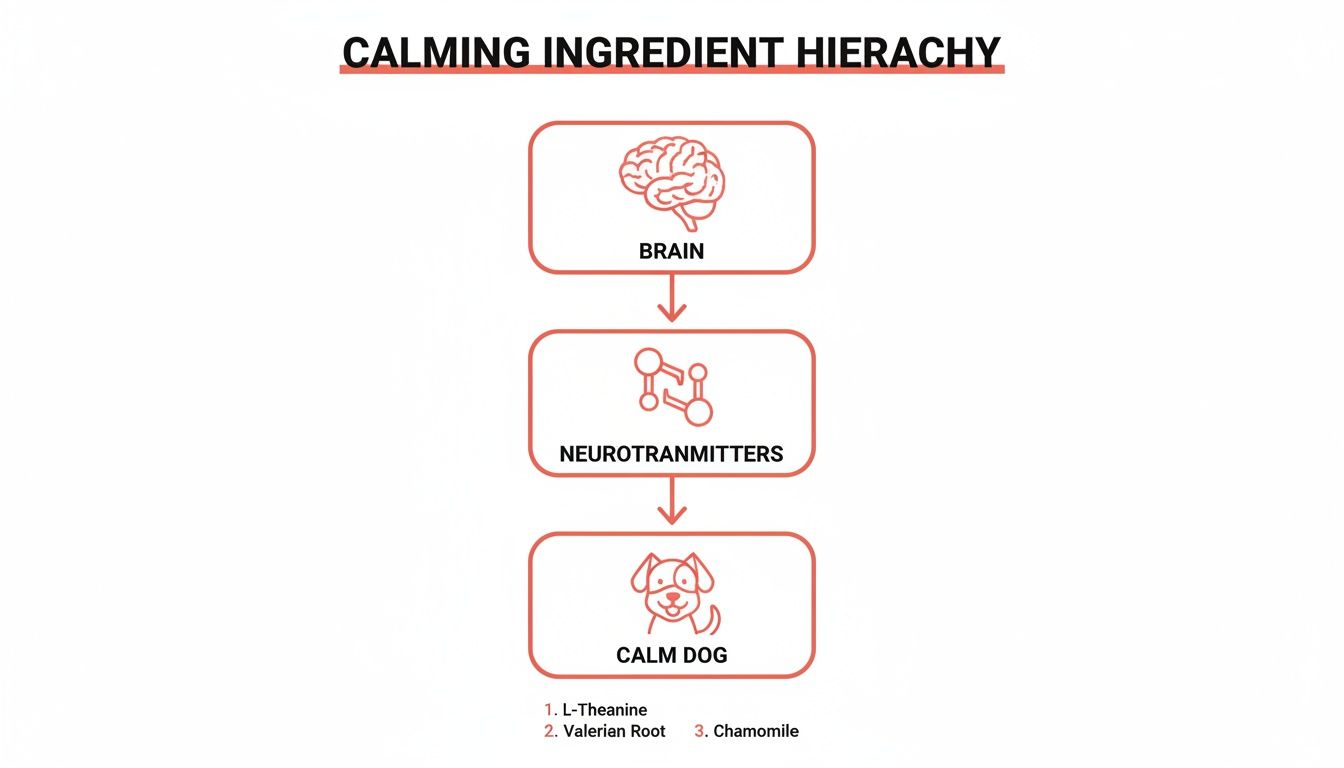
As you can see, it's all about supporting the brain's natural chemistry to create a calm and happy state of mind.
To make it even easier to tell these ingredients apart, here’s a quick-reference guide.
A Comparison of Key Calming Ingredients
This table breaks down what each of the most common active ingredients does, helping you match the right formula to your dog's specific needs.
Think of this table as your cheat sheet for decoding labels and finding the perfect blend of support for your anxious pup.
What to Avoid on the Label
Knowing what to look for is only half the battle. It's just as important to know which ingredients are red flags. A top-tier chew will have a clean, transparent label where the active ingredients are clearly listed and easy to find.
Key Takeaway: A powerful formula lists its science-backed ingredients right at the top. If you see vague terms like "calming blend" with no details, or if fillers like corn and wheat are the first things listed, it’s best to put that bag back on the shelf.
Keep an eye out for these and steer clear:
- Artificial Colors and Flavors: These serve no purpose other than making the product look or taste a certain way. They add zero health benefits and can even trigger allergies.
- Chemical Preservatives: Avoid ingredients like BHA, BHT, or ethoxyquin. Natural preservatives, such as mixed tocopherols (a form of Vitamin E), are a much safer and healthier option.
- Vague Proprietary Blends: If a brand won't tell you exactly what’s in their "special blend" and in what quantities, you have no way of knowing if it’s actually effective. Transparency is key.
By learning to read the ingredient label like a pro, you can confidently pick a product that offers real, effective support for your dog. You’ll be able to see past the marketing and choose a chew that will help your best friend feel their calmest, happiest self.
Weaving Calming Chews into Your Dog's Daily Life
Giving your dog a calming chew is a great move, but it's really just one piece of the puzzle. To get the most out of them, they need to be part of a bigger, more thoughtful daily routine. It's like our own health—one salad won't make you feel amazing for a month. It’s the daily habit of making good choices that builds real, lasting well-being. The same goes for your dog.
When it comes to dog chews for anxiety, consistency is everything. If your dog struggles with a more constant, generalized anxiety, giving them a chew every day helps keep those calming ingredients steady in their system. This builds a more even emotional foundation, making them less likely to get tipped over the edge by little daily stresses.
On the other hand, if your dog's fears are more predictable—think thunderstorms or trips to the vet—timing is your secret weapon. Give them a chew about 30 to 60 minutes before the event kicks off. This gives the active ingredients enough time to get to work, offering support right when they need it most.
A Whole-Dog Approach to Calm
Calming chews are a fantastic tool, but they aren't a magic wand. They shine brightest when they're supporting a broader strategy that helps your dog feel safe and secure in their world. The best anxiety plans tackle the problem from all sides, creating an environment where your dog can truly relax and thrive.
A complete plan that works in harmony should include:
- A Predictable Routine: Dogs are creatures of habit. They find so much comfort in knowing what comes next. Sticking to regular times for meals, walks, and play builds a stable structure that cuts down on anxious uncertainty.
- A Safe Space: Every dog deserves a personal retreat. This could be a comfy crate, a soft bed in a quiet corner, or just their favorite blanket. It’s a spot where they know they can go to feel completely safe when things get too overwhelming.
- Plenty of Exercise: Getting their body moving is one of nature’s best stress busters. Regular walks, a good run, or a fun game of fetch helps burn off all that pent-up nervous energy, leaving them much more relaxed.
It's easy to fall into the trap of seeing calming chews as a quick fix for "bad" behavior. A better way to look at them is as a tool that helps calm your dog's nervous system down enough so they can start learning new, healthier ways to cope with their fears.
More Than Just a Chew: Supporting Their Mind and Spirit
Mental exercise is just as important as physical exercise for your dog's happiness. A busy brain has less time to worry. Weaving simple enrichment activities into their day can make a huge impact on their anxiety levels.
Easy Ways to Add Enrichment
- Puzzle Toys: These turn mealtime into a brain game, making your dog think and problem-solve to get their food. It's an awesome way to build confidence and beat boredom.
- Snuffle Mats: Let them be a dog! Hiding treats in a snuffle mat taps into their natural instinct to sniff and forage, which is incredibly calming and satisfying for them.
- Positive Training Games: Keep training sessions short, sweet, and fun. This not only builds their confidence but also makes your bond stronger. When you reward calm behavior with praise or a tasty treat, you're teaching them that being relaxed is a wonderful thing.
When you combine calming supplements with this kind of supportive lifestyle, you create a powerful effect. The chew takes the edge off their anxiety, while the routine, safe space, and fun activities teach them that their world is a safe, predictable, and happy place. This isn't just about managing symptoms—it's about building a foundation of confidence and resilience for life.
Choosing the Perfect Calming Chew for Your Dog
Walking down the pet aisle can feel like a guessing game, especially when you're looking for something to help your anxious pup. With so many options, how do you pick the right one? It’s not about grabbing the shiniest bag; it's about finding the perfect fit for your dog's specific needs.
Think about your dog first. A formula that works wonders for a big, bouncy Labrador might be way too much for a tiny Chihuahua. Always look at the dosing instructions and make sure the chew is right for your dog’s size and age. Puppies and seniors have their own unique needs, so what works for one won't always work for the other.
Also, consider why your dog is anxious. Are they tearing up the couch when you leave for work, or do they hide and tremble during thunderstorms? Some chews are designed for daily, ongoing support to take the edge off, while others are better for those predictable, short-term stressful events.
Look for More Than Just Calm
The best calming supplements on the market today often pull double duty. You'll find that many top-tier chews also include ingredients to support gut health, like probiotics. This is a huge deal because of the gut-brain axis—a fancy term for the direct communication line between your dog's tummy and their brain.
Simply put, a stressed-out gut can lead to a stressed-out dog. When you pick a chew that also helps balance their gut microbiome, you're not just soothing their mind. You're building a foundation for better health from the inside out, which can lead to a happier, more balanced mood overall.
A Checklist for Making a Confident Choice
Before you head to the checkout, it helps to have a quick mental checklist. This will help you see past the flashy packaging and find a product you can actually trust.
The goal is simple: find a chew that's both safe and effective. A transparent, science-backed formula is always the best investment you can make in your dog's happiness.
Run through these questions before you buy:
- Is the ingredient list clear? Steer clear of products with vague "proprietary blends" that hide what's really inside. You want to see the good stuff—like L-Theanine, Chamomile, or Ashwagandha—listed clearly with their amounts.
- Does it have junk fillers? A quality chew won't be padded with unnecessary fillers like corn, wheat, or soy. It also shouldn't have artificial colors and flavors, which can cause other issues.
- What are other dog owners saying? Reviews are your best friend. Look for feedback from people whose dogs have similar anxiety triggers. Their real-world experience can tell you a lot about how well a product works.
- Is the dose right for my dog? The label should have clear, simple instructions based on your dog's weight. This ensures you’re giving them a safe and effective amount every time.
Using this simple framework helps you cut through the marketing noise. By focusing on your dog’s unique situation and taking a good, hard look at the label, you can confidently pick a calming chew that will make a real difference.
Got Questions? Let's Talk About Calming Chews
It's completely normal to have questions before introducing anything new into your dog's diet. You want to do what's best for your furry friend, and that means getting clear answers. Let's tackle some of the most common things people ask about dog chews for anxiety.
How Fast Do They Actually Work?
This is probably the number one question on every owner's mind. The short answer? It depends.
Some ingredients, like chamomile and L-Theanine, get to work fairly quickly. You might see a subtle calming effect within 30 to 90 minutes. This makes them great for specific, stressful events you know are coming—like a thunderstorm rolling in or a trip to the vet.
But for more persistent, day-to-day anxiety, it's better to think of these chews as a long-term support system. Ingredients like ashwagandha work best over time, helping your dog's body become more resilient to stress. Consistent daily use is the key to building that lasting sense of calm.
Are They Safe for My Dog Every Day?
Safety is always the top priority. So, can you give these to your dog daily? For a high-quality chew made with natural, proven ingredients, the answer is typically yes. They're designed to offer gentle support, not act like a heavy sedative.
Just be sure to stick to the dosage guidelines on the package, which are usually based on your dog's weight. Side effects are uncommon and generally mild, like a bit of drowsiness or a minor tummy ache. If you ever notice something that concerns you, stop giving the chews and have a quick chat with your vet.
It's crucial to know the difference here: a natural calming chew is not the same as a prescription sedative from your vet. These chews use herbs and amino acids to gently support your dog’s natural ability to relax. Prescription meds are powerful drugs that work on the central nervous system and are reserved for more severe cases under a vet's care.
How Do I Know if This Is the Right Choice?
So, are calming chews the right move for your dog? They can be a fantastic tool for dogs with mild to moderate anxiety, especially when you pair them with positive training and a loving environment. They help lower the "static" of anxiety, making it easier for your dog to relax and learn.
However, if your dog’s anxiety is severe—we're talking destructive behavior, aggression, or self-harm—it's time to bring in the pros. Your veterinarian or a certified animal behaviorist can help you build a more comprehensive plan.
Think of high-quality dog chews for anxiety as a wonderful first step, a helping hand on the path to making your best friend feel safe, secure, and happy again.

Karolis is the Founder of FORMA, a pet wellness brand focused on longevity and daily nutrition for dogs. Writes about supplements, canine health, and helping pets live longer, healthier lives
Join thousands of pet parents getting science-backed health insights and natural care advice