Your Guide to Dog Hip and Joint Supplements
Discover how to choose the right dog hip and joint supplement. Learn about key ingredients, safety, and supporting your dog's long-term mobility and health.

A good dog hip and joint supplement is more than just a treat; it's a core part of keeping your dog healthy and active. Think of it like a daily tune-up for the cartilage that cushions their joints. Just as you'd oil a squeaky hinge, these supplements provide the raw materials to help your dog move comfortably and freely for years to come.
Why Your Dog’s Joint Health Is So Important
Imagine your dog's joints are like the hinges on a busy door. In their puppy years, those hinges are brand new and swing without a sound. But after years of constant use—all that running, jumping, and chasing balls—the hinges naturally start to wear down. Without the right care, they can get stiff, creaky, and eventually, painful. That's a pretty good picture of what’s happening inside your dog's hips, elbows, and knees.
The key player here is cartilage, the smooth, slippery tissue that covers the ends of their bones. It’s a natural shock absorber that allows for smooth, effortless movement. The problem is, this crucial cushion can break down over time, and a few common culprits are usually to blame.
The Common Causes of Joint Wear and Tear
Knowing why joint issues pop up is the first step in getting ahead of them. While any dog can develop stiffness, some are more prone to it than others, which makes proactive care even more critical.
Here are the most common reasons joints start to degrade:
- Age: It’s a simple fact of life. As dogs get older, their bodies produce less of the natural compounds needed to maintain healthy cartilage. The lubricating fluid in their joints can also thin out, leading to stiffness and arthritis.
- Breed Predisposition: Let's face it, genetics play a huge role. Large breeds like German Shepherds, Labs, and Great Danes are famous for hip dysplasia. But smaller dogs aren't immune—breeds like Dachshunds can face their own unique joint and back problems.
- Excess Weight: Every extra pound puts a surprising amount of strain on your dog's frame. That constant pressure is like a slow-grinding force on their cartilage, speeding up its breakdown and making any existing issues feel much worse.
- High-Impact Activities: We love seeing our dogs run and play, but a lifetime of hard-charging activity takes a toll. For working dogs or canine athletes, all that impact can accelerate wear and tear if their joints aren't getting the right nutritional support.
A revealing study found that up to 80% of dogs over the age of 8 show signs of joint discomfort. That number really drives home how common this is and why starting a supportive routine early can make all the difference in their golden years.
Spotting the Early Warning Signs
Dogs are masters of disguise when it comes to pain, so the first clues are often easy to miss. But if you know what to look for, you can step in long before a little stiffness turns into a major problem.
Keep an eye out for these subtle hints:
- A slight pause before hopping on the couch or into the car.
- Taking the stairs a bit more slowly than they used to.
- Being noticeably stiff or slow to get up after a nap.
- Falling behind on walks or seeming less excited about playtime.
- Limping, even slightly, or seeming to favor one leg.
These aren't just signs of your dog "getting old." They're signals that their joints need help. A high-quality dog hip and joint supplement is a foundational piece of the puzzle, giving their body the building blocks it needs to keep those all-important structures strong for a long, happy, and adventure-filled life.
What Are the Most Effective Ingredients in a Joint Supplement?
Walking down the pet aisle, it's easy to feel overwhelmed by the sheer number of hip and joint supplements. So, how do you cut through the noise and figure out what actually works? The secret isn't in the flashy packaging; it's in the science-backed ingredients working together inside.
Think of a top-notch supplement formula as a highly skilled construction crew for your dog’s joints. You wouldn't just hire a single plumber to build a whole house. You need a coordinated team—carpenters, electricians, plumbers—each with a specific, vital role. The best joint support works the same way.
This breakdown shows how different factors connect to your dog's joint health and where a quality supplement fits in.

As you can see, proactively supporting your dog's joints with the right ingredients can make a real difference, especially as they age or if they belong to a breed prone to these issues.
The Foundational Duo: Glucosamine and Chondroitin
When it comes to joint support, glucosamine and chondroitin are the undisputed champions. They’re so well-known and effective that products featuring them make up a massive 52.0% of the market. That kind of popularity doesn't happen by accident—it’s built on real results. If you're curious about the numbers, you can explore more insights about joint supplement popularity.
So, what do they actually do?
Glucosamine: The Cartilage Bricklayer. Think of this as the essential raw material for building and patching up cartilage. It provides the building blocks needed to maintain that cushy barrier between the bones, keeping your dog's joints resilient.
Chondroitin: The Moisture Manager. While glucosamine builds, chondroitin protects. It acts like a sponge, pulling water and nutrients into the cartilage. This hydration is absolutely crucial for shock absorption and creating a smooth, slick surface so the bones can glide without friction.
When you see both of these on a label, you know you're looking at a formula designed to support both the structure and the function of your dog’s joints.
A common mistake is assuming one ingredient can do it all. The real magic happens when glucosamine and chondroitin work together. One provides the bricks, and the other ensures the mortar is strong and hydrated—it’s a true team effort for lasting mobility.
The Inflammation-Fighting All-Stars
Beyond just rebuilding the joint structure, managing inflammation is a huge piece of the puzzle. Chronic, low-grade inflammation is a silent enemy that can speed up cartilage breakdown and cause a lot of discomfort. That’s where a few other specialists join the crew.
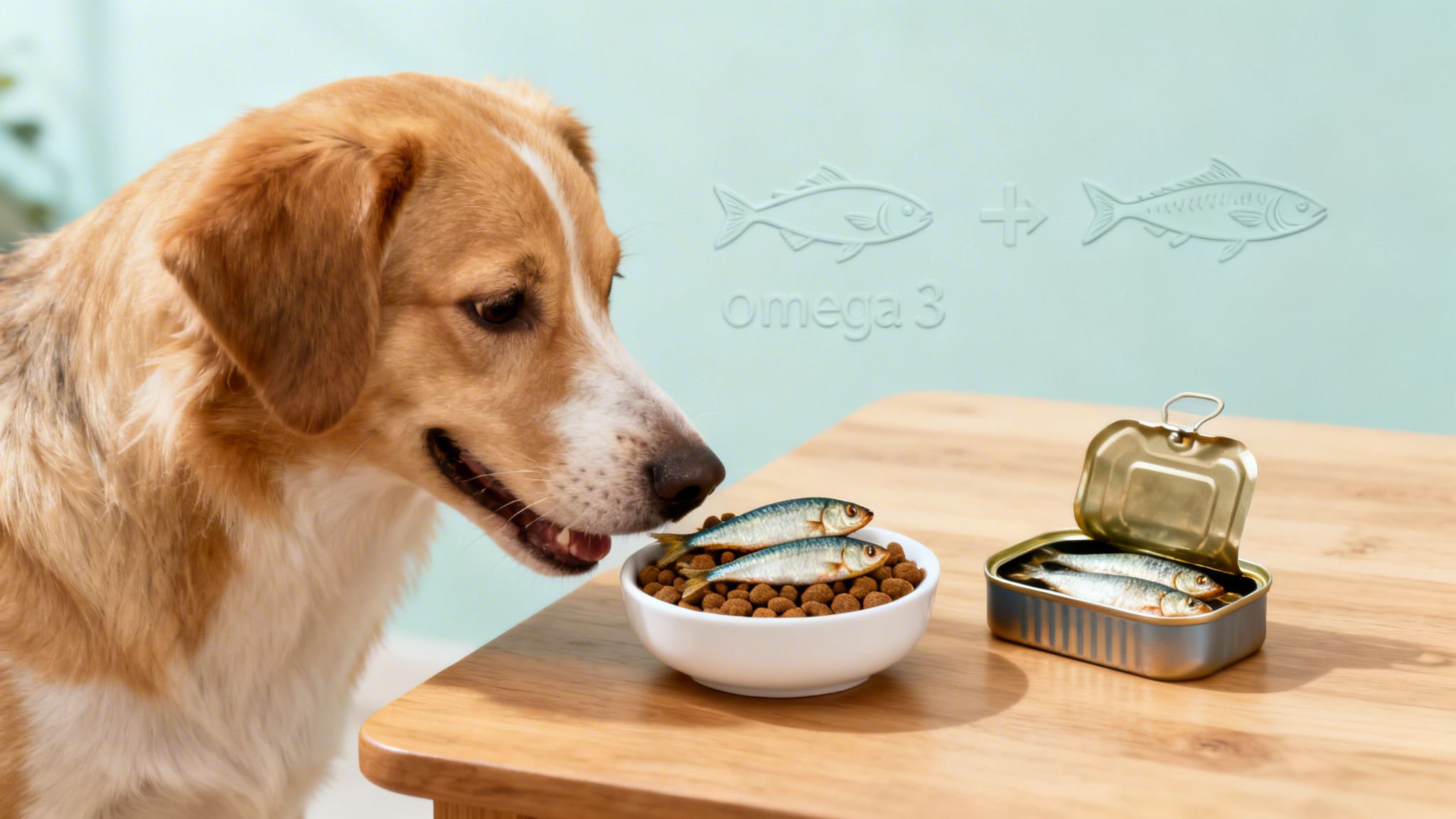
Omega-3 Fatty Acids: Often sourced from fish oil or green-lipped mussels, Omega-3s are famous for their natural anti-inflammatory power. They help soothe achy joints and promote a healthy, balanced inflammatory response throughout the entire body.
Turmeric (Curcumin): Curcumin, the active compound that gives turmeric its bright yellow color, is a potent antioxidant. It helps neutralize the pesky free radicals that cause damage to joint tissue, making it a go-to for promoting everyday comfort.
MSM (Methylsulfonylmethane): This is an organic sulfur compound that’s vital for the health of soft tissues—things like ligaments, tendons, and muscles that keep the joint stable. It also plays a role in producing collagen, another key protein for all those connective tissues.
These ingredients don't rebuild cartilage themselves, but they create a healthier, less inflamed environment. This allows the structural guys, like glucosamine, to do their job much more effectively.
Finding a Formula That Works in Harmony
A truly great dog hip and joint supplement isn't just a random list of ingredients. It’s a carefully crafted formula where every component works in synergy—meaning the combined effect is far greater than what each ingredient could do on its own.
When you're scanning a product label, it helps to know what role each key player has. Here's a quick guide to help you decode what you're seeing.
Key Ingredients in Effective Joint Supplements
A breakdown of the primary functions of common, science-backed ingredients found in high-quality dog hip and joint supplements.
Once you understand how these components are supposed to work together, you can confidently look past the marketing hype. You'll be able to choose a product based on a transparent, effective, and science-backed formula designed for your dog’s long-term health and happiness.
How to Select a Safe and High-Quality Supplement

Walking down the supplement aisle—or scrolling online—can feel overwhelming. The market for pet supplements is absolutely booming, set to grow from USD 2.82 billion in 2025 to a staggering USD 4.74 billion by 2034, and joint support products are leading the pack.
More options are great, but it also means you have to become a savvy shopper to sift through the noise. To find a dog hip and joint supplement that's truly safe and effective, you need to look past the slick marketing and focus on what really counts: quality, transparency, and how it’s made. You can get a better sense of the pet supplement market growth and see why picking the right product is so critical.
A great supplement isn’t just about a flashy ingredient list; it’s about the integrity of the entire process, from sourcing raw materials to the finished product in your hand.
Your Quality Checklist for Choosing a Supplement
Think of this as your non-negotiable list. If a product doesn't tick these boxes, it’s probably best to move on. These standards are what separate a premium, effective formula from one that’s a waste of money—or worse.
- Human-Grade Ingredients: This is the most important distinction. "Feed-grade" ingredients are held to a much lower standard and can legally contain by-products and fillers not allowed in human food. Human-grade means every single component is pure enough for you to eat.
- Third-Party Testing: The best companies voluntarily send their products to independent labs. This step verifies that what's on the label is actually what's in the bottle, confirming both potency and purity. It's an honest check against contamination.
- GMP-Certified Facilities: Look for a seal showing the product was made in a Good Manufacturing Practices (GMP) certified facility. This means the manufacturer follows strict FDA-regulated standards for cleanliness, quality control, and consistency.
These three checkpoints are your first line of defense. They’re verifiable proof that a company is serious about safety and quality, which should give you some real peace of mind.
Another great sign of a quality product is the term "vet-formulated." This tells you that actual veterinarians, people with deep expertise in canine health, had a direct hand in creating the formula and balancing the ingredient dosages.
Red Flags to Spot on the Label
Knowing what to look for is only half the battle; you also need to know what to avoid. A lot of low-quality supplements use confusing language and cheap additives to cut corners, which does your dog no favors.
Keep an eye out for proprietary blends. This is a sneaky marketing term companies use to hide the exact amount of each active ingredient. They'll list something like "Joint Support Complex," but you have no idea if it contains a therapeutic dose of glucosamine or just a sprinkle. Without transparency, you can't judge its effectiveness.
Next, scan the list for artificial additives and fillers. A good supplement doesn't need artificial colors, mystery "flavors," or chemical preservatives like BHA and BHT. Fillers like corn, soy, and wheat are just cheap bulk that can trigger allergies in some dogs.
Finally, watch out for a long list of binders. While some are needed to press a tablet or form a chew, too many can mean there's less room for the good stuff—the active ingredients your dog actually needs. A clean, simple ingredient panel is always a better sign.
A truly premium dog hip and joint supplement will have a label that's easy to read, listing every ingredient and its exact amount. That kind of transparency shows a company is confident in its product and has nothing to hide. By learning to read labels with a critical eye, you can make a choice that genuinely supports your dog's mobility for years to come.
A Holistic Approach to Your Dog's Mobility

A top-tier dog hip and joint supplement is a fantastic tool in your dog's wellness kit, but it’s not a magic bullet. Think of it as one key player on a team. For it to truly shine, the rest of the team needs to be in sync. This complete strategy—combining a powerful supplement with smart lifestyle choices—is the real secret to lasting mobility and comfort.
By supporting your dog's joints from every angle, you create an environment where the ingredients can do their best work. It's about building a foundation for health, from their food bowl to their favorite napping spot.
The Critical Role of Weight Management
Honestly, the single most important thing you can do for your dog’s joints (right alongside a great supplement) is to keep them at a healthy weight. Every extra pound puts an enormous strain on their hips, knees, and spine. It’s like forcing them to wear a heavy backpack all day, every day.
That constant pressure wears down cartilage and makes arthritis pain so much worse. We’ve seen in studies that even a small amount of weight loss can lead to huge improvements in an overweight dog's ability to get around. A balanced diet and proper portion sizes are simply non-negotiable for joint health.
By keeping your dog lean, you’re minimizing the daily wear and tear on their joints. This lets the supplement’s ingredients focus on repairing and protecting cartilage, rather than just fighting an uphill battle against excess weight.
Smart Exercise for Strong, Stable Joints
Exercise is crucial, but the kind of exercise makes all the difference. A wild game of fetch is fun, but high-impact activities with lots of sharp turns and jumping can be tough on joints, especially for older dogs or breeds prone to hip problems. The real goal is to build muscle without causing extra stress.
Strong muscles act like natural shock absorbers, helping to stabilize the joints and take the load off the cartilage. Low-impact activities are the perfect way to strike this balance.
Here are a few joint-friendly ideas:
- Swimming: This is the gold standard. The water supports your dog’s body, letting them build muscle and endurance with virtually zero impact on their joints.
- Leisurely Walks: Consistent, mellow walks on softer surfaces like grass or a dirt trail are fantastic. It’s often better to take a few shorter walks than one long, grueling one.
- Gentle Hikes: A controlled hike on mostly flat terrain is a great way to keep your dog mentally and physically engaged without the jarring impact of running on concrete.
Creating a Joint-Friendly Home Environment
You’d be surprised how much a few simple tweaks around the house can help a dog with stiff joints. These changes reduce the risk of slips and falls, helping your dog move around more confidently and with less pain.
Think about making these small but mighty adjustments:
- Improve Traction: Hardwood or tile floors can feel like an ice rink to a dog with wobbly legs. Laying down non-slip rugs and runners in the main walkways gives them the grip they need.
- Provide Orthopedic Support: A quality orthopedic bed with memory foam cushions their joints, distributes their weight evenly, and can make a huge difference in how they feel after a nap.
- Use Ramps: If your dog struggles to jump up, ramps are a lifesaver. A ramp for the car, couch, or your bed eliminates the painful impact of landing and saves their back and hips from strain.
When you pair a premium dog hip and joint supplement with healthy weight, smart exercise, and a supportive home, you’ve created a powerful, 360-degree plan for their well-being. This complete approach is what gives your best friend the best possible shot at a long, active, and happy life.
Proper Dosing and Working with Your Vet
https://www.youtube.com/embed/hRD4vZ-Obxs
So, you’ve done your research and picked out a fantastic dog hip and joint supplement with transparent, effective ingredients. That’s a huge step! But what you do next is just as important: getting it into your dog’s routine correctly and working hand-in-hand with your vet. How you introduce and use the supplement is key to making sure your dog gets all the good stuff without any hiccups.
Think about it like starting a new workout plan for yourself. You wouldn't just jump off the couch and try to run a marathon on day one, right? You’d ease into it. The same idea applies here, especially for pups with sensitive tummies.
Starting a New Supplement Safely
When you're adding anything new to your dog's diet, the golden rule is always start low and go slow. Even with top-notch ingredients, a sudden change can sometimes cause a little digestive upset. Giving their system time to get used to the new addition makes all the difference.
A great way to do this is by giving your dog half the recommended dose for the first week. Keep an eye on them. If they’re handling it well—no weirdness with their appetite or bathroom habits—then you can confidently move up to the full dose listed on the package. This one simple trick prevents most potential tummy troubles right from the start.
Why Dosage Is Based on Weight
Take a look at the directions on any supplement, and you'll see the dosage is almost always based on how much your dog weighs. This makes perfect sense. A tiny Chihuahua and a giant Great Dane live in different worlds when it comes to their nutritional needs, and that’s especially true for joint support.
The dosage is carefully calculated to deliver the right therapeutic punch of active ingredients, like glucosamine and chondroitin, for their specific body mass.
- Under-dosing: Giving too little just won't provide enough of the key ingredients to actually help their joints. It becomes a bit of a wasted effort.
- Over-dosing: While high-quality supplements are very safe, giving too much doesn’t add extra benefits. It’s mostly just wasteful and could increase the risk of mild side effects like an upset stomach.
Always follow the manufacturer's guidelines. And remember, consistency is key. Giving the supplement every single day allows those beneficial compounds to build up in your dog’s system where they can do their best work.
Think of your veterinarian as your co-pilot on your dog's wellness journey. They can confirm the dosage is right, make sure the supplement plays nicely with any other medications, and help you track your dog's progress over time.
When to Call Your Veterinarian
A good dog hip and joint supplement is a fantastic tool for supporting your dog’s comfort and mobility, but it’s not a substitute for professional medical care. It’s so important to know the difference between a little age-related stiffness and a red flag that means you need to call the vet right away.
It's worth noting that vets have become a major force in the joint care world, actively recommending supplements to help dogs stay mobile. This shift has turned supplements from a "nice-to-have" into an essential part of proactive pet care. If you're interested in the data behind this, you can learn about the growth of the dog joint care market.
Get in touch with your vet immediately if you see any of these signs:
- Sudden, severe limping or a total refusal to put weight on one leg.
- Yelping or whining when they move or when you touch a certain area.
- Visible swelling around any of their joints.
- A sudden disinterest in food or major changes in their overall behavior.
These symptoms could signal something more serious is going on, like an injury or an illness that needs a proper diagnosis. Your supplement is there to support your dog’s health, and your vet is there to guide it.
Got Questions? We’ve Got Answers.
When you start digging into the world of supplements, a lot of questions naturally pop up. You want to feel good about what you’re giving your dog, and that means getting clear, honest answers. This is your go-to guide for the most common questions we hear about dog hip and joint supplements.
We’ll tackle everything from the best age to start, how long it takes to see a real difference, and other practical things you’re probably wondering about. The goal here is to cut through the confusion and give you the confidence to make the best call for your best friend.
At What Age Should I Start Giving My Dog a Joint Supplement?
This is a big one, and there’s no single answer that fits every dog. While we often think of joint care as something for our senior pups, starting early can be a game-changer.
For some breeds, a proactive approach is just plain smart. Think about large and giant breeds like German Shepherds, Labs, or Great Danes. They grow incredibly fast and are often genetically wired for issues like hip dysplasia. For these dogs, many vets suggest starting a joint supplement as early as one year of age. You’re basically giving their joints the building blocks they need right as they’re finishing their major growth spurts.
For most other dogs, a great time to start is around middle age—usually somewhere between 5 and 7 years old. At this point, you’re getting ahead of the curve, helping to preserve healthy cartilage before the natural wear and tear of life really starts to set in. The idea is to support that joint fluid and structure before you see the first hint of stiffness.
But here’s the thing: it’s truly never too late. Even if your dog is well into their golden years and already slowing down, a top-notch dog hip and joint supplement can still bring a lot of comfort, help with lubrication, and seriously improve their quality of life.
How Long Until I See Results from the Supplement?
When it comes to joint support, patience and consistency are your two best friends. This isn't a quick fix. The ingredients in a quality joint formula work with your dog’s body over time, so you’re unlikely to see a dramatic change overnight.
Generally speaking, you’ll want to give it anywhere from four to eight weeks of daily use to see real, noticeable improvements. Some people spot small positive signs within the first couple of weeks, but the full, powerful benefits often take a bit longer to shine through.
So, why the wait? Ingredients like glucosamine and chondroitin need time to build up in your dog’s system and actually get to work in the joint tissues. It’s a slow and steady process of supporting cartilage and improving the quality of the synovial fluid that keeps everything moving smoothly.
Here’s a great way to track their progress:
- Keep a simple journal: Just jot down notes on their willingness to play, how easily they get up from a nap, or if they seem more comfortable on the stairs.
- Take short videos: A quick clip of your dog walking or trotting every two weeks can reveal subtle improvements that are easy to miss day-to-day.
Keep in mind, the timeline can also shift based on your dog's age, weight, breed, and how significant their joint issues were to begin with. Just stick with it.
Are There Any Side Effects I Should Watch For?
When you choose a high-quality, thoughtfully formulated supplement, the risk of side effects is very low. Products made with human-grade ingredients in a certified facility are all about purity and safety, which is exactly what you want.
If any side effect does pop up, it’s almost always a bit of mild digestive upset—think loose stools or a little gas. This usually only happens right at the beginning as your dog’s system gets used to something new.
The best way to avoid this is to ease into it. Start with a half dose for the first 5-7 days. This gives their gut time to adjust. Once you see they’re handling it just fine, you can move up to the full recommended amount for their weight. And of course, if your dog has known food sensitivities, always double-check the ingredient list for potential allergens. If you notice anything that seems off or doesn't go away, stop the supplement and have a chat with your vet.
Can I Give My Dog a Human Joint Supplement Instead?
This question comes up a lot, and the answer is a firm and simple no. Please don’t give your dog a joint supplement made for people, even if the main ingredients look the same.
Here’s why: human supplements are not created for a dog's unique metabolism or digestive system. The dosages are all wrong for their body, which means they could be getting an amount that’s either totally ineffective or potentially harmful.
Even more importantly, many human products contain ingredients that are flat-out dangerous for dogs. The biggest offender is xylitol, an artificial sweetener found in countless human vitamins and supplements that is extremely toxic to dogs. Other fillers, flavorings, or coatings can also cause problems. For the health and safety of your pet, always stick to a high-quality dog hip and joint supplement made just for them.

Karolis is the Founder of FORMA, a pet wellness brand focused on longevity and daily nutrition for dogs. Writes about supplements, canine health, and helping pets live longer, healthier lives
Join thousands of pet parents getting science-backed health insights and natural care advice