Your Guide to the Dog Immune System
Discover how the dog immune system works, what weakens it, and how nutrition, vaccines, and proactive care can keep your canine companion healthy and strong.

A dog's immune system is a sophisticated, built-in defense network of cells and organs that works around the clock to fight off germs, viruses, and other nasty invaders. The easiest way to think about it is like a highly trained security team, always on alert to keep your dog healthy.
Getting a handle on how this system works is the first real step you can take toward supporting your dog's health for the long haul.
Your Dog's Internal Security Team

Picture your dog's body as a private estate that needs constant protection. The dog immune system is that estate's elite security force, tirelessly patrolling every inch to identify and neutralize threats before they can cause trouble.
At its core, this system has one critical job: telling the difference between "self" (your dog's own healthy cells) and "non-self" (unwelcome visitors like bacteria, viruses, or parasites). As soon as an intruder is spotted, the system launches a highly coordinated attack to shut it down.
A strong, well-balanced immune response is the bedrock of your dog's health, acting as the ultimate gatekeeper between them and a world full of potential pathogens.
The Key Players on the Defense Team
To really grasp how this all works, let’s meet the main players on this internal security team. Each has a very specific job, but they all have to work together perfectly to keep your dog protected.
Here's a quick rundown of the most important components and the roles they play.
Your Dog's Immune Defense Team
Let's break down those top three a bit more:
White Blood Cells (The Security Guards): These are the boots on the ground. When a threat is detected, these "guards" are the first to arrive on the scene, ready to confront and destroy the invaders. They are the frontline soldiers in every single immune battle.
Antibodies (The Smart Keys): Produced by specialized white blood cells, antibodies are like custom-made keys designed for a specific lock. They latch onto a particular intruder, essentially tagging it so the "security guards" know exactly which target to eliminate.
Lymph Nodes (The Command Centers): You can feel these little glands in your dog's neck or behind their knees. They act as strategic command centers, filtering out harmful substances and housing immune cells. When they swell up, it’s a clear sign that the command center is fired up and managing an active threat.
A healthy immune system is incredibly clever. It doesn't just react to threats—it also creates a "memory" of past invaders. This immunological memory allows for a much faster and stronger response if the same bug tries to attack again. It's the exact principle that makes vaccines so effective.
Why This Matters for Your Dog
So, what does all this mean for you and your dog? A robust immune system means your dog will bounce back from illness faster and be less prone to nagging, chronic infections.
It’s what helps manage inflammation, supports proper healing, and keeps them full of life, from their goofy puppy days all the way through their golden years. By understanding the basics of the dog immune system, you can make smarter choices to keep their internal "security team" in peak fighting condition.
How a Puppy's Immunity Develops
When a puppy enters the world, their immune system is brand new and completely inexperienced. Think of it as a security team that hasn't been trained yet. They aren't ready for the countless germs waiting just outside the whelping box, which is why nature gives them an incredible head start.
For the first 24 to 48 hours, their mother produces a special, super-rich milk called colostrum. This isn't just food; it's a powerful transfer of her own immunity. This "liquid gold" is packed with antibodies that give her pups a temporary, borrowed shield of protection.
These maternally derived antibodies (MDA) are essentially a starter pack for the puppy's immune system. The puppy's gut is uniquely designed to absorb these large antibody molecules directly into the bloodstream, giving them immediate protection against the same germs their mother has already fought off.
The Critical Immunity Gap
There's a catch, though. This borrowed protection from mom is temporary and starts to fade over time. As the weeks pass, the level of maternal antibodies in the puppy's system slowly drops. At the same time, the puppy's own dog immune system is just beginning to learn how to make its own antibodies.
This creates a tricky transitional period known as the immunity gap.
During this window, usually between 6 and 16 weeks of age, the mother's antibodies are too low to provide solid protection, but the puppy's own immune system isn't yet strong enough to do the job alone. This gap is precisely why young puppies are so vulnerable to serious diseases like parvovirus.
The immunity gap is the single most important concept influencing a puppy's vaccination schedule. Vets time vaccines to close this window, providing protection just as the maternal antibodies fade and before the puppy is left exposed.
Understanding this delicate handoff is everything. Every new, safe experience—from sniffing the backyard to meeting a fully vaccinated, friendly dog—helps "train" their developing immune system, teaching it to tell the difference between a harmless visitor and a real threat.
Building a Resilient Foundation
The journey to a strong immune system doesn't happen overnight. Key immune organs like the thymus and bone marrow actually start developing as early as 21 days into gestation. After birth, every new microbe they encounter helps their lymphoid organs mature. Research shows that the canine immune system develops progressively, becoming largely competent by 6–12 weeks—right around the time maternal antibodies no longer block a vaccine's effectiveness. For a deeper dive, you can explore more about these early developmental stages in canine immunology research.
This is why a puppy's first few months are so critical. Everything from their diet to their vet care helps shape an immune response that will protect them for the rest of their life.
Here's a quick look at the key stages:
- Passive Immunity (Birth to ~8 weeks): The puppy relies almost completely on antibodies from mom's colostrum. This is their inherited defense.
- The Immunity Gap (~6 to 16 weeks): Mom's protection is fading, but the puppy's own system is still getting up to speed. This is prime time for vaccinations.
- Active Immunity (16+ weeks): Thanks to vaccines and careful exposure, the puppy’s immune system is now making its own antibodies and can defend itself.
This incredible transition from borrowed protection to self-sufficient defense is one of nature's marvels. By understanding how it works, you can partner with your vet to give your puppy the support they need to build a tough, well-trained internal security team for life.
The Role of Vaccines in Proactive Health
Beyond the immunity a puppy inherits, your vet has the tools to prepare your dog’s immune system for a lifetime of challenges. The most powerful of these is vaccination—a safe and proven way to train your dog’s internal security team without them ever having to face the real danger.
Think of a vaccine as a controlled training exercise. It introduces a harmless piece of a virus or bacteria, like showing a photo of a wanted criminal to a guard dog. This gives the immune cells a chance to study the enemy, learn its weaknesses, and build a defense plan. The system creates antibodies and memory cells, so if the actual disease ever shows up, the body is primed to launch a fast and effective counter-attack.
This training works incredibly well. The canine parvovirus vaccine is a perfect example. When parvovirus first appeared in the 1970s, it was a devastating new illness. Scientists quickly developed a vaccine that led to a remarkable 90–95% reduction in severe symptoms for vaccinated dogs. You can explore the full story of this life-saving breakthrough in canine health research.
This timeline shows how a puppy's immunity develops, from the protection they get from their mother's milk to bridging the "immunity gap" with vaccinations.
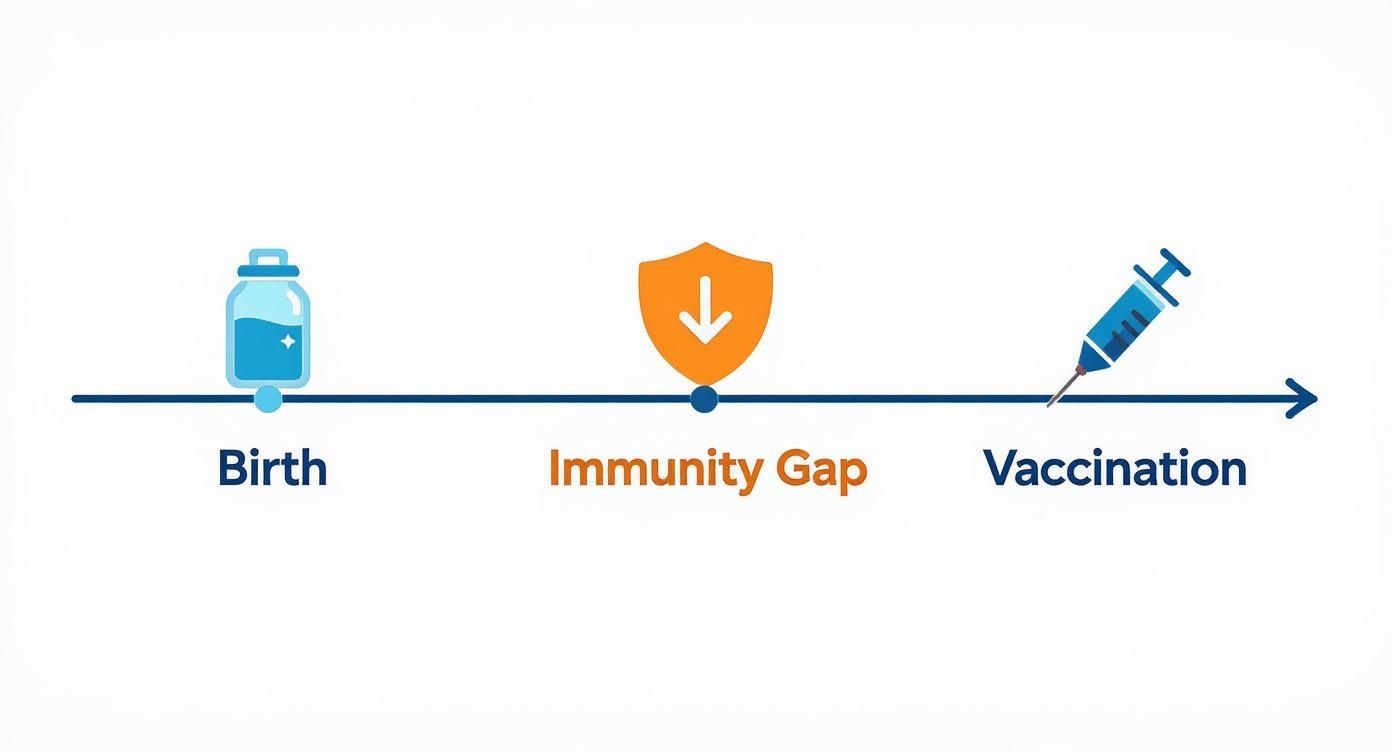
As you can see, vaccines are timed perfectly to take over just as the maternal antibodies a puppy is born with start to fade.
Core Versus Non-Core Vaccines
Not every dog needs every vaccine. Your veterinarian will recommend a schedule tailored to your dog’s specific circumstances. Vaccines generally fall into two categories.
- Core Vaccines: These are non-negotiable for all dogs, no matter where they live or what they do. They protect against dangerous, widespread diseases like rabies, canine distemper, parvovirus, and adenovirus.
- Non-Core Vaccines: These are optional but are often recommended based on a dog's individual risk factors, like their geographic location or how much time they spend around other dogs. This category includes vaccines for kennel cough (Bordetella), Lyme disease, and leptospirosis.
The best way to figure out which non-core vaccines your dog needs is to have an open conversation with your vet about their lifestyle. This ensures their protection is personalized.
Supporting Immunity Beyond Vaccinations
Vaccines are a cornerstone of canine health, but they’re just one piece of the puzzle. Other routine care is just as critical because it reduces the daily workload on your dog's natural defenses, freeing them up to focus on more serious threats.
If the immune system is constantly busy fighting off minor skirmishes, it has fewer resources to handle a major invasion.
Proactive care is all about minimizing the everyday stressors on the immune system. When you manage parasites and keep their teeth clean, you’re freeing up your dog's defenses to operate at peak efficiency, ready for any real danger that comes along.
Take parasite control, for instance. Fleas, ticks, and worms aren't just a nuisance; they carry diseases and trigger inflammation, which keeps the immune system on high alert. Regular, year-round prevention stops these invaders before they can cause trouble.
Dental hygiene also plays a bigger role than you might think. A dirty mouth allows harmful bacteria to thrive, and these germs can enter the bloodstream, causing low-grade inflammation throughout the body. This chronic activation slowly drains the immune system's resources. Regular brushing and professional cleanings help keep this under control, supporting wellness from the inside out.
What Weakens Your Dog's Immune System?
Even a dog in its prime can have its immune system worn down. Think of it like a security system—if minor alarms are constantly going off, the whole system gets fatigued. A dog's immunity works the same way, getting weakened by everyday pressures until it's more vulnerable to real threats.
Many of these factors are subtle, slowly chipping away at your dog’s natural defenses. You might not notice anything is wrong until the system is already under serious strain. The culprits range from the natural process of aging to hidden environmental pressures like chronic stress.
The Slowdown of Age
As dogs get older, their immune systems naturally start to lose a step. This process, known as immunosenescence, is completely normal. It’s like having a veteran security team where guards are retiring faster than new recruits can be trained. The body just doesn't produce new immune cells as quickly, and the seasoned cells left are a bit slower to react to new threats.
This is why senior dogs often struggle more with infections and don't always get the same robust protection from vaccines as younger dogs. It's a big reason an older dog might get sick from something they would have easily fought off in their youth. Their internal defense team is still on the job, but it’s not as sharp or as powerful as it used to be.
The Hidden Damage of Chronic Stress
Stress isn't just in your dog's head; it has very real, physical effects on their body. When a dog is constantly stressed—maybe from separation anxiety, a chaotic home, or not enough exercise—their body is flooded with the stress hormone cortisol.
In short bursts, cortisol is great for a "fight or flight" response. But when it's always present, it acts like a system-wide silencer for the immune system. It essentially tells the body's security guards to stand down, making them less effective at spotting and taking down invaders. This is often why a chronically anxious dog might have recurring skin flare-ups or stomach problems; their defenses are being held back by stress.
A stressed immune system is an overworked immune system. The constant release of cortisol can directly interfere with the function of white blood cells, leaving your dog's body less prepared to handle legitimate threats like viruses and bacteria.
The Critical Link Between Gut Health and Immunity
Believe it or not, one of the biggest players in your dog's immunity is hiding in their gut. An incredible 70-80% of the dog immune system is actually located in the gastrointestinal (GI) tract. This amazing network is called the gut-associated lymphoid tissue, or GALT.
Picture your dog's gut lining as a busy border crossing. The GALT is the security force, carefully inspecting everything that comes through. Its job is to let good things like nutrients in while keeping harmful pathogens out. This border is patrolled by a huge community of good bacteria, collectively known as the gut microbiome.
When that microbiome is in balance, it’s a huge asset. It supports the immune cells, helps them do their job right, and keeps the gut wall strong.
When Gut Bacteria Go Rogue
But things like a poor diet, a round of antibiotics, or even stress can throw this delicate ecosystem off-kilter. When the bad bacteria start to outnumber the good, it creates a state of imbalance called dysbiosis.
This imbalance can lead to "leaky gut," a condition where the intestinal wall becomes weak and permeable. Gaps can form, allowing undigested food particles and toxins to slip into the bloodstream, which triggers a massive inflammatory response. The immune system is suddenly forced to fight low-grade battles all over the body, distracting it from guarding against real outside threats.
It’s clear that a dog’s immune system is under constant pressure from multiple angles. The table below breaks down some of the most common stressors and what you, as an owner, might observe.
Immune System Stressors and Their Effects
Understanding these common factors is the first step toward building a stronger defense for your dog. By supporting their mental health, feeding them a nutrient-rich diet, and prioritizing their gut health, you can make sure their internal security team stays strong, sharp, and ready for anything.
How to Support Your Dog's Immune System

When it comes to your dog's immune system, there's no single magic bullet. It’s all about creating a consistent, healthy lifestyle. Think of it like a top-notch security system; it needs the right resources and regular maintenance to work properly. By focusing on a few key areas, you can give their body the building blocks it needs for a strong, reliable defense.
This means looking at the big picture—how nutrition, exercise, and even their emotional state all weave together. Each one directly impacts how well their internal security team is armed and ready to tackle everything from everyday germs to more serious threats.
Fueling the Front Lines with Nutrition
The single most powerful tool you have for supporting the dog immune system is their food bowl. It’s that simple. A high-quality, balanced diet provides the essential fuel needed to produce and maintain healthy immune cells. You're essentially supplying the gear and energy for your dog's internal bodyguards.
Certain nutrients are absolutely critical for this process. Without them, the immune system just can't operate at full capacity.
Here are the heavy hitters their diet needs:
- Antioxidants (Vitamins C and E): These are like rust-proofers for your dog's cells. They go around neutralizing harmful free radicals—unstable molecules that cause cellular damage and weaken immunity over time.
- Omega-3 Fatty Acids: Found in things like fish oil, these healthy fats are fantastic at keeping inflammation in check. By helping to manage the inflammatory response, they keep the immune system from getting stuck in overdrive.
- Essential Minerals (Zinc and Selenium): These trace minerals are fundamental for developing and operating immune cells. Zinc, for instance, plays a huge role in both the innate and adaptive immune responses.
A diet lacking these key nutrients is like asking a security team to work a double shift without proper equipment or a break. Providing complete and balanced nutrition ensures every immune cell has exactly what it needs to do its job right.
Nurturing the Gut-Immune Connection
Since so much of your dog’s immunity is headquartered in their gut, supporting digestive health is non-negotiable. A happy, thriving gut microbiome—that community of good bacteria living in the intestines—is one of the immune system's best friends.
This is where prebiotics and probiotics really shine.
- Probiotics are the good guys—live, beneficial bacteria that reinforce the gut's microbial army.
- Prebiotics are basically food for those good bacteria. They're specific types of fiber that help the beneficial microbes flourish.
Working together, they help create a stable gut environment. When a dog's gut is in balance, their immune system can focus its energy on outside threats instead of constantly putting out fires caused by internal inflammation.
Reducing the Burden Through Lifestyle
Beyond what's in the bowl, your dog’s daily routine has a massive impact on their immune resilience. Two of the biggest factors here are managing stress and getting the right amount of exercise.
Regular, moderate exercise does more than just tire them out. It boosts circulation, which helps immune cells travel efficiently throughout the body to patrol for invaders. It's also a fantastic stress buster, and stress is a known immune suppressor.
Likewise, don't underestimate the power of mental enrichment and good sleep. A bored or anxious dog has higher levels of the stress hormone cortisol, which can directly weaken immune function. Puzzle toys, training games, and a predictable routine help lower that stress. Deep, restorative sleep is when the body repairs itself and produces fresh immune cells.
By focusing on these three pillars—a nutrient-rich diet, a healthy gut, and a low-stress lifestyle—you create a powerful foundation for a robust dog immune system. These are the daily habits that keep your dog’s internal security team well-fed, well-rested, and ready for anything.
Signs of a Compromised Immune System
https://www.youtube.com/embed/EyJQ0Xo2KnQ
Your dog can’t just tell you they’re feeling under the weather. That’s why it’s up to us to become skilled detectives, picking up on the subtle clues their body sends out. A struggling dog immune system often whispers for help long before it screams.
Learning to recognize these signals is the key to proactive care. Sometimes the signs are easy to spot, but more often, they’re quiet patterns that emerge over weeks or months. Think of it this way: a single ear infection is one thing, but if you’re treating them back-to-back, it’s a red flag that something deeper is off-balance.
The goal is to spot recurring problems, which suggest your dog’s internal defense team is getting overwhelmed.
Common Warning Signs to Watch For
When a dog’s immunity is compromised, it can show up in all sorts of ways, from itchy skin to just seeming tired all the time. These are distress signals from their body, letting you know their defenses are running on empty and could use some backup.
Keep a close eye out for these persistent issues:
- Recurring Infections: Is your dog constantly getting skin infections, ear infections, or urinary tract infections? This is a huge sign their immune system is struggling to fight off everyday bacteria and yeast.
- Slow Wound Healing: When a minor cut or scrape seems to take forever to heal, it means the immune response responsible for tissue repair is sluggish.
- Frequent Digestive Problems: Chronic diarrhea, gas, or vomiting often points to an imbalanced gut—and since over 70% of the immune system lives there, it's a direct hit to their overall health.
- Unexplained Fatigue: All dogs slow down a bit as they age, but a sudden or persistent drop in energy for things they used to love, like walks or playtime, can signal an immune system working in overdrive.
- Allergies That Worsen: If your dog is suddenly scratching nonstop, licking their paws raw, or developing new sensitivities, it’s a classic sign of an overreactive immune system that can’t tell friend from foe.
When to Take Action
Seeing one of these signs pop up isn’t necessarily a reason to panic. But when you notice a consistent pattern, that’s your cue to step in. These symptoms are your dog’s way of showing you their internal security system is falling behind and can’t keep up.
A healthy immune system should knock out minor issues quickly. When small problems turn into chronic battles, it’s a clear signal that the system is compromised and needs support from you and your veterinarian.
If this list sounds a little too familiar, it's time to book an appointment with your vet. Catching these things early helps you get to the root cause—whether it’s diet, stress, or a hidden health issue—so you can give your dog the targeted support they need to get back on their paws.

Karolis is the Founder of FORMA, a pet wellness brand focused on longevity and daily nutrition for dogs. Writes about supplements, canine health, and helping pets live longer, healthier lives
Join thousands of pet parents getting science-backed health insights and natural care advice