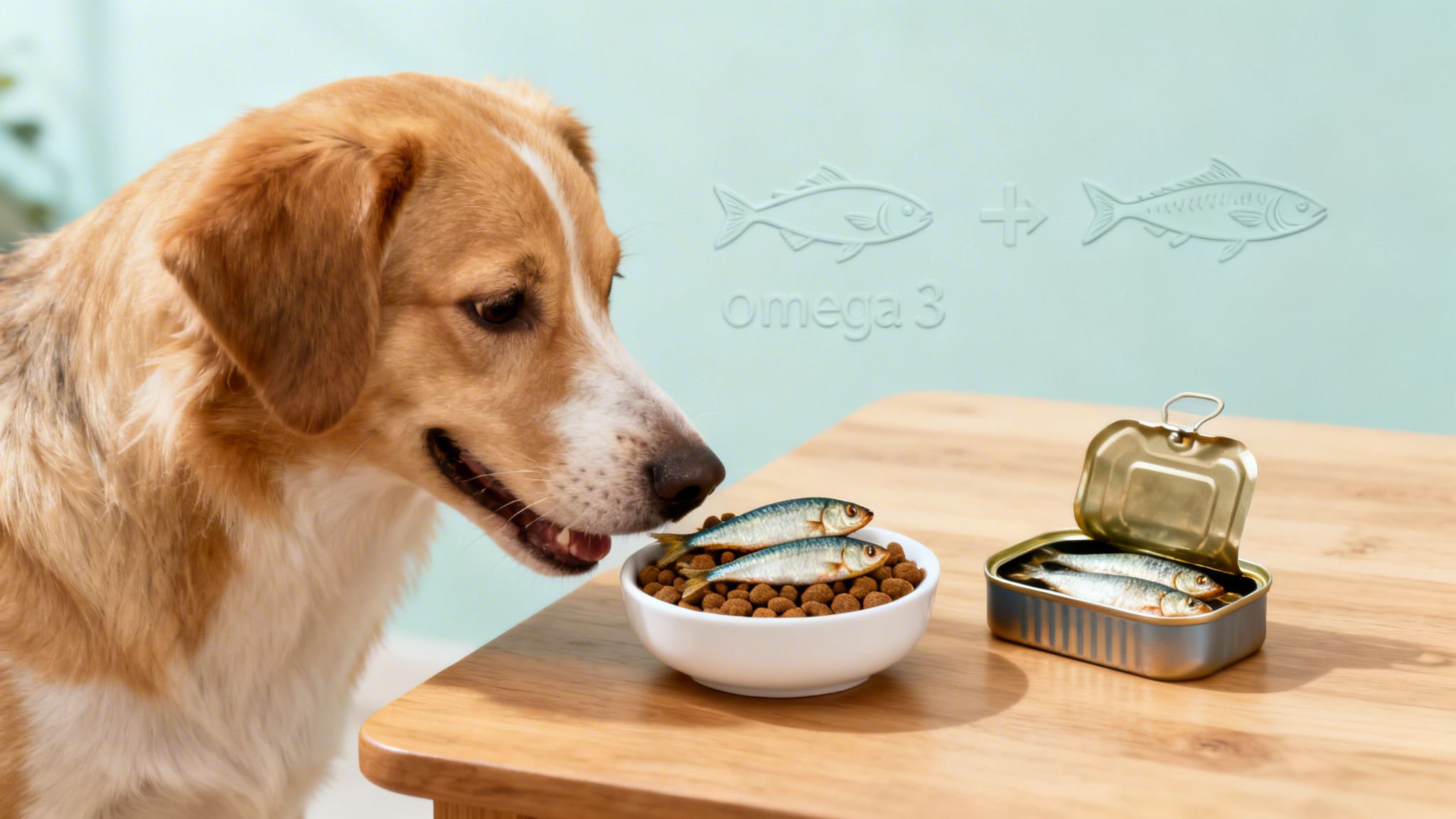
Why Is My Dog Licking Paws Constantly and How Can I Help
Is your dog licking paws constantly? Discover the real reasons behind the itch, from allergies to anxiety, and learn actionable steps to provide lasting relief.
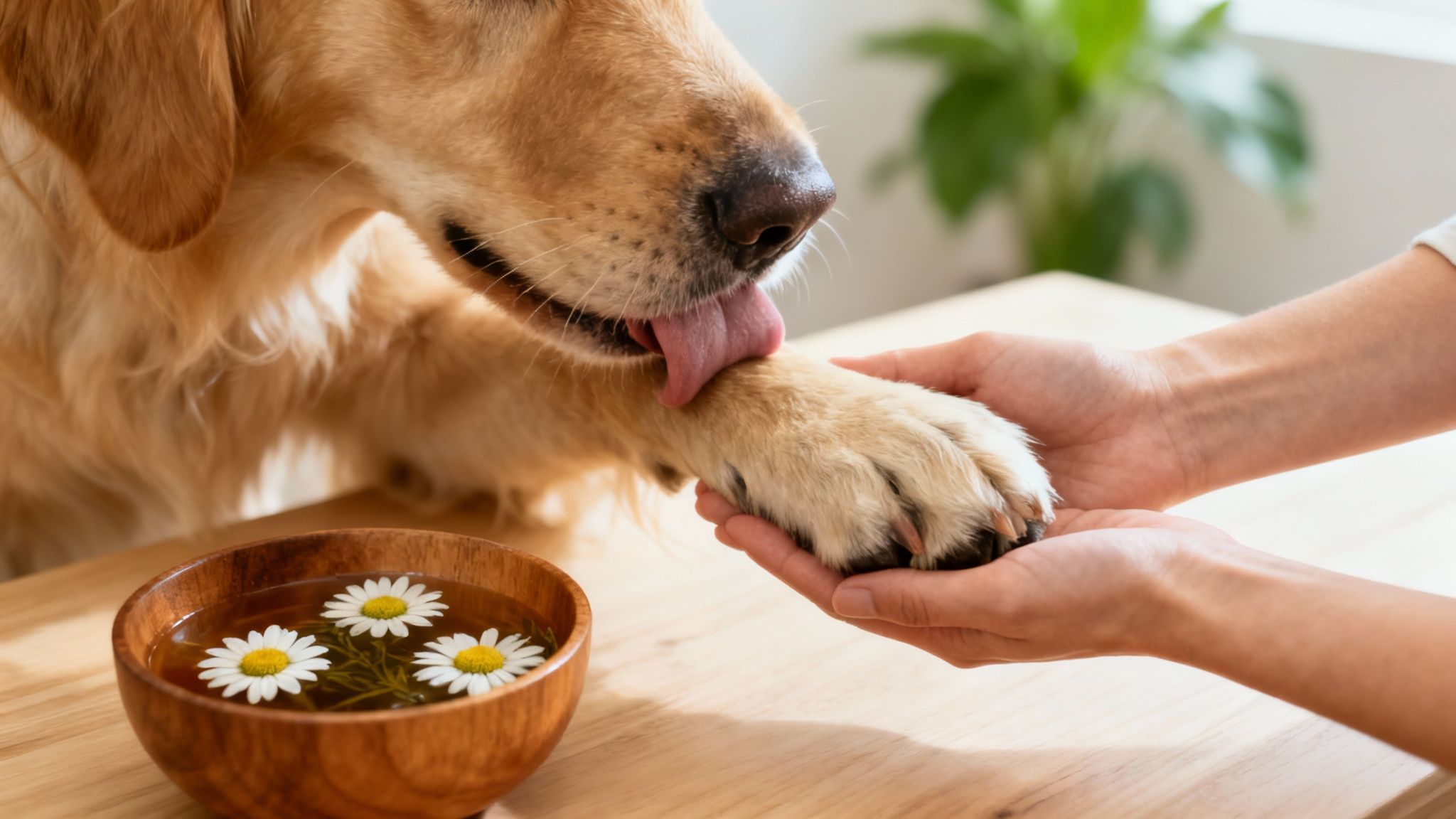
If you've noticed your dog is constantly licking their paws, you're right to be concerned. It's almost always a sign that something's up, whether it's allergies, pain, or even anxiety. A little self-grooming is perfectly normal, but when that licking becomes relentless, it's your dog’s way of trying to find relief. It's up to us to figure out the root cause and help them.
Decoding Your Dog's Paw Licking Habit
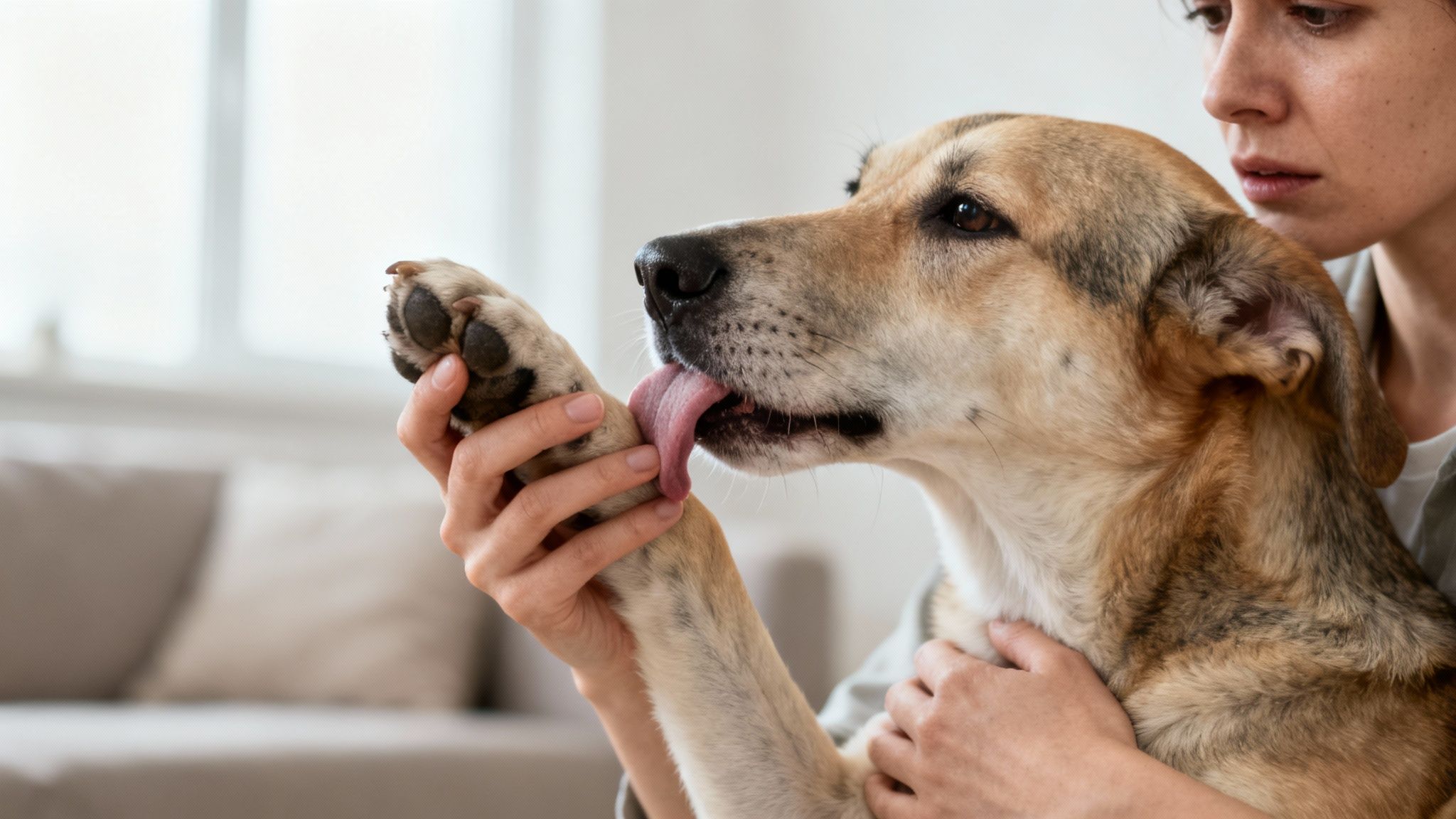
That slurp, slurp, slurp sound can be grating, but it’s a form of communication. Think of it less as a weird habit and more as a distress signal. Your dog can't just tell you, "Hey, my paws are super itchy," or "I stepped on something sharp." Instead, they use the only tool they have: their tongue.
Unfortunately, this can quickly spiral into a bigger problem known as the "itch-lick cycle." It starts with an initial irritant—say, pollen from the grass. Your dog licks to soothe the itch, but the constant moisture from their saliva creates the perfect environment for secondary bacterial or yeast infections. These new infections make the paws even itchier, which triggers more licking, and the cycle continues. It’s a frustrating loop that’s tough to break without a little help.
Finding the Root Cause
Getting to the bottom of why your dog is obsessively licking their paws is the first real step toward a solution. The reasons generally fall into two main buckets: physical and behavioral.
- Physical Issues: This is the most common category, covering everything from seasonal allergies and food sensitivities to a hidden injury.
- Behavioral Triggers: Sometimes, the cause is tied to your dog's emotional state, like separation anxiety, stress, or just plain boredom.
Think of paw licking like a check engine light in your car. It doesn't tell you the exact problem, but it signals that something needs your attention. Ignoring it can lead to more significant issues down the road.
This guide is designed to help you become a detective for your dog's health. We’ll walk through the common culprits, teach you how to assess the situation at home, and give you practical steps to get to the root of the problem. Our goal is to go beyond quick fixes and create a wellness plan that brings your best friend genuine, lasting comfort.
To get started, here’s a quick overview of the most frequent reasons your dog might be licking their paws. Use this table as a starting point to help narrow down the possibilities.
Quick Guide to Common Paw Licking Causes
As you can see, the clues are often right in front of us if we know what to look for. Paying close attention to the specific symptoms and patterns is key to solving the mystery.
Decoding the Physical Causes of Itchy Paws
When your dog starts licking their paws nonstop, it's their body’s way of sending up a flare. This isn't just some quirky habit they've picked up; it's almost always a direct response to some kind of discomfort. Think of their paws as sensitive sensors—they’re often the first part of the body to react to irritants, both inside and out. Getting to the root of the physical cause is your first big step toward finding them real, lasting relief.
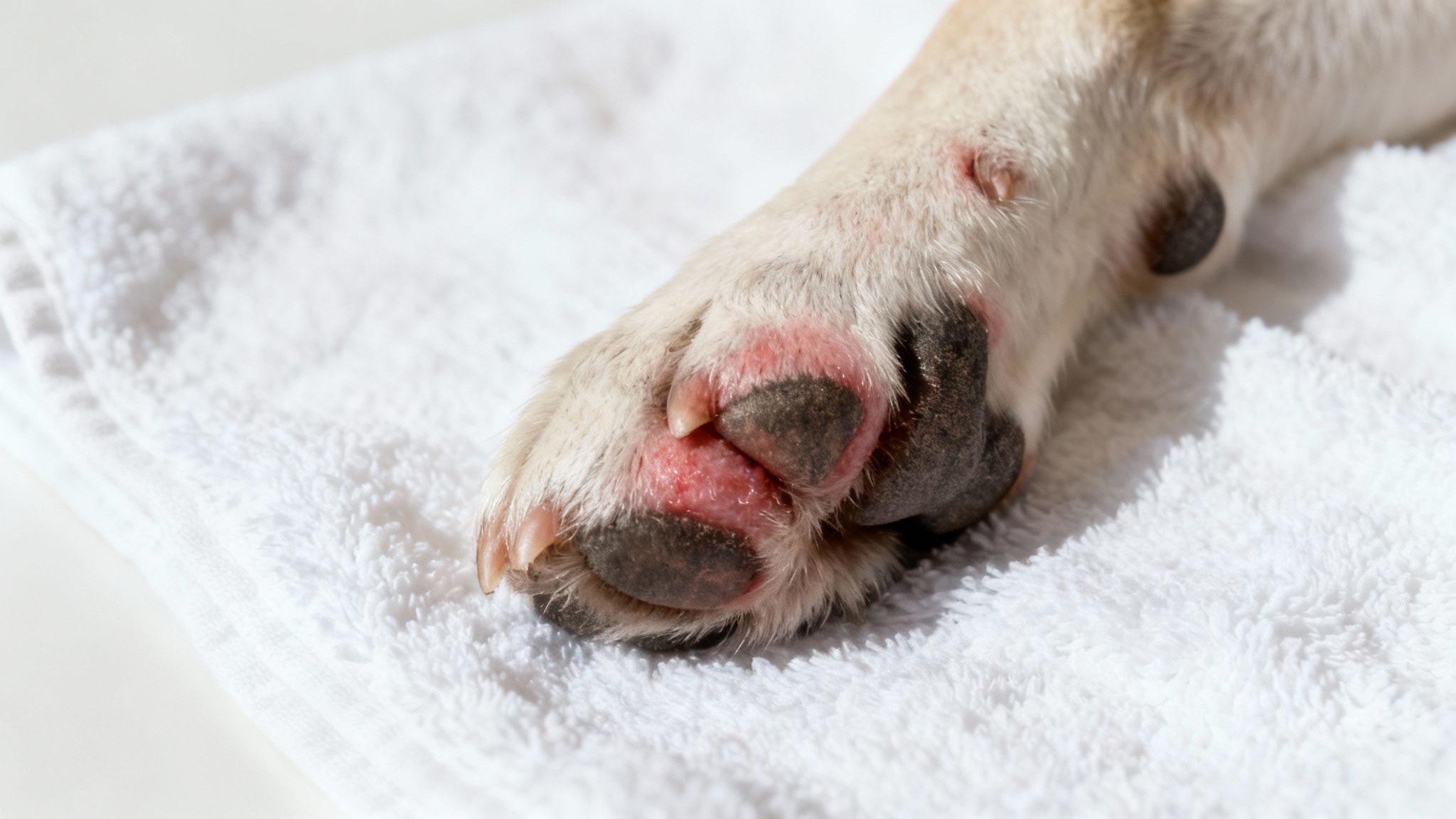
Let's dig into the most common medical reasons that can turn your dog’s paws into itchy, uncomfortable hotspots.
Allergies: The Primary Itch Trigger
More often than not, allergies are the main villain behind obsessive paw licking. An allergic reaction is basically the immune system going into overdrive against something harmless. This triggers a wave of inflammation that shows up as intense itchiness, especially in the paws, ears, and belly.
It’s a huge issue, with allergies affecting up to 15-20% of dogs in the US. Veterinary experts point to things like pollen, grass, mold, and dust mites as the main triggers for atopic dermatitis—a chronic skin condition that can make a dog's paws feel unbearable. The American Kennel Club is a great resource for learning more about this.
You'll generally see two types of allergies in dogs:
- Environmental Allergies: Also known as "atopy," this is a reaction to things your dog breathes in, like pollen or dust. You might notice the licking gets worse seasonally, like in the spring or fall.
- Food Allergies: This is a reaction to an ingredient in their food, usually a protein like chicken or beef. Unlike environmental allergies, the itch from a food sensitivity is usually a year-round battle.
Pesky Parasites Causing Discomfort
Even the most well-cared-for dogs can pick up tiny unwanted guests. These parasites can cause serious irritation on their paws, and the constant itching forces them to lick and chew, which only makes things worse.
Fleas are the obvious culprit, but their saliva can cause a severe reaction called flea allergy dermatitis (FAD). For a sensitive dog, a single bite can trigger a full-body itch fest. Mites are another sneaky one; they can burrow into the skin between the toes, leading to hair loss, scabs, and that relentless licking. Ticks can also cause a painful, itchy spot right where they bite.
Think of a parasite infestation like having an invisible splinter you can't get out. The irritation is constant and focused, making your dog fixate on that one spot to try and find relief.
Sneaky Secondary Infections
One of the biggest risks with constant paw licking is that it can open the door for a secondary infection. All that saliva creates a warm, moist environment—the perfect breeding ground for bacteria and yeast that normally live on the skin without causing trouble.
Once the skin barrier is broken from all the licking and chewing, these microscopic opportunists can multiply and run wild.
Signs of Infection
These infections just add fuel to the fire, cranking up the pain and itchiness. It’s a vicious cycle. What might have started as a mild allergy can quickly spiral into a painful, infected wound that needs a vet’s help to clear up.
Injuries and Foreign Objects
Sometimes, the answer is a lot simpler. If you notice your dog is suddenly fixated on just one paw, it's a good sign that there's a specific injury or something stuck in there.
Take a look for some of these common issues:
- Cuts, scrapes, or burns from walking on hot pavement.
- Foreign objects like thorns, little bits of glass, or splinters wedged in the paw pad.
- A broken nail that's cracked down to the sensitive part (the quick).
- Insect stings or bites from bees, wasps, or spiders.
A gentle but thorough inspection of the paw, especially between the toes and pads, can often reveal the problem right away. It's so important to find and treat these issues quickly, because even a tiny cut can get infected if it's being licked constantly.
Understanding the Behavioral Reasons for Paw Licking
If your vet has given your dog a clean bill of health, it’s time to explore what’s going on in their head. Sometimes, the cause isn't physical at all. Just like we might bite our nails or pace around when we're anxious, dogs have their own ways of coping with big feelings. Excessive paw licking is often one of them.
This isn’t your dog being “bad”; it’s a self-soothing mechanism. The simple act of licking releases endorphins—their brain's natural feel-good chemicals—which gives them a momentary sense of calm. The trouble is, this can quickly become a hard-to-break habit. Your dog feels stressed, licks to feel better, and their brain wires that connection. Before you know it, the licking becomes an automatic response, even when the original trigger has passed.
Common Emotional Triggers
Figuring out what sets off the licking is your first big clue. Every dog is unique, of course, but there are a few usual suspects when it comes to anxiety-driven behaviors.
- Separation Anxiety: Does the licking start right after you grab your keys? For many dogs, being left alone is terrifying, and licking is how they manage that distress.
- Scary Noises: Think fireworks, thunderstorms, or even the vacuum cleaner. These loud, unpredictable sounds can send a sensitive dog searching for comfort, which they find in licking.
- Life Changes: Dogs are creatures of habit. A new home, a new baby, or even a change in your work schedule can throw their world off-kilter and trigger insecure behaviors.
- Plain Old Boredom: A dog without a "job"—whether that's a good walk, a puzzle toy, or a training session—will often invent one. Compulsive licking can easily become their go-to pastime.
Try to play detective. Does it only happen when you're about to leave the house? Or during a storm? Pinpointing the context will light the path toward a solution.
Why It Feels So Good (to Them)
It’s crucial to understand that this isn’t just a random quirk; it’s deeply rooted in canine psychology. Research confirms that stress and anxiety are major players when a dog is licking paws constantly.
About 10-15% of chronic paw-licking cases are linked back to behavioral issues. It starts as a way to self-soothe but can morph into a true compulsive habit, much like a person who can't stop fidgeting when they're nervous. This is a clear signal that your dog needs more emotional support and a calmer environment. You can learn more about these behavioral links on PMC.
This is exactly why scolding your dog or pulling their paw away doesn't work in the long run. You're only interrupting the symptom, not addressing the underlying emotion. In fact, punishing them can add another layer of stress, potentially making the licking even worse.
How to Break the Cycle for Good
Once you’ve identified a likely behavioral trigger, your focus can shift from their paws to their peace of mind. The goal is to replace their need to self-soothe with a genuine feeling of safety, confidence, and engagement.
Here are a few powerful ways to start:
- More Movement: A tired dog is a content dog. Try adding an extra 15 minutes to your walk, introducing a game of fetch, or finding a safe place for them to run. This helps burn off the anxious energy that fuels compulsive behaviors.
- Brain Games: Mental stimulation is just as important as physical exercise. Puzzle toys, snuffle mats, and "find it" games challenge their minds, build confidence, and keep boredom at bay.
- A Safe Haven: Make sure your dog has a cozy, quiet spot—like a crate with a comfy blanket or a special bed in a low-traffic corner—where they can go to decompress when they feel overwhelmed.
- A Predictable Routine: Dogs feel secure when they know what to expect. Sticking to regular times for meals, walks, and playtime creates a stable foundation that reduces anxiety.
By meeting their emotional needs, you can help your dog build the confidence to leave the lick-anxiety cycle behind for good.
Your At-Home Toolkit for Paw Relief
While you're figuring out why your dog is so fixated on their feet, you can still offer some immediate relief. Think of it as first aid for irritated paws. These are simple, practical things you can do right now to make your dog more comfortable and stop the licking from getting worse.
A little bit of consistent paw care can make a world of difference. This isn't about some complicated, time-consuming regimen. It's about building small, healing habits into your day that help remove irritants and calm down angry skin before it turns into a bigger problem.
Start with a Gentle Paw Inspection
First things first, play detective. Before you try any soaks or balms, take a good look at the paws. You might just find an obvious culprit, especially if the licking is focused on one specific spot.
Find a comfy, well-lit place to sit with your dog and gently examine each paw. Spread their toes and check the pads. You’re looking for anything out of the ordinary:
- Foreign Objects: Things like splinters, tiny bits of glass, thorns, or burrs.
- Injuries: Any cuts, scrapes, blisters, or even cracked, dry pads.
- Pests: Ticks are the usual suspects, but also check for insect stings that can cause swelling.
- Irregularities: Any strange lumps, bumps, or growths.
If you spot a small splinter that you can grab easily, you can try removing it with clean tweezers. But if anything is deep, bleeding, or looks infected, it’s best to let your vet handle it. Don't risk making it worse.
Create a Soothing Paw Soak
A paw soak is basically a mini spa day for your dog’s feet. It’s fantastic for washing away allergens like pollen and grass after a walk, and it does wonders for soothing inflamed skin. The relief can be almost instant.
You don't need much. Just fill a shallow bin or your tub with a few inches of lukewarm water—enough to cover their paws. Then, mix in one of these gentle soothers:
- Epsom Salt: A classic for a reason. It has anti-inflammatory properties that can help reduce swelling and ease minor discomfort.
- Oatmeal: Colloidal oatmeal (which is just very finely ground oatmeal) is a go-to for calming itchy skin. You can make your own by blitzing plain, uncooked oats in a blender until they're a fine powder.
- Povidone-Iodine: This is a great gentle antiseptic. Just add enough to the water to turn it the color of weak iced tea. It helps keep bacteria and yeast in check without being harsh.
Have your dog stand in the soak for about 5-10 minutes. The most important part? Dry their paws completely afterward, getting in between every single toe. Dampness is a breeding ground for yeast, and that’s the last thing you want.
Getting into the habit of a quick paw wipe or soak after every walk is a game-changer. You're physically removing the environmental triggers before they have a chance to cause a reaction. It's one of the simplest and most powerful preventative steps you can take.
Protect and Moisturize
Once the paws are clean and totally dry, a good paw balm can work wonders. It helps heal cracked pads and creates a protective barrier against rough surfaces and allergens.
Look for a balm that's dog-safe and lickable, made with natural ingredients like shea butter, coconut oil, or vitamin E. You only need a thin layer to help lock in moisture and protect that sensitive skin.
Knowing When You Need to See a Veterinarian
While those home remedies can provide some much-needed temporary relief, they’re really just a stop-gap, not a long-term solution. It's crucial to know when to switch from at-home care to calling in the professionals.
You know your dog better than anyone. If the constant paw licking is a brand-new behavior and doesn’t let up after a day or two of basic cleaning and care, it's time to make an appointment. Persistent licking is almost always a dog’s way of telling you something deeper is going on, and only a proper diagnosis will get to the root of it.
Red Flags That Signal an Urgent Vet Visit
Some symptoms are just too serious to wait and see. If you spot any of the following, don’t hesitate—get your dog to the vet right away. These signs often point to a severe infection, a deep injury, or significant pain that needs immediate medical help.
It's time to make that call if you see:
- Limping or Unwillingness to Bear Weight: This isn't just a simple itch; it's a clear signal of serious pain.
- Bleeding, Pus, or Discharge: Any kind of oozing from the paw is a tell-tale sign of an infection that likely needs antibiotics.
- A Foul or Musty Odor: That distinct "Frito feet" smell can often point to a yeast infection, while a sour odor might signal a bacterial problem.
- Noticeable Swelling or Heat: A puffy, hot paw could mean anything from a nasty infection or abscess to a broken bone.
- Sudden and Severe Behavioral Changes: If your normally sweet dog growls or snaps when you try to touch their paw, that's their way of screaming "it hurts!"
This simple decision tree can be a great first step when you initially notice the licking and want to do a quick paw check at home.
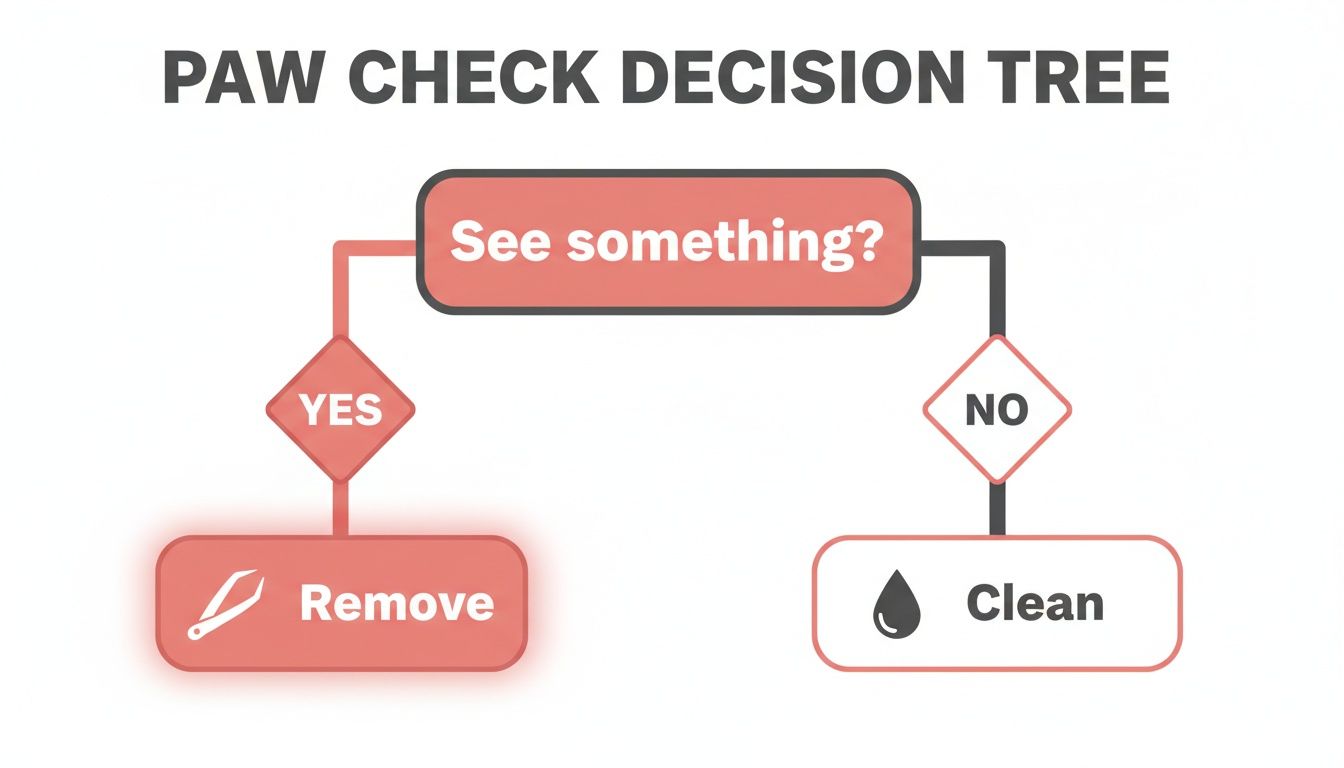
It’s a handy visual guide to help you decide whether you need to carefully remove something obvious or just give the area a gentle cleaning.
What to Expect at the Vet's Office
Heading to the vet for paw licking is pretty common, so don't feel like you're overreacting. Your vet will start with a good look at your dog's paws, skin, and even their ears, since skin issues are often connected. Be prepared to share everything you’ve noticed—when the licking started, if it seems worse at certain times of the year, and any home remedies you've tried.
From there, your vet will likely suggest a few tests to figure out exactly what’s going on.
Your vet is your partner in this. All the little details you provide about your dog's daily life are gold—they help your vet connect the dots and get to an accurate diagnosis much faster.
Some of the most common diagnostic tools include:
- Skin Scrapes or Cytology: This sounds intense, but it just means taking a tiny sample from the paw to look for mites, yeast, or bacteria under a microscope.
- Allergy Testing: If allergies are the prime suspect, your vet might recommend a blood test or refer you to a veterinary dermatologist for more specific skin testing.
- Food Elimination Trial: If a food sensitivity seems likely, your vet will walk you through a strict diet plan to nail down the problem ingredient.
These steps help move past the guesswork and find the real source of the irritation. After all, parasites like fleas, mites, and ticks are responsible for 20-25% of constant paw licking cases. Knowing what the vet might look for helps you prepare for the visit and understand the plan. You can learn more about the hidden dangers of paw licking on Pawlabs.
Building a Proactive Paw Wellness Plan
The best way to deal with paw licking is to get ahead of it. Instead of just reacting when you see the licking start, the real goal is to build a lifestyle for your dog that prevents it from happening in the first place. This is about creating a foundation of long-term health and resilience.
Think of it like tending a garden. You don't just pull weeds as they pop up; you cultivate rich soil, water consistently, and make sure there’s enough sun. It's the same idea with your dog. We want to focus on three core pillars that work together to keep them strong and balanced from the inside out.
The Three Pillars of Paw Health
A truly effective wellness plan isn't just one thing—it’s how nutrition, grooming, and lifestyle all connect. Each piece supports the others, creating a powerful defense against the usual suspects that trigger paw licking. When these pillars are solid, your dog is just better equipped to handle allergens, stress, and irritants without it snowballing into a chronic problem.
Pillar 1: Foundational Nutrition: A healthy gut is mission control for the immune system. When your dog's gut microbiome is in good shape, it helps keep inflammatory responses in check, which is a game-changer for allergies. A diet based on high-quality, whole-food ingredients, maybe with a good probiotic, is key to building this internal defense.
Pillar 2: Consistent Grooming: Think of this as your first line of defense against the outside world. Simple habits, like checking their paws and giving them a quick wipe-down after walks, physically remove allergens like pollen and grass before they can cause irritation. Keeping the hair between their paw pads trimmed is another big help—it boosts airflow and cuts down on moisture, which is exactly what yeast and bacteria love.
Pillar 3: A Balanced Lifestyle: A dog’s mental well-being is directly tied to their physical health. Just like with us, chronic stress can weaken their immune system and lead to compulsive habits like obsessive licking. Making sure they get daily exercise, mental stimulation with puzzle toys, and the comfort of a predictable routine gives them the security they need to stay relaxed and happy.
A proactive approach isn't about adding a dozen new chores to your list. It’s about making small, consistent choices that build up your dog's resilience over time. Every healthy meal, post-walk paw wipe, and fun game of fetch is a deposit into their wellness bank.
This approach is about more than just stopping a single behavior. It’s a commitment to supporting your dog's entire well-being. By focusing on these pillars, you’re giving them the tools to live a more comfortable, vibrant life—with healthy paws ready for all the adventures you’ll have together.
Got Questions About Paw Licking? Let's Dig In.
Even with a solid game plan, it's totally normal to have a few more questions pop up about your dog's constant paw licking. Think of yourself as a detective trying to solve a mystery—the more clues you have, the better. Let's tackle some of the most common questions we hear from dog owners just like you.
These quick, practical insights will help you know what to expect and how to handle specific situations as they come up.
How Long Until I See Improvement?
This is the million-dollar question, right? The honest answer is: it really depends on what’s causing the licking in the first place. Relief isn't always a quick fix, so a little patience will go a long way.
For something simple like a thorn in the paw pad or a tiny cut, your dog will probably feel better almost immediately once you’ve removed the culprit and cleaned the area. But for the more complex stuff, you're playing the long game.
When you're up against allergies or deep-seated behavioral habits, you need to think in terms of weeks, not days. It takes time for the body to respond to a new diet, just like it takes time for a brain to unlearn an old habit and form a new, healthier one.
Here’s a rough timeline to give you an idea:
- Minor Irritants: Almost instant relief to just a few days.
- Behavioral Licking: Several weeks of consistent, positive training and mental stimulation.
- Allergies: It can take 4 to 8 weeks before you see real changes from a food trial or new medication.
Can I Just Use My Own Anti-Itch Cream?
It's so tempting to grab that hydrocortisone cream from your own medicine cabinet, but please don't. Using human medications on your dog's paws without your vet's direct approval is a major no-go.
So many ingredients in our products—like certain steroids or zinc oxide—are toxic to dogs if they lick them. And let's be real, your dog is definitely going to lick whatever you put on their paws. Always, always stick to products that are specifically made for dogs to keep them safe.
Is It a Food Allergy or Something in the Air?
Telling the difference between food and environmental allergies can be tough because they often look the same: itchy, irritated paws. The best clue is usually when the flare-ups happen.
- Environmental Allergies: These tend to follow the seasons. Does the paw licking ramp up every spring when the pollen count soars? Or maybe in the fall with ragweed? That’s a big hint that an environmental trigger is the problem.
- Food Allergies: These are a year-round headache because your dog is eating the problem ingredient every single day. The usual suspects are common proteins like chicken, beef, or dairy. You might also notice other issues, like chronic ear infections or an upset stomach.
What if They're Licking Just One Paw?
When a dog is licking paws constantly but all their attention is on a single paw, it almost always signals a local issue. A systemic problem, like an allergy, would typically make them itchy all over, affecting multiple paws.
If you spot this one-paw-only behavior, it’s time to get up close and do a careful inspection. You're looking for things like:
- A cut, sprain, or even a broken toenail.
- Something stuck in the paw pad, like a pesky splinter, burr, or piece of glass.
- An insect bite or sting.
- A localized infection or maybe even arthritis pain flaring up in that one joint.

Karolis is the Founder of FORMA, a pet wellness brand focused on longevity and daily nutrition for dogs. Writes about supplements, canine health, and helping pets live longer, healthier lives
Join thousands of pet parents getting science-backed health insights and natural care advice