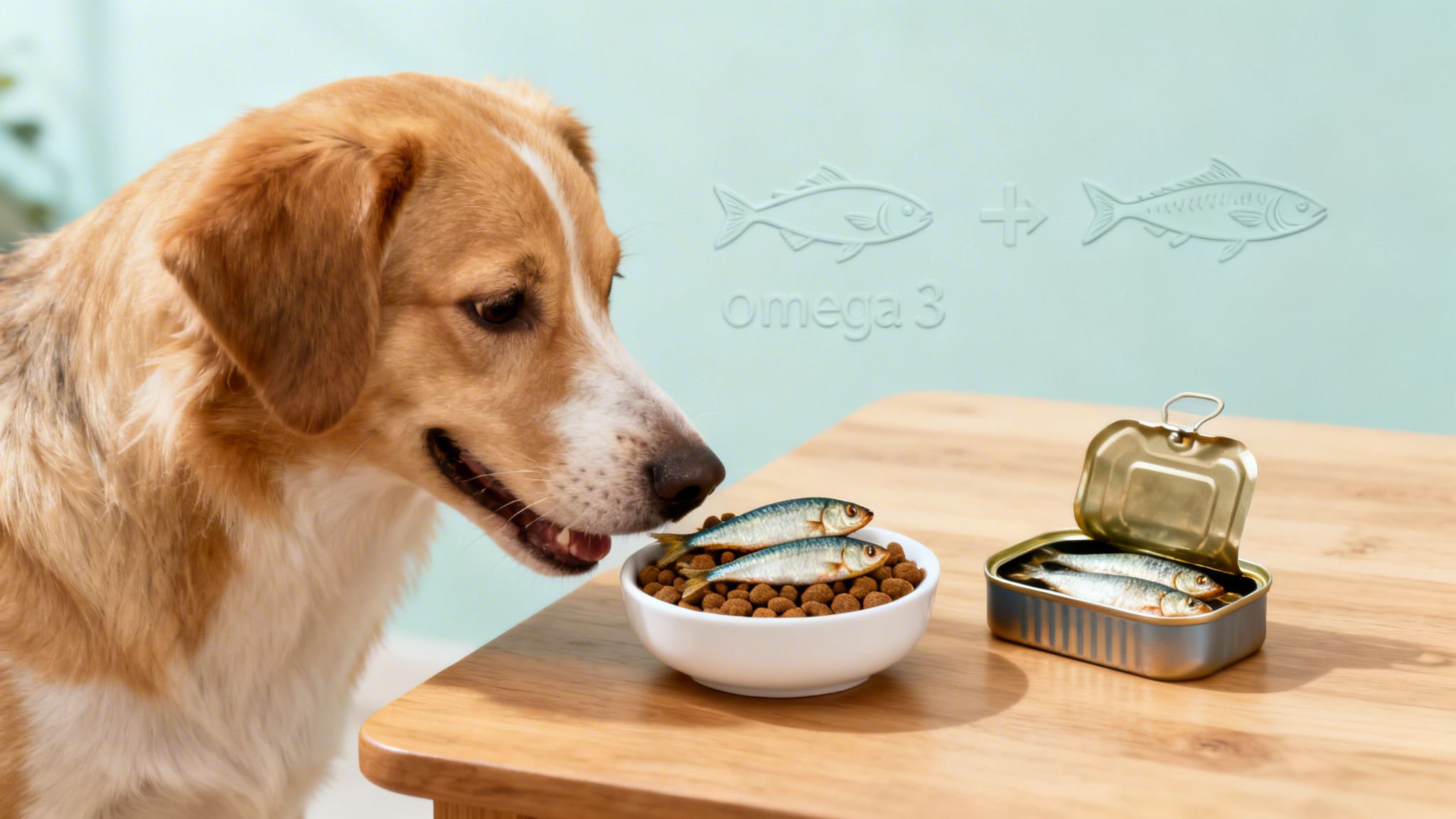
A Guide to Dog Skin and Coat Supplements
Is a dog skin and coat supplement right for your pet? Our guide explains key ingredients, benefits, and how to choose a quality product for a healthier coat.
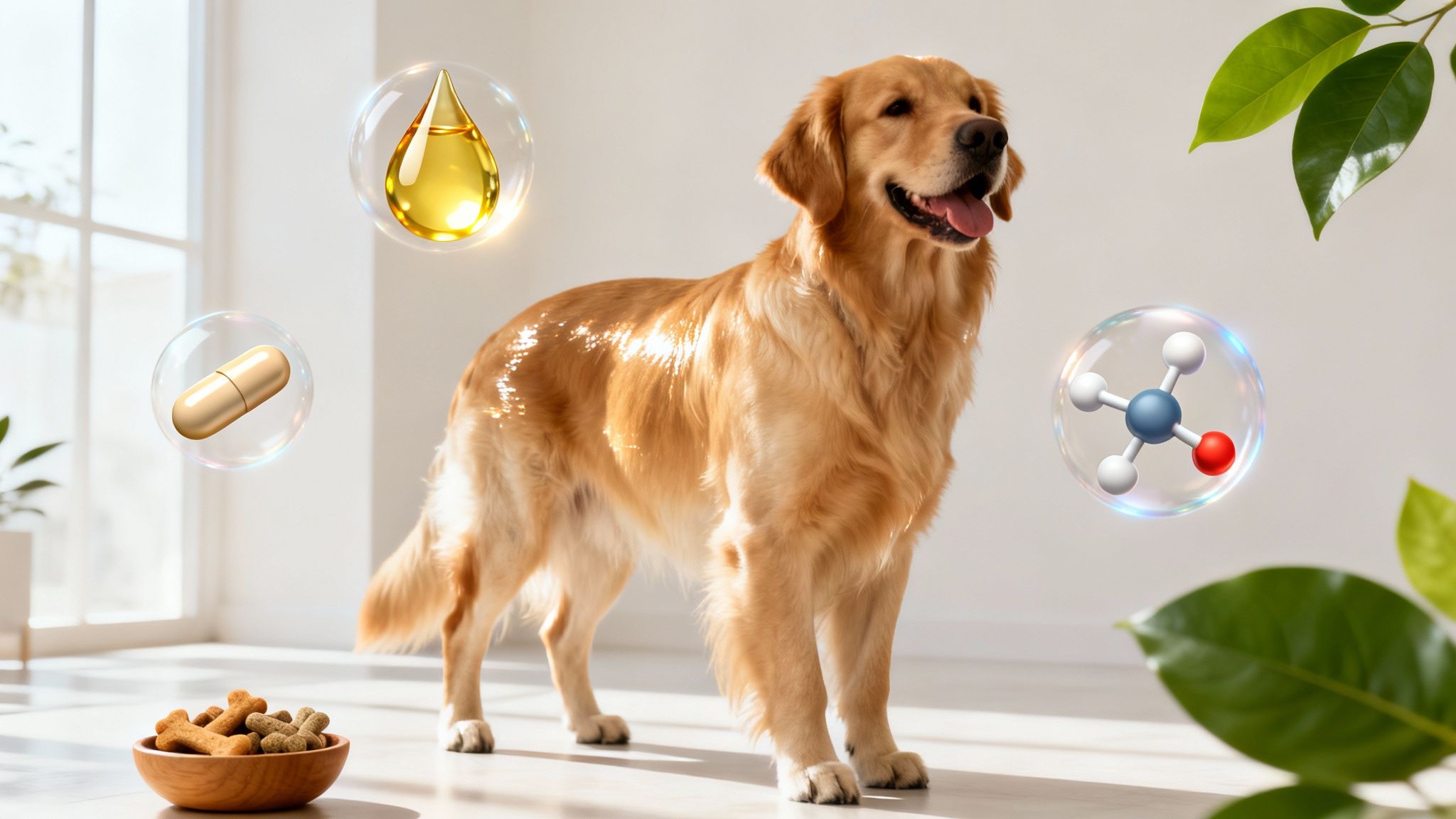
At its core, a dog skin and coat supplement is a product packed with specific nutrients designed to boost your dog’s skin health and give their fur that healthy sheen from the inside out. They deliver targeted ingredients like omega fatty acids and essential vitamins that might be missing from their daily meals, helping to cut down on shedding, calm itchy skin, and bring out a glossy, vibrant coat.
What a Healthy Coat Really Says About Your Dog
A dog's beautiful, shiny coat isn't just for looks—it's a clear window into their overall health. You can almost think of their skin and fur as a daily wellness report card. When your dog is thriving internally, their coat is usually soft, vibrant, and resilient. On the flip side, it's often the first place you'll notice signs of a nutritional shortfall or a deeper health concern.
Many of us know the struggle all too well: dog hair everywhere and a pup who can't stop scratching. These aren't just minor annoyances; they're signals. A dull or brittle coat, constant shedding, or dry, flaky skin can all point to the fact that your dog's body isn't getting what it needs to support its largest organ—the skin.
This is where a top-notch dog skin and coat supplement can make a real difference. Instead of just masking symptoms, these supplements go to work at a cellular level, supplying the crucial building blocks needed for a strong skin barrier and healthy hair follicles.
The Growing Need for Targeted Nutrition
If you're looking for ways to improve your dog's skin, you're in good company. As more pet parents see the direct link between what a dog eats and how they look and feel, the demand for effective nutritional support has skyrocketed.
The global market for pet supplements hit around USD 2.26 billion in 2024 and is expected to grow to USD 3.19 billion by 2030. Within that massive market, skin and coat products are the fastest-growing category, largely because so many owners are dealing with common canine skin problems.
This isn't just a fleeting trend; it points to a significant shift in how we approach pet wellness. We're moving beyond just feeding our dogs and are actively looking for ways to enhance their quality of life. By starting from the inside, you can give your dog relief from discomfort and support the kind of deep, radiant health that truly shines. You can read more about the growing pet supplement market to see just how big this movement has become.
What's Actually in a Skin and Coat Supplement?
To really get a handle on how these supplements work, you have to look under the hood at the ingredients. Think of it like building a sturdy house—you need the right materials working together to create something that lasts. Your dog’s skin and coat are no different; they rely on very specific nutrients to build strength, resilience, and that head-turning shine.
When you understand the "why" behind each ingredient, the label stops being just a list of words. You start to see their specific jobs. Some act as deep, internal moisturizers, while others are basically the construction crew for building strong hair.
This shows how a great supplement, your dog's coat, and their overall health are all tied together.

The big takeaway here? A healthy coat isn't just skin deep. It’s a direct reflection of what's happening on the inside, and targeted supplements can give that internal system a major boost.
Omega-3 Fatty Acids: The Internal Moisturizer
When it comes to skin health, Omega-3s—especially EPA and DHA—are absolute rockstars. The best way to think of them is as an internal moisturizer, working from the inside out to hydrate skin cells at a deep level. This is a whole different ballgame from topical lotions that just sit on the surface.
By fortifying cell membranes, Omega-3s help build a much stronger skin barrier. This barrier is what locks moisture in and keeps environmental troublemakers like pollen and dust mites out. A stronger barrier means less dryness, less flaking, and a better defense against the things that make your dog itch.
Plus, their well-known anti-inflammatory power helps calm the body's over-the-top reaction to allergens, which can dial down the redness and irritation from conditions like atopic dermatitis.
Omega-6 Fatty Acids: The Shine Promoter
While Omega-3s are busy with hydration and inflammation, Omega-6s (like linoleic acid) have a different, but just as critical, job. Think of these as the ‘shine promoters.’ They are absolutely essential for the skin's structure and are a key part of the "glue" that holds skin cells together.
The right amount of Omega-6s is what gives a coat that glossy, healthy sheen. The trick, however, is balance. Most commercial dog foods are already loaded with Omega-6s from ingredients like corn and vegetable oils. A truly effective supplement will add a higher dose of Omega-3s to bring that ratio back into a healthy, balanced state.
Biotin: The Keratin Construction Crew
If hair and nails were a brick building, keratin would be the bricks. And biotin? It’s the construction crew putting it all together. This B-vitamin is non-negotiable for producing keratin, the core protein that makes up every strand of hair and every claw.
A biotin shortage can lead straight to brittle hair, hair loss, and dry, flaky skin. By making sure your dog has plenty, a supplement gives that "construction crew" all the materials it needs to build strong, healthy hair. The result is a fuller coat that's much less likely to break or shed all over your furniture.
"Among various applications, skin & coat supplements are recognized as essential for managing common dermatological issues in dogs, such as allergies and excessive shedding, conditions often addressed through supplementation as recommended by veterinarians. Increasing consumer focus on natural and effective ingredients has strengthened the market's growth, with omega fatty acids, biotin, and antioxidants remaining the cornerstone components." - Discover more insights from this pet dietary supplements market analysis
To make this easier to digest, here's a quick cheat sheet of the most important nutrients you'll find in a quality skin and coat supplement.
Key Nutrients for Your Dog's Skin and Coat
Seeing how these ingredients work together makes it clear that a good supplement is more than just a mix of vitamins—it's a complete toolkit for building a healthy coat from the ground up.
Zinc: The Cellular Repair Specialist
Zinc is a tiny mineral that packs a huge punch. It’s involved in hundreds of processes in the body, but it’s a true specialist when it comes to skin. Zinc is critical for cell division, meaning it's absolutely vital for healing wounds and growing healthy new skin tissue. Think of it as the on-site repair specialist, constantly fixing damage and keeping things running smoothly.
It also helps the oil glands in the skin work correctly to keep the coat naturally conditioned. A zinc deficiency can even cause a specific condition called zinc-responsive dermatosis, which shows up as crusty, scaly patches and hair loss, often around the eyes and mouth.
Vitamin E: The Cellular Bodyguard
Every single day, your dog’s skin is fighting off attacks from things like UV rays, pollution, and even just normal internal body processes. This is called oxidative stress. Vitamin E is a powerful antioxidant that acts like a tiny cellular bodyguard, neutralizing damaging free radicals before they can hurt skin cells.
This protective role helps prevent the skin from aging prematurely and supports its natural healing abilities. It also works as a team with omega fatty acids, protecting those delicate fats from breaking down so they can do their moisturizing and anti-inflammatory jobs. By standing guard over the cells, Vitamin E helps the skin stay elastic and strong.
Recognizing the Signs Your Dog Needs Support
Your dog can’t just tell you when something is wrong, but their skin and coat often do the talking for them. Think of it like a car's dashboard light—their outward appearance is one of the best and earliest indicators of their internal health. Learning to read these signals is the first step in getting them the help they need.
Many of the most common frustrations for dog owners, from endless scratching to constant shedding, are tied directly to skin and coat health. Some clues are obvious, but others are much more subtle. By paying close attention, you can spot nutritional gaps before they turn into bigger problems. A high-quality dog skin and coat supplement can often get to the root cause of these issues, offering relief from the outside in.

Constant Itching and Licking
Is your dog always scratching at their ears, biting their back, or licking their paws? While sometimes it’s just a habit, it's more often a sign of deep, underlying irritation. Their skin is basically in a constant state of alarm, triggered by dryness, allergens, or inflammation that their regular diet might not be equipped to handle.
This isn't just an annoying sound in the middle of the night; it can escalate quickly. The non-stop scratching and licking can break the skin, opening the door for bacteria and leading to nasty secondary infections. To break this frustrating cycle, you have to address the internal source of the itch.
The Tell-Tale Signs of Dandruff
Just like with us, those little white flakes dusting your dog’s fur are a dead giveaway for dry, unhappy skin. This "dandruff" is just dead skin cells shedding way too fast. It’s often a sign that they’re missing key essential fatty acids—the good fats that moisturize the skin from the inside and keep it strong.
When you spot those flakes, picture a dry, cracked desert landscape. That's what their skin looks like on a microscopic level. It’s lost the moisture it needs to maintain its protective barrier, leaving it weak and unhealthy. The goal is to restore that moisture barrier to soothe the irritation and stop the flaking.
A dog’s skin is their largest organ, and it’s incredibly nutrient-hungry. In fact, up to 35% of a dog's daily protein intake goes directly toward maintaining their skin and coat. If there's any kind of nutritional shortfall, their coat is one of the first places you'll see it.
A Dull or Brittle Coat
A healthy dog’s coat should feel soft and have a bit of a shine to it. If their fur feels coarse, dry to the touch, or breaks easily, that’s a big red flag. A brittle coat tells you that the hair follicles aren't getting the building blocks they need—like biotin and zinc—to construct strong, resilient hair.
Think of each hair follicle as a tiny factory. If that factory doesn't get the right raw materials delivered, it can't produce a quality product. What you get instead is a weak, dull coat that looks and feels lifeless.
Common Symptoms at a Glance
Spotting the need for a supplement usually comes down to noticing patterns. Here are some of the most common signs that your dog’s skin and coat could use some extra nutritional muscle:
- Excessive Shedding: All dogs shed, but if you're finding tumbleweeds of fur everywhere year-round or notice a sudden increase, it often means the hair follicles are weak.
- Recurring Hot Spots: These angry, inflamed, and often infected patches of skin usually start with a simple itch that a dog can't leave alone, signaling a major breakdown in the skin's defenses.
- Bald Patches (Alopecia): Hair loss in distinct spots can point to poor follicle health, allergies, or other underlying conditions that are short-circuiting hair growth.
- A "Greasy" or Smelly Coat: Sometimes, skin overproduces oil to try and compensate for being too dry. This can lead to a greasy feeling and a funky "doggy" odor, which might also indicate a yeast imbalance.
If you’re nodding along to one or more of these signs, your dog's body is sending out an S.O.S. Introducing a specialized dog skin and coat supplement, like a daily FORMA chew, can deliver the targeted nutrition they need to rebuild their skin barrier, strengthen their coat, and finally find some relief.
How to Choose a High-Quality Supplement
Walking down the pet supplement aisle can be a dizzying experience. With so many bottles, bags, and chews all promising a glossier coat, how do you know what actually works and what’s just clever marketing? The key is learning to read a label like a pro and knowing the tell-tale signs of a top-notch product.
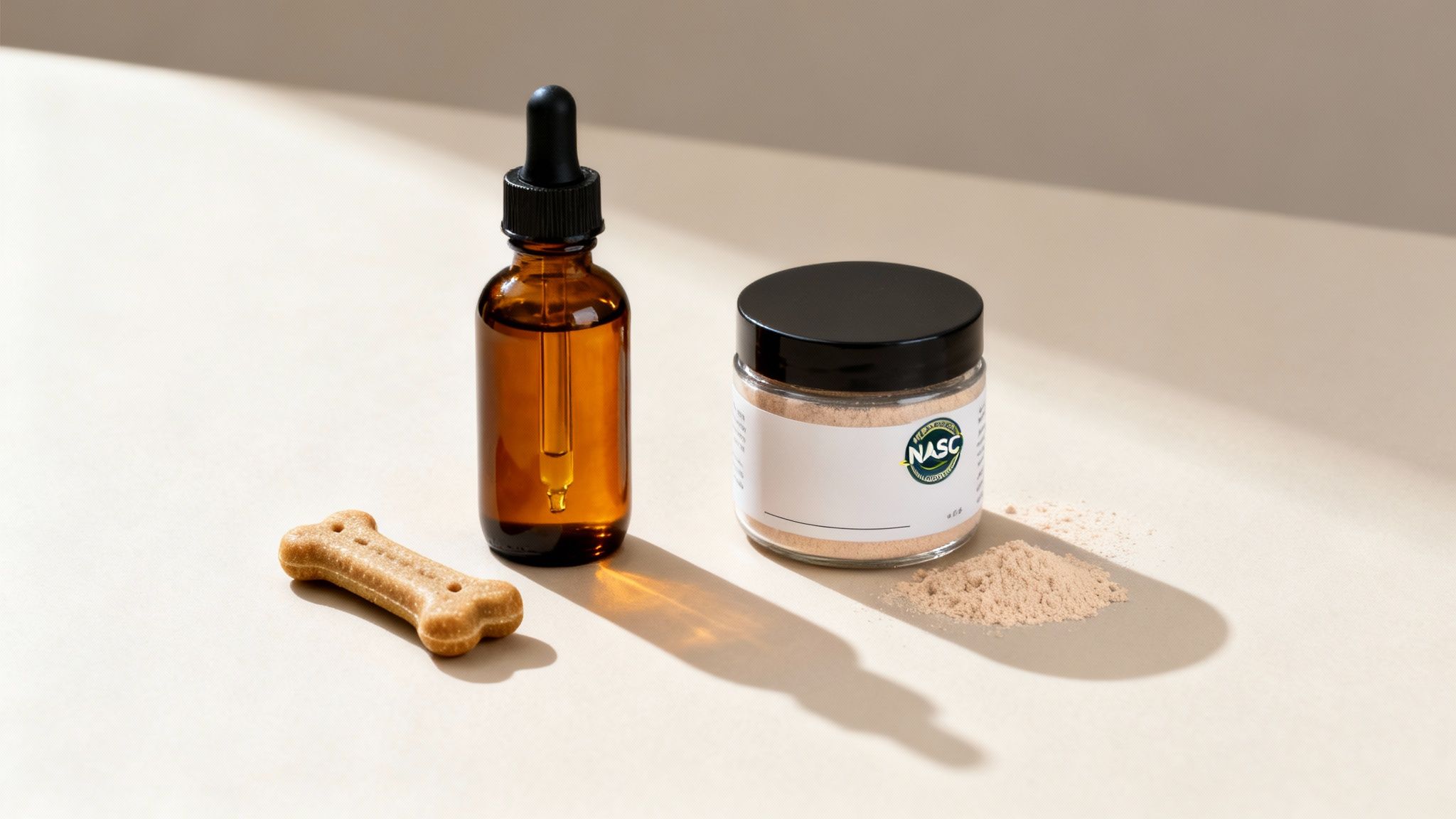
Think of this as an active role in your dog's wellness plan. When you can confidently pick out a safe, effective supplement, you're one step closer to seeing those real results. It all boils down to a few key checks, from spotting official quality seals to choosing the right form for your pup.
Look for the NASC Quality Seal
The fastest way to vet a product is to scan the packaging for the National Animal Supplement Council (NASC) Quality Seal. This isn't just a sticker; it's proof that the manufacturer has voluntarily submitted to—and passed—a strict, independent, third-party audit.
Companies that earn this seal have committed to:
- Honest Labeling: What you see on the label is exactly what’s inside the bottle. No funny business.
- Quality Control: They have documented manufacturing processes to ensure consistency and safety.
- Vigilant Reporting: A system is in place to track and report any product-related issues.
Think of the NASC seal as your first line of defense. In a largely unregulated industry, it’s a quick gut check that tells you the company takes quality and transparency seriously. It’s the easiest way to filter out the questionable stuff from the start.
Prioritize Natural Ingredients Over Fillers
Next, flip that package over and get to know the ingredient list. A high-quality dog skin and coat supplement will have recognizable, natural ingredients right at the top—things like fish oil, flaxseed, biotin, and specific vitamins.
Be suspicious of products that lead with cheap fillers, artificial preservatives, or vague "flavorings." Common red flags include corn, soy, or wheat gluten, which are often just cheap binders and can trigger sensitivities in some dogs. Also, keep an eye out for chemical preservatives like BHA and BHT. A clean, simple ingredient panel is almost always a sign of a better product.
The demand for cleaner options is skyrocketing. In North America, where our pets are truly part of the family, the pet supplement market captured a massive 43.39% share in 2024. This boom is driven by owners like you who understand the benefits and are willing to invest in premium, natural products for their dogs. You can discover more insights about the pet supplement market and its impressive growth.
Choose the Right Form for Your Dog
Supplements come in all shapes and sizes, and the best one really depends on your dog's personality and your daily routine.
- Chews: Soft chews, like our own FORMA, are usually the easiest and most fun option. Most dogs see them as a daily treat, which makes your job simple. Plus, they come in pre-measured doses, so there's no guesswork involved.
- Oils: Liquid oils, especially fish or salmon oil, are fantastic for delivering a concentrated dose of omega-3s. You just drizzle it over their food. The only potential downsides are a fishy smell and the occasional messy spill.
- Powders: Powders are another great option that mixes right into meals, perfect for dogs who might be picky about new textures. Just be sure to measure carefully to get the dosage right every time.
Ultimately, the best supplement is the one you can give your dog consistently without a fight.
Red Flags to Avoid
Knowing what to avoid is just as important as knowing what to look for. Keep these warning signs in mind when you're shopping for a dog skin and coat supplement:
- Miracle Cures: Steer clear of products promising to "cure" diseases or deliver "instant" results. Supplements are here to support your dog’s health, not replace a trip to the vet.
- Mysterious Sourcing: Good brands are proud of where their ingredients come from. If a company is cagey about its sourcing, it’s usually a bad sign.
- No Lot Number or Expiration Date: This is basic stuff. A missing lot number makes a product untraceable if there’s a recall or safety issue.
- Rock-Bottom Prices: Everyone loves a deal, but a price that seems too good to be true probably is. Quality ingredients cost money, and a super-cheap product likely cuts corners on safety or effectiveness.
Making Supplements a Part of Your Dog's Routine
Adding a supplement to your dog's life isn't just about handing over a chew. It's about building a positive habit—one that fits so smoothly into your daily rhythm they don't even think twice about it.
The goal is for them to see it as a treat, a special part of their day, not some new chore you're forcing on them. When you get the introduction right, you're setting yourself up for long-term success.
The Start Low and Go Slow Method
Here’s the golden rule for adding anything new to your dog’s diet: start low and go slow. It’s tempting to jump right in, but even the best supplements can cause a little digestive grumbling if introduced too quickly. You have to give their system a moment to get used to the new, powerful ingredients.
Here’s a simple, practical way to do it:
- Days 1-3: Start with half the recommended dose. This lets their digestive system adapt without feeling overwhelmed.
- Days 4-7: If everything looks good (no tummy troubles or loose stools), you can move up to the full recommended dose.
This gradual approach is the single best way to avoid any digestive hiccups and keep the whole experience positive.
It's important to remember that supplements are there to support your dog's health, not replace a vet. Think of them as a fantastic tool in your wellness toolkit, but never a substitute for professional diagnosis or treatment.
Consistency Is the Secret Ingredient
You wouldn't expect to get fit after one trip to the gym, and the same logic applies here. A supplement needs time and, most importantly, consistency to really work its magic.
Nutrients like omega-3s and biotin don’t deliver overnight results. They need to build up in your dog's system to support the slow, steady process of growing healthy new skin and hair. Skipping days or giving the chew sporadically will seriously slow down any progress.
The easiest way to stay on track is to use a technique called habit stacking. Just link the new habit (giving the supplement) to an old one you already do without thinking. For example, give them their FORMA chew right before you scoop their breakfast into the bowl, or the second you walk back in from your evening stroll. This anchors the new routine to an established one, making it second nature.
Finding the Right Dose
Getting the dose right is everything—it’s crucial for both safety and seeing actual results. Any quality supplement will have clear instructions on the package, usually based on your dog's weight. Follow them closely.
Underdosing is a common mistake; your dog simply won't get enough of the good stuff to make a visible difference. On the flip side, overdosing can lead to an upset stomach and is just a waste of a good product.
Always look for a clear, weight-based chart on the label. It’ll look something like this:
- Up to 25 lbs: 1 Chew Daily
- 26-75 lbs: 2 Chews Daily
- Over 75 lbs: 3 Chews Daily
If your dog’s weight is right on the line between two categories, it’s always best to start with the lower dose. And if you’re ever unsure, a quick call to your vet will give you the clarity and peace of mind you need.
When to Call Your Veterinarian
While a great supplement can do wonders for a dog’s coat, it's not a cure-all. You have to know when it’s time to call in a professional. If you notice any sudden or serious changes in your dog's skin or coat, your first stop should always be the vet.
Make an appointment if you see any of these red flags:
- Intense, persistent itching that doesn't seem to let up.
- Open sores, oozing spots, or other signs of a skin infection.
- Sudden, patchy hair loss.
- Any new or unusual lumps or bumps on their skin.
Your vet can rule out underlying medical problems like parasites, deep-seated allergies, or hormonal issues that require specific treatment. Think of your vet as your partner on this journey—they provide the diagnosis, and a daily supplement can provide the ongoing nutritional support to keep your dog looking and feeling their best.
Common Questions About Dog Skin Supplements
Diving into the world of supplements can feel a little overwhelming. To make sure you feel confident about what you're giving your pup, let's walk through some of the most common questions pet owners have about dog skin and coat supplements.
How Long Until I See Results from a Supplement?
When it comes to supplements, patience is key. Think of it like this: your dog's skin and hair cells have to turn over and regenerate, and that process just takes time. You’ll usually start to see a real difference in their coat's shine, skin moisture, and a lot less scratching after about 4 to 6 weeks of consistent, daily use.
For tougher, more chronic problems like really bad dandruff or persistent dry patches, you might be looking at 8 to 12 weeks before the full effect really shines through. The most important thing is to stick with it every single day. That consistency allows the nutrients to build up in their system and get the job done.
Can I Just Give My Dog My Human Fish Oil?
Please don't. While it might seem like the same thing, human supplements are designed for our bodies and our specific nutritional needs, not a dog's.
Human-grade products can contain flavorings or additives that are harmless for us but toxic for dogs. Plus, the concentration of Omega-3s is likely all wrong for your dog’s weight, which could lead to an ineffective or even dangerous dose. Stick with a formula made specifically for canines.
It's a bit like shampoo—you wouldn't use yours on your dog, right? The same logic applies here. Their bodies are different, and they need formulas built for their unique biology to be both safe and effective.
Are There Any Negative Side Effects?
When you choose a high-quality supplement and give the correct dose, they are generally very safe. The most common hiccup you might see, particularly with oil-based supplements, is a bit of digestive upset like diarrhea. This usually only happens if you introduce it too quickly.
The best way to avoid this is to "start low and go slow." Give your dog half the recommended dose for the first few days, then gradually work your way up to the full amount. If you notice any digestive trouble or other issues that don't go away, stop the supplement and have a chat with your vet.
Is a Supplement Necessary with High-Quality Dog Food?
Often, the answer is yes. Even the best dog foods on the market can have some nutritional gaps. For instance, the high-heat cooking process used to make kibble can degrade delicate nutrients like omega-3 fatty acids, making them less effective by the time they reach your dog's bowl.
On top of that, some dogs just need more support than others, depending on their:
- Breed: Some breeds are just naturally more prone to skin problems.
- Age: Older dogs often need an extra boost to keep their skin and coat in top shape.
- Health Status: Pups with allergies or other health conditions can really benefit from targeted nutritional support.
A good dog skin and coat supplement is like an insurance policy. It tops off the specific nutrients their diet might be missing, ensuring they get the optimal amounts needed for truly healthy skin and a beautiful coat.

Karolis is the Founder of FORMA, a pet wellness brand focused on longevity and daily nutrition for dogs. Writes about supplements, canine health, and helping pets live longer, healthier lives
Join thousands of pet parents getting science-backed health insights and natural care advice