Dog: dog supplements for gut health to support digestion
Discover dog supplements for gut health and how probiotics and prebiotics support digestion, immunity, and your dog's overall wellness.
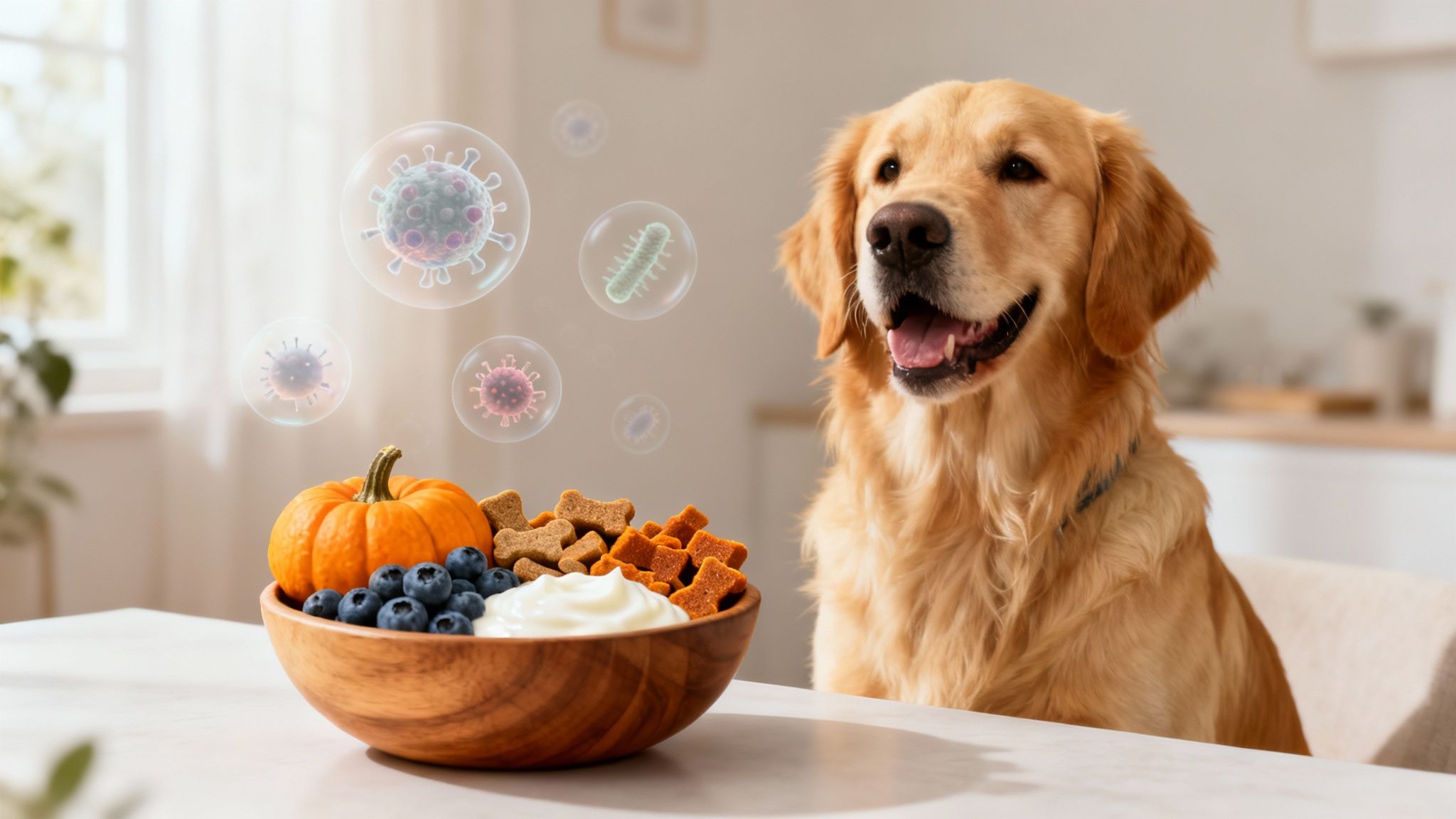
When we talk about dog supplements for gut health, we're not just talking about fixing an upset tummy. We're looking at a powerful tool that supports your dog's total well-being by keeping the good bacteria in their intestines—their microbiome—in perfect harmony. This bustling community of microbes is a big deal, influencing everything from how they absorb nutrients to their immune system, mood, and even the shine on their coat.
Why Your Dog's Gut Health Is More Than Just Digestion
Most of us only think about gut health when our dog has diarrhea or gas, but that’s only scratching the surface. The best way to think about your dog's gut is like a thriving, microscopic garden inside them. When that garden is flourishing with all the right "plants" (good bacteria), the benefits are seen all over their body.
A healthy gut truly is the foundation for a healthy dog. This internal world, the canine gut microbiome, is home to trillions of tiny organisms. These little helpers do far more than just digest dinner; they're critical for your dog's overall vitality. A balanced gut directly impacts almost every part of their health.
The Gut-Body Connection
The gut doesn't operate in a silo. It's constantly "talking" to the rest of the body through a complex network. This is why an imbalance in the gut can pop up in some pretty unexpected places.
Here’s a look at how a healthy gut supports your dog from nose to tail:
- A Stronger Immune System: Did you know a whopping 70-80% of your dog's immune system is actually in their gut? A balanced microbiome strengthens their natural defenses, helping them fight off bugs and keeping inflammation in check.
- Healthier Skin and Coat: If your dog is always itchy or has a dull coat, the root cause might be inflammation that starts in the gut. By soothing their digestive system, you can often see major improvements in their skin.
- A Better Mood: The gut and brain are directly connected through something called the gut-brain axis. A happy gut produces feel-good chemicals like serotonin, which can lead to a calmer, more even-keeled dog.
- Better Nutrient Absorption: When the microbiome is thriving, it helps your dog's body break down food and pull out all the good stuff, making sure they get every last drop of nutrition from their meals.
Why Our Dogs Need a Little Extra Help Today
Life in the 21st century isn't always easy on a dog's gut. Things like highly processed kibble, antibiotics, stress, and even environmental toxins can throw their internal garden out of whack. This imbalance is called dysbiosis, and it can open the door to all sorts of health problems.
Think of a gut health supplement as a skilled gardener for your dog’s internal world. It doesn’t just put a bandage on problems—it helps create the perfect environment for good bacteria to thrive, building a strong foundation for long-term health.
Giving your dog a daily gut health supplement is one of the best things you can do to push back against these modern-day challenges. It helps keep that delicate balance in check, ensuring their internal garden stays healthy and productive. It’s a simple step that can help your best friend live a longer, happier life right by your side.
Understanding Probiotics, Prebiotics, and Digestive Enzymes
When you're trying to figure out how dog gut health supplements actually work, it helps to think of your dog's digestive system as a busy factory. For that factory to run smoothly, it needs a good team and the right equipment. This is where probiotics, prebiotics, and digestive enzymes come in—they are the all-star crew for any top-notch gut health formula.
Let’s keep the factory analogy going.
- Probiotics are the 'Friendly Workers.' These are the live, good bacteria doing all the important jobs, from breaking down food to helping the immune system. You need a big, happy team of these workers for the whole operation to run well.
- Prebiotics are the 'Nutritious Lunch.' Even the best workers need fuel. Prebiotics are special plant fibers that feed the friendly probiotic bacteria, helping them multiply and stay strong.
- Digestive Enzymes are the 'Specialized Tools.' These are the proteins that act like precision machinery, breaking down complex fats, proteins, and carbs into tiny, usable pieces that the body can easily absorb.
The best supplements don't just give you one of these; they give you all three. That way, the factory has a full crew that's well-fed and has all the right tools for the job.
The Core Components of a Gut Health Supplement
To make this even clearer, here’s a simple breakdown of the most important ingredients you'll find in a quality gut health supplement and what they do for your dog.
Think of these three working together as a team. You're not just adding good bacteria; you're also feeding them and giving them the tools they need to do their job right.
Probiotics: The Good Guys in the Gut
Probiotics are really the heart of any good gut supplement. These beneficial microorganisms move into your dog’s intestines and create a balanced environment, which helps keep harmful bacteria from taking over. You can think of them as the friendly gatekeepers of the gut.
Different types, or strains, of probiotics have different specialties. For instance, strains from the Lactobacillus family are great at helping with nutrient absorption and strengthening the gut wall. Others, like Bifidobacterium, are known for their role in boosting the immune system and even affecting mood. When you see a supplement with multiple, well-studied strains, it’s a sign that it’s designed for comprehensive gut support.
Prebiotics: Fueling the Workforce
Just dropping in a bunch of probiotics isn't enough—they need food to survive and thrive. That's where prebiotics come in. These are indigestible fibers, like Fructo-oligosaccharides (FOS) and inulin, that pass through the digestive system and land in the colon, where they become the perfect meal for all those good bacteria.
By feeding the good microbes, prebiotics help them flourish and muscle out the bad ones. This teamwork between prebiotics and probiotics is what creates a healthy, balanced gut microbiome that lasts.
Digestive Enzymes: The Unsung Heroes of Digestion
While probiotics manage the neighborhood, digestive enzymes do the heavy lifting of actually breaking down food. Modern processed kibble often lacks the natural enzymes found in raw foods, which can force your dog’s pancreas to work overtime to produce enough of its own.
Adding enzymes like amylase (for carbs), protease (for proteins), and lipase (for fats) gives their digestive system some much-needed backup. This helps ensure your dog gets every last bit of nutrition from their meals, which is especially helpful for dogs with sensitive stomachs or older pups whose natural enzyme production might be slowing down.
A complete formula includes all three pillars—probiotics, prebiotics, and enzymes. This ensures you're not just adding good bacteria but also feeding them and providing the tools needed for optimal digestion, creating a powerful trifecta for total gut wellness.
This image really drives home how a healthy gut, supported by these components, is connected to your dog's overall wellness.

As you can see, the gut is a central hub that directly influences everything from immunity and skin health to mood.
The science behind this is pretty solid, too. One impressive study showed that dogs given specific probiotics had a 42% drop in bouts of acute diarrhea compared to dogs who got a placebo. Another review of 28 different trials found that multi-strain probiotics helped relieve GI symptoms in 67% of dogs dealing with chronic digestive problems. This isn't just theory; it's making a real difference. If you're curious, you can discover more about the growth of pet dietary supplements and the research behind it.
Spotting the Signs of an Unbalanced Gut
Your dog can't just tell you their tummy hurts, but that doesn't mean they aren't communicating. They give us clues all the time about how they're feeling on the inside. Learning to read those signals is one of the best things you can do as a dog owner.
Sure, some signs like diarrhea are impossible to miss. But often, an unhappy gut whispers before it shouts.
These little hints are your dog's way of saying their internal ecosystem—their gut microbiome—is out of whack. When the bad bacteria start to outnumber the good guys, a condition called dysbiosis, the effects can pop up all over their body. Catching these clues early means you can step in before a small issue snowballs into a bigger one.

Beyond the Belly: Obvious Digestive Issues
Let's start with the most direct signs of gut trouble. You’ve probably seen these before, but if they become part of your new normal, it’s time to pay attention.
- Loose Stools or Diarrhea: A one-off soft poop isn't usually a big deal. But if it's happening regularly, it's a huge red flag that the gut is inflamed and can't absorb water properly.
- Excessive Gas: A little toot here and there is normal. But if your dog is clearing the room with their flatulence, it often means food isn't being digested well and is fermenting in the gut, feeding the wrong kind of bacteria.
- Vomiting or Regurgitation: While dogs sometimes vomit for simple reasons, consistent vomiting points to some serious irritation in their digestive tract.
When you see these symptoms, the digestive system is waving a white flag. A good dog supplement for gut health can help turn things around by reintroducing beneficial bacteria and providing enzymes to calm things down and aid digestion.
The Skin-Gut Connection
Here’s one that surprises a lot of people: your dog's skin is often a mirror of their gut health. Many chronic skin problems are actually external symptoms of an internal fire that started in the gut.
It all comes down to something called the gut-skin axis. Think of the gut lining as a security fence. When it gets damaged (a condition often called "leaky gut"), undigested food bits and toxins can sneak through into the bloodstream. The immune system spots these intruders and launches a full-scale inflammatory response, which very often shows up on the skin.
It's wild to think about, but roughly 70% of your dog's immune system is located right in their gut. When the microbiome is off-kilter, the immune system can go into overdrive, resulting in constant itching, hot spots, and skin irritation.
Keep an eye out for these skin and coat clues:
- Constant Itching and Scratching: Is your dog always chewing their paws, scratching their sides, or rubbing their face on the carpet? That's a classic sign of internal inflammation.
- Dull, Dry Coat: A healthy gut absorbs all the nutrients needed for a glossy, beautiful coat. If their fur looks lackluster, it could mean they aren't getting the full benefit of their food.
- Recurring Ear Infections: The skin inside the ears is just as vulnerable. Those yeasty, gunky ear infections that keep coming back are often tied directly to a systemic problem rooted in the gut.
Other Subtle Clues to Watch For
An unbalanced gut can manifest in ways that seem totally unrelated to their stomach.
- Unusually Bad Breath: We all know "dog breath," but if it suddenly gets truly terrible and brushing doesn't help, it might not be their teeth. An overgrowth of smelly bacteria in the digestive tract can be the real culprit.
- Changes in Mood or Behavior: The gut-brain axis is a real and powerful connection. Gut bacteria help produce neurotransmitters like serotonin (the "happy chemical"). When the gut is a mess, it can actually contribute to more anxiety, lethargy, or a generally grumpy pup.
By becoming a detective for these signs, you can shift from just reacting to problems to proactively supporting your dog’s health from the inside out. More often than not, getting their gut right is the key to solving a whole host of other issues.
How to Choose the Best Gut Health Supplement
Walking down the pet aisle or scrolling online can be overwhelming. With a dizzying number of options, how do you pick a dog supplement for gut health that actually works? The secret is to look past the flashy labels and get a little nerdy about what’s inside the package.
Choosing the right supplement really comes down to becoming a savvy label-reader. You're looking for a product that’s upfront about its ingredients and has been formulated with a clear, science-backed purpose. Think of it as an investment in your dog's long-term health—it’s worth a few extra minutes to make sure you're getting it right.
Look for Human-Grade Ingredients
The phrase "human-grade" gets thrown around a lot, but it's a genuine mark of quality. It simply means the ingredients are sourced and handled under the same strict regulations required for human foods. This one detail tells you a lot about the product's safety and purity.
Supplements made with human-grade ingredients are far less likely to have contaminants or cheap components that could do more harm than good. When you see that label, you know you’re giving your dog something that meets the same high standards you’d want for your own food.
A supplement is only as good as its weakest ingredient. Prioritizing human-grade quality and science-backed formulas ensures you're giving your dog a product that is both safe and effective, without any hidden compromises.
This commitment to quality is what separates a truly premium supplement from the rest. It shows that the brand is dedicated to creating something that genuinely supports your dog’s health from the inside out.
Avoid Unnecessary Fillers and Additives
A great supplement is defined as much by what it doesn't have as what it does. Always flip the container over and scan the ingredient list for extras that serve no real purpose for your dog’s health.
Common culprits include:
- Artificial Colors and Flavors: These are just for show and can sometimes trigger sensitivities in dogs. A good product doesn't need them.
- Grains like Corn, Soy, and Wheat: Often used as cheap fillers, these can be common allergens and may even contribute to gut inflammation in some dogs.
- Unnecessary Binders: Some brands use low-quality binders to hold chews together. The best formulas use natural, beneficial ingredients to do the job instead.
A clean, short ingredient list is usually a very good sign. It means the formula is focused on active ingredients that get the job done.
Choose Multi-Benefit Formulas for Modern Wellness
We know now that a dog's health is all connected. A supplement that only targets one issue feels a bit outdated, doesn't it? The most effective dog supplements for gut health today are ones that pack a bigger punch, offering multiple benefits in one.
Look for formulas that also provide support for things like:
- Immunity: Since a whopping 70-80% of your dog’s immune system is in the gut, ingredients that boost both are a powerful combo.
- Calmness: The gut and brain are in constant communication. So, a balanced gut can often lead to a calmer, more relaxed dog.
This "whole dog" approach is all about supporting total well-being, not just patching up one symptom. Plus, a multi-benefit supplement makes your daily routine much simpler while delivering more comprehensive care.
Prioritize Convenience and Consistency
Let’s be honest: the best supplement in the world is useless if your dog won’t take it. This is where the form of the supplement really matters. Powders can be messy and tricky to dose correctly, and trying to hide a pill every day can turn into a wrestling match.
This is why daily chews have become so popular. They're incredibly easy to give, most dogs think they’re getting a treat, and it makes your daily routine simple and even fun. Consistency is everything when it comes to rebalancing the gut microbiome, which is a gradual process that needs steady, daily support.
This shift toward easy, effective solutions is a big deal in the pet world. In fact, the U.S. dog intestinal health pet dietary supplement market brought in USD 8.9 billion in revenue in a recent year. That number is driven by owners like us who see our pets as family and are ready to invest in their health. You can discover more about these pet wellness market trends and see what’s fueling this growth.
Making Supplements a Seamless Part of Your Dog's Day
When it comes to gut health supplements, consistency is everything. Think of it like watering a plant—a splash here and there won't do much, but steady, daily care helps it thrive. To really get your dog’s internal ecosystem back in balance, that supplement needs to become a simple, automatic part of their day.
The good news? This doesn't have to be a big production. With a few smart moves, you can work supplements into your dog's routine so smoothly they'll either not notice or, even better, start looking forward to it.
Finding the Right Rhythm and Dosage
First up, always check the product label for the correct dosage. It’s almost always based on your dog's weight. Giving too little won't get you the results you're after, and while most gut supplements are quite safe, it’s always best practice to stick to the recommended amount.
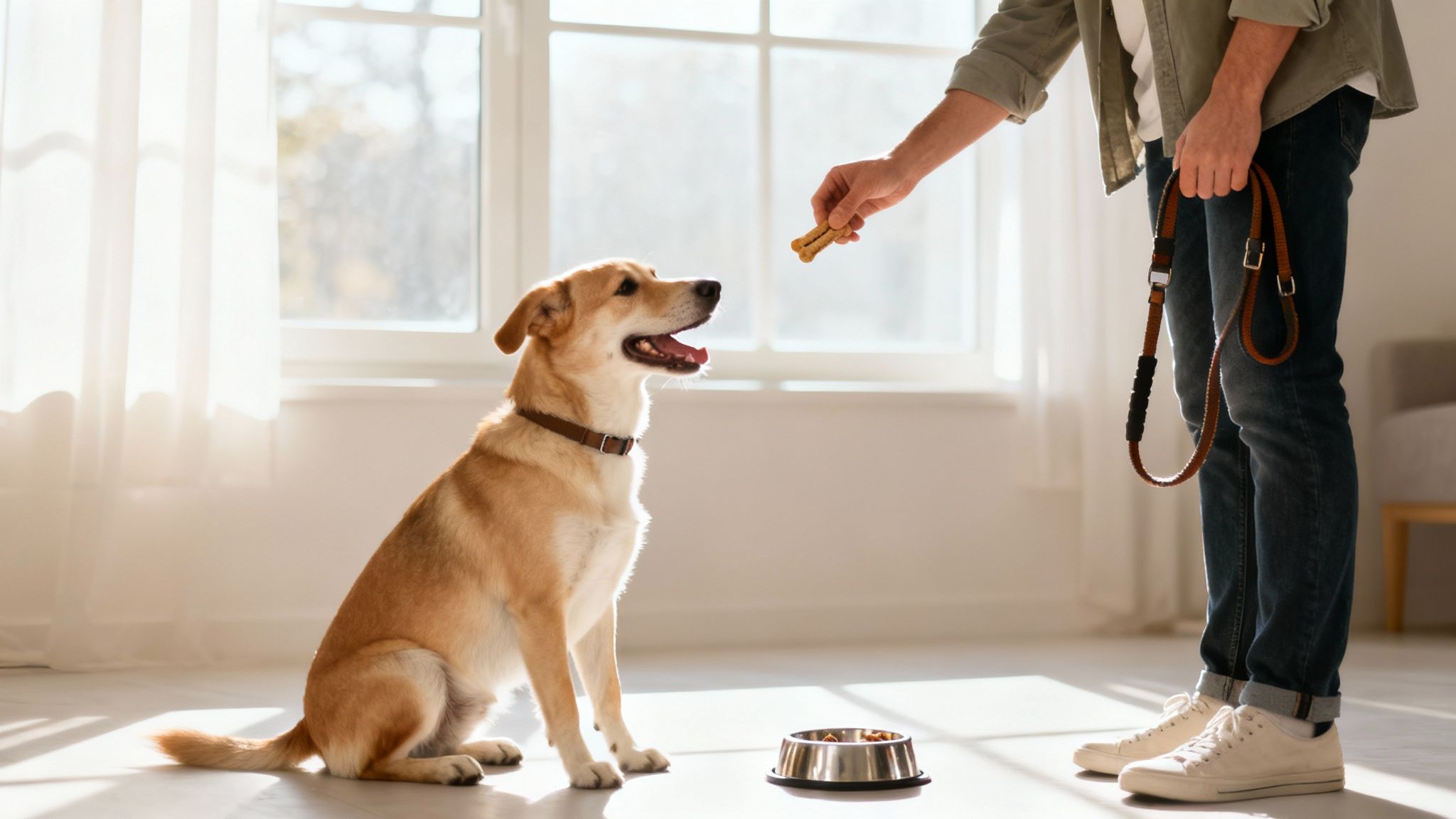
The easiest time to give a supplement is with a meal. This little trick helps with absorption and reduces any chance of an upset stomach. Plus, it’s just plain simple. Tossing the chew into their breakfast or dinner bowl is a foolproof way to make sure they get it down without a fuss.
Introducing Supplements to Picky Eaters
Have a dog who gives anything new the side-eye? A slow and steady introduction is your best friend. Even the tastiest, bacon-flavored chew can seem a bit suspicious at first.
Here are a few gentle ways to win them over:
- Offer it as a Treat: Start by handing them the chew like it’s a high-value reward. Your excitement can be contagious.
- Break It Up: For smaller dogs or the extra-cautious ones, try breaking the chew into smaller bits and mixing them right into their kibble.
- Add a Topper: Crumble the chew over their food and add a little something they can't resist, like a dollop of plain yogurt or a splash of bone broth.
By turning supplement time into a positive daily ritual, you're building a powerful habit. Try giving it right after your morning walk or as a special "dessert" once their dinner bowl is clean. This turns a health necessity into a happy moment they can count on.
Improving your dog's gut health is a journey, not a sprint. It takes time for the good bacteria to set up shop and create lasting balance. Be patient and stick with it—the biggest changes often happen quietly over several weeks.
This commitment to a daily routine is something we're seeing more and more from pet parents who are serious about their dog's long-term wellness. In fact, the global pet dietary supplements market is projected to hit USD 4.11 billion by 2030, with digestive health leading the way. E-commerce subscriptions now make up 28% of online revenue, which just shows how many families are locking in these consistent wellness habits. You can discover more insights about the pet supplements market on marketsandmarkets.com.
Ultimately, setting realistic expectations and staying consistent is the real formula for success.
Got Questions About Dog Gut Health Supplements? We’ve Got Answers.
Stepping into the world of dog gut health supplements can feel a little overwhelming. You've got questions, and as a devoted dog parent, you want to make sure you're doing the right thing for your best friend.
We hear the same questions all the time, so let's clear the air. My goal here is to give you straightforward answers so you can feel confident you’re making a great choice for your dog's health and happiness.
How Long Until I See Results?
This is the big one! While every dog is different, you might see small wins—like less gas or firmer stools—within just a few days. That’s a great start.
But the real, lasting changes take a bit more time. We're talking about rebuilding a whole ecosystem in their gut, and that doesn't happen overnight. For those deeper benefits like better skin, a stronger immune system, or more consistent energy, you'll want to give it at least 4 to 6 weeks of daily use. Think of it less like a quick fix and more like planting a garden that will flourish for years.
Can I Just Give My Dog My Probiotics?
I know it’s tempting, but please don't share your own probiotics with your dog. A dog's gut is a whole different world than ours—it's much more acidic, for one thing. Supplements made specifically for dogs contain the right bacterial strains in the right amounts to actually survive that tough environment and do their job.
Using a dog-specific formula is critical. It ensures the good bacteria can actually make it through the stomach, reach the intestines, and set up shop where they’re needed most. Human products just aren't built for a dog's unique system.
Are There Any Side Effects I Should Worry About?
Thankfully, side effects are pretty rare and almost always mild. The most common thing you might see is a little temporary gas or a slightly looser stool for the first few days.
This usually just means the new good bacteria are moving in and the gut is adjusting. It's a sign that things are starting to rebalance! If you start slow and the symptoms don't clear up after a few days, it's always smart to check in with your vet.
Does Every Single Dog Need a Gut Supplement?
Not every dog needs one in the same way they need water, but a huge number of them can really benefit from the support. Think about it: processed kibble, stress from a new routine, or a round of antibiotics can all throw their gut out of whack.
A gut health supplement is especially helpful for:
- Dogs with notoriously sensitive stomachs or chronic tummy troubles.
- Pups who are always scratching or getting ear infections.
- Dogs who just finished a course of antibiotics.
- Pets who primarily eat a highly processed, dry food diet.
It's like a daily insurance policy for their inner ecosystem, keeping that internal "garden" healthy and thriving.

Karolis is the Founder of FORMA, a pet wellness brand focused on longevity and daily nutrition for dogs. Writes about supplements, canine health, and helping pets live longer, healthier lives
Join thousands of pet parents getting science-backed health insights and natural care advice