Natural Dog Calming Remedies That Actually Work
Discover effective natural dog calming remedies to soothe your anxious pet. Our guide explores gentle, science-backed solutions for a happier, calmer dog.
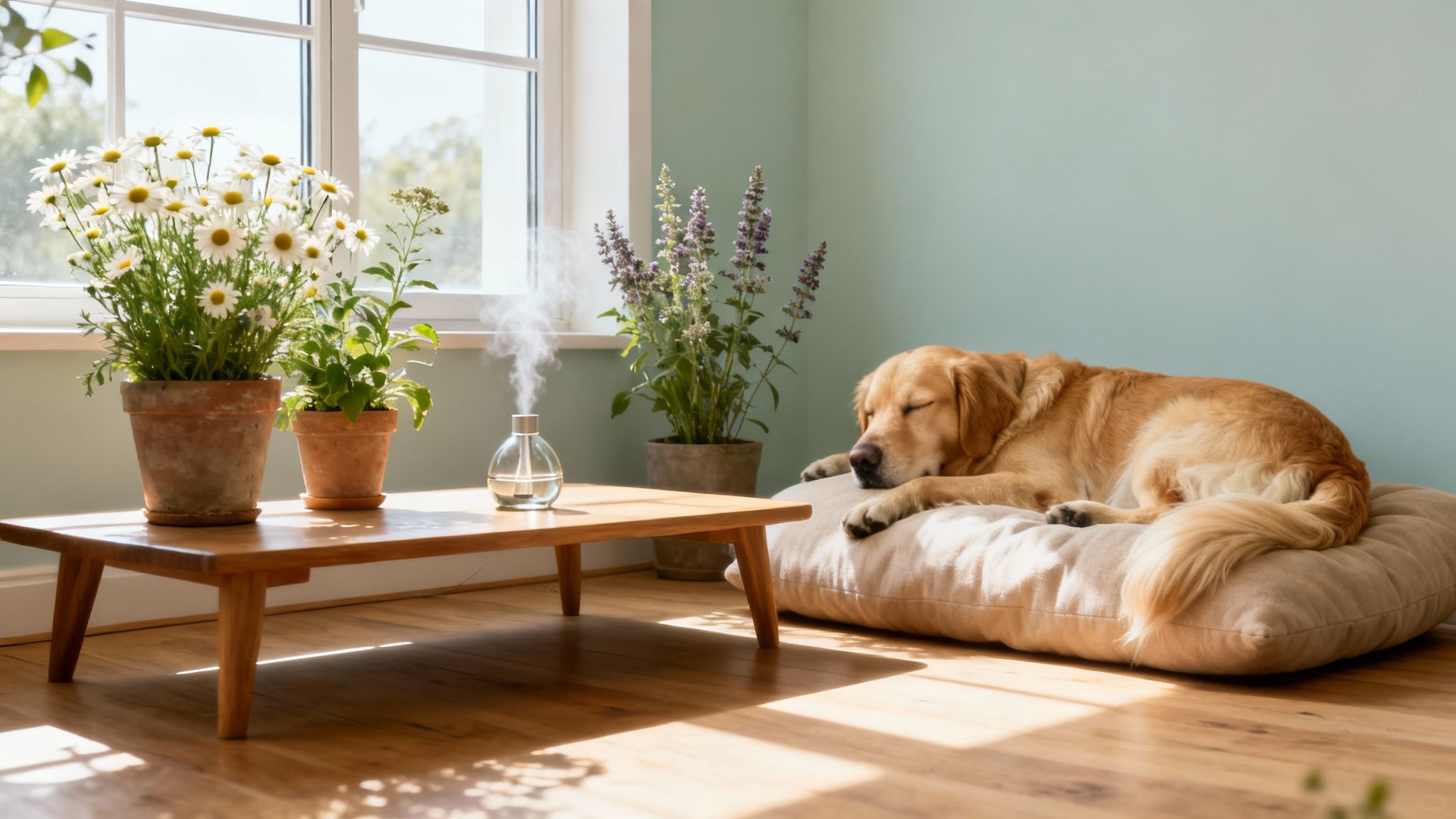
Before you can even think about which natural remedies might help your dog, you have to learn to speak their language. Spotting the early, quiet signs of anxiety is the most important first step. It's the difference between just treating the symptoms and actually getting to the root of what's bothering them.
Decoding Your Dog's Anxiety Signals

Before we find a solution, we need to truly understand the problem. Think of your dog's anxiety as a car alarm that's just a little too sensitive. It's not "bad behavior"—it's an internal system designed to signal danger that's become a bit overactive. It might go off for anything, from a distant firework to the jingle of your car keys.
This constant state of high alert is your dog’s way of telling you they feel overwhelmed or unsafe. To really understand what they're saying, you have to look past the obvious stuff like barking and trembling. The real clues are often much quieter.
Common Triggers for Canine Anxiety
A dog's anxiety rarely comes out of nowhere; it’s almost always a reaction to something specific in their environment. Figuring out what sets off that internal alarm is key to choosing a calming strategy that will actually work.
Some of the most common culprits include:
- Separation: This is the classic "left alone" distress, which often leads to chewed-up furniture or non-stop barking.
- Noise Phobias: An intense, fearful reaction to loud noises like thunderstorms, construction, or fireworks.
- Environmental Changes: Big shifts like moving to a new house, or even small ones like rearranging the living room, can throw them off balance.
- Social Situations: Feeling swamped by new people or other dogs, especially if they weren't well-socialized as a puppy.
Subtle Signs of Stress to Watch For
Most dogs will show you they're uncomfortable long before they start barking or hiding. If you can learn to catch these early whispers of stress, you can step in before their anxiety really spirals.
A yawn isn't always a yawn. When a dog yawns in a stressful situation, it’s often a "calming signal." They're trying to soothe themselves or signal to others that they're feeling uneasy. Context is everything when it comes to reading their body language.
Here’s a quick checklist of those quieter signals to keep an eye out for:
- Lip or Nose Licking: Especially when there’s no food around.
- Excessive Yawning: As we just covered, this is a classic sign of stress, not just sleepiness.
- "Whale Eye": This is when you can see the whites of their eyes in a crescent shape.
- Pinned-Back Ears: When their ears are held low and tight against their head.
- Tucked Tail: A low-hanging or tucked tail is a clear sign of fear.
- Pacing: The inability to settle down and just relax is a big red flag.
When you learn to see the world through their eyes and recognize these signals, you're in a much better position to choose the right natural dog calming remedies that will offer real, meaningful relief.
Here is the rewritten section, designed to sound natural and human-written.
Why So Many of Us Are Turning to Natural Solutions
If you’ve found yourself looking for gentler ways to help your anxious dog, you’re not alone. There's a real shift happening in how we think about our dogs' health, moving away from a rush to medicate and toward more natural, supportive options. This isn't just some passing fad; it's a fundamental change driven by something we all feel: our dogs are family.
This idea even has a name: pet humanization. It simply means we see our dogs as more than just pets. They're family members, and we want them to have the same quality of life we want for ourselves—good food, a happy environment, and solid emotional support.
That’s why many of us are pausing before reaching for strong pharmaceuticals. We're asking bigger questions and looking for natural remedies that help our dogs find their own balance, rather than just covering up the symptoms.
It's About Building a Foundation for Calm
The beauty of natural solutions is that they're not just a quick fix. They’re about building a foundation for long-term well-being. Think of it this way: a powerful medication can be like putting a patch on a leaky pipe—it stops the immediate problem. But a natural approach is more like strengthening the entire pipe to prevent leaks in the first place.
This way of thinking recognizes that a dog’s anxiety isn't isolated. It's connected to everything—their diet, their environment, their daily routines. As pet parents, we're more informed than ever, and we want to give our dogs ingredients we can actually understand and trust.
We're starting to see anxiety for what it is: a real health issue, not just "bad behavior." This shift means we're looking for thoughtful, supportive ways to help our dogs, not just correct them.
The Proof Is in the Numbers
You don't have to take my word for it—the market trends tell the same story. The dog relaxants market was valued at USD 186.2 million in 2024 and is expected to jump to an incredible USD 505.3 million by 2035.
That’s a growth rate of about 9.5% every year, which shows just how seriously we're all taking our dogs' mental health. This boom is fueled by more people bringing dogs into their families and a deeper understanding of what they need to thrive. If you're curious, you can get more details from the full market report on Metatech Insights.
So, if you’re exploring natural options, know that you're part of a huge, growing community of owners making the same choice. You're putting your dog's long-term well-being first and helping them build a calm, confident life from the inside out.
Decoding Powerful Calming Botanicals
Diving into the world of natural dog supplements can feel a bit overwhelming. You're staring at an ingredient list full of words you might not recognize, wondering what will actually work for your pup. Let's clear up the confusion and look at some of the most trusted and effective calming herbs out there.
Think of Chamomile as nature’s gentle relaxant. It’s like a warm, soothing hug for your dog's nervous system, containing natural compounds that ease muscle tension and promote a sense of calm. It’s a fantastic go-to for general restlessness or mild stress, like when you have company over.
Then you have L-theanine, an amazing amino acid most famously found in green tea. It works by boosting those "feel-good" neurotransmitters in the brain, like dopamine and serotonin. This helps your dog feel relaxed and content without making them drowsy—perfect for focused training or staying calm during car rides.
For More Intensive Support
When you're dealing with more than just mild jitters, some herbs offer a bit more oomph.
- Valerian Root: This one is well-known for its sedative qualities. It's a lifesaver for dogs who just can't seem to switch off at night or get terrified during thunderstorms and fireworks.
- Passionflower: This beautiful plant works by increasing levels of a brain-calming chemical called GABA. Think of GABA as the "brakes" for an overactive mind, making it great for dogs that get easily overwhelmed or overstimulated.
A special mention goes to Ashwagandha. It's what's known as an adaptogen, which means it doesn't just provide temporary calm. Instead, it helps your dog's body become more resilient to stress over time, so they're better prepared to handle triggers in the future.
This move toward natural solutions is part of a much bigger shift in how we care for our pets. We're treating them more like family, which means we're looking for gentler, more holistic ways to support their well-being.

This trend, often called "pet humanization," is why so many of us are reaching for a natural remedy before a prescription.
The Rise of Plant-Based Solutions
This isn’t just a feeling; the numbers back it up. Plant-based ingredients are now the biggest driver in the dog calming market. In fact, natural remedies now command a whopping 45.2% of the market share for these products.
It’s clear that pet parents are actively choosing familiar, trusted ingredients over synthetic, chemical-based options. You can read more about these pet calming product market trends to see just how significant this shift has become.
To help you quickly identify the right herb for your dog, here's a simple breakdown of the most common ingredients and what they do best.
Common Natural Calming Ingredients And Their Benefits
Knowing what these key botanicals do makes all the difference. You're no longer just guessing—you're making an informed choice to find the perfect blend that will help your dog feel safe, secure, and happy.
Why Daily Calming Chews Really Work
When you're looking for natural ways to help your anxious dog, calming chews are often the first thing people recommend—and for good reason. They’ve become a go-to for so many of us, and it’s easy to see why.
Think of a daily calming chew less like a medicine and more like a daily wellness vitamin. It's a simple, proactive step you can weave right into your morning routine. For your dog, it's not a scary pill or a strange-tasting oil; it’s just a delicious treat. That simple switch turns what could be a stressful moment into a happy, positive one.
This consistency is the secret sauce. Many of the best natural ingredients, like chamomile or L-theanine, don't work like a magic wand. They need to build up in your dog’s system over time to create a truly stable, resilient emotional baseline.
A Proactive Way to Keep Your Dog Calm
The best way to manage anxiety is to get ahead of it. While a chew can definitely take the edge off before a known stressor like a car ride or a thunderstorm, their real power comes from daily use.
Giving your dog a chew every day helps build a foundation of calm. It supports a balanced nervous system, making them less likely to have those big, overwhelming reactions in the first place. It's not just about putting out fires; it's about nurturing a long-term sense of security and well-being.
And this approach is catching on. The global market for pet calming products is booming, with calming chews leading the pack. In fact, they accounted for a massive 34.7% revenue share in 2025. This isn't surprising—their convenience fits perfectly into how we already care for and treat our dogs. You can learn more about the rise of consumable pet wellness products to see just how big this trend has become.
How to Pick a Top-Notch Calming Chew
With so many options out there, it's crucial to know what you're looking for. Not all calming chews are made the same, and a quality product is more than just a tasty snack—it’s packed with clean, effective ingredients.
Here’s what to look for on the label to make sure you're getting the good stuff:
- Active vs. Inactive Ingredients: The "active" ingredients are the herbs and supplements doing the heavy lifting. The "inactive" list should be short, simple, and easy to recognize—no artificial colors, flavors, or weird fillers.
- Human-Grade Quality: This is a huge green flag. It means the ingredients meet the same safety and sourcing standards as the food we eat.
- Proven, Science-Backed Formulas: Look for brands that use well-researched ingredients known for their calming properties, like L-theanine, chamomile, and ashwagandha.
- Clear Dosing Instructions: A trustworthy company will always provide clear, easy-to-follow instructions based on your dog's weight. This ensures you’re giving a safe and effective amount every time.
When you choose a high-quality daily chew, you’re doing more than just giving your dog a treat. You're adding a foundational piece to their overall wellness plan, helping them build the emotional resilience they need to feel confident and calm every single day.
Building A Calm Home Environment

While supplements can be a huge help, true, lasting calm for your dog really starts at home. Turning your dog's living space into a sanctuary is one of the most powerful natural dog calming remedies there is. It creates a solid foundation that makes everything else you do even more effective.
Think about it from our perspective—it’s tough to relax in a chaotic, unpredictable place. It's the same for our dogs. The goal here is to dial down the environmental stress so their nervous system isn't always on high alert. And that begins with giving them a personal retreat.
Create a Dedicated Safe Space
Every single dog needs a den. I don't mean a place for punishment, but a cozy, quiet spot that's all theirs. It's a place they can choose to go when they feel overwhelmed by visitors, loud noises, or just the general buzz of the household.
This space needs to be respected by everyone in the family. When your dog is in their spot, it’s a clear "do not disturb" signal.
A crate with a blanket draped over it, a quiet corner with a comfy bed, or even a small, designated room can be the perfect safe haven. The important thing is that this spot is only ever associated with safety and relaxation.
Make this space inviting with familiar bedding and a favorite toy. This helps your dog build a really positive connection to it, turning it into their personal sanctuary.
The Power of a Predictable Routine
Dogs thrive on routine. There's an incredible amount of comfort for them in knowing what's coming next. A consistent daily schedule—for meals, walks, playtime, and even downtime—can slash their anxiety because it takes the guesswork out of their day.
When a dog knows when they'll eat or when they'll get to go outside, they aren't wasting energy worrying about it. This predictability gives them a real sense of stability and calm.
Here are a few other simple but effective tools to help create a peaceful atmosphere:
- Pheromone Diffusers: These are brilliant. They plug into the wall and release a synthetic version of the calming pheromone a mother dog produces, which sends a constant message of safety and comfort through the room.
- Enrichment Toys: Puzzle feeders and treat-dispensing toys are fantastic for preventing stress that comes from sheer boredom. They give your dog a healthy, engaging job to do.
- Calming Sounds: You'd be surprised how well this works. Certain types of classical music or even just a simple white noise machine can help muffle startling outside noises like traffic or a neighbor's dog, creating a more soothing soundscape.
By layering these strategies, you’re not just putting a band-aid on your dog's anxiety. You're actively building a calmer, more confident dog from the outside in.
Weaving Calmness into Your Dog's Daily Life
The best natural dog calming remedies aren’t something you just give your dog; they're habits you build into their everyday world. A dog's emotional state is tied directly to their physical well-being. By nurturing both, you're helping them become a more resilient and happy companion. You'd be surprised how much of a difference small, consistent changes can make.
It really starts with the gut. Think of the "gut-brain axis" as a superhighway connecting your dog's stomach to their brain. When their digestive system is happy and in balance, it sends positive, calming signals upstairs, which helps keep their mood stable and anxiety in check.
Mindful Movement and Mental Workouts
We all know exercise is crucial, but for an anxious dog, the kind of exercise you do can be a game-changer. A wild game of fetch might seem fun, but it can also jack up adrenaline and arousal levels, which is the last thing a worried dog needs. The goal is to focus on activities that get their brain working in a calm, focused way.
A "sniffari" is a perfect example. Instead of a structured walk, just let your dog lead the way with their nose, exploring every scent that catches their interest. It’s a simple change, but it's incredibly powerful. It lets them tap into their natural instincts and decompress using their strongest sense.
Here are a few other ideas to get their mind working:
- Puzzle Feeders: These make mealtime a fun challenge instead of a two-second gulp-fest.
- Scent Work: Try hiding a few high-value treats around the house and let them sniff them out.
- Learning New Tricks: Keep training sessions short and sweet. Positive, fun learning builds focus and boosts their self-esteem.
The Confidence-Building Power of Training
Speaking of training, it's about so much more than just "sit" and "stay." Good, positive training is one of the most effective tools for building a dog's confidence and making your relationship stronger. Every time your dog figures something out and earns a reward, they learn a valuable lesson: they can make good things happen.
This sense of control is a powerful antidote to the feeling of helplessness that often drives anxiety. Your bond becomes a source of safety and trust, which is probably the most potent and natural calming remedy there is. By focusing on these lifestyle habits, you're not just putting a band-aid on anxiety—you’re building a solid foundation for a calm mind and a healthy body, creating a lifetime of emotional well-being.
Got Questions? We've Got Answers.
When you start looking into natural supplements for your dog, it's totally normal to have a few questions. You're a responsible pet owner, and you want to do what's best and safest for your furry friend. Let's clear up some of the most common things people ask.
How Quickly Do These Remedies Actually Work?
This is a great question, and the honest answer is: it depends. The speed really comes down to the ingredients in the supplement and your dog's own individual system.
Some ingredients, especially certain botanicals you find in high-quality calming chews, get to work pretty fast. You might see your dog start to chill out within 30 to 90 minutes. This makes them a fantastic option for stressful situations you know are coming, like a trip to the vet or a long car ride.
Then there are other ingredients that play more of a long game. Adaptogens, for instance, don't provide an instant fix. Instead, they work over time to help your dog's body become more resilient to stress. For these, you’re looking at a few weeks of consistent, daily use before you'll notice a real shift toward a calmer, more balanced demeanor.
Are These Supplements Safe For All Dogs?
Generally speaking, natural dog calming remedies are very safe, but there's a big "if"—if they are made specifically for dogs. Never give your dog a supplement meant for humans. It's also crucial to stick to the dosage instructions on the label, which are almost always based on your dog's weight.
Before you start your dog on any new supplement, it's always a good idea to check in with your vet. A quick phone call can make all the difference, especially if your dog has other health issues or is on medication, just to be sure nothing will interact poorly.
When Is It Time to See a Vet?
Natural remedies can be absolute game-changers for dogs with mild to moderate anxiety. They help take the edge off everyday stress and can build a great foundation for a calmer life. But they aren't a magic wand for every single case.
You should definitely seek professional help if your dog's anxiety is severe. Look for red flags like:
- Serious aggression (toward you, other people, or other animals).
- Destructive behavior that could get them hurt (like chewing through a crate or walls).
- Self-harm, such as licking a spot raw or chewing on their own paws compulsively.
These behaviors signal that something more serious is going on. Your vet or a certified veterinary behaviorist is the best person to help. They can first rule out any hidden medical causes and then work with you to develop a comprehensive plan that's tailored specifically for your dog's needs.

Karolis is the Founder of FORMA, a pet wellness brand focused on longevity and daily nutrition for dogs. Writes about supplements, canine health, and helping pets live longer, healthier lives
Join thousands of pet parents getting science-backed health insights and natural care advice