Natural Remedies for Dog Arthritis Explained
Discover effective natural remedies for dog arthritis. This guide explores diet, safe exercise, and supplements to improve your dog's joint health and comfort.

It's tough to watch your best friend slow down. That familiar limp, the hesitation before jumping on the couch, or the stiffness after a nap—these are the telltale signs of arthritis, and they can be heartbreaking for any dog owner.
The good news? You're not powerless. There are so many effective and natural remedies for dog arthritis that can bring the spring back into their step. We're talking about gentle, sustainable ways to support their joints, improve their comfort, and boost their overall quality of life.
Easing Your Dog's Arthritis Pain Naturally
This isn't about quick fixes or masking the problem. It's about building a comprehensive wellness plan that addresses the root causes of their discomfort. Think of it less like a single prescription and more like tending to a garden. To get a vibrant, healthy garden, you need good soil, the right amount of water, and plenty of sunshine. One element alone isn't enough.
Similarly, helping your arthritic dog thrive requires a combination of strategies working in harmony. Let's walk through how to create that supportive environment for them.
A Gentle Path to Better Mobility
We're going to layer several simple but powerful approaches to create a routine that makes a real difference. You'll see how these pieces fit together to provide lasting relief.
We'll cover:
- Diet and Weight Management: Food is medicine. We'll explore how an anti-inflammatory diet can calm sore joints from the inside out and why keeping your dog at a healthy weight is probably the most important thing you can do for them.
- Smart, Safe Exercise: Not all movement is created equal. You'll learn how to swap out jarring, high-impact activities for gentle exercises like swimming and controlled leash walks that build muscle without punishing the joints.
- Powerful Supplements and Botanicals: We'll break down how proven ingredients like glucosamine, chondroitin, and turmeric actually work to protect cartilage and fight inflammation. No fluff, just the facts.
- A Dog-Friendly Home: Sometimes the biggest wins come from the smallest changes. Simple tweaks like adding an orthopedic bed or non-slip rugs can dramatically improve your dog's daily comfort and confidence.
You're not alone in looking for these kinds of solutions. The market for companion animal arthritis care was valued at around USD 3.4 billion in 2023, and a huge part of that growth comes from owners like you seeking natural options. People want effective support without the potential downsides of long-term medication. You can read the full research about trends in canine arthritis care to see just how big this shift is.
By weaving these natural remedies for dog arthritis into your daily routine, you're doing more than just managing symptoms. You're giving your dog the incredible gift of more happy, comfortable, and playful days by your side.
Your Dog's Diet: The First Line of Defense Against Joint Pain

Before we even get into special supplements or therapies, let's talk about the single most impactful place to start: your dog's food bowl. The link between what a dog eats, how much they weigh, and how much their joints hurt is incredibly direct.
Think of it this way: your dog's joints are like the shocks on a car. If you overload that car with extra weight, the shocks wear out faster, and you feel every single bump in the road. It's the same for your dog. Every extra pound puts a constant, grinding pressure on joints that are already sore and inflamed.
In fact, research shows that even a small amount of weight loss in an overweight dog can make a huge difference in their mobility and reduce visible lameness. This isn't about putting your dog on a crash diet; it's about giving them relief. It’s easily one of the most effective natural remedies for dog arthritis you have at your disposal.
Building an Anti-Inflammatory Diet
Beyond just counting calories, the type of food your dog eats can either pour fuel on the inflammatory fire or help put it out. The idea behind an anti-inflammatory diet is simple: use food to actively soothe the body's overactive inflammatory response. It’s healing from the inside out.
The goal is to move away from pro-inflammatory ingredients common in many highly processed dog foods and instead fill their bowl with whole, nutrient-packed foods that support their joints.
Here’s what a good anti-inflammatory diet is built on:
- High-Quality Protein: Strong muscles are a joint's best friend. They act like a support system, stabilizing wobbly joints and taking a lot of the pressure off. Lean protein from sources like chicken, turkey, and fish helps keep that muscle mass strong.
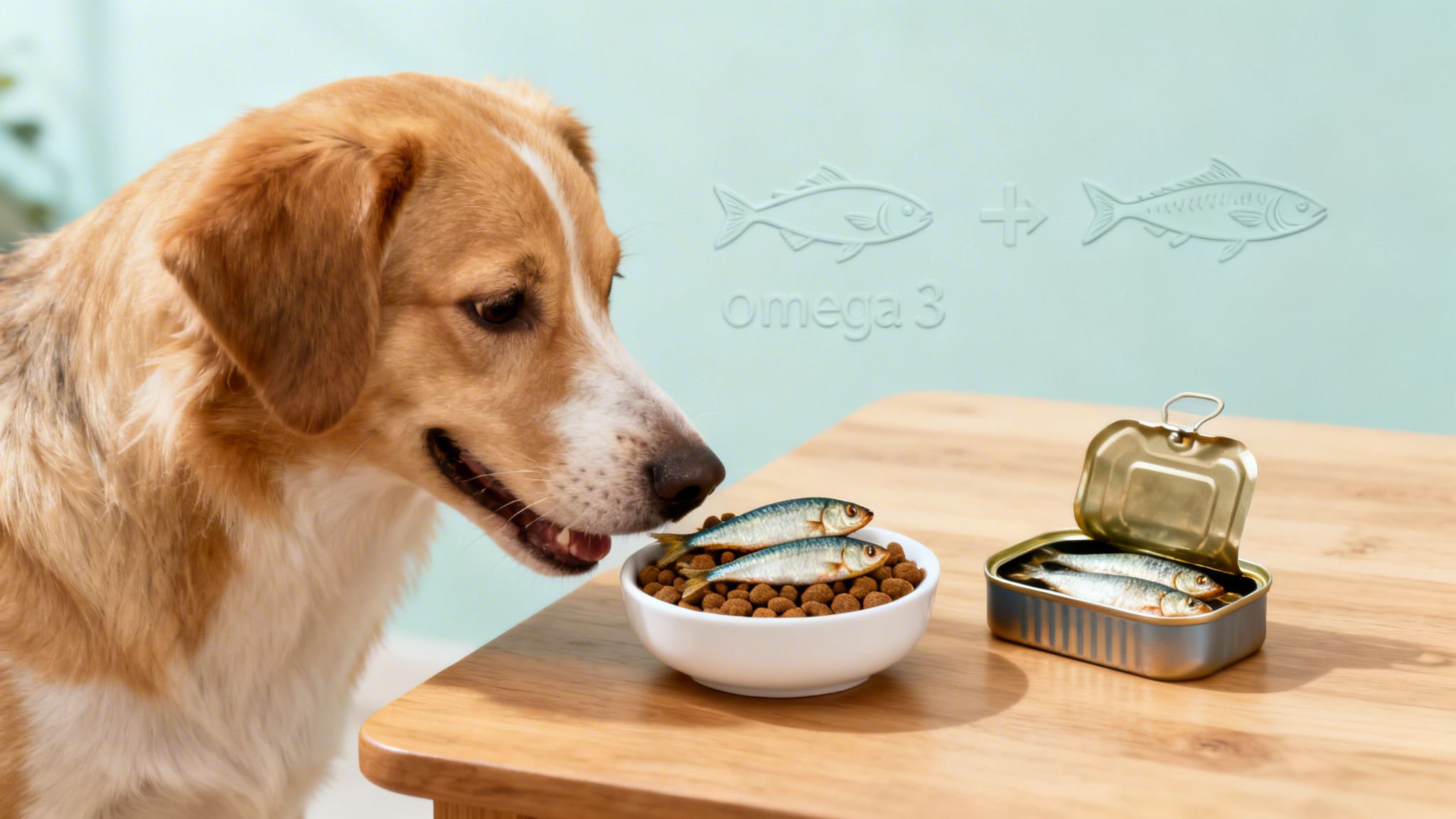
- Omega-3 Fatty Acids: These are the true superstars for joint health. Found in fatty, cold-water fish like salmon and sardines, omega-3s (especially EPA and DHA) are powerful, natural anti-inflammatories that can directly reduce pain and stiffness.
- Antioxidant-Rich Fruits & Veggies: Think color! Brightly colored produce like blueberries, spinach, and sweet potatoes are loaded with antioxidants. These little powerhouses fight off damaging free radicals that contribute to inflammation and cell damage within the joint.
Your dog's diet isn't just passive fuel—it's an active tool. By making smart food choices, you can help create an internal environment that calms inflammation, making it a foundational part of managing their arthritis naturally.
Foods to Watch Out For
What you don't feed your dog is just as important as what you do. Some common ingredients can actually encourage inflammation, making your dog's arthritis symptoms feel even worse.
Try to scale back on or completely avoid these:
- Processed Grains: Cheap fillers like corn, wheat, and soy can be pro-inflammatory for many dogs and offer very little in the way of joint-supporting nutrition.
- High Omega-6 Fats: Dogs need a balance of omega-6 and omega-3 fats. The problem is, many processed foods are heavy on omega-6s (from vegetable oils like corn and sunflower) and light on omega-3s, which can tilt the body toward an inflammatory state.
- Sugars & Artificial Additives: These ingredients are bad news for joints. They can trigger inflammation on their own and contribute to weight gain, delivering a painful one-two punch.
How to Get Started
Making diet changes can feel like a big project, but it doesn't have to be. The key is to go slow and be consistent.
First, get real about portions. Stop "eyeballing" kibble and start using a measuring cup for every single meal. The guidelines on the food bag are a decent starting point, but you'll likely need to adjust based on your dog's actual activity level and body shape.
When you switch to a new food, do it gradually over 7-10 days. Start by mixing just a little of the new food in with the old, and slowly increase the ratio. This gives their digestive system time to adjust. By combining smart portion control with an anti-inflammatory diet, you’re setting your dog up for a more comfortable, active, and happy life.
Using Safe Exercise to Improve Mobility
When you see your dog struggling with stiff, sore joints, the gut reaction is often to let them rest. And while rest is definitely part of the equation, too much couch time can backfire. Inactivity lets those joints get even creakier and causes the supporting muscles to weaken, which only makes the whole situation worse.
I like to think of an arthritic joint as a rusty door hinge. If you stop using it, it seizes up completely. But with a bit of oil and some slow, steady movement, it starts to swing freely again. The right kind of exercise is that oil for your dog’s joints, keeping them lubricated and building up the muscles that hold everything in place.
This is hands-down one of the most effective natural remedies for dog arthritis because it tackles the problem from two angles: pain and mobility. Gentle, consistent movement actually encourages the body to produce more synovial fluid—the joint’s natural lubricant—which cushions the bones and helps them glide instead of grind.
Why Low-Impact Is the Golden Rule
The trick is knowing the difference between movement that helps and movement that hurts. For a dog with arthritis, high-impact activities are the enemy. Things like launching after a tennis ball, leaping for a frisbee, or making those quick, sharp turns put a ton of jarring force on already fragile cartilage.
Instead, we want to focus on low-impact exercises that build strength and flexibility without all that pounding. These activities take the joints through their full range of motion, but in a smooth, controlled way.
Some of the best low-impact options are:
- Leash Walks: A good old-fashioned walk is the cornerstone of any arthritis management plan. The key is consistency. Aim for shorter, more frequent walks on forgiving surfaces like grass or a dirt trail, rather than hard concrete.
- Swimming: This is pretty much the perfect exercise for an arthritic dog. The water’s buoyancy supports their entire body weight, taking all the pressure off their joints. They get a fantastic muscle-building and cardio workout with zero impact.
- Underwater Treadmill: If you have access to a canine rehabilitation facility, this is an incredible tool. It gives you the best of both worlds—the buoyancy of water combined with the controlled, muscle-building motion of walking.
The golden rule for exercising a dog with arthritis is "little and often." A few gentle 15-minute walks spread throughout the day are infinitely better for their joints than one epic, hour-long hike on Saturday.
Creating a Safe and Enjoyable Routine
Building a solid exercise routine is all about paying attention and being consistent. Your dog can’t just tell you, "Hey, that hurt!" so you have to become a pro at reading their signals.
Always start with a proper warm-up. Just a slow five-minute stroll is enough to get blood flowing to the muscles and prep the joints for a bit more activity. Likewise, a five-minute cool-down at the end of your walk helps prevent stiffness from setting in later.
Keep a close eye on how your dog is doing, both during and after your outings. If you see them limping more, lagging behind, or panting heavily, that’s your cue. It’s time to dial back the intensity or shorten the next walk.
Here’s a simple checklist to keep things safe:
- Always Warm Up: Kick things off with 5 minutes of slow walking.
- Keep It Short and Sweet: Multiple short sessions beat one long, grueling one.
- Watch for Fatigue: If they start to slow down, head for home. Don't push it.
- Avoid "Weekend Warrior" Syndrome: A steady routine all week is much safer than packing all the activity into the weekend.
- Cool Down: Wrap up with another 5 minutes of easy walking.
By tailoring the activity to what your dog can comfortably handle, exercise becomes a powerful healing tool instead of a source of pain. It not only helps them stay mobile and happy but also strengthens that incredible bond the two of you share.
Choosing The Right Joint Health Supplements
Walking down the supplement aisle can feel a bit like staring at a wall of promises. Every bottle claims to have the secret to your dog’s comfort, but what actually works? It’s a lot like cooking a good meal—you need the right ingredients, in the right amounts, working together.
This is especially true when you're dealing with something as important as your dog's joint health. The pet supplement world has exploded, and it’s no surprise why. The global market for pet herbal supplements hit USD 895.0 million in 2023 and is expected to keep climbing. The main reason? Joint support. Owners are looking for safer, long-term options like turmeric and glucosamine, moving away from relying solely on conventional drugs. If you’re curious about what’s driving this trend, you can discover more insights about the pet supplement industry.
So, let's break down what you should actually be looking for on those labels.
The Building Blocks of Healthy Cartilage
Some of the most important supplements work by giving your dog's body the raw materials it needs to repair and maintain cartilage. Think of cartilage as the essential, squishy cushion between the bones in a joint.
Imagine that cushion is a brick wall. Over time, arthritis causes that wall to wear down and crumble. A couple of key ingredients act like the mortar and new bricks needed to keep that wall strong and stable.
- Glucosamine: This is a natural compound that’s a core component of cartilage. It helps kickstart the growth of new cartilage cells, essentially providing the "bricks" to patch up any damage.
- Chondroitin Sulfate: This works hand-in-hand with glucosamine, acting like the "mortar." It's fantastic at helping cartilage hold onto water, which is what gives it that crucial shock-absorbing quality. It also helps block the nasty enzymes that are actively breaking the cartilage down.
When you see these two on a label, you know the formula is designed to support the joint's fundamental structure. They aren't a quick fix for pain, but after a few weeks of consistent use, they can make a real difference in slowing down joint damage.
Taming Inflammation The Natural Way
While glucosamine and chondroitin are busy rebuilding, another group of natural ingredients gets to work on calming the inflammation that causes so much of the pain and stiffness.
These are nature's anti-inflammatories, working to soothe sore joints from the inside out.
- Omega-3 Fatty Acids (EPA & DHA): Found in things like fish oil and green-lipped mussels, these fatty acids are inflammation-fighting powerhouses. They work on a cellular level to dial down the body's inflammatory response, which can lead to real, noticeable improvements in your dog's comfort and mobility.
- Turmeric (Curcumin): Curcumin is the active compound in turmeric, and it’s a seriously potent natural anti-inflammatory. It blocks specific inflammatory pathways in the body, offering relief that's been compared to some medications, just in a gentler, more natural package. Pro tip: always look for formulas that include a little black pepper extract (piperine), as it boosts how much curcumin the body can actually absorb and use.
A truly effective joint supplement doesn't just do one thing. It should combine cartilage-building ingredients with powerful natural anti-inflammatories to offer a complete approach—rebuilding structure while actively reducing pain.
This two-pronged approach is key. It's about repairing the joint while also making your dog feel better day-to-day. The infographic below touches on this holistic idea, showing how low-impact exercise complements a good supplement routine.
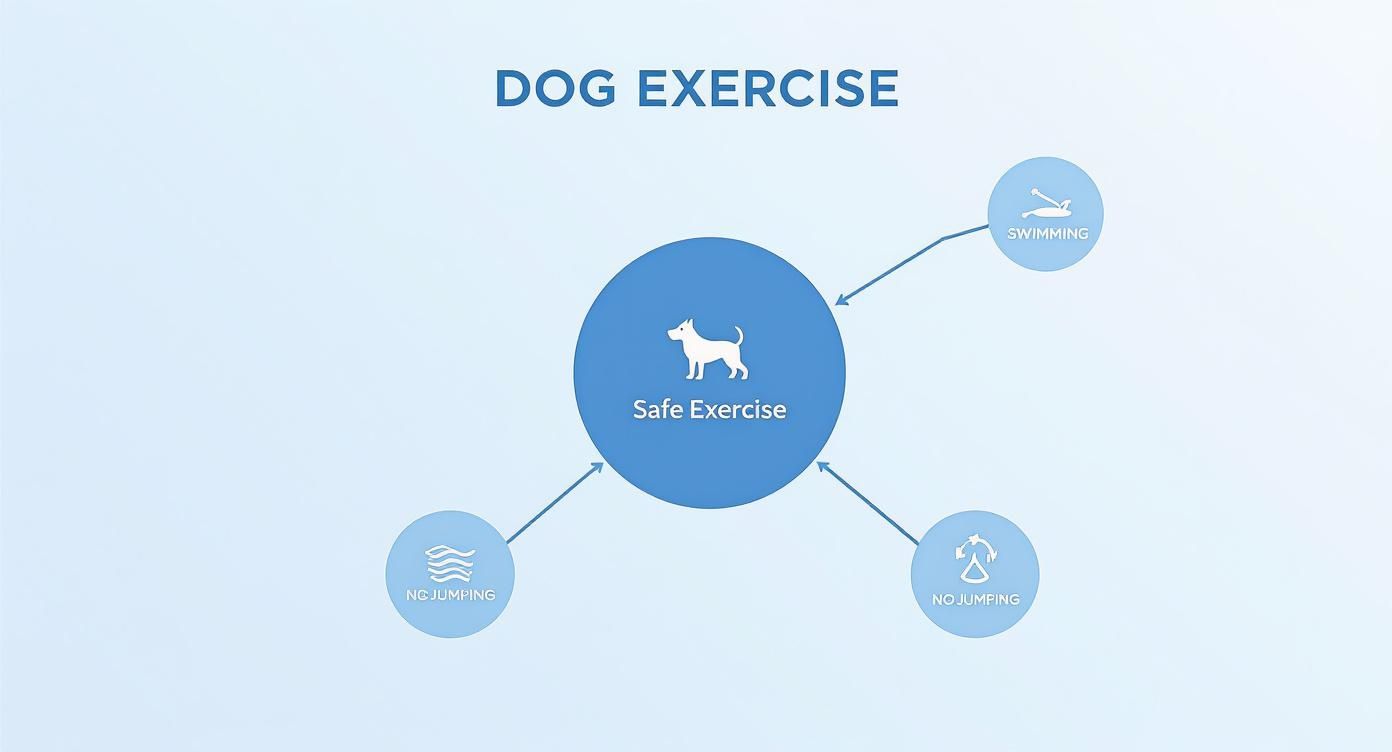
As the visual shows, you want to choose activities that support the joints—like swimming or gentle walks—while avoiding high-impact stress. This is a perfect parallel for choosing supplements that support the body's natural healing processes rather than just masking symptoms.
To make things clearer, here's a quick look at how these top natural ingredients stack up against each other.
Comparing Top Natural Supplements for Dog Joints
Each of these ingredients plays a unique and valuable role in managing your dog's arthritis.
The Power of a Multi-Ingredient Formula
You could try to buy each of these supplements separately, but that gets complicated and expensive fast. You'd be juggling multiple bottles, trying to figure out the right dosages, and hoping your dog is willing to swallow a handful of pills every morning.
This is where a high-quality, all-in-one chew really shines. A well-formulated product like the FORMA superfood chew is designed with synergy in mind. It combines clinically-backed doses of key ingredients into a single treat your dog will actually look forward to.
Here’s why a combined formula is almost always the smarter choice:
- Correct Ratios: Reputable brands have done the science to make sure the ingredients are balanced to work together effectively. The ratio of glucosamine to chondroitin, for example, really matters.
- Simplicity and Consistency: Giving your dog one tasty chew a day is a whole lot easier than managing several different supplements. For natural remedies, this daily consistency is everything.
- Better Absorption: Premium formulas often include extra ingredients that help the body absorb the key nutrients, making sure your dog gets the full benefit from every single bite.
- Comprehensive Support: A thoughtfully designed chew often includes other goodies that support overall wellness, like antioxidants for cellular health or probiotics for gut health, which also plays a role in keeping inflammation in check.
By choosing a comprehensive chew, you're not just giving your dog a joint supplement. You're simplifying your life and giving them a daily dose of broad-spectrum support that contributes to their overall health and happiness.
Making Your Home an Arthritis-Friendly Haven

Sometimes the most effective natural remedies for dog arthritis start right at home. It’s easy to forget, but our homes can be a real obstacle course for a dog with aching joints. That beautiful hardwood floor you love? To them, it can feel like a slippery ice rink, making every step a challenge.
By making a few thoughtful changes, you can remove those daily hurdles, which not only eases their pain but also helps prevent the kind of injuries that make arthritis worse. It's all about creating a safe space where they can move around with confidence and rest comfortably. These little adjustments really do add up to a huge improvement in their day-to-day life.
This hands-on approach is becoming more and more common. We’re seeing a big shift toward supportive care, with over 40% of adult dogs in some studies now getting joint supplements. It shows just how much owners are focusing on wellness to manage conditions like arthritis. You can learn more about trends in the canine arthritis market to see how this is changing pet care for the better.
Upgrading Their Comfort Zone
An arthritic dog desperately needs a place to rest that doesn't put extra stress on their body. Honestly, the single best investment you can make is a high-quality orthopedic bed.
A regular fluffy bed just flattens out, offering almost no real support. A true orthopedic bed, however, is made of dense memory foam that cradles their joints and distributes their weight evenly. It eases pressure points and gives them the firm base they need to get up without a struggle. Just be sure to put it in a warm, draft-free spot where they already love to hang out.
A great bed isn't a luxury for a dog with arthritis; it's a therapeutic tool. By cushioning their joints for the many hours they spend sleeping, you're actively helping to reduce stiffness and pain throughout their day.
Improving Safety and Accessibility
Think about all the navigating your dog does in a day. Just getting around can be full of painful moments. Making those movements safer is key to preventing slips, falls, and jarring impacts that can cause a major setback.
Here are a few essential fixes:
- Provide Secure Footing: Lay down some non-slip rugs or runners on hardwood, tile, or laminate floors. This gives their paws the grip they need to feel stable and confident when walking.
- Eliminate Jumping: Leaping onto the couch or into the car is incredibly tough on sore joints. A sturdy ramp or a set of pet stairs provides a gentle slope, making a world of difference.
- Elevate Their Bowls: Bending down to eat and drink can strain an arthritic dog's neck, shoulders, and back. A simple raised feeder brings their bowls up to a comfortable height, allowing for much better posture at mealtime.
These are simple but powerful changes. When you remove these physical stressors from their environment, you create a true haven that supports their mobility and offers constant, gentle relief for their aching body.
How to Partner With Your Veterinarian
Exploring natural remedies for dog arthritis is a fantastic step, but it’s one you should never take alone. Real success comes from a partnership. Your veterinarian is your most important ally, blending their medical expertise with what you know best: your dog's day-to-day comfort and personality.
This teamwork is all about making sure every choice is both safe and effective. Your vet has the full picture of your dog’s health history and can spot potential problems before they start, like a new herb interacting with an existing medication. Think of it like this: you're the one driving the car every day, but your vet is the expert navigator with the map.
Starting The Conversation
Bringing up natural remedies with your vet can feel a little daunting. But you might be surprised—most vets today welcome an integrative approach. The trick is to frame it as a team effort. You’re not second-guessing their advice; you’re asking them to help you build a more complete wellness plan.
Before your appointment, jot down a list of the specific therapies or supplements you're curious about. This shows you're engaged and helps make the conversation focused and productive.
Here are a few questions you could ask to get the ball rolling:
- Dosage and Safety: "Based on my dog's weight and current health, what would be a safe starting dose for this?"
- Potential Interactions: "Is there any reason this might not mix well with their current food or medications?"
- Monitoring Progress: "What positive changes or potential side effects should I be looking for at home?"
This turns a routine check-up into a collaborative strategy session for your dog’s well-being.
Tracking Progress Together
Your daily observations are pure gold for your vet. They only see your dog for a few minutes in the clinic, but you see them 24/7. Learning to be a keen observer is one of the most powerful things you can do for your dog.
Your vet has the medical charts, but you have the daily diary. Note the small wins—the day they met you at the door with more energy, or the first time in months they put their paws on the windowsill. This feedback is critical.
Keep a simple journal or a note on your phone. Log their energy level, how they're walking, their appetite, and how eager they are to play. When you share these tangible details, you’re giving your vet the data they need to help you adjust the plan for the best results. It’s this teamwork that truly gives your dog the safest, most effective support possible.
Common Questions About Natural Arthritis Care
Taking the plunge into natural remedies for your dog's arthritis is a big step, and it's completely normal to have a lot of questions. Getting clear, straightforward answers is the best way to feel confident that you’re doing the right thing for your best friend. Let's tackle some of the most common things pet parents wonder about.
How Long Does It Take for Natural Remedies to Work?
When it comes to natural care, patience is a virtue. Unlike conventional pain meds that can work quickly to mask symptoms, natural remedies aim to fix the root of the problem—like taming inflammation and rebuilding joint health.
Think of it like tending to a garden. You don't see sprouts overnight. It takes consistent watering and care. For supplements like glucosamine or turmeric, you'll likely start seeing subtle improvements in your dog's comfort and willingness to move in about 4 to 8 weeks. For things like diet and weight loss, the results become more obvious as the pounds start to come off. The real magic happens with daily consistency.
Are Human Joint Supplements Safe for My Dog?
This is a great question, and the answer is a hard no. While the active ingredients might look the same on the label (like glucosamine), supplements for humans are not designed for a dog's body.
Human products often contain ingredients that are downright toxic to dogs. A big one is xylitol, an artificial sweetener that's extremely dangerous for them. Plus, the dosages are formulated for a person's weight and metabolism, making them either ineffective or unsafe for a dog. Always stick with a high-quality joint supplement made specifically for canines.
Never give your dog a supplement or medication intended for humans without explicit direction from your veterinarian. What is safe for you can be harmful to them, and the risks far outweigh any potential benefits.
Can Natural Remedies Replace Vet-Prescribed Medications?
You should never stop or change your dog’s prescribed medication without talking to your vet first. Think of natural remedies as powerful allies, not replacements. They work best as part of a bigger, more complete care plan.
For most dogs, especially those dealing with significant pain, natural approaches shine when they work alongside conventional medicine. It’s all about collaboration with your vet. Over time, this combined strategy might even help reduce the dose of prescription drugs, which is great for minimizing potential side effects while keeping your dog comfortable and happy. It's a partnership, not a competition.

Karolis is the Founder of FORMA, a pet wellness brand focused on longevity and daily nutrition for dogs. Writes about supplements, canine health, and helping pets live longer, healthier lives
Join thousands of pet parents getting science-backed health insights and natural care advice