Natural Supplements for Dog Anxiety A Complete Guide
Discover the best natural supplements for dog anxiety. This guide explores calming ingredients, safety tips, and how to choose the right solution for your dog.
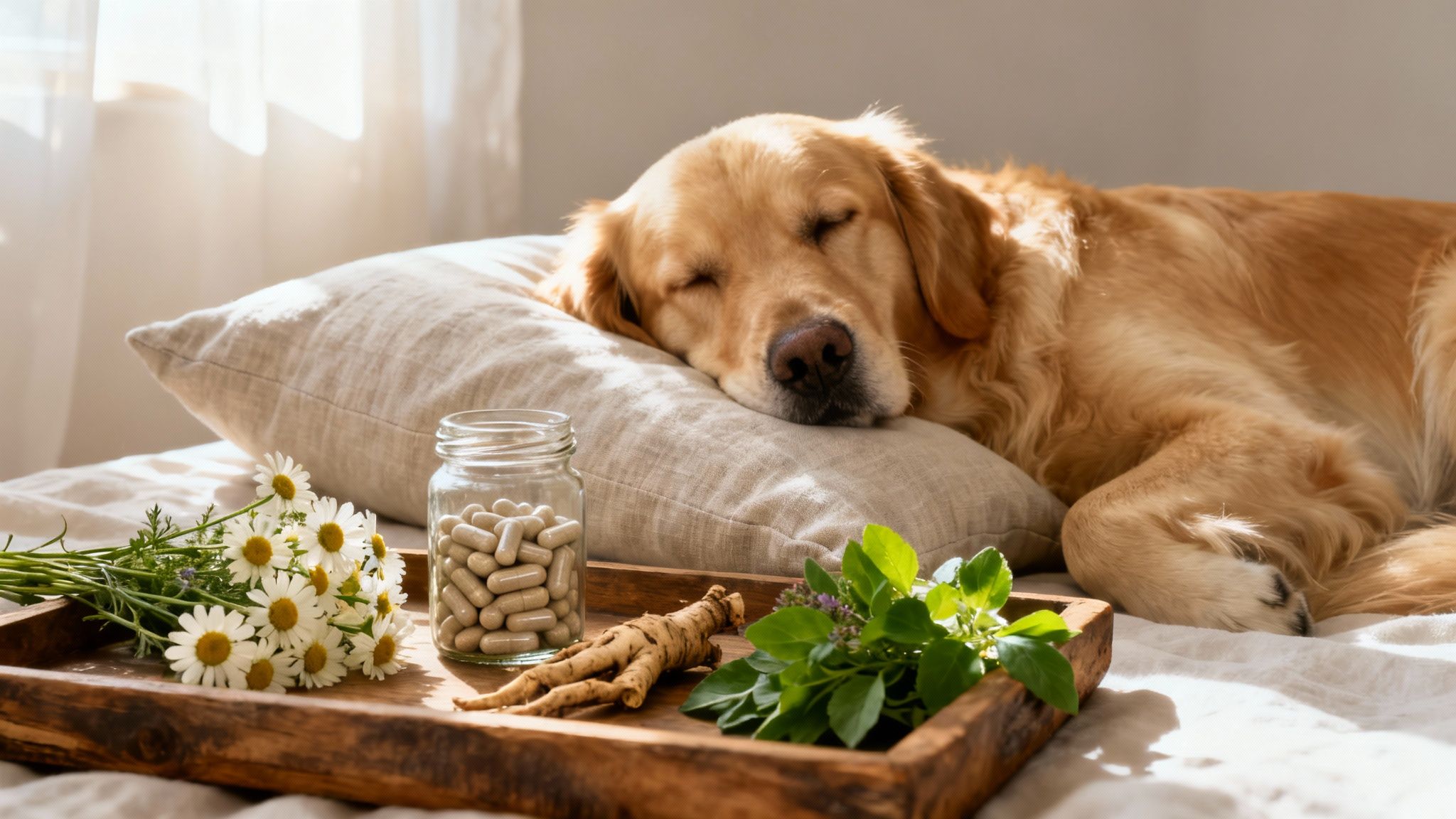
When your dog is struggling with anxiety, you want to help them feel safe and calm. Natural supplements, using ingredients like L-theanine, chamomile, and even certain probiotics, offer a gentle way to support their emotional balance. These options are designed to work with your dog’s body, not against it, promoting a sense of peace without the heavy side effects that can come with some traditional medications.
Why Pet Parents Are Turning to Natural Anxiety Solutions
It’s tough to watch a dog you love deal with anxiety. That frantic barking every time you walk out the door, the shaking during a thunderstorm, the constant panting on car rides—it's heartbreaking. As a pet parent, you feel helpless and start looking for anything that can bring them relief, but the idea of prescription drugs can feel like a really big step.
This is where natural supplements for dog anxiety have found their place. It helps to think of them less like a sedative and more like a supportive tool for your dog's nervous system. The goal isn’t to change who they are. It’s about turning down the volume on their anxiety so their happy, confident personality can come through again. This gentler approach is exactly what many modern dog owners are looking for.
The Shift Toward Holistic Pet Wellness
These days, our dogs are family. There’s no question about it. This change in how we see them means we’re more in tune with their emotional health than ever before. We want the same level of care for our dogs that we'd want for ourselves: clean ingredients, products we can trust, and solutions that help the body do its job better.
And the market shows it. The global demand for dog calming supplements hit USD 1.8 billion in 2023 and is expected to soar to USD 3.2 billion by 2028. This boom is fueled by millions of pet owners looking for natural ways to manage everyday problems like separation anxiety and fear of loud noises. You can learn more about the growth of the dog supplement market to see just how big this shift is.
Natural supplements work by nurturing the body’s own calming mechanisms. Instead of forcing a change, they provide the building blocks needed to restore balance—much like a healthy diet supports overall physical health.
Why Natural Options Are Gaining Trust
The real appeal of natural supplements is their philosophy of working in harmony with the body. This approach offers a few key benefits that just make sense to pet parents today:
- Fewer Side Effects: Ingredients like chamomile and L-theanine are well-known for being gentle. This means a much lower risk of your dog becoming drowsy, lethargic, or just not acting like themselves.
- Proactive Support: You can use these supplements as part of a daily routine to help your dog build resilience to stress over time, not just as a quick fix in a panic-filled moment.
- Holistic Benefits: Many of these ingredients do more than just calm. Probiotics, for example, are fantastic for gut health, which we now know is directly connected to mood and emotional regulation through the gut-brain axis.
Choosing natural supplements for dog anxiety is about more than just managing a symptom. It’s an investment in your dog’s long-term emotional well-being, giving them the support they need to face the world with a little more confidence and a lot more calm.
Understanding How Anxiety Affects Your Dog

Before we can really help our dogs, we need to get inside their heads and see the world from their perspective. A dog's anxiety isn't them being "bad"—it's a very real and overwhelming emotional response to something they feel is a threat.
Think about it from their point of view. That garbage truck rumbling down the street isn't just a noise; to a dog home alone, it can sound like a monster trying to break in. Their heart starts to race, their body tenses up, and their brain goes into overdrive. This is the classic "fight or flight" response, a hardwired survival instinct that screams "danger!"
This same internal alarm can get tripped by all sorts of things. The first step to helping your dog feel safe is figuring out what's setting it off.
Common Triggers for Canine Anxiety
While every dog has their own unique personality and fears, most anxiety tends to bubble up from a few common sources. Knowing what these are helps you get ahead of the problem.
- Separation: For many dogs, being left alone is terrifying. When you walk out the door, their sense of safety and security goes with you.
- Loud Noises: Fireworks, thunderstorms, even the vacuum cleaner can be incredibly jarring for a dog's sensitive ears, triggering an immediate fear response.
- New Places and Travel: A car ride or a trip to the vet yanks them out of their comfort zone. These unfamiliar environments can feel disorienting and stressful.
- Social Situations: Meeting new dogs or people can be a lot to handle, especially for a dog that didn't get a lot of positive social exposure as a pup.
When your dog encounters one of these triggers, their body gets a rush of stress hormones like cortisol and adrenaline. In a real emergency, that's a good thing! But when it happens day after day, that chronic stress can really wear them down, both physically and emotionally.
How Natural Supplements Gently Rebalance the System
So, where do natural supplements for dog anxiety fit in? Think of them less like an on/off switch and more like a dimmer switch for your dog's anxiety. Their job isn't to sedate your dog, but to gently turn down the volume on their stress response.
The goal of a natural supplement is to gently turn down the intensity of the brain's overactive stress signals. It helps your dog manage their feelings without making them drowsy or changing their core personality.
While some prescription medications work like a fire hose—powerful and fast—natural supplements are more like a steady, gentle rain. They work with your dog's body, supporting its innate ability to find balance and calm itself down from the inside out.
Supporting the Body's Calming Messengers
This rebalancing act all comes down to chemistry, specifically neurotransmitters. These are the messengers that carry signals around your dog's brain. For anxiety, two of the most important players are serotonin and GABA.
- Serotonin: You've probably heard this called the "feel-good" chemical. It plays a huge role in stabilizing mood and creating a sense of well-being. When serotonin levels are healthy, your dog just feels more secure.
- GABA (gamma-aminobutyric acid): Think of GABA as the brain's brake pedal. Its main job is to put a lid on nerve activity, preventing the brain from getting over-excited and spiraling into panic. It promotes relaxation.
Many natural ingredients, like L-tryptophan (which the body uses to make serotonin) or calming herbs like chamomile, work by supporting these two systems. They give the body the building blocks it needs to maintain a stable emotional foundation. The result is a dog who is more resilient and better equipped to handle the stresses of everyday life.
The Best Natural Calming Ingredients for Dogs
Stepping into the world of natural supplements for an anxious dog can feel like a lot to take in. When you're looking at a product label, you want to know that what you're seeing is safe, effective, and actually makes sense for your dog. It's a lot like reading your own food labels—the more you understand what’s inside, the better choices you can make.
And you're not alone in looking for these kinds of solutions. The demand for gentle, effective support is booming. The pet dietary supplement market is on track to jump from USD 2.81 billion in 2025 to a whopping USD 6.61 billion by 2035, and dogs are leading that charge. A big reason for this is the rise in issues like separation anxiety, which saw a 25% spike after many of us headed back to the office. You can discover more insights about this growing pet wellness market and see how ingredients like L-theanine and chamomile are becoming go-to staples for a calmer pup.
So, let's break down some of the most trusted and effective natural calming ingredients you’ll find on the shelf.
L-Theanine: The Focused Relaxer
Ever had a cup of green tea and felt that unique sense of calm, focused energy? That’s L-theanine at work. This amazing amino acid is a game-changer for dog anxiety because it works on the brain without simply knocking them out.
Instead of causing drowsiness, L-theanine helps produce alpha brain waves. These are the same brain waves linked to "wakeful relaxation" in people—that feeling you get during a good meditation session. For dogs, this means they can stay alert and engaged, just without the nervous edge.
This makes L-theanine a fantastic choice for specific situations:
- Training Sessions: Helps an anxious dog concentrate on learning instead of reacting to every little distraction.
- Mild Separation Anxiety: Gives them a gentle buffer against the stress of you walking out the door.
- Vet Visits: Can keep your dog calm enough to be handled without feeling totally sedated.
Chamomile: The Gentle Soother
Chamomile is practically famous for its calming abilities, and for good reason. The magic comes from a compound called apigenin, which gently binds to brain receptors to help dial down anxiety and encourage relaxation. It's a mild, natural soother, making it perfect for taking the edge off general nervousness.
Think of chamomile as the warm, comforting hug of the herbal world. It's gentle enough for everyday use and can be especially helpful for dogs who have trouble settling down at night or just seem a bit on edge.
Key Insight: Chamomile doesn't just calm the mind. It also has muscle-relaxing properties, which is a huge help for dogs who carry their stress physically, tensing up their bodies when they feel anxious.
It’s an ideal ingredient for dogs dealing with restlessness or the mild stress that comes from having houseguests or a change in routine.
Valerian Root: The Sleep Supporter
When anxiety is so bad that it's messing with your dog's sleep, valerian root is an ingredient to look for. This herb is a classic, used for centuries as a natural sleep aid. Its power comes from its ability to increase GABA (gamma-aminobutyric acid) in the brain.
As we covered earlier, GABA is basically the brain’s brake pedal. It slows down nerve activity, keeping the brain from spiraling into an over-excited state. By giving GABA a boost, valerian root helps quiet a racing mind and lets your dog get deeper, more restorative rest.
Because it's a bit more potent, valerian root is best for:
- Noise Phobias: Can help a dog sleep right through a thunderstorm or fireworks.
- Serious Travel Anxiety: Makes long car rides or even flights much more bearable.
- Nighttime Pacing: A great solution for dogs who just can't seem to settle down and rest through the night.
It’s a stronger herb than chamomile, so it’s usually reserved for more intense, short-term situations rather than daily maintenance.
Tryptophan: The Mood Stabilizer
You probably know tryptophan as the thing in turkey that makes you sleepy after Thanksgiving dinner, but its role in the body is far more complex and important. Tryptophan is an essential amino acid, meaning dogs can't make it themselves—they have to get it from their diet or a supplement.
Here’s where it gets interesting: the body converts tryptophan directly into serotonin. Serotonin is the "feel-good" neurotransmitter that's in charge of regulating mood, sleep, and appetite. When a dog has stable serotonin levels, they feel more secure, content, and emotionally balanced.
Supplementing with tryptophan ensures your dog's brain has all the raw materials it needs to keep serotonin production humming along. This makes it a fantastic ingredient for long-term mood support, helping build a solid foundation of emotional resilience.
Probiotics: The Gut-Brain Connection
It might seem odd to see probiotics on a list of calming ingredients, but the science is crystal clear: a healthy gut is directly tied to a healthy mind. This is all thanks to the gut-brain axis, a busy two-way communication highway between the brain and the intestines.
Your dog’s gut is home to trillions of bacteria, and this microbiome is a little neurotransmitter factory, producing about 90% of the body's serotonin. If the balance of good-to-bad bacteria gets thrown off, it can directly impact your dog's mood and crank up their anxiety.
By adding beneficial probiotics, you help restore that healthy gut balance. This, in turn, supports stable serotonin production and promotes a calmer, more even-keeled dog. It’s a perfect example of how supporting one part of the body can create positive ripple effects everywhere else.
To help you see how these ingredients stack up, here’s a quick comparison table.
Comparing Popular Natural Calming Ingredients for Dogs
This table offers a quick snapshot of the top natural ingredients we've discussed. It's designed to help you easily compare their primary benefits and see which might be the best fit for your dog's specific needs.
Ultimately, understanding what each ingredient does allows you to make a more informed choice. Whether your dog needs help focusing during training or needs some serious support during a thunderstorm, there's a natural option that can make a real difference.
How to Choose the Right Supplement for Your Dog
Walking down the pet aisle or browsing online for natural supplements for dog anxiety can feel like a lot to take in. But you don't need to be a scientist to make a great choice for your pup.
Think of it less like finding a miracle cure and more like matching the right support to your dog’s specific personality and needs. It’s all about becoming a confident advocate for their well-being.
The demand for these products is exploding. The pet calming market is expected to reach USD 1.20 billion in 2025 and is on track to hit USD 2.06 billion by 2030. A huge chunk of that—51%—is for our canine friends, driven by common struggles like separation anxiety and fear of loud noises.
Calming chews and other oral supplements are the most popular choice, making up 34.7% of the market's revenue in 2025 simply because they're so easy to use. If you want to dive deeper into these trends, you can read the full research about the pet calming market.
This boom means you have more options than ever, but it also means you need to know what to look for. It all starts with the label.
How to Read a Supplement Label
A good supplement label is like an honest resume—it should tell you everything you need to know without any fluff. If you see vague promises or a confusing list of ingredients, that’s a red flag.
Here's what to zero in on:
Active Ingredients: This is your cheat sheet. It should clearly list the good stuff, like L-theanine or chamomile, along with the exact amount in milligrams (mg). This number tells you how potent the supplement is.
Inactive Ingredients: What’s not in the formula is just as important. You want to see natural, whole-food ingredients. Steer clear of artificial colors, flavors, preservatives, or cheap fillers like corn and soy that can sometimes cause more trouble than they're worth.
Third-Party Testing: This is a big one. Reputable companies will pay an independent lab to test their products for purity and potency. Look for a seal or mention of this on the package. It's a huge mark of a brand that stands by its quality.
Choose the Right Format for Your Dog
Supplements aren't one-size-fits-all. The best format is simply the one your dog will actually take without a fight. Since consistency is the name of the game, making it a stress-free experience is crucial.
- Chews: For most dogs, these are just tasty treats. They're perfect for building a positive daily routine.
- Oils or Tinctures: Got a picky eater? Oils are your friend. You can easily mix them into their food, and they allow for super-precise dosing, which is great for smaller dogs.
- Powders: Similar to oils, powders are easy to sprinkle over a meal. They can also be a more budget-friendly option, especially if you have more than one dog.
Picking the right format means you’re giving your dog support, not creating another source of anxiety for both of you.
Prioritize Science and Safety
A trustworthy brand doesn't just make claims; it shows its work. Look for companies that build their formulas on real scientific research and put safety first. This always includes clear, weight-based dosing instructions.
Important Takeaway: Never guess the dosage. Always follow the manufacturer's directions. When in doubt, it's smart to start with a little less to see how your dog reacts. And, of course, a chat with your vet is always the best place to begin.
The infographic below highlights some of the most effective, science-backed ingredients and how they work.
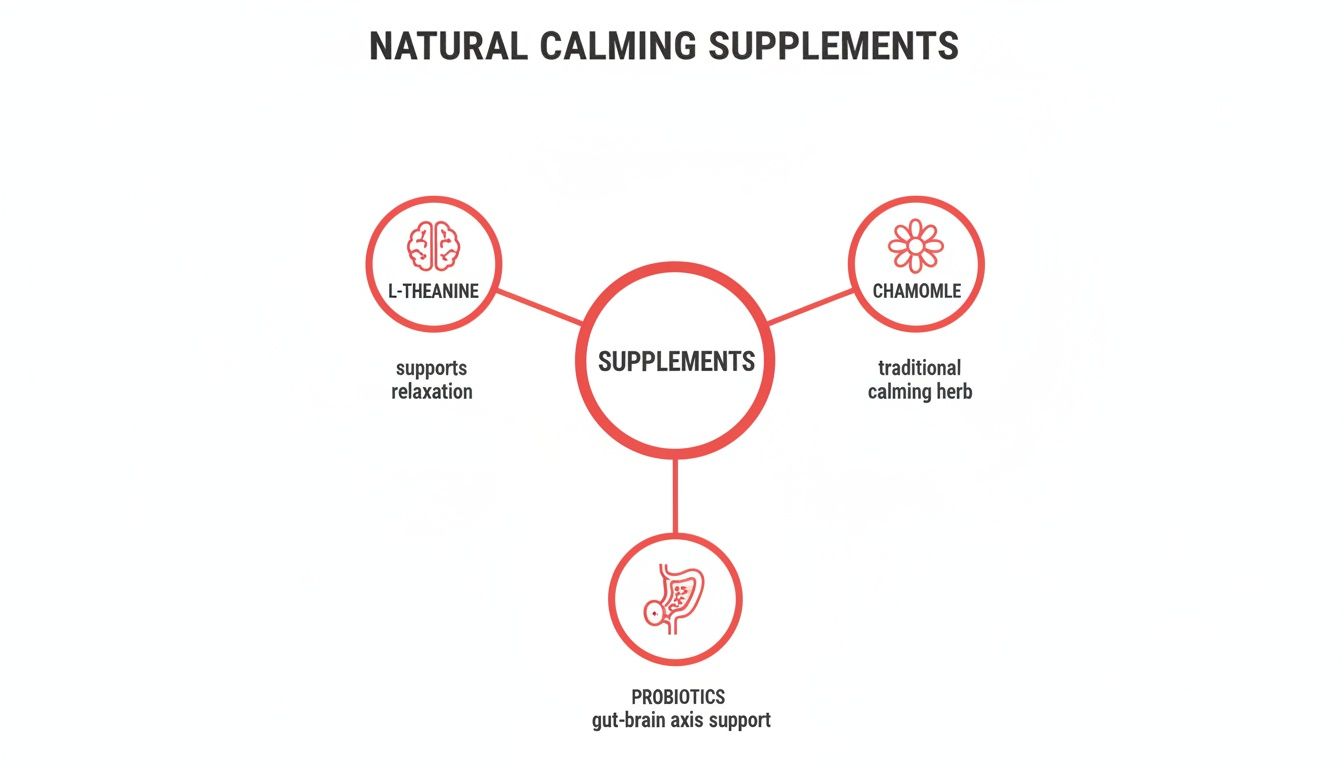
This visual guide breaks down how different natural ingredients support different body systems—from the brain to the gut—to help your dog feel more at ease.
By learning to read labels, picking a format your dog enjoys, and sticking with science-backed brands, you can find a high-quality supplement with confidence. It’s a simple but powerful way to help your anxious companion feel more secure, balanced, and happy.
Building a Holistic Anxiety Management Plan

While natural supplements can be a huge help for an anxious dog, they aren't a magic wand. It's best to think of them as one important player on a bigger team. Real, lasting calm comes from a well-rounded plan that supports your dog's needs from every angle.
Supplements are most effective when they’re part of a positive routine and a comforting environment. When you combine them with other strategies, you create a powerful synergy that helps your dog feel safe, secure, and understood. This complete approach is what builds resilience for the long haul.
The Power of Positive Reinforcement Training
Behavioral training is the bedrock of any solid anxiety plan. The point isn’t to “fix” your dog, but to build their confidence and give them better ways to cope with their fears. We're gently trying to reshape their emotional response to whatever triggers them.
This is where techniques like desensitization and counter-conditioning are so valuable. Desensitization means slowly introducing your dog to their trigger at such a low level that they don't react, then gradually increasing the intensity over time. Counter-conditioning is all about changing their mind, turning "that scary thing" into a signal that "something amazing is about to happen," usually with a super tasty treat.
A holistic approach goes beyond a single product. It involves creating a supportive ecosystem where your dog's physical and emotional health are nurtured together, providing a complete roadmap for success.
Creating a Safe and Predictable World
Anxious dogs thrive on routine. When they know what to expect from their day, a massive source of stress and uncertainty just melts away. A consistent schedule for meals, walks, and playtime creates a comforting rhythm they can count on.
Your home environment is just as crucial. A chaotic house can easily fuel anxiety, whereas a calm one can be a soothing balm. Here are a few simple ways to create a sanctuary for your pup:
- Provide a Safe Space: Set up a cozy crate or a quiet corner with their favorite bed where they can go to decompress. This should be their personal den—a place where no one ever bothers them.
- Use Calming Tools: Things like anxiety wraps, which apply gentle, constant pressure, can be incredibly comforting. A white noise machine can also be great for muffling startling noises during a thunderstorm.
- Incorporate Mental Enrichment: Puzzle feeders and "sniffaris" (where they just get to sniff everything on a walk) are fantastic for lowering stress. These activities engage their brain in a healthy way, burn off anxious energy, and build confidence.
The Role of Diet and Exercise
Never underestimate the mind-body connection in dogs. Regular exercise is a natural stress-buster, helping to burn off excess cortisol and release mood-boosting endorphins. A tired dog is very often a calmer, happier dog.
What you put in their bowl matters, too. A diet based on high-quality, whole-food ingredients helps maintain stable energy levels and gives their brain the nutrients it needs to function well. The gut-brain axis is a real thing—a balanced diet supports a healthy gut, which is vital for producing "feel-good" neurotransmitters like serotonin.
When you bring together natural supplements for dog anxiety, consistent training, a predictable routine, and proper physical care, you build a complete support system. This is how you help your dog not just cope with their anxiety, but truly start to thrive.
Your Questions About Dog Anxiety Supplements, Answered
When you start looking into natural supplements for your dog's anxiety, it’s completely normal to have a ton of questions. You’re trying to do the best for your furry friend, and that means being sure about what you're giving them.
Let's clear up some of the most common things people wonder about, like how fast these supplements work, what to watch out for, and how they fit into your dog's overall care plan.
How Long Does It Take to See a Difference?
This is probably the number one question on every dog owner's mind. The honest answer is: it depends on the ingredients and what they’re designed to do. Think of them as falling into two different camps.
For "In-the-Moment" Stress: Some supplements are built for quick relief during specific events, like a looming thunderstorm or an upcoming car trip. Ingredients like L-theanine or valerian root are fast-acting and can start to calm your dog down within 30 to 90 minutes. They’re great for taking the edge off right when you need it.
For Long-Term Balance: Other supplements work more like a daily vitamin for the mind. Ingredients like tryptophan and probiotics aren't about a quick fix; they work behind the scenes to build up your dog's emotional resilience over time. By supporting healthy serotonin levels and the gut-brain connection, they help create a more stable mood. With these, you’ll want to be patient, as it can take four to six weeks to see the full, lasting benefits.
Are There Any Side Effects I Should Worry About?
One of the biggest pluses of high-quality natural supplements is how safe they are, especially when you compare them to prescription drugs. Most dogs handle gentle ingredients like chamomile, L-theanine, and probiotics without any issues at all.
That said, every dog is an individual. If there is a side effect, it’s usually minor digestive upset as their body gets used to something new. The best way to avoid this is to always start with the correct dose for your dog’s weight and introduce it slowly.
A Quick Word From the Vet: Even though natural ingredients are very safe, it's always smart to have a quick chat with your vet before starting anything new. They know your dog's health history and can give you the green light that it's the right move.
Can I Give These Supplements with My Dog's Prescription Meds?
This is a really important question, and the answer is a firm no—not without your vet's direct approval and supervision.
Mixing supplements with prescription anxiety medications can be risky. Certain herbs and amino acids can interfere with drugs like SSRIs (such as fluoxetine) or benzodiazepines. This could either make the medication too strong or cause other unexpected side effects. Your vet is the only one who can safely map out a plan that might involve both.
What's the Difference Between Calming Supplements and CBD?
It's easy to see why people get these two mixed up. Both are natural options aimed at easing anxiety, but they work on the body in fundamentally different ways.
Natural Calming SupplementsThese usually contain a mix of familiar herbs, amino acids, and other natural compounds.
- How They Work: They tap into your dog’s existing biological systems to encourage calm, often by supporting the production of "feel-good" neurotransmitters like serotonin and GABA.
- Common Ingredients: You'll see things like L-theanine, chamomile, tryptophan, and valerian root on the label.
- Regulation: They're typically considered dietary supplements and have a long track record of safe use.
CBD (Cannabidiol)CBD comes from the hemp plant and interacts with a specific network in the body called the endocannabinoid system (ECS).
- How It Works: The ECS is like a master regulator for mood, sleep, and stress. CBD influences this system to help restore balance and promote a sense of well-being.
- The Source: It’s extracted from hemp and is non-psychoactive, meaning it won't get your dog "high."
- Regulation: The rules around CBD for pets are still catching up, which makes it absolutely crucial to choose brands that provide third-party lab results to prove their products are safe and pure.
Both can be incredibly helpful, but they aren't interchangeable. The right choice depends on your dog, your vet's opinion, and your own comfort level. Getting informed about the different natural supplements for dog anxiety is the first step toward building a safe and effective wellness plan for your best friend.

Karolis is the Founder of FORMA, a pet wellness brand focused on longevity and daily nutrition for dogs. Writes about supplements, canine health, and helping pets live longer, healthier lives
Join thousands of pet parents getting science-backed health insights and natural care advice