A Practical Guide to Preventive Care for Dogs
Discover the essentials of preventive care for dogs. This guide covers vet visits, nutrition, and at-home checks to help your dog live a longer, happier life.
When we talk about "preventive care" for our dogs, what we're really talking about is a simple, powerful idea: staying ahead of health problems. It’s all about building consistent, healthy habits and getting regular checkups to stop illnesses before they ever get a foothold. Instead of waiting for something to go wrong, this approach is about taking small, routine steps to build a lifetime of wellness for your best friend.
The result? Fewer stressful, expensive emergency vet visits and, most importantly, more happy, healthy years together.
The Big Shift: From Reacting to Preventing
Think of it like taking care of your car. You don't wait for the engine to seize up before you change the oil. You do it regularly to keep the car running smoothly and prevent a major breakdown down the road. Preventive care for dogs works on the exact same principle. It's a conscious choice to move away from simply reacting to sickness and instead, proactively building a strong foundation of health that helps your dog thrive at every age.
This isn't just about the annual trip to the vet, though that’s a huge part of it. It’s a partnership between professional medical guidance and the smart choices you make at home every single day. The philosophy is straightforward: consistent effort now prevents serious, heartbreaking health crises later. By focusing on wellness, you become the most important advocate for your dog's health.
Why Proactive Care Is More Important Than Ever
Let's be honest—our dogs are family. That special bond we share has only gotten stronger over the years, and with it, our desire to give them the best quality of life possible. This isn't just a feeling; it's a trend shaping the entire pet care world. The global market for preventive pet healthcare hit an incredible $239.29 billion in 2023 and is only expected to climb as more of us see the incredible benefits.
Here in the US, pet owners spent a whopping $147 billion on their furry family members in 2023. A huge 78% of them said that preventive care was absolutely essential for their dog’s well-being. This shift isn't about spending more money for the sake of it—it's about investing intelligently in a longer, healthier future for our dogs. You can find more details on these global pet care trends on ttconsultants.com.
Preventive care is the ultimate expression of love for your dog. It's the daily commitment to their health that pays dividends in longevity and vitality, turning hope for a long life into a tangible plan.
A solid preventive plan isn't just one thing; it's a combination of several key elements that all support each other. Think of them as the pillars holding up your dog's long-term health. The table below breaks down these core components.
The Pillars of Proactive Dog Wellness
Each of these pillars is crucial. If you neglect one, the others can be weakened, which is why a well-rounded, balanced approach is the key to giving your dog a truly healthy life.
Building Your Dog's Health Foundation
Think of your vet as your co-pilot in your dog's health journey, not just an emergency room doctor. That annual wellness exam is the bedrock of preventive care for dogs. It's where you establish a health baseline—a snapshot of what "normal" looks like for your pup—so you can spot trouble long before it becomes a crisis.
This isn't just a quick once-over. During this visit, your vet does a full nose-to-tail physical. They’re feeling for lumps you might have missed, checking the condition of the skin and coat, peering into eyes and ears, and assessing how easily your dog moves. Just as important, they're listening to the heart and lungs, catching subtle changes that are often the first whispers of a developing problem.
Viewing this yearly visit as a strategic partnership transforms it from a calendar reminder into one of the most powerful tools you have for a long, happy life with your dog.
Vaccines: Your Dog's Personal Bodyguard
Vaccines are a non-negotiable part of preventive care. They essentially train your dog's immune system to recognize and fight off serious, often deadly, contagious diseases. It’s easiest to break them down into two groups: core and non-core.
Core Vaccines: These are the must-haves. Think of them as the essential security detail for every single dog. They protect against universal threats like rabies, distemper, parvovirus, and adenovirus—diseases that are both widespread and incredibly dangerous.
Non-Core Vaccines: These are more like customized security for specific situations. These vaccines protect against diseases linked to your dog’s lifestyle. If your dog is a social butterfly at the dog park, goes to daycare, or stays at a kennel, your vet will likely recommend vaccines for things like kennel cough (Bordetella) or canine influenza.
By chatting with your vet about your dog's day-to-day life, you can build the perfect "shield" for them. It’s a personalized plan that gives them exactly the protection they need without anything they don’t.
Your dog's annual wellness exam is more than a checkup—it's an opportunity to collect vital clues about their health. Early detection of issues like heart murmurs or joint stiffness can dramatically improve outcomes and add years to their life.
The timeline below shows how these annual checkups fit into the bigger picture of daily habits and long-term health.
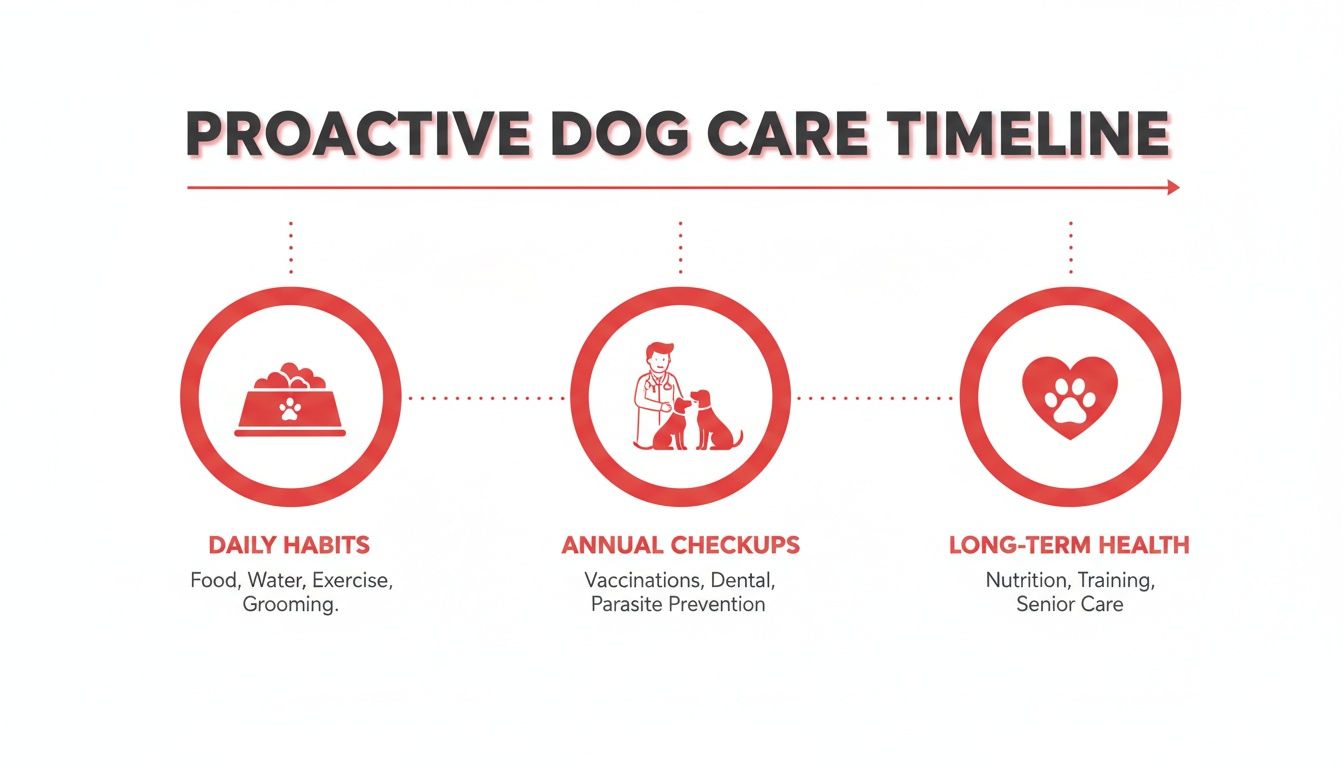
This visual drives home a key point: consistent daily care, backed up by yearly professional check-ins, is what truly builds a lifetime of good health.
The Unseen Threat: Why Parasite Prevention Is a Must
While vaccines handle viruses, another battle needs to be fought against pests that can live on your dog or even inside your home. Fleas, ticks, and heartworms are so much more than creepy-crawly annoyances; they are tiny vehicles for big diseases. Year-round parasite prevention isn't optional—it's absolutely critical.
Fleas can cause miserable skin allergies and transmit tapeworms. Ticks are infamous for carrying serious illnesses like Lyme disease. And heartworm, which is spread by a simple mosquito bite, is a silent killer that slowly destroys the heart and lungs, often becoming fatal before owners even know there’s a problem.
Because these pests can pop up in different forms all year long (yes, even in winter!), giving your dog their preventive medication every single month is essential. It’s a simple routine that protects your best friend and even the human family members, as some of these parasites can pass diseases to us, too. This is one of the easiest and most effective steps in any solid preventive care for dogs plan.
Fueling Wellness Through Nutrition and Weight Management
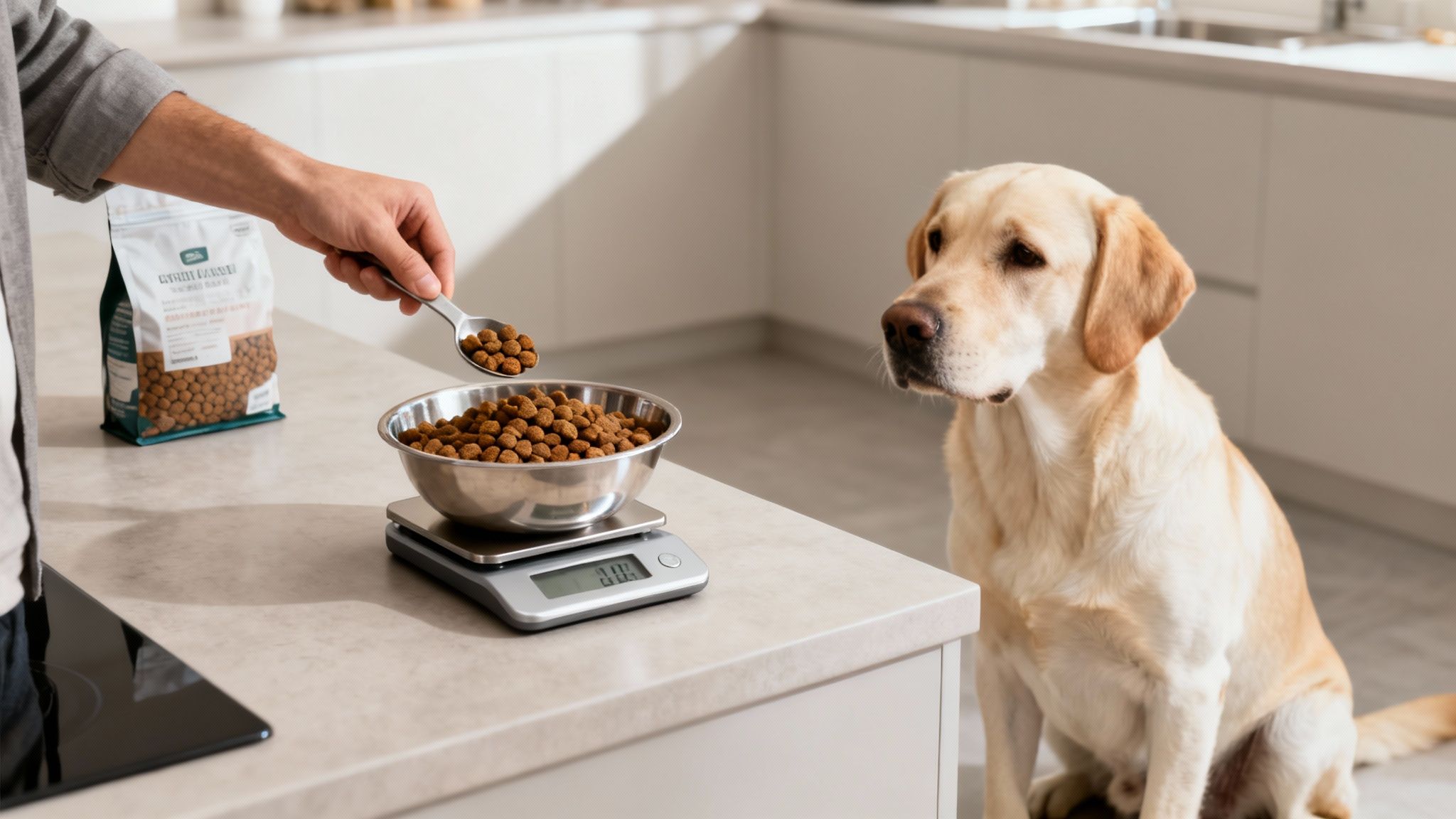
What you put in your dog’s bowl every day is one of the most powerful tools you have for their long-term health. It’s simple, really. Nutrition is the fuel that powers their immune system, supports their joints, and keeps them energized. Think of it like a high-performance car—you wouldn’t put cheap, low-grade fuel in it and expect it to run smoothly. Your dog’s body is no different; it needs high-quality nutrients to truly thrive.
A balanced diet is a core pillar of preventive care for dogs. It has a direct line to everything from their skin and coat to their ability to fight off illness. By understanding what goes into their food, you can build a foundation of wellness from the inside out and help head off chronic issues before they ever get a chance to start.
Decoding Your Dog's Food Label
Let's be honest, the pet food aisle can be overwhelming. It’s a sea of flashy bags with pictures of happy dogs, all making big promises. The secret to cutting through all that noise is learning to read the ingredient list and guaranteed analysis on the back. This isn't about being loyal to a brand; it's about knowing what you’re actually feeding your dog.
A good rule of thumb is to look for a specific, named meat source as the very first ingredient—think "deboned chicken" or "lamb meal." Ingredients are listed by weight, so whatever’s first is what makes up the bulk of the food. Be skeptical of vague terms like "meat by-products" or generic "meat and bone meal," because their quality can be all over the map.
Making sense of the label is your best bet for picking a great food. This table breaks down a few key terms you'll see.
Decoding Your Dog's Food Label
Once you get the hang of it, you’ll be able to spot the good stuff and avoid the marketing fluff.
The Critical Role of Weight Management
Keeping your dog at a healthy weight is, without a doubt, one of the most important things you can do for them. Just a few extra pounds put a surprising amount of strain on their entire body, opening the door to a whole host of serious health problems.
- Joint Damage: Excess weight puts constant stress on joints, which can speed up the development of arthritis and lead to chronic pain.
- Heart and Lung Strain: The heart has to work much harder to pump blood through a larger body, and the extra weight can constrict the lungs, making breathing difficult.
- Increased Disease Risk: Obesity is a major risk factor for conditions like diabetes, certain types of cancer, and high blood pressure.
The tricky part is that many of us don't see the extra weight. A recent survey uncovered a startling gap between what we see and what’s really going on. While 51% of dog owners believe their pet is at an ideal weight, veterinarians find that 25-30% of U.S. dogs are clinically obese and another 40-45% are overweight. What’s more, vets only bring up body condition scores with about a quarter of owners, highlighting a major communication breakdown. You can dig into more of these findings on the Association for Pet Obesity Prevention's website.
An ideal body condition is a powerful preventive tool. A dog at a healthy weight not only lives longer—by an average of up to two years—but also enjoys a much higher quality of life with fewer chronic health issues.
You don’t need a scale to do a quick check-in. Just run your hands along your dog’s sides. You should be able to feel their ribs easily under a thin layer of fat. When you look at them from above, you should see a clear "waist" that tucks in behind their ribcage.
Bridging Gaps with Targeted Supplements
Even with the best diet in the world, some dogs just need a little extra support. That's where high-quality supplements come in. They aren’t meant to replace a balanced diet, but they can act as a booster to fill in specific nutritional gaps.
For example, a dog with a sensitive stomach might do really well with a daily chew containing probiotics and prebiotics to support a healthy gut. For an active or aging dog, a supplement with natural anti-inflammatory ingredients like turmeric can be a huge help in maintaining joint health.
When picking a supplement, look for human-grade ingredients and formulas backed by real science. A daily superfood chew like FORMA can make this simple by combining support for gut health, immunity, and calmness into one easy treat. It’s a great way to complement their diet and double down on your commitment to their long-term wellness.
Enriching Your Dog's Daily Life
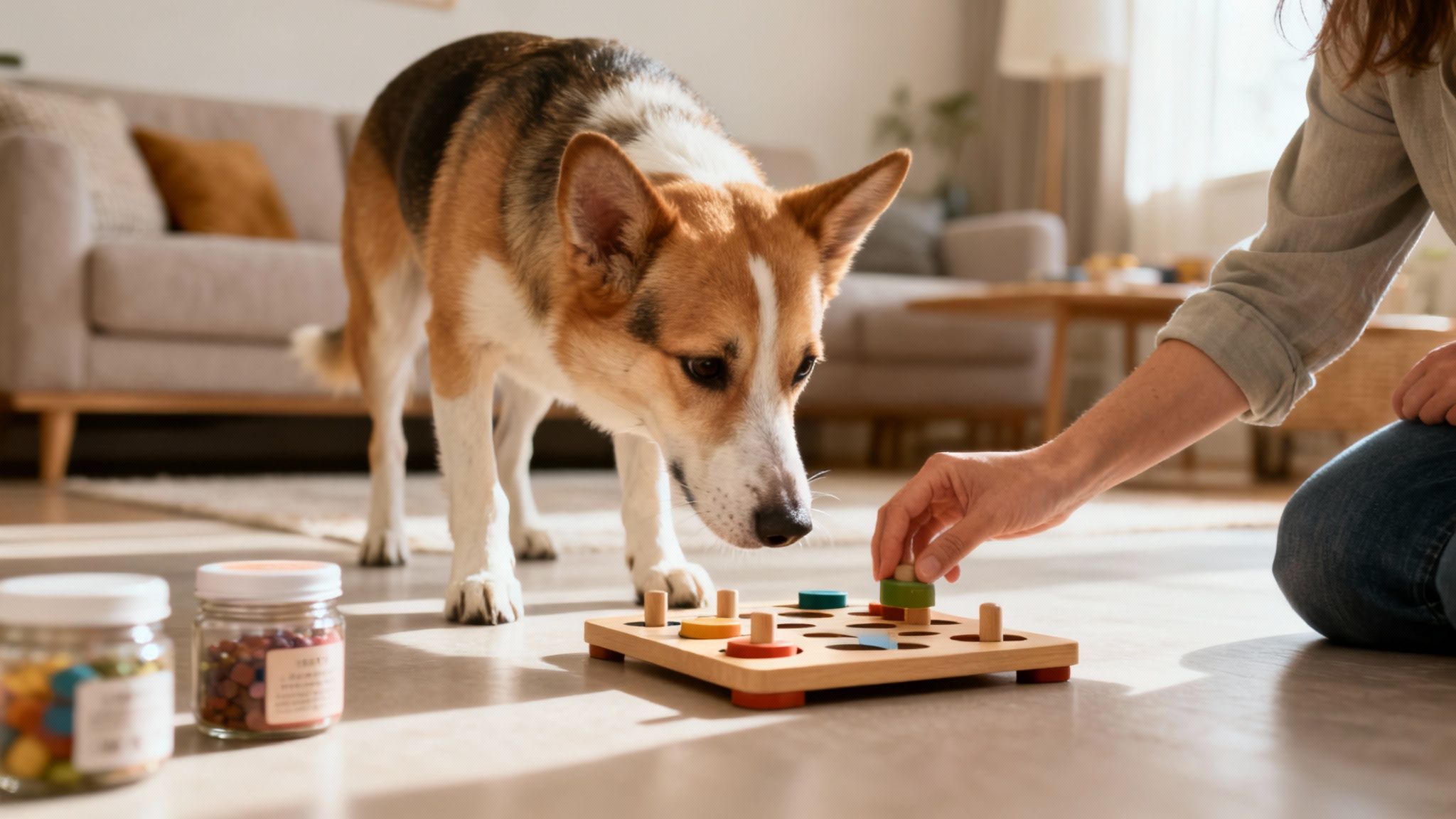
True preventive care for dogs is so much more than just what happens at the vet's office once a year. It’s baked into their everyday lives—the games you play, the routines you keep, and the habits you build together. Things like keeping their teeth clean and their minds busy are incredibly powerful ways to head off problems down the road.
These daily practices are about caring for the whole dog, not just their physical health. By making their day-to-day life more interesting and healthy, you’re doing more than just keeping them happy; you're investing in their long-term well-being.
Dental Health: The Gateway to Overall Wellness
We’ve all heard someone shrug and say, “It’s just dog breath.” But that smell is often the first sign of a much bigger issue brewing inside your dog’s mouth.
Think of their mouth as a doorway to the rest of their body. When bad bacteria take over the teeth and gums, they don't just stay there. This bacteria can slip into the bloodstream through sore, inflamed gums and travel straight to vital organs like the heart, liver, and kidneys. What starts as a simple dental problem can slowly turn into a serious, body-wide threat. That’s why taking care of their teeth is a non-negotiable part of good preventive care.
A simple at-home routine can make a huge difference.
- Regular Brushing: Try to brush your dog's teeth a few times a week. Just be sure to use a toothpaste made for dogs, as human toothpaste is toxic to them.
- Dental Chews and Toys: A good-quality dental chew isn't just a treat; it helps scrape away plaque and tartar as your dog happily gnaws away.
- Professional Cleanings: Your vet will let you know when it's time for a professional cleaning. This is the only way to remove the tough tartar that builds up under the gumline, where a toothbrush just can't reach.
The key is to start early and be consistent. You're not just fighting bad breath—you're protecting their entire body from the inside out.
Beyond the Walk: Keeping Their Brains Busy
A daily walk is fantastic for stretching their legs, but it doesn't always do much to challenge their mind. Remember, dogs were bred to do jobs—herding, hunting, guarding. Their brains are wired to solve problems. A bored dog is often a dog who gets into trouble, finding their own "work" to do, like redecorating your shoes or barking at every leaf that blows by.
The answer is mental enrichment. It’s all about giving your dog little puzzles to solve and tasks to complete, which puts their natural instincts to good use. This kind of brain work is just as vital as physical exercise for raising a happy, well-adjusted dog.
A tired dog is a good dog, but a fulfilled dog is a happy one. Mental exercise taps into their core instincts, reduces stress, and strengthens the bond you share, making it a vital part of proactive wellness.
This holistic approach is becoming more and more important. The global pet care market hit a massive $304.4 billion in 2023, with a growing focus on total wellness. With chronic problems like obesity affecting 25-30% of dogs in North America and allergies impacting up to 21% of pets globally, strategies that address both body and mind are more critical than ever. You can learn more about these global trends in preventive healthcare for pets.
Simple Ways to Challenge Your Dog's Mind
You don’t need to set up an elaborate obstacle course to give your dog a mental workout. It’s easy to sprinkle enriching activities throughout their day.
Puzzle Toys and Feeders: Ditch the plain old food bowl and make mealtime a game. Puzzle toys require your dog to nudge, paw, and figure things out to get their kibble. It turns eating into a fun brain teaser.
Scent Games: A dog's nose is a superpower. Hide a few tasty treats around the room, and then give them a cue like "Find it!" This simple game, often called "nose work," is incredibly satisfying for them.
Learn New Tricks: Teaching a new command is a fantastic mental workout. A quick, five-minute training session can often be more tiring for a dog than a 20-minute walk.
These activities do more than just bust boredom. They build confidence and can seriously cut down on anxiety-driven behaviors. By challenging their minds, you’re giving them a healthy outlet that leads to a calmer, more balanced dog—a cornerstone of lifelong preventive care.
Adapting Care for Your Senior Dog
Just like with people, our dogs’ health needs change as they get older. The preventive care routine that worked for your bouncy, adult dog needs a bit of a rethink once they hit their golden years. This stage of life is less about annual check-ins and more about keeping a closer eye on things to stay ahead of the curve.
So, when is a dog officially a "senior"? It really depends on their breed and size. For bigger dogs, it can be as early as age seven, while smaller pups get a few more years. During this time, age-related conditions can sneak up. Adjusting their care isn't about looking for trouble—it's about proactively supporting their body as it changes, so they can live out their senior years happy and comfortable.
Shifting to Semi-Annual Vet Visits
One of the biggest adjustments in preventive care for dogs as they age is bumping up vet visits. For seniors, it's a really good idea to schedule wellness exams every six months instead of just once a year. Think about it: six months for an older dog is like two or three years for us. A lot can happen in that time.
These more frequent checkups give your vet a chance to track your dog's health more closely and spot subtle changes in their weight, how they’re moving, or how their organs are functioning. Catching these things early makes all the difference.
During these visits, your vet will be paying extra attention to a few key areas:
- Joint Health and Mobility: They'll be on the lookout for stiffness, pain, or muscle loss—the classic signs of arthritis.
- Dental Condition: Older dogs are much more likely to have serious dental issues, which can affect their health in surprising ways.
- Vision and Hearing: They'll check for common signs of aging, like cataracts or hearing loss.
- Cognitive Function: You’ll probably discuss any changes in behavior that might point to Canine Cognitive Dysfunction, which is a lot like dementia in people.
The Power of Senior Health Screenings
Beyond the hands-on exam, senior visits often include routine screening tests, like blood work and a urinalysis. These are your secret weapons. They give you a peek inside your dog's body, revealing problems long before they start showing any physical symptoms.
A senior blood panel is like an internal health audit for your dog. It provides crucial data on organ function, blood cell counts, and metabolic health, allowing your vet to spot the earliest signs of diseases like kidney disease, diabetes, or thyroid issues while they are most manageable.
For example, a complete blood count (CBC) can flag things like an underlying infection or anemia. A chemistry panel checks on the liver, kidneys, and other vital organs. If you can catch a slight dip in kidney function early, for instance, a simple diet change can add years of quality time with your best friend.
Supporting a Comfortable and Happy Senior Life
As your dog gets older, a few simple tweaks around the house can make a world of difference. Stiff joints are a common complaint, so an orthopedic bed can provide much-needed cushion. If you have hardwood or tile, non-slip rugs can prevent painful falls. Even raising their food and water bowls can make mealtime more comfortable.
Their diet needs to change, too. Senior dogs usually need fewer calories to maintain a healthy weight, but they often benefit from more fiber and specific nutrients for joint health. This is where a good supplement can be a game-changer. A daily superfood chew like FORMA offers natural support for mobility and brain health, helping fill any nutritional gaps and keep your senior dog feeling their best.
Your At-Home Preventive Care Checklist
Your vet is an essential partner in your dog's health, but you are on the front lines every single day. Simple checks at home, done between professional visits, make you the most important member of your dog's wellness team. After all, you know your dog better than anyone, so you're the one most likely to notice the subtle little changes that could signal a problem.
This routine isn't about playing vet or diagnosing issues yourself. Think of it more like collecting data. You're simply gathering key information to share with your veterinarian, which helps them do their job even better. This simple practice is a huge part of effective preventive care for dogs and, best of all, it deepens the incredible bond you share.
The 5-Minute Weekly Wellness Scan
Find a quiet moment each week—maybe during a cuddle session on the couch—to do a quick, gentle nose-to-tail check. Keep it positive with plenty of praise and maybe a treat or two.
- Eyes and Nose: Take a gentle look at their eyes. They should be bright and clear, not red or cloudy. A tiny bit of "eye gunk" can be normal, but excessive discharge isn't. Their nose should be moist, without any cracks or sores.
- Ears and Mouth: Peek inside their ears. Healthy ears are clean and don't have a funky smell. Now, lift their lips and check out their teeth and gums. Redness, swelling, or a heavy layer of tartar are early warnings of dental disease.
- Skin and Coat: Run your hands all over your dog’s body. Feel for any new lumps, bumps, or spots that seem tender to the touch. Part their fur in a few places to look for redness, flaky skin, or unwelcome guests like fleas or ticks. A healthy coat is shiny and full, not dull and brittle.
This quick, hands-on check keeps you plugged into your dog's physical state, making it much easier to spot small issues before they become big ones.
Monthly Health Monitoring
Once a month, take a step back and observe your dog's general habits and physical condition. These patterns are like a window into their internal health.
Monitoring your dog’s daily habits—their appetite, thirst, and energy—is like reading their personal health journal. A sudden change in these routines is often the very first sign that something is amiss, giving you a critical head start.
Use this simple checklist for your monthly observations:
- Check Their Weight and Body Condition: Can you easily feel their ribs without digging in? When you look down at them from above, do they have a visible waist? Keeping your dog lean is one of the single best things you can do for their long-term health.
- Monitor Appetite and Water Intake: Take note of any major shifts in how much they're eating or drinking. A dog who's suddenly starving or turning their nose up at food warrants a closer look. The same goes for a dog who suddenly can't seem to get enough water.
- Assess Energy and Mobility: Is your dog's energy level normal for their age and breed? Watch for new signs of stiffness when they get up, hesitation before jumping on the couch, or a sudden lack of interest in their favorite games.
- Inspect Paws and Nails: Check their paw pads for any cuts or cracks. Make sure their nails are a reasonable length—if you hear them clicking on the floor when they walk, it’s probably time for a trim.
Common Questions About Preventive Care for Dogs
Even with the best intentions, kicking off a full preventive care plan for your dog can feel a little overwhelming and often brings up a few questions. Let's walk through some of the most common ones so you can feel confident in building a wellness routine that truly fits you and your best friend.
A big one I always hear is about the cost. It’s true, proactive care means spending money on regular checkups, high-quality food, and parasite preventives. But I always tell my clients to think of it as an investment. The cost of these routine items is a drop in the bucket compared to a $5,000 emergency surgery for a foreign object removal or the long-term expense of managing a disease that could have been avoided. You're spending a little now to save a lot—and a lot of heartache—later.
Breed-Specific Needs and Starting Age
"Does this change depending on my dog's breed?" Absolutely. Your dog's needs are as unique as they are. A tireless Border Collie is going to need a different approach to exercise and joint support than a French Bulldog, whose flat face makes them more susceptible to breathing issues. Your vet is your best partner here; they'll help you create a plan that accounts for your dog's specific genetic roadmap.
"When should I start preventive care?" This is the classic question from every new puppy parent, and the answer couldn't be simpler: right away. Those initial puppy vet visits for vaccinations and deworming are the first, most important steps in a lifetime of good health.
Getting started from day one sets a crucial baseline for your vet. It establishes a history they can use to track your dog's health as they grow and change over the years.
Finally, people often ask if it's ever "too late" to start. The answer is a resounding no. Is it better to start from puppyhood? Of course. But jumping into a preventive care plan at any age can still make a world of difference for your dog's quality of life.
For an adult or senior dog, the focus might shift to things like managing dental health, providing joint support with a great supplement like FORMA, and running more frequent screening tests. It's never, ever too late to be your dog's number one health advocate.

Karolis is the Founder of FORMA, a pet wellness brand focused on longevity and daily nutrition for dogs. Writes about supplements, canine health, and helping pets live longer, healthier lives
Join thousands of pet parents getting science-backed health insights and natural care advice