What Age Is Dog Considered Senior? A Practical Owner's Guide
What age is dog considered senior? Learn how breed, size, and health affect aging, plus signs of seniorhood and expert care tips.
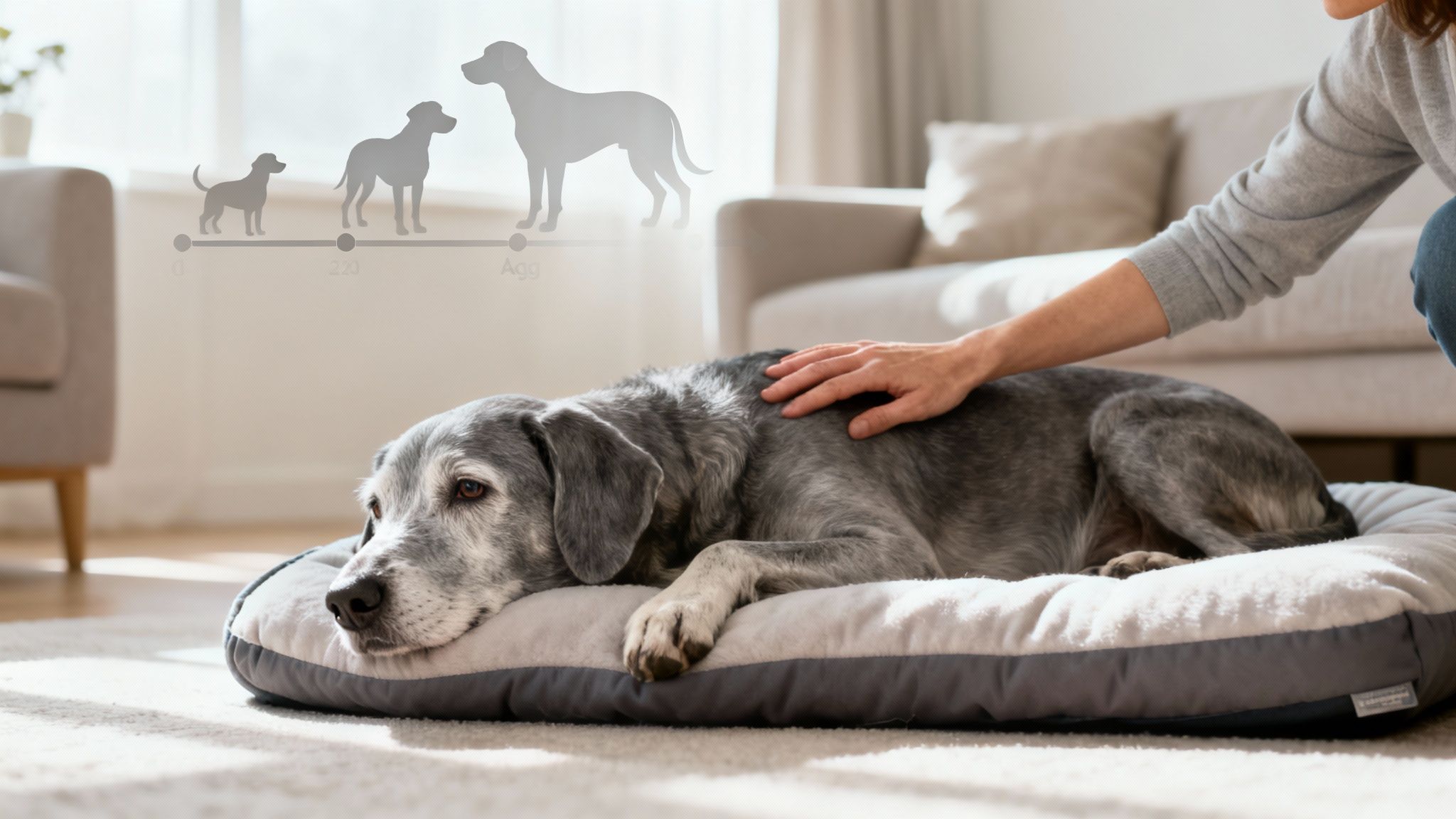
That old saying about "one dog year equals seven human years"? It's a charming myth, but it's not very helpful. When it comes to figuring out what age a dog is considered senior, the real answer depends almost entirely on their size and breed.
The simple truth is that big dogs just age a lot faster than little ones.
The Real Story Behind Your Dog’s Golden Years
Let’s toss out that old seven-year rule for good. Vets today have a much better handle on how dogs age, and it's clear that a tiny Chihuahua and a massive Great Dane are on completely different timelines.
It all comes down to biology. Giant breeds go from puppy to full-grown in a flash, and that explosive growth puts a ton of stress on their bodies. Their higher metabolic rate means they burn through life a bit quicker, entering their senior phase much sooner. On the flip side, smaller dogs take their time maturing and generally live longer, so they don't hit their golden years until much later.
Senior Age Ranges By Dog Size
To make it easier, we can break it down by weight. Don't think of it as a hard-and-fast number, but more of a general guide for when you should start thinking about senior care.
Here’s a quick reference to see where your dog falls.
When Your Dog Is Considered a Senior By Size
As you can see, size makes a huge difference. Small terriers might not be considered seniors until they’re 11 or 12, while a medium-sized dog hits that milestone around age 10. Large breeds get there by age 8, and giant breeds like Great Danes are often considered seniors as early as 7 years old. This lines up with what we know about their lifespans—small dogs often live well into their teens. You can get a deeper dive into how different breeds age from the experts at VCA Hospitals.
This infographic gives you a simple visual of how it all breaks down.
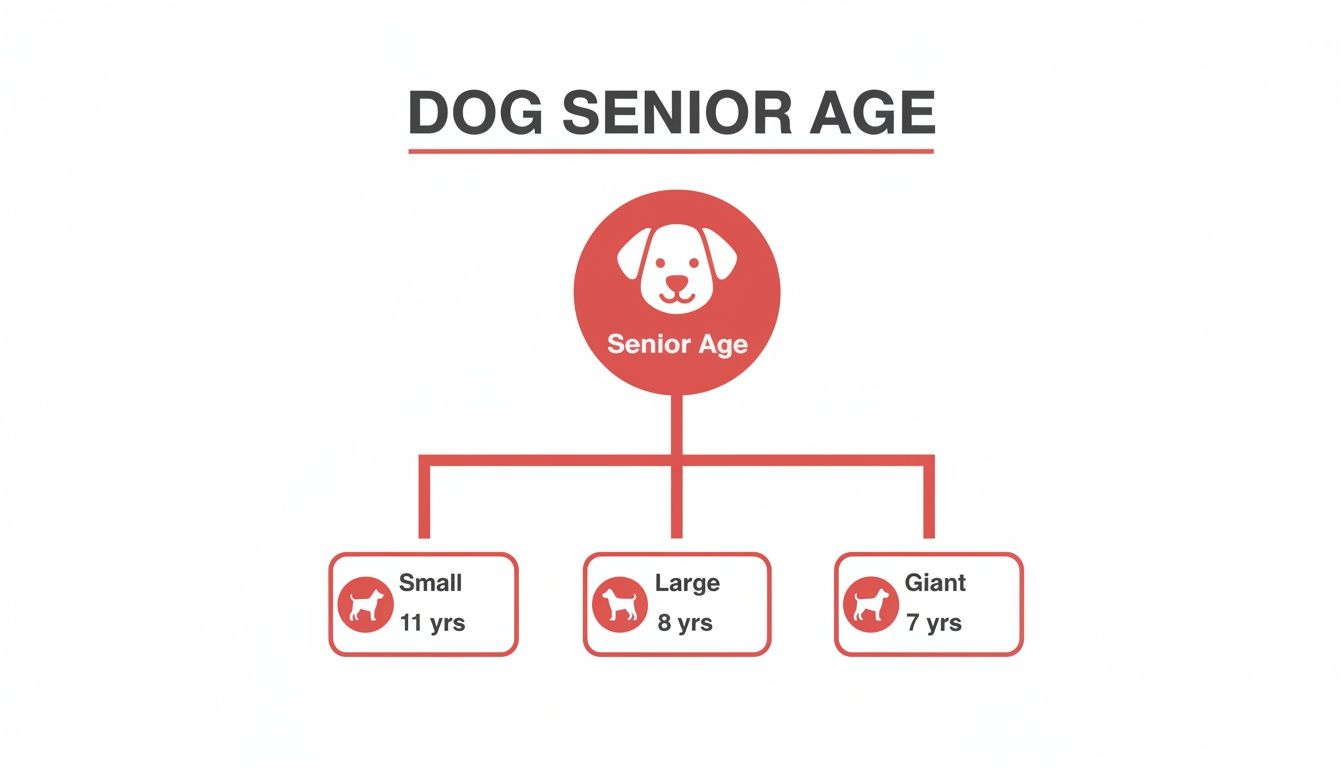
It’s pretty clear: a giant breed can be well into their senior years while a small dog of the exact same age is still in the prime of their life. Grasping this is the first step toward giving your best friend the proactive, age-appropriate care they deserve.
How Vets See Senior Status: It’s More Than Just a Birthday
While those size-based charts are a great rule of thumb, your veterinarian looks at more than just the calendar to decide when your dog is hitting their golden years. It’s less about a specific birthday and more about a gradual shift into a new phase of life. Vets take a much more personal, biological view to understand what’s really going on inside your dog's body.

A handy guideline comes from the American Veterinary Medical Association (AVMA). They suggest a dog is considered a senior once they’ve reached the last 25% of their breed's expected lifespan. This flexible approach makes so much more sense, acknowledging the huge difference in aging between a long-living Chihuahua and a Great Dane with a much shorter lifespan.
The Science Behind Your Dog's "Real" Age
Amazingly, science has given us an even more accurate way to look at age. It's called the epigenetic clock, and it goes way beyond simple math to figure out a dog’s true biological age by looking at changes in their DNA. Think of it this way: their birth certificate gives you their age in years, but their DNA tells the story of how much their body has actually aged.
This has totally busted the old "one dog year equals seven human years" myth. Researchers now know that dogs age much, much faster in their first couple of years, and then the whole process slows down considerably.
For instance, a one-year-old pup is biologically closer to a 31-year-old human, while a four-year-old dog is more like a 54-year-old person. This new DNA-based model, which you can read more about in recent research on dog aging, shows that after age seven, the aging curve flattens out. It’s a big reason why many vets now consider any dog over seven to be entering their senior years.
The epigenetic clock gives us a fascinating peek into your dog's internal aging. It proves that becoming a senior isn't a straight line—it's a unique journey that can look very different from one dog to the next, even within the same breed.
Senior vs. Geriatric: Knowing the Difference
To tailor care even more precisely, vets often break down the later years into two separate stages: senior and geriatric. Understanding the distinction helps you know what to expect and how to best support your dog as they grow older.
Here’s a simple look at what each stage means:
- Senior Dogs: This is the early phase of older age, usually starting around 7-8 years old for many dogs. You might notice the first subtle signs of them slowing down, but they’re often still quite active and healthy. This is the perfect time for proactive care, like switching to twice-a-year vet checkups and tweaking their diet.
- Geriatric Dogs: This term is for dogs in the very advanced stages of old age, typically around age 12 and up. Geriatric dogs are more prone to serious health problems like advanced arthritis, canine cognitive dysfunction, or organ issues. Their care shifts to focus more on managing symptoms, keeping them comfortable, and preserving their quality of life.
By keeping these two stages in mind, you and your vet can work together to build a care plan that truly fits where your dog is on their life's journey, making sure they get the support they need, right when they need it.
Spotting the Subtle Signs Your Dog is Getting Older
Knowing the official age when a dog becomes a “senior” is one thing, but actually seeing the signs of aging is another. Your dog can’t just tell you, “Hey, my back’s a little stiff this morning.” Instead, they show you through tiny, quiet changes in how they look and act. Learning to spot these clues is one of the best things you can do to keep your old friend happy and healthy.
Think of it as learning a new dialect of their body language. Some changes are just a normal, harmless part of getting on in years. Others, though, can be an early whisper that something’s not quite right and it’s time for a vet visit. By tuning in, you can catch problems early, make life more comfortable for them, and really enjoy those golden years together.
Physical Changes to Watch For
Often, the first clues are the ones you can see. These changes usually creep in so slowly you might not even notice them day-to-day. But they are important messages from your dog's body, so don't just brush them off as "him just getting old."
Here are a few common physical signs to keep an eye on:
- A Graying Muzzle and Face: Just like us, many dogs get a distinguished sprinkle of gray hair. A silvery muzzle is one of the most classic—and completely normal—signs of a life well-lived.
- Cloudy Eyes (Lenticular Sclerosis): You might notice a faint, bluish haze deep in your dog's pupils. This is usually a normal hardening of the lens that doesn’t really affect their sight. It's still critical to have your vet confirm it's not cataracts, which are more serious.
- New Lumps and Bumps: Finding a weird lump on your dog is always a little scary. Most end up being harmless fatty tumors called lipomas, but you absolutely must have every new lump checked by a veterinarian. It’s the only way to be sure.
- Weight Fluctuations: An older dog's metabolism often slows down, making it easier to pack on pounds that stress their joints. On the flip side, sudden weight loss can be a red flag for everything from dental pain to kidney issues.
These physical signs are your frontline clues. A regular grooming session is the perfect time to give your dog a gentle once-over, feeling for anything new and taking a good look at their skin and coat.
Behavioral Shifts That Signal Aging
Sometimes, the changes aren't in how your dog looks, but in how they act. A shift in their daily routine is often one of the very first signs they're entering their senior phase. It’s their way of adjusting to a body that doesn’t quite work like it used to.
Be on the lookout for these kinds of adjustments:
- Sleeping More: It’s totally normal for older dogs to want more naps. Their stamina just isn't what it once was. The key is to watch for a sudden change to extreme lethargy, which could signal pain or illness.
- Increased Vocalization: Is your dog barking or whining more than usual? This can sometimes be tied to confusion, anxiety, or even hearing loss. They might not hear you approaching and get startled more easily.
- Changes in Social Interaction: Some senior dogs turn into velcro-pups, seeking constant comfort. Others might get a bit grumpy and prefer their own space. This can stem from pain, anxiety, or even cognitive decline.
- Confusion or Disorientation: This one can be tough to see. Does your dog ever seem to get "stuck" in a corner, stare blankly at walls, or forget commands they've known for years? These can be signs of Canine Cognitive Dysfunction (CCD), which is basically dog dementia.
A change in your dog’s routine is a signal to pay closer attention. While some shifts are a natural part of the aging process, they always warrant observation to ensure your dog is comfortable and not in distress.
By being an observant owner, you can tell the difference between normal aging and a quiet call for help. Understanding these signs puts you in the driver's seat, allowing you to have meaningful conversations with your vet and give your dog the absolute best care as they age.
What to Watch for: Common Health Concerns in Senior Dogs
Just like with people, getting older means our dogs’ bodies start to change. Knowing when your dog officially enters their "senior" years is the first step, but the next is understanding that this new chapter can bring a higher risk for certain health problems.
This isn't about being fearful—it’s about being your dog's best advocate. When you know what to look for, you can catch potential issues early and work with your vet to keep your companion comfortable and happy.

Let's walk through some of the most common health bumps in the road for our aging best friends.
Arthritis and Joint Issues
One of the most frequent complaints for older dogs is osteoarthritis. You can think of the cartilage in their joints like the treads on a tire—after years of running, jumping, and playing, it simply wears thin. This leads to inflammation, stiffness, and pain.
You might notice your dog is a bit slower to get out of bed in the morning, hesitates before jumping on the couch, or doesn't seem as excited for walks. These aren’t just signs of “slowing down.” They're often clear signals of chronic pain that can be managed effectively with your vet's help.
Dental Disease
A healthy mouth is critical to a healthy dog, especially as they get older. Years of plaque and tartar buildup can snowball into periodontal disease, a painful condition that causes inflamed gums, loose teeth, and even serious infections.
It's more than just bad breath. The bacteria from a diseased mouth can actually enter the bloodstream and cause damage to vital organs like the heart and kidneys. Keep an eye out for stinky breath, dropping food, or reluctance to chew.
This is a massive issue in the senior dog community. With over 52% of dog-owning households in the US now caring for a dog aged 7 or older, we're seeing these trends up close. Studies show that 31% of senior dogs suffer from dental disease, right alongside mobility problems (33%) and weight issues (35%). You can read more about the growing population of senior pets and their health trends.
Heart and Kidney Conditions
Just like in people, a dog's internal organs can lose a step over time. Conditions like chronic kidney disease and heart disease are unfortunately common in our gray-muzzled friends.
- Kidney Disease: The kidneys are the body's filtration system. When they start to fail, you might notice your dog is suddenly drinking a ton of water and needing to go outside constantly.
- Heart Disease: A weakening heart can lead to a persistent cough (especially at night), getting winded easily on walks, or a general lack of stamina.
While both conditions are serious, they can often be managed with the right medication, diet, and regular vet check-ins, dramatically improving your dog's quality of life.
A proactive approach is everything. Many of these age-related diseases creep in quietly. That's why biannual wellness exams for senior dogs are so important—they allow your vet to run blood tests that can spot trouble long before your dog ever feels sick.
Vision and Hearing Loss
A slow decline in sight and hearing is a normal part of aging for many dogs. You might see a bluish, cloudy haze in your dog’s eyes. This is often a harmless age-related change called lenticular sclerosis.
Still, it’s crucial to have a vet rule out cataracts, which can progress to full blindness. Similarly, gradual hearing loss can make a dog seem less responsive or startle more easily. Small tweaks at home, like using hand signals or not rearranging the furniture, can help them navigate their world with confidence.
Canine Cognitive Dysfunction
You may have heard of "doggy dementia," and that's essentially what Canine Cognitive Dysfunction (CCD) is. It's a progressive neurological condition that affects an older dog's brain, impacting their memory, awareness, and behavior.
The signs of CCD are often remembered with the acronym DISHAA:
- Disorientation: Getting stuck in corners or seeming lost in the house.
- Interaction changes: Becoming less social or, conversely, suddenly very clingy.
- Sleep-wake cycle changes: Pacing all night and sleeping all day.
- House soiling: Forgetting their potty training.
- Activity level changes: Aimless wandering or a lack of interest in playing.
- Anxiety: Developing new fears or phobias seemingly out of nowhere.
There's no cure for CCD, but don't lose hope. There are medications, supplements, and simple management strategies that can help slow it down and manage the symptoms, keeping your dog feeling safe and secure.
Making Your Senior Dog's Golden Years Shine
Knowing when your dog officially becomes a "senior" is the first step. The next, and most important one, is making sure their world is set up for them to truly thrive. A little proactive care goes a long way in turning their golden years into their best years. It’s all about making small, thoughtful tweaks to their everyday life.
This doesn't mean you have to flip their routine upside down. Think of it more like fine-tuning their world to better match their changing body and energy levels. By focusing on four key areas—what they eat, how they move, their comfort at home, and their vet care—you can give them a solid foundation for health and happiness.
Adjusting Their Diet for a Slower Lifestyle
As dogs get older, their metabolism naturally slows down. The high-octane fuel they needed as a puppy or young adult can now easily lead to weight gain, which is a huge problem for aging joints. For a senior dog, it's less about the amount of food and more about the quality of the nutrients packed into every bite.
This is where senior-specific dog foods come in handy. They’re formulated with an older dog’s needs in mind and usually offer:
- Fewer Calories: To help keep them at a healthy weight and prevent obesity.
- Higher Fiber: Great for supporting their digestive health, which can get a bit more sensitive as they age.
- Joint-Supporting Nutrients: You'll often see ingredients like glucosamine and chondroitin, which help maintain cartilage and ease stiffness.
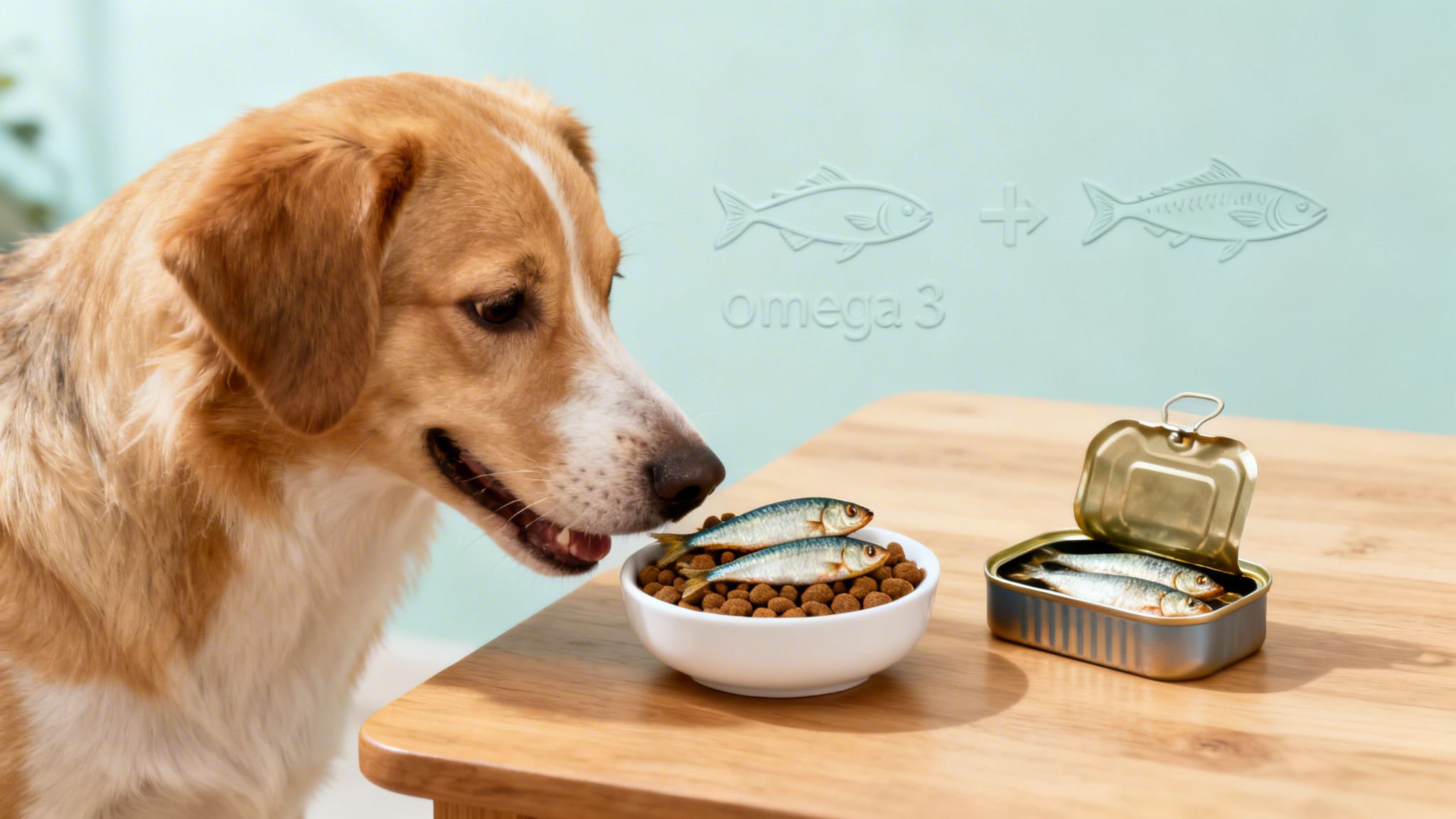
- Omega-3 Fatty Acids: These are fantastic for both reducing inflammation and keeping their mind sharp.
Remember, any food switch should be gradual. It’s always best to chat with your vet first; they can recommend a diet that’s a perfect match for your dog's specific health needs.
Rethinking Exercise for Comfort and Fun
Your senior dog probably isn't going to be your five-mile running partner anymore, but that doesn't mean exercise is off the table. In fact, gentle, regular movement is more crucial than ever. The goal simply shifts from intense workouts to consistent, low-impact activity that keeps their joints limber, muscles strong, and brain engaged.
Think of it this way: "motion is lotion" for their joints. A little bit of gentle activity every day can do wonders for managing arthritis pain and stiffness.
A common mistake is to stop all activity the moment a dog starts slowing down. The real key is to adapt the activity, not eliminate it. Keeping them moving is absolutely essential for their body and their spirit.
Here are a few great low-impact ideas:
- Leisurely Walks: Shorter, more frequent strolls on soft surfaces like grass are much kinder to their joints than one long trek on hard pavement.
- Swimming: This is the gold-standard workout for seniors! It’s a full-body exercise with absolutely zero impact on their joints.
- Gentle Play: A calm game of fetch in the yard or interactive puzzle toys can provide both physical and mental stimulation without overdoing it.
Creating a Senior-Friendly Home
A few simple changes around your house can make a massive difference in your senior dog’s daily comfort and safety. As their mobility declines and their senses aren't quite as sharp, these adjustments help them navigate their world with confidence.
Consider these easy and effective upgrades:
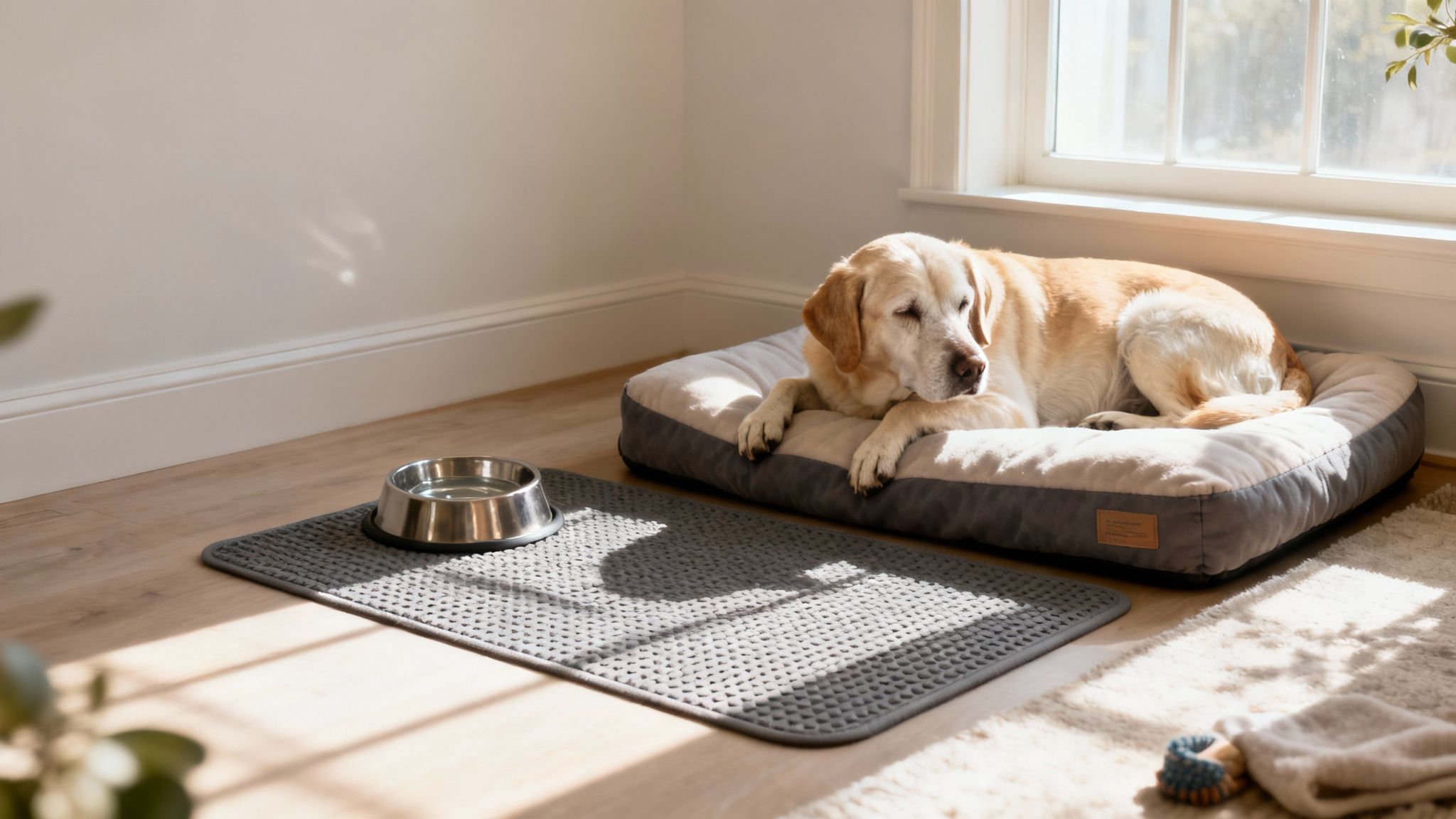
- Orthopedic Bedding: A high-quality, supportive bed can soothe sore joints and give them a truly comfortable place to rest. Make sure it's in a warm spot, away from drafts.
- Non-Slip Surfaces: Hardwood, laminate, or tile floors can feel like an ice rink to a dog with stiff or weak legs. Adding some rugs or runners provides the traction they need to prevent scary slips and falls.
- Ramps and Stairs: Help your dog get to their favorite spots—like the couch or your bed—without the strain of jumping. This simple tool can save their hips and spine from unnecessary stress and potential injury.
The New Standard for Vet Visits
For senior dogs, that old standard of one vet visit per year just doesn't cut it anymore. Most veterinarians now recommend biannual checkups, meaning one every six months. Because dogs age so much faster than we do, a lot can change in a short amount of time.
These more frequent visits give your vet a chance to catch potential issues like kidney disease, arthritis, or dental problems early on, when they are much easier to manage. Think of these appointments as the cornerstone of your dog's senior care plan—they give you peace of mind and give your dog the best shot at a long, comfortable life.
Your Top Questions About Senior Dogs, Answered
Watching your best friend enter their golden years often comes with a whole new set of questions. To help you feel more confident, we've put together some straight-to-the-point answers for the things we hear most from owners of aging dogs.
This isn't about just getting by; it's about making proactive choices so your dog can stay as happy, comfortable, and healthy as possible. Let's get right into it.
Should I Change My Dog's Food When They Become a Senior?
Yes, in most cases, making the switch to a senior-specific diet is a great move. As dogs age, their metabolism slows down and they're usually not as active. This means they need fewer calories to avoid putting on extra weight, which can be really hard on their joints.
Senior dog foods are designed with these changes in mind. They’re usually formulated with:
- Fewer calories to help maintain a healthy weight.
- More fiber to keep their digestive system running smoothly.
- Added nutrients like glucosamine and chondroitin for much-needed joint support.
Of course, the best first step is always a chat with your vet. They can look at your dog's specific health profile and recommend a diet that’s just right for them.
How Often Should My Senior Dog See the Vet?
We generally recommend that senior dogs get a wellness checkup every six months instead of just once a year. I know that sounds like a lot, but a dog's health can change significantly in that timeframe—after all, they age much faster than we do.
Think of these visits as proactive, not reactive. They give your vet a chance to spot potential issues like arthritis, dental disease, or organ problems in their earliest stages when they are much easier to manage. These checkups typically include a full physical exam and blood work to give a clear picture of what's going on inside.
It's really just a comprehensive health screening. Catching something early can make a world of difference in your dog's comfort and quality of life, making these twice-a-year visits a worthwhile investment in their well-being.
Is It Normal for My Senior Dog to Sleep More?
It's completely normal for older dogs to spend more time snoozing. Just like people, their bodies need more rest as they age, so an extra nap or two is usually nothing to worry about.
The key is to watch for sudden, dramatic shifts. If the increased sleep is paired with other signs—like a poor appetite, hesitation to move, or losing interest in their favorite toys—it could point to an underlying health issue. Often, pain from conditions like arthritis shows up as what we see as simple lethargy.
If you're ever concerned about your dog's energy levels, a quick vet visit is the best way to rule out any medical problems and make sure they’re comfortable.
What Are the Best Exercises for a Senior Dog?
For senior dogs, the best exercise is always low-impact. The goal is to protect their aging joints while keeping them moving. Gentle, consistent activity is what you're aiming for—enough to maintain muscle tone and mobility without causing any strain or pain.
Instead of a long, grueling hike, try shorter, more leisurely walks. Swimming is another fantastic option because it’s a great full-body workout with zero stress on the joints. And don't forget mental exercise! Scent work games and puzzle toys are perfect for keeping their mind sharp without much physical effort. It's all about keeping them happily and comfortably active, not pushing them to their limits.

Karolis is the Founder of FORMA, a pet wellness brand focused on longevity and daily nutrition for dogs. Writes about supplements, canine health, and helping pets live longer, healthier lives
Join thousands of pet parents getting science-backed health insights and natural care advice