Why Dogs Eat Grass Explained for Concerned Owners
Discover why dogs eat grass, when it’s normal, and when to seek help. Expert insights into dog behavior and health in this clear guide on why dogs eat grass.
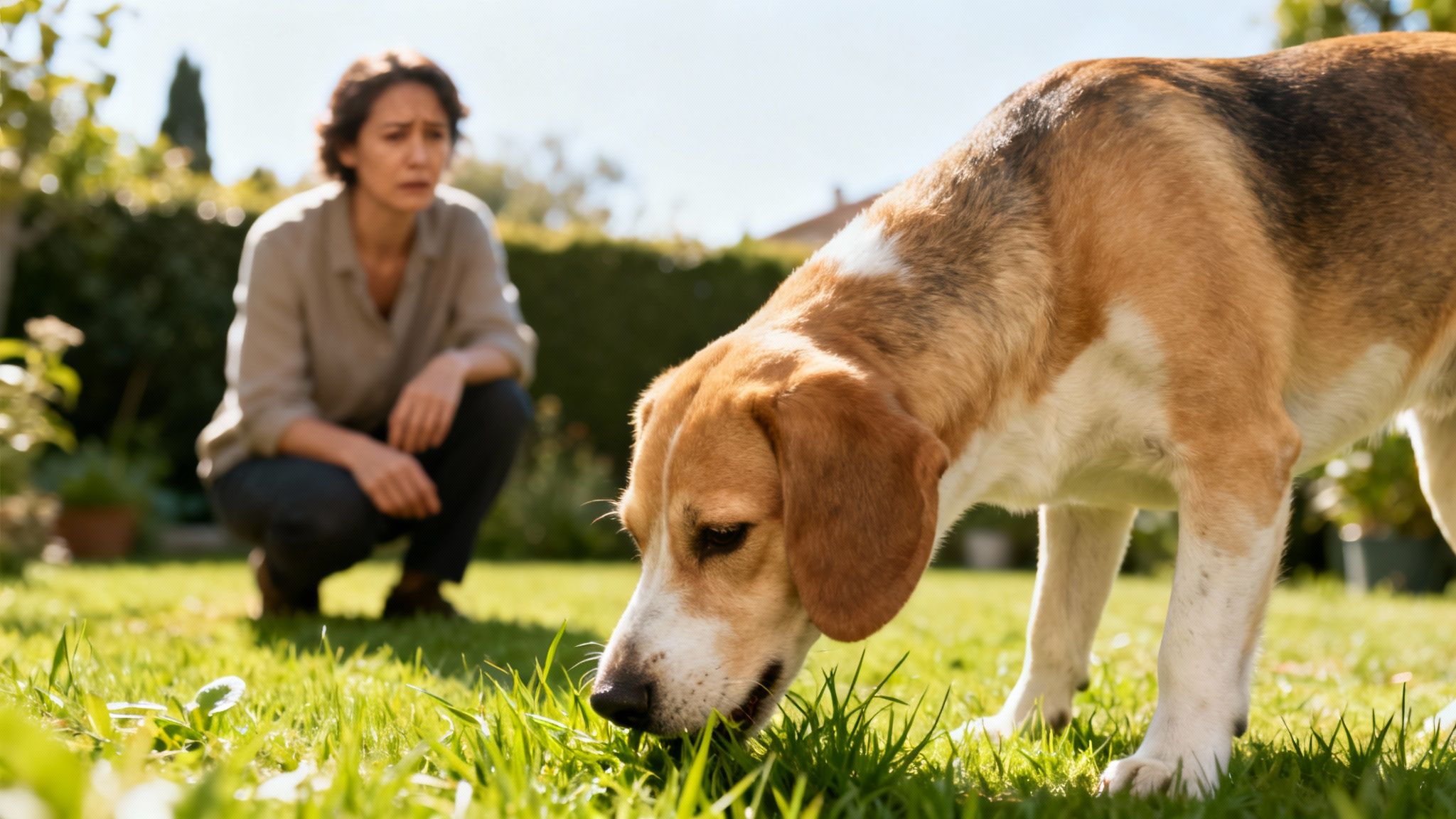
It can be a little jarring, can't it? You look out into the yard and see your dog, who you feed premium food, happily munching away on the lawn. But the simple truth is, this is a perfectly normal dog thing to do.
This instinct is often a holdover from their wild ancestors, a simple search for a bit of extra fiber, or sometimes, just something to do when they're bored. It’s almost never a sign that something is seriously wrong.
A Reassuring Look at Why Dogs Eat Grass

If you've ever found yourself worrying that your dog's grass-eating habit is a red flag for sickness, you can relax. This behavior is incredibly common and usually completely harmless. Think of it less like a symptom and more like a deeply ingrained, instinctual behavior. Their wild ancestors used all sorts of plants to supplement their diet and help things move along digestively, and our modern dogs are just carrying on that tradition.
And science backs this up. One well-known study found that a staggering 68% of dogs eat grass or other plants every single week, if not daily. What’s even more telling is that the same study busted a huge myth: only a tiny 8% of dogs seemed sick before eating grass. This tells us that most dogs aren't munching on the lawn to try and make themselves throw up. You can dig into more of these findings over at Newport Harbor Vets.
Key Takeaway: For most dogs, eating grass is a normal, instinct-driven habit, not a cry for help. It's a common behavior shared by countless healthy dogs.
So, what's your dog's reason? It usually boils down to one of a handful of common motivations. To help you quickly get a handle on what might be driving your dog's lawn-snacking, here's a quick summary of the usual suspects.
Quick Guide: Why Dogs Eat Grass
This table breaks down the top reasons your dog might be grazing, what it likely means, and whether you should be concerned.
This gives you a great starting point for understanding your dog's behavior. Now, let's explore each of these reasons a little more deeply and talk about what you can do to help.
Sorting Fact from Fiction on Grass Eating
It’s completely natural to worry when you see your dog chomping down on the lawn. For years, two theories have dominated the conversation: either your dog is trying to make themselves throw up, or their diet is missing something crucial. They both sound plausible, but the reality is a lot more interesting.
Let's start with the biggest misconception—that dogs use grass to intentionally induce vomiting. It’s an easy conclusion to jump to, but it’s not what’s really happening most of the time. The grass, full of fiber, can sometimes tickle the throat and stomach lining on its way down. This can trigger a vomit reflex, but it’s more of an accidental side effect than the actual goal.
The Truth About Tummy Troubles
Think about the last time you saw your dog eat grass. Were they whining, pacing, or looking queasy beforehand? Probably not. Most dogs look perfectly happy and healthy while they graze, which is our first big clue that an upset stomach isn't the primary driver.
The research backs this up. Grass-eating is incredibly common—in fact, 79% of owners say they’ve seen their dog do it. But here’s the kicker: only about 22% of those dogs actually throw up afterward. An even smaller slice of the pie, just 8%, showed any signs of feeling unwell before they started grazing.
If you’re interested in the details, you can read the full research on why dogs eat grass that helped bust these old myths.
The takeaway is clear: for the vast majority of dogs, grass eating is not a deliberate attempt to relieve nausea. It’s a proactive, instinctual behavior, not a reactive one.
Diet and Instinct
The other common myth is that your dog must be lacking nutrients. While a poor diet can certainly cause strange cravings, grass-eating happens in dogs of all stripes. It doesn't matter if they're on a top-of-the-line kibble, a raw food plan, or a carefully prepared home-cooked meal—they still do it.
This tells us the behavior is likely rooted in something deeper: instinct. This is a trait handed down from their wild ancestors. Wolves and other canids would eat plants to get extra fiber, which helped them pass things they couldn't digest, like fur and bone.
So, your very well-fed pup isn't starving for nutrients. They're just tuning into an ancient instinct that has nothing to do with how much they love their dinner.
So, Why Do Dogs Really Eat Grass?
Now that we’ve busted a few common myths, let’s get into what’s actually going on when your dog decides the lawn looks like a tasty salad bar. It’s rarely just one thing. More often than not, it's a mix of ancient instincts, nutritional needs, or even just plain old dog psychology.
Thinking about it from their perspective helps make sense of this quirky habit. When you look past the chewing, you start to see the complex reasons behind what is, for most dogs, a perfectly normal behavior. Let's break down the four most likely explanations.
It’s an Echo of Their Wild Ancestors
Probably the strongest explanation is rooted deep in your dog's DNA. Long before dogs were our pampered companions with bowls of scientifically formulated kibble, their wild ancestors, like wolves, had a very different way of life. As hunters, they ate their prey whole—stomach, guts, and all. That meant they were indirectly consuming the plant matter their prey had eaten.
But they also ate plants on purpose. It’s thought that indigestible fiber from grass and other roughage helped wild canids deal with intestinal parasites. The fiber would essentially wrap around the worms, helping to sweep them out of the digestive tract. It was a primitive but effective form of deworming, crucial for survival.
Your modern dog isn't thinking, "Time to get rid of some worms!" when they chew on grass. It's an echo—a deeply ingrained, primal instinct passed down through countless generations. The behavior is just there, hardwired into their biology.
They’re Looking for Something Missing in Their Diet
Even with today's high-quality dog foods, some dogs might instinctively nibble on grass to fill a minor nutritional gap. We're not talking about a major deficiency here. It's more about an instinct to supplement what they're already getting, especially when it comes to fiber.
It's a bit like us deciding to add a handful of kale to our smoothie. We’re not malnourished, but our body is telling us it could use a little boost. For a dog, grass is the most convenient source of roughage around, and it can help keep their digestion running smoothly.
You might even notice a couple of different grazing styles:
- The Selective Grazer: This is the dog who seems to be on a mission, carefully selecting specific long, broad blades of grass. They often chew them thoughtfully. This type of grazing is most often linked to that ancestral "gut-sweeping" instinct.
- The Casual Nibbler: This dog seems to be tasting the fresh, tender shoots. They might be looking for certain micronutrients or, just as likely, they simply enjoy the taste and texture of young grass.
If you think a lack of fiber might be the culprit, you don't always need a massive diet overall. Sometimes, a small tweak is all that's needed to stop their search for greens.
It's All in Their Head: Boredom and Anxiety
Sometimes, grass-eating has nothing to do with a dog's stomach and everything to do with their state of mind. We humans bite our nails when we're anxious or raid the fridge when we're bored. Dogs are no different; they have their own ways of coping.
A dog without enough to do—not enough mental stimulation or physical exercise—might start chewing on grass just to pass the time. It's an easy, accessible activity right there at their paws. For anxious dogs, the repetitive act of ripping and chewing can be a self-soothing behavior, a way to calm their nerves. This is particularly common for dogs struggling with things like separation anxiety or stress from a big change at home.
Warning Signs in Grass Eating Behavior
A dog casually nibbling on the lawn is usually nothing to worry about. In fact, it's a perfectly normal part of being a dog. But it's smart to know when this quirky habit might be pointing to something more serious. Think of it as learning to read your dog's signals; a sudden change in their grass-eating patterns could be their way of telling you something isn't right.
The real difference is in the how and how often. An occasional, relaxed graze is one thing. Frantic, obsessive chomping is something else entirely. You’re looking for behavior that’s out of character for your dog.
When Grazing Becomes a Concern
One of the first things to watch for is a sudden spike in how often your dog eats grass. If your once-in-a-while nibbler suddenly turns into a daily grazer, it's time to pay closer attention. This shift, especially if it comes with other symptoms, is a sign you need to take a closer look at their health.
Keep an eye out for these tell-tale warning signs:
- Vomiting and Diarrhea: A dog might vomit occasionally after eating grass, but if it becomes frequent or persistent, that's a major red flag.
- Lethargy or Low Energy: If your normally playful dog seems unusually tired and isn't interested in their favorite activities, it could signal an underlying problem.
- Loss of Appetite: A dog who turns their nose up at their food but obsessively eats grass is sending a pretty clear message that they're feeling off.
- Weight Loss: Unexplained weight loss is always a reason to call your vet, no matter what other behaviors you're seeing.
By itself, grass eating is rarely a problem. But when it becomes compulsive or is paired with other symptoms, it’s no longer just a quirky behavior—it’s a clue that your dog needs help.
This flowchart can help you figure out what might be going on, connecting the behavior to common causes like boredom or a nutritional need.
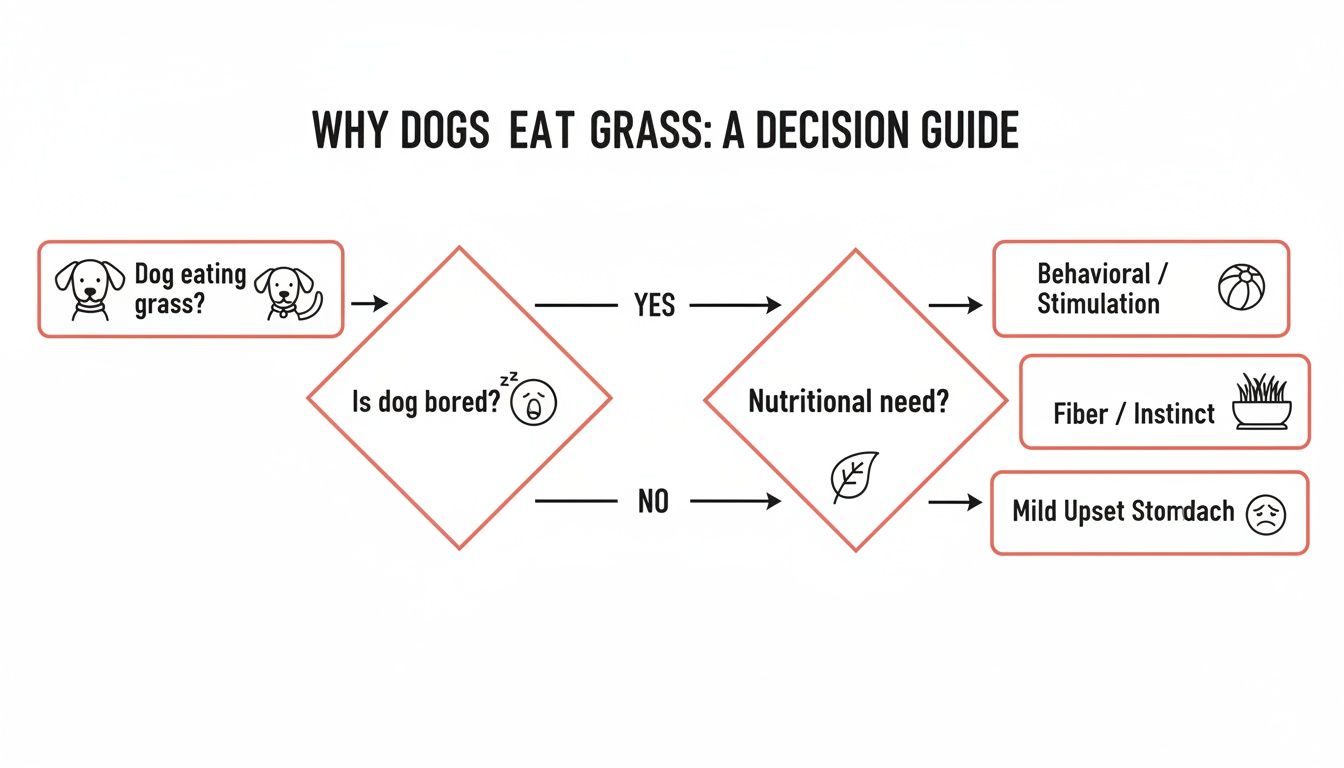
As the chart shows, figuring out the "why" often comes down to observing these other factors. When you know what to look for, you can give your dog the right support.
Comparing Normal vs. Alarming Behavior
To help you sort things out, let's break down the difference between typical grazing and behaviors that should have you calling the vet. This simple comparison can help you tell a harmless quirk from a potential cry for help.
Normal Grazing vs Potential Warning Signs
At the end of the day, trust your gut. You know your dog better than anyone. If their grass-eating habit suddenly feels "off" or is part of a bigger picture of them just not being themselves, it's always best to play it safe and get some professional advice.
What to Do About Your Dog's Grass-Eating Habit
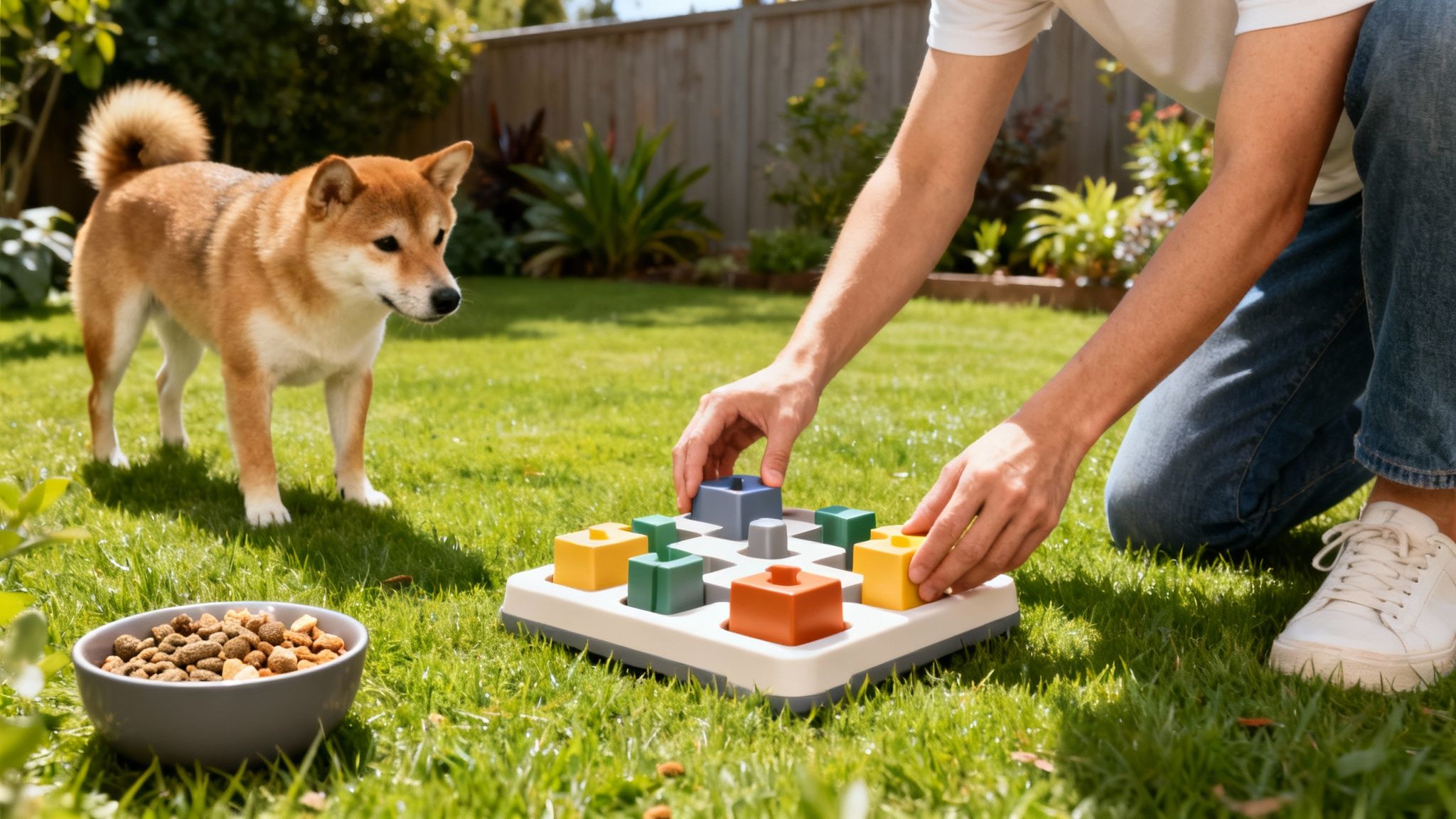
Okay, so we've dug into why your dog might be grazing on the lawn. Now for the practical part: what can you actually do about it?
The goal here isn't necessarily to stop the behavior cold turkey, especially if it's just an occasional nibble. It's more about understanding the root cause and offering better, healthier alternatives. Think of it as redirecting their energy and instincts in a positive way. Let’s walk through three simple strategies you can try right away.
1. Give Their Diet a Fiber Boost
Sometimes the most obvious answer is the right one. If your dog is constantly munching on grass, their body might just be telling them they need a bit more fiber. Good roughage is key for healthy digestion, and adding more to their diet could be all it takes to curb their lawn-snacking.
You don't need to completely change their food to make this happen. It's often as simple as supplementing what they already eat.
- Add Dog-Safe Veggies: A spoonful of plain canned pumpkin (not the pie filling!) or some steamed green beans mixed into their kibble is an easy and natural way to add fiber.
- Try a Fiber Supplement: You can also find high-quality fiber supplements for dogs, usually in a powder or chewable form. Just be sure to run it by your vet before starting anything new.
A Quick Tip: Go slow. When you're adding fiber, start with a very small amount and increase it gradually over a week or two. This lets their digestive system get used to the change and helps you find the sweet spot for their needs.
2. Up Their Mental and Physical Game
If you've ruled out a dietary need, the next big culprits are often boredom and anxiety. A dog without a "job" will find one for themselves, and sometimes that job is meticulously trimming the lawn with their teeth.
The fix? Make their life more interesting! A dog that’s physically tired and mentally engaged is far less likely to develop quirky habits. You want to give them positive outlets for all that natural doggy energy—things like sniffing, problem-solving, and chewing on appropriate items.
Actionable Enrichment Ideas
- Puzzle Toys: These are fantastic for making your dog think. They have to work to get their food or treats, which is an amazing mental workout.
- Scent Work: Hide some smelly treats around the yard or house and let your dog use their incredible nose to "find it." This is one of the most satisfying activities for a dog.
- Toy Rotation: Don't leave all their toys out all the time. Keep a few out and swap them for "new" ones every few days. A toy they haven't seen in a week is suddenly exciting again.
- New Walking Routes: Ditch the same old walk around the block. Exploring new streets with new sights and smells provides way more stimulation and fun.
3. Make Sure Their Grazing Area is Safe
Last but not least, if your dog is going to snack on grass sometimes, you have to make sure it's safe. This is non-negotiable. Many common fertilizers, pesticides, and weed killers are incredibly toxic to our pets.
Take a good look at your own yard and any other spots your dog frequents. If you don't know for sure that a lawn is untreated, assume that it is. It’s best to prevent them from eating grass in public parks or on a neighbor’s lawn where you can’t be sure what chemicals have been used.
It's also a great idea to check your garden for common toxic plants like azaleas, tulips, and daffodils. By creating a safe, chemical-free zone, you can relax a little, knowing their occasional nibble won't turn into a scary trip to the emergency vet.
Still Have Questions About Your Dog Eating Grass?
Even when you know why it happens, seeing your dog chow down on the lawn can still feel a little strange. You just want what’s best for them, and it’s natural to have a few more questions. Let's clear up some of the most common ones so you can feel confident about what you're seeing.
Is the Grass in My Yard Safe for My Dog to Eat?
Generally, yes—but with one huge caveat. The grass has to be 100% free of pesticides, herbicides, and other chemical treatments. Many of the products we use to keep our lawns green are toxic to dogs and can lead to serious health problems if they're ingested.
Before you let your dog graze, double-check that any lawn care products you use are certified as pet-safe. It's also a great idea to take a walk around your yard and pull out any toxic weeds or plants that might be growing alongside the grass. When in doubt, it’s always better to steer them away from the lawn.
If My Dog Eats a Lot of Grass, Should I Change Their Food?
That's usually not the first place to start. While a dog who’s constantly grazing might be looking for more fiber, this behavior pops up in dogs on all kinds of diets, from top-tier kibble to fresh, raw food. A full diet change probably isn't necessary.
Instead, think about supplementing their current meals first. A simple spoonful of plain pumpkin puree or some steamed green beans can add a nice, natural fiber boost. If the grass-eating continues and you’re still worried, that’s the time to talk to your vet. They can help you figure out if a slow transition to a new food makes sense.
Key Insight: Don't jump straight to a new bag of food. Often, a small tweak—like adding a bit more fiber or providing more engaging toys—is all it takes to curb the grass-eating without the digestive upset of a major diet change.
My Puppy Eats Grass All the Time. Is This Normal?
Oh, absolutely. It's incredibly common for puppies to eat way more grass than adult dogs. Puppies use their mouths to explore and learn about the world, so tasting everything (including the lawn) is just part of the discovery process. It’s also deeply tied to their primal instincts.
The most important thing is to make sure your puppy is on a deworming schedule approved by your vet. Their instinct to eat grass might be a throwback to how their ancestors cleared out intestinal parasites. As long as your pup is energetic, healthy, and not showing any signs of being sick, this exploratory grazing is usually harmless and something they'll likely grow out of.
When Should I Actually Be Worried About My Dog's Grass-Eating?
It’s time to pay closer attention when the behavior suddenly becomes intense or comes with other symptoms. A calm, occasional nibble here and there is one thing. Frantic, obsessive chomping is something else entirely.
Give your vet a call if the grass-eating is paired with any of these signs:
- Frequent Vomiting: Throwing up once in a while can happen, but if it’s a regular thing after they eat grass, it points to a problem.
- Persistent Diarrhea: This is a clear sign of major tummy trouble that needs a professional look.
- Lethargy or Apathy: If your once-playful dog suddenly isn't interested in walks, toys, or you, that’s a big red flag.
- Loss of Appetite or Weight Loss: A dog who refuses their dinner but is desperate to eat grass is telling you something is wrong.
At the end of the day, you know your dog better than anyone. If their grass-eating habit feels off, or if it seems like part of a bigger picture of them just not feeling like themselves, trust your gut and get some professional advice.

Karolis is the Founder of FORMA, a pet wellness brand focused on longevity and daily nutrition for dogs. Writes about supplements, canine health, and helping pets live longer, healthier lives
Join thousands of pet parents getting science-backed health insights and natural care advice