Aging dog behavior changes: Recognize signs and support your senior
Learn about aging dog behavior changes, what causes them, and practical tips to support your senior dog through the golden years.
It’s easy to feel a little lost when your loyal, predictable dog starts acting… well, weird. Maybe they’ve started pacing at night, seem startled by a doorbell they’ve heard a thousand times, or have become grumpy all of a sudden.
These aren’t just random quirks. Think of them as signals—your dog's way of telling you that something in their world has changed. These shifts are almost always tied to the natural process of aging, whether it's an achy joint, fading eyesight, or a bit of confusion.
Decoding Your Senior Dog’s New Behaviors
Watching your old friend change can be unsettling. But before you get frustrated, it's crucial to understand that your dog isn't "misbehaving" on purpose. They're trying to cope with new physical or mental challenges.
For instance, a dog who suddenly snaps when you pet their back might not be angry; they could be guarding a spot that’s sore from arthritis. The dog who seems to get stuck in a corner isn't being stubborn—they might be showing the first signs of cognitive decline, similar to dementia in people.
Understanding the "Why" Behind the Change
The best thing you can do is shift your mindset from "Why is my dog doing this?" to "What is my dog trying to tell me?" This simple change in perspective is everything. It helps you get to the root of the problem instead of just putting a band-aid on the symptom.
So, what are the usual suspects behind these new behaviors? It often boils down to a few key things:
- Physical Pain: This is a big one. Aches from arthritis, sore gums from dental disease, or other internal issues can make a dog irritable, withdrawn, or unwilling to be touched.
- Cognitive Decline: Just like humans, dogs can experience age-related cognitive changes. Canine Cognitive Dysfunction (CCD) can cause disorientation, anxiety, and a total mix-up of their sleep schedule.
- Sensory Loss: When a dog’s hearing or vision starts to fade, the world can become a scary, unpredictable place. This often leads to them being easily startled, more anxious, or less responsive.
To help you connect the dots, I've put together a quick reference table. It breaks down some of the most common changes you might see, their likely causes, and your immediate next steps.
A Quick Guide to Senior Dog Behavior Changes
This table is a great starting point for figuring out what might be going on with your aging companion.
Remember, this is just a guide. The most important first step is always a conversation with your veterinarian to get a proper diagnosis and create a plan to keep your dog comfortable and happy.
The Hidden Reasons Your Senior Dog Is Changing
To really help your senior dog, you have to put on your detective hat. Those new habits—like pacing all night or getting suddenly grumpy—aren't random. They're clues, pointing to something deeper going on. Once you understand the "why" behind the changes, you can swap frustration for compassion and find solutions that actually work.
Most of these shifts boil down to three main areas: what's happening in their mind, their body, and their senses. Let's dig into each of these to figure out what your dog is trying to tell you.
Decoding Canine Cognitive Dysfunction Syndrome
One of the biggest culprits behind behavior changes is Canine Cognitive Dysfunction Syndrome (CDS), which you might hear called "doggy dementia." This is a progressive neurological condition that messes with a dog's memory, ability to learn, and general awareness. It's not just "getting old"—it's a real medical diagnosis tied to physical changes in the brain.
The signs can be incredibly subtle at first, which makes them easy to brush off. To help owners connect the dots, vets often use the acronym DISHAA:
- Disorientation: Does your dog get stuck in corners, stare at walls, or seem lost in his own home? That’s a classic sign.
- Interaction Changes: Maybe your once-cuddly dog now shies away from touch. Or, the opposite could happen, and they become a velcro dog, suddenly anxious and clingy.
- Sleep-Wake Cycle Changes: This is a big one. Many owners first notice something is wrong when their dog is restless and pacing all night, only to sleep soundly all day.
- House Soiling: Accidents in the house from a dog who has been perfectly house-trained for years are a major red flag. They might forget to signal they need to go out or simply lose track of where they are.
- Activity Level Changes: This can look like aimless wandering, repetitive licking, or just a general lack of interest in things they used to enjoy.
- Anxiety: New fears and anxieties are common. Your dog might develop separation anxiety for the first time or become fearful of loud noises that never bothered them before.
CDS isn't some rare disease; it's a huge issue for our aging companions. Studies show that while 28% of dogs aged 11-12 have at least one sign of cognitive decline, that number jumps to a staggering 68% for dogs between 15 and 16 years old.
This whole process can feel overwhelming, but it really comes down to observing, investigating, and then taking action.
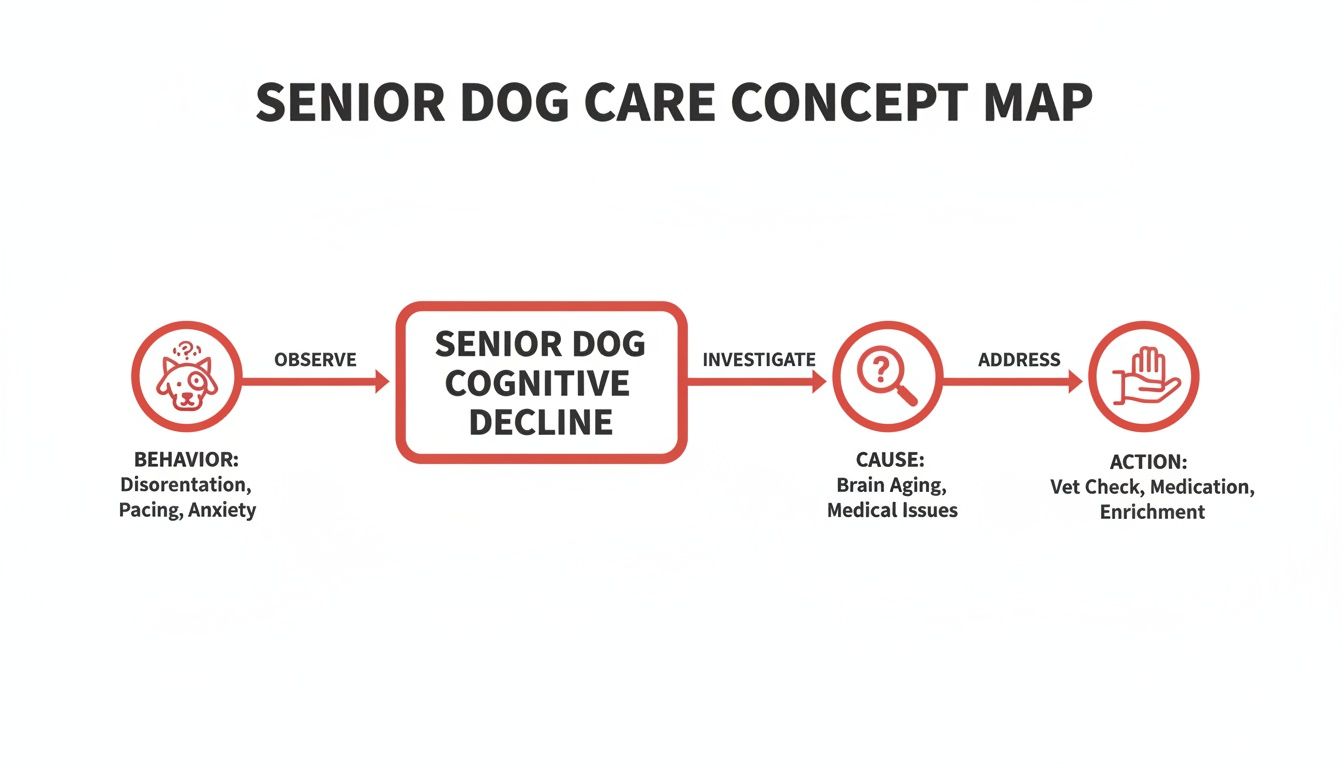
As you can see, it starts with noticing a new behavior, figuring out the likely cause, and then finding the right way to help them.
The Impact of Unseen Pain
Another major reason for a senior dog's personality to change is chronic pain, and arthritis is usually the top offender. Dogs are absolute masters at hiding their pain—it's a survival instinct left over from their wild ancestors, where showing weakness made you a target. Instead of whining or crying, their pain often leaks out through their behavior.
Think about it: if your joints ached constantly, you’d probably be irritable, too. You might not want to go out, and you’d likely snap if someone accidentally bumped into you. Your dog is exactly the same.
Pain can show up as:
- Sudden grumpiness or aggression: Your sweet-as-pie dog might growl when you try to pet their back or help them onto the bed because that simple touch hurts.
- Reluctance to move: If they hesitate before going up stairs, refuse to jump in the car, or struggle to get up from a nap, joint pain is a very likely cause.
- Excessive licking: You might notice your dog constantly licking a specific spot, like their wrist or hip. They're trying to soothe a joint that's aching.
It’s so easy to mistake these signs for "bad behavior" or just old age, but more often than not, they are your dog's only way of telling you they're hurting.
When Senses Start to Fade
Finally, don't underestimate the impact of gradual hearing and vision loss. A world that was once familiar and safe can suddenly feel like a confusing and scary place.
When a dog’s vision starts to go, they might bump into furniture or seem scared to walk around in dim light. If they can’t hear you coming up behind them, a gentle pat can be a huge shock, causing them to jump or even snap out of pure surprise. This sensory decline often creates a foundation of anxiety that wasn't there before.
Getting a handle on these underlying issues is the most important first step. When you realize your dog isn't just being difficult—but is actually coping with cognitive decline, pain, or fading senses—you can give them the support they need to feel safe and comfortable in their golden years.
What These Behavior Changes Actually Look Like
So, we've talked about why your older dog might be acting differently. Now, let's get into the nitty-gritty of what these changes look like day-to-day. When you can connect the dots between a new habit and a potential cause, you’re in a much better position to help.
It’s easy to feel caught off guard by these shifts, but they usually creep in slowly. Knowing exactly what to look for will empower you to be a confident advocate for your best friend's health.
Increased Anxiety and Clinginess
One of the first things many owners notice is a sudden jump in anxiety. This can show up in ways that are both obvious and incredibly subtle, leaving you scratching your head.
Your once-independent dog might suddenly turn into your personal shadow, trailing you from the living room to the kitchen and back again. They might start whining the second you’re out of sight or get worked up when you grab your keys—things that never fazed them before. This new clinginess often comes from a place of vulnerability as their senses fade and their world becomes a little more confusing.
This isn't just a quirky personality change; it's a widespread issue. A major analysis from the Dog Aging Project found that attachment and separation problems were seen in a staggering 85.9% of senior dogs.
That statistic really drives home how common anxiety becomes with age. What looks like a simple bid for attention is often your dog’s way of asking for reassurance in a world that doesn’t feel as predictable as it used to.
New Fears and Phobias
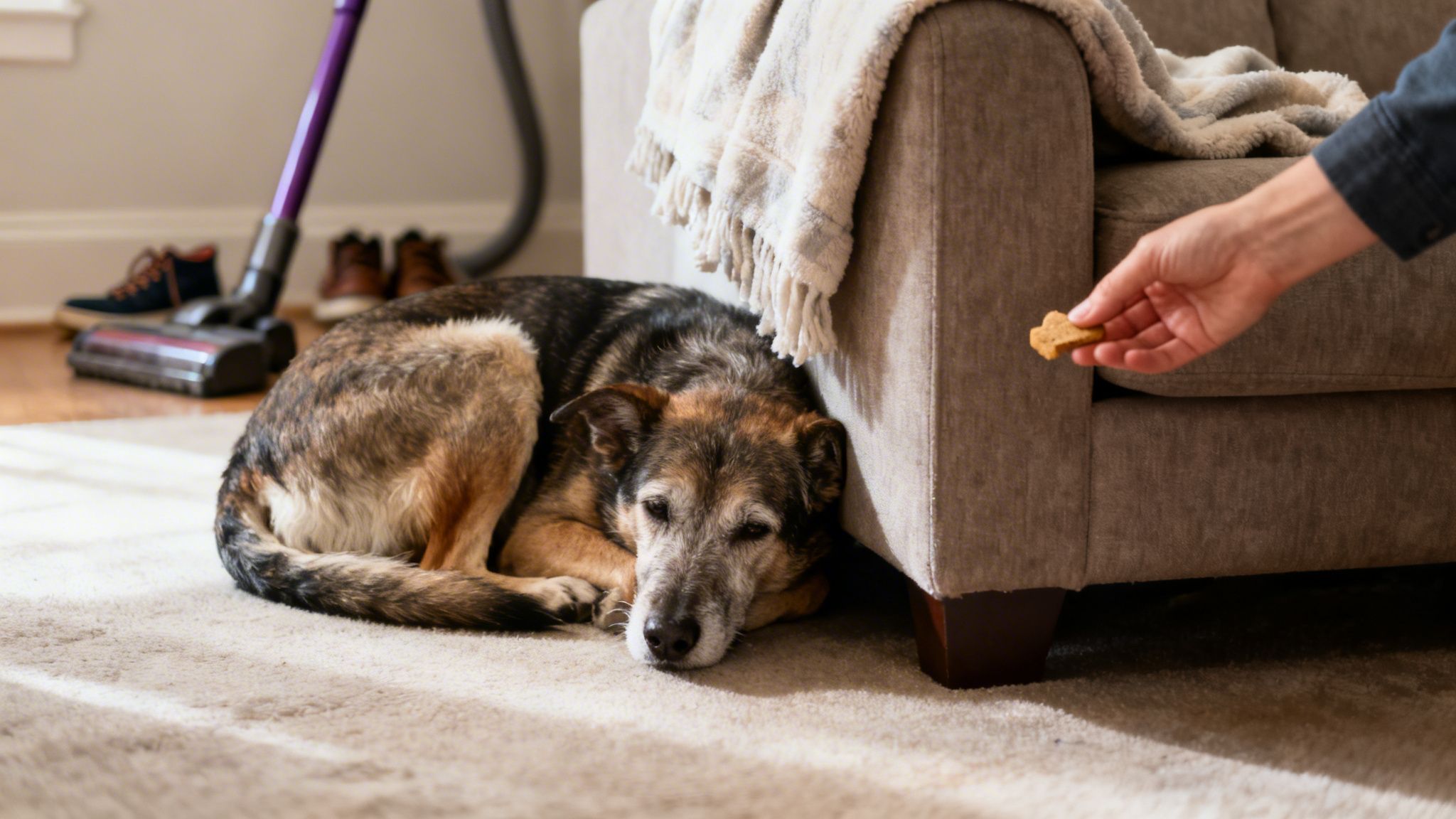
Is your dog suddenly terrified of thunderstorms? Does the vacuum cleaner send them running for cover? Developing new fears is a classic sign that things are changing for your senior pup.
Often, this is tied directly to their senses. A dog who can't hear as well might be startled by the vibrations of an appliance they didn't hear coming. A dog with cloudy vision might see a shadow and perceive it as a threat. Their world is literally shrinking, and that uncertainty can easily breed fear.
Irritability and Sudden Aggression
This is probably the most upsetting change for any dog owner: your sweet, gentle companion suddenly growls, snarls, or even snaps. A low growl when you touch their back or a snap when a child gets too close can be deeply concerning.
It’s so important to remember this is almost never coming from a place of meanness. It's communication. More often than not, it’s a dog’s way of saying, "Ouch!" An arthritic dog might snap because a friendly pat on the hips sent a jolt of pain through their body. They are just trying to protect themselves from getting hurt again.
This is more common than you might think. The same 2025 study found aggression was the number one behavioral problem, impacting 55.6% of dogs studied. Many acted out toward strangers, owners, or other pets in the home. You can learn more about the study's findings on dog behavior issues in the US on modernsciences.org.
Restlessness and Pacing at Night
A mixed-up sleep schedule is a hallmark of what vets call Canine Cognitive Dysfunction Syndrome (CDS), or doggy dementia. If your senior dog is wandering around at night, whining, or just seems lost, that’s a big red flag.
This isn't your typical insomnia. It’s usually a sign of disorientation. Your dog might not be sure where they are, what time it is, or why they feel so unsettled. You'll often see this nighttime restlessness paired with them sleeping more and more during the day.
Gaining a better understanding of your dog's physical decline can be a game-changer, and exploring the principles of fitness testing for seniors offers valuable insights. By recognizing these behavioral shifts for what they truly are—signals of an unmet need—you can provide the compassionate, effective care your old friend deserves.
When It's Time to Call the Vet
It can be tough to tell the difference between a dog simply getting older and a dog who needs medical help. While many age-related changes happen slowly over time, some behaviors are definite red flags. Your veterinarian is your best partner in figuring this out.
So, when do you make the call? Here’s a simple rule of thumb I always tell clients: any behavior change that is sudden, dramatic, or clearly distressing needs a vet visit. Think about things that pop up out of nowhere or seem completely out of character for your dog. It's so important not to just write it off as "old age" until you've ruled out a treatable medical problem.
Holding off on that call can let things like infections, organ disease, or chronic pain get much worse. Getting a diagnosis early is always the best path to getting your dog relief and making their golden years comfortable.
Red Flags That Mean "Call the Vet Now"
If you notice any of the following, it’s time to get your vet on the phone and schedule an appointment. These signs often point to something more serious than just the normal aging process.
- Sudden Aggression or Irritability: Is your normally sweet dog suddenly snapping or growling? This is often a classic sign of significant pain (think arthritis or dental disease) or even a neurological issue.
- Serious Disorientation: We're not talking about a moment of forgetfulness. This is when your dog seems truly lost in your home, gets stuck in corners, or stares blankly at walls. It can be a strong indicator of canine cognitive dysfunction.
- House Soiling (in a Potty-Trained Dog): A one-off accident is one thing, but if your trained dog is consistently having accidents inside—especially if they don’t seem to notice—it could signal a UTI, kidney problems, or other internal issues.
- Loss of Appetite or Refusing Water: Not wanting to eat or drink is a big deal for any dog. These are serious symptoms that can point to everything from painful dental problems to systemic illness and can lead to a rapid decline.
- Stumbling, Seizures, or Collapse: Any event involving a loss of balance, muscle control, or consciousness is an emergency. Get to the vet right away.
Think of your veterinarian as a detective for your dog's health. You see the behavioral clues, but they can connect those clues to physical causes you can't see.
What to Expect at the Vet's Office
The more information you can give your vet, the better. Before you go, jot down a few notes about the new behaviors, when you first noticed them, and how often they happen. If you can, take a short video of the behavior on your phone—it can be incredibly helpful!
Once you’re there, your vet will start with a few key steps to get a complete picture of your dog's health:
- A Thorough Physical Exam: They'll check your dog from nose to tail, feeling for sore joints, looking at their teeth and gums, and checking their eyes and ears for any signs of pain, infection, or sensory loss.
- Blood Work: A standard blood panel is one of the best tools we have for seeing what's happening on the inside. It can reveal hidden problems like thyroid imbalances, kidney or liver disease, and signs of infection.
- Urinalysis: This is a simple but vital test, especially if house soiling is the problem. It’s the fastest way to check for a urinary tract infection or other issues with the kidneys and bladder.
These initial tests give your vet a solid baseline. From there, they might suggest more specific diagnostics, but this is the starting point for figuring out what's really going on and creating a plan to help your best friend feel better.
Simple Ways to Create a Senior-Friendly Home
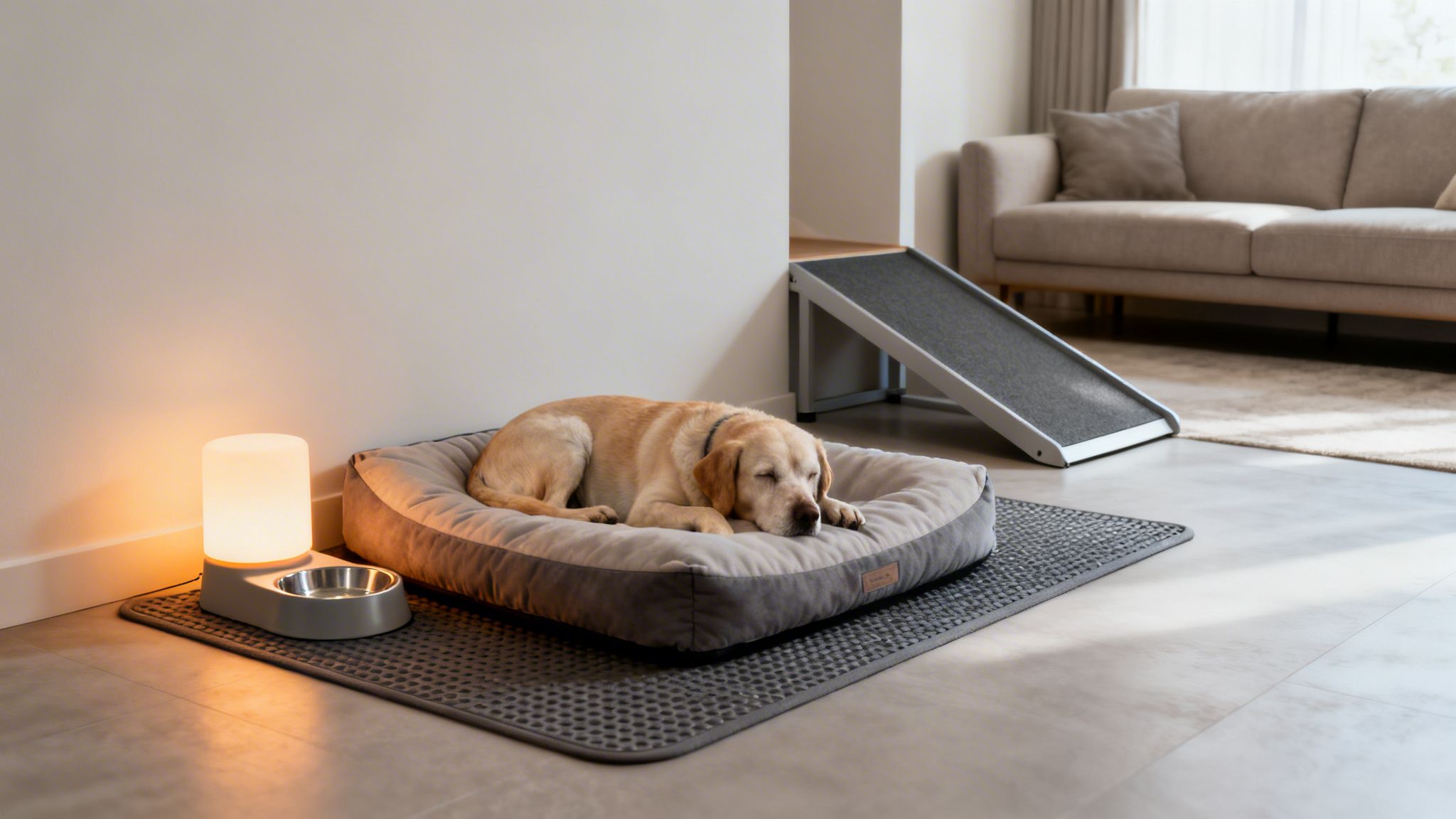
After you and your vet have ruled out any serious health problems, the next step is turning your home into a safe, calming haven for your senior dog. You'd be surprised how much small, thoughtful changes can boost their confidence and comfort, helping to smooth out many of the behavioral bumps that come with age.
Try to see your home through your dog's eyes. Those beautiful hardwood floors? They can feel like an ice rink to a pup with stiff, wobbly legs. A dimly lit hallway might seem spooky to a dog whose vision isn't what it used to be. Our goal is to make their world feel predictable, safe, and soothing again.
Establish a Predictable Daily Routine
For an older dog, especially one navigating the fog of cognitive decline, a solid routine is an anchor in a confusing world. It dials down their anxiety because they know exactly what’s coming next.
Do your best to keep meal times, potty breaks, and walks on a consistent schedule. This simple predictability helps them feel secure and can even cut down on accidents by giving them regular chances to relieve themselves.
A stable routine helps orient a disoriented dog. When their internal clock is off, a reliable external schedule for meals and walks provides structure and reduces the stress that fuels anxious behaviors.
It’s a simple thing, really, but creating that daily pattern provides a powerful sense of security that is fundamental to their well-being.
Make Your Home Safer and More Accessible
Two of the biggest hurdles for aging dogs are wobbly joints and fading senses. Luckily, a few easy modifications can make a massive difference, helping prevent falls and giving their confidence a much-needed boost.
These adjustments are often simple and don't have to cost a fortune:
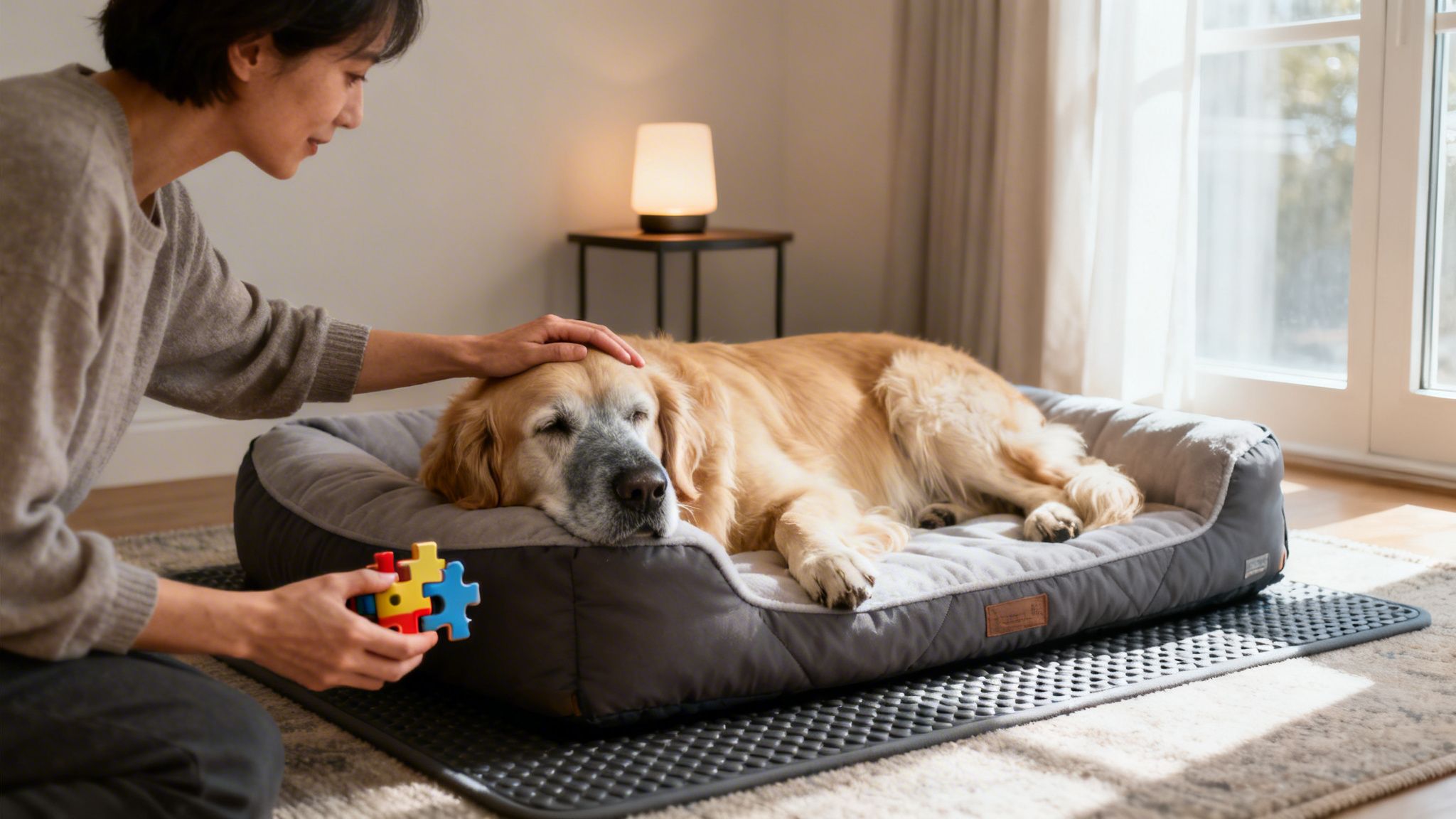
- Improve Traction: Lay down non-slip rugs or runners on slick surfaces like hardwood, tile, or laminate. This gives their paws something solid to grip, preventing painful slips that could lead to a serious injury.
- Light the Way: Plug in a few nightlights in hallways, near their bed, and by the door they use to go outside. It’s a huge help for dogs with poor vision trying to find their way around in the dark.
- Create Clear Pathways: Keep floors free of clutter. A predictable layout helps a dog with vision or cognitive challenges move around without bumping into furniture and feeling lost.
Prioritize Comfort and Mental Engagement
Just because your dog can't chase a ball for an hour doesn't mean their need for comfort and mental stimulation has vanished—it just looks a little different now. Soothing their body and gently engaging their mind are absolutely key to a great quality of life.
An orthopedic bed with memory foam can be a game-changer for arthritic joints, easing pain and helping them get truly restorative sleep. Make sure it's in a quiet spot, away from drafts, where they can feel safe. A cozy, den-like space is also essential; checking dog kennel size recommendations can help you create a personal spot that’s easy for them to get into and out of.
Gentle mental workouts are just as important. It’s time to swap out the intense physical games for calmer, brain-focused activities:
- Puzzle Toys: Use slow feeders or simple puzzle toys that don't require a lot of pushing or shoving.
- Scent Work: Hide a few smelly treats around a single room and let them sniff them out. It taps into their powerful sense of smell and is a fantastic mental workout.
- Short Training Sessions: Spend just a few minutes a day practicing basic commands they’ve known for years. It reinforces your bond and keeps their mind sharp.
By making these thoughtful adjustments, you’re doing more than just rearranging furniture. You’re adapting their entire world to meet their new needs, showing them they are safe, comfortable, and deeply loved. And that’s the best support you can possibly offer.
Nutrition to Support Your Senior Dog’s Brain and Body
While sorting out your dog's environment and staying on top of vet visits are crucial, what you put in their bowl plays a huge role in managing the behavioral changes that come with age. Think of food as fuel for both the body and the brain. Just like a high-performance car needs premium fuel, an aging dog's brain needs specific nutrients to keep running smoothly.
The right diet can be a powerful tool for supporting your dog's cognitive health, easing their anxiety, and just helping them feel better all around. By focusing on a few key ingredients, you can get ahead of some of the root causes of those behavioral shifts, helping your dog feel more like their old self.
Key Nutrients for a Healthy Senior Brain
As a dog gets older, their brain naturally changes, which can affect everything from memory and learning to their overall mood. But the right nutrients can help protect their brain cells from damage and provide the kind of energy needed for clear thinking. The good news is that some of the most effective ingredients are backed by solid science and can make a real, noticeable difference.
Here are three of the most important things to look for when supporting your senior dog's brain health:
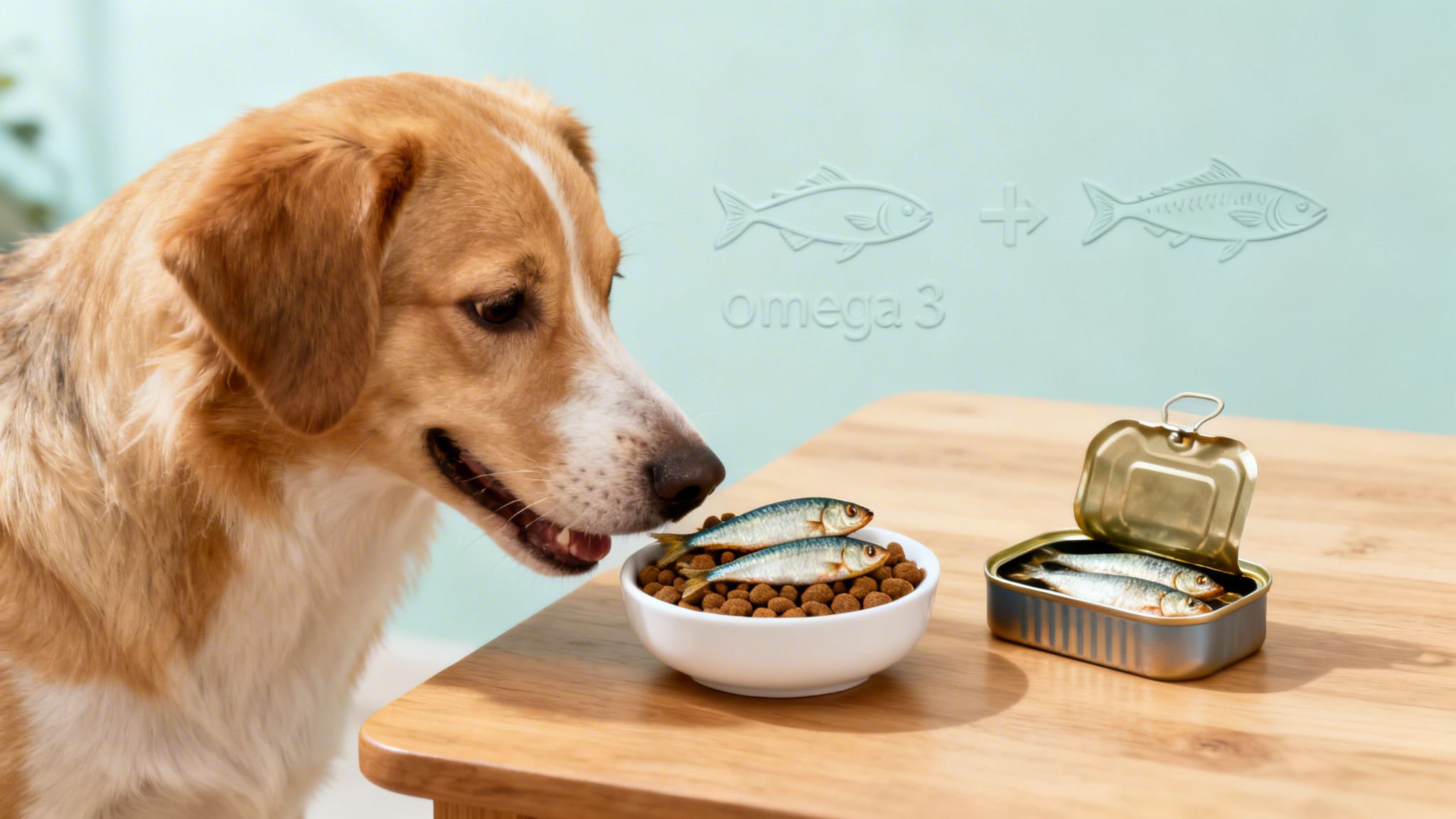
- Omega-3 Fatty Acids: Specifically DHA and EPA. These are the literal building blocks for healthy brain cell membranes. They are also fantastic at reducing inflammation, which is a major culprit behind cognitive decline.
- Antioxidants: Think of ingredients like Vitamin C, Vitamin E, and selenium as your dog's personal bodyguards. They fight off free radicals—nasty, unstable molecules that damage all cells, including those in the brain. A diet rich in antioxidants helps shield the brain from this daily wear and tear.
- Medium-Chain Triglycerides (MCTs): Found in things like coconut oil, MCTs are a special kind of fat. The brain can convert them into an alternative energy source, which is incredibly useful for older dogs whose brains sometimes struggle to use their main fuel, glucose, as efficiently.
Getting these nutrients into your dog’s diet can help promote clearer thinking and may cut down on the confusion and disorientation that often come with old age.
The Power of a Daily Superfood Supplement
Let's be realistic—making sure your dog gets the perfect amount of these brain-boosting nutrients every single day through their meals alone can be tough. This is where a high-quality daily supplement can make all the difference. A well-made superfood chew, like FORMA, takes the guesswork out of it, delivering a precise, science-backed blend of ingredients in one simple step.
Instead of juggling a bunch of different bottles and trying to hide pills in their food, a single chew provides consistent, comprehensive support. That consistency is what really leads to benefits over time.
A top-notch supplement is more than just one or two ingredients, though. When a product is made with human-grade ingredients, you know you're getting purity and potency that supports their entire body, not just their brain. It’s this whole-body approach that really helps manage the complex needs of an aging dog.
For instance, a complete formula can help with:
- Cognitive Health: Using ingredients like MCTs and omega-3s to fuel the brain.
- Calmness: Including natural compounds to help soothe anxiety and restlessness.
- Mobility: Packing in anti-inflammatory ingredients to ease their aching joints.
- Immunity: Bolstering their natural defenses with a solid dose of antioxidants and vitamins.
Proactive Nutrition for a Longer, Calmer Life
This kind of proactive nutritional support is more important than ever, especially when you look at recent research. A huge study from the Dog Aging Project, which included 47,444 dogs, discovered that fearfulness shoots up in dogs over eight years old. It also found that mixed breeds and smaller dogs were more likely to show higher rates of fear and aggression. You can read more about how dog behavior changes with age on vice.com.
By choosing a daily superfood chew that supports both brain function and calmness, you are directly addressing the kinds of age-related behaviors this study highlights, helping manage them before they become serious issues.
When you invest in your dog's nutrition, you're doing more than just filling their bowl—you are taking an active role in their long-term health and happiness. A daily routine with a supplement like FORMA gives you the power to provide foundational support for their mind and body.
Making this one simple addition to their daily care is a powerful way to promote a longer, better quality of life. It’s an investment in more happy, calm, and comfortable years together, giving you peace of mind while giving your best friend the support they truly deserve.
Common Questions About Senior Dog Behavior
As you journey through these golden years with your dog, questions are bound to pop up about their new quirks. Let's walk through some of the most common concerns I hear from owners, so you can feel confident you're giving your old friend the best care possible.
Is My Old Dog's Aggression a Sign of Dementia?
It’s easy to jump to conclusions, but when an older dog suddenly becomes aggressive, the most common culprit is actually pain, not dementia. Think about it: a dog might snap when someone accidentally touches a sore hip, or if they're startled because they can't see or hear as well as they used to.
Before you assume it's a cognitive issue, your very first step should be a thorough vet check. Your veterinarian can look for hidden sources of pain, like arthritis or painful dental problems. Getting to the root of the medical issue is often the fastest way to resolve the aggression.
It's helpful to reframe sudden aggression as your dog's only way of communicating. They aren't being "bad"—they're trying to tell you, "I hurt," or "I'm scared." A vet visit, not punishment, is the kindest and most effective response.
Can I Retrain My Senior Dog to Stop House Accidents?
For senior dogs, it's less about retraining and more about smart management. First things first, your vet needs to rule out medical issues. Urinary tract infections, kidney disease, and other health problems are incredibly common in older dogs and can lead to accidents.
Once you have a clean bill of health, adjust your routine. Take them out more often, especially first thing in the morning and right after meals. You can also place potty pads in an easily accessible area and make sure the path to the backyard is clear and well-lit. Patience is everything here—never scold them for something they truly can't control.
How Can I Tell If My Dog Is in Pain or Just Getting Old?
It can be tough to tell the difference between a dog who's just slowing down and one who is actively in pain. The secret is to become a detective and watch for specific, subtle clues.
While slowing down is normal, certain behaviors are red flags for discomfort.
- Hesitating before jumping on the couch or climbing stairs.
- Struggling to get up or lie down comfortably.
- Constantly licking at a specific joint.
- Becoming grumpy or irritable when you try to pet them.
These aren't just signs of "getting old"—they're signs that it's time to call the vet. A good pain management plan can make a world of difference in their comfort and happiness.

Karolis is the Founder of FORMA, a pet wellness brand focused on longevity and daily nutrition for dogs. Writes about supplements, canine health, and helping pets live longer, healthier lives
Join thousands of pet parents getting science-backed health insights and natural care advice