What Causes Dog Allergies Uncovering Triggers and Finding Relief
Wondering what causes dog allergies? Uncover the common environmental, food, and flea triggers and learn practical strategies to manage your dog's symptoms.
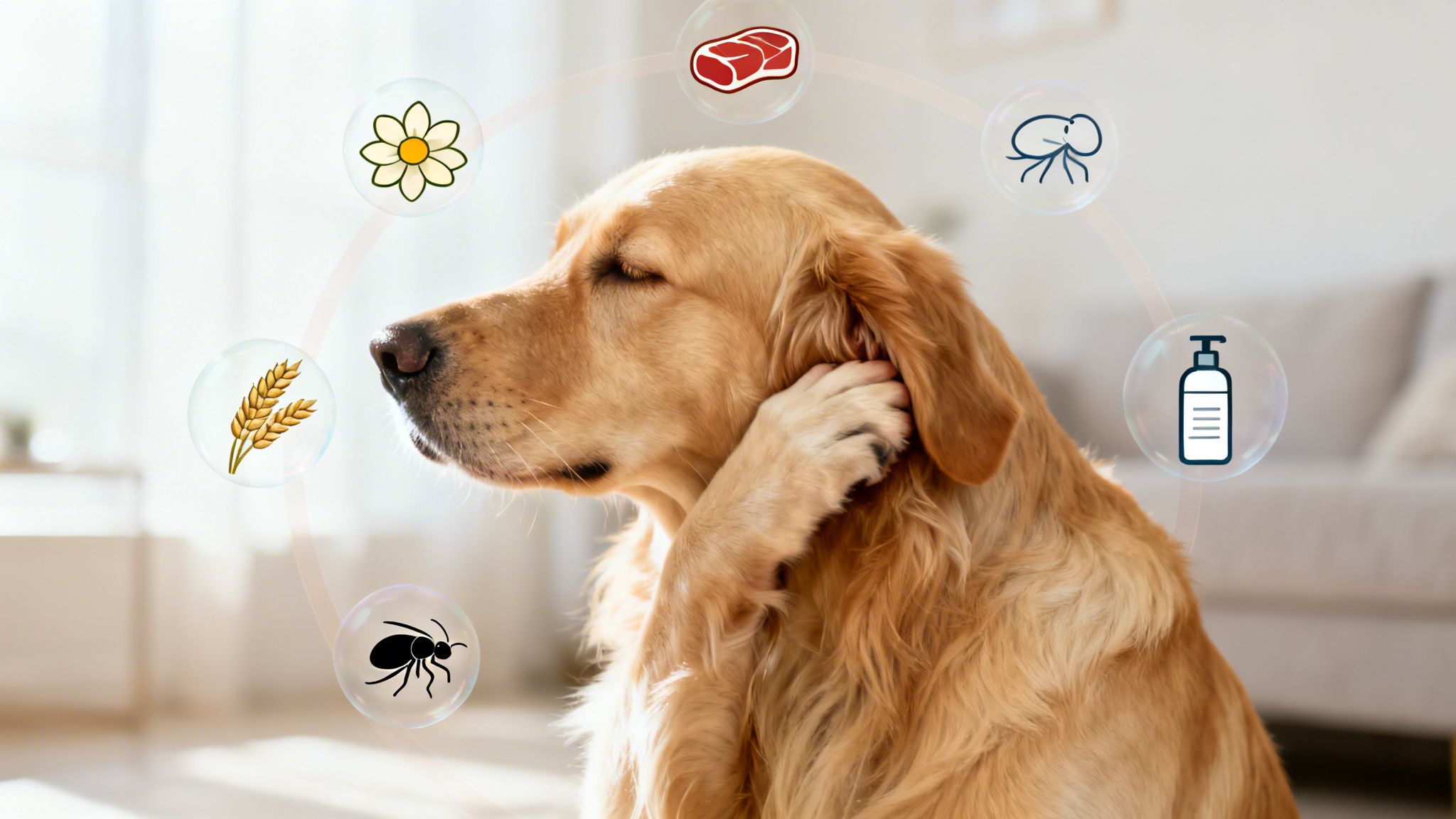
It starts with a scratch. Then another.It starts with a scratch. Then another. Before you know it, your dog is constantly licking, chewing, and digging at their skin—and you're both feeling miserable.
The simple answer to what causes dog allergies is a case of mistaken identity. Your dog's immune system, which is designed to be a bodyguard against real threats, starts overreacting to harmless everyday things like pollen, a specific food ingredient, or even flea saliva. This guide will help you get to the bottom of your dog's discomfort and find a clear path toward relief.
Why Is My Dog So Itchy? Understanding the Rise in Canine Allergies

If it feels like more dogs have allergies these days, you’re not imagining it. That constant scratching, relentless paw licking, and those stubborn ear infections have become a frustrating reality for countless dog owners. These aren't just minor irritations; they're the outward signs of an immune system gone haywire, and they can seriously diminish your dog's quality of life.
The problem is so widespread that allergies are now the number one reason owners file pet insurance claims. In fact, a deep dive into over one million insured pets revealed that allergy-related claims shot up by a staggering 42% in North America between 2019 and 2023. On average, a single dog might rack up around 16 allergy claims over its lifetime, costing owners about $2,300. You can learn more about these allergy claim trends to see just how common this issue has become.
The Allergy Epidemic Explained
So, what’s going on? Why are so many dogs suffering? The answer is a bit complicated, but many roads lead back to modern lifestyle factors. Things like increased exposure to environmental pollutants, highly processed diets, and even how clean we keep our homes can all play a role in confusing a dog's immune system.
Think of it like a home security system that’s become overly sensitive. It’s supposed to go off for intruders, but instead, it’s sounding the alarm every time the mail carrier walks by.
An allergy is essentially a biological mistake. The immune system, designed to protect the body from viruses and bacteria, misidentifies a harmless substance as an invader and launches an aggressive, unnecessary attack.
This internal battle is what causes the external symptoms we see—the relentless itching, inflamed skin, and digestive upset. To help you start connecting the dots, we've broken down the main categories of allergens that affect our canine companions.
Quick Guide to Common Dog Allergy Triggers
This table gives you a quick snapshot of the different types of allergies and what typically sets them off. It's a great starting point for figuring out what might be bothering your dog.
Now that you have a general overview, let's explore each of these categories in more detail to understand how they uniquely impact our dogs.
How Your Dog’s Immune System Triggers an Allergic Reaction
To really get what's happening when a dog has allergies, we need to zoom in and look at how their immune system works. A healthy immune system is a brilliant bodyguard, always on patrol. It knows exactly how to spot and take down real threats, like nasty viruses or bacteria, without causing a scene.
But in a dog with allergies, that bodyguard gets a little… overzealous. It starts seeing threats everywhere, mistaking perfectly harmless things for dangerous invaders. We call these harmless substances allergens, and they can be anything from a fleck of pollen to a protein in your dog's food.
This simple case of mistaken identity is what kicks off the whole allergic cascade. The immune system, convinced it’s under attack, goes into full-blown defense mode.
The Biological False Alarm
The first time your dog comes across a new allergen, its immune system quietly starts producing antibodies called Immunoglobulin E (IgE). You can think of these IgE antibodies as little "wanted posters" designed for that one specific allergen. These posters then get stuck onto special immune cells, called mast cells, which hang out in your dog’s skin, nose, and gut, waiting.
Now the system is primed and ready. The next time your dog encounters that same allergen—whether they breathe it in, eat it, or just touch it—it latches onto those IgE antibodies like a key fitting into a lock. This connection is the trigger that sounds the alarm bells.
In an instant, the mast cells burst open, releasing a flood of powerful chemicals into the body. The most famous of these is histamine.
A dog's allergic reaction is essentially an extreme overreaction to a perceived threat. The immune system's response is disproportionate to the actual danger, causing more harm to the body than the allergen itself ever could.
This chemical flood is what causes all those miserable allergy symptoms we see. Histamine ramps up blood flow (causing redness), makes blood vessels leaky (leading to swelling and hives), and irritates nerve endings, which is what triggers that frantic, non-stop itching.
Skin Deep: The Battleground for Environmental Allergies
When it comes to environmental allergies, your dog’s skin is ground zero. Humans tend to inhale allergens and get a runny nose, but dogs often absorb them right through their skin. This direct contact sets off that IgE-driven reaction right at the source, leading to intense inflammation and that vicious cycle of itching and scratching.
Interestingly, a large European study found that 27% of adults tested at allergy clinics showed sensitivity to dogs. This hints that the environmental factors affecting us might be impacting our pets, too. For owners trying to manage their dog's health, this really underscores the importance of what’s going on inside. For example, an unhealthy gut can make the immune system even more likely to overreact. Supporting your dog's immunity from the inside out can make a real difference in managing these flare-ups. You can learn more about the rise in environmental allergies from the American Veterinary Medical Association.
This whole process shows why allergies aren't just a "skin issue." The scratching and redness you see on the outside are the end result of an internal immune system mix-up. Grasping this is the first real step toward finding relief that actually works for your dog.
Identifying the Four Main Allergy Culprits in Dogs
When you realize your dog's immune system is in overdrive, that's the first clue. The real detective work starts now: figuring out what it's overreacting to. Once you know the enemy, you can build a much smarter defense.
Nearly all dog allergies are triggered by one of four culprits. Each has its own signature set of clues. By learning to spot the patterns, you can give your vet the vital information they need to crack the case and get your dog some relief.
Environmental Allergies: The Invisible Attackers
This is the big one. By far, the most common type of allergy we see in dogs is atopic dermatitis, which is just the technical term for environmental allergies. It’s a reaction to tiny, invisible particles in your dog’s world that they either inhale or, more commonly, absorb right through their skin.
Sound familiar? These are often the same things that give us humans a case of the sneezes and watery eyes. The biggest difference is how our dogs show it. Instead of a runny nose, they get intensely itchy skin. This is your classic "allergic dog."
Common triggers include:
- Pollens from trees, grass, and weeds, which is why symptoms can seem worse in certain seasons.
- Mold spores, lurking in damp spots indoors (like basements) or outdoors.
- Dust mites, the microscopic bugs that live in our carpets, bedding, and furniture.
- Dander from other pets in the house, like cats or even another dog.
A dog with environmental allergies is often caught in a cycle of chewing their paws, rubbing their face on the furniture, and dealing with one ear or skin infection after another. The itch can be everywhere or concentrated in specific spots like the feet, belly, and ears.
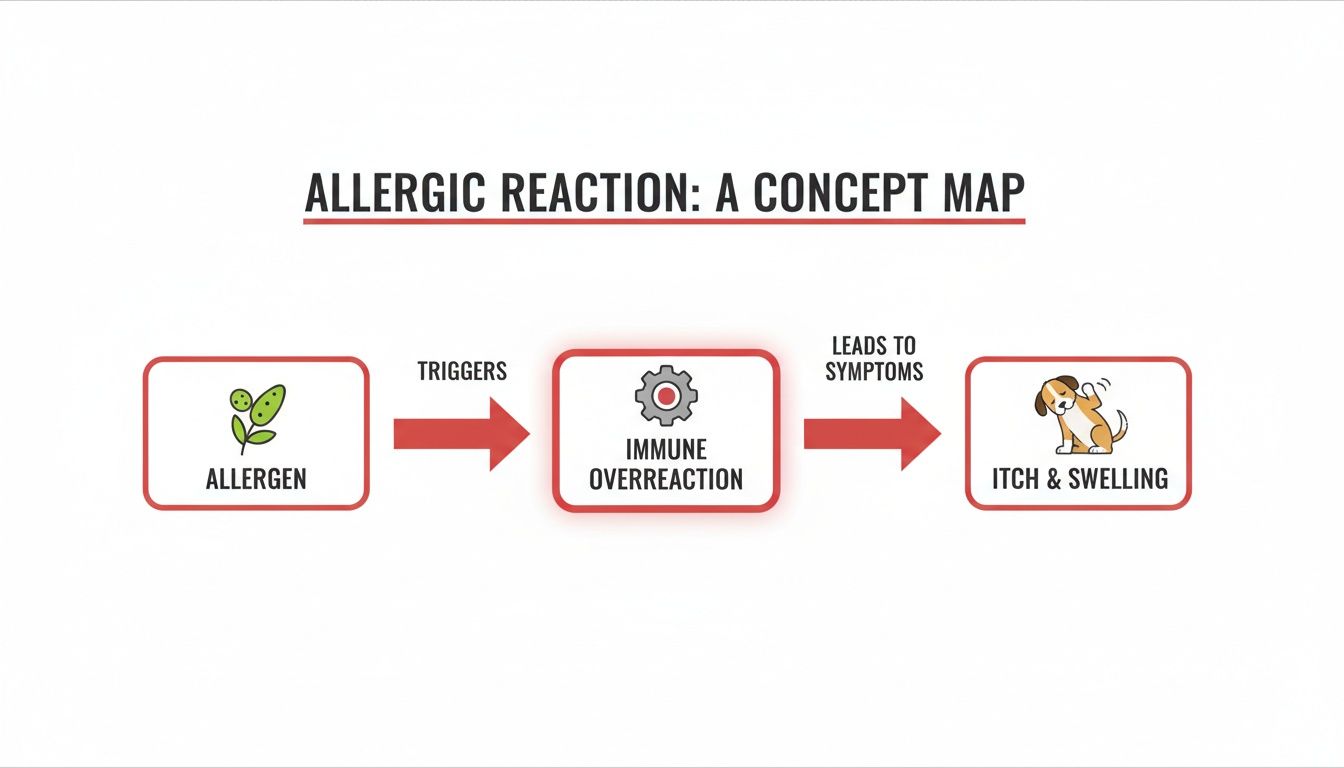
This diagram breaks it down perfectly: an outside trigger kicks off an internal immune system freak-out, which we then see on the outside as frustrating itching and inflammation.
Food Allergies: The Internal Upset
True food allergies, while not as common as environmental ones, can make a dog miserable. It’s crucial to know the difference between a food allergy and a food intolerance. A true allergy is an immune system attack, while an intolerance is more of a digestive issue, where the body just can't process an ingredient properly.
A food allergy can pop up at any age, even if your dog has eaten the same kibble for years without an issue. One day, the immune system just decides a certain protein is a threat, and the reaction begins.
Despite what you might have heard, food allergies only make up about 10% of all allergy cases in dogs. If a dog is itchy year-round, environmental allergens are a much more likely cause.
It's usually the proteins, not the grains, that are the problem. The most frequent triggers are:
- Beef
- Dairy
- Chicken
- Lamb
- Soy
- Wheat
The symptoms can look a lot like environmental allergies—chronic itching, paw licking, skin infections. But the tell-tale sign of a food allergy is often the addition of GI issues, like vomiting, diarrhea, or having to go to the bathroom way more often.
Flea Allergy Dermatitis: An Extreme Overreaction
For some dogs, it only takes one single flea bite to unleash an absolute firestorm of itching. This is Flea Allergy Dermatitis (FAD), and it's an extreme hypersensitivity to the proteins in flea saliva. It’s one of the most intensely uncomfortable skin conditions a dog can have.
You might think, "But I've never seen a flea on my dog!" That doesn't rule it out. A flea can hop on, bite, and hop off long before you ever spot it. But for an allergic dog, the damage is done—the reaction to that one bite can last for weeks.
The itching with FAD is most severe at the base of the tail, across the rump, and down the back of the hind legs. Look for signs of hair loss, scabs, and angry "hot spots" in these areas from all the frantic scratching and chewing. Strict, year-round flea prevention is the only answer here.
Contact Allergies: The Rarest of Them All
Last and certainly least common is the contact allergy. This happens when a dog’s skin physically touches a substance that triggers a localized reaction. This isn't just a simple irritation; it's a true allergic response that appears right at the point of contact.
It’s rare because a dog’s coat of fur is a pretty good natural barrier. As you’d expect, reactions usually show up on parts of the body with less hair, like the belly, paws, or around the muzzle.
Potential triggers can be just about anything:
- Chemicals in shampoos or flea collars.
- Materials in plastic food bowls.
- Fibers or dyes in their bedding or your carpet.
- Certain plants or grasses in the yard.
The dead giveaway for a contact allergy is a rash or redness that’s confined to the exact spot that touched the irritant. The good news? Remove the offending object, and the symptoms usually clear up fast.
Comparing Dog Allergy Types: Symptoms and Triggers
Distinguishing between these four allergy types can be tricky since their symptoms often overlap. This table breaks down the key differences to help you identify the most likely culprit behind your dog's discomfort.
Understanding these distinctions is the first step. Besides food and environmental factors, digging into specific triggers like pet dander and allergies can provide even more clarity. Pinpointing the right category is the key to finally getting your dog on the path to lasting relief.
Figuring out what's making your dog so itchy can feel like a frustrating guessing game. While your observations at home are a huge help, getting a proper diagnosis from your vet is the only way to stop guessing and start a treatment plan that actually works.
Your vet's detective work starts the second you walk in the door. They're not just looking at a single symptom; they're trying to build a complete picture of your dog’s life. This detailed history is the cornerstone of the whole process.
So, be ready to chat about everything: when the itching started, if it gets worse in certain seasons, every single thing your dog eats (yep, treats and table scraps count!), and what their daily environment looks like. This conversation helps your vet start to narrow down the possibilities.
The Elimination Diet: A Food Allergy Investigation
If your vet’s gut feeling points toward a food allergy, they’ll almost certainly recommend the gold standard for diagnosis: an elimination diet. It’s hands-down the most reliable way to figure out if food is the problem, but it demands serious commitment from you.
The whole idea is to feed your dog a diet with a "novel" protein and carbohydrate—ingredients their body has never seen before. Think things like rabbit and potato, or maybe venison and sweet potato.
Here’s a breakdown of the process:
- The Strict Phase: For a solid 8 to 12 weeks, your dog eats nothing but the special food. And I mean nothing. No treats, no dental chews, no flavored heartworm pills, not even that little piece of cheese that "accidentally" fell on the floor.
- Symptom Watch: During this time, you'll be on high alert, watching for a real improvement in their itching and skin. If the symptoms calm down significantly, you're on the right track.
- The Rechallenge: This is the moment of truth. To confirm the allergy, you'll carefully reintroduce one ingredient from their old food. If the itching comes roaring back, you’ve found your culprit.
An elimination diet isn't really a test; it's more of a science experiment you conduct at home. Its success hinges on being 100% strict. One little slip-up can derail the whole process and send you back to square one.
Skin Testing for Environmental Allergens
When it seems like something in the air—like pollens, molds, or dust mites—is the problem, your vet might refer you to a veterinary dermatologist for intradermal skin testing. This is the most accurate way to pinpoint specific environmental triggers.
For the test, your dog will be lightly sedated so they stay comfortable and still. The dermatologist will shave a small patch of fur on their side and inject tiny amounts of dozens of common local allergens just under the skin.
What happens next is pretty immediate. If your dog is allergic to something, a small, mosquito-bite-like hive will pop up at that injection site within minutes. The size of the hive helps gauge how severe the allergy is. The best part? These results can be used to create custom-formulated allergy shots (immunotherapy) that can teach your dog's immune system to chill out over time.
The Role of Allergy Blood Tests
Another diagnostic tool is a blood test, often called a serum IgE test. This test looks for specific allergy-related antibodies (called IgE) floating around in your dog's blood. We just draw a blood sample, send it to a lab, and they check it against a whole panel of potential food and environmental allergens.
Now, while blood tests are obviously easier and less invasive than skin testing, they have a reputation for being a bit less reliable. They can sometimes produce false positives, flagging an allergy to something that doesn't actually bother your dog in real life.
Because of this, many vets use blood tests as a starting point or to add another layer of information to what they already know. They can be a good option for dogs who aren't great candidates for sedation. Ultimately, your vet will weigh all the options and recommend the best path forward based on your dog's specific case.
Building an Effective Allergy Management Plan
Finally getting a specific allergy diagnosis is a huge relief. It means you can stop guessing and start taking targeted action. Working with your vet, you can now build a solid management plan that combines medical treatments with practical, everyday changes to give your dog lasting comfort.

Think of this as more than just stopping the itch—it's about getting their quality of life back. The best approach is a multi-layered defense that not only calms the symptoms but also helps your dog's body better handle the allergens in their world.
Medical Interventions to Stop the Itch
When your dog is scratching relentlessly, the first priority is immediate relief. Vets have some great tools to break that awful itch-scratch cycle, which is crucial for preventing nasty secondary skin infections and letting inflamed skin heal.
Two of the go-to options you'll likely discuss are:
- Apoquel (Oclacitinib): This is a daily pill that gets to work fast. It essentially flips a switch on the specific pathways that cause itching and inflammation, turning off the "itch signal" before it drives your dog crazy.
- Cytopoint (Lokivetmab): This is an injectable treatment your vet gives every 4-8 weeks, making it a great long-lasting option. It uses antibody technology to find and neutralize the protein that sends itch signals to the brain. It doesn't just mask the signal; it silences the messenger.
For a more permanent solution to environmental allergies, your vet might bring up immunotherapy. You might know it as allergy shots or drops. The idea is to gradually introduce your dog's immune system to tiny, controlled amounts of what they're allergic to. Over time, this can actually "retrain" their system to be less dramatic, dialing down their allergic reactions.
Practical Lifestyle and Environmental Changes
Medication is a game-changer, but what you do at home is just as important. Creating a low-allergen environment can significantly reduce your dog's daily exposure, taking a huge load off their over-stressed immune system.
Here are a few simple changes that make a world of difference:
- Frequent Bathing: A good bath with a vet-approved hypoallergenic or medicated shampoo physically washes allergens off their coat and soothes irritated skin. An oatmeal-based shampoo is often a fantastic choice for calming things down.
- Paw Wipes: Keep a pack of pet-safe wipes by the door and give your dog's paws and belly a quick wipe after every trip outside. This stops pollen and other outdoor triggers from being tracked all over your house.
- Air Purification: Running an air purifier with a HEPA filter in the rooms where your dog hangs out most can trap a surprising amount of airborne allergens like pollen, mold, and dust mites.
- Regular Cleaning: Wash your dog’s bedding in hot water at least once a week to kill dust mites. A good vacuuming and dusting routine also helps keep the overall allergen count low.
And don't forget the fleas. For dogs with flea allergy dermatitis, strict, year-round flea and tick prevention is absolutely non-negotiable. It only takes one bite to trigger weeks of misery for a sensitive pup.
The Foundational Role of Nutrition and Gut Health
A truly holistic plan looks beyond the skin and addresses health from the inside out. Did you know that around 70% of a dog's immune system is located in the gut? This means a healthy digestive system is ground zero for a balanced immune response. If the gut microbiome is out of whack, the immune system is far more likely to overreact to things.
Think of a healthy gut as a security guard for the body. It keeps undigested food particles and allergens from "leaking" into the bloodstream where they can trigger an immune freak-out. Keeping that gut barrier strong is key.
Focusing on gut health can be incredibly powerful. Start by feeding a high-quality, easily digestible diet. You can also bring in supportive supplements like probiotics to help populate the gut with good bacteria, and omega-3 fatty acids (from fish oil) to act as a natural anti-inflammatory for the skin.
Ultimately, a balanced diet provides the raw materials needed for a strong skin barrier, making it physically harder for environmental allergens to get in. By combining the right medical treatments with a clean home environment and a focus on gut health, you create a powerful, multi-pronged strategy that will help your dog live a much happier, less itchy life.
Your Top Questions About Dog Allergies, Answered
When you're dealing with a dog's allergies, a million questions can run through your mind. You just want to do what's best for your furry friend, and that starts with getting clear, straightforward answers. Let's tackle some of the most common questions I hear from dog owners.
Can Older Dogs Suddenly Develop Allergies?
It's a scenario I see all the time: a dog has been perfectly fine for six, seven, or even ten years, and then suddenly, the scratching starts. So, can a dog develop allergies later in life? Absolutely, yes.
I like to use the "allergy bucket" analogy. Imagine your dog has a bucket that slowly fills up with every potential allergen it's exposed to over its lifetime—pollens, dust mites, ingredients in its food. For years, that bucket might have plenty of room. But one day, a final exposure, even to something familiar, makes the bucket overflow. That’s when you suddenly see an allergic reaction, seemingly out of nowhere.
Are Some Dog Breeds More Prone to Allergies?
While any dog, purebred or mixed, can have allergies, genetics definitely play a big part. Some breeds are just more likely to have the genetic wiring that predisposes them to allergic reactions. If you have one of these breeds, it's smart to be on high alert for the first signs of trouble, like itchy skin or ear infections.
A few of the breeds we see most often for allergy issues include:
- Golden Retrievers and Labradors
- German Shepherds
- French Bulldogs and English Bulldogs
- Cocker Spaniels
- Boxers
- West Highland White Terriers
Now, this doesn't mean your Golden Retriever is destined for a life of itching. It just means their risk factor is higher. This is where proactive care—like a high-quality diet and minimizing environmental triggers—can really make a difference.
A great way to think about it is that genetics load the gun, but the environment pulls the trigger. Even in a high-risk breed, you have some control over the factors that can set off their allergies.
This is exactly why a holistic, supportive care plan is so crucial, no matter what breed your dog is.
Is It Safe to Give My Dog Human Allergy Medicine?
When your dog is scratching frantically in the middle of the night, reaching for your own Benadryl can seem like a quick and easy solution. But please, you should never give your dog any human medication without talking to your veterinarian first.
While vets do sometimes use certain human antihistamines, the dosage is incredibly specific and is based on your dog's exact weight and overall health. A wrong dose can be completely ineffective or, worse, toxic. Plus, many human allergy formulas contain other active ingredients like decongestants (think pseudoephedrine) that are extremely dangerous for dogs. It’s just not worth the risk. Always call your vet.
What Can I Do at Home for Immediate Itch Relief?
While you and your vet figure out the root cause, you'll want some safe ways to give your poor dog some relief right now. These home remedies won't cure the allergy, but they can soothe the skin and make your dog a lot more comfortable.
One of the best go-to remedies is a simple oatmeal bath. Colloidal oatmeal is fantastic for calming inflammation. You can find pre-made oatmeal shampoos for dogs, or you can make your own by grinding plain, unflavored oatmeal into a fine powder in a blender. Add it to a tub of lukewarm water and let your dog soak for about 10 minutes before a gentle rinse.
Here are a few other things you can try at home:
- Paw Soaks: If your dog is chewing its paws raw, a quick soak in cool water with Epsom salts after a walk can help calm the irritation.
- Coconut Oil: For dry, flaky patches, you can rub in a small amount of virgin coconut oil. It’s a great natural moisturizer. Just try to stop your dog from licking it right off!
- Pet-Safe Wipes: Keep some hypoallergenic, unscented wipes by the door. A quick wipe-down of your dog's paws, belly, and face after they come inside physically removes pollen and other allergens before they can cause a reaction.
These simple steps can provide much-needed comfort and give you a way to help your dog feel better while you work on a long-term solution.

Karolis is the Founder of FORMA, a pet wellness brand focused on longevity and daily nutrition for dogs. Writes about supplements, canine health, and helping pets live longer, healthier lives
Join thousands of pet parents getting science-backed health insights and natural care advice