Finding the Best Probiotics for Dogs
Discover the best probiotics for dogs to support digestion, immunity, and overall wellness. Our guide explains how to choose the right supplement for your pet.
The best probiotic for your dog really comes down to what you're trying to achieve. Are you tackling tummy troubles? Bolstering their immune system? Or maybe helping a nervous pup feel a bit more relaxed?
Different probiotic strains are good at different jobs. It’s less about finding a one-size-fits-all fix and more about picking the right tool for your dog’s specific needs.
Why Probiotics Are Your Dog’s Internal Gardeners
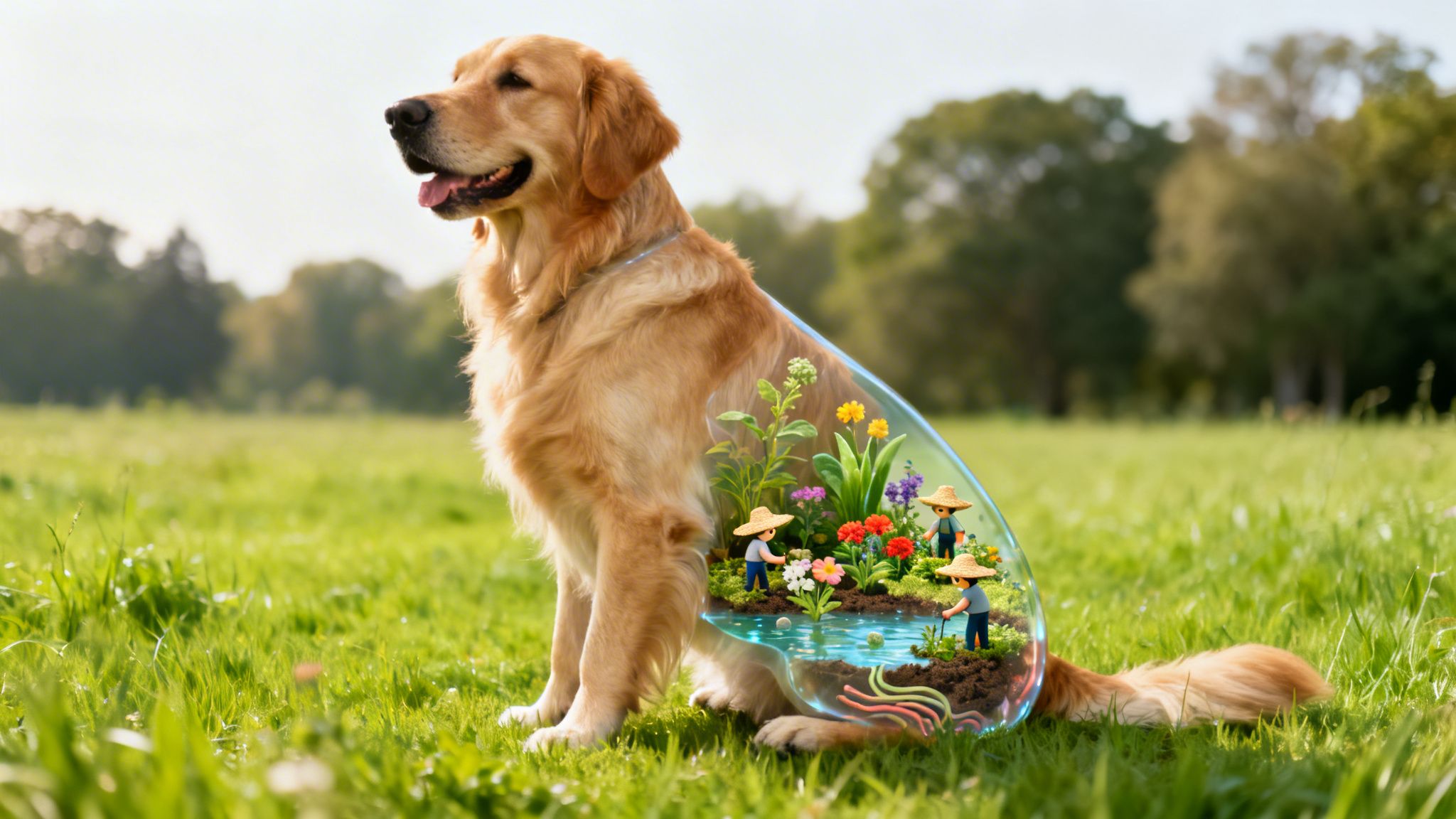
Think of your dog's gut as a garden. To thrive, it needs a healthy balance of good plants and dedicated gardeners to keep the weeds from taking over. Probiotics are those expert gardeners—they’re live, beneficial bacteria that work to keep that delicate internal ecosystem in harmony.
When things like stress, a change in diet, or a round of antibiotics throw that balance off, it’s like weeds (the bad bacteria) start to run wild. That’s when you see problems like gas, diarrhea, and a dog who just isn’t absorbing all the nutrients from their food.
Adding the right probiotics is like reseeding the garden with the good stuff. These tiny microorganisms do more than just help with digestion; they’re essential workers with a few critical jobs on their list.
- Improve Nutrient Absorption: They help break down food so your dog can actually use all the good stuff in their meals.
- Strengthen Immune Defenses: A huge chunk of your dog's immune system—around 70%—is located right in their gut. A healthy microbiome creates a strong barrier against nasty pathogens.
- Produce Essential Vitamins: These good bacteria actually create important nutrients like B vitamins and vitamin K, which contribute to your dog's overall health.
Choosing the Right Strain for Your Dog
Here’s the thing: not all probiotics are the same. Different bacterial strains have different specialties, just like some gardeners are experts with vegetables while others excel with flowers. Some strains are fantastic at calming an upset stomach, while others are better at shoring up the immune system.
Knowing which strain does what is the key to finding the best probiotic for your dog.
To make it a little easier, this flowchart can help you connect your dog's needs to the right kind of support.
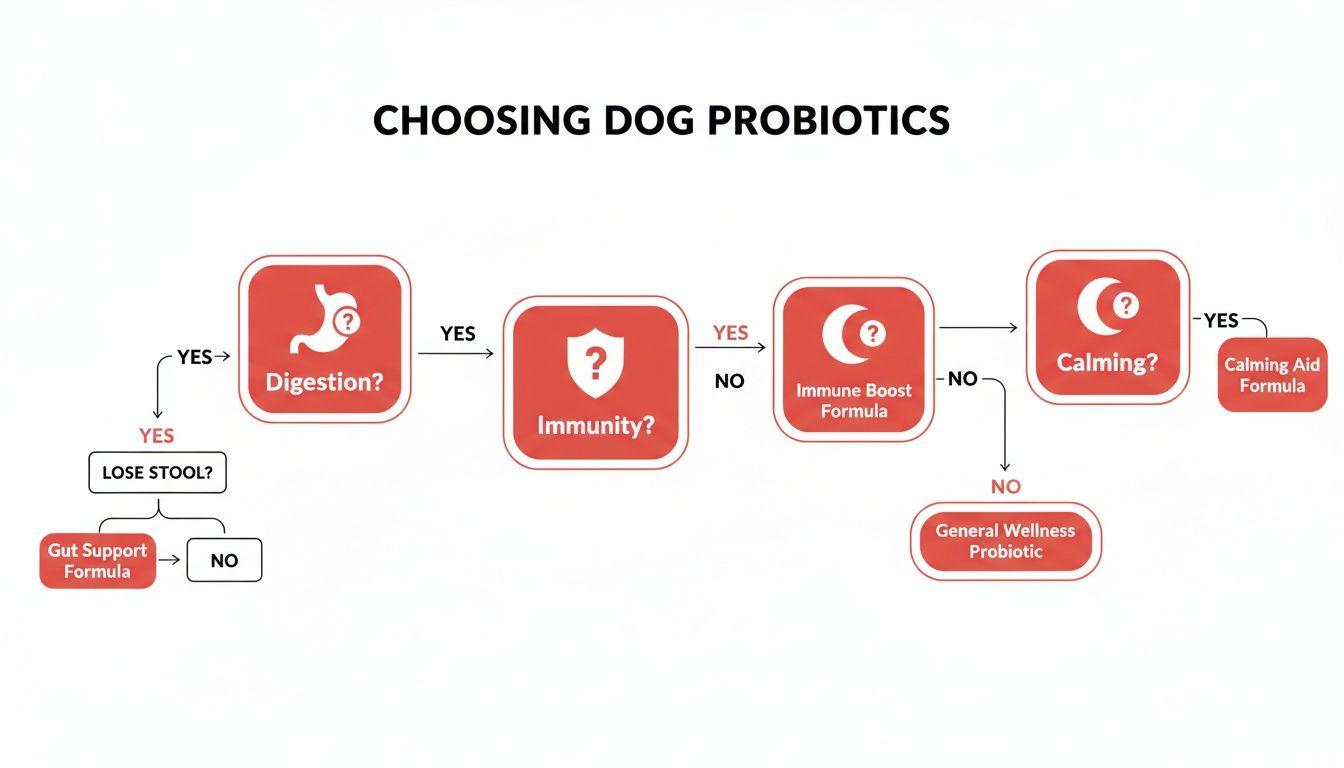
This decision tree helps you narrow down whether you should be looking for digestive, immune, or calming support. To dig a bit deeper, it helps to know which specific strains are the heavy hitters for each job.
Key Probiotic Strains and Their Top Benefits for Dogs
With so many strains out there, it can be confusing to know which ones to look for on a product label. The table below breaks down some of the most well-researched and effective strains, so you can match the right "gardener" to the task at hand.
Seeing these names on an ingredient list is a great sign that the product is formulated with specific goals in mind, not just throwing in any bacteria and calling it a day.
Understanding Your Dog's Gut Microbiome
Before we can find the best probiotics for your dog, we need to talk about where they actually do their work. Think of your dog's digestive tract as a bustling, vibrant city living right inside them. This internal metropolis is what we call the gut microbiome.
This city is home to trillions of microscopic residents, most of which are bacteria. In a healthy gut, the vast majority are "good citizens"—the beneficial bacteria that work around the clock to keep things running smoothly. They're in charge of everything from breaking down food and absorbing nutrients to even producing essential vitamins.
But their job doesn't stop at digestion. These good bacteria are also the city's first responders and its primary defense force. A healthy, balanced gut is directly tied to a strong immune system, helping shield your dog from illnesses. They even play a role in your dog's mood and mental state through a fascinating connection called the gut-brain axis.
When Bad Actors Take Over the City
Unfortunately, it's easy for this internal city to fall into chaos. Things like stress, a poor diet, the natural aging process, or a round of antibiotics can hit the microbiome like a natural disaster, wiping out large populations of the good guys.
This creates a power vacuum, giving "bad actors"—the harmful bacteria—a chance to take over and cause trouble. When these troublemakers start to outnumber the good bacteria, the city's essential services begin to fail.
This imbalance, a condition known as dysbiosis, is often the real culprit behind many common dog health issues. You might start seeing symptoms like:
- Excessive gas and bloating
- Chronic diarrhea or consistently loose stools
- Unexplained changes in weight
- Itchy skin and relentless allergies
- Low energy and general lethargy
Taking a closer look at the principles of dog digestive health shows just how critical this balance is. When your dog's internal city is in turmoil, you'll see the effects all over their body.
Why Gut Health Is Central to Total Wellness
There's a reason you hear so much about gut health these days. It’s a cornerstone of your dog’s overall vitality and longevity. This growing awareness is clear in the market, where dogs now account for a massive 78% of all pet probiotic supplement sales. It's a trend driven by owners who understand the power of proactive care, with 45% of the market zeroing in on digestive health solutions.
Restoring balance to your dog's internal "city" isn't just about fixing a stomach ache. It’s about reinforcing their immune system, sharpening their mental clarity, and supporting their health from the inside out for a longer, happier life.
This is exactly where probiotics step in. Think of them as reinforcements—armies of good citizens sent in to help reclaim the city from the bad actors. By bringing order back to the gut, you’re supporting nearly every aspect of your dog’s well-being and setting them up for a vibrant, resilient, and thriving life.
What Science Says Probiotics Can Do For Your Dog

It’s one thing to think of your dog's gut as a bustling internal city, but the real magic happens when you see what probiotics can do. Think of them as the skilled city planners and construction crews—they don't just move in; they actively get to work improving the entire system. This leads to real, tangible health benefits that you can see and your dog can definitely feel.
The ripple effect of a healthy gut is amazing. It goes way beyond just settling an upset stomach, touching nearly every part of your dog's well-being, from their digestion and immunity right down to their mood and even their skin.
Let's dig into the three biggest ways the right probiotics can make a difference.
Bringing Back Digestive Harmony
The first thing most dog owners notice is a calmer, happier tummy. An unbalanced gut is often the culprit behind those classic signs of digestive distress—erratic poops, smelly gas, and uncomfortable bloating. Probiotics get to the root of the problem by restoring order.
For example, a dog struggling with chronically soft stools might find relief with a strain like Bifidobacterium animalis, which is well-known for improving stool quality and regularity. By adding these good guys, you help push out the troublemakers that are causing all that irritation in the digestive tract.
This restoration process has a few key effects:
- Better Poops: Probiotics help the intestines absorb the right amount of water, which leads to firmer, more predictable bowel movements. In fact, some studies have shown certain probiotics can cut the duration of diarrhea from seven days down to just four.
- Less Gas and Bloating: By helping your dog break down their food more efficiently, probiotics reduce the nasty fermentation that creates excess gas. That means more comfort for your dog and a fresher-smelling home for you.
- More Nutrients from Food: A healthy gut lining is much better at its job of absorbing vitamins and minerals. This ensures your dog is getting the full nutritional punch from every single meal.
Building a Stronger Immune System
Here's a fact that surprises a lot of people: around 70% of your dog's entire immune system is located in their gut. That makes their gut the command center for their body's defense forces. When that command center is well-staffed and running smoothly, your dog is far better prepared to fight off whatever comes their way.
A healthy gut lining works like a secure border wall, carefully screening what gets into the bloodstream. Probiotics act like reinforcements, strengthening this wall and helping "train" the immune cells to tell the difference between real threats and harmless visitors.
A well-supported gut microbiome means a more vigilant and effective immune response. This can translate to fewer infections, quicker recovery times, and even a reduction in allergy symptoms.
Take a dog who's constantly battling itchy skin or ear infections. They might see a huge improvement with a probiotic that includes Lactobacillus strains. Research shows that certain probiotics can help calm an overactive immune system that's causing allergic reactions. In one study, the probiotic strain Lactobacillus sakei was found to significantly reduce the severity of skin allergies in dogs over a two-month period.
Supporting a Calm and Happy Mind
One of the most exciting frontiers in this research is the gut-brain axis—a direct communication highway between your dog's gut and their brain. An unbalanced, chaotic gut can send stress signals straight to the brain, contributing to anxiety, nervousness, and other behavioral issues. On the flip side, a calm gut helps promote a calm mind.
This connection is exactly why some of the best probiotics for dogs now include specific strains chosen for their ability to soothe. For a dog that panics during thunderstorms or can't handle being left alone, probiotics can be a surprisingly effective part of the solution.
Strains like Lactobacillus casei have been linked to better moods and fewer stress-related behaviors. By creating a healthier gut environment, these probiotics help regulate the production of neurotransmitters like serotonin (the "feel-good" chemical), a huge amount of which is actually made in the gut. So, when you're supporting your dog's gut health, you're also directly supporting their mental and emotional resilience, helping them feel more secure and less reactive to the world around them.
How to Choose a High-Quality Probiotic Supplement
Walking down the pet aisle can feel like a pop quiz you didn't study for. Every label promises a healthier, happier dog, but not all probiotics are created equal. To find the right one, you need to learn how to read a label like a pro and see past the flashy marketing.
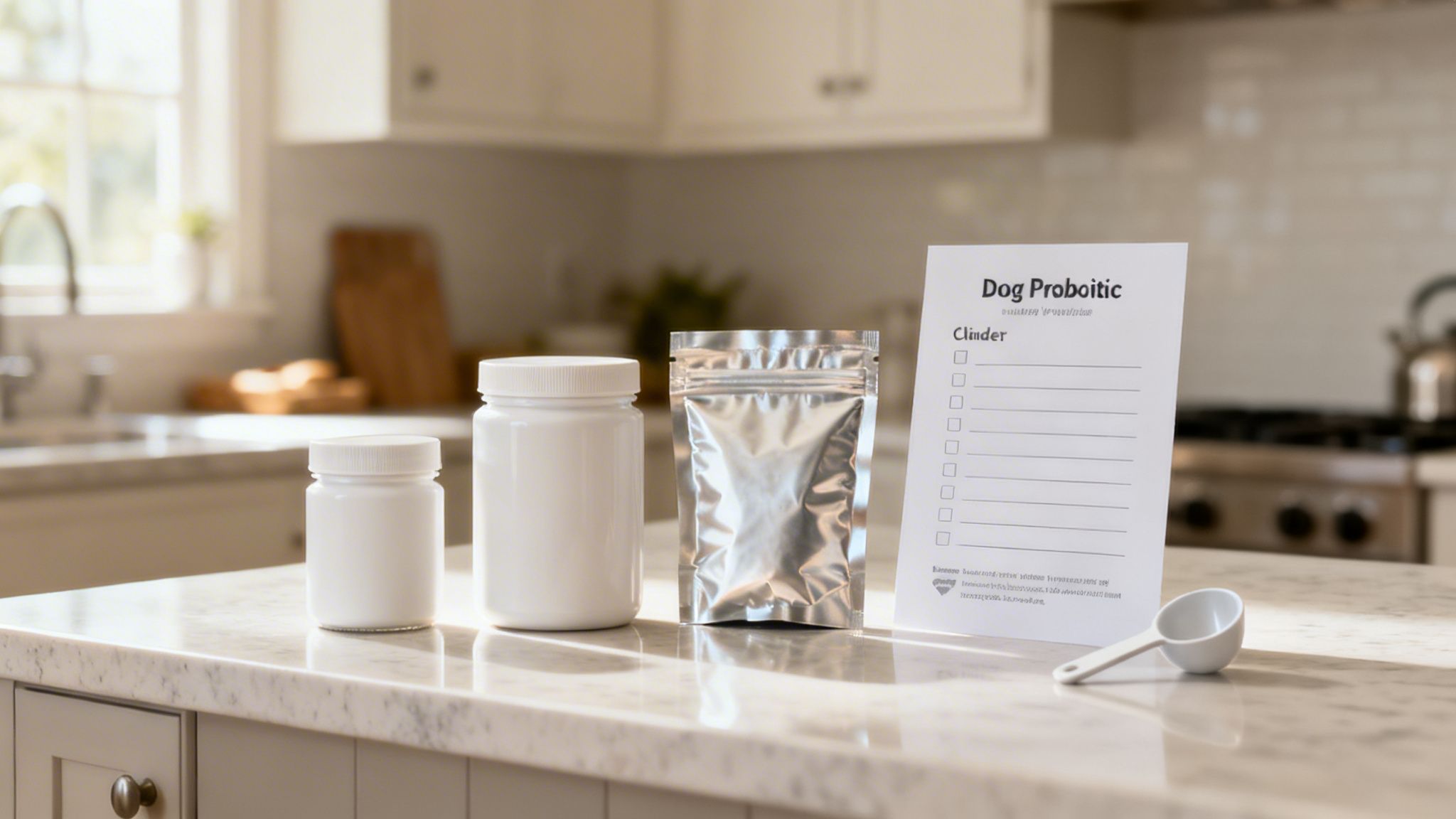
Choosing a good supplement isn't about grabbing the most popular brand off the shelf. It’s about understanding what’s inside the package. A few key details separate a truly effective probiotic from one that’s little more than expensive dust. This checklist will help you make a smart choice for your best friend.
Check the CFU Count
First thing you’ll notice on a probiotic label is a number followed by CFU, which stands for Colony-Forming Units. This is simply a measure of how many live, active bacteria are packed into each serving. Think of it as the product's potency.
It's easy to assume that a bigger number is always better, but that's not the whole story. It's like cooking—tossing in more of one ingredient won’t fix a bad recipe. The quality and specific types of bacteria matter far more than the sheer quantity.
For a healthy dog's daily maintenance, a dose between 1 to 10 billion CFUs is a great place to start. While dogs with specific health issues might need a higher count, don't let a massive CFU number be the only thing that sways you.
Prioritize Multi-Strain Formulas
One type of good bacteria can certainly help, but a team of different specialists can do a whole lot more. Your dog’s gut is an incredibly diverse ecosystem, so the best probiotics usually contain several well-researched strains that work together.
Look for formulas that feature a mix of bacteria from different families, such as:
- Bifidobacterium species: These are fantastic for supporting overall gut balance and keeping things regular.
- Lactobacillus species: Well-known for their role in supporting the immune system and digestive health.
- Enterococcus faecium: A tough, resilient strain that’s been shown to help manage diarrhea and get gut flora back on track.
A formula with a variety of strains provides more complete support, kind of like sending in a full construction crew instead of just a single plumber.
A top-tier probiotic should be formulated with dog-specific strains. While some bacteria benefit both humans and dogs, strains that have been studied specifically in canines are more likely to thrive in their unique digestive system and deliver the results you’re looking for.
Consider the Delivery Format
How you give the probiotic to your dog is a bigger deal than you might think. If it's a pain, you're less likely to stick with it. Probiotics for dogs generally come in three main forms, and each has its ups and downs.
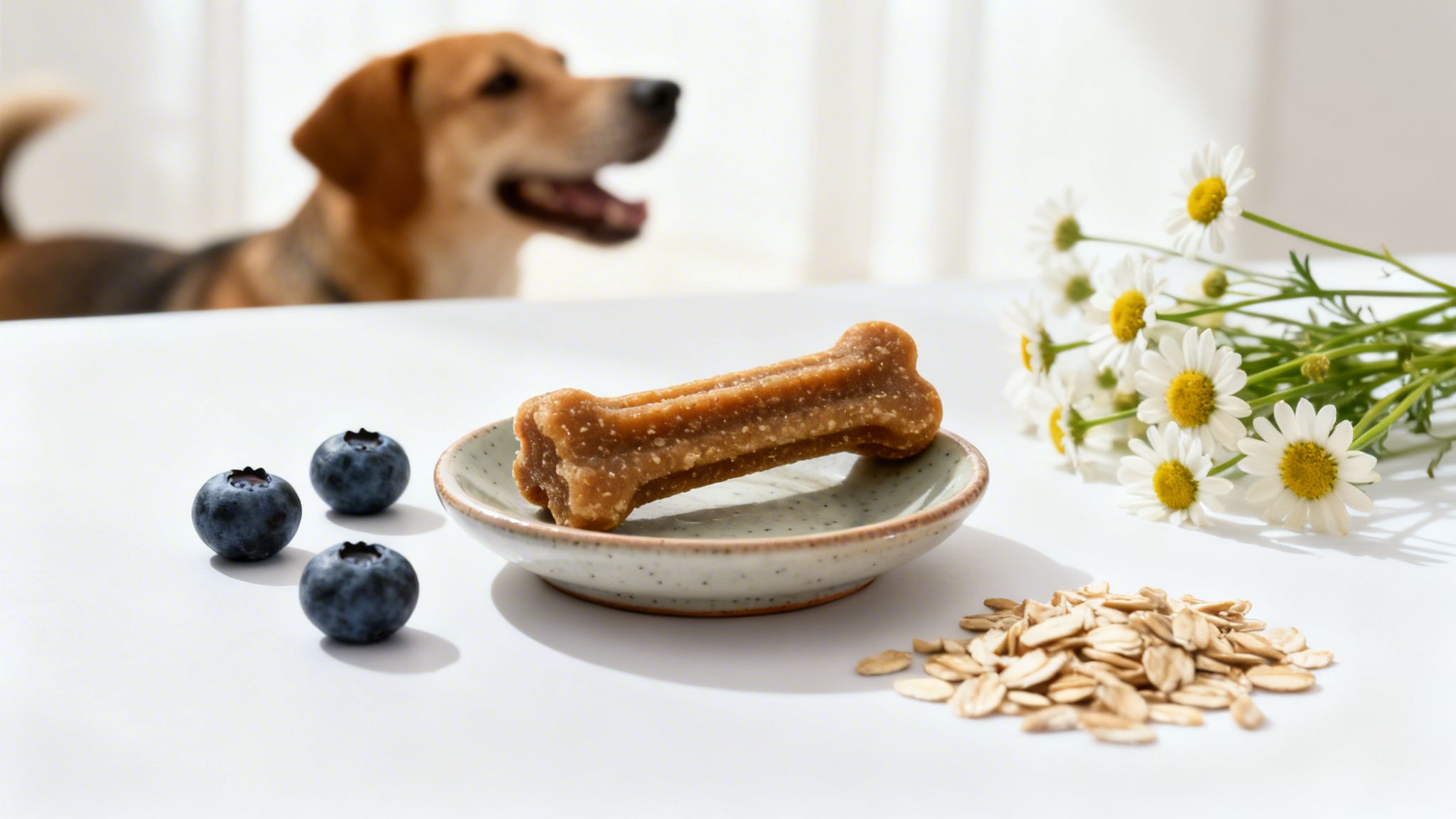
For many of us, a tasty daily chew like FORMA hits that sweet spot of being both effective and incredibly easy. It feels like a reward to your dog, which makes your daily routine simple and something you both look forward to.
Inspect for Quality and Purity
Finally, flip the package over and give the ingredient list a good, hard look. The best supplements for your dog should be made with the same care you’d expect for your own.
Here are a few signs of a premium product:
- Human-Grade Ingredients: This is an indicator of a higher standard of quality and safety.
- Third-Party Testing: This verification ensures the product actually contains what the label claims and is free of nasty contaminants.
- No Harmful Fillers: Steer clear of products with artificial colors, flavors, preservatives, or cheap fillers like corn, wheat, or soy that can cause issues for sensitive dogs.
With this checklist in hand, you can confidently sort through the options and pick a probiotic that will genuinely support your dog’s health from the inside out.
Meet FORMA: A Simpler Path to Your Dog’s Total Wellness
Let's be honest, the world of dog supplements can be a maze. Once you’ve waded through the science and figured out what makes a quality product, you still have to find one that actually works for your life and your dog. It's easy to feel overwhelmed.
But what if you could skip the cabinet full of different bottles and powders? Imagine one tasty, daily chew that handles all the heavy lifting for your dog's health. That's the simple, powerful idea behind an all-in-one superfood supplement.
It’s More Than Just a Probiotic
We created FORMA for pet parents who view their dog as family and want a straightforward routine that gets real results. It isn't just another probiotic on the shelf; it's a daily superfood chew built to support total-body wellness from every angle.
The philosophy is simple: gut health, immunity, and calmness are all deeply connected. When your dog’s gut is balanced, their immune system is stronger. A healthy gut can also lead to a more relaxed, resilient mindset. FORMA’s formula is built on this very principle, combining powerful ingredients to tackle these critical areas in one easy step.
Think of it this way: by blending probiotics with other proven superfoods, FORMA creates a team effort inside your dog's body. It's like having a nutritionist, trainer, and therapist all working together in one delicious daily treat.
A Formula Designed for Modern Dogs
Our dogs today deal with modern problems, from environmental toxins to the everyday stress of a busy home. FORMA’s human-grade, science-backed ingredients were handpicked to help them not just cope, but truly thrive.
- For a Healthy Gut: A carefully selected blend of probiotics and prebiotics gets to work balancing the gut microbiome. This means better digestion and more efficient nutrient absorption from their food.
- For a Strong Immune System: We packed it with antioxidants and other immune-boosting compounds to help fortify your dog's natural defenses against whatever the world throws at them.
- For a Calmer Mind: Key ingredients known to support the gut-brain connection help foster a sense of calm, making it easier for your dog to handle stressful situations.
This isn't about putting a temporary patch on a single problem. It's about nurturing the very foundations of your dog's health to promote a long, vibrant life from the inside out.
Making Your Daily Routine Effortless
The real beauty of FORMA is its simplicity. If you’re a busy person, juggling multiple supplements is a chore. One powder for digestion, a pill for joints, another chew for anxiety—it’s a lot to manage. FORMA declutters your counter and your routine, replacing it all with one enjoyable daily ritual.
This convenience is what makes consistency so easy. When your dog starts seeing their daily chew as a special treat, giving them what they need becomes the best part of their day—and one of the simplest parts of yours.
Of course, total wellness also includes a happy, healthy environment. For many dog owners, creating that space means learning a pet-friendly guide on how to grow grass with dogs to make their yard a true haven. At the end of the day, choosing FORMA is about taking a proactive, streamlined approach to your dog's health, giving them the foundation they need to live a full and happy life by your side.
When to Talk to Your Vet About Probiotics
While probiotics are a fantastic tool for your dog's health, it’s always best to have your veterinarian in your corner. Think of them as your partner in your dog's wellness journey. Even though the best probiotics for dogs are generally very safe, they’re still a supplement, and a quick chat with your vet ensures you're making the smartest choice.
This conversation becomes absolutely essential if your dog has any specific health challenges. For dogs with pre-existing conditions, a compromised immune system, or those on other medications, your vet's input isn't just helpful—it's crucial. They can spot potential interactions and guide you toward a product that truly supports your dog's unique needs.
Making the Most of Your Vet Visit
To make that conversation as productive as possible, go in prepared. Having a few specific questions ready shows you’ve done your homework and helps your vet give you advice that's tailored directly to your pup. They know your dog's full health history, which is something no website can ever replicate.
Your vet is your greatest resource. Collaborating with them ensures that any supplement you introduce, including probiotics, aligns perfectly with your dog's overall health plan and specific needs.
Here are a few simple but powerful questions to get the ball rolling:
- Which specific probiotic strains would you recommend for my dog’s issues? A dog with itchy skin might need different gut support than one with a chronically rumbly tummy.
- What’s the right dosage for my dog's size and breed? Getting the dose right is the key to seeing real benefits, and it’s not always one-size-fits-all.
- Are there any brands you particularly trust? Vets often have firsthand experience with products that consistently deliver great results and meet high safety standards.
Taking this simple step turns supplement shopping from a guessing game into a confident decision. It’s all about being a proactive, responsible pet parent and finding the absolute best probiotics for your dog’s long-term health and happiness.
Your Top Questions About Dog Probiotics, Answered
Alright, so you’ve got the basics down, but you probably still have a few practical questions swirling around. That’s completely normal! When it comes to our dogs, we all want to get things just right.
Let's walk through some of the most common questions we hear from dog owners just like you, so you can feel confident you’re making the best move for your furry friend.
Can I Just Give My Dog My Probiotics?
It's a common question, but the answer is a firm "no." While it might seem convenient, human probiotics just aren't designed for a dog's gut. Our digestive systems are worlds apart, from the acid levels in our stomachs to the specific bacteria that call our intestines home.
Giving a dog a human probiotic is a bit like trying to use the wrong kind of fuel in a car—it’s not going to run properly. You need canine-specific strains that are proven to survive a dog's unique digestive journey and actually get to work where they're needed most.
How Long Until I See a Difference?
This is where a little patience comes in. The time it takes for probiotics to work really depends on why you're using them and your dog's current gut health.
- Quick Relief: For a sudden tummy upset, like a bout of diarrhea, you could see firmer stools in just a few days.
- Long-Term Gains: If you’re tackling chronic issues like itchy skin, a weak immune system, or even anxiety, you'll want to give it at least 4 to 6 weeks of daily use. It takes time to gently and effectively rebalance the entire gut ecosystem.
Should I Worry About Side Effects?
Probiotics are incredibly safe for most dogs, but it's not unheard of to see some minor adjustments at the very beginning. A little bit of extra gas or mild bloating can happen as your dog's gut gets used to the new tenants.
Think of it as a "settling in" period. This mild reaction is often a good sign, showing that the beneficial bacteria are colonizing and starting to shift the environment for the better.
A great way to ease them into it is by starting with half the recommended dose for the first few days. This simple trick lets their system adapt smoothly. If the side effects stick around for more than a week, a quick call to your vet is always a good idea.
Do I Have to Refrigerate Dog Probiotics?
Not anymore! While older formulas often required refrigeration to keep the live cultures, well, alive, modern processing has changed the game.
Many high-quality probiotics now use advanced techniques like freeze-drying to keep the bacteria dormant but potent until they're consumed. This makes powders and chews incredibly convenient and shelf-stable. Our superfood chew, FORMA, is a perfect example—it’s designed to be effective without needing a spot in the fridge. But as a rule of thumb, always check the product label for storage instructions just to be safe.

Karolis is the Founder of FORMA, a pet wellness brand focused on longevity and daily nutrition for dogs. Writes about supplements, canine health, and helping pets live longer, healthier lives
Join thousands of pet parents getting science-backed health insights and natural care advice