Apple Cider Vinegar for Dogs: Safe Uses, Benefits, and Tips
Apple cider vinegar for dogs: safety, skin and flea benefits, dosage guidance, and vet-approved alternatives. (apple cider vinegar for dogs)
Apple cider vinegar is one of those home remedies you hear about for just about everything, from itchy skin to an upset stomach. But when it comes to our dogs, it's a topic that needs a bit more care and a healthy dose of reality.
Lots of dog owners are huge fans, sharing stories about how it's helped their pets. On the other hand, the hard scientific proof in veterinary medicine just isn't there yet. The golden rule? If you're going to try it, always dilute it heavily with water and have a quick chat with your vet first. This goes for both adding it to their food and putting it on their skin.
The Truth About Apple Cider Vinegar for Dogs

You’ve probably heard apple cider vinegar (ACV) hailed as a miracle cure for dogs. Is it really a powerful natural supplement, or is it just an overhyped and risky folk remedy? The truth, as it often does, is somewhere in the middle.
Think of it this way: ACV is like a popular herbal tea for humans. Many people feel it helps with minor wellness goals, but you wouldn’t expect a doctor to prescribe it for a serious medical condition. That's the same lens we should use for our dogs.
Of course, using vinegar for health isn't a new idea. It has a long and storied history, with some of the earliest records showing Roman soldiers drinking it mixed with water to stay healthy. You can dig into some of the fascinating historical uses of vinegar if you're curious.
But here’s the key takeaway: despite centuries of use, modern, peer-reviewed studies on ACV specifically for dogs are practically nonexistent. This leaves us relying mostly on anecdotal stories rather than solid scientific fact.
What This Guide Covers
My goal here is to cut through all the noise and give you a balanced, practical look at using apple cider vinegar for dogs. We'll explore what's real and what's just hype so you can make a safe and informed decision for your best friend.
Here’s a quick rundown of what’s ahead:
- Potential Benefits: We’ll look at the big claims—does it actually help with skin, digestion, or fleas?
- Safety and Dosing: You'll learn the right way to dilute and apply it to prevent causing more harm than good.
- The Real Risks: We'll be honest about the potential dangers, like stomach upset and skin irritation.
- When to Skip It: I'll point out the red flags and situations where you absolutely need to call your vet instead.
By the end, you'll have clear, actionable information. Understanding both the possible upsides and the very real limitations is the key to deciding if ACV has a place in your dog's wellness plan.
What's Actually in That Bottle of ACV?
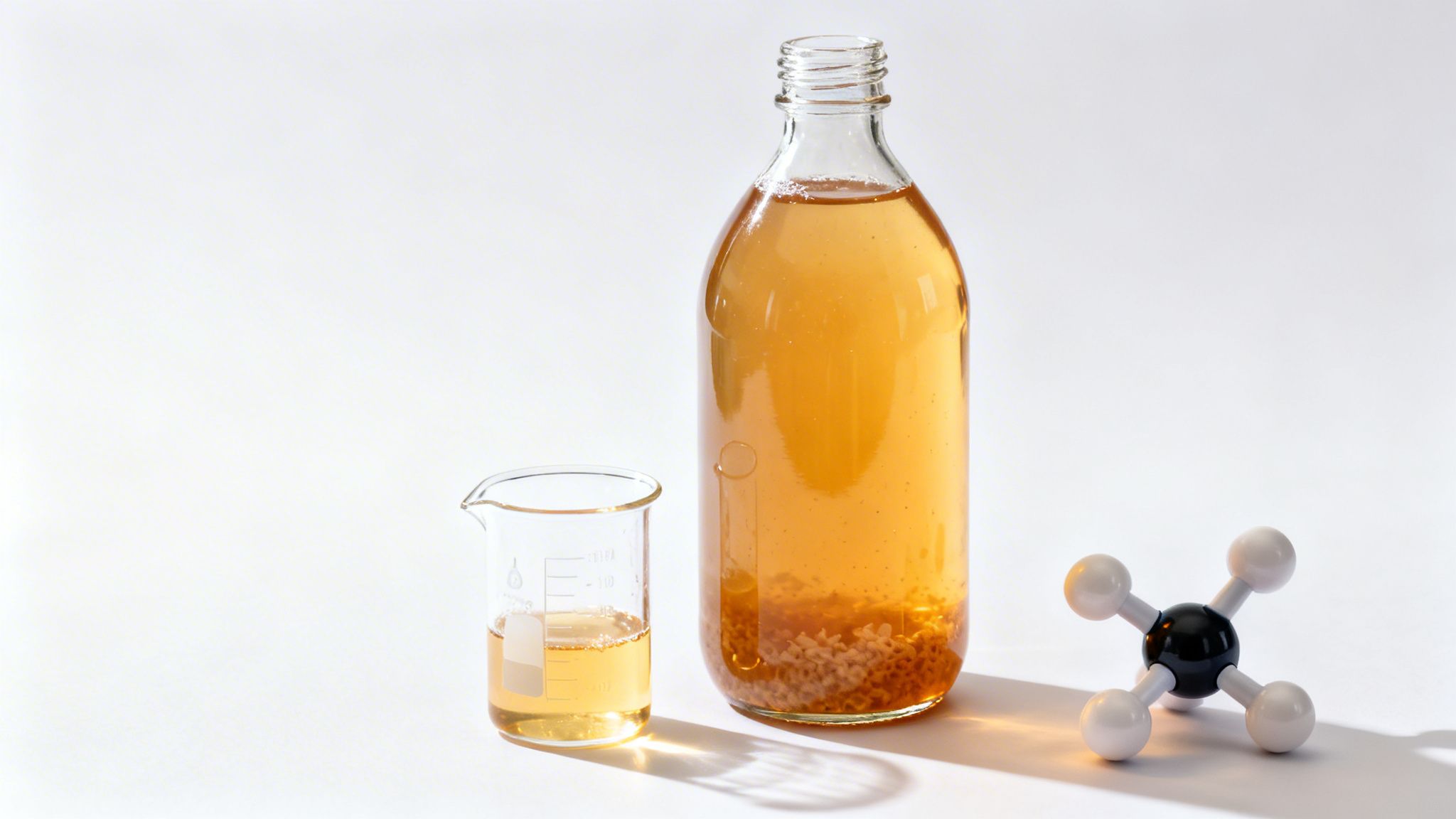
To really get why people swear by apple cider vinegar for dogs, we have to look past the hype and understand what’s going on chemically. It all starts with a simple, two-step fermentation process. First, yeast eats the sugar in crushed apples and turns it into alcohol. Next, a specific type of bacteria comes along and converts that alcohol into acetic acid.
That acetic acid is the key player here. It's what gives ACV its sharp, sour taste and potent smell, and it's behind most of the health claims you hear about.
If you grab a bottle of raw, unfiltered ACV, you'll see a cloudy substance floating around called "the mother." This is a mix of proteins, enzymes, and good bacteria. While it’s often praised, the vast majority of scientific research has zeroed in on the acetic acid itself.
The Power of Acetic Acid
When you hear about people using ACV on their dog's skin, it's almost always because of acetic acid's antimicrobial and antibacterial properties. In a lab, vinegar has proven it can slow down or stop the growth of certain nasty pathogens. This is the science behind using it in a DIY skin rinse or even as a household cleaner.
Think of it as a natural disinfectant. The acidity makes it a tough place for some kinds of bacteria and yeast to thrive, whether that’s on your countertop or, theoretically, on your dog’s coat.
But here’s the big catch: what happens in a petri dish doesn't always translate to our pets. There's a real lack of solid research confirming that it’s both safe and effective when used directly on dogs for issues like itchy skin or warding off fleas.
"The composition of apple cider vinegar includes approximately 5 percent acetic acid plus malic acid, with traces of potassium... Research published in peer-reviewed journals confirms that vinegar possesses natural antiseptic and antibacterial properties... Despite these laboratory findings... veterinary nutritionists emphasize that current peer-reviewed literature offers no compelling evidence supporting routine feeding or topical application of ACV to dogs."
This expert take gets right to the heart of the issue. A finding in a lab is one thing, but it’s a giant leap to assume it’s a safe and effective treatment for your dog.
What About the Internal Health Claims?
Most of the buzz around feeding ACV to dogs is borrowed directly from human health studies. In people, some research has pointed to potential benefits for managing blood sugar and weight. The idea is that acetic acid might slow down digestion, which helps prevent sharp spikes in blood sugar.
This led people to wonder if ACV could do the same for dogs. Some believe it helps balance a dog’s internal pH, fostering a healthier gut. And a happy gut is the cornerstone of good health, impacting everything from their immune system to how well they absorb nutrients.
For a great breakdown of how a balanced gut works, check out this guide to natural probiotics for optimal health. It really explains the role of those beneficial bacteria in building a strong digestive and immune system.
Still, it’s crucial to remember that none of this has been proven in studies on dogs. A dog’s digestive system is not the same as ours, so we can't just assume what works for us will work for them. When it comes to ACV, the science just hasn't caught up to the stories you hear online, leaving a lot of question marks for responsible dog owners.
How People Actually Use ACV for Their Dogs
So, how are dog owners using apple cider vinegar in the real world? It's important to know that most of these popular methods come from shared experiences within the pet community, not from official veterinary playbooks. Think of it as folk wisdom for pets—always run it by your vet before trying something new.
Generally, ACV use falls into two camps: putting it on your dog (topical) or putting it in your dog (internal). Each method has a different goal and requires its own set of rules to keep your pup safe and happy.
Mixing Up a Topical ACV Spray for Skin and Coat
One of the most common things you'll see people do with ACV is create a simple skin and coat rinse. They often reach for it to soothe itchy spots, calm down minor skin flare-ups, or try to make their dog a less appealing landing spot for fleas. The idea is that the vinegar's acidity creates an environment where yeast and bacteria can't thrive.
Whipping up a batch is easy. The number one rule? Dilute, dilute, dilute. Undiluted ACV is way too strong for a dog's skin and will cause more harm than good.
A Simple DIY ACV Skin Rinse
- Get the Right Stuff: Look for raw, unfiltered apple cider vinegar that still has "the mother" floating around in it. That cloudy stuff is where all the beneficial enzymes and bacteria are thought to reside.
- Mix Your Potion: In a clean spray bottle, combine one part ACV with one part purified water. A 50/50 ratio is the classic starting point.
- Give It a Good Shake: Before you spray, shake the bottle well. This gets "the mother" mixed in so every spritz has the good stuff.
To use it, just lightly mist your dog’s coat. You can focus on itchy areas, but be incredibly careful to avoid their eyes, nose, or any open sores or hot spots. Yes, it will smell like vinegar at first, but that scent usually disappears once the coat dries. For more precise application, you can also dab it on with a cotton ball.
A Critical Word of Caution: Never, ever apply ACV—even if it's diluted—to broken skin, cuts, or raw spots. The acidity will sting like crazy and can actually interfere with healing. It’s always smart to do a little patch test on a healthy patch of skin first to make sure your dog doesn't have a reaction.
Adding ACV to Food for Digestive Support
The other popular route is adding a tiny, diluted amount of ACV to a dog’s food or water bowl. The thinking here is that it might help balance the digestive system's pH, give the gut a little boost, and maybe even tackle bad breath from the inside out. For instance, some believe the malic and acetic acids in ACV help knock out odor-causing bacteria.
But when it comes to feeding your dog ACV, you have to be extremely careful. We're talking very small amounts, introduced slowly.
Common Dosing Wisdom
You’ll see a lot of different suggestions online. A popular one is a 50/50 dilution for topical sprays. For feeding, you might see recommendations of 1-2 teaspoons for dogs up to 34 pounds and 1 tablespoon for bigger dogs from 35-100 pounds. It's crucial to understand these are not official guidelines; you can learn more about these common ACV practices for dogs but should always treat them as anecdotal.
If you decide to add ACV to your dog's diet, stick to these best practices:
- Always Dilute It: Never pour straight ACV into their bowl. Mix the correct dose thoroughly into their food or a full bowl of water.
- Offer a Choice: Make sure a separate bowl of plain, fresh water is always available. Some dogs hate the taste of ACV and might stop drinking if it's their only option, which can lead to dehydration.
- Start Low and Go Slow: Begin with just a quarter of the suggested dose to see how your dog’s stomach handles it. If everything seems fine, you can gradually work your way up over a week.
These methods show how many owners are already using ACV. But just remember, what works wonders for your neighbor’s dog might not be right for yours. Nothing beats careful observation and a quick chat with your veterinarian.
Knowing the Risks and When to Avoid ACV
It’s easy to get excited by all the positive stories about apple cider vinegar, but we need to talk about the other side of the coin. Your dog's safety always comes first, and understanding the potential risks is just as important as knowing the benefits. The main issue with ACV? Its acidity.
If you don't dilute it enough, that acid can really upset your dog’s stomach, leading to vomiting or diarrhea. It’s like us trying to drink straight lemon juice—it’s just too harsh. The same goes for our dogs.
Even when you do dilute it properly, long-term use can still pose a problem. Over time, the acidity can slowly wear away at your dog's tooth enamel, which might cause dental issues down the road. This is exactly why heavy dilution and using it in moderation are so critical.
The Number One Rule for Skin Applications
When you're using an ACV spray or rinse on your dog's skin, there's one rule you absolutely cannot break: never apply it to open wounds, sores, or raw hot spots.
Imagine putting vinegar on a cut—it would sting like crazy. It’s the same for your dog. Applying it to broken skin will cause a lot of pain and can actually get in the way of the healing process, making everything worse.
Before you go all-in with a full-body spray, always do a patch test first. Just apply a little bit of the diluted ACV to a small, healthy area of skin and wait 24 hours. This simple check can save your dog from a world of itchy, widespread irritation.
If you're thinking through the different ways to use ACV, this chart can help you map out your options safely.
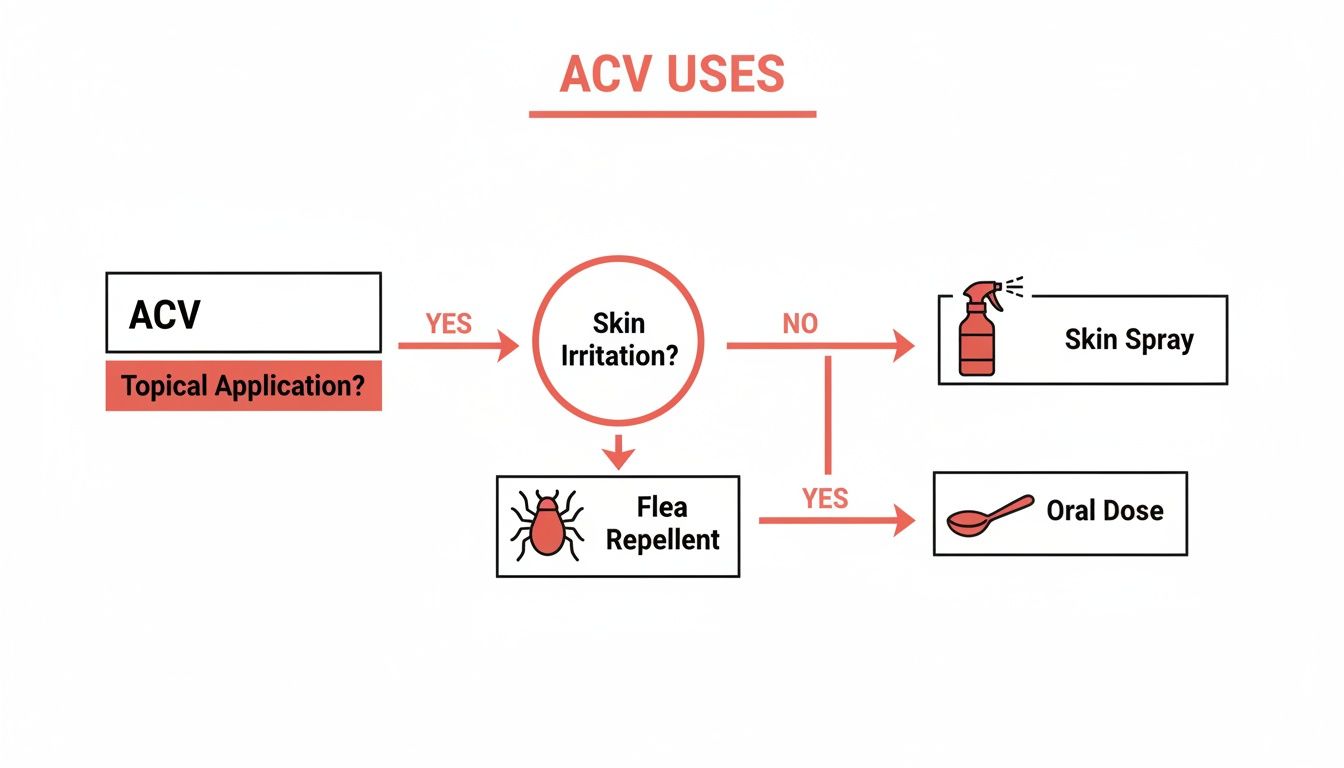
This visual guide breaks down the common uses and helps you match the right method to your goal while keeping safety front and center.
When to Completely Avoid ACV
The reality is, apple cider vinegar isn't right for every dog. If your dog has certain health issues, it's best to steer clear of ACV altogether.
- Kidney Disease: A dog with weak kidneys can have a tough time processing the extra acid from ACV, which could make their condition worse.
- Chronic Digestive Issues: If your pup already struggles with a sensitive stomach or gastritis, adding an acid like ACV to the mix can easily trigger a flare-up.
- Bladder Stones: Certain types of bladder stones are sensitive to changes in urine pH, so using ACV could be a risky move.
You also need to be on high alert for any signs that your dog isn't handling ACV well. Knowing what to look for means you can stop immediately before a small problem turns into a big one.
This checklist outlines the key red flags to watch for and when you should stop using ACV right away.
ACV Safety Checklist: When to Stop Use
If you spot any of these signs, the best thing to do is hit the brakes and give your veterinarian a call. When it comes to trying something new like ACV, the "start low and go slow" approach is always the safest bet. Your vet is, and always will be, your best partner in keeping your dog healthy and safe.
Vet-Approved Ways to Boost Your Dog's Health
While apple cider vinegar for dogs is a popular topic in many pet circles, it’s more of a home remedy than a cornerstone of canine wellness. If you really want to support your dog’s long-term health, it’s best to lean on proven strategies that get right to the heart of what you’re trying to achieve.
When it comes to improving gut health and strengthening the immune system, the science is pretty clear. The real heavy hitters are prebiotics, probiotics, and postbiotics. This trio works together to build and maintain a healthy gut microbiome, which is basically the command center for your dog’s overall well-being.
Think of your dog's gut as a garden. ACV might slightly tweak the soil's pH now and then, but it doesn't plant any seeds or feed the flowers already there. The "biotics," on the other hand, are the gardeners, the seeds, and the nutrient-rich fertilizer all rolled into one powerful team.
The Gut-Immune Connection Explained
It might be surprising, but your dog's immune system isn't just floating around in their body. Nearly 90% of it is located right in their gut. This means a healthy digestive tract is your dog's first and best line of defense against getting sick.
This gut environment is home to trillions of microbes, collectively known as the gut microbiome. A balanced microbiome is critical for everything from absorbing nutrients from food to influencing mood. When this delicate ecosystem gets knocked off balance, it can open the door to digestive upset, skin issues, allergies, and a weaker immune system.
This is exactly where the "biotics" step in, offering a much more direct and reliable approach than a splash of ACV. They provide a structured, evidence-based way to fuel a thriving gut.
Understanding the "Biotic" Power Trio
So, what exactly are these "biotics"? Let's break down how this team works together to create a powerful synergy for your dog's health.
Prebiotics: Think of these as the fertilizer. Prebiotics are special plant fibers that feed the good bacteria already living in your dog’s gut, helping them grow strong and multiply.
Probiotics: These are the seeds of the garden—the actual live, beneficial bacteria. They help maintain a healthy balance by crowding out the bad guys, supporting digestion, and bolstering the immune system.
Postbiotics: This is the harvest. Postbiotics are the beneficial compounds created by probiotics as they ferment prebiotic fiber. This "harvest" includes essential nutrients like vitamins and short-chain fatty acids that strengthen the gut wall and help calm inflammation.
By providing all three, you create a complete, self-sustaining system for gut health. The prebiotics feed the probiotics, which then produce the incredibly valuable postbiotics. It’s a cycle that ensures the gut isn't just surviving, but truly thriving.
A More Reliable Path to Wellness
Instead of guessing with ACV, which comes with its own set of risks, a professionally formulated supplement offers a much safer and more direct route to supporting your dog. This is where a product like FORMA's daily superfood chew comes into play.
These chews are designed by professionals to deliver a precise blend of these key ingredients in one easy step. It takes all the guesswork out of the equation and ensures your dog gets a consistent, effective dose every single day.
Benefits of a Science-Backed Supplement:
- Targeted Support: It delivers the right ingredients to directly address gut health and immunity.
- Safety and Consistency: Formulated by experts, it avoids the risks of improper dilution or adverse reactions common with DIY remedies like ACV.
- Human-Grade Ingredients: You can be sure your dog is only getting high-quality, safe components.
- Comprehensive Formula: These supplements often include other beneficial ingredients, like antioxidants or calming aids, for a more holistic approach to health.
At the end of the day, while the idea of a simple kitchen fix is appealing, your dog's health deserves a strategy you can count on. For foundational goals like supporting their gut and building a strong immune system, turning to science-backed solutions like FORMA provides the peace of mind and real results that a bottle of apple cider vinegar simply can't guarantee.
Making an Informed Choice About ACV
So, let's pull all of this together. When it comes to using apple cider vinegar for dogs, it's pretty clear there's a lot to consider. ACV definitely has its fans in the pet community, especially for things like skin rinses or as a gentle flea repellent.
But we have to be honest about what it is: a folk remedy. While it's popular, it just doesn't have the hard scientific evidence to back it up in veterinary medicine, and there are real risks if you don't use it correctly. My goal here is to give you the confidence to make a smart, safe choice for your best friend.
The bottom line is simple. If you do decide to give ACV a try, you have to put safety first.
Your ACV Safety Checklist
Before you even think about grabbing that bottle, memorize these golden rules. They’re non-negotiable.
- Always Dilute: Never, ever use ACV straight. For a skin spray, a 50/50 mix with water is a good starting point. For their water bowl, we’re talking a tiny splash in a full bowl.
- Never on Broken Skin: Just imagine putting acid on an open cut. Applying ACV to raw hot spots, wounds, or sores will cause a lot of pain and can make healing much slower.
- Start Small: Begin with the smallest possible amount, whether you’re adding it to food or spraying it on their coat. Watch how your dog reacts before you even consider using more.
- Consult Your Veterinarian: This is the most important step of all. A quick call to your vet can help you avoid making a big mistake, especially if your dog has an underlying health issue you don't know about.
Think of apple cider vinegar as a minor tool in your pet care toolkit, not a cornerstone of their health regimen. It should never take the place of veterinary care or fundamental wellness support.
When it comes to foundational health goals like improving gut health or building a strong immune system, you're much better off investing in a solution that's been professionally formulated and proven to work. A daily superfood chew like FORMA, for example, delivers targeted, science-backed ingredients made specifically for a dog's biology.
And when you're looking at ACV products for yourself, it's good to know there are options like convenient Apple Cider Vinegar capsules. But for your dog’s long-term health, always choose the path that offers reliability and peace of mind.
Common Questions About ACV for Dogs
If you're thinking about trying apple cider vinegar for your dog, you probably have a few questions. That’s a good thing. When it comes to home remedies, getting clear, honest answers is the first step to keeping your pet safe. Let's tackle some of the most common questions I hear from dog owners.
Can I Give My Dog Apple Cider Vinegar Every Day?
This is a really popular question, but the short answer is that daily use isn't a great idea. While a tiny, heavily diluted amount might be okay for some dogs, giving it every day long-term could do more harm than good.
The biggest issue is the acidity. Over time, that acid can slowly wear away at your dog's tooth enamel, leading to sensitivity and other dental problems. It can also mess with the natural pH balance in their gut, which is a delicate system you don't want to disrupt without a good reason.
My rule of thumb? Think of ACV as a temporary tool for a specific issue, not a daily vitamin. Using it for a short period under your vet's supervision is a much safer bet than making it a permanent fixture in their food bowl.
What Kind of Apple Cider Vinegar Is Best for Dogs?
Not all ACV is created equal, and the kind you buy really matters. If you're going to use it, you absolutely want to get raw, unfiltered, organic apple cider vinegar.
The key phrase to look for on the label is "with the mother." This refers to those cloudy, stringy bits you see floating inside, which are a powerhouse of beneficial bacteria, proteins, and enzymes. This is where most of the supposed health benefits are found.
- Raw and Unfiltered: This means it hasn't been pasteurized (heat-treated), a process that kills off "the mother" and its delicate enzymes.
- Organic: Choosing organic means the apples were grown without a bunch of synthetic pesticides and fertilizers, which is always a better choice for your dog.
That crystal-clear ACV you see on most grocery store shelves has been filtered and processed, stripping it of "the mother" and all the good stuff. It’s little more than sour, apple-flavored liquid and won't provide the same potential benefits.
How Long Does It Take for ACV to Work on Fleas?
Let's be very clear about this: apple cider vinegar is not a flea killer. It won’t solve an active infestation. It’s best thought of as a mild repellent—something that makes your dog’s coat a less attractive place for fleas to hang out.
Using a diluted ACV rinse after a bath might help deter new fleas from jumping aboard, but it does absolutely nothing to kill the fleas, eggs, or larvae already there. If you're dealing with a real flea problem, a vet-recommended flea treatment is the only effective solution. Trying to fix an infestation with just an ACV spray will only allow the problem to get much, much worse.
Can ACV Help with My Dog's Ear Infections?
No, you should never, ever put apple cider vinegar in your dog's ears. If you suspect an ear infection, the inside of the ear is likely inflamed, raw, and incredibly sensitive. Pouring something as acidic as ACV into that environment would be extremely painful for your dog and could make the inflammation much worse.
Even more dangerous is the risk of a ruptured eardrum, which is impossible to know without a vet's exam. Putting any liquid into an ear with a ruptured drum can cause permanent hearing damage. If you see signs of an ear infection—like head shaking, scratching at the ears, or a bad smell—the only safe move is to call your veterinarian.

Karolis is the Founder of FORMA, a pet wellness brand focused on longevity and daily nutrition for dogs. Writes about supplements, canine health, and helping pets live longer, healthier lives
Join thousands of pet parents getting science-backed health insights and natural care advice