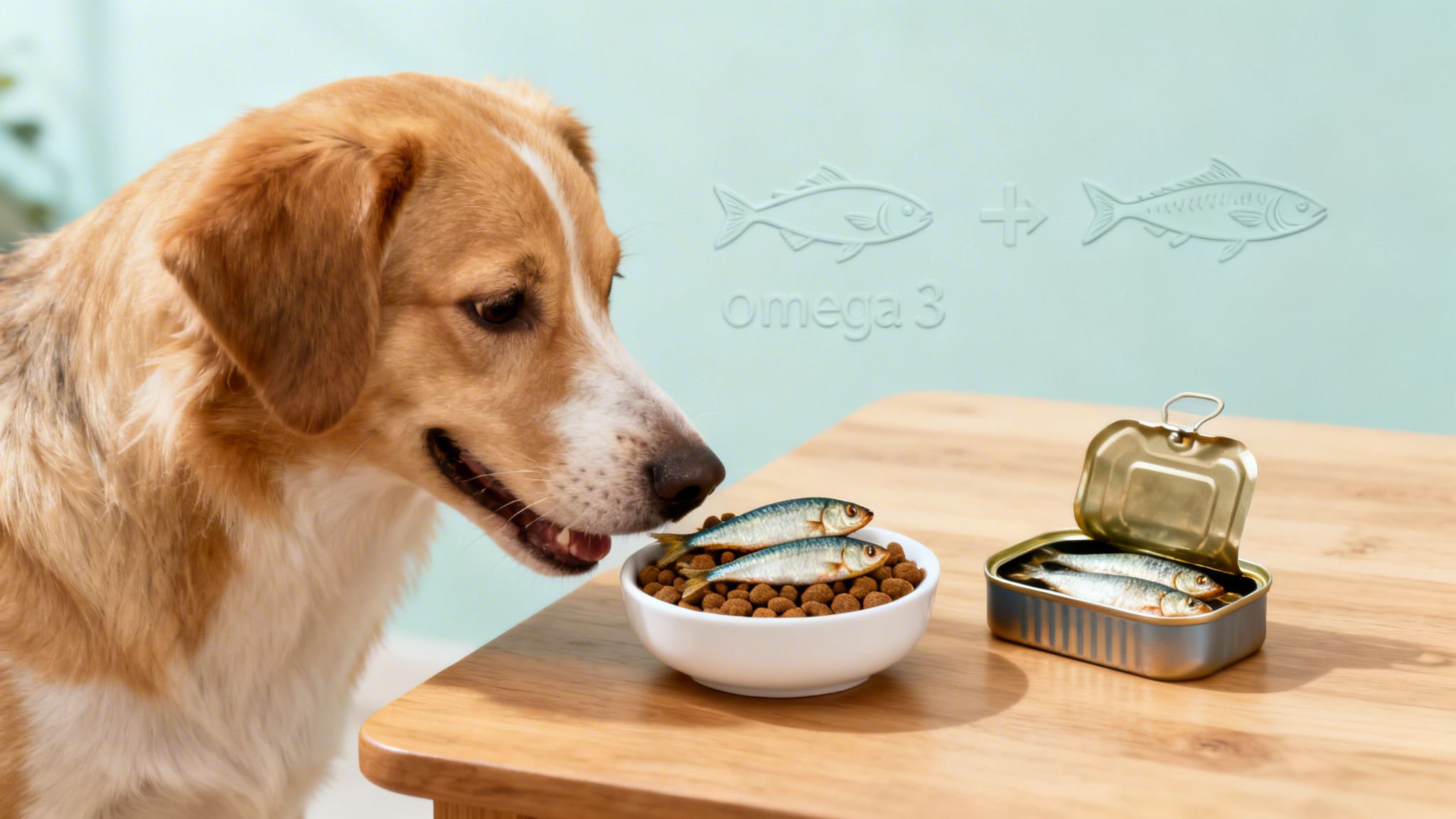
Can Dogs Eat Chia Seeds A Guide to This Canine Superfood
Can dogs eat chia seeds? Discover the health benefits, safe serving sizes, and potential risks in this complete guide for pet owners.
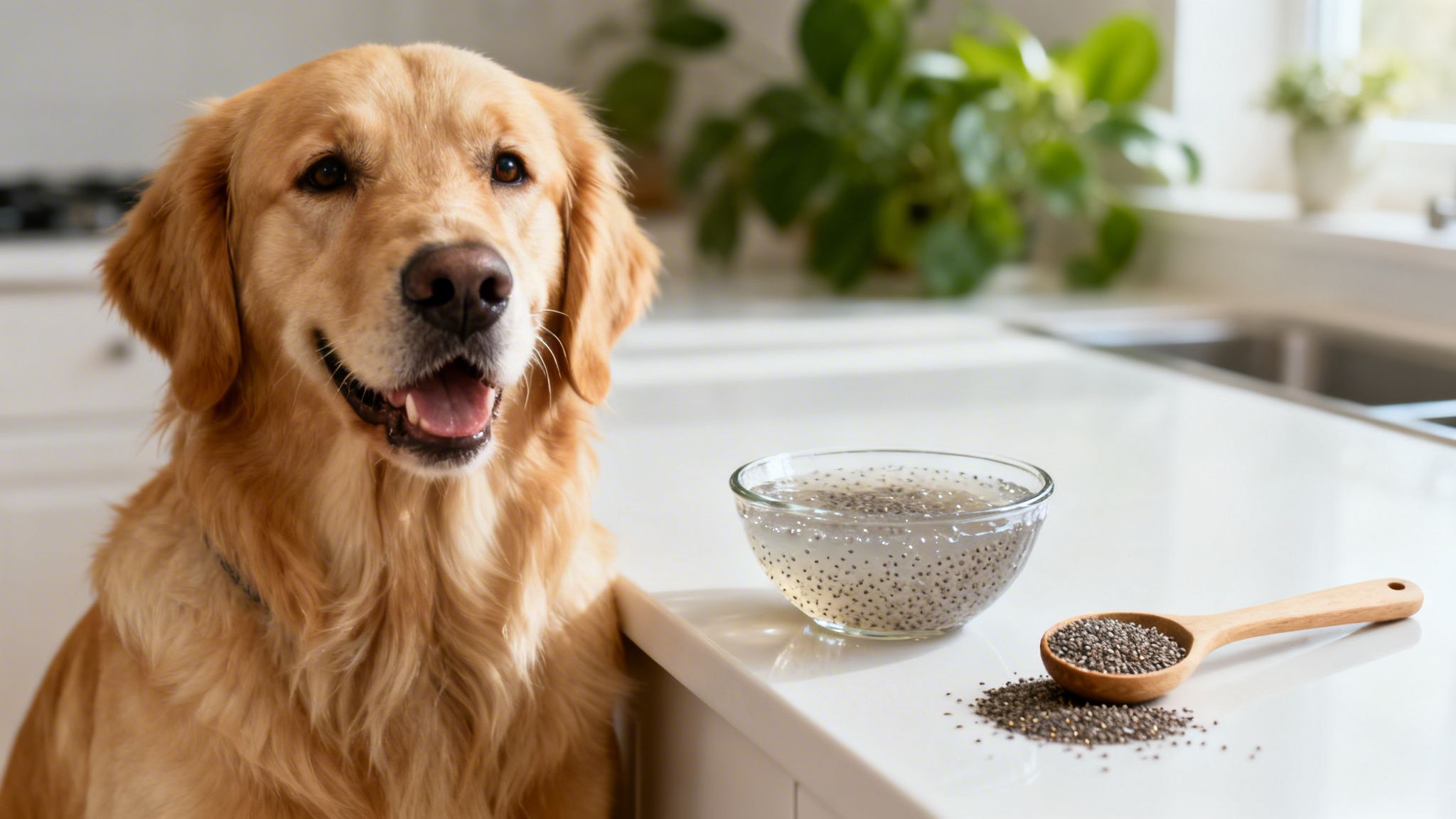
So, you're looking at that little bag of chia seeds in your pantry and wondering, "Can my dog eat these?" The short answer is a resounding yes, dogs can absolutely eat chia seeds.
When prepared the right way, these tiny seeds can be a fantastic nutritional boost for your four-legged friend. Think of them less as a treat and more as a powerful supplement, packed with fiber, omega-3 fatty acids, and important minerals that can support your dog's overall health from the inside out.
The Quick Answer: Yes, Dogs Can Eat Chia Seeds
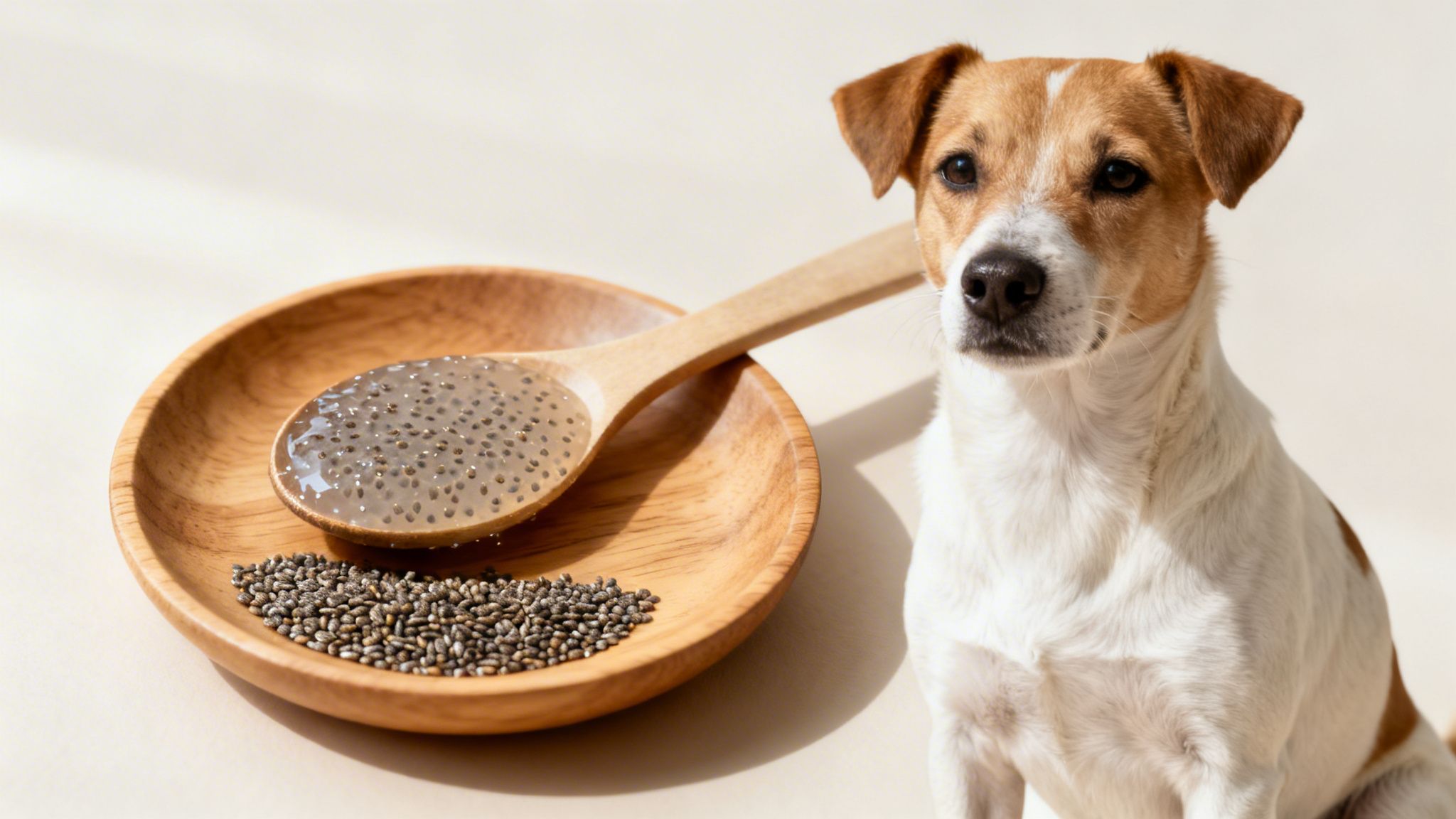
If you're a busy pet parent just looking for the bottom line, feel confident adding a sprinkle of chia to your dog's food bowl. These little seeds are nutritional powerhouses. The key, which we’ll dive into later, is proper preparation. When served correctly, they are not only safe but can be incredibly beneficial.
Many dog owners who've added chia seeds to their dog's diet have seen some pretty great changes, from shinier coats to better digestion. It's an easy way to add a lot of goodness to their daily meals.
What Makes Chia a Canine Superfood?
What’s all the fuss about these little black and white seeds? Well, their superfood status comes from a seriously dense nutritional profile. Chia seeds are one of the richest plant-based sources of omega-3 fatty acids, which are famous for giving dogs that glossy, healthy coat and soothing itchy skin.
But the benefits go more than skin deep:
- Digestive Health: All that fiber is fantastic for keeping your dog's digestive system running smoothly. It helps create regular, healthy bowel movements and can firm up loose stools.
- Joint Support: The omega-3s in chia have anti-inflammatory properties, which can be a real game-changer for older dogs or those with achy joints.
- Sustained Energy: Aztec and Mayan warriors famously used chia for stamina on long journeys. That same slow-release energy can help keep your dog active and playful throughout the day.
The key takeaway is this: Chia seeds offer a simple, natural way to supplement your dog's diet with valuable nutrients that support everything from their skin to their digestive tract.
To give you a clear, at-a-glance summary, here's a quick breakdown of what to consider before adding this superfood to your dog's bowl.
Chia Seeds for Dogs At a Glance
As you can see, the benefits are impressive, and the risks are easily managed with proper preparation and serving size. Now, let's get into the specifics of how to do it right.
What's Inside These Tiny Seeds? A Nutritional Powerhouse
So, can dogs eat chia seeds? The short answer is yes, but the real story is in why they're so good for them. Picture each tiny chia seed as a little nutritional bomb, packed with a powerhouse of compounds that support your dog's health from the inside out.
At the core of chia's magic are three big players: omega-3 fatty acids, fiber, and antioxidants. These aren't just buzzwords; they work together to boost everything from your dog's brain function to their digestive health. It's this concentrated blend that makes chia a true superfood. To get a better sense of this, it helps to understand the broader benefits of superfoods and how they contribute to overall well-being.
Omega-3s: The Secret to a Sharp Mind and Shiny Coat
Think of omega-3s as the premium oil that keeps your dog's engine running smoothly—both their brain and their coat. Chia seeds are one of the best plant-based sources of a particular omega-3 called Alpha-Linolenic Acid (ALA).
This fatty acid is a natural anti-inflammatory, which is fantastic news for senior dogs or breeds that struggle with joint stiffness. A little sprinkle of chia can help soothe that inflammation, making movement easier and more comfortable. Plus, these healthy fats are key for building a strong skin barrier, which means less itching and dryness and a coat that's noticeably soft and shiny.
Fiber: The Ultimate Gut Guardian
If omega-3s are the oil, fiber is the digestive system's clean-up crew. Chia seeds are loaded with both soluble and insoluble fiber, which is the perfect one-two punch for a happy gut. When you soak them, the soluble fiber creates a gel that helps everything move along nicely, leading to consistent, healthy poops.
The fiber content in chia is seriously impressive. These little seeds contain about 35 grams of fiber per 100 grams—way more than other common sources. Flaxseed has around 27 grams, and grains like corn or rice only have about 6-8 grams. This high fiber content also helps your dog feel full longer, which is a lifesaver if you're trying to manage the weight of a pup who's always hungry.
Here's a cool fact: Soaked chia seeds can absorb up to 12 times their weight in water. This not only helps with digestion but also gives your dog a nice hydration boost, which is something we often forget about.
Antioxidants and Minerals: The Body's Tiny Helpers
Beyond the big three, chia seeds are full of other goodies. They're packed with antioxidants that act like bodyguards, protecting your dog’s cells from damage and supporting their immune system for the long haul.
They also deliver a solid dose of essential minerals:
- Calcium: The classic building block for strong bones and teeth.
- Phosphorus: Works hand-in-hand with calcium to support skeletal health and is crucial for converting food into energy.
- Magnesium: A key player in everything from muscle function to nerve signals.
When you add it all up, it’s easy to see why chia seeds are getting so much attention. They're a simple, natural way to give your dog a powerful nutritional boost that supports their overall vitality.
How to Safely Prepare Chia Seeds for Your Dog
So, you’re sold on the amazing nutrients packed into those tiny seeds. Great! But before you sprinkle them over your dog’s dinner, there's one crucial step you can't skip: preparation. Getting this right is the key to unlocking all their benefits and avoiding any potential problems.
Think of it like this: you wouldn't serve a raw, hard potato. The same idea applies here. The secret to making chia seeds safe and easy for your dog to digest is simple: just add water.
When you add liquid, the dry, hard little seeds magically transform into a soft, gelatinous pudding. This "chia gel" is what you want to serve your dog, and it's absolutely non-negotiable for their safety.
The Magic of Soaking Chia Seeds
Why all the fuss about soaking? When chia seeds hit the water, the soluble fiber on their outer layer goes to work, soaking up to 12 times their weight in liquid. This creates a gel that's super easy for your dog to swallow and digest.
Tossing dry seeds into their bowl is a bad idea. They could expand in your dog’s throat and pose a choking risk, or swell up in their stomach and cause discomfort. Pre-soaking eliminates that danger completely. As a bonus, it also adds a nice hydration boost to their meal.
Pro Tip: A good ratio to start with is one part chia seeds to about ten parts water. Give it a good stir and let it sit for at least 15-20 minutes. You'll know it's ready when it looks like a thick, tapioca-style pudding. You can even make a larger batch and keep it in an airtight container in the fridge for up to a week.
This simple prep work is what turns a raw seed into a powerhouse supplement for your dog.

As you can see, the path from seed to better health starts with this one simple step.
Creative Ways to Serve Chia Gel
Once your chia gel is ready, the fun begins. The gel itself is pretty bland, so even the fussiest eaters probably won't mind it when it’s mixed into something they already love.
Here are a few easy ways to work it into their routine:
- Mix it Right In: The simplest approach is to stir the proper amount of chia gel directly into your dog's regular wet or dry food. It adds a bit of moisture and a ton of nutrients without changing the taste.
- Create a Tasty Topper: For a little something extra, mix the gel with a spoonful of plain, unsweetened yogurt or pure pumpkin purée. It makes a delicious and gut-friendly topping for their meal.
- Freeze up "Pupsicles": Spoon the chia gel into an ice cube tray—you can even add a splash of bone broth for more flavor—and freeze. These are perfect for a cool, hydrating treat on a hot day.
Feeling more adventurous? Try making a simple "puppy chia pudding." Just mix the prepared gel with some mashed banana or unsweetened applesauce for a healthy snack your dog can lick right off the spoon. Following these simple steps makes adding chia to their diet a safe, beneficial, and tasty experience every time.
Finding the Right Chia Seed Serving Size for Your Dog
When you hear about a superfood like chia, it's tempting to think that more is better. But with something as potent and fiber-packed as chia seeds, that’s actually not the case. Getting the portion size right is the key to letting your dog enjoy all the good stuff without any digestive drama.
The trick is to tailor the serving to your dog's size. A tiny Yorkie and a giant Mastiff have completely different needs, and their chia portion should reflect that. A little too much can lead to gas, bloating, or an upset stomach, so we want to be precise. Thankfully, there’s a simple rule of thumb that makes it easy.
The Golden Rule for Chia Dosing
The most trusted guideline for serving chia seeds is based on your dog's body weight. This approach ensures you're giving them a safe, beneficial amount every time.
A good rule of thumb is to give 1/4 teaspoon of soaked chia seeds for every 10 pounds of your dog's body weight each day. It’s a straightforward ratio that takes the guesswork out of it.
So, a 20-pound French Bulldog would get about half a teaspoon, while an 80-pound German Shepherd would get two teaspoons. This measured approach keeps you from overwhelming their digestive system with too much fiber all at once. This standard became popular after studies showed that chia can absorb up to 12 times its weight in water, which really drives home why moderation is so important. If you want to dive deeper, you can find more on the research behind chia seed safety for pets.
Figuring out the right amount is just as crucial as preparing the seeds correctly when answering, "can dogs eat chia safely?"
Daily Chia Seed Serving Guide for Dogs
To make things even simpler, here is a handy chart to help you find the right starting point. Just remember, these recommendations are for soaked chia seeds, not dry ones.
Always start with a smaller amount than listed and gradually increase to the full serving. This gives your dog's system time to adjust to the added fiber.
Start Low and Go Slow
Even when you know the ideal final amount, the best way to introduce chia is to take it slow. It's just like starting a new workout routine—you wouldn't try to lift the heaviest weight on your first day.
Begin with just a tiny pinch, maybe a quarter of their recommended serving, mixed into their food for the first few days. Keep an eye on them for any signs of an upset stomach. If everything looks good, you can slowly increase the amount over the next week or two until you reach their perfect daily dose. This slow and steady approach gives their digestive system plenty of time to get used to the new fiber source.
Understanding the Potential Risks and Side Effects
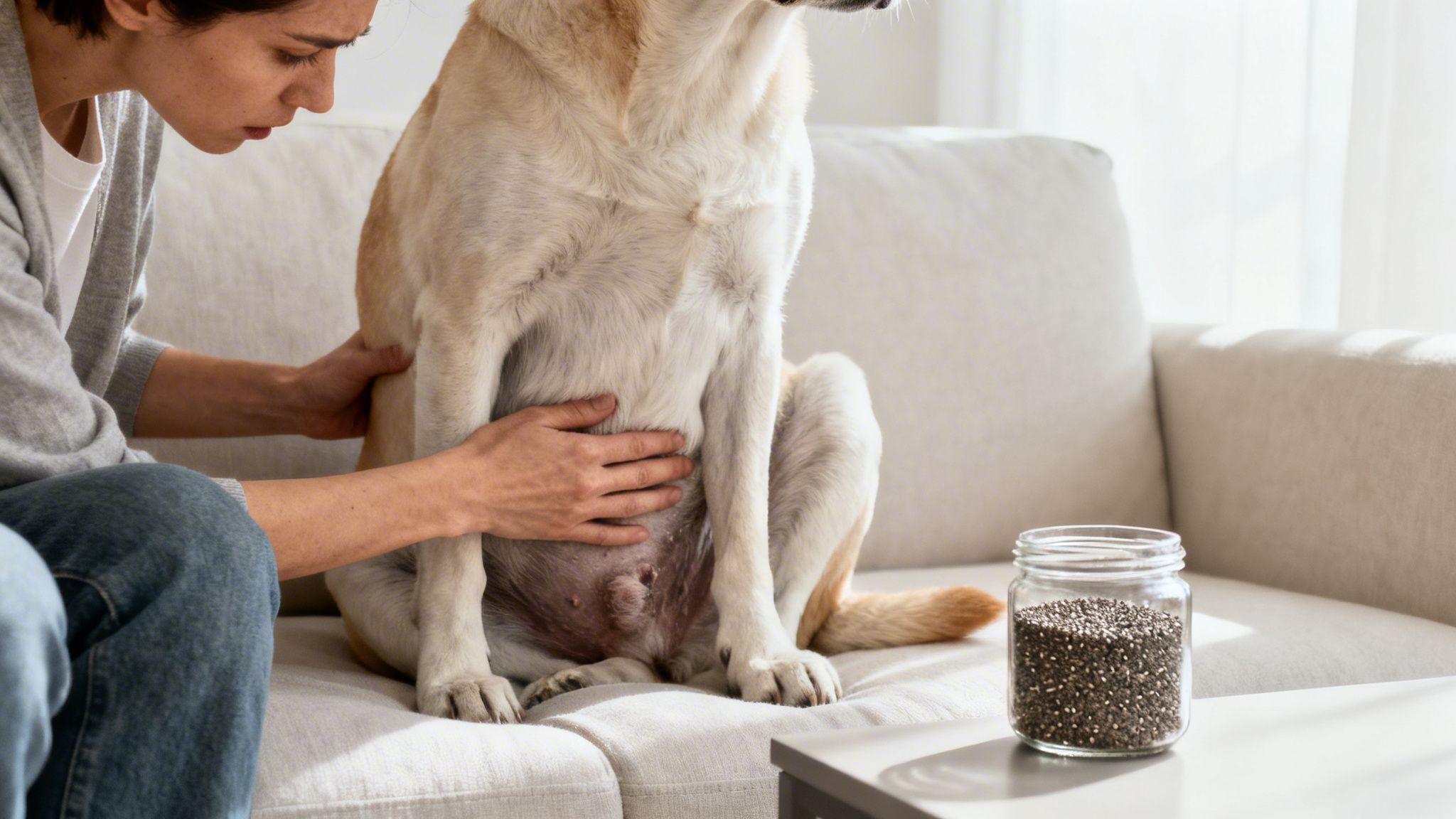
While chia seeds are little nutritional powerhouses, being a good pet parent means looking at the whole picture. Before you sprinkle any new food into your dog's bowl, it’s smart to know about the potential downsides—even with a superfood like chia. The good news is, these risks are easy to manage once you know what to do.
The biggest potential problem comes from how the seeds are served. The answer to "can dogs eat chia seeds?" really comes down to one critical detail: you have to soak them first. If you skip this simple step, you could be creating problems that are entirely avoidable.
The Choking and Digestive Hazards of Dry Seeds
Picture a tiny, dry sponge. What happens when you drop it in water? It soaks up the liquid and expands in a big way. Dry chia seeds do the exact same thing, absorbing up to 12 times their weight in liquid.
If you give your dog a spoonful of dry seeds, they can swell up in their throat or esophagus as they go down, which poses a serious choking hazard. This is a particularly big risk for smaller dogs or any pup who gobbles their food down without much chewing.
Even if they make it to the stomach, that expansion continues. This can cause some serious discomfort, leading to gas, bloating, or even a painful blockage. By soaking the seeds ahead of time, you let them expand before your dog ever eats them, completely removing this danger.
Key Takeaway: Never, ever feed your dog dry, unsoaked chia seeds. The risk of choking or causing an internal blockage is just too high. Always pre-soak them until they’ve formed a gel.
Spotting Signs of Digestive Upset
Even when you prepare them perfectly, the high fiber content in chia can sometimes be a bit much for a dog's system, especially if you add too much, too soon. A little fiber is great for their gut, but a sudden overload can do more harm than good.
Keep an eye out for these signs, which usually mean you've given too large a serving or introduced it too quickly:
- Gas or bloating: A bit of initial gassiness can be normal, but excessive amounts mean their digestive tract is struggling.
- Diarrhea or loose stools: While fiber can help firm up poop, an overload can push things in the other direction.
- Vomiting or lots of stomach gurgling: These are pretty clear signs of an irritated tummy.
If you spot any of these symptoms, just stop giving them chia for a few days and let their system get back to normal. If you want to try again, start with a much smaller amount.
When to Consult Your Veterinarian
While chia is perfectly fine for most healthy dogs, there are a few situations where you'll want to check with your vet first. Dogs with known sensitive stomachs, pre-existing conditions like inflammatory bowel disease (IBD), or those on specific medications might not be the best candidates.
Your vet knows your dog’s full health history and can give you advice that’s tailored to them. A quick chat is all it takes to make sure you’re making the safest, smartest choice for your best friend.
Common Questions About Chia Seeds for Dogs
Even after learning the basics, you probably still have a few questions rolling around in your mind. That's completely normal. When you're thinking about adding a new food to your dog's diet, you want to be 100% sure you're doing the right thing.
Let's tackle some of the most common questions I hear from pet owners. Think of this as your quick-reference guide to clear up any lingering doubts.
Can Puppies Eat Chia Seeds?
Technically, yes, puppies can have chia seeds, but this is one of those situations where you absolutely need to proceed with caution and talk to your vet first. A puppy's digestive system is a delicate work in progress.
While the omega-3s are fantastic for their developing brain and body, the high fiber content can easily overwhelm their little tummies. If your vet gives you the okay, start with a tiny pinch—much less than you'd give an adult dog—and always make sure the seeds are soaked into a gel. This is crucial to avoid any choking hazards or digestive upset.
Is There a Difference Between Black and White Chia Seeds?
Great question! The simple answer is no, not really. For your dog's purposes, there's no significant nutritional difference between black and white chia seeds.
Both colors deliver the same powerhouse dose of fiber, protein, and omega-3 fatty acids. The color is just a natural variation, kind of like how you can get red, green, or yellow apples. Feel free to use whichever you have on hand; your dog will get the same great benefits either way.
The bottom line is that both black and white chia seeds are equally safe and nutritious for your dog. Focus on proper preparation and serving size rather than the color of the seed.
How Often Should I Give My Dog Chia Seeds?
Once you’ve started with a small amount and seen that your dog handles it well, you can make chia seeds a regular part of their daily routine. Consistency is really the key to seeing the best results.
Think of it more like a daily supplement than an occasional treat. Consistent, daily use is what helps support their digestive regularity, keeps their coat shiny and healthy, and provides those ongoing anti-inflammatory benefits for their joints. Just be sure to stick to the correct serving size for their weight to keep everything in balance.
Can Chia Seeds Help My Dog Lose Weight?
They can certainly be a helpful part of a weight management plan. The magic of chia seeds is their incredible ability to absorb water and form a gel. This helps your dog feel fuller for longer after they eat, which can cut down on begging and potentially lower their overall calorie intake.
Of course, they aren't a miracle weight-loss cure on their own. Chia seeds work best as one component of a larger strategy that must include a balanced diet, proper portion sizes, and plenty of exercise—all under the guidance of your vet.
It's common for dog owners to wonder about various foods beyond just chia seeds. For a wider view on what's safe and what's not, you can find useful information about what foods are safe for dogs. Always put safety first when introducing anything new into your dog's bowl.

Karolis is the Founder of FORMA, a pet wellness brand focused on longevity and daily nutrition for dogs. Writes about supplements, canine health, and helping pets live longer, healthier lives
Join thousands of pet parents getting science-backed health insights and natural care advice