Are Sardines Good for Dogs? A Guide to This Canine Superfood
Are sardines good for dogs? Explore the powerful health benefits, safe serving sizes, potential risks, and expert tips for adding this fish to your dog's diet.
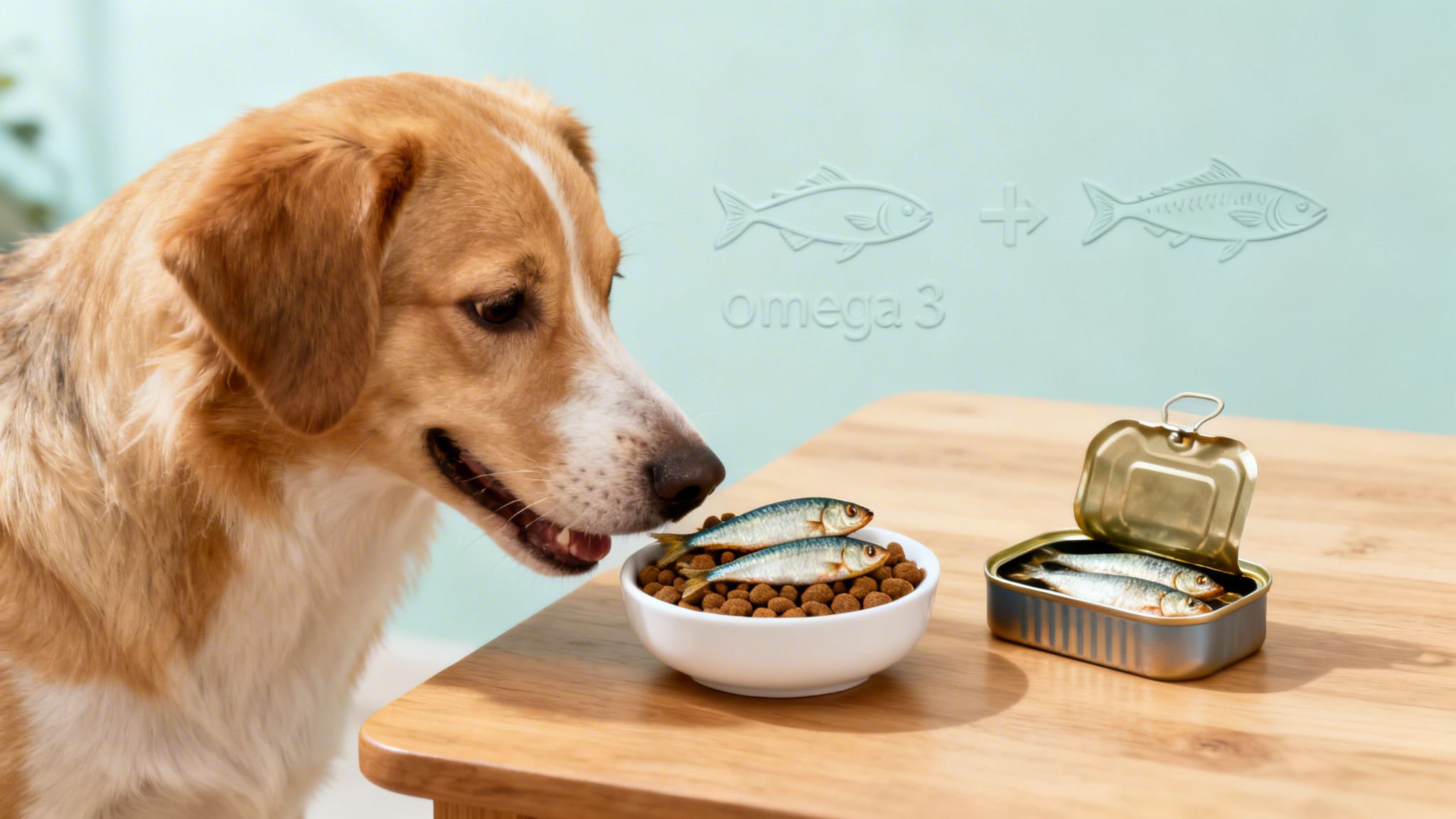
Let's cut right to the chase: yes, sardines are fantastic for most dogs. I like to think of them as little nutritional powerhouses straight from the ocean. When served correctly, they can be a huge boost to your dog's health, supporting everything from their joints to their skin and coat.
The key, of course, is doing it the right way.
Yes, Sardines Are a Superfood for Most Dogs

When owners ask me if sardines are safe, my answer is almost always a confident "yes," as long as you follow a few simple rules. These tiny fish are packed with high-quality protein, calcium, and—most importantly—omega-3 fatty acids.
Think about what those omega-3s, specifically EPA and DHA, can do. They are natural anti-inflammatories, which can be a game-changer for older dogs or any pup struggling with joint pain. With over 20% of dogs over age eight suffering from arthritis, adding sardines can be a simple, food-based way to offer some relief. You can read more about how these fatty acids work from the experts at Dog Cancer Blog.
Sardines for Dogs At a Glance
To make it simple, it helps to see the benefits and risks side-by-side. Here’s a quick summary of what you need to keep in mind.
| Key Benefit | Risk to Consider |
|---|---|
| Omega-3 Powerhouse: A rich source of EPA and DHA, which reduce inflammation and support joint, skin, and brain health. | High Sodium: Sardines packed in brine (salt water) can be dangerous for dogs, potentially leading to sodium poisoning. |
| High-Quality Protein: Provides essential amino acids for strong muscles and overall vitality. | Unhealthy Fats: Varieties canned in certain oils (like soybean or sunflower oil) add unnecessary fats and calories. |
| Rich in Nutrients: Packed with calcium for bone health and Vitamin D for immune function. | Choking Hazard: While the bones are usually soft and digestible, it’s always a good practice to mash them up. |
Ultimately, the goal is to harness all the good stuff while avoiding the potential pitfalls.
The core idea is to treat sardines as a powerful supplement, not a full meal. Their nutritional density is what makes them so beneficial, but also why moderation is so important.
By choosing the right kind of sardines and the proper serving size, you can give your dog a powerful nutritional boost. This guide will walk you through exactly how to add this superfood to your dog's bowl safely and effectively.
What's Actually In a Sardine? More Than You'd Think.
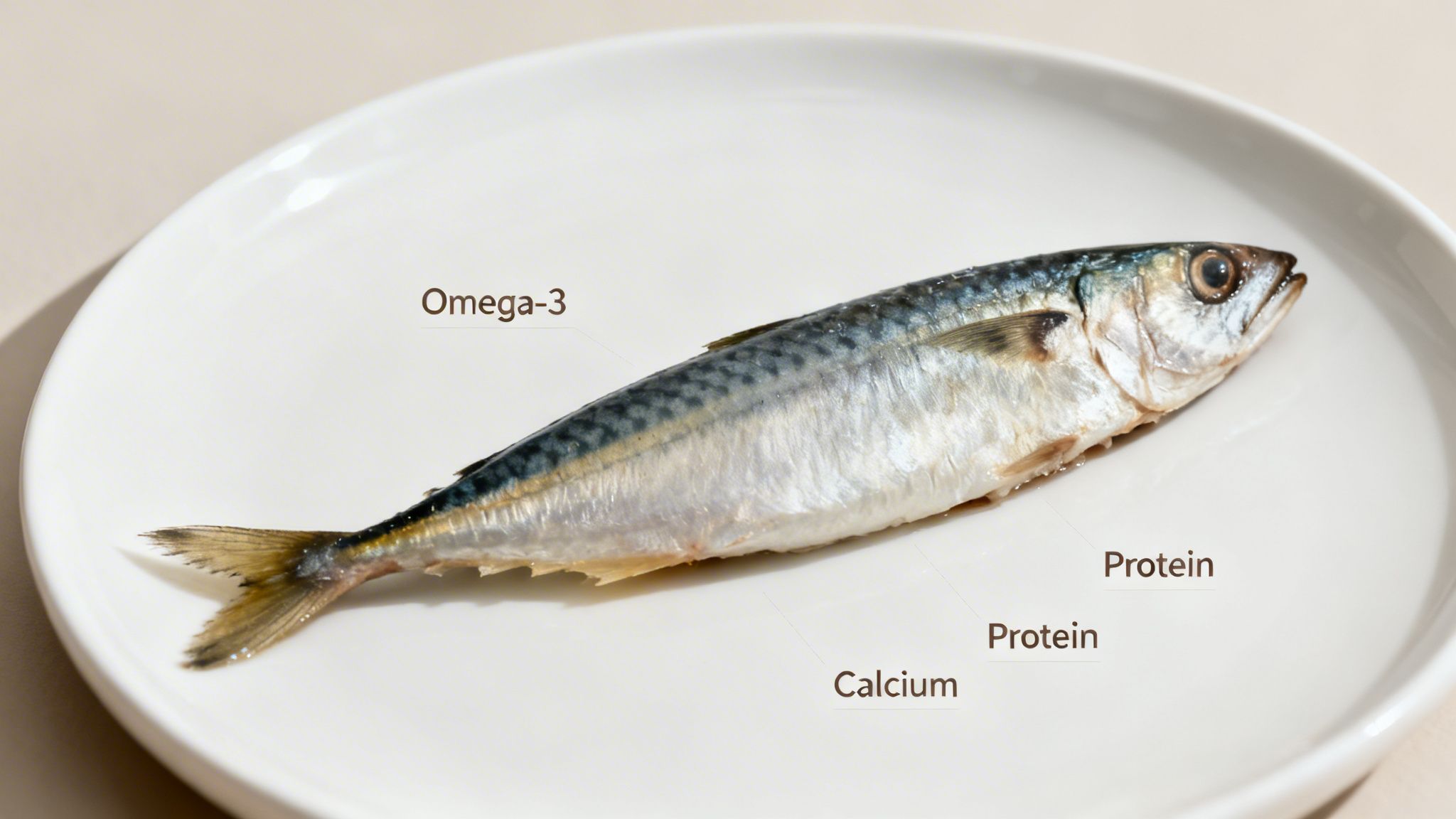
It’s easy to dismiss a sardine as just a little fishy treat, but that's really missing the big picture. Think of them less as a snack and more like a multivitamin pulled straight from the ocean. They are an amazing example of how nutrient-dense whole foods can have a huge impact on your dog’s well-being.
The headliner, of course, is the omega-3 fatty acids. You’ve probably heard of EPA and DHA, and for good reason. These are the "good fats" that work as powerful, natural anti-inflammatories in the body. If you have a senior dog with stiff joints or an active pup who’s always on the move, these fatty acids can help soothe that inflammation and keep them comfortable. They're also the secret behind a glossy coat and healthy, itch-free skin.
Protein, Bones, and Brainpower
Beyond the healthy fats, sardines are absolutely loaded with high-quality protein that’s easy for dogs to digest. Protein delivers the essential amino acids that act as the building blocks for everything from strong muscles to tissue repair. This is vital for all dogs, whether it’s a puppy building that new muscle or an older dog trying to hang onto it.
Here’s something you might not have thought about: the bones. In canned sardines, the bones are cooked until they're completely soft, edible, and safe. Don't pick them out!
These tiny, digestible bones are a fantastic source of two key minerals:
- Calcium: The cornerstone for building and maintaining strong bones and teeth.
- Phosphorus: Works hand-in-hand with calcium to support your dog's entire skeletal system.
Sardines are also what I like to call "brain food." They're brimming with DHA, an omega-3 that is absolutely critical for cognitive function. With cognitive decline affecting nearly 28% of dogs by the time they’re 11, the nutrients in sardines can help fight oxidative stress and keep your older dog's mind sharp. The experts at Faim Museau have some great insights on how these nutrients specifically support canine brain health.
Sardines are also one of the best natural sources of Coenzyme Q10 (CoQ10). This is a powerful antioxidant that fuels cellular energy and supports heart health. It's like a little tune-up for your dog's entire system.
Finally, you get a whole cocktail of other important micronutrients. We're talking about Vitamin D (which helps the body use all that great calcium), Vitamin B12 for nerve health and red blood cell production, and selenium, an antioxidant that helps the immune system and thyroid function properly. Every single nutrient plays a part, making sardines a truly well-rounded boost for your dog's diet.
How to Choose and Prepare Sardines Safely
Alright, so you’re sold on the benefits of sardines. But how do you actually buy and serve them safely? Walking down the canned fish aisle can be surprisingly overwhelming, but picking the right product is the single most important step.
Think of it like you're shopping for yourself. You'd probably skip the chips drenched in oil and caked in salt for a healthier option. The same exact thinking applies to your dog. Your mission is to find the plainest, most boring-looking can of sardines on the shelf.
When you're scanning the labels, you're really only looking for two key things:
Packed in water: Always, always choose sardines packed in spring water. Those packed in olive oil, soybean oil, or other oils just add a ton of extra fat and calories. For some dogs, especially ones prone to pancreatitis, that extra fat can spell trouble. Water is the cleanest and safest bet.
No salt added: This is a big one. A dog's system isn't built to handle a lot of sodium, and sardines packed in brine are basically a salt bomb. The label should clearly state "no salt added" or "unsalted."
Canned Versus Fresh Sardines
You might see fresh sardines at the fish counter and wonder if those are a better choice. While they’re great, canned sardines are usually the more practical and safer option for most of us. The canning process actually gives them a huge safety advantage.
The high-heat canning process softens the tiny bones until they’re completely brittle and easy to digest. This is great news because it means you don't have to worry about them being a choking hazard. Plus, those softened bones are a fantastic, bioavailable source of calcium.
Fresh sardines, on the other hand, mean more work for you. You’d have to cook them thoroughly and, if they're on the larger side, you might even have to pick out the bigger bones. For sheer simplicity and peace of mind, canned is the clear winner here.
Once you’ve got the right can, getting it ready is a breeze. Even though you bought an unsalted version, it’s a good habit to rinse the sardines under a little cool water. This just washes away any residual sodium from the canning liquid.
From there, you can serve the sardine whole as a high-value treat or simply mash it up with a fork. Mashing it into your dog’s regular food is a great trick—it spreads that delicious fishy flavor all through their meal and ensures they get every last bit.
Finding the Right Serving Size for Your Dog
When you’re adding a powerhouse food like sardines to your dog's bowl, it's easy to think more is better. But with something this rich and nutrient-packed, getting the portion size right is everything. Think of sardines as a flavourful, high-impact supplement, not the main event.
Getting the serving size wrong can throw your dog’s whole diet off balance. It’s a lot like figuring out safe serving sizes for human foods for our pets—the goal is to add benefits without causing problems.
This simple chart is your go-to guide for picking the perfect can.
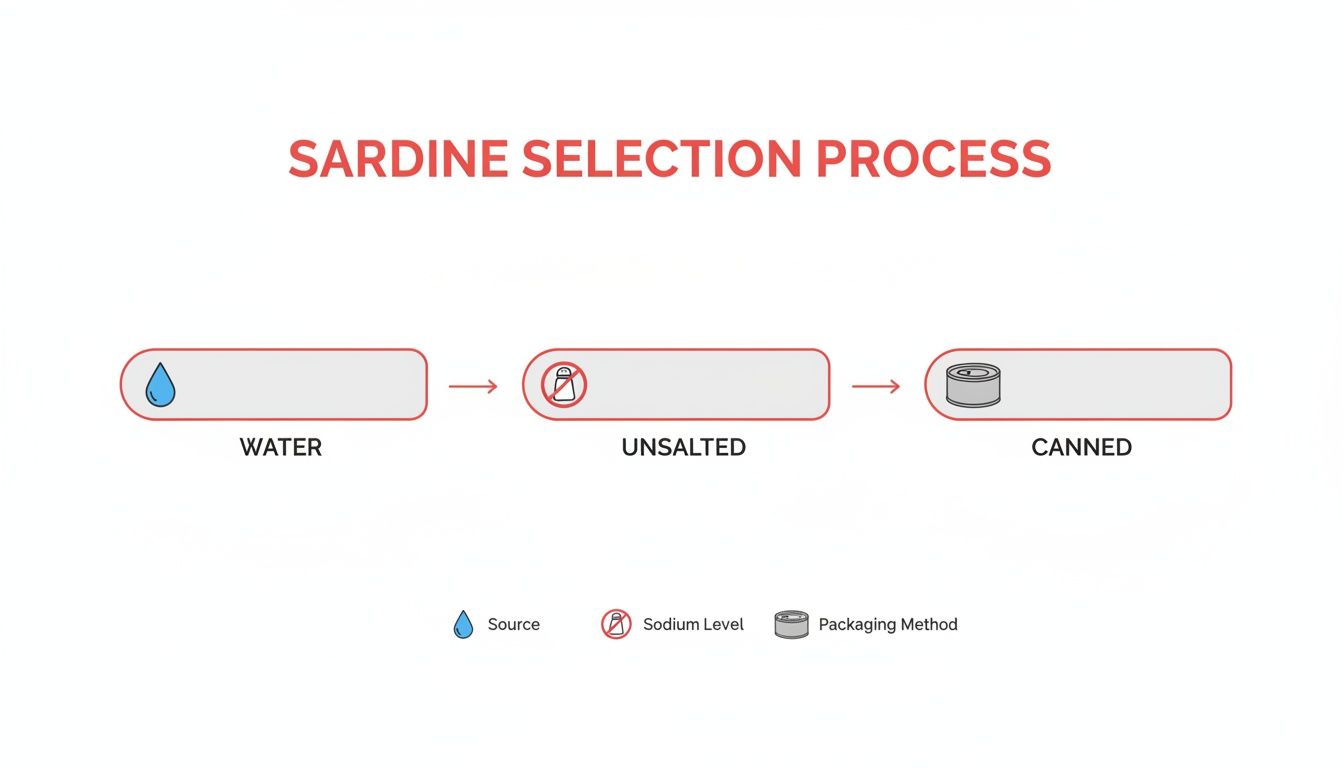
The takeaway is crystal clear: stick with sardines packed in plain water, make sure there’s no added salt, and choose the canned kind for safety and convenience.
Recommended Weekly Sardine Serving by Dog Weight
So, how much is the right amount? A dog’s weight is the best guide. The following recommendations are based on a standard 3.75 oz can of sardines. Remember to spread this amount out over the entire week, not serve it all in one sitting.
| Dog Weight | Recommended Serving (3.75 oz can of sardines) | Frequency |
|---|---|---|
| Small Dogs (Under 20 lbs) | Up to ½ a can per week | 2-3 times per week |
| Medium Dogs (20-50 lbs) | Up to 1 full can per week | 2-3 times per week |
| Large Dogs (Over 50 lbs) | Up to 1½ cans per week | 2-3 times per week |
These guidelines help keep things in perspective. For a little Dachshund, you might mash a small piece of a sardine (maybe a quarter of the fish) into their food a couple of times a week. A big Golden Retriever, on the other hand, could easily handle half a sardine mixed in with their kibble every other day.
How Often Should You Feed Sardines?
It's not just about how much you feed, but how often. While some owners wonder if they can give their dogs sardines daily, it’s much better to treat them as a special food topper.
A good rule of thumb is to offer sardines 2 to 3 times per week. This schedule provides a steady stream of omega-3s without overwhelming their system with extra fat and calories.
By sticking to this routine, you ensure sardines remain a healthy bonus, not a dietary disruption. It lets your dog get all the benefits—from a glossy coat to better joint support—while keeping their main meals perfectly balanced. And as with any new food, start slow and keep an eye out for any digestive upset.
Potential Risks and What to Watch For
Okay, so we've covered the good stuff. But before you rush out to buy a case of sardines, let's talk about the potential downsides. Like any rich food, they need to be introduced thoughtfully. Knowing what to watch for is how you keep this treat safe and healthy for your dog.
The single biggest mistake people make is grabbing the wrong can. Sardines packed in brine are loaded with sodium—way too much for a dog and can lead to serious salt poisoning. You also need to steer clear of any packed in sauces, like mustard or tomato. They often hide salt, sugar, and even ingredients like garlic or onions that are toxic to dogs.
Tummy Troubles and Pancreatitis Concerns
Another thing to keep in mind is the fat content. While we love those healthy omega-3s, sardines are a fatty fish. For dogs with a history of pancreatitis, a painful condition often triggered by high-fat foods, sardines could spell trouble. If your dog has ever had pancreatitis, check with your vet before even thinking about adding sardines to their diet.
Even for a perfectly healthy dog, too much of a new, rich food can easily cause an upset stomach. Keep an eye out for these signs:
- Vomiting
- Diarrhea
- Lots of gas or a gurgling tummy
- Not wanting to eat their next meal
The key is to start small. I mean really small. Offer just a tiny flake of a single sardine and see how your dog does over the next day before offering any more.
The Golden Rule: Always choose sardines packed in water with no salt added. It's the simplest way to avoid almost all the common problems right from the start.
A Quick Word on Allergies and Mercury
Fish allergies aren't incredibly common in dogs, but they do happen. If you notice your dog getting extra itchy, breaking out in hives, or having persistent digestive issues after eating sardines, stop feeding them and give your vet a call.
Finally, what about heavy metals like mercury? This is one area where you can relax. The great news is that sardines are one of the safest fish you can feed. Because they are small and have a very short lifespan, they’re right at the bottom of the food chain. This means they simply don’t live long enough to accumulate dangerous levels of mercury, unlike big predators like tuna or swordfish.
How Sardines Fit into Your Dog's Overall Health Plan
It’s easy to think of sardines as just another tasty treat, but that really sells them short. The best way to look at them is as a natural, powerful addition to your dog’s complete wellness routine. When we ask if sardines are good for dogs, the most honest answer is a big yes—especially when they’re part of a bigger picture that includes a great diet and the right supplements.
Sardines aren't meant to replace your dog's regular meals. Think of them as a "whole food supplement." They deliver a potent, natural boost of very specific nutrients that can make a real difference. The incredible omega-3s in sardines are fantastic for cooling inflammation, but they do their best work on top of a solid nutritional foundation.
The Perfect Partner for a Daily Supplement
Here’s a simple way to think about it. A high-quality daily supplement is like your dog's multivitamin. It gives them a steady, correctly-dosed blend of ingredients every single day to support their joints, skin, and long-term health. It’s your insurance policy against any nutritional gaps.
Sardines, then, are like the specialist you call in a couple of times a week for some extra help. Their rich concentration of EPA and DHA supercharges the benefits of a daily joint or skin supplement. When you combine them, you get this amazing effect where the food-based nutrients and the formulated supplement work together.
By pairing a whole-food like sardines with a proven daily supplement, you're covering all your bases. You get the reliable, foundational support from the chew, plus the targeted, anti-inflammatory punch from fresh omega-3s.
Building a Smart Wellness Routine
At the end of the day, adding sardines to the mix is about being proactive with your dog’s health and letting food be part of their medicine. You’re moving beyond simply filling their bowl and are now choosing ingredients with a specific job to do. It’s all about blending the best of nature with the reliability of science.
Here’s how it all comes together:
- Daily Diet: The fuel. This provides the fundamental calories and nutrients for energy and basic body function.
- Daily Supplement (like FORMA): The foundation. This delivers a consistent, science-backed dose of ingredients for things like gut health, immunity, and longevity.
- Sardine Topper (2-3 times/week): The boost. This offers a powerful, natural burst of anti-inflammatory omega-3s to specifically target joint and skin health.
This layered strategy gives you peace of mind that you're not just feeding your dog, but truly nourishing them. By integrating whole foods like sardines with a top-notch daily supplement, you're building a comprehensive wellness plan that helps your dog feel their best, from the inside out.
Your Top Sardine Questions, Answered
Alright, even after seeing all the good stuff sardines can do, you probably still have a few questions rolling around in your head. I get it. As a dog owner, you want to be 100% sure you're doing the right thing. Let's tackle some of the most common questions I hear.
Can I Give My Dog Sardines Packed in Olive Oil?
My advice is to always stick with sardines packed in water. While a drizzle of high-quality olive oil isn't the end of the world, you can't be sure what you're getting in that can. Many brands use cheaper soybean or sunflower oils, which can add inflammatory fats that you’re trying to avoid.
Plus, all that extra oil is just a heap of extra calories your dog doesn't need. For the simplest, safest bet, just look for two key phrases on the label: "packed in water" and "no salt added".
Are the Bones in Canned Sardines Safe for My Dog?
This is a super common worry, but the short answer is yes, the bones are perfectly safe for almost every dog. The high-heat canning process makes them incredibly soft and brittle—so soft you could easily crush them between your fingers.
Think of these soft bones as a fantastic, built-in calcium supplement. They are completely digestible and a great natural boost for your dog's skeletal health. If you're still a bit nervous, just mash the whole sardine with a fork before serving. Problem solved.
How Often Can I Feed My Dog Sardines?
A great rhythm to get into is feeding sardines 2 to 3 times per week. This keeps a steady stream of those amazing omega-3s coming without overdoing it on the calories and fat.
Remember, sardines are a superfood supplement, not a full meal. Think of them as a nutrient-packed food topper or a high-value treat. Sticking to this schedule gives you all the benefits without throwing your dog's overall diet out of whack.
Should I Avoid Sardines If My Dog Has Pancreatitis?
Yes, if your dog has a history of pancreatitis, you need to be extremely cautious. This is a time to talk to your vet first.
The fat content in sardines, even though it's the "good" kind, can still be enough to trigger a painful flare-up in a sensitive dog. For dogs prone to pancreatitis, the total amount of fat is what really matters. Your vet knows your dog's health history and can give you the best, safest advice.

Karolis is the Founder of FORMA, a pet wellness brand focused on longevity and daily nutrition for dogs. Writes about supplements, canine health, and helping pets live longer, healthier lives
Join thousands of pet parents getting science-backed health insights and natural care advice