Finding the Best Food for Dogs With Allergies
Is your dog constantly itching? This guide helps you find the best food for dogs with allergies, from hypoallergenic diets to elimination protocols.

If you're looking for the best food for dogs with allergies, you'll want to explore a few specific types of diets. We're talking about special formulas like limited-ingredient, novel-protein, or hydrolyzed-protein foods. These diets are designed to sidestep common triggers like beef or chicken, helping to finally give your dog’s overactive immune system a break and ease all that itching and stomach upset.
Recognizing the Signs of a Food Allergy in Your Dog
It’s heartbreaking to watch your best friend constantly scratching, chewing their paws raw, or dealing with yet another ear infection. These aren't just quirky behaviors—they're often the most visible and frustrating signs that a food allergy is at play. Learning to spot these clues is your first step toward getting them some real relief.

Allergy vs. Intolerance: What's the Difference?
First, it’s really important to know whether you’re dealing with a true food allergy or just a food intolerance. The difference is huge. Think of it this way: a serious peanut allergy in a person is a world apart from someone who just feels bloated after drinking milk.
- Food Allergy: This is a full-blown immune response. Your dog's body mistakenly flags a food ingredient—almost always a protein—as a dangerous invader. This kicks off an inflammatory chain reaction that causes all those classic allergy symptoms.
- Food Intolerance: This is purely a digestive problem. Your dog’s gut just can't process a certain food properly, leading to things like gas, an upset stomach, or diarrhea. It’s uncomfortable for them, but it doesn't involve the immune system.
Common Symptoms to Watch For
Food allergy symptoms can be maddeningly vague and often look like other health issues. And surprisingly, the most common signs aren't digestive at all—they show up on the skin.
A true food allergy is an immune system overreaction to a specific protein. This is why symptoms often appear as widespread inflammation, hitting the skin, ears, and gut all at once.
Keep an eye out for these tell-tale signs:
- Constant Itching: This is the #1 clue. You’ll notice your dog scratching nonstop, obsessively licking their paws, or rubbing their face on the carpet.
- Skin Problems: Be on the lookout for rashes, hives, hot spots (those angry red, moist patches of skin), and even hair loss.
- Chronic Ear Infections: If you’re always at the vet for smelly, waxy, or inflamed ears, a food allergy could be the root cause. The ear canal is just an extension of the skin, making it a hotspot for allergic reactions.
- Stomach Upset: While not as common as skin issues, you might see chronic gas, vomiting, or diarrhea that just won't clear up.
This isn’t some rare condition. Food allergies affect up to 10% of dogs worldwide. The good news? Vets report that 70-80% of allergic dogs see a major improvement within 8-12 weeks after switching to a specialized diet.
While we're focused on food, don't forget that other things in your dog's world can cause similar irritation. Symptoms can sometimes overlap with reactions to environmental triggers like pesky pet dander. A well-rounded approach that considers both diet and environment will always give you the best shot at success.
Common Allergy Triggers Hiding in Your Dog's Food
If your dog is constantly scratching or dealing with an upset stomach, it’s only natural to start eyeing their food bowl. And you’re on the right track. While just about any ingredient can be an allergy trigger, a handful of very common ones cause most of the problems we see.
What surprises most dog owners is that the biggest culprits are often the main ingredients in their dog's food. It’s a classic case of overexposure. Your dog’s immune system gets so used to seeing a certain protein that it eventually messes up and flags it as a threat, triggering the inflammation that leads to all that itching and discomfort.
The Problem with Proteins
Proteins are essential for your dog’s health, but they’re also the number one cause of true food allergies. When a dog eats the same protein day in and day out for years, their immune system can become sensitized. This is exactly why a dog can suddenly become allergic to a food they've eaten their whole life without a problem.
The most frequent offenders I see in my practice are:
- Beef: A staple in so many dog foods, making it a top trigger.
- Chicken: Another extremely common protein that many dogs eventually react to.
- Dairy Products: Things like milk or cheese in treats can cause both allergies and digestive upset.
- Lamb: This used to be a go-to for sensitive dogs, but it’s so common now that it’s a frequent allergen.
- Eggs: They’re a great source of protein, but not for every dog.
In fact, the numbers are pretty telling. Research shows that beef is behind a staggering 34% of canine food allergies, with dairy coming in second at 17%. Considering that 10-15% of all dogs in the US have some kind of allergy, pinpointing these common proteins is the first real step toward finding relief. You can get a better sense of dog food ingredient trends by checking out the latest natural dog food market analysis.
Grains and Fillers Uncovered
The grain-free craze has everyone thinking that corn, wheat, and soy are the bad guys. While some dogs do have true grain allergies, it’s far less common than a protein allergy. More often, if a dog reacts to a grain, it’s a lower-grade sensitivity, not a full-blown immune response.
It's easy to confuse a food allergy with a food sensitivity. An allergy is an immune system meltdown that causes widespread issues like itchy skin and ear infections. A sensitivity is more of a digestive problem, like gas or loose stool, that doesn't involve the immune system in the same way.
This common misunderstanding sends well-meaning owners on a wild goose chase. They'll switch to a fancy grain-free food, but if it still contains chicken—the actual trigger—nothing changes. The itching continues, and everyone gets more frustrated.
To help you connect your dog’s symptoms to potential triggers, this table lists the most common food allergens and the signs they often cause.
Common Dog Food Allergens and Associated Symptoms
Use this table to connect your dog's symptoms to the most common food allergens, helping you identify potential triggers in their diet.
| Allergen | Type | Common Symptoms |
|---|---|---|
| Beef | Protein | Chronic ear infections, itchy paws, skin rashes, hot spots, digestive upset |
| Chicken | Protein | Itchy skin (especially on the face, feet, and ears), obsessive licking, vomiting |
| Dairy | Protein | Gas, diarrhea, vomiting, itchy red skin, poor coat condition |
| Lamb | Protein | Skin inflammation, paw licking, hives, gastrointestinal issues |
| Eggs | Protein | Skin rashes, hives, facial swelling, vomiting or diarrhea |
| Wheat | Grain | Paw biting, recurrent skin infections, dull coat, head shaking |
| Soy | Plant | Itching, hair loss, ear inflammation, vomiting, diarrhea |
This is why learning to read the entire ingredient label is so important. Ignore the pretty pictures on the front of the bag and flip it over. The first five ingredients tell you almost everything you need to know about what's really in the food.
Once you know what you’re looking for, you can start making smarter choices and find a food for dogs with allergies that actually works.
How to Choose the Right Hypoallergenic Dog Food
Walking down the pet food aisle when you have an allergic dog can be completely overwhelming. The shelves are lined with bags, all promising to be the magic solution. But what really separates one "hypoallergenic" food from another? Once you understand the strategy behind each type of diet, you can make a much more confident choice for your itchy friend.

Think of a food allergy as a case of mistaken identity—your dog’s immune system is overreacting to a common food protein it thinks is a threat. Hypoallergenic diets work by outsmarting this reaction in one of three ways: they remove the trigger, swap it for something new, or break it down until it’s unrecognizable.
Let's break down those three main approaches.
Limited Ingredient Diets (LID)
The simplest starting point is a Limited Ingredient Diet, or LID. The entire philosophy here is "less is more." These foods are made with a very short ingredient list, typically just one protein source (like duck) and one carbohydrate source (like sweet potato).
By dramatically simplifying the recipe, you reduce the chances of your dog eating whatever it is that’s causing the problem. It also makes it much easier to pinpoint the culprit if an allergic reaction continues.
- Who they're for: LIDs are great for dogs with milder sensitivities or when you’re just starting to figure out your dog's triggers.
- The catch: You have to pick the right one. If your dog is allergic to chicken, a chicken-based LID is obviously not going to solve anything.
These diets are essentially a ready-made elimination diet in a bag, and they're widely available without a prescription.
Novel Protein Diets
A Novel Protein Diet takes things a step further. "Novel" just means new, and these diets are built around a protein source your dog has probably never eaten before.
Common examples include:
- Venison
- Rabbit
- Kangaroo
- Alligator
The idea is simple: a dog can’t be allergic to an ingredient it’s never been exposed to. By introducing a completely foreign protein, the immune system doesn't have a pre-programmed "attack" response, giving your dog’s body a much-needed break to calm down and reset.
This is a really effective strategy. For dogs with more stubborn allergies, it's worth talking to your vet about all the options. Understanding the role of prescription dog food for allergies can be a game-changer, especially when you need a guaranteed "clean" diet under veterinary guidance.
Hydrolyzed Protein Diets
This is where food science gets really clever. Hydrolyzed protein diets are the most advanced option, designed for dogs who seem to be allergic to everything.
Instead of just swapping out proteins, these foods take a common one—like chicken or soy—and use a process called hydrolysis to break it down. Using water, the protein molecules are broken into such tiny pieces that the immune system simply can’t identify them anymore.
Think of it like this: the immune system is a security guard looking for a specific key (the protein) to fit a lock (the receptor that triggers a reaction). A hydrolyzed diet smashes that key into dust. The guard sees the dust, but it no longer fits the lock, so the alarm never goes off.
- Who they're for: These diets are lifesavers for dogs with severe or multiple food allergies, since the original protein source becomes irrelevant.
- The catch: They are almost always the most expensive option and typically require a veterinarian's prescription.
Ultimately, choosing the right food for dogs with allergies comes down to your dog's history, the severity of their symptoms, and your vet's expert opinion. A simple LID might do the trick, but for more complex cases, a novel or hydrolyzed diet could be the key to finally giving your dog some peace.
Using an Elimination Diet to Pinpoint Your Dog's Allergies
If you’re at your wit's end trying to figure out what's making your dog so miserable, it might be time to play detective. When it comes to truly identifying a food allergy, vets agree that the elimination diet is the gold standard. It's hands-down the most accurate way to figure out exactly which ingredient is causing your dog’s immune system to overreact.
Think of it as hitting a complete reset button on your dog's diet. The whole point is to remove every possible allergen from their bowl, let their body calm down, and then reintroduce old foods one by one. It’s a process that demands a lot of patience and discipline, but it’s your clearest path to getting them long-term relief.
The First Step: Selecting a Trial Diet
First things first, this is a journey you’ll want to take with your veterinarian. They’ll help you choose the right food for the trial period, which is a critical decision. You can't just grab a new bag from the store; you need a diet that is truly foreign to your dog’s system. The best choices are almost always prescription diets.
- Novel Protein Diet: This means a diet with one protein and one carbohydrate source that your dog has never had before. If your dog’s diet has always been chicken-and-rice or beef-and-potato based, you might try something totally different, like kangaroo and oats.
- Hydrolyzed Protein Diet: This is a pretty high-tech option. The proteins in the food are broken down into such tiny pieces that they essentially fly under the immune system's radar. They become "invisible," so they can’t trigger an allergic reaction.
Choosing a prescription diet is key because they are manufactured with strict protocols to prevent cross-contamination. Many over-the-counter foods can have trace amounts of other proteins that can completely derail your investigation before you even get started.
The Strict Trial Period: What to Expect
Once you have the right food, this is where your commitment really gets tested. The elimination trial requires absolute, 100% commitment for a full 8 to 12 weeks. It takes that long for all the old, symptom-causing proteins to clear out of your dog’s system and for their irritated skin to finally heal.
The Golden Rule: During the entire trial, your dog can have absolutely nothing except the prescribed food and fresh water. That means no treats, no table scraps, no dental chews, no rawhides, and no flavored medications or supplements. Even one little slip-up can ruin weeks of progress and force you to start all over again.
This is, by far, the toughest part for most of us. Saying no to those pleading puppy-dog eyes is hard! But just keep reminding yourself that you’re doing this for their health and comfort. You can find other ways to show them love, like an extra-long belly rub, a new puzzle toy, or a favorite game of fetch.
And there's good reason to be hopeful. For example, recent veterinary data shows that 65% of dogs on gluten-free trials (a form of elimination diet) see their symptoms vanish completely in just 4-6 weeks. It's a powerful reminder of how effective a strict diet can be. You can dive deeper into the market trends for these specialized diets and their impact on the pet food market.
The Reintroduction Challenge: Finding the Culprit
If your dog’s itching, paw-licking, and ear troubles have dramatically improved by the end of the trial, congratulations! That's a huge win and confirms a food allergy was the culprit. But your detective work isn’t quite finished—now you have to find the specific trigger.
This next phase is called the reintroduction challenge. While keeping your dog on the special elimination diet as their base, you’ll start adding back single ingredients from their old food, one at a time. For instance, you might add a small amount of plain, cooked chicken to their meals for two weeks.
During that two-week challenge, you’ll be a hawk, watching for any sign of their old symptoms returning:
- More itching or scratching
- Skin turning red or pink
- Chewing or licking at their paws
- Red, smelly ears
- Tummy troubles like gas or diarrhea
If your dog has no reaction after two weeks, you can be reasonably sure that chicken is in the clear. You’ll then stop feeding chicken and move on to challenge the next ingredient, like beef. But if a reaction does flare up, you’ve found a culprit! You’ll stop the challenge, wait for their symptoms to calm back down, and then proceed to the next ingredient on your list. This step-by-step process is the only way to build a definitive "safe" and "unsafe" list, which is exactly what you need to choose the best lifelong food for dogs with allergies.
Supplements That Support an Allergic Dog's Health
Figuring out the right food for your allergic dog is a huge first step—it's the foundation of their recovery. But to really get them back to their happy, healthy self, you'll want to build on that foundation with a few key supplements.
Think of it this way: changing your dog's diet removes the trigger, but their body still needs help healing from all the inflammation and irritation. The right supplements work right alongside a hypoallergenic diet to calm things down, restore balance, and strengthen their natural defenses.
Fortifying the Gut Microbiome
It might sound strange, but over 70% of your dog’s immune system is located in their gut. This complex community of bacteria, called the gut microbiome, basically runs the show when it comes to immune responses. If it gets out of whack, the immune system can go into overdrive, reacting to things it shouldn't—like the protein in their food.
That’s where probiotics come in. These are the good guys, the beneficial bacteria that help bring harmony back to the gut. A high-quality probiotic helps crowd out the bad bacteria and re-establish a healthy environment, which in turn helps calm down an overactive immune system.
A healthy gut acts like a smart bouncer at a club. It knows who to let in (nutrients) and who to kick out (pathogens). An unhealthy gut has a panicky, trigger-happy bouncer who starts a fight with everyone, including harmless food proteins.
By getting your dog's gut health back on track, you're directly supporting the command center of their immune system. This is a critical piece of the puzzle for long-term allergy management.
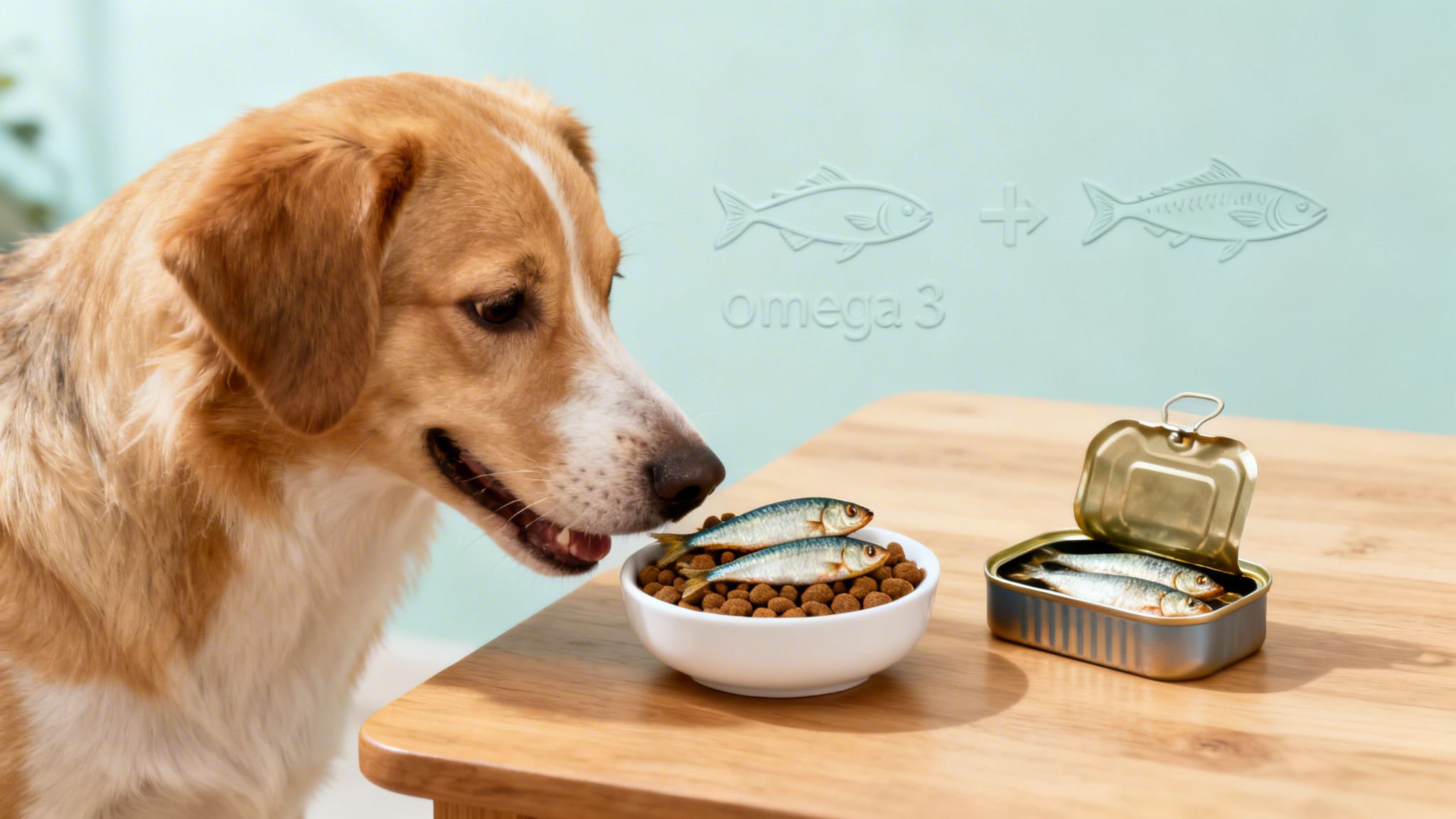
Soothing Skin with Omega-3 Fatty Acids
That constant itching and scratching you see is the most obvious sign of the battle raging inside your dog’s body. The true culprit is inflammation, and one of the best natural tools we have to fight it is omega-3 fatty acids.
These amazing fats, especially EPA and DHA found in fish oil, are famous for their anti-inflammatory abilities. They work on a cellular level to dial down the body's inflammatory response. This can lead to some very welcome relief:
- Less Itching and Scratching: By cooling inflammation from the inside, omega-3s can make a real difference in your dog's comfort.
- A Stronger Skin Barrier: Omega-3s also help fortify the skin, making it a better barrier against other environmental irritants.
- A Healthier Coat: As a bonus, these healthy fats nourish the skin and follicles, which often leads to a noticeably softer, shinier coat.
To make things easier, you can look for a supplement that tackles multiple issues at once. For example, a superfood chew like FORMA is designed to support gut health and immunity while also promoting a sense of calm—all in one simple treat. An all-in-one approach helps you support your dog's wellness from every angle.
The process for figuring out your dog's specific triggers, known as an elimination diet, is the most reliable method vets recommend. This flowchart breaks it down visually.

It shows you how to start with a new, safe food, wait for your dog's symptoms to improve, and then carefully reintroduce old ingredients one by one to see what causes a reaction.
Combining an elimination diet with the right supplements gives you a powerful one-two punch. It’s the best way to manage not just the symptoms, but the root causes of their allergies, helping your dog feel comfortable in their own skin again.
Tips for a Smooth Transition to a New Dog Food
So you've found a promising new food for your dog's allergies. That's a huge step! But how you introduce that food is just as important as which one you chose. Switching your dog's diet cold turkey is a recipe for disaster—it can shock their digestive system and lead to vomiting, diarrhea, and a miserable pup.
The key is to go slow. Think of it like this: you wouldn't jump off the couch and try to run a marathon tomorrow. Your dog’s gut works the same way. It needs time to get used to the new ingredients and build up the right bacteria to digest them properly.
Your Day-by-Day Transition Plan
We’re aiming for a slow, gradual mix-in over at least a week. For dogs with really sensitive stomachs, I often recommend stretching it out to 10 days. This slow pace gives their gut time to adjust and prevents the kind of tummy upset that might make you wrongly blame the new food.
Here’s a simple schedule that works wonders:
- Days 1-3: Serve a mix of 75% old food and 25% new food.
- Days 4-6: Move to a 50/50 split of old and new food.
- Days 7-9: Shift the ratio to 25% old food and 75% new food.
- Day 10: You've made it! Go ahead and serve 100% new food.
Keep a close eye on your dog's poop during this time. If things get loose or you notice any upset, just dial it back. Stay at the current food ratio for another day or two before trying to increase the new food again.
Staying Vigilant Beyond the Bowl
Here’s something many pet parents forget: managing a food allergy means you have to become a bit of a food detective for everything your dog eats. It’s not just about their kibble. Hidden allergens in treats, dental chews, and even table scraps can completely undo all of your careful work.
Consistency is everything. One little piece of cheese or a crust of bread from a well-meaning family member can be enough to trigger a full-blown reaction. When that happens, you’ll have no way of knowing if the new diet is actually working.
You have to get the whole family on board. Explain what’s off-limits and why it’s so important for your dog’s health and comfort. It's a good idea to clear the cupboards of all the old treats just to avoid any mix-ups.
Instead, stock up on safe, single-ingredient snacks. The beauty of these is you know exactly what’s in them.
Safe Treat Alternatives:
- Small pieces of cooked sweet potato
- Baby carrots (raw or steamed are both great)
- Green beans
- A few pieces of their new kibble (it works!)
- Cubes of unseasoned, cooked novel protein (like the venison or rabbit in their food)
By carefully managing the transition and keeping a tight rein on every single thing your dog eats, you're giving them the best possible chance for success. This is how you’ll finally see real improvement and get your best friend on the road to feeling better for good.
Frequently Asked Questions About Dog Food Allergies
If you're trying to get to the bottom of your dog's food allergies, you probably have a lot of questions swirling around. It's a confusing topic, but we've been there. Let's clear up some of the most common questions we hear from other dog parents.
How Long Until I See Improvement on a New Diet?
This is the part that requires a lot of patience. You'll typically need to stick with a strict new diet for 8 to 12 weeks to see the full picture.
While you might notice your dog is less itchy and much more comfortable within the first month, it takes time for the skin to fully heal and for the old allergens to completely clear their system. Hang in there!
Can My Dog Develop New Allergies Later On?
Frustratingly, yes. A dog can be perfectly fine with an ingredient for years and then suddenly develop an allergy to it. The immune system is always changing.
This is why it's so important to keep an eye on your dog, even after you've found a diet that works. If you see those old, familiar symptoms of itching or stomach upset start to creep back in, it’s a sign to check in with your vet. You might need to rotate to a new food or identify another trigger.
Key Takeaway: An allergy is an immune system response, causing widespread issues like itching and skin inflammation. An intolerance is a digestive issue, leading to symptoms like gas or diarrhea without involving the immune system.
Are Grain-Free Diets Always Better for Allergies?
Not necessarily, and this is a huge misconception. Grain-free diets became incredibly popular, but actual grain allergies are much less common than allergies to animal proteins.
The most common culprits are proteins like beef and chicken. The best food for dogs with allergies is simply one that avoids your dog’s specific trigger. If your dog is allergic to chicken, a grain-free chicken-based food won't solve the problem at all.
What Is the Difference Between a Food Allergy and Intolerance?
Getting this right is crucial. Think of it like your dog’s body having two different types of alarm systems.
- A food allergy is when the immune system overreacts, treating a harmless food protein like a dangerous invader. It launches a full-blown inflammatory attack, leading to constant itching, hives, and chronic ear or skin infections.
- A food intolerance, on the other hand, is a digestive problem. The body just can't process a certain ingredient properly. This results in gut-related issues like gas, bloating, or diarrhea, but it doesn't trigger that body-wide immune response.

Karolis is the Founder of FORMA, a pet wellness brand focused on longevity and daily nutrition for dogs. Writes about supplements, canine health, and helping pets live longer, healthier lives
Join thousands of pet parents getting science-backed health insights and natural care advice