Discover calming chews for dogs: Soothing help for anxiety
Explore calming chews for dogs and how they help ease stress. Learn ingredients to look for and tips to choose safe options for anxious pups.

So, what exactly are calming chews for dogs? Think of them less like a medicine and more like a supportive supplement. They're specially made treats packed with natural ingredients—things like chamomile, L-tryptophan, and hemp—that help take the edge off your dog's stress and anxiety without knocking them out. They're a gentle way to help your pup feel a bit more secure when life gets a little overwhelming.
Understanding Your Dog's Anxiety

You know that pang in your gut when you see your dog shaking during a thunderstorm? Or the sad whine that starts the moment you pick up your car keys? That’s real anxiety, and it’s tough for any dog owner to watch. Our dogs feel things deeply, and that same sensitivity that makes them such great companions can also make them prone to stress, fear, and over-excitement.
This isn't just "bad behavior" that needs correcting. It's a genuine emotional reaction to something in their world that feels threatening or scary. The first step to helping them is figuring out what those triggers are.
Common Triggers for Canine Stress
Lots of everyday things can set a dog on edge. Some are obvious, like fireworks, but others are much quieter. Pinpointing these triggers helps you get ahead of the anxiety and offer support before it spirals.
Here are a few of the usual suspects:
- Separation Anxiety: The panic a dog feels when they're left by themselves. It’s incredibly common, with some veterinary surveys finding it affects anywhere from 40-60% of dogs.
- Noise Phobias: The vacuum cleaner, a clap of thunder, a car backfiring—loud, unexpected noises can be genuinely terrifying for a sensitive dog.
- Situational Stress: Things we consider normal, like car rides, trips to the vet, or even having guests over, can be a major source of stress for our furry friends.
- Changes in Routine: Dogs thrive on predictability. A new home, a new baby, or even just a change in your work schedule can throw their whole world off-kilter.
It's important to remember that calming chews aren't a sedative or a quick "fix." They work by helping to regulate the body's stress response, which allows your dog to feel safer and less reactive to whatever is bothering them.
A Growing Movement in Pet Wellness
Using calming aids is becoming a cornerstone of modern pet care. As owners, we're looking for gentle, effective ways to support our dogs' emotional health, not just their physical health. This shift in thinking is driving huge growth in the pet wellness market.
In fact, the global market for pet calming products is expected to hit USD 18.2 billion in 2024 and is on track to reach USD 32.4 billion by 2034. Dogs make up the biggest piece of that pie at 51%, and chews are the most popular format, accounting for a 34.7% revenue share—mostly because dogs see them as a tasty treat. You can discover more about these market trends and what they mean for the future of pet care.
These numbers tell a clear story: we care deeply about our dogs' mental wellbeing. When you choose to use tools like calming chews for dogs, you’re part of a growing community of owners who are committed to giving their pets a happier, more peaceful life.
How Do Calming Chews Actually Work?
Ever wonder what’s really going on when your dog nibbles on a calming chew? It’s not magic, but it is a pretty cool bit of biology. Think of an anxious dog's nervous system as a car engine that’s running way too hot—it's overactive, jumpy, and just not running smoothly. The ingredients in a good calming chew act like a special coolant. They don't shut the engine off, but they help it get back to a normal, balanced temperature.
These chews aren't about sedating your dog or changing their personality. Instead, they work with your dog’s own body to gently turn down the volume on their stress response. They help manage the flood of stress hormones, like cortisol, that trigger things like trembling, pacing, or non-stop barking. By supporting the systems that regulate mood and relaxation, they help your dog face stressful situations with a clearer, calmer mind.
Adaptogens: Building Stress Resilience
One of the most impressive groups of ingredients you’ll find in quality calming chews for dogs are adaptogens. These are a unique class of herbs and plants that help the body quite literally adapt to and resist physical, chemical, and biological stress.
Imagine your dog is trying to balance on a tightrope. A sudden loud noise is like a gust of wind that threatens to knock them off. Adaptogens are like the balancing pole in their hands, helping them keep their footing and stay steady even when things get a little shaky. They don’t get rid of the stressor, but they make your dog much better at handling it.
A classic example is Ashwagandha. This ancient herb helps keep cortisol, the body's main stress hormone, in check. When cortisol levels are stuck on high, it keeps a dog in a constant state of "fight or flight." Ashwagandha helps nudge those levels back into a healthier range, which encourages a sense of calm without making your dog drowsy.
Neurotransmitter Supporters: Finding a Mood Balance
Another key piece of the puzzle is supporting your dog’s brain chemistry. The brain relies on chemical messengers, called neurotransmitters, to manage everything from mood and sleep to feelings of happiness. When a dog is feeling anxious, these messengers can get thrown out of whack.
This is where neurotransmitter supporters step in. These ingredients are essentially the building blocks for the brain's "feel-good" chemicals.
The idea isn't to artificially create happiness, but to give the brain the raw materials it needs to produce its own sense of calm and stability. It's like making sure a chef has all the right ingredients to cook a perfect meal.
A great example is L-Tryptophan, an essential amino acid. Your dog's body turns L-Tryptophan into serotonin, a famous neurotransmitter that plays a huge part in positive moods and restful sleep. By making sure your dog has enough of it, calming chews help maintain stable serotonin levels, which is a direct line to a more relaxed, less worried state of mind.
Herbal Relaxants: A Gentle, Soothing Touch
Finally, many formulas will include herbal relaxants. These are botanicals with a long history of use for their gentle, soothing effects on the central nervous system. They’re the final touch that helps ease physical tension and quiet a racing mind.
Think of these herbs as a warm, cozy blanket on a chilly night. They don't force your dog to sleep, but they create a sense of security and ease that makes it much easier to relax naturally.
- Chamomile: This little flower has been used for centuries as a mild relaxant. It contains compounds that work on certain brain receptors to help take the edge off anxiety.
- Valerian Root: Known for its mild sedative qualities, Valerian Root can help soothe nervous tension and is especially helpful for dogs who have a hard time settling down.
- Passionflower: This plant is thought to boost levels of GABA (gamma-aminobutyric acid) in the brain. GABA is a neurotransmitter that helps slow down brain activity, which can help a dog feel less overwhelmed and more relaxed.
By blending these three different but complementary approaches—adaptogens for resilience, neurotransmitter supporters for mood, and herbal relaxants for soothing—calming chews offer a layered, effective way to support your dog’s emotional well-being from the inside out.
Decoding the Ingredient Label
Ever turn over a bag of calming chews for dogs and feel like you're trying to read a foreign language? That long list of ingredients can be confusing, and it's tough to know what's actually helping your dog and what's just filler. But learning to decode that label is your most powerful tool for picking a product that's effective, high-quality, and safe.
The best way to think about it is in two parts: the active ingredients and the inactive ingredients. The actives are the stars of the show—they’re the ones doing the heavy lifting to help your dog feel calm. The inactives are the supporting cast; they give the chew its taste and texture, but their quality is just as important.
Active Ingredients: The Power Players
This is where you'll find the good stuff—the herbs, amino acids, and other compounds that actually produce the calming effect. A top-notch formula will be packed with natural, science-backed ingredients that work together to gently support your dog’s nervous system.
You might even find some unexpected but powerful additions, like probiotics. The link between gut health and brain function, often called the gut-brain axis, is incredibly strong in dogs. A balanced gut can lead to a more balanced mood, so seeing digestive support in a calming chew is a huge plus.
The table below breaks down some of the most common and effective natural ingredients you’ll find in high-quality calming supplements.
Key Ingredients in Calming Chews
These ingredients work together, often synergistically, to provide well-rounded support for your dog's emotional well-being.
Inactive Ingredients: Quality Matters Here, Too
The "inactive" list is where you can really tell a premium product from a cheap one. These ingredients are what bind the chew, make it tasty, and keep it fresh. Unfortunately, this is also where some companies cut corners with artificial additives and cheap fillers that can cause more harm than good.
Here’s a great rule of thumb: If you can't pronounce an ingredient or have no idea what it is, it's worth a closer look. The best brands use whole-food ingredients like oat flour, sweet potato, or coconut oil even in their inactive list.
This diagram shows how different categories of ingredients come together in a thoughtfully designed chew.
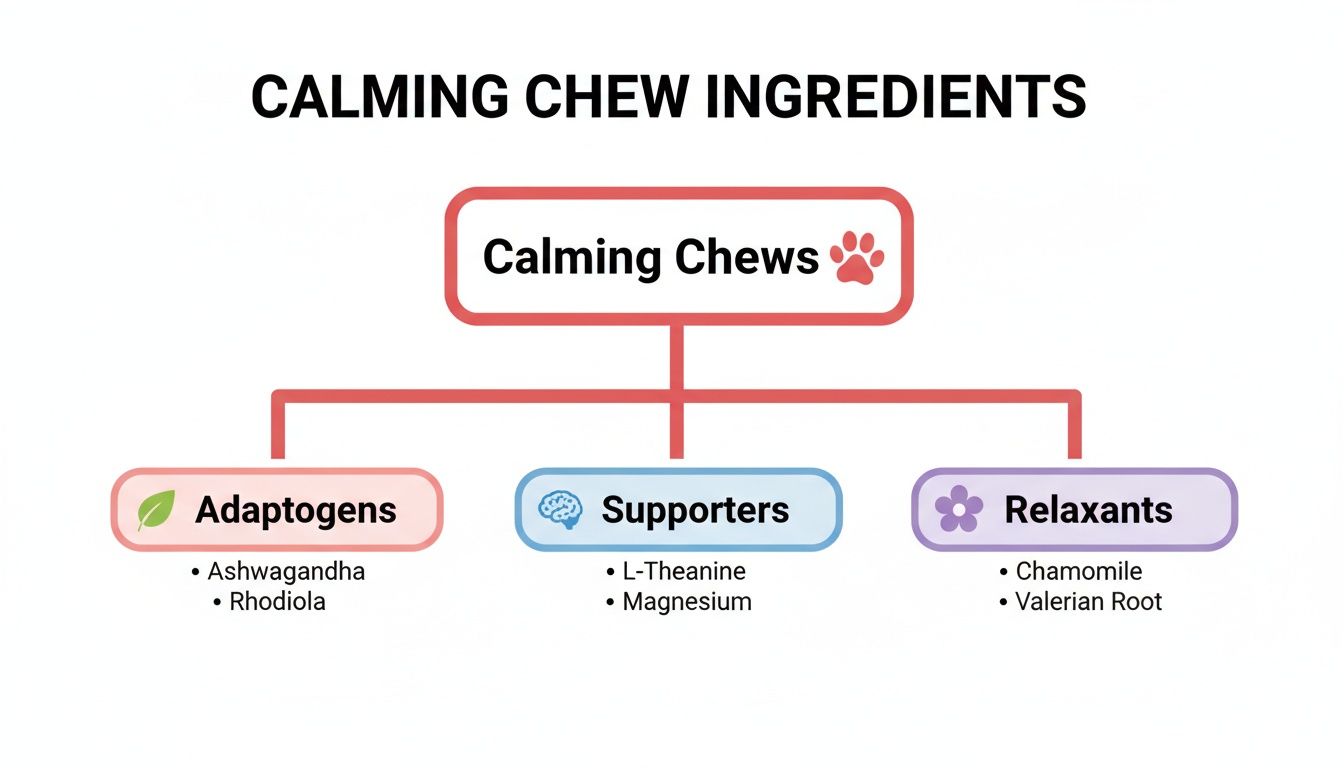
As you can see, a well-rounded formula doesn't just rely on one thing; it uses a mix of adaptogens, supporters, and relaxants to create a complete calming solution.
Red Flags to Avoid on the Label
Knowing what to look for is only half the battle; knowing what to avoid is just as crucial. Certain additives can cancel out the health benefits and might even be harmful, especially for sensitive dogs.
As dog owners get savvier, the demand for clean, simple labels is growing. The market for dog calming products hit USD 9,036.6 million globally in 2024 and is expected to reach USD 12,370.2 million by 2030. Edible chews are the clear favorite, making up 44% of sales because they're so easy to give. This trend shows that people are paying more attention to what goes into their pets' supplements. You can read the full research about pet calming product trends to see how these preferences are shaping the industry.
Here are the big red flags to watch out for on any label:
- Artificial Colors (e.g., Red 40, Yellow 5): These do nothing for your dog and are only there to make the product look appealing to you. They can be linked to allergic reactions and even hyperactivity.
- Chemical Preservatives (e.g., BHA, BHT, Ethoxyquin): These chemicals extend shelf life, but their safety is a hot topic of debate. Natural preservatives like mixed tocopherols (a form of vitamin E) are a much better choice.
- Cheap Fillers (e.g., Corn, Wheat, Soy): These are common allergens used to bulk up a product on the cheap. They offer zero nutritional value for your dog.
- Propylene Glycol: This additive keeps chews moist, but it's been banned in cat food for safety reasons. It's best to avoid it for your dog, too.
- Artificial Flavors: A "bacon flavor" that isn't from actual bacon is just a chemical cocktail. A quality chew gets its taste from real, whole-food ingredients.
Choosing the Right Calming Chews for Your Dog
Stepping into the pet aisle and seeing a wall of calming chews for dogs can feel pretty overwhelming. With so many options, how do you know which one will actually help your dog? The trick is to play detective and figure out exactly what your pup needs.
Picking the right chew isn’t about grabbing the most popular bag. It's about matching the ingredients and dosage to your dog's size, the kind of anxiety they have, and their overall health. A little homework upfront makes for a much happier, calmer dog.
Match the Chew to the Stressor
First things first, what's making your dog anxious? Is it a constant, background worry, or does it only flare up during specific events? Knowing the "why" is the most important step in finding the right solution.
Think of it like this: you wouldn't use a sledgehammer to hang a picture. In the same way, the chew that helps a dog with separation anxiety is probably different from one that helps a dog who dreads fireworks.
- Situational Anxiety: For those predictable freak-outs—car rides, vet visits, thunderstorms—you need something that works relatively fast. Look for ingredients like chamomile and L-theanine. You can usually give these about 30-60 minutes before the stressful event to help take the edge off.
- Chronic Anxiety: If your dog deals with ongoing issues like separation anxiety or is just generally a nervous soul, a daily supplement is a better approach. These formulas often use ingredients like ashwagandha or L-tryptophan to help build up their emotional resilience over time.
Getting this part right means you’re giving your dog support exactly when and how they need it most.
Consider Your Dog’s Unique Profile
Every dog is different, and their physical makeup plays a huge role in finding the right fit. What works for a giant Great Dane could be totally wrong for a tiny Chihuahua. Pay attention to your dog's size, any sensitivities, and their current health.
Dosage is almost always based on weight, so a chew made for a 10-pound dog just won't cut it for an 80-pound one. Always, always follow the package guidelines to keep things safe and effective.
You also need to be on the lookout for allergies. If you know your dog gets an upset stomach from grains or is allergic to chicken, read that ingredient list carefully. A chew that’s supposed to be calming won’t do much good if it’s also causing an itchy allergic reaction.
The goal is to reduce stress, not add to it with an upset stomach or itchy skin. A clean, hypoallergenic formula is often the safest bet for sensitive pups.
Evaluate Brand Reputation and Quality
The pet supplement world isn't tightly regulated, so it’s on us as pet owners to do our due diligence. A trustworthy company will be transparent about where they source their ingredients and how they make their products. Don't be shy about doing a little digging before you buy.
Here are a few signs of a quality brand:
- Third-Party Testing: This is a big one. It means an independent lab has checked the product to confirm it has what the label claims and is free of nasty contaminants.
- Manufacturing Standards: Look for seals like GMP (Good Manufacturing Practices). This tells you the product was made in a clean, professional facility.
- Veterinarian Formulation: Chews developed with input from veterinarians are more likely to be based on solid science and designed with your dog's safety in mind.
A brand that checks these boxes is showing you they’re serious about your pet's well-being.
Look for Multi-Functional Formulas
Finally, why not get more bang for your buck? Many modern supplements, like those from FORMA, are made to support more than just anxiety. These multi-tasking formulas can simplify your dog's routine while providing more comprehensive wellness support.
For example, a calming chew that also includes probiotics for gut health or glucosamine for achy joints is a brilliant two-for-one. Since we know the gut and brain are closely linked, supporting healthy digestion can actually boost the calming effects. Choosing a product that covers multiple bases is a smart way to invest in your dog's long-term health and happiness.
How to Use Calming Chews Safely and Effectively
So, you've decided to try calming chews. That's great! But getting the best results isn't as simple as tossing one to your dog and hoping for the best. To really make a difference, you need to be a little strategic. When used thoughtfully, these chews can be a fantastic tool for your dog's emotional well-being.
Think of it this way: you wouldn't just grab a random supplement off the shelf and start taking it without reading the label. The same logic applies here. Proper, consistent use is what transforms a simple treat into a reliable source of comfort for your furry friend.
Follow the Dosage Instructions on the Package
This is the golden rule. The dosage instructions on the package aren't just a suggestion—they're carefully worked out based on your dog's weight to deliver just the right amount of the active ingredients.
Giving too little might not have any effect at all, leaving you wondering if they even work. On the other hand, giving too much could cause unwanted side effects like an upset stomach or making your dog overly sleepy. The goal is to find that perfect balance, offering gentle support without knocking them out.
Remember, more isn't better when it comes to supplements. You're aiming to support your dog's natural ability to relax, not sedate them. Sticking to the recommended dose is the key.
Before you start, get an accurate weight for your dog. If they fall right on the line between two weight categories, always play it safe and start with the lower dose. You can see how they respond before ever thinking about giving more.
Timing Is Everything
When you give the chew is just as important as how much you give. The best time really depends on what kind of stress your dog is dealing with.
A little planning goes a long way in making sure the ingredients are at peak effectiveness right when your dog needs them most.
- For Predictable Stress: Got a vet visit coming up? Is there a thunderstorm on the forecast? For these one-off events, give the chew about 30 to 60 minutes beforehand. This gives their body enough time to absorb the good stuff, helping to ease their nerves before the anxiety really kicks in.
- For Everyday Anxiety: If you’re dealing with something more constant, like separation anxiety or general nervousness, a daily routine is your best bet. Giving a chew at the same time every day helps maintain a steady level of support, which can build up their resilience over time.
Watch How Your Dog Responds
Once you start giving the chews, put on your detective hat. Your dog can’t tell you in words how they’re feeling, so you have to pay close attention to their behavior.
Are they a little less frantic when the doorbell rings? Do they seem to settle down quicker when you leave for work? These are the small wins you're looking for.
At the same time, keep an eye out for anything unusual. High-quality chews rarely cause problems, but some dogs might experience mild drowsiness or an upset stomach. If you notice anything that worries you, stop giving the chews and give your vet a call.
Always Talk to Your Vet First
Before you introduce any new supplement into your dog's routine, a quick chat with your veterinarian is a must. This is non-negotiable, especially if your dog has any health issues or is already on other medications.
Your vet knows your dog's full health history and can give you advice tailored specifically for them. They'll make sure the ingredients won't clash with anything else and help you create a smart, safe plan to help your best friend feel their best.
A Holistic Approach to Managing Dog Anxiety

While calming chews for dogs can be a game-changer, they work best when they aren't the only tool in your toolbox. Think of them as one important part of a bigger plan, not a magic fix. To truly help your dog feel safe and sound, you need to combine the chews with other strategies that tackle anxiety from every angle.
This well-rounded approach means you're not just putting a band-aid on the symptoms. You're actually building your dog's confidence for the long haul. By creating a stable, enriching world for them, you amplify the effects of the chews and pave the way for real, lasting peace.
Building a Foundation of Routine and Exercise
Dogs are creatures of habit. They thrive on knowing what’s coming next, and a predictable schedule is one of the most comforting things you can give them. A solid daily routine lets them relax because it removes the stress of uncertainty.
Try to stick to consistent times for meals, potty breaks, walks, and sleep. This simple rhythm creates a powerful sense of security, telling your dog that their world is safe and under control.
And of course, there’s exercise. It’s non-negotiable. A tired dog is almost always a calmer dog, as getting their body moving is a fantastic natural stress-buster that helps burn off all that nervous energy.
- Daily Walks: These are great for the body but also for the mind. New sights, sounds, and smells give your dog plenty to think about.
- Active Play: A good game of fetch or tug-of-war is perfect for letting them release pent-up energy in a fun, positive way.
A dog that's had a good workout has far less anxious energy to pour into things like destructive chewing or non-stop barking. You're giving that energy a healthy place to go.
Engaging Their Mind and Environment
Mental workouts are just as crucial as physical ones. A bored dog with nothing to do is a prime candidate for anxiety. Challenging their brain builds confidence and gives them a job to focus on. Puzzle toys, snuffle mats, and short, fun training sessions are all brilliant ways to keep their mind sharp.
The final piece of this puzzle is creating a peaceful home. This means having a safe, quiet spot—like a cozy crate or a comfy bed in a quiet corner—where your dog can go to decompress. Sometimes, playing some gentle music or using a white noise machine can also work wonders to drown out scary sounds from outside.
It's clear owners are seeing the value in this approach. The global pet calming products market is expected to hit USD 17.45 billion by 2025, and calming chews for dogs are a huge part of that growth. You can see how these products are reshaping pet wellness routines from this market report. By pairing chews with consistent training and a supportive home, you’re creating a powerful, multi-layered strategy to help your dog not just cope, but truly thrive.
Have Questions? We Have Answers.
It's completely normal to have a ton of questions when you're looking into supplements for your dog. You're trying to do what's best for them, and you deserve clear, honest answers. Let's tackle some of the most common things pet parents ask about calming chews for dogs so you can feel good about your decisions.
How Long Until I See Results?
This is usually the first question on everyone's mind! For a specific stressful event, like a trip to the vet or an impending thunderstorm, you'll generally see the chews start to work within 30 to 90 minutes. Giving one about an hour ahead of time is a great rule of thumb.
Of course, every dog is different. Their metabolism, size, and even whether they have a full or empty stomach can influence how quickly the chews kick in. If you're using them for more ongoing, day-to-day anxiety, think of it less like a quick fix and more like building a foundation. The real magic happens with consistent daily use over a few weeks, as the ingredients gently support a calmer, more balanced state of mind.
Are These Safe to Give Every Day?
Absolutely. A good-quality calming chew with natural ingredients is made for exactly that—safe, daily support. Things like L-theanine, chamomile, and tryptophan aren't heavy sedatives; they work with your dog’s body to encourage its own natural calming abilities. Think of it as helping them maintain their emotional equilibrium.
The most important thing here is choosing a quality product and sticking to the instructions. Always follow the dosage on the package and pick a brand you trust—one that’s open about what’s inside and how they make their chews.
And, as with any new supplement, if your dog is on other medications or has any health issues, it’s always smart to have a quick chat with your vet first. They can give you the green light and make sure it fits perfectly into your dog's overall wellness plan.
Will Calming Chews Just Knock My Dog Out?
Not at all. A well-made calming chew is designed to ease anxiety, not induce a nap. The goal is a relaxed dog, not a drowsy one. Your pup should still be their normal, alert self, just without the nervous edge. It’s about helping them cope with stress, not zoning them out.
If you do notice your dog seems extra sleepy, you might have given a dose that's a bit too high for their individual system. It's always best to start with the lowest recommended dose for your dog’s weight and see how they do.
What About Puppies? Can They Take Them?
This is a great question, and the answer is: it depends. A puppy's body is still growing and developing, so their needs are very different from an adult dog's. Many calming chews for dogs are formulated with adults in mind.
Here’s a quick checklist for puppies:
- Read the Label: The first stop should always be the packaging. Look for specific age and weight guidelines.
- Seek Puppy-Specific Formulas: Some savvy brands make chews specifically for the little guys.
- Talk to Your Vet: This is non-negotiable for puppies. Your vet is the best person to tell you if a calming supplement is a safe and smart choice for your pup's specific age and development.

Karolis is the Founder of FORMA, a pet wellness brand focused on longevity and daily nutrition for dogs. Writes about supplements, canine health, and helping pets live longer, healthier lives
Join thousands of pet parents getting science-backed health insights and natural care advice