Intestinal Blockage in Dogs A Pet Parent's Guide
Learn the signs of intestinal blockage in dogs, causes, treatment, and prevention. Our guide helps you act fast to keep your dog safe and healthy.
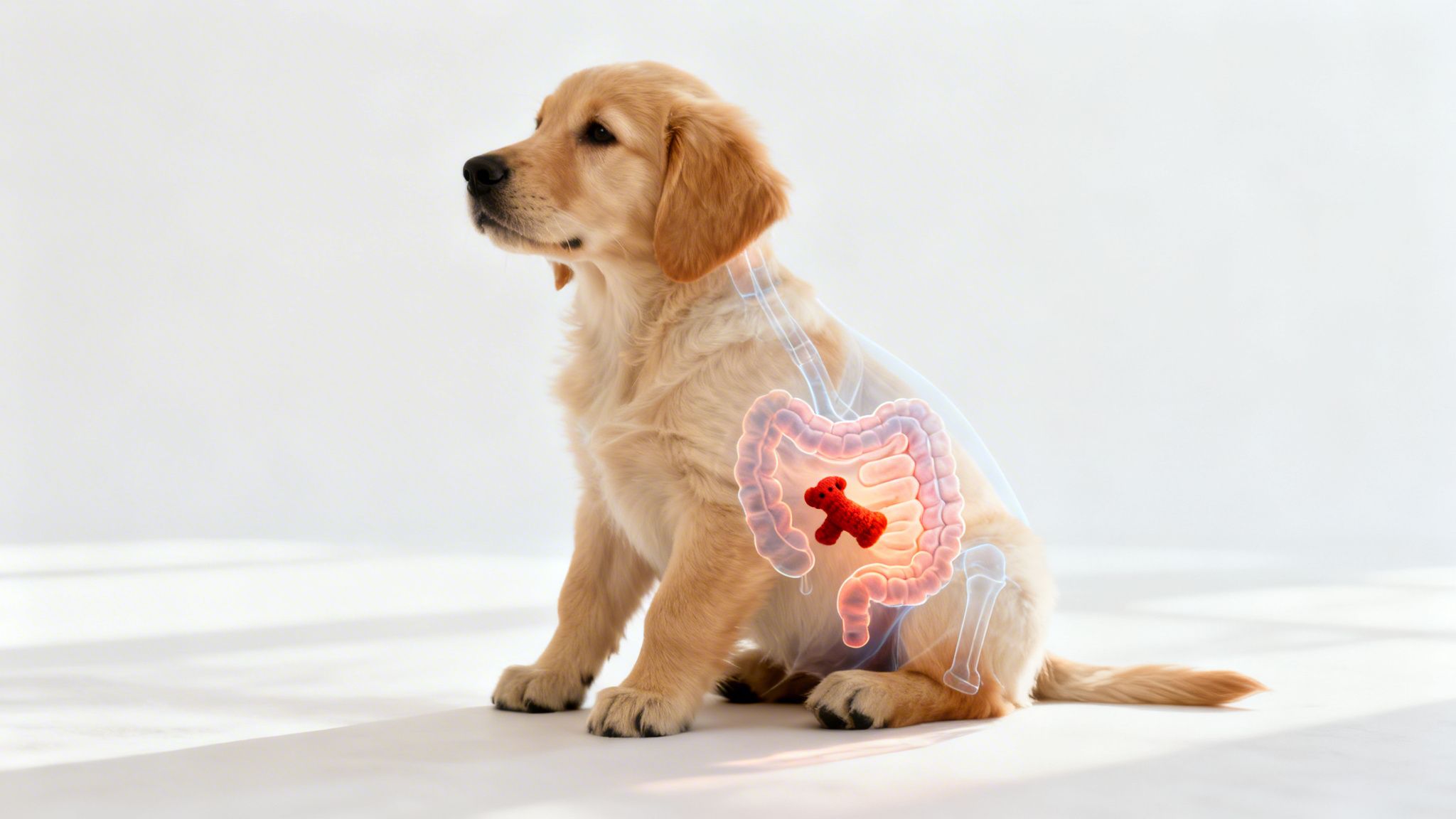
An intestinal blockage is a scary and very real emergency for any dog owner. It’s exactly what it sounds like: something is physically stuck in your dog's intestines, creating a "traffic jam" that prevents food, water, and waste from passing through.
This blockage can be either partial, allowing a little bit of fluid or gas to squeeze by, or complete, where nothing gets through at all. Left untreated, this can become life-threatening in a hurry.
What Is an Intestinal Blockage in Dogs
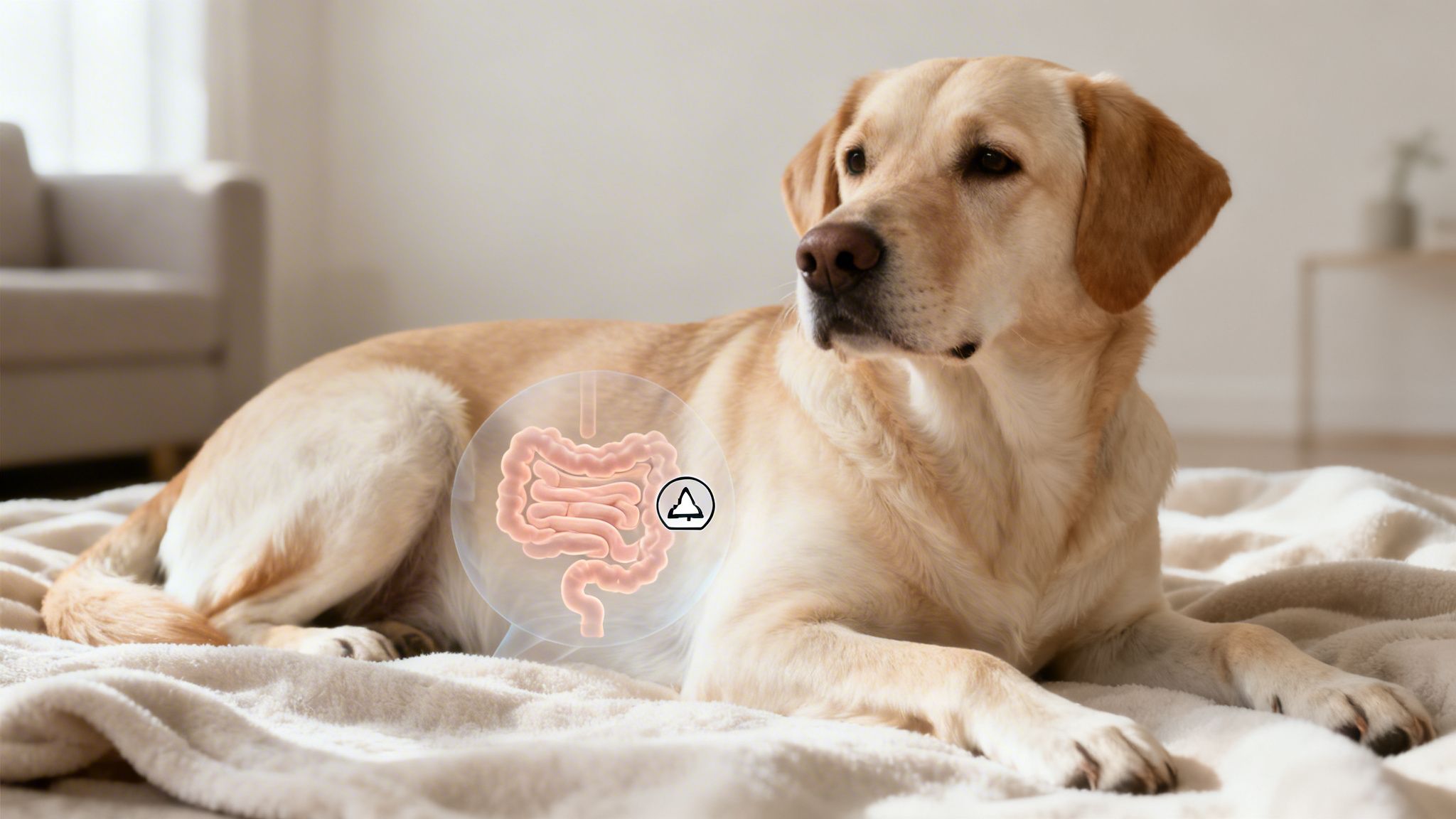
Think of your dog's digestive tract as a long, winding highway. An intestinal blockage is like a major pile-up that shuts down all the lanes. Traffic (food and liquid) backs up, causing pressure to build. This is incredibly dangerous because it can cut off blood flow to the intestinal walls, leading to tissue death, dehydration, and intense pain.
A partial blockage is like having one lane of that highway closed—things slow to a crawl, but a little can still get by. A complete blockage, on the other hand, is a total shutdown. Both are serious emergencies that need a vet's attention right away.
For a quick overview, here's a summary of what you need to know.
Quick Guide to Intestinal Blockages
Remember, this table is just a starting point. Your vet is always your best resource.
How Common Are These Blockages?
Unfortunately, they’re more common than you might think, especially for curious puppies and certain breeds known for their "eat first, ask questions later" attitude. Data from a large network of vet hospitals shows that foreign body obstructions happen at a rate of about 26.4 per 10,000 cases.
Young dogs under a year old are the most frequent culprits, but some larger breeds like Pit Bulls and Labrador Retrievers also top the list. If you want to dive deeper, you can explore more detailed statistics on this topic to see the full picture on survival rates and risk factors.
The most important thing to remember is that with quick veterinary intervention, the outlook is usually very good.
Key Takeaway: An intestinal blockage is a physical obstruction preventing the normal flow of material through the digestive tract. It is always a medical emergency, and the sooner a dog receives veterinary care, the better the chances of a full recovery.
Understanding the Seriousness Without Panic
Hearing the words "intestinal blockage" is enough to make any dog owner's heart sink. But being informed is your best defense against panic. The real danger isn't just the clog itself, but the domino effect it creates.
When the intestine is blocked, it can lose blood supply, causing the tissue to die. In a worst-case scenario, the intestinal wall can tear or burst. This spills digestive contents into the abdomen, causing a severe, life-threatening infection called peritonitis.
This is why acting fast is so critical. By knowing the signs and understanding the risks, you become your dog's most important advocate. Your watchfulness and quick decision to call the vet are the two most powerful tools for a positive outcome.
Why Intestinal Blockages Happen
To really get a handle on intestinal blockages, you first have to understand what causes these digestive traffic jams. There are a few different medical reasons, but the most common one—by a long shot—is when a dog swallows something it has no business eating.
These items are called foreign bodies. Think socks, kids' toys, rocks, you name it. Unlike food, your dog's stomach can't break them down. If an object is too big or just the wrong shape to navigate the winding path of the intestines, it gets stuck. Simple as that.
A classic—and especially dangerous—example is a sock. A dog might gulp one down in a playful moment. Because it's soft, it can make it out of the stomach and into the narrow small intestine. But that’s where the trouble starts. It bunches up and creates a complete roadblock. The same goes for things like corn cobs, which are infamous for causing severe blockages after being snatched from a picnic or trash can.
The usual Suspects: Common Foreign Objects
Dogs explore the world with their mouths, especially puppies and mouthy breeds like Labradors. This natural curiosity can unfortunately lead them to swallow a wild variety of household items. Knowing what to look out for is the first step in dog-proofing your home.
Some of the most common things vets have to surgically remove include:
- Fabric Items: Socks, underwear, and even face masks are top offenders. They ball up perfectly to plug the bowel.
- Kitchen Trash: Corn cobs are a huge hazard. Their size and tapered shape make them perfectly designed to get lodged in the small intestine. Cooked bones are another risk, as they can splinter and either block the gut or poke a hole through it.
- Toys and Balls: Small rubber balls, squeakers, and pieces chewed off of larger toys are swallowed all the time.
- Rocks and Stones: It sounds strange, but some dogs get into the habit of chewing on or eating rocks. This can easily lead to a very serious blockage.
- Linear Objects: This is a special category for things like string, yarn, ribbon, or even long strands of carpet. These are incredibly dangerous.
Why are linear objects so bad? They can get anchored somewhere, like at the base of the tongue or in the stomach. The intestines, doing their job, keep trying to push the rest of the string along. This motion causes the intestines to crawl up the string, bunching together like an accordion.
This scary situation, called plication, is a true surgical emergency. The tight string can act like a wire, sawing right through the intestinal wall and spilling gut contents into the abdomen. That leads to a massive, life-threatening infection.
A Quick Note on "Repeat Offenders": Some dogs just seem driven to eat things that aren't food, a condition known as pica. They don't "learn their lesson," even after a traumatic surgery. For these dogs, constant supervision and a rock-solid prevention strategy are the only things that will keep them safe.
Other Medical Causes for Blockages
While swallowing something is the #1 cause, it’s not the only one. Sometimes, the problem starts from inside the body. It’s important to know about these other causes, especially if you have an older dog or one with a history of digestive problems.
An intestinal blockage can also be caused by things that grow, twist, or swell internally.
Tumors or Masses
In older dogs, a tumor growing on the intestinal wall can slowly squeeze the passage shut. It can be a cancerous or benign mass, but either way, as it gets bigger, it physically blocks food and waste from passing. The symptoms often come on much more gradually than with a foreign object.
Intussusception
This one is a bit strange, but a good way to picture it is to think of an old-school telescope collapsing into itself. That’s basically what happens to the intestine. One section of the gut slides into the section next to it, creating a blockage and cutting off the blood supply to that trapped piece of tissue. It's more common in puppies and can be set off by anything that causes severe inflammation, like a bad case of worms or a viral infection.
Strictures and Scar Tissue
Sometimes, a past surgery, injury, or severe infection in the abdomen can leave scar tissue behind. This tissue isn't stretchy like the rest of the healthy intestine. It can form a stricture—a permanent, narrow ring. This tight spot can then easily trap normal food and waste, causing a blockage to happen over and over again.
Recognizing the Warning Signs of a Blockage
When your dog isn't acting like themselves, it’s natural to worry. For a problem as serious as an intestinal blockage in dogs, being able to tell the difference between a minor tummy ache and a real emergency is critical. The signs can start out so subtly, it's easy to brush them off at first.
Think of it like a clog in your home's plumbing. A partial clog might just mean a slow drain—frustrating, but not a full-blown crisis yet. It's the same with a digestive obstruction. The first hints can be easy to miss until the situation gets much worse. Your best defense is being a good observer.
The trick is to watch for any shifts in your dog's daily routine and physical condition. A dog with a blockage will almost always show you they're in distress; you just need to know how to read the signs.
Early and Subtle Symptoms to Watch For
In the beginning, especially if it's only a partial blockage, the symptoms can look a lot like any other case of digestive upset. But with a true obstruction, these issues won't go away—they’ll stick around and usually get worse.
- Vomiting: This is the classic, number-one sign. It might start with your dog throwing up food or yellow bile every now and then. But the real red flag is persistent vomiting, especially if it happens right after they try to eat or drink.
- Loss of Appetite: When a dog who normally loves mealtime suddenly shows no interest, that’s a big clue something is off. A complete refusal to eat, known as anorexia, is a serious warning sign that needs a vet's attention.
- Lethargy and Weakness: Is your usually bouncy pup now just lying around, ignoring their favorite toys or turning down a walk? A sudden crash in energy is common because the blockage is causing pain and preventing them from getting any nutrients from their food.
These early symptoms are your first heads-up that you might be dealing with more than a simple upset stomach. A single bout of vomiting might not be a major concern, but if you see a few of these signs together, or if any one of them lasts for more than 24 hours, it’s time to call your vet.
More Obvious and Urgent Signs
As a blockage progresses, the symptoms become much more dramatic and hard to miss. By this point, your dog is likely in a lot of discomfort and pain. These are crystal-clear signals that you need to get to a vet right away.
One of the most telling signs is a change in how they stand. A dog with belly pain will often get into a "prayer position"—front paws down on the floor with their rear end up in the air. This strange-looking stretch is their way of trying to relieve the pressure on their sore abdomen.
Other clear signs of distress include:
- Straining to Defecate: You might see your dog trying to poop but producing nothing, or maybe just a little bit of watery diarrhea. This happens because the blockage is physically stopping solid waste from moving through.
- Abdominal Pain: Besides the prayer pose, your dog might yelp or whine when you try to touch their belly. They might also seem restless and unable to find a comfortable position to lie down.
- Behavioral Changes: A normally sweet-natured dog can become grumpy or withdrawn because they're in pain. Pacing, panting, and an inability to settle are also very common.
Emergency Red Flags: Some symptoms signal a life-threatening emergency that needs immediate veterinary care. If your dog has a swollen or hard belly, pale gums, is struggling to breathe, or collapses—this is a crisis. These are signs of shock or a ruptured intestine, and every single second matters.
At the end of the day, you know your dog better than anyone. If your gut is telling you something is seriously wrong, listen to it. It is always better to be cautious and get a professional opinion than to wait and see. Acting quickly could save your dog's life.
How Your Vet Figures Out if It's a Blockage
When you rush your sick dog into the vet clinic, worried about a possible intestinal blockage, the team will move quickly to piece together the puzzle. Think of it like a detective story—they need to gather clues to confirm a blockage, pinpoint its location, and check your dog’s overall health to decide on the safest way to help them.
The first thing your vet will do is a thorough physical examination. They'll listen to your dog’s heart and lungs, check their gum color for signs of shock or dehydration, and take their temperature. A crucial part of this exam is gently but firmly pressing on your dog's belly, a technique called abdominal palpation.
During this hands-on check, the vet is feeling for anything out of the ordinary—pain, gas, a strange firmness, or sometimes even the object itself. A dog with a blockage will almost always flinch, tense up, or cry out when the sore spot is touched. This simple step gives the vet immediate and valuable information.
Looking Inside with Imaging
While a physical exam provides important hints, the only way to know for sure what's happening inside is with imaging. Vets almost always start with abdominal X-rays to get a look at your dog's entire digestive tract.
X-rays are fantastic for spotting two key things:
- Dense Objects: Things like metal, bone, or certain types of rocks show up bright white on an X-ray, making them easy to identify.
- Telltale Patterns: Even if the object itself is soft and doesn't show up (like a sock or a piece of plastic), the X-ray can reveal the effects of the blockage. You might see loops of intestine ballooned up with gas and fluid, which looks like a major traffic jam—a classic sign of an obstruction.
Of course, not everything is visible on an X-ray. Softer materials like fabric or some plastics are "radiolucent," meaning X-rays pass right through them. If the X-rays aren’t giving a clear answer but your dog’s symptoms are screaming "blockage," the next step is usually an abdominal ultrasound. Using sound waves, an ultrasound creates a live video of the organs, allowing the vet to see those softer objects, measure the intestinal wall thickness, and check for fluid that isn't moving.
Why Blood Work Is So Important
Along with imaging, your vet will almost certainly recommend blood work. This might seem like an odd step for a suspected blockage, but it's absolutely critical for figuring out how stable your dog is for treatment, especially if they might need surgery.
A blood panel gives a vital snapshot of your dog's internal health, checking for:
- Dehydration: A blockage stops water from being absorbed, and severe dehydration can happen fast.
- Electrolyte Imbalances: All the vomiting and fluid loss can throw crucial electrolytes like potassium and sodium dangerously out of whack.
- Organ Function: The tests check the liver and kidneys to make sure your dog is strong enough to handle anesthesia and recover from surgery.
This information is crucial for tailoring the right treatment. A major study found that where the blockage is located can change which electrolytes are most affected. For example, a whopping 63% of blockages happen in the jejunum (the middle section of the small intestine). You can learn more about these critical findings and how vets use this data to make life-saving decisions.
By putting together the clues from the physical exam, imaging, and blood tests, your vet can confidently diagnose the problem. This comprehensive approach gives them the full picture they need before moving on to the most important part: getting your dog treated.
How Vets Treat an Intestinal Blockage in Your Dog
Getting the news that your dog has an intestinal blockage is undoubtedly scary. But the good news is, that diagnosis is the first step toward getting them better. Veterinary medicine has come a long way, and we have several effective ways to clear these dangerous obstructions.
The right treatment plan will depend on a few key things: what your dog swallowed, where it's stuck, and whether it’s causing a partial or complete blockage.
Think of it like a traffic jam in your dog's digestive tract. A minor slowdown—a partial blockage—might just need a little help to get things moving again. But a complete standstill requires a more hands-on approach to clear the road and prevent a pile-up.
This flowchart gives you a peek into how your vet will likely approach the situation.
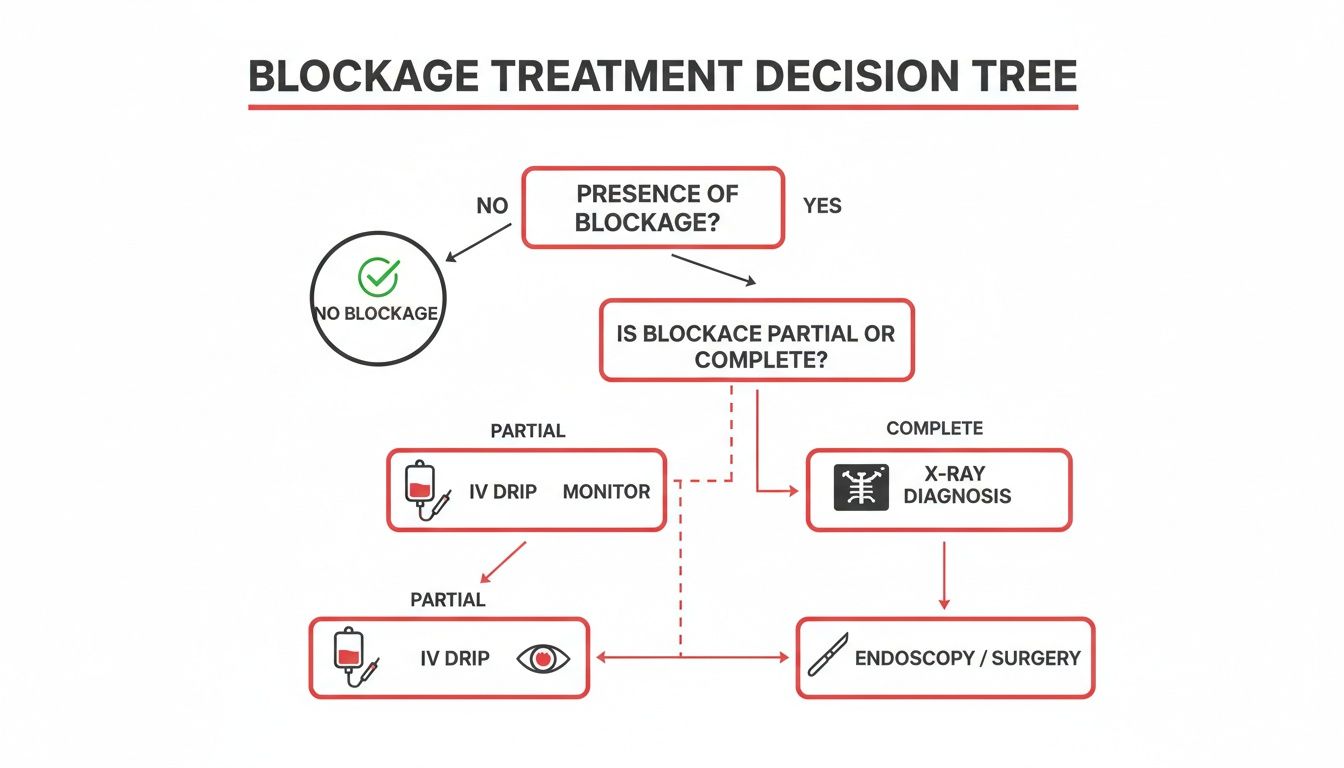
As you can see, the path forward really hinges on whether the blockage is partial or complete. Vets will always try the least invasive option first, as long as it's safe for your dog.
Medical Management for Partial Blockages
If the object is small and smooth, and it’s only causing a partial blockage, your vet might suggest trying a non-surgical approach first. This is what we call medical management. It means your dog will be hospitalized for close monitoring and supportive care.
The goal here is to give the body a chance to pass the object on its own. This typically involves:
- Intravenous (IV) Fluids: To rehydrate your dog and correct any electrolyte imbalances caused by vomiting.
- Pain Medication: To ensure your dog stays comfortable throughout the process.
- Close Monitoring: The veterinary team will keep a close eye on your dog's condition and may take more X-rays to see if the object is making progress.
This "wait and see" approach is only safe in very specific situations. If your dog isn't improving or the object just won't budge, it's time to move on to a more direct intervention.
Endoscopy: A Less Invasive Option
Sometimes, we get lucky. If the foreign object is stuck in the esophagus or stomach, we can often pull it out without making a single incision. This is done with a procedure called endoscopy.
An endoscope is a long, flexible tube with a tiny camera and a grasper on the end. The vet guides it down your dog's throat, locates the object on a screen, grabs it, and carefully pulls it back out. It's an amazing, minimally invasive technique that means a much faster and less painful recovery for your pup.
The difference this can make is huge. For blockages in the upper GI tract, endoscopy is incredibly successful. Surgery is a last resort, and the risks are far greater. One study showed the mortality rate for surgery on the esophagus was a staggering 75%, while endoscopy for the same problem was only 5.36%. If you're interested in the data, you can read more about these critical findings on treatment outcomes.
Abdominal Surgery for Complete Blockages
When an object is causing a complete blockage, is lodged deep in the intestines, or has started to damage the tissue, surgery isn't just an option—it's a lifesaver. The thought of surgery is scary for any pet owner, but this is a very common procedure that vets perform with a high rate of success.
During the operation, the surgeon will make an incision in your dog's abdomen to get to the intestines. They'll find the blockage and make a small cut in the intestinal wall (an enterotomy) to remove the object.
In some cases, the blockage may have cut off blood supply and caused a section of the intestine to die. If that happens, the surgeon will remove the damaged portion and carefully stitch the healthy ends back together (a resection and anastomosis).
While it's a major surgery, acting quickly gives your dog the best possible chance. It relieves the intense pain and pressure and, most importantly, prevents a potentially fatal rupture of the intestine.
How to Prevent Intestinal Blockages
As a dog owner, knowing that your vet can treat an intestinal blockage is a relief. But let's be honest—the absolute best-case scenario is never having to go through that terrifying experience in the first place. Prevention is always the best medicine, and it really comes down to two things: managing your dog's environment and supporting their overall digestive health.
It all starts with getting on your hands and knees and seeing your home from your dog's perspective. Anything on the floor, in a low basket, or on the edge of a coffee table is fair game. For some dogs, "fair game" means it's a chew toy. For others, it’s a snack. It takes a level of watchfulness that feels a lot like baby-proofing a house, but the peace of mind is worth every bit of effort.
The goal isn't to create a sterile bubble, but a "safe zone" where your dog can be a dog without stumbling into a life-threatening situation. A little consistent effort now is infinitely less stressful than a frantic, middle-of-the-night trip to the emergency vet.
Creating a Dog-Proof Environment
The single biggest thing you can do to prevent a blockage is to control what your dog can get into. It’s that simple. Most blockages aren't from malicious intent; they're accidents caused by everyday household items. A few smart habits can almost eliminate this risk entirely.
Try making these rules non-negotiable in your home:
- Secure Your Trash: Your kitchen and bathroom trash cans are treasure troves of danger. We're talking corn cobs, cooked bones, dental floss, and tampons. Get cans with lids your dog can't flip or pry open.
- Keep Laundry Contained: Socks and underwear are, weirdly enough, some of the most common items vets pull out of dogs' intestines. A closed laundry hamper is your best friend. Keep clothes off the floor.
- Manage Kids' Toys: Tiny Legos, doll accessories, and the squeakers ripped from stuffed animals are the perfect size to be swallowed. Teach your kids to put their toys away in bins or in rooms where the dog isn't allowed.
Supervision is just as crucial as dog-proofing. If you can't have eyes on your dog, especially if they’re young or just plain curious, use a crate, a playpen, or a dog-proofed room to keep them out of trouble.
Choosing Genuinely Safe Toys
Dogs have a natural need to chew, but not all toys are created equal. You’d be surprised how many popular dog toys can break apart, creating a serious choking or blockage hazard. Picking the right toys is a huge part of preventing an intestinal blockage in dogs.
Always look for toys that are durable and sized correctly for your specific dog. A toy that’s perfectly safe for a tiny Chihuahua could be swallowed whole by a Golden Retriever.
The "Indestructible" Myth: Let's get this out of the way—no toy is truly indestructible. You have to supervise your dog with any new toy to see how they play with it. If they can chew off chunks or pieces, that toy is not safe for them and needs to be taken away immediately.
Your best bet is to stick with toys made from a single, solid piece of tough rubber. Get in the habit of checking them regularly for cracks or missing pieces. If a toy is starting to fall apart, toss it. It’s also wise to avoid toys with small plastic squeakers that can be surgically removed and swallowed in seconds.
Supporting a Resilient Digestive System
While keeping foreign objects out of your dog's mouth is priority number one, building a strong, resilient digestive system is their body's first line of defense. A healthy gut is simply better at handling the occasional dietary mistake and can recover more easily from digestive stress.
Everything starts with a high-quality, easily digestible diet. Good food supports regular, healthy bowel movements and maintains the integrity of the entire gut. And while we're focused on foreign objects, keeping the digestive tract moving smoothly is important for overall health. Sometimes, issues like severe constipation can lead to problems, so understanding how to relieve constipation naturally can provide a good foundation for gut wellness.
If your dog has a sensitive stomach or is a repeat offender for eating things they shouldn't, you might want to consider a daily gut-support supplement. A quality chew with prebiotics, probiotics, and fiber helps promote a healthy gut microbiome, which is crucial for smooth digestion. Think of it as an investment in your dog’s internal "plumbing"—just a little something to help keep things flowing as they should.
Common Questions About Dog Intestinal Blockages
Even after getting a handle on what an intestinal blockage is, you probably still have a few lingering questions. It’s a scary situation, and it’s completely normal to have practical concerns. Let’s walk through some of the most common questions we hear from dog owners.
How Long Can a Dog Live with an Intestinal Blockage?
This is the one question every worried owner asks, and the answer is sobering: not long. A complete intestinal blockage is a true medical emergency, and there's no time to "wait and see."
While a dog might technically survive for three to four days, they will be in a great deal of pain, and their condition will spiral downward very quickly. The blockage cuts off blood supply to the intestines, causing tissue to die. If the intestinal wall tears, stomach contents leak into the abdomen, leading to a life-threatening infection. Your dog's best shot at a full recovery hinges on getting to a vet within 24 hours of noticing the first signs.
Can a Dog Pass a Blockage on Its Own?
Sometimes, a dog might get lucky and pass a very small, smooth object that’s only causing a partial blockage. A vet might help this along with supportive care, like IV fluids to keep things hydrated and moving. But you should never, ever count on this happening.
Key Insight: If you even suspect your dog swallowed something they shouldn't have, call your vet immediately. Never try to make your dog vomit at home unless a vet specifically tells you to. The object could get stuck in the throat on the way up, creating an even more dangerous emergency.
What Is the Recovery Time for Intestinal Blockage Surgery?
If your dog needs surgery, you can generally expect a full recovery to take about 10 to 14 days. The first 72 hours are the most critical, as your vet will be monitoring for any signs of infection or other complications.
Once your dog is back home, your job is to enforce strict rest—no running, jumping, or playing. It's tough, but it's essential for healing. They'll also need to:
- Wear an E-collar (the classic "cone of shame") to keep them from licking or chewing the incision.
- Eat a bland, soft diet that’s easy on their healing gut.
Following your vet’s discharge instructions to the letter is the single most important thing you can do to ensure a smooth recovery.
Are Some Dog Breeds More Prone to Blockages?
They sure are. Both research and anecdotal evidence from vet clinics point to certain breeds showing up with this problem more often. Labrador Retrievers, Golden Retrievers, and Pit Bull-type dogs are frequent fliers, mostly because their curious, mouthy nature gets them into trouble.
But it’s crucial to remember that this can happen to any dog—any breed, any age, any size. Staying vigilant is just part of being a responsible dog owner, no matter what kind of pup you have.

Karolis is the Founder of FORMA, a pet wellness brand focused on longevity and daily nutrition for dogs. Writes about supplements, canine health, and helping pets live longer, healthier lives
Join thousands of pet parents getting science-backed health insights and natural care advice