Can Dogs Eat Dragon Fruit? can dogs eat dragon fruit - Safety, Benefits & Tips
Can dogs eat dragon fruit? can dogs eat dragon fruit safely - tips on safety, nutrition, serving sizes, and how to feed your pup.

You've probably seen dragon fruit in the produce aisle—that vibrant, pink-skinned fruit with green spikes that looks like something from another planet. It's natural to wonder if you can share a slice with your curious dog.
So, what’s the verdict? Yes, dogs can absolutely eat dragon fruit, but with a few important rules. The sweet, speckled flesh is a perfectly safe and healthy snack, but that tough, leathery skin is a definite no-go. It’s hard for them to digest and can even be a choking hazard, so you'll need to always remove it first.
What to Know Before Sharing Dragon Fruit With Your Dog

When you find a healthy treat that your dog actually loves, it feels like a huge win. Dragon fruit, also known as pitaya, often falls into that category. It’s more than just a sweet, hydrating snack; it’s a low-calorie option that’s great for a little reward.
With just 82 calories in a 3.5-ounce serving, it’s a guilt-free treat. This is a big deal, especially when you consider that an estimated 59% of dogs in the US are overweight or obese. Finding low-calorie alternatives to processed biscuits is one of the best things we can do for our pups' health. You can learn more about how fresh foods fit into a modern canine diet by checking out these insights on dog-safe fruits.
The number one rule with any new food is to introduce it slowly and in moderation. Because dragon fruit is high in fiber and water, too much too soon can lead to an upset stomach or diarrhea.
Dragon Fruit for Dogs at a Glance
Before we get into the nitty-gritty of health benefits and serving suggestions, here’s a quick cheat sheet. This table breaks down the most important things to remember when giving your dog dragon fruit.
Here’s a look at the essentials:
Think of dragon fruit as a special, occasional treat rather than a daily staple. When prepared correctly, it’s a wonderful way to add a little variety and nutrition to your dog’s snack time.
What's Inside? The Real Nutritional Perks for Your Dog
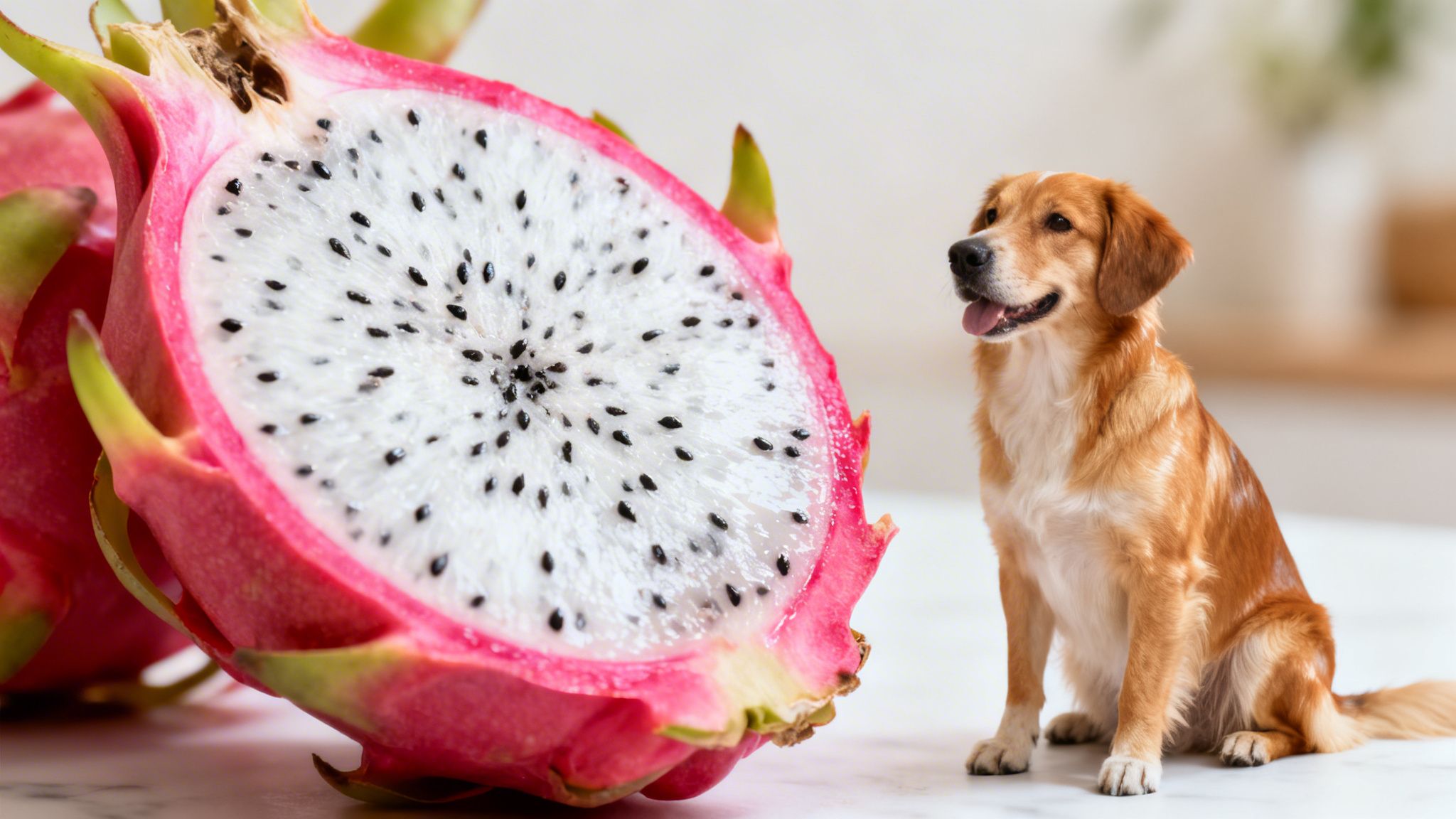
It’s easy to get caught up in how weird and wonderful dragon fruit looks, but when you peel back that vibrant pink skin, you’ll find a surprisingly gentle and supportive snack for your dog. This isn't just a sugary, watery treat; it’s packed with good stuff that can genuinely boost their health.
Think of each nutrient as a member of a tiny support crew, working together to keep your dog’s body in balance. When given in moderation, this fruit really can be a beneficial addition to their diet. Let’s get into what makes it so special.
A Gentle Boost for Their Tummy and Immune System
One of the biggest wins here is the Vitamin C. Now, dogs make their own Vitamin C, but a little extra can be a huge help, especially if they're feeling stressed or under the weather. It’s a cornerstone of a strong immune system, helping them fight off sniffles and other common bugs.
Dragon fruit is also loaded with dietary fiber. The best way to picture what this fiber does is to think of it as a gentle broom sweeping through your dog's digestive tract. It keeps things moving, encourages regular potty breaks, and helps maintain a healthy gut. And as any dog owner knows, a happy gut often means a happy dog.
The combination of high water content and fiber makes dragon fruit fantastic for digestive regularity. The water keeps things from getting "stuck," and the fiber adds the right amount of bulk for healthy, consistent stools.
Healthy Fats and Antioxidants for a Healthy Glow
Beyond the basics, dragon fruit comes with some powerful extras. It’s full of antioxidants—especially compounds called betalains, which are responsible for that brilliant magenta color in the red varieties. These antioxidants are like tiny bodyguards for your dog's cells, neutralizing the nasty free radicals that can cause damage and contribute to aging and disease.
And what about those tiny black seeds? Don’t worry about picking them out. They’re perfectly safe and happen to be a great source of omega-3 and omega-6 fatty acids. These healthy fats are essential for:
- Keeping their coat shiny and their skin from getting dry and itchy.
- Supporting brain health and cognitive function as they age.
- Helping to reduce inflammation all over the body.
A Surprising Mineral Punch
You might not expect it, but dragon fruit also packs a decent mineral punch that supports everything from strong muscles to healthy bones. A 3.5-ounce serving contains about 240mg of potassium, a mineral critical for heart health and proper muscle function. That's a big deal, especially when you consider that heart conditions affect roughly 10% of senior dogs.
It also contains magnesium, which helps maintain bone density—another significant benefit since an estimated 20% of dogs over eight years old show early signs of arthritis. The fruit's Vitamin C and betalains also work together to reduce oxidative stress, providing anti-inflammatory perks. If you want to get into the nitty-gritty, you can find a full nutritional breakdown for dogs on nomnomnow.com.
So, when you toss your pup a few cubes of dragon fruit, you're not just giving them a treat. You're giving them a snack that actively supports their strength, immunity, and overall vitality.
How to Prepare and Serve Dragon Fruit Safely
So, you’re ready to share this cool-looking fruit with your dog? Great! Getting it ready is simple, but there are a few non-negotiable rules to follow to keep things safe. The key is to think of dragon fruit as a special, juicy treat, not a full-on meal.
First things first, pick a good one at the store. You’re looking for a fruit with vibrant, bright pink skin. It should feel firm but give just a little when you gently press it—kind of like a ripe avocado. Steer clear of any that are mushy, have a lot of brown spots, or look dried out.
A Step-by-Step Guide to Preparation
Don't let its spiky appearance fool you; prepping a dragon fruit is surprisingly easy. All you need is a cutting board and a knife.
- Wash It Well: Always start by giving the fruit a good rinse under cool water. This washes away any dirt, pesticides, or bacteria it might have picked up on its way to your kitchen.
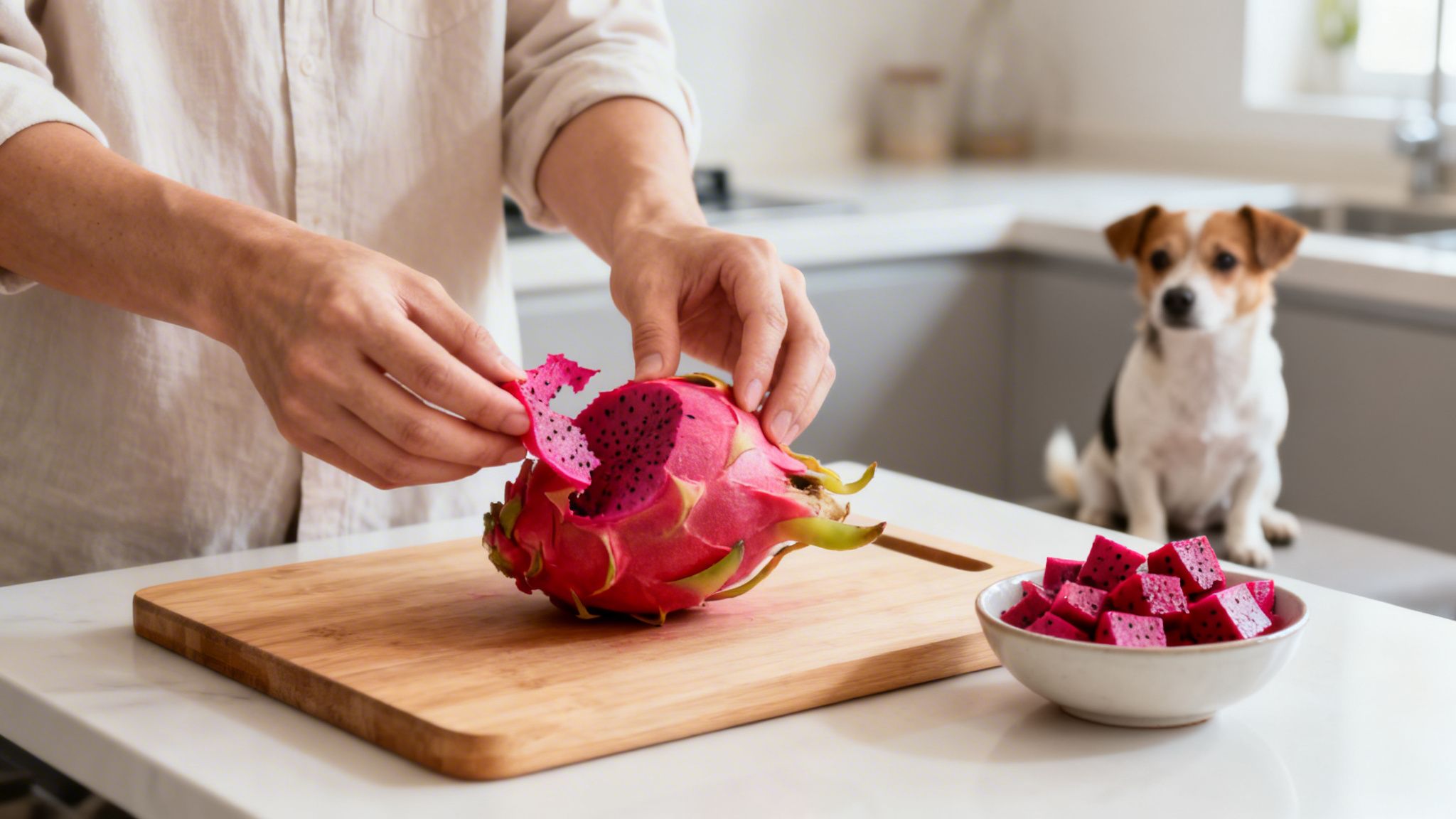
- Slice and Peel: Lay the fruit on your cutting board and slice it right down the middle, lengthwise. The flesh should separate from the skin pretty easily. You can either use a spoon to scoop out the white or pink flesh, or just peel the thick skin back with your fingers.
- Toss the Skin: This is important—the leathery skin is tough, hard to digest, and can be a serious choking hazard. It has no nutritional perks for your dog, so make sure it goes straight into the compost or trash.
- Dice It Up: Cut the fleshy part into small, bite-sized cubes. Tailor the size to your dog—what works for a Great Dane is way too big for a Yorkie. Think small.
If you have any leftovers, pop them in the fridge. Just be sure you're using safe plastics for food storage to keep the fruit fresh and free from contaminants.
How Much Dragon Fruit Can My Dog Eat?
This is where moderation really matters. The best rule of thumb for any treat, including dragon fruit, is the 10% rule: treats should never make up more than 10% of your dog's total daily calories.
Moderation is everything. Because it's packed with fiber, too much dragon fruit can easily cause an upset stomach or diarrhea. It’s always best to start with a tiny amount to see how your dog handles it.
Not sure where to begin? Here are some simple serving guidelines based on your dog’s weight:
- Extra-Small Dogs (under 10 lbs): Just one or two tiny pieces, about the size of a pea.
- Small Dogs (10-30 lbs): A few small cubes, adding up to about one teaspoon.
- Medium Dogs (30-50 lbs): One to two tablespoons of diced fruit.
- Large Dogs (over 50 lbs): A small handful, up to about a quarter cup of cubes.
Remember to introduce it slowly. If your dog enjoys it and shows no signs of digestive trouble, you can feel confident adding it to their treat rotation every once in a while.
Understanding the Potential Risks and Side Effects
As great as dragon fruit can be, it's not without a few potential hiccups. The good news is that the risks are low and usually pretty easy to manage. It just pays to be aware of what to look for, especially when introducing any new food to your pup's diet.
The biggest issue you might run into is simple digestive upset. Think of your dog's gut as a finely tuned system. Suddenly adding a bunch of a high-fiber, high-water fruit can be a bit of a shock. It's like sending a sudden rush of water through old pipes—it can cause a bit of a backup.
This usually shows up as diarrhea. It’s not a sign that dragon fruit is toxic, but more of a signal that their stomach is having a tough time processing all that new fiber and moisture at once.
Signs of an Intolerance or Upset Stomach
Anytime you give your dog a new treat, you have to put on your detective hat for a few hours. Keep a close eye on your pup to see how they handle it. Most of the time, any issues are mild and pass quickly, but being observant is key.
Here are the main signs of digestive trouble to watch for:
- Loose Stools or Diarrhea: This is, by far, the most common reaction if they’ve had a bit too much.
- Vomiting: A pretty clear sign their stomach didn't appreciate the new addition.
- Lethargy or Lack of Energy: If your normally bouncy dog is suddenly moping around, an upset tummy could be the culprit.
- Excessive Gas: A few rumbles are one thing, but a lot of extra gas can signal digestive distress.
If you spot any of these symptoms, just hold off on giving them more dragon fruit for a while and let their system get back to normal. If the symptoms last for more than a day, it's probably wise to give your vet a quick call.
While we’re focused on what goes in your dog, it’s worth remembering that what comes out can affect your home. If an accident does happen, using the right products is crucial. There are some excellent recommendations for floor cleaners safe for dogs that get the job done without exposing your pet to harsh chemicals.
The Small Risk of Allergic Reactions
It’s extremely rare, but an allergic reaction to dragon fruit can happen. This is exactly why the "start small" rule is so important. For the very first introduction, stick to a single, tiny piece—about the size of a pea. Then, just wait and watch.
Signs of an allergic reaction look different from a simple tummy ache. You’ll want to look for skin issues like intense itching, hives, or red patches, and more serious signs like swelling around their face, lips, or mouth.
If you see any of these reactions, stop giving them the fruit right away and get in touch with your veterinarian for guidance.
Creative Ways to Add Dragon Fruit to Your Dog's Diet

So, you've mastered safely preparing dragon fruit for your dog. Now for the fun part! While plain cubes are a perfectly good treat, a little creativity can turn this healthy snack into an exciting new experience for your pup.
Thinking outside the food bowl is a great way to add a little enrichment to their day. Serving dragon fruit in different forms not only keeps things interesting but can even add to its benefits. A frozen chunk, for example, is a fantastic teething soother for a puppy or a welcome relief on a scorching summer afternoon.
Simple Dragon Fruit Recipes for Your Dog
Don't worry, you don't need to be a professional chef to make these. These dog-friendly recipes are incredibly simple, requiring just a couple of ingredients and a few minutes of your time.
1. Frozen Dragon Fruit "Pupsicles"
This has to be one of the easiest and most-loved ways to serve dragon fruit. These frozen treats are perfect for warm weather and give your dog something fun to work on.
- Blend It: Toss a few cubes of fresh dragon fruit into a blender with a splash of water or a tablespoon of plain, unsweetened yogurt. Blend it all up until you get a nice, smooth puree.
- Freeze It: Pour the bright pink mixture into an ice cube tray or a fun, dog-safe silicone mold.
- Serve It: Let it freeze for a few hours. Once solid, pop one out for a hydrating, delicious treat your dog will go crazy for.
These pupsicles are more than just a snack; they're an enrichment tool. Licking is a self-soothing behavior for dogs, so a frozen treat can help keep them calm and occupied.
2. A Tasty Food Topper
Got a picky eater on your hands? A little bit of dragon fruit might be just the thing to spark their interest. Simply mash up a small amount of the fruit and mix it right into their regular food. It adds a touch of sweetness, moisture, and a nutrient boost to their meal.
This is an especially great trick for senior dogs or those with dental problems who might be turning their nose up at dry, crunchy kibble. The extra hydration is a nice bonus, too!
3. High-Value Training Treats
When you’re teaching "stay" for the tenth time, you need a reward that really holds your dog's attention. Small, soft cubes of dragon fruit make an excellent high-value reward. Their unique taste and soft texture are often way more exciting than a standard dry biscuit.
Plus, since they are low in calories, you can be a little more generous during a training session without worrying about overdoing it. Just keep the pieces small and the praise big
Frequently Asked Questions About Dogs and Dragon Fruit
When you're trying to do the best for your dog, it feels like a new question pops up every day. You want to be sure about any new food you're introducing, and that’s a great instinct. Let's clear up some of the most common questions about sharing dragon fruit with your furry friend so you can feel confident you're making a safe choice.
We’ve pulled together the top queries to tackle specific concerns and drive home the most important points from this guide.
Can My Puppy Eat Dragon Fruit?
The short answer is yes, but you need to be extra careful. A puppy's digestive system is still under construction and is way more sensitive than an adult dog's. Think of it like a brand-new engine that's still being broken in—you wouldn't want to push it too hard right away.
Because of this, moderation is everything. If you decide to offer some, start with a minuscule piece, no bigger than a pea. Then, keep a close eye on your pup for any signs of an upset stomach, like loose stools.
While the fiber in dragon fruit is good for dogs, even a tiny bit can be too much for a young gut and lead to diarrhea. Remember, their specially formulated puppy food should always be the star of the show, providing the complete nutrition they need to grow. New foods like dragon fruit should be a very rare, very tiny treat, introduced one at a time.
Is Red or Yellow Dragon Fruit Better for My Dog?
Good news here: both the red-skinned (which can have white or magenta flesh) and the yellow-skinned varieties are perfectly safe and nutritious for dogs. Nutritionally, they're so similar that you don't need to stress about finding one type over the other.
Some studies hint that the deep red and magenta-fleshed fruits pack more betalains, which are powerful antioxidants that give them their vibrant color. On the flip side, the yellow varieties are often said to be a little sweeter.
For your dog, either one is a great pick. What matters most is that the fruit is fresh, ripe, and prepared correctly. Just make sure you serve only the flesh and get rid of that tough, indigestible skin. The color of the fruit is far less important than how you serve it.
How Often Can I Give My Dog Dragon Fruit?
Think of dragon fruit as a special treat, not a daily snack or part of their regular meal. For a healthy adult dog, offering a small, properly sized portion just once or twice a week is a safe bet.
The golden rule for all treats is the 10% rule. This handy guideline says that treats—and that includes healthy ones like dragon fruit—should never make up more than 10% of your dog's total daily calorie count. Sticking to this helps keep their main diet balanced and prevents the fruit's high fiber from causing an upset stomach.
Your dog's daily diet is like a carefully built house. Their main food is the foundation and walls. Treats are just the decorations—they look nice, but you wouldn't build a house out of them.
Are the Black Seeds in Dragon Fruit Safe for Dogs?
Yes, they absolutely are! The tiny black seeds you see scattered throughout the fruit's flesh are completely safe for dogs to eat. It's a common worry, especially since we know seeds from other fruits like apples and cherries can be toxic.
Thankfully, dragon fruit seeds are different. They're small, easy to digest, and pose no risk at all. In fact, they even provide a small nutritional bonus, containing healthy omega fatty acids and a little extra fiber. You definitely don’t need to spend time trying to pick them all out.
Can I Give My Dog Dried Dragon Fruit?
It’s much better to stick with fresh dragon fruit. While dried dragon fruit isn't toxic, the drying process super-concentrates all the natural sugars. A small piece of dried fruit has way more sugar than the same-sized piece of fresh fruit.
All that extra sugar can lead to unwanted weight gain and might give your dog an upset stomach. Plus, fresh fruit has a high water content, which is a great way to help keep your dog hydrated—a benefit that’s completely lost when the fruit is dried. For these reasons, fresh is always the best and safest choice for your pup.

Karolis is the Founder of FORMA, a pet wellness brand focused on longevity and daily nutrition for dogs. Writes about supplements, canine health, and helping pets live longer, healthier lives
Join thousands of pet parents getting science-backed health insights and natural care advice