Can You Give Dogs Benadryl? A Guide for Concerned Owners
Can you give dogs Benadryl? Learn the proper dosage, risks, and side effects. Discover why vets are rethinking this drug and find safer alternatives.

So, can you give dogs Benadryl? The short answer is yes, but it’s a qualified yes, loaded with a lot of "buts" and "be carefuls." Honestly, while it's a tool some vets still reach for in a pinch, it's rarely the best or safest choice for our dogs today.
The Honest Answer About Benadryl for Dogs
For decades, Benadryl (the brand name for diphenhydramine) has been a staple in the family medicine cabinet. So when a dog gets an insect sting or breaks out in hives, it's a natural reflex for a worried owner to think of that little pink pill.
But the way we, as veterinarians and educated pet parents, view this old standby has changed. It's time we all caught up.
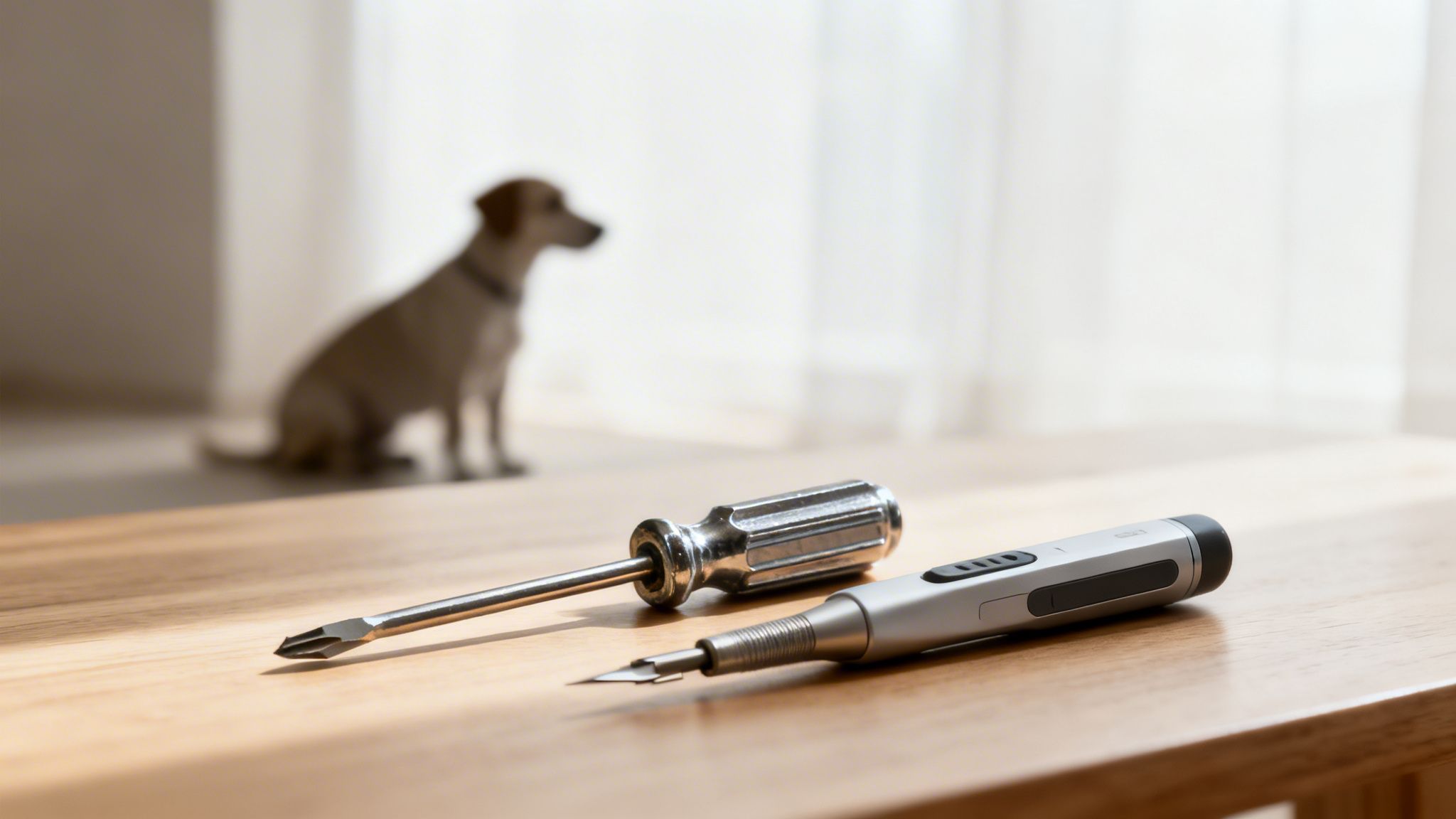
Think of Benadryl as an old, general-purpose flathead screwdriver. It’s been rattling around the toolbox forever and, sure, it might get the job done for a very simple task. But for anything important, you’d grab a modern, specialized tool—one that’s safer, more efficient, and designed for the specific job at hand. The same logic applies here.
Why Is This Question So Common?
The question "can you give dogs Benadryl" floods online forums because it’s cheap, you can buy it anywhere, and we've all used it ourselves. As pet owners, we see our dogs suffering and want to give them fast relief. Reaching for something familiar comes from a place of love.
The problem is, that instinct doesn't account for the critical differences in how dogs and humans process medications. While some vets might suggest it for an acute, one-off situation, it's no longer a first-line treatment for ongoing issues like seasonal allergies. There are simply better and safer options now.
Vet Guidance Is Not Optional
I can't stress this enough: never give your dog Benadryl without talking to your vet first. This isn't just a suggestion; it's a matter of safety. Benadryl has what we call a narrow margin of safety.
The generally accepted dose is about 1 to 2 milligrams per pound of your dog's body weight. However, research shows that negative side effects can pop up at doses just slightly higher than that, making an accidental overdose a very real and dangerous possibility. For a closer look at the data, you can explore veterinary resources on dosing risks.
Giving your dog Benadryl without a vet's okay is like using that old screwdriver to fix a car's computer. You might get lucky, but you're far more likely to cause serious damage you can't even see.
To help you make an informed decision, let's get into the specifics—from when Benadryl might be appropriate to why modern treatments are usually the better call.
Before we dive deeper, here is a quick summary of the most important things to keep in mind.
Benadryl for Dogs At a Glance
This table covers the basics, but the devil is in the details. In the rest of this guide, we'll break down everything you need to know to move from simply asking if you can give your dog Benadryl to truly understanding what's best for their health.
When Vets Still Use Benadryl for Dogs
While it's no longer the first thing we grab for a dog's itchy skin, Benadryl (diphenhydramine) hasn't been completely kicked out of the veterinary clinic. Its role has just gotten a lot more specific. Think of it less as an everyday allergy pill and more as a precision tool for very particular, often acute, situations.
Knowing when vets use it helps clear up why we might recommend it one day but advise against it the next. It’s a good reminder that the answer to "can you give dogs Benadryl?" is always best answered by a professional. These aren't home remedies; they are carefully calculated, vet-supervised applications.
In these cases, Benadryl isn't just about calming a minor itch. It's used as a strategic part of a bigger medical plan to keep a dog safe.
Preventing Severe Allergic Reactions
One of the most common and critical uses for Benadryl today is pre-treating a dog before they encounter something we know could trigger a massive allergic reaction. It's a purely preventative move, designed to blunt the body's over-the-top response before it even gets started.
A vet will typically use this strategy in a few high-stakes scenarios:
- Vaccine Reactions: If a dog has a history of reacting badly to shots—think hives, a swollen face, or worse—a vet might give a dose of Benadryl beforehand. This helps head off a potentially severe allergic reaction to the vaccine.
- Mast Cell Tumor Surgery: Mast cells are little walking bags of histamine. During surgery to remove a mast cell tumor, just handling the tumor can cause it to dump a dangerous amount of histamine into the dog's system. Pre-treating with Benadryl helps block this from happening.
- Heartworm Treatment: The medicine that kills adult heartworms works well, but as the worms die, they release foreign proteins. This can trigger a nasty, sometimes life-threatening, allergic reaction. Benadryl is often a standard part of the protocol to keep that risk to a minimum.
You can take a deeper dive into these specific uses by checking out research on diphenhydramine use in dogs. It really shows how the thinking has shifted from general use to these very precise, professional interventions.
Managing Dizziness and Nausea
Benadryl's well-known side effect of drowsiness, along with its effects on the brain, also makes it useful for issues related to balance and motion. While we often have newer, better drugs for this now, it's still a solid option in some circumstances.
Key Insight: Benadryl works for nausea because it affects the part of the brain that controls vomiting, called the chemoreceptor trigger zone. This is why its benefits go beyond just allergies.
One classic example is vestibular syndrome. This condition throws a dog's balance completely out of whack, causing extreme dizziness, a head tilt, and nausea. The calming, sedating effect of Benadryl can help a distressed dog feel less panicky and reduce that awful spinning sensation.
It's also sometimes used for motion sickness in the car. Giving it about an hour before a trip can help a dog relax and feel less queasy. That said, most vets today will point you toward newer medications made specifically for canine motion sickness that don't cause as much drowsiness.
These examples show that when a vet does suggest Benadryl, it’s for a very specific reason—not just a random shot in the dark for an itchy foot.
Alright, let's talk about how to figure out the right Benadryl dose for your dog, assuming your vet has already given you the go-ahead.
Getting this part right is everything. This is one of those times where precision is key, because the goal is to help your dog, not accidentally cause more problems.
Most vets agree on a standard starting point: 1 milligram (mg) of diphenhydramine for every pound of your dog's body weight. This dose can usually be given two to three times a day, about 8-12 hours apart. So, a 25-pound dog would get a 25 mg dose, and a 75-pound dog would get 75 mg.
It sounds simple, but you can't just eyeball it. Benadryl has what we call a narrow safety margin. Think of it like a recipe that calls for a pinch of a very strong spice—a little bit is perfect, but a little too much can easily ruin the dish. The line between a helpful dose and a toxic one is surprisingly thin, which makes accurate dosing non-negotiable.
Finding the Right Benadryl (And Avoiding the Wrong One)
This next part is just as important as the dose. You absolutely must choose a Benadryl product that contains only diphenhydramine and nothing else.
It's easy to grab the wrong box off the shelf. Many over-the-counter medicines are combination formulas designed to tackle a whole list of human cold and sinus symptoms. These are a huge no-go for dogs, as they’re often packed with other active ingredients that can be seriously toxic to them.
As you can see below, the reasons a vet might use diphenhydramine are very specific and targeted—a far cry from why a person might grab a multi-symptom cold pill.

This just goes to show that in a clinical setting, this drug is used for serious medical reasons, not as a casual, all-purpose fix.
Dangerous Ingredients to Watch Out For
When you're at the pharmacy, you need to become a label detective. Seriously. Flip the box over and scan the "Active Ingredients" list. If you see anything other than diphenhydramine, put it back immediately.
Here is a quick breakdown of which Benadryl products are generally safe and which are definite no-gos for your dog.
Benadryl Formulations Safe vs Unsafe for Dogs
The bottom line? Never, ever give your dog a product with a label like "Benadryl Cold & Flu" or "Benadryl Sinus." These multi-symptom formulas are a recipe for accidental poisoning.
You also have to be extra careful with liquid versions, especially those made for children. Many are sweetened with xylitol, an artificial sweetener that is incredibly dangerous for dogs. Even a small amount can cause a life-threatening plunge in blood sugar and lead to liver failure. Some liquids also contain alcohol, another toxin for pets.
Because of these risks, plain, old-fashioned tablets are almost always the safest and simplest way to give your dog the right dose of only diphenhydramine. So, when asking if you can give dogs Benadryl, the real answer depends entirely on you choosing the right, single-ingredient product.
What Are the Risks and Side Effects?
Whenever you give your dog a new medication, even an over-the-counter one, you have to be ready for potential side effects. The answer to "can I give my dog Benadryl?" isn't a simple yes or no without understanding what can go wrong.
Your dog can't tell you they feel weird or dizzy, so it’s your job to be their detective. Knowing what to look for is the first step.
Common and Mild Side Effects
The number one thing you’ll probably notice is drowsiness. This is the same reason some people use it to get to sleep, and it’s a very common reaction in dogs. Your pup might just seem extra sleepy or want to cuddle more than usual.
Along with that sleepiness, a few other things might pop up:
- Dry Mouth: The medication can dial back saliva production. You might notice your dog making more trips to the water bowl or see that their saliva is a bit thick and sticky.
- Urinary Retention: Benadryl can sometimes make it harder for a dog to pee. If you see your dog straining or just not going as often as they normally do, this could be why.
- Vomiting or Diarrhea: Just like with people, some dogs get an upset stomach after taking diphenhydramine.
These reactions are usually on the milder side and often go away on their own. But sometimes, a dog can have the complete opposite reaction. Instead of getting tired, they might become hyper, agitated, or anxious. This is called a paradoxical reaction—it’s not common, but it happens.
Key Takeaway: The line between a helpful dose and a harmful one is incredibly thin. Research has documented that a dose of 111 mg/kg was fatal in a Poodle-cross, and side effects can start at just 1 mg/kg over the recommended amount. You can learn more about the research on diphenhydramine toxicity in dogs to really understand this narrow safety margin.
When Benadryl Is Dangerous
Beyond the usual side effects, there are situations where Benadryl is a flat-out bad idea. The drug has what are called "anticholinergic" properties (the same ones that cause dry mouth), and these can make some existing health problems much, much worse.
A good vet will never prescribe Benadryl if your dog has any of these conditions:
- Glaucoma: The drug can increase pressure inside the eyes.
- High Blood Pressure: It can make blood pressure climb even higher.
- Cardiovascular Disease: It can speed up the heart rate, putting dangerous strain on a weak heart.
- Prostatic Hypertrophy: For male dogs with an enlarged prostate, it can make urinary retention worse.
- Seizure Disorders: In some rare cases, it might lower the seizure threshold, making a seizure more likely.
This is exactly why you can't skip a vet visit. Trying to diagnose and medicate your dog on your own could easily turn a small problem into a big emergency. While it's vital to know the risks of this specific drug, it's also smart to understand the general principles regarding supplement use and potential adverse effects so you can be a more informed pet parent all around.
At the end of the day, only your veterinarian can truly weigh the potential benefits against these serious risks for your specific dog.
Why Vets Are Rethinking Benadryl for Dog Allergies
If you've noticed your vet seems a bit hesitant to suggest Benadryl for your dog's itchy skin lately, you're picking up on a major shift in the veterinary world. This isn't just a change of heart—it's a change based on solid new science about how the drug actually works in dogs. Or, more accurately, how it doesn't.
For a long time, we simply borrowed from human medicine, figuring what worked for our allergies would work for our dogs. But the science is telling us a very different story. The whole issue boils down to a concept called bioavailability.
The Bioavailability Problem
"Bioavailability" sounds complicated, but it's really just a term for how much of a drug actually makes it into the bloodstream to do its job.
Imagine you're watering a plant with a super leaky hose. You might pour a whole gallon of water in one end, but if 92% of it leaks out through holes along the way, your poor plant only gets a few dribbles.
That's almost exactly what's happening when we give dogs Benadryl. New research has confirmed that when dogs take diphenhydramine by mouth, their bodies absorb it incredibly poorly and inconsistently.
A major 2020 double-blind study—the gold standard for research—found that oral diphenhydramine did virtually nothing to stop allergic reactions in Beagles. Other studies have found that, on average, a dismal 7.8% of the drug is actually available in a dog’s system, and that number varies wildly from dog to dog. You can explore more insights on Benadryl's efficacy in dogs to see the data for yourself.
This incredibly low bioavailability is why the drug is so hit-or-miss. For most dogs, the amount of medicine that actually reaches their system is just too tiny to provide any real relief from persistent itching. It’s like trying to put out a forest fire with a water pistol.
Why Newer Antihistamines Work Better
The good news is, this new understanding has opened the door to much better options. Vets now have a whole new generation of antihistamines that are far more effective and reliable for our dogs.
A perfect example is cetirizine, which you might know as the active ingredient in Zyrtec. Unlike Benadryl, cetirizine has much, much better bioavailability in dogs. That means more of the medication gets where it needs to go to actually fight off those frustrating allergy symptoms. The result is more predictable and effective relief for way more dogs.
This shift isn't about completely abandoning an old standby—it still has its place for certain things. It’s about following the science to make smarter, more effective choices for our pets. Understanding the evidence helps us move from asking, "Can you give dogs Benadryl?" to partnering with our vet to ask, "What's the best option for my dog's health right now?" That collaborative approach is what modern, high-quality care is all about.
Modern Alternatives for a Calm and Healthy Dog

Instead of just reacting to problems like itchy skin or a bout of anxiety, what if you could build your dog’s resilience from the inside out? Shifting away from a reactive mindset opens up a whole world of modern, proactive wellness strategies. The goal is to support a calm and healthy dog before problems start, so you aren't always reaching for a quick fix.
This isn't about finding a one-to-one substitute for an emergency drug. It's about creating such a strong health foundation that your dog is simply less bothered by everyday stressors and environmental triggers. Think of it this way: you’re reinforcing your home’s foundation to withstand a storm, rather than just patching leaks as they appear.
And that's a really important mindset shift, especially when you look at the science behind Benadryl. For all its long-standing use, its effectiveness is a bit of a gamble. Studies have shown that for chronic allergy symptoms, antihistamines like diphenhydramine are only effective in about 25% of dogs. That means for the vast majority of our pets, we should be exploring other options. You can find out more about these clinical findings on PetPlace.com.
Nature-Based Support for Calm and Wellness
Luckily, nature offers some incredible ingredients that can help manage mild anxiety and support a balanced immune response, often with far fewer side effects.
- Quercetin: People often call this "nature's Benadryl." It's a plant-based flavonoid with natural antihistamine and anti-inflammatory properties that can help calm a dog's over-the-top response to allergens.
- Chamomile: This gentle herb is famous for its calming effects. It can help soothe anxiety and even has properties that settle an upset stomach, which is a common physical sign of stress in dogs.
- L-Theanine: Found in green tea, this amino acid is fantastic because it promotes a feeling of relaxation without causing drowsiness. It works by supporting calming chemicals in the brain, making it great for managing stress from car rides, vet visits, or fireworks.
Key Insight: These natural supplements aren't quick fixes. They work best when given as part of a consistent, daily routine to help the body stay in a balanced state, rather than just suppressing a symptom after it flares up.
Building Resilience with a Daily Superfood Chew
Bringing these powerful ingredients into your dog's daily routine doesn't have to be a chore. A high-quality daily superfood chew like FORMA is designed to provide this kind of foundational support in one easy step. By combining ingredients that nurture a calm mind, support a robust gut, and strengthen the immune system, you create a powerful synergy for whole-body health.
A healthy gut is directly tied to a calmer mind and a more balanced immune system. This kind of holistic support reduces the number of times you might even feel the need to ask, "can you give a dog benadryl?" It’s a proactive investment in your dog's long-term wellness, helping them stay balanced, resilient, and happy every single day.
Your Top Questions About Benadryl for Dogs, Answered
Even after getting the full rundown, you probably still have a few specific questions. That’s completely normal. Let's tackle some of the most common ones I hear from dog owners to make sure you have the clearest picture for your dog's safety.
How Long Does It Take for Benadryl to Work in Dogs?
You can expect to see Benadryl start kicking in within 30 to 60 minutes of giving it to your dog. You’ll notice the peak effects—like sleepiness or relief from itching—about an hour or two after that.
But the relief is temporary. The effects usually wear off in about 8 to 12 hours. This is exactly why a vet might suggest giving it two or three times a day for a very short-term problem, like the discomfort from a vaccine reaction, but not as a long-term solution for ongoing issues.
Can I Give My Puppy Benadryl?
The short answer is a hard no, not unless your veterinarian has given you explicit, direct instructions. A puppy's body is just not ready for it. Their tiny systems and developing organs can't process drugs like diphenhydramine in a predictable or safe way.
Dosing is also incredibly tricky for a small, growing puppy. The risk of an accidental and dangerous overdose is just too high. Their bodies are far too fragile to take a gamble with over-the-counter human meds.
What Should I Do If My Dog Eats Too Much Benadryl?
Treat this as a medical emergency. An overdose can trigger some truly scary symptoms, from extreme agitation and seizures to a dangerously fast heart rate or even respiratory failure.
If you even think your dog got into too much Benadryl, you need to act fast.
- Don’t wait for symptoms to show up.
- Call your vet, the nearest 24/7 emergency animal hospital, or an animal poison control center immediately.
- Grab the Benadryl box or bottle. You’ll need to tell them the exact ingredients and dosage strength.
Getting professional help right away is absolutely critical. It can be the one thing that turns a potential tragedy into a minor incident.

Karolis is the Founder of FORMA, a pet wellness brand focused on longevity and daily nutrition for dogs. Writes about supplements, canine health, and helping pets live longer, healthier lives
Join thousands of pet parents getting science-backed health insights and natural care advice