Are Carrots Good for Dogs? A Complete Guide for Pet Owners
Are carrots good for dogs? Learn the surprising health benefits, safe serving sizes, and preparation tips in our complete guide for modern pet owners.

Ever wondered if you can share that crunchy carrot stick with your begging dog? The answer is a resounding yes. Carrots are one of the best low-calorie treats you can offer. I've always seen them as nature's perfect chew toy—one that’s not only safe and affordable but also loaded with good stuff for your pup.
When given in moderation, they’re a fantastic, nutritious boost to your dog's regular diet.
The Surprising Benefits of Carrots for Your Dog
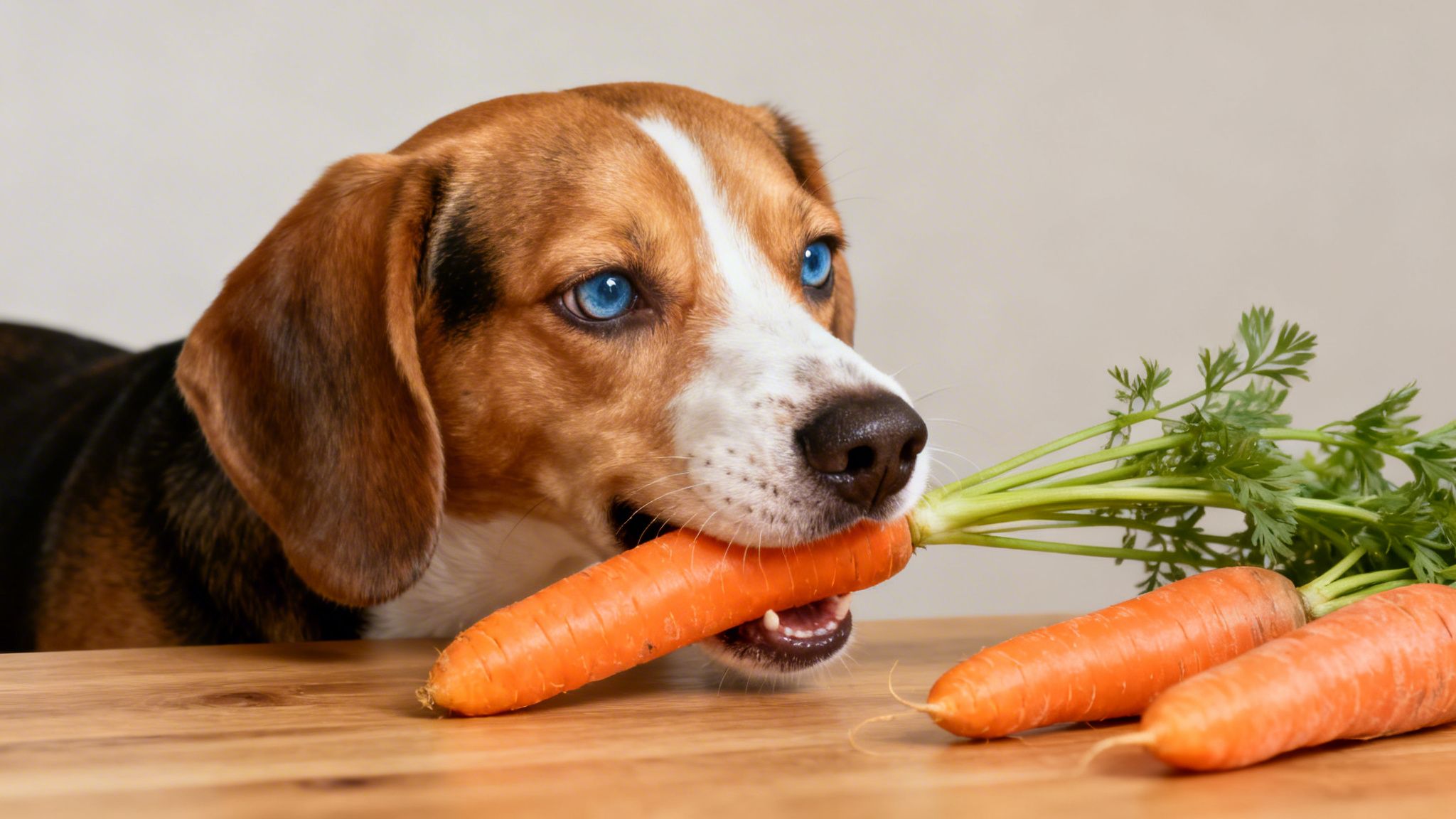
So, what’s the big deal about this humble root vegetable? It turns out carrots are much more than a simple crunchy snack. They're a powerhouse of nutrients that support your dog's health from their nose to their tail.
For starters, we’ve all heard carrots are good for our eyes, and the same holds true for our dogs. They're packed with beta-carotene, which a dog’s body converts into Vitamin A. This is a superstar vitamin for maintaining sharp vision, especially in low light, and keeping the eyes healthy overall.
But the benefits don't stop there. Carrots also contain antioxidants that help protect skin cells, which can mean a healthier, shinier coat and less itching. They even have potassium and vitamin K to support heart health, plus soluble fiber that can help manage cholesterol—an issue that’s becoming more common in dogs. If you want to dive deeper, you can find more information from experts in dog nutrition on how these nutrients work.
To make it simple, here’s a quick rundown of what makes carrots so great for your dog.
Carrot Benefits at a Glance
As you can see, this simple veggie packs a lot of punch into a low-calorie package.
A Closer Look at What's Inside
Let's dig into the key players that make carrots such a smart choice. Every crunchy bite delivers a healthy dose of vitamins and minerals doing important jobs.
- Vitamin A (from Beta-Carotene): This is the big one. It’s absolutely crucial for good vision, a strong immune response, and keeping your dog's skin and coat in top condition.
- Fiber: Carrots contain both soluble and insoluble fiber. This combination is fantastic for digestion, helping to create firm stools and maintain a healthy gut.
- Antioxidants: These powerful compounds are like little bodyguards for your dog's cells, protecting them from damage caused by free radicals that contribute to aging and disease.
Think of a carrot as a multi-tool for your dog's health. It cleans teeth, delivers key vitamins for their eyes, and provides fiber for their tummy—all in one simple, low-calorie snack.
It's not just about the nutrients, though. The physical properties of a carrot make it an outstanding treat. Their low-calorie and low-fat profile makes them an ideal reward, especially if your dog is on a weight management plan. Plus, that satisfying crunch from a raw carrot acts like a natural toothbrush, helping to gently scrape away plaque and keep their teeth cleaner between brushings.
How Carrots Improve Your Dog's Gut Health
We all know carrots are great for vision and skin, but their real magic might just be hidden deep inside your dog's gut. Think of your dog's digestive system as a thriving community of trillions of bacteria. For your dog to feel their best, that community needs plenty of "good guys"—the beneficial bacteria that keep everything in balance.
Carrots are a fantastic way to support this internal ecosystem. They're loaded with a specific kind of fiber that acts as a prebiotic.
What's a prebiotic? It’s like a specialized fertilizer for the good bacteria already living in your dog’s gut. While their regular food provides overall energy, prebiotics are targeted fuel just for those helpful microbes, encouraging them to multiply and thrive.
When these good bacteria flourish, they create a stable and healthy gut environment, which is really the cornerstone of your dog's overall wellness.
The Science Behind a Happy Gut
A healthy gut does so much more than just digest meals. It's directly tied to how well your dog absorbs nutrients, the strength of their immune system, and even their mood. When the good bacteria get the prebiotic fuel they love from foods like carrots, they get to work producing powerful compounds called short-chain fatty acids (SCFAs).
These SCFAs are the unsung heroes of gut health. They have a few critical jobs:
- Fuel the Gut Lining: They act as the primary energy source for the cells lining your dog's intestines, keeping the gut wall strong and healthy.
- Strengthen the Barrier: A strong gut wall is essential. It acts as a gatekeeper, preventing toxins and other harmful stuff from leaking into the bloodstream where they can cause inflammation and other problems.
- Support Immunity: A huge part of your dog's immune system is actually located in the gut, and SCFAs play a key role in keeping it functioning properly.
So, when you toss your dog a carrot, you're doing more than just giving them a crunchy treat. You're actively feeding the good bacteria that maintain this vital internal defense system. A balanced gut means smoother digestion, fewer tummy upsets, and a stronger shield against illness.
Carrot Fiber: A Consistent Gut Booster
Not all fiber is the same, and the kind found in carrots has proven to be remarkably consistent at promoting a healthy gut in all sorts of dogs. This makes carrots a great choice, especially for pups with sensitive stomachs or less-than-predictable digestion.
In fact, recent studies have shown just how reliable carrot-derived prebiotics can be. One study looked at a natural fiber made from upcycled carrot pomace. When given to dogs of different sizes, it consistently helped stabilize their gut microbial communities. This supplement not only boosted the production of those all-important SCFAs but also significantly increased a beneficial bacterium called Phocaeicola vulgatus—a stable result that isn't always seen with other common prebiotics. You can learn more about how this groundbreaking research demonstrates carrot fiber's reliability in supporting gut health.
This consistency is what makes carrot fiber so special. It means adding carrots to your dog's diet can be a dependable way to fortify their gut barrier, especially for dogs prone to digestive issues or those who could use an immune boost. It turns out this simple root vegetable is a straight shot to a happier, healthier gut.
How to Safely Prepare Carrots for Your Dog
So, you're ready to add carrots to your dog's treat rotation? That's great! But how you prep them is just as important as the treat itself. Getting it right ensures your dog gets all the good stuff without any of the risks.
First things first: give those carrots a good scrub under running water. This isn't a step to skip—it gets rid of any lingering dirt, bacteria, or pesticides. It’s also a good reminder to practice smart kitchen habits. Learning how to prevent cross-contamination is key to keeping your whole family, furry members included, safe and healthy.
Raw vs Cooked Carrots Which Is Best for Your Dog
The "raw versus cooked" debate is a common one, and honestly, there's no single right answer. It really comes down to what you're trying to achieve and what works for your specific dog. Each preparation method has its own perks.
To help you decide, here’s a quick breakdown:
Ultimately, cooked carrots are generally easier on the digestive system, while raw carrots offer a great dental benefit. You can even alternate between them to give your dog the best of both worlds!

As you can see, making food digestible is a direct line to a happy, healthy gut. For carrots, that often means cooking them.
Safe Serving Ideas for Any Dog
The number one risk with carrots is choking. Never, ever toss your dog a big chunk they could accidentally swallow whole. The key is to match the prep style to your dog's size and chewing habits.
Here are a few foolproof ways to serve them:
- Grate or Shred: This is my go-to method. Finely shredded carrot makes a fantastic, hydrating topper for their regular meal. It mixes right in, and there's absolutely no choking risk.
- Dice into Small Pieces: For small and medium-sized dogs, dicing carrots into tiny, pea-sized bits gives them a satisfying crunch without the danger.
- Steam and Mash: Got a puppy or an older dog with sensitive teeth? Just steam some carrots until they're soft, mash them up, and serve. It makes a delicious, easy-to-eat purée.
- Freeze Whole: A big, frozen carrot can be a lifesaver for a teething puppy. It’s a natural, cooling chew toy. Just be sure to watch them closely so they don’t snap off and swallow a large piece.
Think of carrot preparation like choosing the right toy for your dog. A tiny Chihuahua shouldn't have a giant bone, and a Great Dane could swallow a small chew whole. Match the carrot size and form to your dog's ability to handle it safely.
By taking just a few extra moments to prepare them correctly, you can make carrots a safe, healthy, and delicious part of your dog's life.
How Many Carrots Can a Dog Safely Eat?
We've established that carrots are a great, healthy snack for dogs, but the real question every owner asks is, "How much is too much?" It’s helpful to think of your dog’s diet as a complete, balanced meal. Their regular dog food is the main course, packed with everything they need. Treats, even healthy ones like carrots, are just the side dish.
As with any treat, the golden rule is the 10% rule. This is a simple but vital guideline: treats should never make up more than 10% of your dog’s total daily calories. Sticking to this ensures their primary nutrition comes from their formulated food, which is designed to keep them healthy and strong.
Giving too many carrots, despite their benefits, can backfire. The most common issue is an upset stomach—think gas or diarrhea—from all that extra fiber. Over time, those extra calories can also lead to weight gain, which is something we always want to avoid.
Serving Guidelines by Dog Size
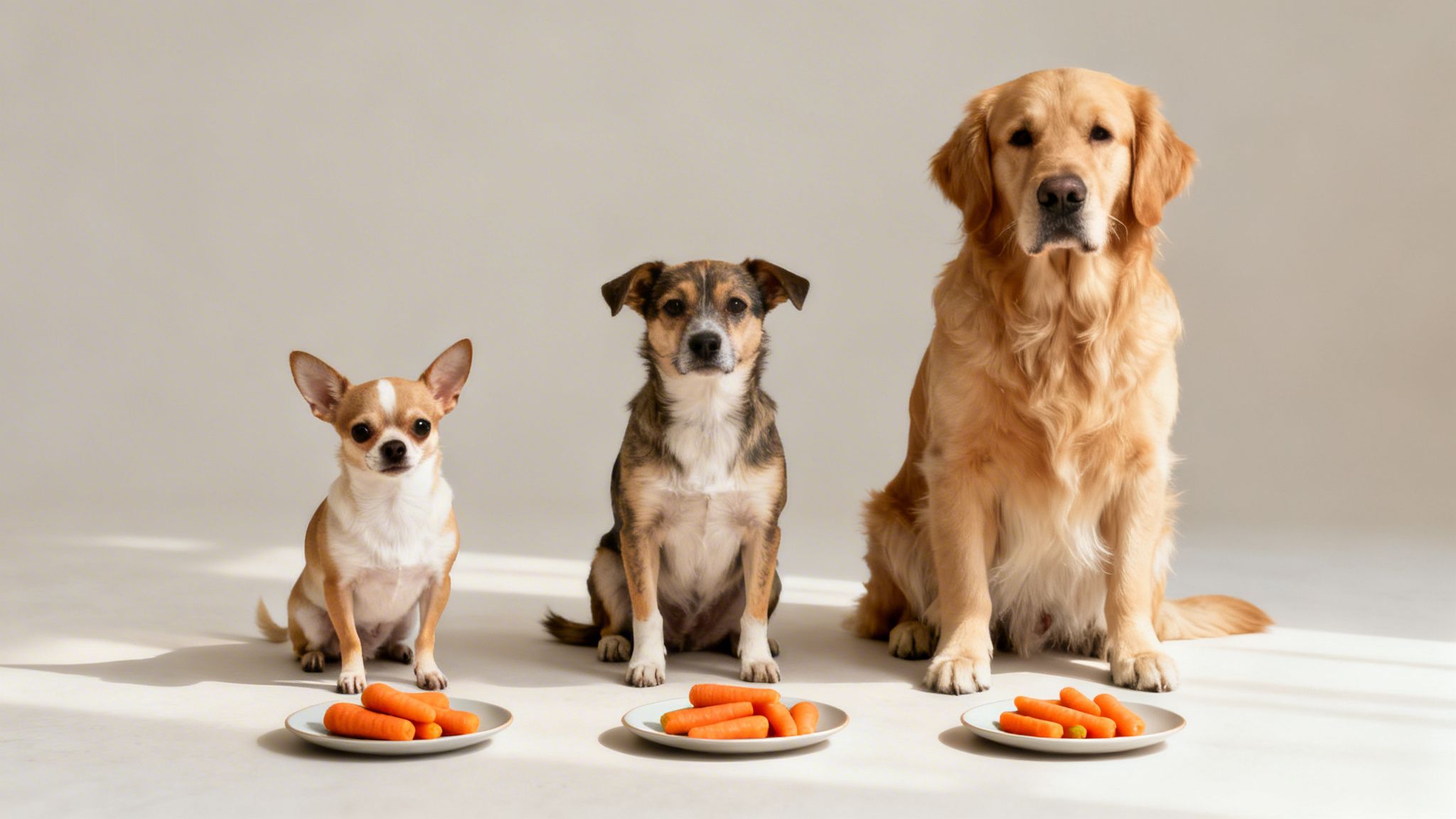
So, what does the 10% rule look like in practice? A tiny Yorkie has a much smaller "treat budget" than a big, bounding German Shepherd. It all comes down to your dog's size, age, and how active they are.
Here are some general starting points to help you figure out the right amount:
- Extra-Small Dogs (under 10 lbs): For the little guys like Chihuahuas and Yorkies, think tiny. A few thin, coin-sized slices or even half a baby carrot is more than enough for a daily treat.
- Small Dogs (11-25 lbs): Pugs, Boston Terriers, and other small breeds can usually handle one to two baby carrots a day without any trouble.
- Medium Dogs (26-50 lbs): If you have a Beagle or a Border Collie, you can offer two or three baby carrots or a few larger chunks throughout the day.
- Large Dogs (over 50 lbs): For the big dogs like Labs and Golden Retrievers, a small handful of carrot sticks—about what you'd get from one small whole carrot—is a perfectly reasonable amount.
Remember, these are just guidelines. The best approach is to start with a small amount and see how your dog’s digestive system responds.
It's easy to see why carrots fit so well into that 10% treat budget. They are full of insoluble fiber, which is fantastic for keeping your dog’s digestion regular—a huge plus for the estimated 25% of US dogs with chronic digestive issues. Plus, at only about 4 kcals per baby carrot, they are a brilliant low-calorie option for weight management, which is critical since nearly 60% of US pets are overweight. You can find more on this topic by exploring how carrot fiber benefits canine digestion on Redbarn.com.
Special Considerations for Certain Dogs
While most dogs do great with carrots, you need to be extra careful with some. For dogs with diabetes, the natural sugar content means carrots should only be an occasional treat, and always with your vet's okay. The same goes for dogs with a history of pancreatitis or those with especially sensitive stomachs—less is always more.
When in doubt, start small and pay attention to your dog. By following the 10% rule and using these portion sizes as a guide, you can make carrots a safe, fun, and healthy part of their routine.
Integrating Carrots into a Holistic Wellness Plan
As great as carrots are, they really shine when they're part of a bigger picture. It helps to think of your dog's diet like a well-coached sports team. Their high-quality dog food is the star player, handling the bulk of the work and providing the core nutrition they need day in and day out.
Think of carrots and other healthy whole foods as the specialists on the team. They come off the bench with unique skills—in this case, vitamins, antioxidants, and fiber—to fill in any gaps and boost the team's overall performance.
This is all about combining the best of both worlds: the reliability of a scientifically balanced diet with the natural, whole-food goodness of ingredients like carrots. It’s a simple way to build a lifestyle that supports your dog's vitality for years to come.
Creating Synergy Between Food, Treats, and Supplements
But the real magic happens when you get all these pieces working in sync. For example, the prebiotic fiber in carrots helps create a thriving environment in your dog's gut. A healthier gut, in turn, can more effectively absorb and use the powerful ingredients found in other supplements.
Think of it like planting a garden. Your dog’s daily food is the high-quality soil. Adding carrots is like mixing in compost—it enriches the soil and makes it far more receptive to new growth. A targeted supplement, say for joint health, is the seed you plant. That seed has a much better chance of sprouting and thriving in that rich, well-prepped environment.
This synergy is what we're aiming for. The fiber from carrots does more than just aid digestion; it primes your dog’s entire system to get the most out of everything else you give them. This is especially true when you're using supplements formulated for specific health goals.
When you pair a natural treat like carrots with a high-quality product like FORMA, you're building a truly powerful wellness routine. The chews deliver targeted, science-backed ingredients for things like immunity and calmness, while the carrots provide the whole-food fiber and vitamins that help the body put those ingredients to good use.
It creates a complete system where every part makes the others work better. Ultimately, it’s a straightforward and effective way to give your dog comprehensive support for a long, happy life. Of course, it's always a great idea to chat with your vet to create the perfect plan for your dog's individual needs.
Common Questions About Feeding Carrots to Dogs
So, you’re ready to add some crunchy carrots to your dog's treat rotation. That's great! But it's completely normal to have a few lingering "what if" questions. After all, what’s good for one dog might not be perfect for another.
Let's dig into some of the most common questions dog owners ask. We'll cover everything from teething puppies to whether you need to splurge on organic produce.
Can Puppies Eat Carrots?
Good news for puppy parents: carrots are a definite yes! They can even be a secret weapon during that dreaded teething phase. A big, frozen carrot stick is a fantastic, all-natural chew toy. The cold helps soothe their sore gums, and the crunching satisfies that need to gnaw on, well, everything.
Just remember, a puppy's digestive system is still under construction. You have to introduce new foods slowly. Start with tiny, grated pieces or a little spoonful of steamed, mashed carrot. This makes it easy for them to digest and avoids any choking risk.
Always keep an eye on your pup when they're working on a treat, especially something hard like a frozen carrot. You want to make sure they don't snap off a big chunk and try to swallow it whole.
A little bit of caution makes carrots a safe and super-healthy treat from day one.
Are There Dogs That Should Not Eat Carrots?
While most dogs can enjoy carrots without a problem, they aren't the best choice for every pup. A few health conditions mean you need to be extra careful.
For dogs with diabetes, carrots should be a rare, vet-approved treat. They do contain natural sugar, which can mess with blood glucose levels. Portion control is absolutely essential here.
Dogs with a history of pancreatitis or just chronically sensitive stomachs might also struggle with the fiber in carrots. If your dog is known for having digestive troubles, it’s probably best to go easy or skip them altogether.
Finally, though it's uncommon, food allergies can happen. If you feed your dog carrots and notice any of these signs, stop giving them and have a chat with your vet:
- Itchy skin or constant paw-licking
- Red, irritated skin
- Vomiting or diarrhea
- Unusual gassiness
Do Carrots Really Help Clean My Dog's Teeth?
Think of a raw carrot stick as a natural toothbrush's assistant, not a replacement. It definitely helps, but it doesn't do the whole job.
As your dog gnaws on a hard, raw carrot, the abrasive texture scrapes away some of the soft plaque on the surface of their teeth. It’s a great way to help reduce that fuzzy buildup and can even freshen their breath a bit.
But a carrot can't get into all the nooks and crannies or reach below the gum line, which is where nasty tartar loves to hide. So, by all means, use carrots as part of your dental health toolkit, but don't hang up the toothbrush just yet.
Is It Better to Feed My Dog Organic Carrots?
Whether you grab a bag of organic carrots or the conventional kind, the most important rule is the same: wash them thoroughly. Giving them a good rinse and scrub removes any lingering dirt, bacteria, or pesticides before they end up in your dog's bowl.
From a nutritional standpoint, the difference between organic and regular carrots is pretty small for a dog. If you prefer to buy organic for your own family to avoid pesticides, it makes perfect sense to do the same for your dog. But if not, don't sweat it. As long as they're washed well, either type makes a perfectly healthy, crunchy snack.

Karolis is the Founder of FORMA, a pet wellness brand focused on longevity and daily nutrition for dogs. Writes about supplements, canine health, and helping pets live longer, healthier lives
Join thousands of pet parents getting science-backed health insights and natural care advice