A Dog Feeding Schedule by Age From Puppy to Senior
The ultimate dog feeding schedule by age. Learn how often to feed your puppy, adult, or senior dog for optimal health, with vet-approved tips and portions.

Knowing how often to feed your dog isn't just about filling a bowl—it's one of the most important things you can do for their long-term health. The rules change as they grow, with puppies needing three to four meals daily, adults doing well on two meals, and senior dogs often benefiting from two smaller meals to match their changing metabolism.
Sticking to a schedule helps with everything from their puppy growth spurts to maintaining a healthy weight in their golden years.
Why Your Dog’s Feeding Schedule Matters
A consistent feeding routine does more than just satisfy hunger; it's a cornerstone of your dog's physical health and even their behavior. Think of it as setting your dog’s internal clock. When they eat at predictable times, their digestive system gets into a rhythm, which leads to more predictable potty breaks. This is a game-changer for house training a new puppy.
This structure also gives your dog a sense of security and stability. Dogs are creatures of habit, and knowing when their next meal is coming can reduce the anxiety that often leads to begging, counter-surfing, or scavenging. Scheduled feedings also make you the primary source of food, strengthening your bond.
Plus, it's a simple way to monitor their health. When you control mealtimes, you'll immediately notice if their appetite changes. A sudden lack of interest in food is often the first red flag for a health problem, and it's much easier to spot when you're not just topping off a full bowl all day.
This timeline gives a great visual of how a dog's feeding needs shift from the frequent meals of puppyhood to a more stable routine later in life.
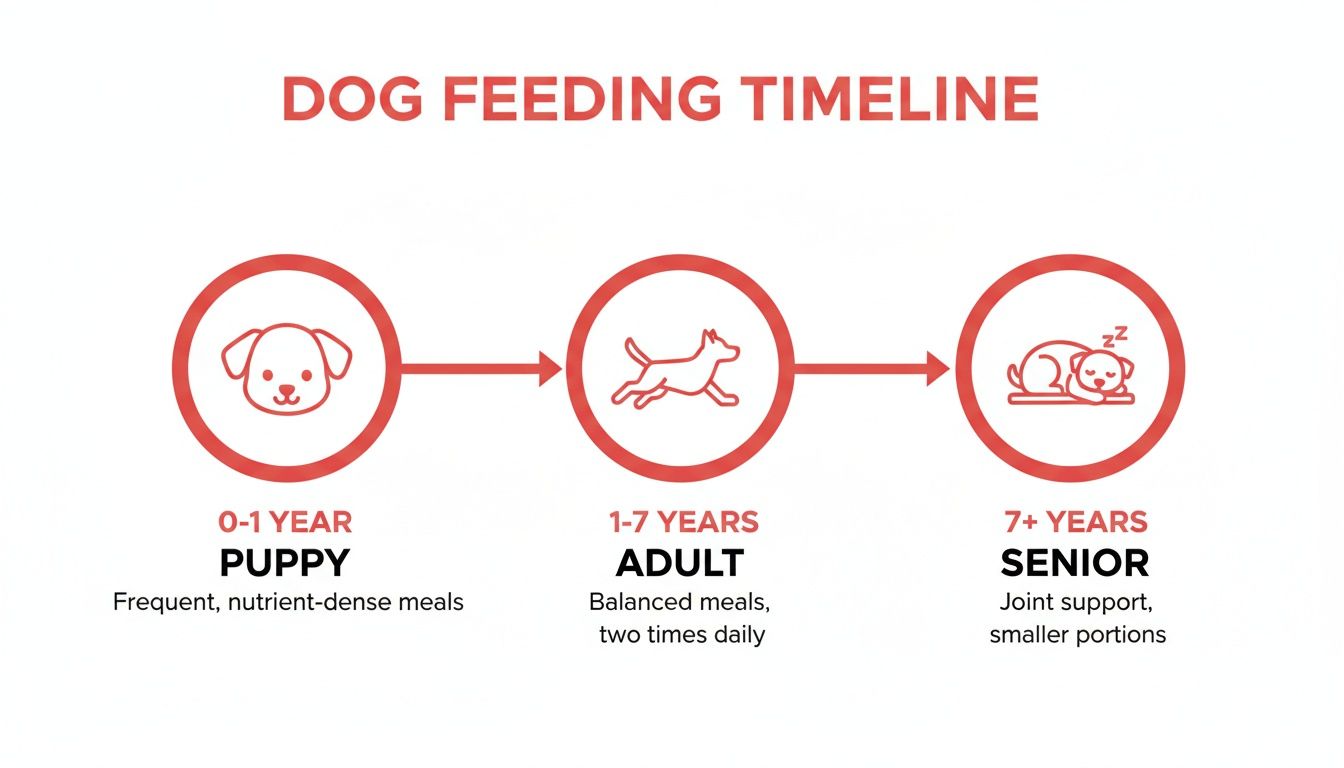
The takeaway is straightforward: as a dog's metabolism and growth rate change, their feeding frequency and nutritional needs must change, too.
Quick-Look Feeding Guidelines by Age
Here's a handy table that breaks down the typical feeding recommendations for each life stage. Think of this as your starting point; we'll get into the details for each age group next.
Dog Feeding Schedule From Puppy to Senior
Of course, these are just general guidelines. Every dog is an individual, and things like their breed, size, and how active they are will always be important factors in dialing in the perfect schedule.
For a deeper dive into creating a routine, check out this excellent guide on a vet-approved dog feeding schedule by age. It’s a great resource to have on hand as you figure out what works best for your furry friend.
Building a Healthy Foundation in the Puppy Years

The puppy years are a whirlwind of growth, and how you feed them sets the stage for a healthy, happy life. Think of your puppy as a tiny construction site running 24/7. They need a constant supply of top-notch materials—protein, fat, vitamins—to build strong bones, lean muscles, and a sharp mind. This is why their diet is worlds apart from an adult dog's.
Their little stomachs can't hold much, but their metabolisms are firing on all cylinders. This means they burn through calories at an astonishing rate and need to refuel often with smaller meals. Sticking to a consistent schedule also works wonders for house training, as predictable mealtimes lead to more predictable potty breaks.
The Puppy Feeding Timeline
As your puppy grows, their feeding schedule will need to adapt. The goal is to provide a steady stream of energy for all that development without overwhelming their tiny digestive system.
Here's a typical roadmap to follow:
- 8 to 12 Weeks: Stick with four small meals a day. This keeps their blood sugar stable and energy levels consistent.
- 3 to 6 Months: You can now transition down to three meals a day. Their stomach is getting bigger, so they can handle more at once.
- 6 Months to 1 Year: It's time to move to two meals a day. This twice-a-day routine will likely be their schedule for life.
Always make these changes gradually over a week or so. Abruptly dropping a meal can lead to an upset tummy, so take it slow.
Decoding Puppy Food and Portions
The "what" is just as important as the "when." Always choose a food that’s specifically formulated for puppies. These recipes have the precise balance of protein, fat, calcium, and phosphorus they need for this intense growth spurt. Adult dog food just doesn't have the right fuel for their development.
The feeding chart on the back of the bag is your starting point, not the final rule. These guidelines are based on your puppy’s projected adult weight, which is a crucial detail many people miss.
A Note on Portion Control: A common mistake is to feed a puppy based on their current size. Instead, find their breed's average adult weight on the chart to determine the total daily amount, then divide that by the number of meals they get.
For example, if the chart says your future 60-pound Golden Retriever needs three cups a day and they're eating three meals, you’d give them one cup at each meal. This ensures they get all the calories they need for healthy growth without packing on extra pounds that can strain their developing joints.
Why Frequent Meals Are So Important
For young pups, especially those under four months old, multiple meals a day aren't just a suggestion—they're a must. Veterinarians recommend a schedule of three meals per day for puppies under 4 months to fuel their high-octane metabolism and incredible growth rate. This frequency is critical for preventing hypoglycemia (a dangerous drop in blood sugar) and ensuring their brain and body have a constant supply of energy.
This structured approach lays the groundwork for a healthy adulthood. To give them an extra boost, you can explore options like high-quality dog food toppers for puppies to make their meals even more nutritious. As your puppy’s digestive system matures around the six or seven-month mark, you can start the transition to a twice-daily schedule. Remember, everything you do now is about building a strong foundation that will support them for years to come.
Your Adolescent Dog's Changing Appetite: Navigating the "Teenage" Year
Welcome to the teenage phase. Usually kicking in around six months and lasting until their first birthday (or even longer for big dogs), this is a time of massive change. Your pup's growth spurts are finally starting to level off, but their energy? That’s still through the roof.
Think of it this way: their body is shifting gears from all-out construction to long-term maintenance. This means their nutritional needs are changing, too. Their metabolism is maturing, so they just don't need as many calories as they did a few months ago. If you keep feeding them high-octane puppy food at the same rate, you're paving the way for unhealthy weight gain, which is tough on their still-developing joints. This is your cue to start paying close attention.
Your job now is to guide them smoothly from growth-focused fuel to a balanced adult diet that keeps them energized without packing on the pounds.
When Is It Time to Switch to Adult Food?
This is probably one of the biggest questions on every dog owner's mind. The timing really comes down to one thing: how big your dog is going to be when they're all grown up.
- Small Breeds (under 20 lbs): These little guys mature fast. Most are ready to make the leap to adult food between 9 and 12 months old.
- Medium Breeds (20-50 lbs): For most medium-sized dogs, their first birthday is the magic number. Plan to switch around the 12-month mark.
- Large and Giant Breeds (over 50 lbs): Big dogs need a lot more time to grow. It's crucial to keep them on a large-breed puppy formula until they're 18 to 24 months old to support their bones and joints properly.
Don't just switch the food overnight—that’s a recipe for an upset stomach. Instead, take it slow. Over 7-10 days, start mixing a little bit of the new adult food into their puppy food. Each day, just add a little more of the new stuff and a little less of the old, until you've fully made the switch.
What Happens After They're Spayed or Neutered?
Getting your dog spayed or neutered is a big milestone during this stage. It’s a responsible choice for their health, but it does bring on hormonal shifts that slow down their metabolism. In fact, their energy needs can drop by as much as 30% after the procedure.
This is non-negotiable: you have to adjust how much you're feeding them almost right away. Sticking with the same portion size after they've been fixed is one of the most common reasons dogs become overweight. Talk to your vet for specifics, but a good rule of thumb is to cut back their daily calories by about 25-30%.
Let Your Dog's Body Be Your Guide
The feeding chart on the back of a dog food bag? It’s just a suggestion, a starting point. Every dog is an individual with their own metabolism and energy level. The best tool you have for figuring out the right amount isn't a measuring cup—it's your own hands and eyes.
Get familiar with the Body Condition Score (BCS). It's a simple, hands-on way to check if your dog is at a healthy weight.
You should be able to feel their ribs easily under a thin layer of fat, almost like the back of your hand. When you look down at them from above, you should see a clear, defined waist. If you find yourself having to poke around to find their ribs, or if that hourglass shape has disappeared, it’s a sign you need to scale back their meals. Checking their BCS regularly helps you catch weight changes early and make small tweaks before they turn into big problems.
The Adult Dog Routine for Peak Health and Longevity

Once your dog makes it through the wild teenage years, they finally settle into adulthood. This long and wonderful phase is all about maintaining their health for the long haul. Gone are the days of fueling rapid growth; now, the goal is to sustain their energy, support their body, and keep them in great shape for years to come.
This is where a consistent dog feeding schedule by age really proves its worth. An adult dog’s metabolism is far more stable than a puppy's, so they don’t need constant refueling. A predictable routine helps regulate their digestion, makes weight management a breeze, and gives them the steady energy they need for everything from a game of fetch to a long nap on the couch.
The Gold Standard: Two Meals a Day
For the vast majority of adult dogs, the vet-recommended standard is feeding them twice a day. One meal in the morning and one in the evening is a balanced approach that fits easily into most human schedules and comes with some serious health perks. Think of it like giving their engine a steady supply of fuel instead of one massive energy dump.
This rhythm helps keep their metabolism humming and their energy levels stable, preventing the sluggish crash that can follow a single giant meal. It also cuts down on begging, because your dog learns to expect their food at set times.
Here’s why the twice-a-day plan is so popular:
- Happy Tummies: Splitting food into two smaller portions is much easier on their digestive system. It can also help lower the risk of bloat, a dangerous and life-threatening condition, particularly for deep-chested breeds.
- Steady Energy: Two meals provide a more consistent release of energy, which helps prevent those big peaks and valleys in their mood and activity levels.
- Easier Weight Control: It’s so much simpler to control portions and see exactly how much they’re eating when meals are scheduled. This makes it easy to adjust their food intake to keep them at a healthy weight.
A New Perspective: One Meal a Day
While the two-meal model has been the go-to for decades, some fascinating research is starting to challenge that thinking. A huge 2022 study from the Dog Aging Project looked at over 24,000 dogs and uncovered some surprising connections. It found that the 8% of dogs fed just once a day had better cognitive scores and lower odds of developing gut, dental, orthopedic, kidney, and liver problems. You can dig into the compelling findings here.
Now, this doesn't mean you should immediately switch your dog to a single daily meal. This was an observational study, which means it found a link, not a direct cause-and-effect. But it does start an important conversation about how feeding frequency might play a role in a dog's long-term health.
Important Takeaway: This research hints that for some dogs, one meal a day could offer some health advantages. However, it’s not the right fit for every dog—especially small breeds prone to low blood sugar (hypoglycemia) or dogs with certain medical conditions.
Deciding What's Best for Your Dog
So, which schedule is the right one for your four-legged friend? The truth is, it depends entirely on your individual dog. The twice-a-day schedule is still the safest and most widely recommended approach for most. But if the idea of a once-a-day feeding has you curious, it's definitely a conversation to have with your veterinarian.
Here’s a quick breakdown to help you weigh the options:
Ultimately, the best dog feeding schedule by age is the one that keeps your adult dog at a healthy weight, full of energy, and feeling great. Whether you stick with the trusted two-meal plan or explore a different routine with your vet's okay, consistency is the key to supporting their health for a lifetime.
Adjusting Meals for Your Senior Dog's Golden Years
As your dog enters their golden years—usually around age seven—their body starts to tell a new story. They’re like a cherished classic car; they still run beautifully but need a different kind of fuel and a more gentle tune-up schedule to keep everything humming. Their metabolism naturally slows, they might prefer a nap to a long run, and their nutritional needs shift in a big way.
This new chapter calls for a thoughtful update to their dog feeding schedule by age. Your goal shifts from fueling growth and boundless energy to maintaining a healthy weight, supporting aging joints, and keeping their digestion running smoothly. A consistent routine becomes even more vital, offering them a comforting sense of stability.
By adapting their diet now, you’re doing more than just filling their bowl. You're proactively managing their health to make sure their senior years are as happy and comfortable as possible.
Rethinking Your Senior Dog's Diet
The first, and probably most important, step is taking a hard look at their food. A less active lifestyle makes senior dogs prime candidates for weight gain, which puts a ton of extra stress on their joints and organs. That’s why so many vets recommend switching to a food formulated specifically for seniors.
These diets are built for their new reality. They're typically lower in calories to help prevent unwanted pounds but are still packed with high-quality, easy-to-digest protein to help them hold on to their muscle mass. You'll also find they often have more fiber, which is great for a slowing digestive system and helps keep things regular.
Just remember to make the switch slowly. A gradual transition over 7-10 days is key to avoiding an upset stomach. Start by mixing a little of the new food in with the old, and slowly increase the amount until they’re fully on the new diet.
Joint support is a huge piece of the puzzle for senior nutrition. Many senior formulas come fortified with ingredients like glucosamine and chondroitin, which are fantastic for maintaining cartilage and easing the stiffness that can come with arthritis.
Adjusting Meal Frequency and Texture
While most adult dogs do just fine with two meals a day, some seniors benefit from a slightly different approach. Their digestive systems can become more sensitive, so breaking their daily portion into two or three smaller meals can be much easier for them to handle. This can prevent that post-meal discomfort and also helps keep their energy levels on a more even keel throughout the day.
Dental health is another big consideration. After years of chewing, many older dogs have sensitive gums, cracked teeth, or even a few missing, which can turn crunchy kibble into a real challenge.
If you see your dog struggling or hesitating to eat their hard food, try these simple adjustments:
- Soften Their Kibble: Just add a splash of warm water or some low-sodium broth. Letting it sit for a few minutes can make a world of difference, turning it into a much more manageable mash.
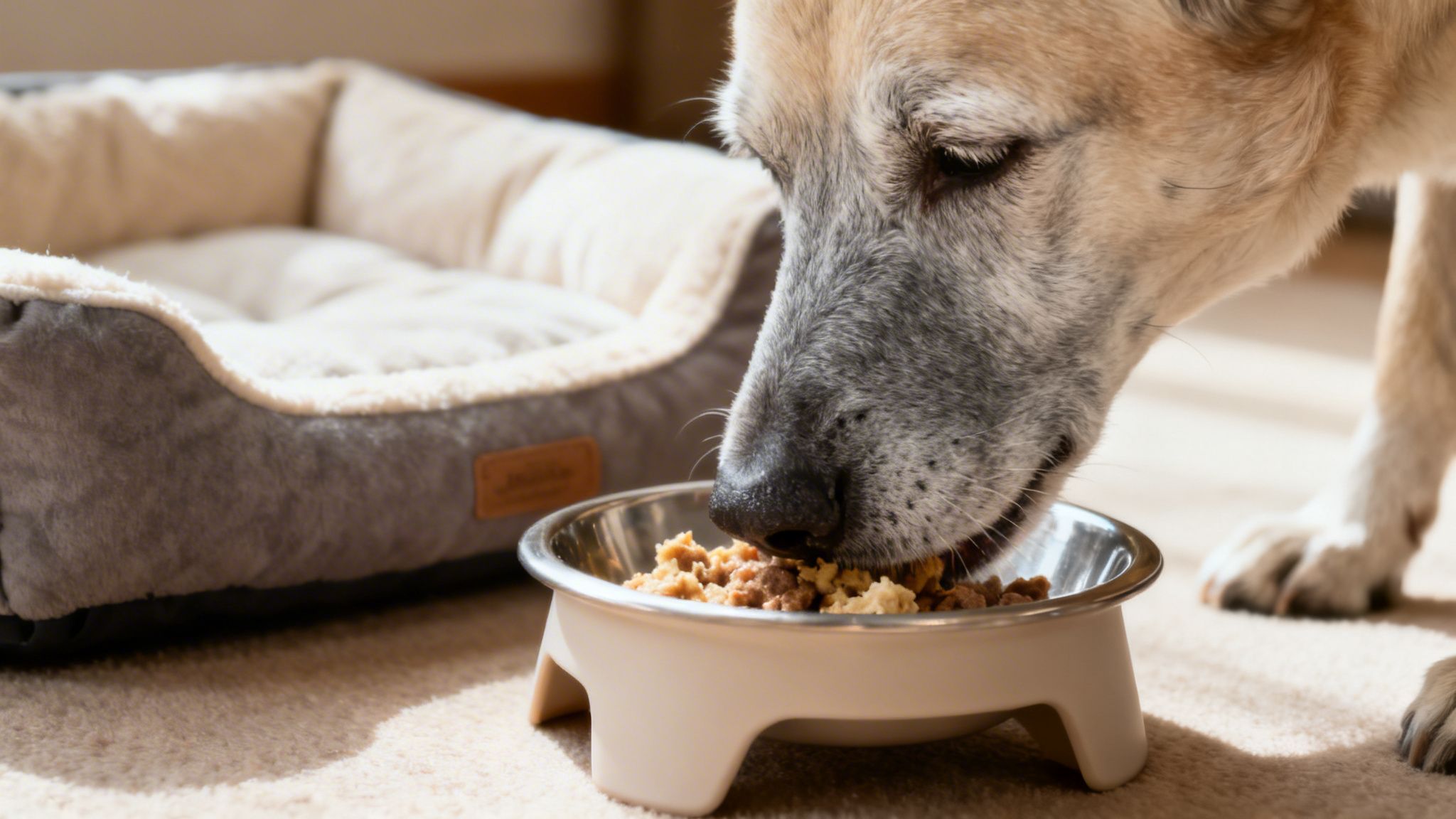
- Switch to Wet Food: Canned or wet food is naturally softer and is an excellent choice for dogs with significant dental problems.
- Consider Supplements: To give them an extra layer of support, adding a daily chew like FORMA can help manage their gut health and immunity—two things that are incredibly important as they get older.
By keeping a close eye on these details, you can fine-tune their feeding routine to perfectly match their changing needs. It’s this careful attention that helps them stay healthy, comfortable, and full of life well into their golden years.
How to Know When It's Time for a Change
Think of your dog's feeding schedule less as a rigid set of rules and more as a living, breathing plan. It needs to adapt as they grow and change. After all, you know your dog better than anyone, and learning to read their cues is the single best way to keep them healthy and well-fed.
Life happens. A sudden burst of energy, a new health issue, or just the simple act of getting older are all signals that it might be time to rethink their meal plan. Let's walk through how to spot those signs and make smart adjustments.
Your Secret Weapon: The Body Condition Score
One of the best tools in your toolkit is the Body Condition Score (BCS). It sounds technical, but it’s really just a simple, hands-on way to check if your dog is at a healthy weight. Vets use it all the time, and it's easy to do at home. It’s far more telling than a number on the scale because it looks at body fat, not just pounds.
Here’s how you can do a quick BCS check yourself:
- The Rib Test: Gently run your palms over your dog’s sides. You should be able to feel their ribs under a light layer of fat, kind of like feeling the back of your hand. If you have to push hard to find them, they might be carrying a little extra weight.
- The Overhead View: Stand over your dog and look down. You should see a nice, gentle "hourglass" shape, with a defined waist behind the ribs. If their shape is more oval or straight, it’s a good sign they could stand to lose a pound or two.
- The Side View: Take a look at your dog from the side. Their belly should tuck up neatly from their chest toward their back legs. A sagging tummy that hangs low or is level with the chest usually means there’s some excess fat.
The goal is to find that "just right" spot. A dog with an ideal BCS is lean and fit, not bony or pudgy. Checking this every month or so helps you spot weight changes early, before they can turn into bigger problems.
Other Clues That It's Time to Adjust
Beyond their physical shape, your dog's day-to-day behavior and health can tell you a lot about whether their diet is working for them. Keep an eye out for these telltale signs.
Ups and Downs in Energy
Has your fetch-obsessed pup suddenly become a professional napper? Or has your lazy companion found a second wind? A big shift in their activity level directly changes how many calories they need. More zoomies means they need more fuel in the tank, while a quieter lifestyle calls for fewer calories to keep them from gaining weight.
What Their Tummy is Telling You
A dog's digestive system is a fantastic barometer for their overall health. Pay close attention to a few key things:
- Poop Patrol: If their stools are consistently loose or they seem constipated, their food might not be agreeing with them.
- Gas and Bloating: A little bit of gas is normal, but if it's constant, it could be a sign of a food sensitivity.
- Vomiting: If your dog is throwing up often after eating, that's a definite red flag that something isn't right.
If you spot these signs, it's a good idea to check in with your vet. They can help you figure out if a food switch is needed. Adding a daily supplement like FORMA can also be a great way to support their gut health, especially during a dietary transition.
Your Dog Feeding Questions, Answered
Even the best-laid plans can hit a few snags. Dog feeding isn't always straightforward, so let's tackle some of the most common questions that pop up for owners.
Is it Okay to Leave My Dog's Food Out All Day?
That's called free-feeding, and while it sounds easy, it's usually not the best idea. Most dogs simply aren't wired to graze; when food is always available, it often leads to overeating and can contribute to obesity.
Sticking to a schedule also gives you a huge advantage in monitoring their health. A dog who suddenly turns their nose up at a meal is telling you something, but you'd never know if their bowl was always full.
Think of it this way: a scheduled meal that's picked up after 15-20 minutes is a clean, controlled event. A full bowl left out all day can be an open invitation for ants, mice, or other pests you'd rather not have in your home.
Help! My Dog Wolfs Down Their Food in Seconds. What Should I Do?
Eating too fast isn't just a messy habit—it can be a real health risk. It can lead to choking, vomiting, or a dangerous condition known as bloat (gastric dilatation-volvulus or GDV), which is especially a concern for breeds with deep chests.
Luckily, you have some simple and effective tools to slow them down:
- Slow-Feeder Bowls: These bowls have mazes and patterns built right in, forcing your dog to navigate the obstacles to get their kibble. It's an instant brake pedal for speed-eaters.
- Puzzle Toys: Turn mealtime into a brain game. Food puzzles require your dog to nudge, roll, or paw at the toy to release a few pieces of kibble at a time, making dinner both fun and slow.
How Do I Know How Much to Actually Feed My Dog?
The feeding chart on your dog's food bag is a great starting point, but it's just that—a start. No two dogs are the same, and the right portion size depends entirely on your dog's age, breed, metabolism, and how active they are.
Begin with the bag's recommendation, but then put on your detective hat. Keep an eye on your dog's Body Condition Score (BCS) every week. Do they have a visible waist? Can you feel their ribs easily without them sticking out? Adjust their food up or down based on what you see and feel.
If you're ever second-guessing yourself, your vet is your best resource. They can help you dial in the perfect daily calorie count for your dog's specific needs.

Karolis is the Founder of FORMA, a pet wellness brand focused on longevity and daily nutrition for dogs. Writes about supplements, canine health, and helping pets live longer, healthier lives
Join thousands of pet parents getting science-backed health insights and natural care advice