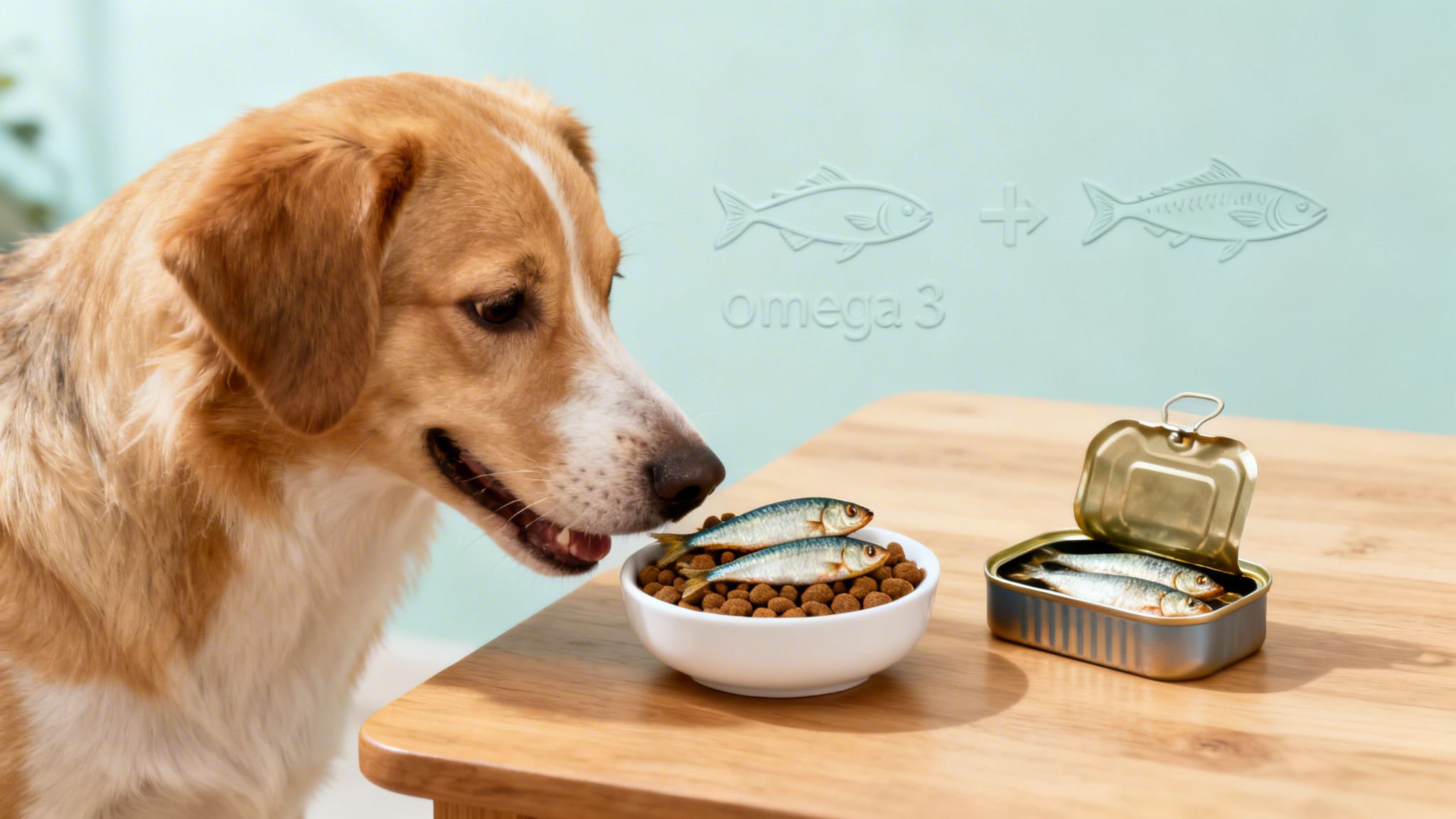
Salmon oil for dogs: Boost Skin, Coat, and Joint Health
Discover the benefits of salmon oil for dogs: better skin, coat, joints, safe dosages, and how to pick quality oil.

You've probably heard the hype about salmon oil for dogs, and honestly, it’s one of those rare trends that actually lives up to its reputation. At its core, salmon oil is a supplement packed with Omega-3 fatty acids—specifically the all-stars, EPA and DHA.
These aren't just any fats. They're essential fats that act like powerful, natural anti-inflammatories, helping with everything from your dog's itchy skin and dull coat to their stiff joints and even brain health.
So, What Exactly Is Salmon Oil and Why All the Buzz?

Think of it like this: your dog's body is a high-performance machine. Their food is the fuel, but salmon oil is the specialized lubricant that keeps all the moving parts running smoothly. It delivers two critical Omega-3s that are often lacking in commercial dog foods:
- EPA (Eicosapentaenoic Acid): This is the ultimate inflammation-fighter. It's what helps calm irritated skin, soothe achy joints, and support a healthy heart.
- DHA (Docosahexaenoic Acid): Consider this pure brain food. DHA is a major building block of brain and eye tissue, making it essential for puppy development and keeping senior dogs sharp as they age.
Here’s the thing—dogs can't really produce enough of these fatty acids on their own. They need to get them from their diet, and adding a high-quality salmon oil is one of the most direct and effective ways to make sure they're getting what they need to thrive.
The Rise of Proactive Pet Wellness
More and more, we're thinking about our dogs' health in the long term. It’s less about reacting to problems and more about building a strong foundation for a long, happy life. This mindset is exactly why supplements like salmon oil have become so popular.
And it’s not just a niche thing. The global market for pet salmon oil supplements hit a massive $2.7 billion in 2023. This explosion is driven by pet parents like us who understand that the EPA and DHA in salmon oil are game-changers for joint health, inflammation, and getting that super-shiny coat. If you're curious, you can dig into the full details of the pet supplement market growth to see just how big this movement is.
The big idea here is simple: by adding these "good fats" to your dog's bowl, you're bridging a common nutritional gap. The result? Visible improvements in their health, comfort, and overall vibe.
This isn’t about jumping on a bandwagon. It's about providing fundamental support that can make a real difference. A little salmon oil each day can help keep their coat glossy, their movements fluid, and their mind active. Up next, we'll break down exactly what these benefits look like in the real world.
The Science-Backed Benefits for Your Dog

Sure, the promise of a shiny coat is what gets most people interested in salmon oil. But that’s really just scratching the surface. The real magic is in the Omega-3 fatty acids, specifically EPA and DHA, which work deep inside your dog's body to support everything from their joints to their brain.
Think of EPA and DHA as a highly skilled maintenance crew for your dog’s cells. They go everywhere, calming down inflammation, reinforcing cell walls, and making sure all the different systems are talking to each other properly.
Let's break down the four key jobs this crew handles—the benefits you can see and your dog can definitely feel.
For a Gleaming Coat and Healthy Skin
This is the benefit everyone notices first. If you’re dealing with a dog who has dry, flaky skin, seems to be scratching all the time, or has a dull, brittle coat, inflammation is very often the secret villain. Omega-3s tackle this problem head-on.
EPA is a natural anti-inflammatory, so it soothes irritated skin from the inside out. It also helps fortify the skin barrier, which is responsible for locking in moisture and keeping allergens like pollen and dust mites out. A stronger barrier means way less itching.
This is a huge reason why the supplement is so popular. In fact, improving skin and coat health is the top driver for pet parents buying omega-3s, accounting for 38% of the market share. It’s not just about looking good; it's about providing genuine comfort. You can read more about this trend in the growth of the global Omega-3 pet supplement market.
Supporting Joint Health and Mobility
Whether you have a bouncy young pup or a senior dog who’s starting to slow down, their joints are everything. Daily activities cause wear and tear, and as dogs get older, inflammation can creep in, leading to stiffness and aches.
This is where the anti-inflammatory power of salmon oil really shines.
Think of inflamed joints like a rusty door hinge—stiff, creaky, and painful. The EPA in salmon oil acts like WD-40, cooling the inflammation so the joint can move more smoothly and with less pain.
This provides incredible relief for dogs with conditions like arthritis, but it’s also a fantastic preventative measure for active dogs of any age. By keeping inflammation low, you’re helping preserve their joint function so they can keep chasing that ball for years to come.
Fueling Brain Development and Cognitive Function
A sharp mind is just as important as a healthy body. This is where DHA, the other star Omega-3, steps into the spotlight. DHA is a major building block of the brain and retinas, making it absolutely vital for puppies.
Puppies supplemented with DHA during their first few months actually show better memory, trainability, and cognitive skills. You’re literally giving them the raw materials to build a better brain, setting them up for a lifetime of success.
But the brain benefits don't end after puppyhood. For senior dogs, DHA helps protect brain cells and support cognitive function, which can help slow down the mental fog that comes with aging. This can look like:
- Better Memory: Your older dog might remember commands or their favorite walking routes more easily.
- Improved Recognition: They may show more consistent recognition of you and other family members.
- More Engagement: A well-fed brain often leads to more playfulness and interaction, even in their golden years.
Adding salmon oil for dogs to a senior’s diet is a simple way to help keep their mind sharp and their bond with you strong.
Promoting a Healthy Heart and Strong Immune System
Finally, salmon oil’s benefits reach two of the body's most critical systems: the heart and the immune system. Omega-3s help support cardiovascular health by promoting a regular heartbeat and maintaining healthy blood pressure and triglyceride levels.
At the same time, these incredible fatty acids act like a smart controller for the immune system. They help it respond to real threats without overreacting—a key factor in managing allergies and autoimmune issues.
A well-regulated immune system is simply better at its job of fighting off infections, which keeps your dog healthier overall. By supporting these core functions, salmon oil provides a foundational boost to your dog's long-term wellness. It’s a simple addition with profound, body-wide benefits.
How to Choose the Best Salmon Oil for Your Dog
Walking down the pet aisle or scrolling online, the number of salmon oil options can feel overwhelming. It’s tempting to think they’re all the same, but the quality, purity, and power of that oil can vary wildly from one bottle to the next.
Choosing the right one is all about learning to read the label like a pro. Think of it like buying olive oil for your own kitchen. You know that extra-virgin, cold-pressed is the good stuff, far superior to a generic, highly-refined oil. The same idea applies here. Let's break down what really separates a top-tier salmon oil from the rest.
Start with the Source: Why Wild-Caught Wins
The very first thing you should look for is where the fish came from. This one detail hugely impacts the quality of the Omega-3s your dog gets. You’ll usually see two options: wild-caught or farm-raised.
Wild-caught salmon is the gold standard, period. These fish swim free and eat what they’re supposed to—a natural diet of smaller fish and krill. This is what makes them so incredibly rich in those all-important EPA and DHA fatty acids.
Farm-raised salmon, on the other hand, are often fed processed pellets that can be higher in Omega-6s. Most dogs already get plenty of Omega-6 in their regular food. The whole point of adding salmon oil is to boost their Omega-3 intake and create a healthier balance, which makes wild-caught the clear winner.
Purity Check: Look for Third-Party Testing
Because salmon are higher up the food chain, they can absorb contaminants like heavy metals (think mercury, lead, and arsenic) from the water they live in. Any good manufacturer knows this and takes serious steps to make sure their product is clean and safe.
You should never, ever buy a salmon oil supplement that doesn't prove its purity. Here’s what to look for on the label or the brand's website:
- Third-Party Tested: This is a non-negotiable. It means an independent lab, with no connection to the company, has verified the oil is free from harmful contaminants.
- Certificate of Analysis (COA): The best brands make this document easy to find. A COA shows you the exact results of those lab tests, proving the oil is clean and safe from heavy metals, PCBs, and other toxins.
A brand that’s transparent about its testing is a brand you can trust. If they're quiet about purity, that's a huge red flag. Move on.
Check the Potency: It's All About EPA and DHA
The magic of salmon oil is in its concentration of two specific fatty acids: EPA and DHA. Just seeing "salmon oil" on the bottle isn't enough. You need to know how much of the good stuff is actually in there, because that’s what determines how well it will work.
Flip the bottle over to the "Guaranteed Analysis" section. It should state exactly how many milligrams (mg) of EPA and DHA are in each serving. Higher numbers mean the oil is more potent, so you can often give a smaller, more effective dose. If a product only lists a generic "Total Omega-3s" number without breaking it down, be skeptical.
How It's Made Matters: Cold-Pressing is Key
The way the oil gets from the fish to the bottle makes a huge difference. Omega-3s are delicate and can be easily damaged by heat and air, which can make them less effective or even cause them to go bad.
The best method by far is cold-pressing. This technique gently extracts the oil without using high temperatures, protecting those fragile EPA and DHA molecules and keeping the oil as potent as possible. Molecular distillation is another great process that purifies the oil while preserving the nutrients. If a bottle doesn't mention how the oil was extracted, you can assume it was likely exposed to heat that compromised the quality.
Finding the Right Dosage for Your Dog
Figuring out the right amount of salmon oil for your dog shouldn't feel like a guessing game. While every bottle will have its own recommendations based on how concentrated the oil is, there are some great general guidelines to get you started. The key is finding that perfect amount that delivers all the good stuff without causing any tummy troubles.
The right dose almost always comes down to your dog's weight. A tiny Yorkie obviously needs a lot less than a Bernese Mountain Dog, so a one-size-fits-all approach is a no-go. The number you really want to pay attention to is the combined amount of EPA and DHA in milligrams (mg)—not just the total amount of oil.
Start Low and Go Slow
If there’s one golden rule for introducing any new supplement, it’s this: start slow. Salmon oil is incredibly rich, and jumping in with a full dose can be a bit of a shock to their digestive system, leading to loose stools or an upset stomach.
To avoid any issues, start with about half the recommended daily amount for your dog’s weight. Stick with this smaller dose for about a week. This gives their body plenty of time to get used to the new addition. If everything looks good (no tummy upset!), you can then slowly work your way up to the full dose.
This gentle approach is your best bet for a smooth transition. It lets you keep an eye on how your dog is handling it and helps prevent any unwanted side effects.
Recommended Daily Salmon Oil Dosage by Dog Weight
Use this clear guide to determine the right daily amount of combined EPA and DHA based on your dog's size.
Just remember, these are maintenance doses for general health and wellness. If you’re using salmon oil to help with a specific health issue, like severe arthritis or allergies, your vet might recommend a different (and usually higher) "therapeutic dose." It's always a good idea to chat with your vet before using salmon oil to manage a medical condition.
This quick visual breaks down the three most important things to look for when you're shopping around.
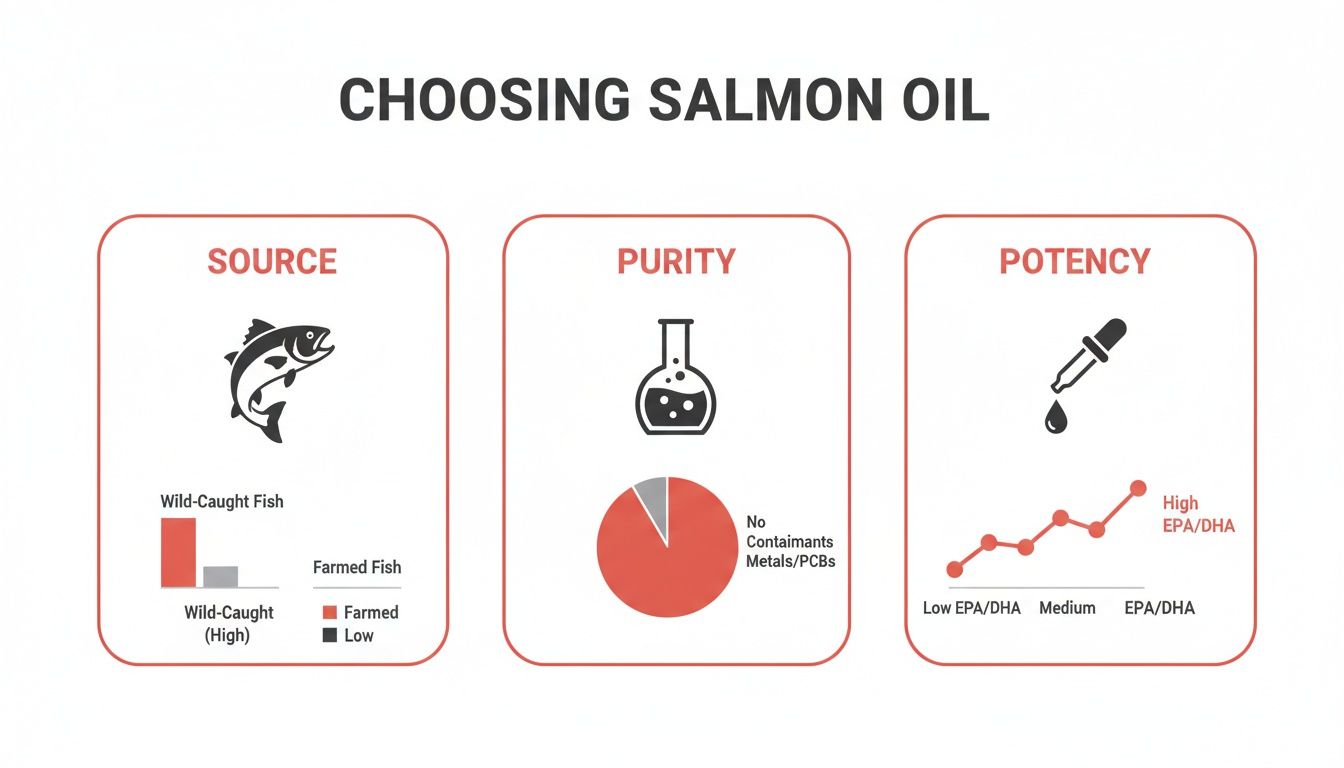
When it comes down to it, zeroing in on a wild-caught source, proven purity, and high EPA/DHA levels is how you know you’re giving your dog a safe and effective supplement.
How to Add Salmon Oil to Your Dog's Diet
Alright, you've found a great salmon oil and you're ready to start boosting your dog's wellness. The best part? It's usually super easy. Most dogs go crazy for the fishy flavor, so it feels more like a treat than a health supplement.
The simplest way to serve it up is to just drizzle the liquid oil right over their food. It doesn't matter if you feed kibble, fresh, or raw—a quick pump over their meal is all you need. Mixing it in with their food is also a good move for dogs with sensitive stomachs.
If you went with capsules, you can easily tuck them into a pill pocket or wrap them in a piece of cheese. Some dogs will just gulp them down whole! The key is consistency, so stick with whatever method your pup prefers.
Starting Off on the Right Paw
When you’re adding anything new to your dog’s routine, it’s always best to take it slow. While most dogs handle salmon oil just fine, jumping in with the full dose right away can sometimes lead to an upset stomach or loose stools.
The golden rule here is "start low and go slow." For the first week, give your dog half the recommended daily dose for their weight. This little bit of patience gives their digestive system plenty of time to get used to the new, healthy fats.
If everything looks good after a week (no tummy troubles!), you can gradually work your way up to the full dose over the next few days. This slow and steady approach is the best way to avoid any digestive bumps in the road.
Storing Your Salmon Oil for Maximum Freshness
Omega-3s are amazing, but they're also pretty delicate. Heat, light, and air are their enemies, causing them to break down and go rancid. Rancid oil doesn't just lose its benefits; it can actually be harmful. So, proper storage is a must.
To keep your salmon oil potent and safe, just follow these simple tips:
- Keep It Cool: Once you've opened a bottle of liquid salmon oil, it belongs in the fridge. The cold temperature seriously slows down oxidation and keeps it fresh.
- Keep It Dark: Light is a major no-no for Omega-3s. You'll notice good brands use opaque or dark bottles for this exact reason. Just make sure you store it out of direct sunlight.
- Keep It Sealed: Get in the habit of tightening the cap or pump securely after every use. The less air that gets in, the better.
Pro Tip: Give the oil a quick sniff before you serve it. Fresh salmon oil has a light, fishy smell. If it ever smells super strong, sharp, or just "off," it's likely gone bad. Toss it out and start fresh.
Understanding Mild Side Effects
While salmon oil for dogs is incredibly safe, it's always smart to know what to keep an eye on. The most common issue is a bit of digestive upset, especially if you start with too much, too soon. This usually just looks like some diarrhea or a gurgly stomach.
It's also worth remembering that salmon oil is packed with calories. If your dog is watching their waistline, you might need to adjust their meal portions a tiny bit to balance things out. And yes, you might notice some fishy breath, but that's a small price to pay for a shiny coat and healthy joints!
If you spot any side effects that stick around or seem serious, stop giving the oil and give your vet a call. They can help you figure out what’s going on and confirm if it's the right supplement for your individual dog.
Got Questions About Salmon Oil? We've Got Answers.
It's totally normal to have a few questions, even after seeing all the amazing benefits. When it comes to our dogs, being a little extra cautious is a good thing! We get it.
So, let's dive into some of the most common questions we hear from dog parents just like you. We’ll keep the answers clear and simple, so you can feel 100% confident about adding this to your dog's routine.
Can I Give My Dog Salmon Oil Every Day?
Yes, you absolutely can! In fact, you should. For salmon oil to really work its magic, consistency is everything.
Think of it like your own daily vitamin. You take it every day because the benefits build up over time. The same goes for your dog. A daily dose keeps a steady, optimal level of Omega-3s in their system. This constant supply is what allows the EPA and DHA to do their work—soothing inflammation, supporting brain health, and keeping that coat shiny, day in and day out. Just stick to the right amount for your dog's weight, and you're golden.
What's the Difference Between Salmon Oil and Fish Oil?
This is a great question and a super common point of confusion. While they both provide Omega-3s, the key difference is in the source and specificity.
"Fish oil" is a pretty broad term. It can be made from a mix of different oily fish, like anchovies, sardines, and mackerel. The quality and the exact amounts of EPA and DHA can really vary depending on what fish are in the blend.
Salmon oil, on the other hand, comes only from salmon. This is why a high-quality, wild-caught salmon oil is often considered the gold standard. Salmon is one of nature’s richest sources of EPA and DHA, and when you choose a pure salmon oil, you know exactly what you're getting.
No matter which you choose, the most important thing is to read the label. Look for a guaranteed analysis that clearly lists the EPA and DHA content and, ideally, shows it has been tested by a third party for purity.
How Long Does It Take to See Results?
This is where a little patience comes in handy, but you probably won't be waiting too long to see the first positive signs. The benefits show up on different timelines.
Here's a general guide for what to expect:
- Shiny Coat & Healthy Skin (3-4 weeks): This is usually the first change people notice. Within about a month, you might see less shedding, less itchy skin, and a coat that’s noticeably softer and shinier.
- Better Mobility & Joint Comfort (8-12 weeks): The anti-inflammatory effects that help with stiff joints take a bit longer to become visible. After two or three months, you may notice your dog seems more comfortable getting up from a nap or is more eager to play.
- Brain & Immune Health (Ongoing): These benefits are more about long-term protection than something you can see. Think of it as an investment in your dog's future health, helping to keep their mind sharp and their immune system strong for years to come.
Remember, every dog is an individual. The exact timeline can vary based on their age, health, and what you’re hoping to support. Consistency is what truly makes the difference.
Are There Any Side Effects I Should Watch For?
When given at the right dose, salmon oil is overwhelmingly safe. But it’s always smart to know what to keep an eye on.
The most common issue is a bit of digestive upset, like loose stool, especially when you're just starting out. This is exactly why we recommend the "start low and go slow" approach. Giving your dog's system time to adjust makes all the difference.
A few other things to be aware of, though they're much less common:
- Weight Gain: Salmon oil is a healthy fat, but it still has calories. If your dog is already watching their weight, you may need to account for these extra calories in their daily diet.
- Fishy Breath: This one’s kind of a given, but hey, it's harmless! A small price to pay for a healthy pup.
- Slowed Blood Clotting: This is only a concern at very high doses. The standard dosage won't cause problems, but it's why you should always chat with your vet before starting if your dog has a bleeding disorder or is scheduled for surgery.
If you notice any tummy troubles that don't go away or have any other concerns, just pause the supplement and give your vet a call. They can always help you figure out the best path forward.

Karolis is the Founder of FORMA, a pet wellness brand focused on longevity and daily nutrition for dogs. Writes about supplements, canine health, and helping pets live longer, healthier lives
Join thousands of pet parents getting science-backed health insights and natural care advice