How to Make Dog Food at Home A Simple Guide
Learn how to make dog food at home with our simple guide. Get vet-approved recipes, nutritional advice, and practical tips for your dog's health.
When you decide to make your dog’s food, you’re essentially becoming their personal chef. It’s all about creating balanced meals by carefully selecting the right mix of proteins, carbs, and healthy fats. This puts you in the driver's seat, letting you tailor every meal to your dog's unique needs and sidestep the processed fillers common in so many commercial foods.
Why Pet Owners Are Choosing Homemade Dog Food

The move toward homemade dog food isn't just some passing fad. It's a real reaction from owners who want to know exactly what's in their dog's bowl. More and more people are looking past the flashy marketing on kibble bags and want to take a more direct role in their dog's nutrition.
Often, this decision comes from a personal place. Maybe your dog has been battling itchy skin for years, has a sensitive stomach that just can't handle store-bought kibble, or is getting older and needs a diet that's easier on their system.
When you're the one in the kitchen, you're the ultimate quality control. You know for a fact that your dog is getting fresh, whole foods without any mystery "by-products" or artificial junk. That kind of control is incredibly empowering, especially when you're trying to manage a specific health issue.
The Quest for Human-Grade Quality
A huge part of this movement is the simple desire for human-grade ingredients. We see our dogs as part of the family, so it just makes sense that their food should meet the same standards as ours. The thought of feeding them rendered fats or chemical preservatives just doesn't sit right with a lot of us anymore.
This isn't just a feeling; it's a major market shift. The global dog food market is on track to hit USD 106.78 billion by 2026, and a lot of that growth is driven by the "premiumization of dog diets." This trend is especially noticeable among millennial pet owners in North America and Europe, who are more than willing to invest in better nutrition. You can explore more data on this growing market to get the full scope.
This commitment to quality brings some pretty great benefits:
- Total Transparency: You pick out every single ingredient yourself. No hidden allergens, no low-quality fillers, no surprises.
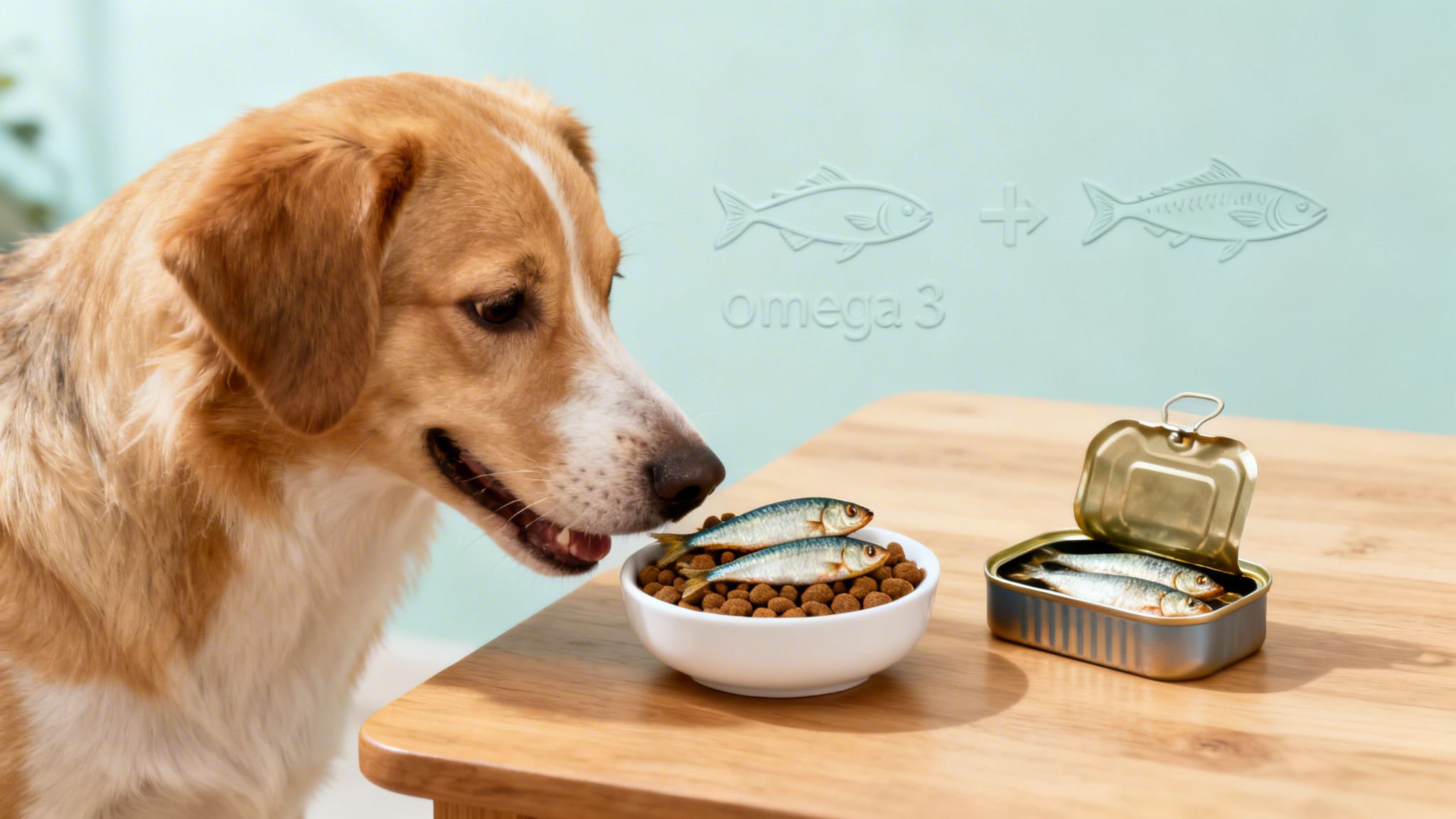
- Custom-Tailored Nutrition: It’s easy to tweak recipes on the fly. Need more digestive support? Add some pumpkin. Want to boost joint health? Throw in some omega-3-rich fish.
- A Stronger Bond: There's something special about preparing a meal for your dog. It's a hands-on way to show you care that goes way beyond just scooping kibble into a bowl.
For many owners, cooking for their dog stops being a chore and becomes a meaningful ritual. It’s an act of love that gives you peace of mind, knowing you’re providing the absolute best you can.
It’s About More Than Just Cooking
Jumping into homemade dog food isn't a decision to make on a whim, though. The benefits are clear, but it demands a real commitment to understanding what your dog truly needs to be healthy. A simple bowl of chicken and rice might seem fine, but it’s nowhere near a nutritionally complete diet.
Real success comes from creating balanced meals that deliver all the essential vitamins, minerals, and nutrients your dog needs to thrive.
That's what this guide is all about. We’re here to walk you through the entire process—from the nutritional basics and vet-approved recipes to practical tips on storage and portion sizes. It’s about learning what "best" really means for your dog and feeling confident that you can provide it.
Understanding Your Dog's Nutritional Needs
Before you even think about firing up the stove, let's talk about what actually makes a meal balanced for a dog. It’s so much more than just mixing up some meat and veggies you think are healthy. Getting homemade dog food right is a science, and it starts with understanding that what’s good for us isn’t necessarily good for them.
A dog’s body runs on a specific fuel mix. They need a careful balance of protein, fats, and carbohydrates, along with essential vitamins and minerals, to power everything from a game of fetch to basic cell repair. Even with the best intentions, getting that balance wrong can cause real health problems down the road.
The Core Building Blocks of a Canine Diet
Every single meal you make needs to be built on a solid foundation of macronutrients. Think of these as the main pillars of your dog’s diet—each one has a critical job to do.
Protein is non-negotiable; it's the absolute cornerstone. It’s essential for building and repairing muscle, keeping the immune system strong, and growing a healthy skin and coat. Quality animal-based proteins are key because they provide amino acids that dogs simply can't make themselves.
Fats are your dog’s main gas tank. Ounce for ounce, they provide more than double the energy of protein or carbs. Plus, healthy fats are crucial for absorbing certain vitamins (A, D, E, and K) and are the secret to that shiny, soft coat we all love.
Carbohydrates sometimes get a bad rap, but the right ones are incredibly useful. Simple-to-digest carbs like sweet potatoes and brown rice offer a great source of steady energy and provide fiber, which is a game-changer for keeping their digestive system running smoothly.
A well-planned homemade diet is a fantastic goal, but the only way to get the ratios perfect for your dog is to talk to a veterinary nutritionist. They can help you sidestep common mistakes that even the most dedicated owners make.
Core Macronutrient Guide for Homemade Dog Food
Getting a handle on what these core components do will help you make much smarter ingredient choices. Here’s a quick-reference guide to the essential building blocks of your dog's diet and their roles.
Remember, this table is just a general guideline. An energetic Border Collie pup will need a very different diet than a senior Basset Hound who prefers the couch.
Don't Forget the Micronutrients
While macronutrients get all the attention, it's the vitamins and minerals that are the unsung heroes of your dog’s health. Honestly, this is where most homemade diets fail. Commercial foods are fortified with a precise vitamin and mineral blend to make them "complete and balanced," a step that's dangerously easy to miss when you're cooking at home.
The two most critical minerals to get right are calcium and phosphorus. They work as a team to build strong bones and teeth, but their ratio has to be just right.
- A diet heavy in meat is naturally high in phosphorus. Without enough calcium to balance it, you can cause serious skeletal problems over time.
- For adult dogs, the ideal calcium-to-phosphorus ratio is somewhere between 1:1 and 2:1.
It's nearly impossible to hit this delicate balance without using specific supplements. You’ll notice many vet-approved recipes call for bone meal or another form of calcium for this very reason. It’s a simple addition that prevents entirely avoidable long-term health issues.
This is exactly why getting some expert guidance is so important. A board-certified veterinary nutritionist can review your recipes and point you to the right supplements to fill any nutritional gaps. That way, the meals you lovingly prepare are not just delicious, but truly complete.
Choosing Safe and Healthy Ingredients

Walking through the grocery store aisles feels a little different when you’re shopping for your dog. Suddenly, you're not just grabbing what's on sale; you're carefully building the foundation for a healthy, delicious meal. Picking the right ingredients is the most important part of this whole adventure.
The idea is to combine a variety of whole foods to create a balanced bowl. It's really about mixing high-quality proteins for muscle, beneficial carbs for energy, and healthy fats for a shiny coat and healthy skin.
Selecting Your Core Proteins
Protein is the star of the show in any dog's diet. It’s what builds and maintains strong muscles and keeps their immune system running smoothly. My advice? Stick with lean, high-quality options that you'd be happy to eat yourself.
Here are a few of my go-to choices:
- Lean Ground Meats: Ground turkey, chicken, or lean beef (like sirloin) are fantastic. They’re easy for dogs to digest and incredibly simple to cook.
- Fish: Salmon and sardines are my favorites. They’re absolutely packed with omega-3 fatty acids, which are great for reducing inflammation and supporting joint health.
- Eggs: A true powerhouse of nutrition. Eggs are one of the most complete forms of protein you can give your dog.
A critical word of caution: always buy unseasoned meat. Many pre-seasoned or marinated meats contain onion or garlic powder, both of which are toxic to dogs.
Choosing Beneficial Carbohydrates and Veggies
Carbs are what fuel your dog’s zoomies and provide the fiber they need for good digestion. Sticking to complex carbs and veggies full of nutrients will give them steady energy without the sugar crash.
Here are some excellent options:
- Sweet Potatoes: These are a fantastic source of fiber, vitamins, and antioxidants. Just be sure to cook them thoroughly, as raw sweet potatoes can be tough on their stomach.
- Brown Rice and Quinoa: These whole grains are easily digestible and offer that slow-burn energy dogs need.
- Carrots, Peas, and Green Beans: These add a nice pop of color, texture, and vitamins. I often use frozen ones for convenience.
- Pumpkin Purée: A spoonful of 100% pure pumpkin (not the pie filling!) is a secret weapon for digestive health. It helps with both constipation and diarrhea.
This isn’t just about filling a bowl; it’s about targeted nutrition. For my older dog, I'll often use a recipe with salmon (for the calming omega-3s) and blueberries (for immunity-boosting antioxidants). A great starting ratio, often approved by vets, is 50% meat/organs, 25% veggies, and 25% grains. This leaves room to add in superfoods to create a truly holistic meal. You can discover more insights about pet food trends on Statista to see how this approach is becoming more common.
Remember, variety is your friend. Rotating different proteins and vegetables not only keeps mealtime interesting for your dog but also provides a wider range of nutrients over time.
Incorporating Healthy Fats
Fats are essential for that glossy coat, healthy skin, and absorbing important vitamins. But not all fats are created equal. You only need a little bit—a small drizzle is usually plenty.
Good sources of healthy fats include:
- Fish Oil or Flaxseed Oil: Both are top-tier sources of omega-3s.
- Sunflower or Safflower Oil: These provide beneficial omega-6 fatty acids.
- Coconut Oil: A great source of medium-chain triglycerides that can support brain health, especially in senior dogs.
Just a small amount added to each batch of food can make a huge difference in your dog's skin and coat.
Critical Foods You Must Avoid
Pay close attention here, because this is the most crucial part of making homemade food. Many common human foods are dangerous, and some can even be fatal for dogs. When you’re cooking for your pup, your kitchen needs to become a "no-fly zone" for these ingredients.
Never include these in your dog's food:
- Onions, Garlic, Chives, and Leeks: All members of the allium family, these can cause serious damage to a dog's red blood cells.
- Grapes and Raisins: These are extremely toxic and can lead to sudden kidney failure.
- Chocolate and Caffeine: Both contain substances that are toxic to a dog's heart and nervous system.
- Xylitol: This artificial sweetener is a huge danger. It’s found in many products, including some peanut butters, so always read the label.
- Macadamia Nuts: These can cause weakness, vomiting, and tremors.
Always double-check the ingredient labels on things like broths, canned pumpkin, or other packaged foods to ensure they don’t contain any of these hidden dangers. When in doubt, leave it out.
A Couple of Simple, Vet-Approved Recipes to Get You Started
Alright, let's get to the fun part—actually cooking. I know the idea of crafting your own recipes from scratch can feel like a huge leap, so it’s always best to start with a solid, vet-approved foundation.
Think of these recipes as your starting point. You can swap out certain ingredients down the line, but the core balance of protein, carbs, and fats is already worked out to give your dog a complete meal. Just remember, a quick chat with your vet is always a good idea before you switch up your dog's diet.
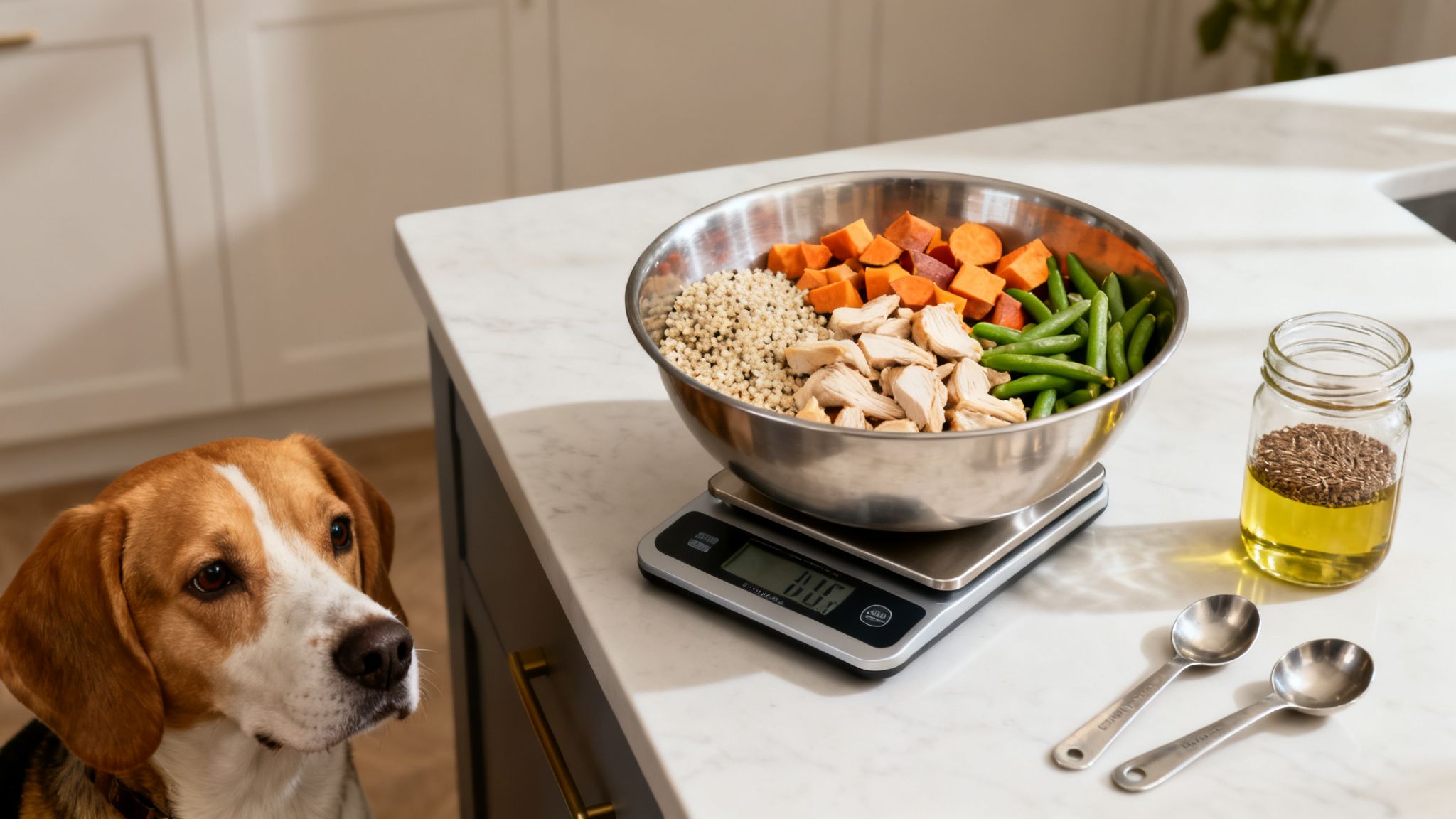
Everyday Balanced Chicken Bowl
This is a fantastic, all-around great meal for a healthy and active adult dog. It’s packed with high-quality protein, easy-to-digest carbs, and veggies full of nutrients to keep them going all day. Honestly, it's a crowd-pleaser for most pups.
What You'll Need:
- 3 lbs ground chicken (lean ground beef works too)
- 1 cup brown rice, uncooked
- 1 cup carrots, shredded
- 1 cup spinach, chopped
- 1/2 cup peas (fresh or frozen is fine)
- 1 tablespoon olive oil or flaxseed oil
- 4 cups water or low-sodium chicken broth
- 1 teaspoon vet-recommended calcium (like ground eggshells or a specific powder)
Putting It Together:
- Brown the ground chicken in a large pot or Dutch oven over medium heat. Make sure to drain off any extra fat.
- Toss in the water (or broth), uncooked rice, and shredded carrots. Crank up the heat and bring it all to a boil.
- Once it's boiling, knock the heat down to low, pop a lid on, and let it simmer for about 20-25 minutes. You’re waiting for the rice to get tender and soak up most of the liquid.
- Kill the heat and stir in the chopped spinach and peas. The heat from the food is enough to gently wilt them without destroying their nutrients.
- Let it cool down a bit, then stir in the olive oil and calcium supplement. Mix it all up really well. It's crucial to let the food cool completely before you serve it.
One of the best parts about cooking at home? The savings. You can often make human-grade meals for just $2-4 per pound, a huge drop from the $5-10 you might pay for premium store-bought brands. For instance, this recipe using bulk chicken, rice, and spinach can make 10 lbs of food for under $20. The same amount of a top-tier commercial brand could easily set you back $50+. If you're curious, you can discover more insights about the dog food market here.
My Favorite Tip: Make a huge batch! This recipe freezes perfectly. I like to portion it out into single-serving containers and stack them in the freezer. It makes mealtime incredibly fast and easy for weeks to come.
Gentle Tummy Turkey and Sweet Potato Blend
Got a dog with a sensitive stomach, an older pup, or just one who needs something a little easier on their system? This recipe is for them. It uses super-lean ground turkey and sweet potatoes, which are a wonderful and gentle source of fiber and vitamins.
What You'll Need:
- 3 lbs ground turkey
- 1 large sweet potato, peeled and diced (about 2 cups)
- 1 cup green beans, trimmed and chopped
- 1/2 cup rolled oats, uncooked
- 4 cups water
- 1 tablespoon coconut oil
- 1 teaspoon vet-recommended calcium supplement
Putting It Together:
- In a large pot, cook the ground turkey over medium heat until it’s no longer pink. Again, drain off the excess fat.
- Add the diced sweet potato, chopped green beans, and water. Bring it to a boil.
- Turn the heat down to a simmer, cover the pot, and let it cook for about 15 minutes, or until you can easily poke a fork through the sweet potato pieces.
- Stir in the uncooked rolled oats. Then, take the pot off the heat, cover it again, and just let it sit for about 10 minutes. The oats will absorb the rest of the liquid and soften up perfectly.
- Once it’s cooled down a little, stir in the coconut oil and calcium. Give it a final good mix and make sure it's completely cool before serving.
These recipes are here to build your confidence. Once you get the hang of it, you'll feel much more comfortable knowing you're feeding your dog a safe, balanced, and delicious meal made right in your own kitchen.
How to Portion and Store Homemade Food Safely
You’ve sourced the best ingredients and cooked a beautiful, nutritious meal for your dog. So what now? Don't let your hard work go to waste—what you do next is just as critical for your dog's health. Getting the portion sizes right and storing the food safely are the final, crucial pieces of the puzzle.
Think of it like this: you wouldn't cook a big pot of chili for yourself and leave it on the counter all day. The same common-sense food safety rules absolutely apply to your dog's meals. The main goal is to cool the food down quickly and get it stored correctly to lock in freshness and stop harmful bacteria like Salmonella or Listeria from taking hold.
Figuring Out the Right Portion Size
Trying to figure out how much to feed your dog can feel like a guessing game at first, but there's a reliable rule of thumb to get you started. A great starting point is to feed your dog about 2-3% of their ideal body weight in fresh food each day.
So, a 50-pound dog would get somewhere between 1 and 1.5 pounds of food daily, which you’d typically split into a morning and evening meal.
Here are a few more quick examples:
- For a 20 lb Dog: Roughly 0.4 to 0.6 lbs (that's 6.4 to 9.6 oz) per day.
- For a 50 lb Dog: Roughly 1 to 1.5 lbs (that's 16 to 24 oz) per day.
- For an 80 lb Dog: Roughly 1.6 to 2.4 lbs (that's 25.6 to 38.4 oz) per day.
Of course, this is just a baseline. A hyperactive Border Collie who spends her days chasing frisbees is going to burn a lot more calories than a senior Bulldog who has perfected the art of napping. You'll need to adjust the amount based on your dog's specific energy levels, age, and metabolism. The best way to know if you're on track is to keep an eye on their body condition.
Smart and Safe Food Storage
Once everything is cooked, you need to bring the temperature down fast. Letting food sit out in the "danger zone"—that's between 40°F and 140°F—is like rolling out the welcome mat for bacteria. To cool a big batch quickly, I like to spread it out onto a couple of baking sheets. You could also place the pot in an ice bath in your sink.
The whole workflow is pretty simple when you break it down.

As the diagram shows, it’s a straightforward flow: you mix your ingredients, cook them, and then get them portioned out for storage right away.
Key Takeaway: Remember, homemade dog food is fresh, perishable food. Treat it exactly like you would your own meals. It doesn't have the commercial preservatives found in kibble, so its shelf life is much shorter. This makes proper storage non-negotiable.
Once the food has cooled completely, you've got two main options:
- Refrigeration: For meals you'll use in the next few days, airtight containers in the fridge are perfect. The food will stay fresh for about 3-4 days.
- Freezing: Your freezer is your best friend when you're making big batches. This is the ultimate time-saver.
A little trick I've learned is to use silicone muffin trays or large ice cube trays for freezing. I scoop a single serving into each mold, freeze them solid, and then pop the frozen "pucks" into a large labeled freezer bag. It makes feeding time unbelievably easy—I just grab what I need for the day without having to defrost a massive container. Using this method, the food stays fresh for up to 3 months.
Your Top Questions About Homemade Dog Food Answered
Deciding to make your dog’s food is a big step, and it’s totally normal to have a few questions swirling around. Let's tackle some of the most common ones I hear from pet owners, so you can move forward with confidence.
Is It Really Cheaper to Make My Own Dog Food?
This is usually the first thing people ask, and the answer is a resounding "it depends, but usually yes!"
When you stack it up against the premium fresh food brands you see in stores, making it yourself can save you a good chunk of change. By buying staple ingredients like chicken or rice in bulk, you can often get your cost down to around $2 to $4 per pound.
Compare that to high-end fresh or organic brands, which can easily run you $5 to $10 per pound. Sure, your costs will go up if you choose pricier organic meats or need to add specific supplements, but you’re cutting out the brand markup and paying for pure, quality ingredients. It’s a fantastic way to feed your dog top-notch food without the premium price tag.
How Can I Be Sure the Food Is Nutritionally Complete?
This is, without a doubt, the most important question. Getting the nutrition right is absolutely critical for your dog's health, and it's not something you want to guess at.
The gold standard here is to consult a board-certified veterinary nutritionist. They're the experts who can take your recipe, analyze it down to the last micronutrient, and tell you exactly what, if anything, is missing.
A classic mistake in DIY dog food is getting the calcium-to-phosphorus ratio wrong, which can cause serious health issues down the line. Starting with a vet-approved recipe is a great first step, but a professional consultation gives you that final seal of approval.
For extra peace of mind, I always recommend using a high-quality multi-vitamin and mineral supplement designed for homemade diets. Think of it as a nutritional safety net that catches any micronutrients that might not be perfectly balanced in the food itself.
What’s the Best Way to Switch My Dog to a Homemade Diet?
Slow and steady wins the race here. A gradual transition over 7 to 10 days is the key to avoiding an upset stomach and making the switch a positive experience. Don't rush it!
Here’s a simple schedule that works almost every time:
- Days 1-3: Mix just 25% new homemade food with 75% of their old kibble or wet food.
- Days 4-6: If everything looks good (no tummy troubles!), move to a 50/50 split.
- Days 7-9: Up the homemade portion to 75%, with only 25% of the old food remaining.
- Day 10+: If the transition is smooth, you can go all in with 100% homemade food.
Keep a close eye on your dog during this period. You're looking for normal energy levels and, let's be honest, solid, healthy-looking poop. That’s how you’ll know their system is adapting well.
Are There Warning Signs That the Diet Isn’t Working?
Yes, and your dog is usually pretty good at telling you when something's off. You just need to know what to look for.
Keep an eye out for any of these red flags:
- Ongoing diarrhea or vomiting
- A coat that looks dull, dry, or has new dandruff
- Sudden weight loss or gain that you can't explain
- Less energy or seeming more tired than usual (lethargy)
- New skin problems, like constant scratching or hotspots
These symptoms could point to anything from a simple nutritional gap to an emerging food allergy. If you spot any of these signs, hit the pause button on the homemade diet and give your vet a call. They can help you figure out what’s going on and get your pup back on track.

Karolis is the Founder of FORMA, a pet wellness brand focused on longevity and daily nutrition for dogs. Writes about supplements, canine health, and helping pets live longer, healthier lives
Join thousands of pet parents getting science-backed health insights and natural care advice