How to Treat Diarrhea in Dogs a Practical At Home Guide
Discover how to treat diarrhea in dogs with our guide on safe home remedies, bland diets, hydration, and knowing when to see a vet for your pet's gut health.

When you find that tell-tale puddle, it's easy to jump straight to panic mode. But before you do anything, take a deep breath and take a good look at your dog. For most mild cases of diarrhea, a little at-home care is all that's needed. The trick is knowing whether you're dealing with a simple upset stomach or something that needs a vet's attention.
What to Do When Your Dog Has Diarrhea

That sinking feeling is universal for dog owners. But remember, most of the time, acute diarrhea is a minor issue that you can manage right at home. The very first thing to do is a quick, calm assessment of your dog's overall condition. This check-in is the most important step, as it tells you whether to proceed with home care or call the vet.
You’re trying to get a complete picture of their health, not just focusing on the poop. A dog with a soft stool who's still running around chasing their favorite toy is in a very different situation than one who is curled up in a corner and won't drink.
Assess Your Dog's Behavior and Energy
First, just observe. Is your dog acting like their normal, goofy self? Are they still wagging their tail, following you around, and getting excited about the sound of the treat jar? Or are they hiding, listless, or acting uncomfortable?
A dog with a simple tummy ache will often have normal or only slightly lower energy. Maybe they aren't up for a five-mile hike, but they'll still happily greet you at the door. If your dog seems unusually weak, refuses to move, or is just completely "out of it," that's a major red flag.
Check for Dehydration
Diarrhea pulls a lot of fluid from the body, so dehydration is a real risk and your primary concern. Thankfully, there are a couple of quick checks you can do right at home.
- The Skin Tent Test: Gently pull up the skin between your dog’s shoulder blades. If they're well-hydrated, it should snap right back down. If it goes back slowly or, worse, stays tented up, they are likely dehydrated.
- Check Their Gums: A healthy dog's gums are pink and slick. If you press a finger on their gum, the spot will turn white but should return to pink in under two seconds. Gums that look pale, dry, or feel sticky are another clear sign of dehydration.
A dog that is both lethargic and showing signs of dehydration needs to see a vet. Home care is really only for dogs who are otherwise bright, alert, and still drinking water.
This whole assessment only takes a few minutes, but it gives you the critical information you need. It helps you confidently decide whether it's safe to manage this at home or time to call for professional help. If your dog passed this initial check, you can move on to the next steps for at-home care.
The 24-Hour Gut Reset for Your Dog
So, you've checked your dog over, and aside from the tummy troubles, they seem their usual, happy self. Great. The first thing to do is often the simplest: give their digestive system a much-needed break.
Think of it as hitting the pause button. Withholding food for a short period gives that inflamed, irritated gut lining a chance to calm down and heal without having to work on digesting a new meal.
For most healthy adult dogs, a 12 to 24-hour fast is completely safe and surprisingly effective. This isn’t about depriving your pup; it's a strategic move to stop the cycle of irritation. Just remember, this advice doesn't apply to very young puppies, senior dogs, or dogs with pre-existing health issues—they need a vet’s guidance.
Keeping Hydration a Top Priority
While food is off the menu for a bit, water is non-negotiable. Diarrhea pulls a lot of fluid from your dog's body, and dehydration is the single biggest risk we need to manage during this gut reset. Your main job is to make sure fresh, clean water is always available and to gently encourage them to drink.
Sometimes, a dog with an upset stomach won't be interested in their regular water bowl. If that's the case, you can get a little creative to entice them.
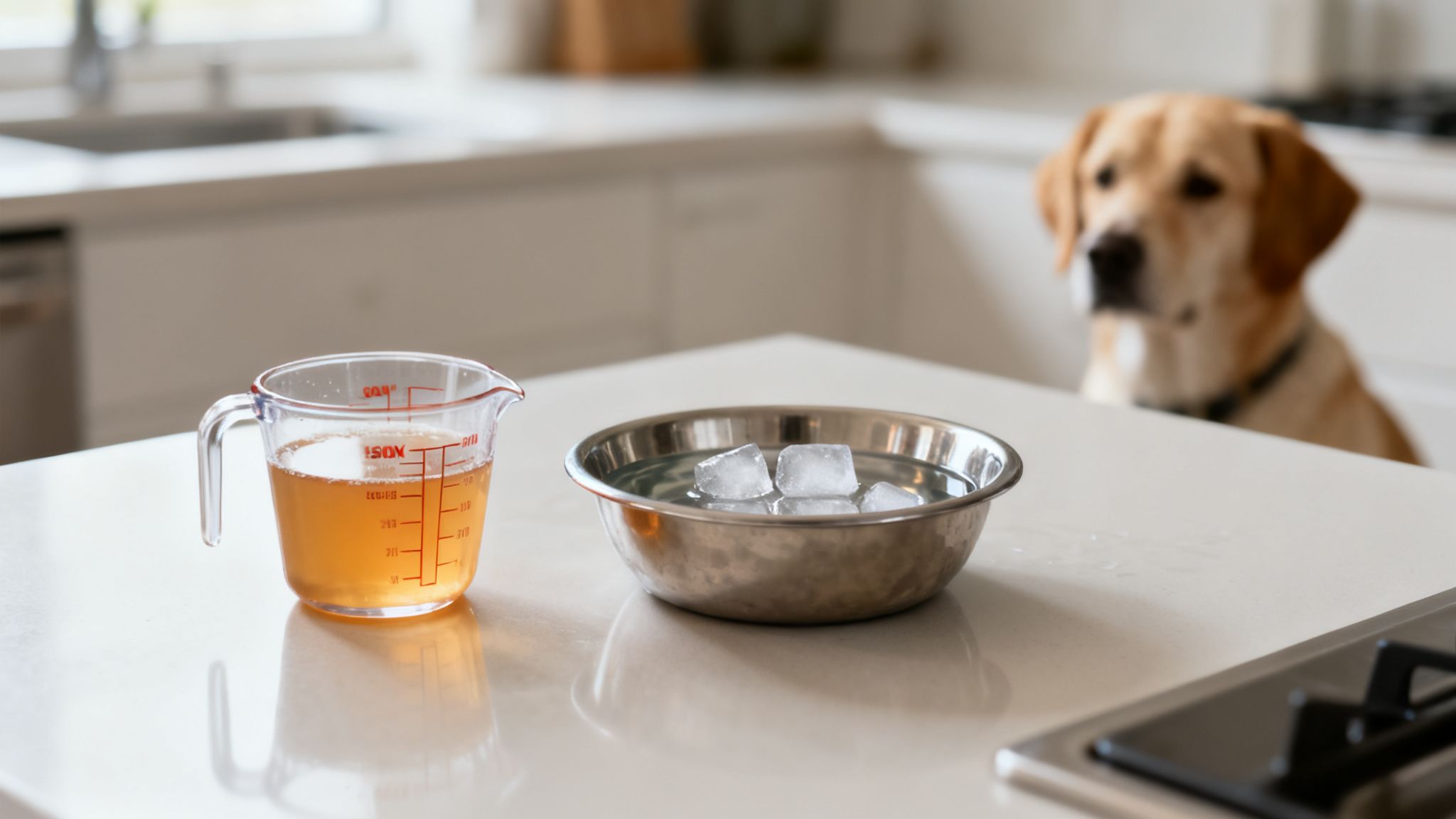
- Try Ice Chips: Many dogs find crunching on ice chips or small cubes far more interesting than just lapping up water.
- Flavor Their Water: Adding a small splash of plain, low-sodium bone broth (chicken or beef) can make the water bowl suddenly very appealing.
- Place Bowls Everywhere: Putting a few extra water bowls around the house acts as a constant, gentle reminder for them to stay hydrated.
Key Takeaway: The fast is to calm the gut, but hydration is what keeps your dog safe. Never, ever restrict access to water during this 24-hour rest period.
This whole approach is part of a bigger shift in veterinary thinking, focusing more on supportive, microbiome-friendly care instead of jumping straight to medication. It lines up with what the research shows us, too. A UK study looking at over 1,800 cases of acute diarrhea found that over 80% of dogs got better after just one vet visit, usually within two days. This really drives home how often these issues resolve on their own with a little help. You can read more about these modern approaches to canine gut health.
After your dog has made it through the fast and their stomach seems to have settled, it's time to reintroduce food. But you can't just jump back to their regular kibble. We need to ease their digestive system back into work with a gentle, bland diet, which we'll cover in the next section.
Introducing the Bland Diet for Recovery
After a 12-24 hour fast, your dog’s gut has had a chance to calm down, but it’s still incredibly delicate. Rushing back to their normal kibble is one of the biggest mistakes people make—it’s often too rich and can trigger the diarrhea all over again.
Instead, we need to reintroduce food gently with a bland diet. Think of it as digestive first-aid. The whole point is to give them calories and nutrients for healing without making their GI tract do any heavy lifting. This isn't a long-term diet, just a temporary bridge for the next two to three days to help get their system back on track.
Building the Perfect Bland Meal
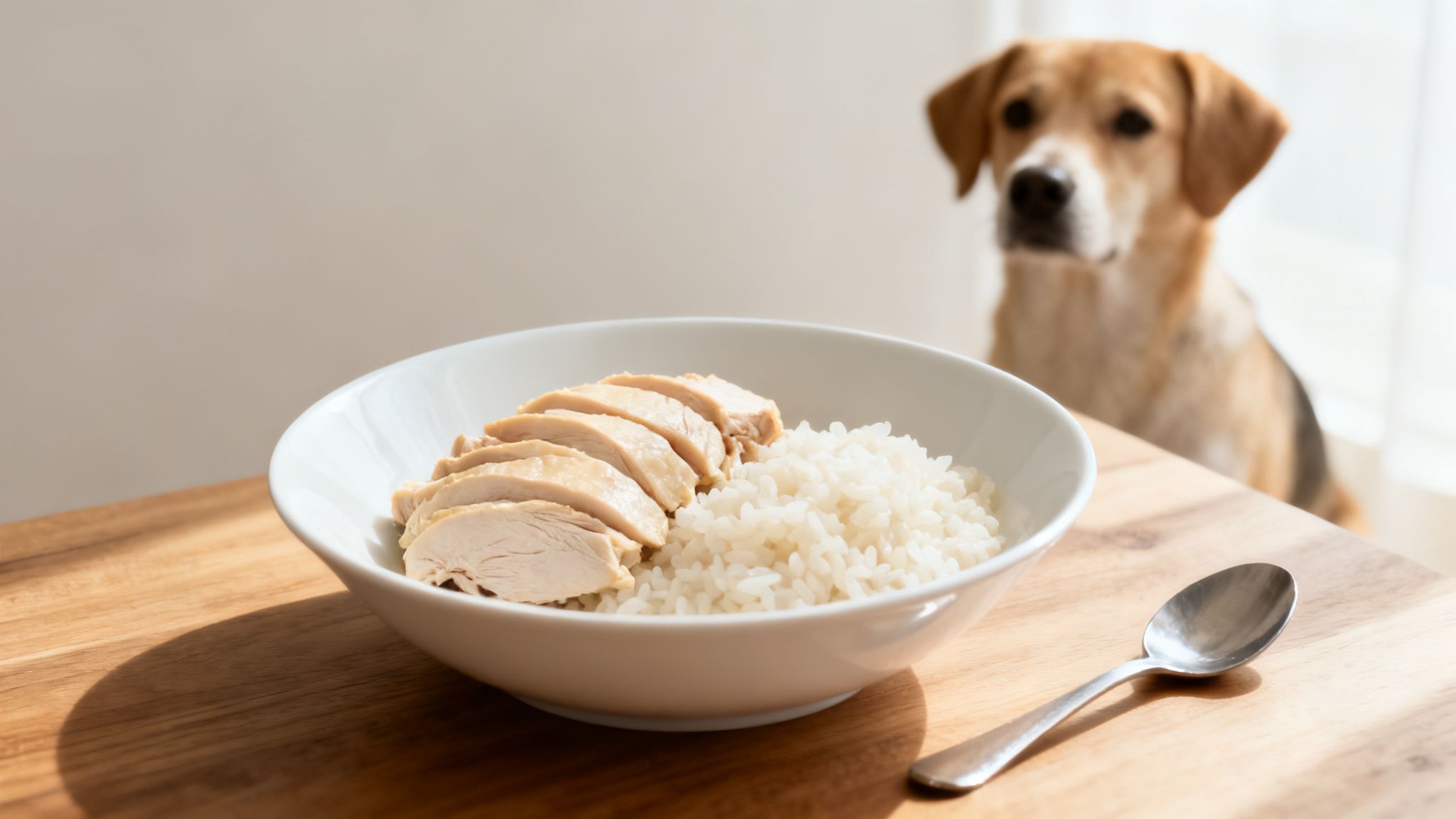
The tried-and-true formula for a bland diet is simple: one part lean protein to two parts starchy carbohydrate. That's it. The most important rule is to keep it plain—absolutely no oils, butter, or seasonings. Everything should be boiled or steamed and served at room temperature.
Here are the classic building blocks you can use:
- Lean Protein: Provides the amino acids needed to repair the gut lining. Boiled, skinless, boneless chicken breast is the go-to. Extra-lean ground turkey is another great choice.
- Starchy Carbohydrate: This is key for adding bulk to the stool and providing easy energy. Plain white rice is the standard, but plain canned pumpkin (the 100% pure kind, not pie filling!) or boiled sweet potato work beautifully, too.
Don’t give them a big meal all at once. Start small. Really small. Instead of their usual two meals, break it down into three or four tiny portions throughout the day. This keeps their digestive system from getting overwhelmed.
Portion Sizes and Smart Alternatives
So, how much should you actually feed them? A good rule of thumb is to aim for the same total daily volume as their regular food, just split into those smaller, more frequent meals. For example, if your 40-pound dog normally eats two cups a day, you could offer four half-cup servings of the bland diet mix spread a few hours apart.
But what if your dog can't have chicken or is sensitive to rice? No worries. The bland diet is all about the principle, not the specific ingredients.
The principle of a bland diet is more important than the specific ingredients. It's about combining a single, easily digestible protein with a single, simple carbohydrate to soothe the gut.
This table breaks down some fantastic alternatives if the classic chicken-and-rice recipe isn't right for your dog.
Bland Diet Ingredient Comparison
This comparison of common bland diet components, their benefits, and preparation tips can help you choose the best option for your dog's recovery.
Once you see consistently firm, normal-looking poop for a full 24 hours, you've got the green light to start slowly transitioning back to their regular food. We'll walk through exactly how to do that in the next section.
Restoring Gut Health with Probiotics
Getting your dog's diarrhea to stop is only half the battle. The real work is rebuilding the good stuff that got flushed out. Think of a diarrhea episode as a flash flood in your dog’s gut—it washes away everything, both the good and bad bacteria, leaving the whole system out of whack and vulnerable.
This is where the right kind of supportive care really shines, especially probiotics. Probiotics are basically reinforcements for the "good guys" in the gut, helping to repopulate the area and get things back in balance so your dog can truly heal.
Why the Gut Microbiome Matters
I like to explain the gut microbiome as a tiny, bustling city inside your dog. When it's running smoothly, the good bacteria are busy digesting food, making vitamins, and keeping troublemakers (pathogens) from setting up shop. Diarrhea is like a riot that clears the streets, allowing the bad guys to take over.
Giving your dog a high-quality probiotic helps bring back the good citizens. This does more than just fix the immediate problem; it beefs up the gut's security for the future. These helpful microbes firm up stool, calm down inflammation in the intestines, and even boost the immune system, since so much of it is housed right there in the gut.
This isn't just a hunch; it's becoming standard practice. A huge study looked at 3,189 dogs with acute diarrhea and found that probiotics were the most common treatment, used in 60.8% of cases. That’s even more common than antibiotics! It shows a real shift in veterinary thinking toward supporting the gut's natural ecosystem instead of just treating symptoms. You can learn more about the growing preference for supportive care in dogs with diarrhea.
Choosing the Right Probiotic
Heads up: not all probiotics are the same, and your dog can't just share yours. A dog's gut is a different environment than ours, so they need specific bacterial strains to get the job done right.
When you're on the hunt for a good probiotic, here’s what to look for:
- Canine-Specific Strains: Look for ingredients like Enterococcus faecium or specific Lactobacillus and Bifidobacterium species. These are the ones proven to work well for dogs.
- Guaranteed Live Cultures: The label should promise a certain number of live organisms (measured in CFUs, or Colony Forming Units) all the way to the expiration date. Dead bacteria won't do much good.
- Prebiotics Included: The best supplements also contain prebiotics. These are special fibers that act like fertilizer for the good bacteria, helping them settle in and thrive. This combo is often called a "synbiotic."
The goal shouldn't be just to react to every tummy upset. It's about being proactive. A daily gut-support supplement is a fantastic tool for maintaining a healthy, resilient microbiome every single day.
By making a daily supplement like FORMA part of your dog's routine, you're giving their digestive system consistent, steady support. This not only helps them bounce back quicker from the occasional bout of diarrhea but also builds a stronger foundation for their long-term gut health and immunity. You're helping keep that internal "city" of microbes flourishing, making them far better prepared for any digestive curveballs life throws their way.
Knowing When to Call the Vet
While home care is a fantastic first line of defense for a simple case of diarrhea, it's not a cure-all. Your most important job as a dog owner is knowing when an upset stomach has crossed the line into a potential medical emergency.
Knowing when to act can make a huge difference in your dog's outcome. You don't need to panic over every soft stool, but ignoring serious red flags can be dangerous. Let's walk through exactly when to stop home treatment and pick up the phone.
Trust your gut. You know your dog better than anyone. If you feel like something is seriously wrong, it's always better to be safe and call your veterinarian for advice.
Red Flags That Require a Vet Visit
Some symptoms are clear signals that your dog needs professional medical help, and fast. If you see any of the following, don't wait to see if things get better on their own—contact your vet or a local emergency animal hospital right away.
- Blood in the Stool: This could look like bright red streaks (hematochezia) or dark, tarry stools (melena). Both are signs of trouble that need a vet's diagnosis.
- Repeated Vomiting: A single vomit isn't always a crisis. But if your dog is vomiting multiple times or can't even keep water down, they're on a fast track to severe dehydration.
- Signs of Abdominal Pain: Is your dog hunched over? Do they whine when you touch their belly? Are they doing the "prayer position" with their rear in the air? These are classic signs of serious pain.
- Extreme Lethargy: This isn't just being tired after a long walk. We’re talking about a profound lack of energy—your dog is unresponsive, weak, or seems completely out of it.
You should also be quick to call the vet for diarrhea in very young puppies, senior dogs, or dogs with pre-existing conditions like kidney disease or diabetes. They just don't have the same reserves to fight things off.
This decision tree gives you a great visual for navigating dog diarrhea, showing how both home care and vet visits often lead back to probiotics for gut recovery.
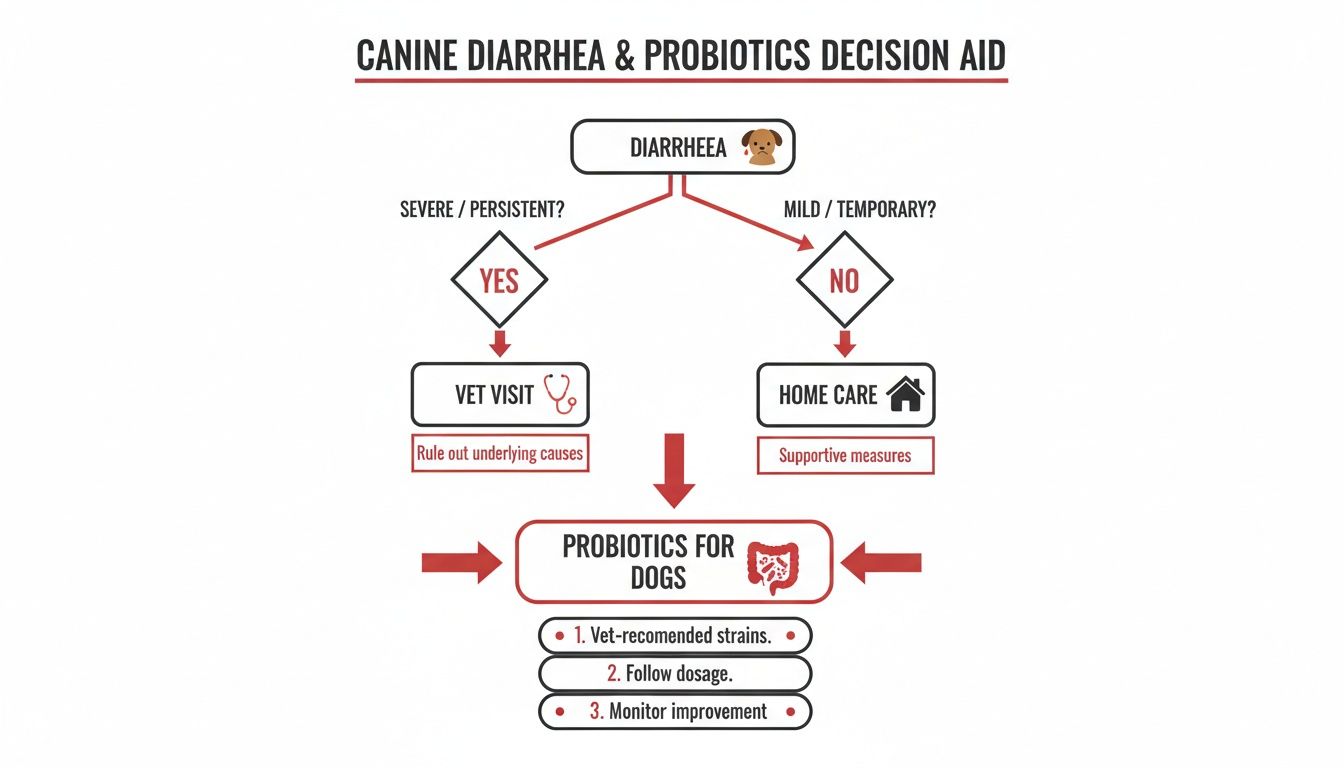
The takeaway here is that probiotics are a cornerstone of recovery, whether the initial treatment happens at home or with your vet.
Understanding True Lethargy
The word "lethargy" gets thrown around a lot, so it's easy to get confused. A dog with a simple case of diarrhea might be quieter than usual, choosing to nap instead of play fetch. That's pretty normal.
Medical lethargy, on the other hand, is a dramatic shift in behavior.
It’s when your food-obsessed Labrador doesn’t even lift his head when you open the treat bag. It's when your bouncy terrier won't get up to greet you at the door. That level of listlessness, especially when combined with diarrhea, signals a much more serious problem.
Common Questions About Dog Diarrhea
Even when you have a plan, dealing with your dog’s upset stomach can bring up a lot of questions. That’s completely normal. Let's run through some of the most common things we get asked, so you can handle your dog’s recovery with a bit more confidence.
Can I Give My Dog Human Medicine for Diarrhea?
This is a big one, and the answer is almost always no—at least not without explicit instructions from your vet.
It can be tempting to reach for something like Imodium or Pepto-Bismol, but these are made for human bodies. The dosages can be tricky and even toxic for dogs, and some of the ingredients are downright dangerous for them. It's just not worth the risk.
A much safer bet is to stick with supportive home care. Focus on that bland diet, keep the water bowl full, and maybe add a probiotic made specifically for dogs. These approaches help soothe the gut and address the actual imbalance, whereas human meds often just cover up the symptoms.
How Long Is Too Long for a Dog to Have Diarrhea?
For a generally healthy adult dog, you should start seeing some real improvement within 24 to 48 hours after you begin home care (fasting, bland diet, etc.). If you're past the two-day mark and things aren't getting better, it’s time to call the vet.
But that timeline shrinks for more vulnerable dogs.
- Puppies and Senior Dogs: Their systems are more delicate, and they can get dehydrated incredibly fast. For them, the magic number is 24 hours. If the diarrhea lasts longer than that, get your vet on the phone.
- Dogs with Other Health Issues: If your dog already has a pre-existing condition, don't wait. It's best to consult your vet as soon as it starts.
The clock isn't the only thing that matters. Pay close attention to your dog's overall behavior. If they seem wiped out, refuse to drink, or act like they're in pain, call the vet immediately. Don't wait, even if it's only been a few hours.
What’s the Difference Between Probiotics and Prebiotics?
I find it easiest to think of this like tending a garden inside your dog's gut.
Probiotics are like the good seeds. They are live, beneficial bacteria that you add to the gut to help restore balance, especially after an upset has wiped out the good guys.
Prebiotics, on the other hand, are the fertilizer. They're a special type of fiber that feeds the good bacteria already living there. Prebiotics help the existing colonies of microbes grow stronger and flourish. For long-term gut health, a supplement that contains both gives you the best of both worlds.
How Do I Transition My Dog Back to Regular Food?
Great news! Your dog has had a solid, normal-looking poop for a full day. Now, you can start bringing back their regular food. The golden rule here is to go slowly. Rushing this step is a classic mistake that can send you right back to square one.
We recommend taking three to five days to make the switch.
- Days 1-2: Mix about 75% of the bland diet with 25% of their regular food.
- Days 3-4: If their stool is still looking good, you can move to a 50/50 mix.
- Day 5: Still on track? Try 25% bland diet and 75% regular food. From there, you can transition back to their normal meal completely.

Karolis is the Founder of FORMA, a pet wellness brand focused on longevity and daily nutrition for dogs. Writes about supplements, canine health, and helping pets live longer, healthier lives
Join thousands of pet parents getting science-backed health insights and natural care advice