A Pet Parent's Guide to Dog Gut Health Supplements
Discover the benefits of dog gut health supplements. Learn how to choose the right ingredients and support your dog’s digestion for a happier, healthier life.
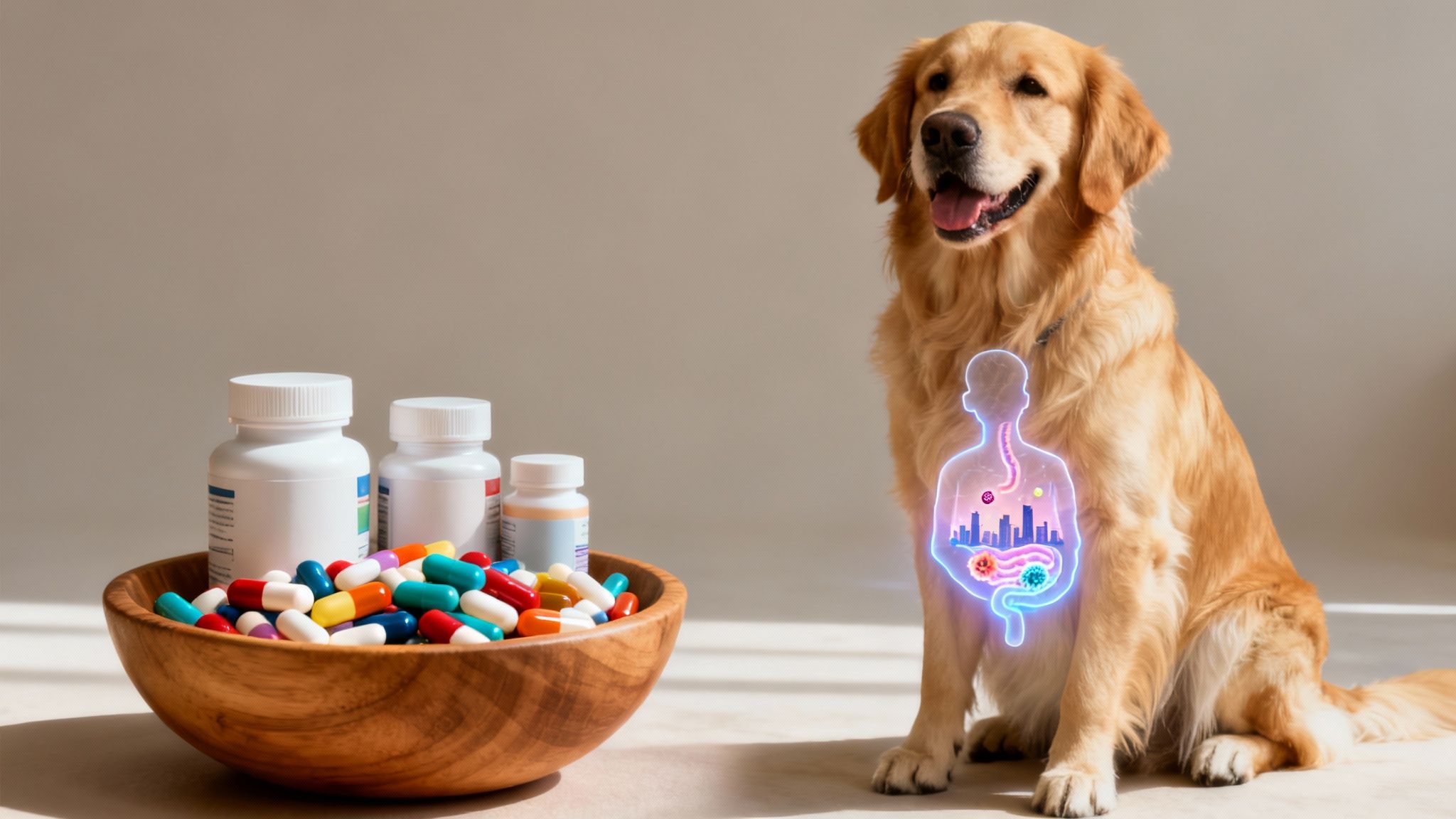
Think of dog gut health supplements as your toolkit for keeping your dog's digestive system running smoothly. They're designed to balance the good bacteria in the gut, often using a combination of probiotics, prebiotics, and enzymes. The goal? Better digestion, a stronger immune system, and a healthier dog all around.
What Is Your Dog's Gut Microbiome?
Imagine a bustling city inside your dog's belly. This city isn't filled with people and cars, but with trillions of tiny residents: bacteria, fungi, and other microbes. This entire community, living and working together in the digestive tract, is what we call the gut microbiome.
This internal ecosystem is so much more than just a food-processing factory. It's really the command center for your dog's overall health. When this microbial city is in balance, it works hard to keep your dog feeling their best.
The Power of a Balanced Internal City
A healthy gut is like a well-oiled machine. The "good" bacteria are the diligent workers on the factory floor, breaking down food, manufacturing essential vitamins, and even training the immune system. It's a surprising fact, but over 70% of a dog's immune system is actually located in their gut. This makes their microbiome the first line of defense against sickness.
When a dog's gut is balanced, you see a few key benefits:
- They absorb and use all the good stuff from their food.
- Their immune system is robust and ready to fight off germs.
- They produce important mood-regulating chemicals (like serotonin).
- The "bad" bacteria are kept in check and can't take over.
When the City Falls into Chaos
Unfortunately, it's easy to throw this delicate balance out of whack. Things like stress, a course of antibiotics, a poor diet, or even environmental changes can create chaos in the microbial city. When this happens, the harmful bacteria can start to outnumber the good guys, leading to an imbalance known as dysbiosis.
This internal imbalance is often the root cause of many common health issues in dogs. What you see on the outside—like itchy skin, gas, or low energy—frequently starts as a problem on the inside.
This kind of disruption shows up in all sorts of ways, from obvious tummy troubles to more subtle symptoms you might not connect to digestion. The health of this internal city is directly tied to your dog's vitality. This is where dog gut health supplements come in. They act like a specialized cleanup crew, helping to restore order and get the city running smoothly again.
Decoding the Ingredients in Gut Supplements
Ever looked at the back of a dog supplement bottle and felt like you needed a science degree to understand it? You’re not alone. The labels can be packed with unfamiliar terms, but figuring out what they mean is the key to picking a product that will actually help your dog.
Think of it like building a team for your dog’s digestive system. You need the right players in the right positions to get the job done. A healthy gut is the command center for so much of your dog's overall well-being, from their immune defenses to their mood.
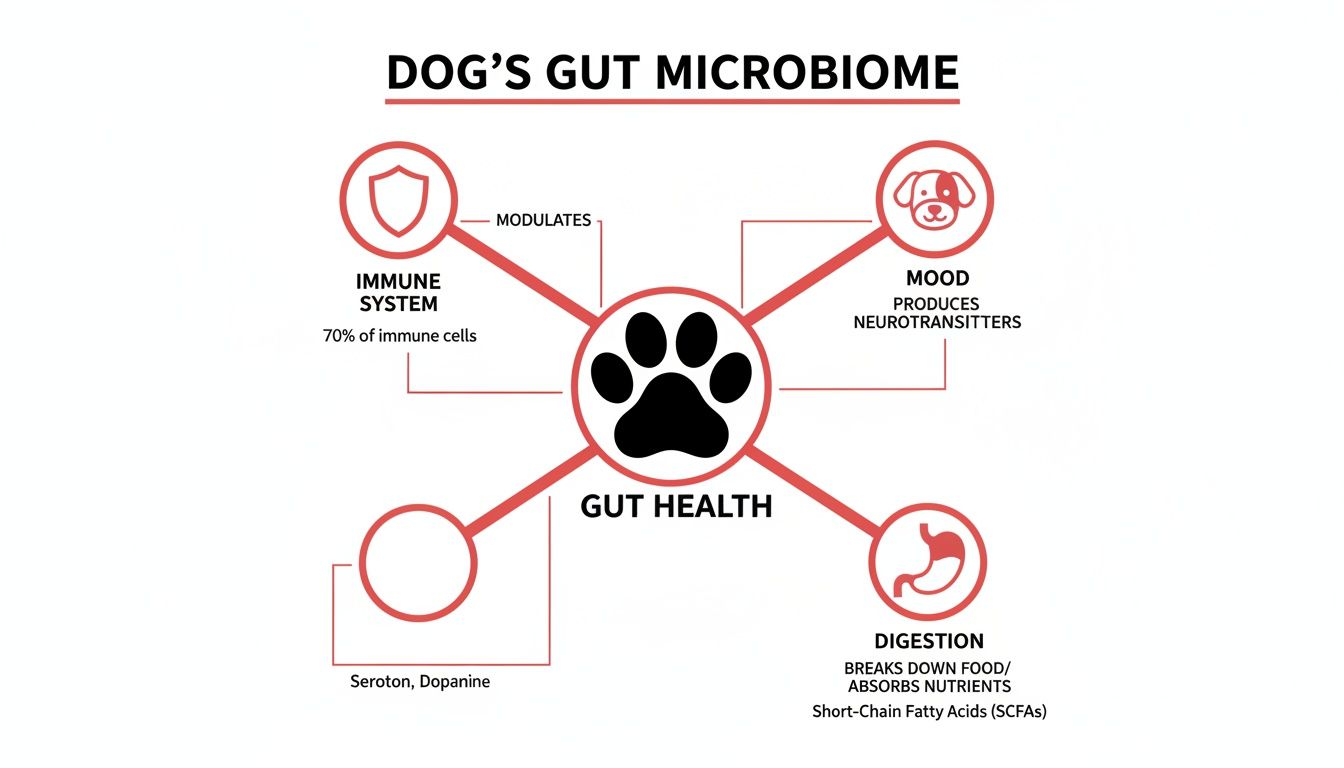
As you can see, a happy gut has a ripple effect, touching nearly every aspect of your dog's life. It’s why getting these ingredients right is so important.
The Mighty 'Biotics' Family
The first words you'll probably spot on any gut supplement are from the "biotics" family. Each one plays a unique and vital role, and they all work together to keep your dog's digestive system humming along smoothly.
Let’s break down the main players:
- Probiotics: These are the good guys—the live, beneficial bacteria that help populate your dog’s gut. Think of them as reinforcements arriving on the scene to help restore order, improve digestion, and support a strong immune system.
- Prebiotics: This is basically food for the good guys. Prebiotics are special types of fiber that your dog can't digest, but the friendly probiotic bacteria love to munch on. This fuel helps them grow and flourish.
- Postbiotics: These are the helpful byproducts created when probiotics ferment prebiotics. These compounds, like enzymes and short-chain fatty acids, are little powerhouses that strengthen the gut wall and help keep inflammation in check.
It's no surprise that the market for these ingredients is booming. The pet probiotics supplement industry is on track to hit USD 1.65 billion by 2030. And dogs are the biggest consumers, making up 78% of the market thanks to a ton of research into what strains work best for them. You can check out more details on this trend over at Mordor Intelligence.
Key Ingredients in Gut Health Supplements and Their Functions
To make it even clearer, here’s a quick-reference table that breaks down the most common ingredients you'll find in these supplements and what they do.
This table shows how a well-rounded formula doesn't just rely on one ingredient, but combines several to tackle gut health from all angles.
Essential Supporting Ingredients
Beyond the 'biotics,' the best gut health formulas often include a few other key allies to round out the support crew. These ingredients work in tandem with the core components to create a more powerful, holistic supplement for your dog.
A truly effective supplement is more than just a single ingredient. It's about synergy—how different components work together to provide comprehensive support for the entire digestive system.
Let's dig into two of the most popular and effective additions you’ll see.
Digestive Enzymes
These are tiny protein workhorses that help break down food into nutrients the body can actually absorb. The main ones are:
- Amylase to break down carbohydrates
- Protease to break down proteins
- Lipase to break down fats
Many processed dog foods, especially kibble, are cooked at high temperatures that destroy the natural enzymes found in whole foods. Adding them back in via a supplement takes a huge load off your dog's digestive system, ensuring they get every last bit of goodness from their meals.
Soothing Herbs
For generations, people have turned to certain herbs for digestive relief, and they can work wonders for our dogs, too. Ingredients like ginger, slippery elm, and marshmallow root have natural anti-inflammatory properties. They gently soothe an irritated gut lining and can help ease the discomfort that comes with an upset stomach, making them a fantastic addition to any gut-focused formula.
Spotting the Signs of an Unhealthy Gut
An unhappy gut rarely suffers in silence. It sends out distress signals, letting you know the bustling city inside your dog is in chaos. The tricky part is that these clues can be easy to overlook if you don't know what you're looking for. To help your dog, you have to become a bit of a gut-health detective, connecting the dots between their internal world and what you see on the outside.
Most of us immediately think of diarrhea or constipation when we hear "gut problems." While those are definitely big, flashing red lights, the truth is that poor gut health often shows up in ways that seem totally unrelated to their stomach. It helps to think of the gut as a plant's root system—if the roots are sick, it won't be long before the leaves and flowers start to wither.

Beyond the Belly Problems
Digestive issues are often just the tip of the iceberg. When the bad bacteria in the gut start to outnumber the good guys, it kicks off a cycle of chronic inflammation that can spread throughout your dog's whole body. This internal chaos can bubble to the surface in some pretty surprising—and often frustrating—ways.
You might be looking at a gut problem if your dog has:
- Persistent Itchy Skin: A damaged gut lining can let tiny food particles sneak into the bloodstream. This triggers an immune overreaction that shows up as constant scratching, painful hot spots, or generally irritated skin.
- Chronic Ear Infections: That same inflammation loves to settle in the ear canals, causing those stubborn, recurring infections that just never seem to go away for good.
- A Dull, Lackluster Coat: A healthy gut is a nutrient-absorbing powerhouse. When it’s not working right, your dog can’t get the building blocks for a shiny coat, leading to dry fur and way more shedding.
- Embarrassing Bad Breath: Sure, dental problems can be the cause. But stinky breath that won't quit can also be a sign that the bacteria in their digestive tract are out of whack.
These outward symptoms are your dog’s way of waving a flag and telling you their internal ecosystem is struggling. If we ignore them, that underlying inflammation just keeps simmering, paving the way for bigger health battles later on.
An unhealthy gut is a stressed gut. The constant low-level inflammation it creates puts a significant strain on your dog's entire system, impacting everything from their skin to their mood.
Behavioral and Mood Changes
The link between the gut and the brain is incredibly strong. This "gut-brain axis" means your dog's mental and emotional state is directly tied to their digestive health. An inflamed gut can cause behavioral shifts that are all too easy to mistake for simple training issues.
This powerful connection means you should also be on the lookout for:
- Increased Anxiety or Restlessness: Physical discomfort and inflammation can put a dog on edge, making them seem anxious or unsettled for no apparent reason.
- Lethargy or Low Energy: If your dog isn't properly digesting food and absorbing nutrients, they simply don't have the fuel to be their happy, playful selves.
If any of these signs sound familiar, it’s a good bet that it’s time to start focusing on their gut. Bringing in high-quality dog gut health supplements can be a game-changing first step toward restoring balance from the inside out and tackling these problems at their root cause.
The Real Benefits of a Healthy Gut for Your Dog
Taking care of your dog’s gut is about so much more than just avoiding an upset stomach. It’s one of the best things you can do to help them live a vibrant, happy life. A balanced gut is the foundation for total wellness, influencing everything from how they feel to how they act.
Think of a healthy gut as a super-efficient factory. The good bacteria living there break down food, unlocking all the vitamins and minerals so your dog’s body can actually use them. That direct line to better nutrition creates results you can see with your own eyes.
Better Digestion and More Energy
The first thing most owners notice is a huge improvement in digestion. Getting the right balance of microbes in their gut leads to consistently firm, healthy poops. No more frustrating bouts of diarrhea or constipation.
This also means your dog gets way more energy from their food. When their body isn't working overtime just to process a meal, it can turn those nutrients into fuel for fun. You'll likely see:
- More Pep in Their Step: They'll have more stamina for walks, fetch, and just being a dog.
- Maximum Nutrient Power: A healthy gut lining makes sure all the good stuff in their food gets absorbed, not wasted.
- A Happier Tummy: Less gas and bloating mean a much more comfortable and content pup.
The impact of dog gut health supplements is so clear that the entire veterinary dietary supplement market is booming. It's projected to jump from USD 3.96 billion in 2025 to USD 9.50 billion by 2035—a massive 140% increase. You can read more about this market growth on Fact.MR.
A Stronger Immune System and a Calmer Dog
Here’s a wild fact: over 70% of your dog's immune system is located in their gut. That makes their digestive tract the first line of defense against getting sick. A healthy community of gut bacteria essentially trains the immune cells to know the good guys from the bad guys.
A healthy gut acts like a bouncer at the door. It reinforces the intestinal wall to keep harmful germs out of the bloodstream while dialing down the over-the-top immune responses that cause allergies and itchy skin.
This powerful gut-immune connection is why a happy gut often means fewer infections and less trouble with things like itchy paws or chronic ear issues.
But it doesn’t stop there. The gut and brain are constantly talking to each other through what scientists call the "gut-brain axis." A calm gut helps produce important chemicals like serotonin—the "feel-good" hormone. So, by soothing their tummy, you're also helping your dog feel more relaxed, even-tempered, and genuinely happy.
How to Choose the Right Supplement for Your Dog
Walking down the pet aisle or scrolling online, it’s easy to feel overwhelmed by the sheer number of dog gut health supplements. How do you know which one is actually right for your dog?
Before you add anything to your cart, your very first step should always be a chat with your veterinarian. They have the full picture of your dog’s health and can help rule out any serious issues that might be hiding behind digestive upset. Think of them as your co-pilot on this journey.
Assess Your Dog's Specific Needs
With your vet’s go-ahead, it’s time to think about what you’re trying to solve. Is your pup just dealing with a bit of gas after meals? Or are you facing bigger challenges, like chronic loose stools or even allergy-like symptoms such as itchy paws and ear infections?
The right supplement depends entirely on the job you need it to do.
- For General Maintenance: If your dog is already pretty healthy, a simple, well-rounded formula with a solid mix of probiotics and prebiotics is a great way to keep things running smoothly.
- For Digestive Upset: For more immediate tummy troubles, look for formulas containing fast-acting probiotic strains like Saccharomyces boulardii. Many also include soothing ingredients like pumpkin or ginger to calm things down.
- For Skin and Allergies: If you suspect gut health is linked to your dog’s itchy skin, a supplement with specific immune-supporting strains and anti-inflammatory ingredients can make a real difference.
Matching the formula to the problem ensures you're giving your dog exactly what they need to feel better.
Learn to Read the Label
Don't let flashy packaging fool you—the real story is always on the back of the bottle. Becoming a "label detective" is the single best skill you can develop when shopping for supplements.
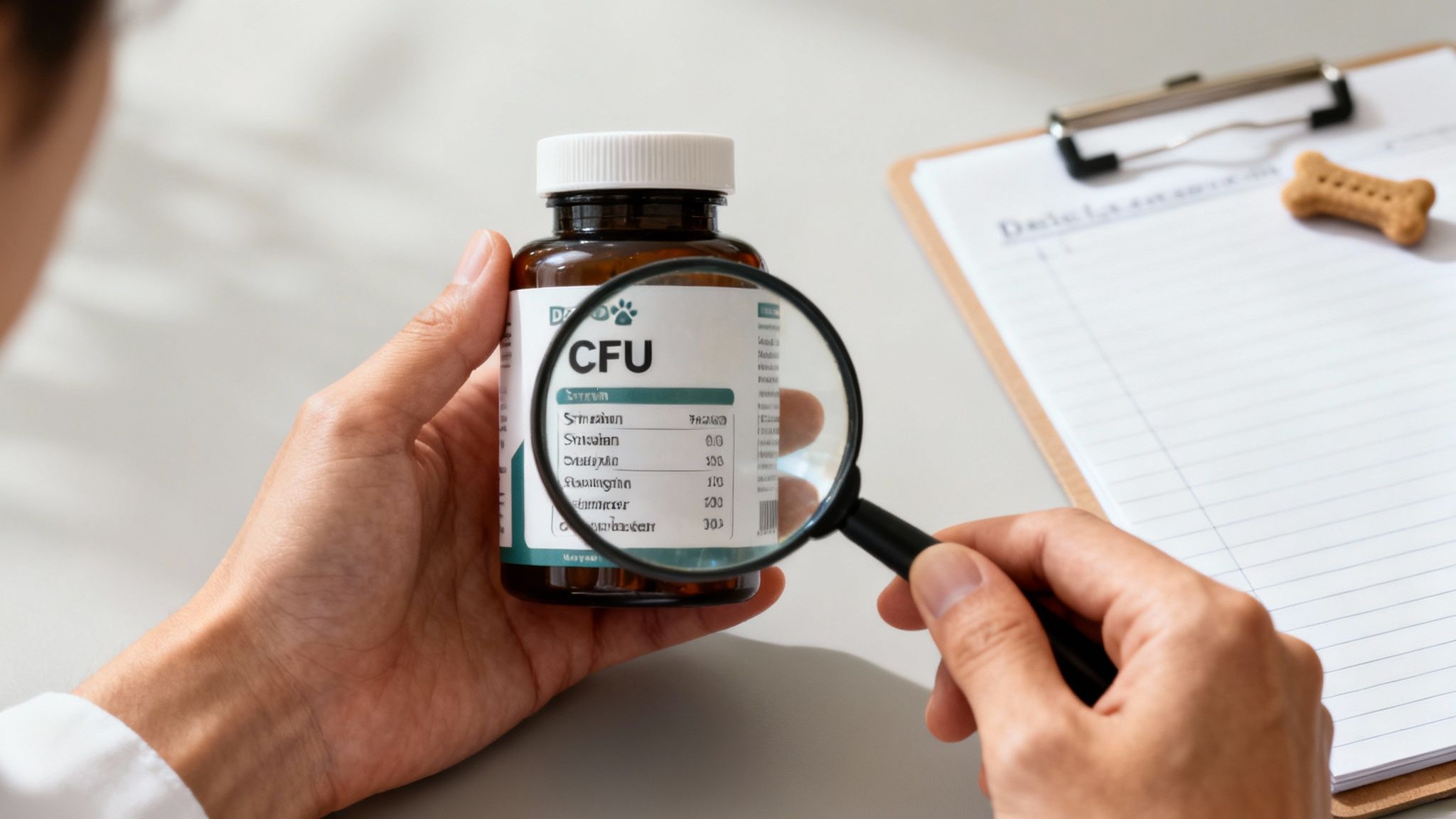
First, look for the Colony Forming Units (CFUs), which tells you how many live bacteria are in each dose. A good product will have a count in the billions. You'll also want to see the specific probiotic strains listed out, not just a vague "proprietary blend." Strains from the Lactobacillus and Bifidobacterium families are some of the most well-researched for canine health.
Key Takeaway: The best supplements guarantee their CFU count at the time of expiration, not just when they were made. This is a crucial detail, as it ensures the probiotics are still alive and kicking when your dog needs them most.
Prioritize Quality and Safety
The dog supplement industry is booming. In the U.S. alone, the market is expected to hit USD 733.48 million in 2025, and a staggering 68.3% of dog owners already buy supplements. You can dig into the numbers yourself by checking out the latest dog supplements market reports.
With so many brands competing for your attention, here’s how to spot the ones that truly care about quality:
- Third-Party Testing: Look for a seal from an organization like the National Animal Supplement Council (NASC). This shows the product has been verified by an independent lab for safety and potency, meaning what's on the label is actually in the bottle.
- Manufacturing Standards: Choose brands that are made in facilities following Good Manufacturing Practices (GMP). This is your assurance that the product was made under strict, quality-controlled conditions.
- Form and Palatability: Supplements aren't much good if your dog won't take them! They come in powders, liquids, and chews. A tasty chew often feels more like a treat, making it the easiest way to stay consistent with your dog's new routine.
By starting with your vet, focusing on your dog’s unique needs, and demanding quality, you can cut through the noise and find a supplement that genuinely supports your best friend’s health from the inside out.
Got Questions? We’ve Got Answers.
When you start digging into canine gut health, a few questions always pop up. It’s completely normal. Getting solid, straight-up answers is the best way to feel good about the choices you're making for your dog.
Let's clear the air on some of the most common things pet parents wonder about when it comes to dog gut health supplements.
Can I Just Give My Dog My Own Probiotics?
I hear this one all the time, and it's a tempting shortcut, but the answer is a definite no. While the idea behind probiotics is the same for us and our dogs, our digestive systems are worlds apart. A dog's gut has a different pH and is home to a completely different team of bacteria.
Human probiotics are formulated for us. The bacterial strains they contain are meant to thrive in a human gut, not a canine one. At best, they’ll just pass through without doing anything. At worst, they could actually make your dog's tummy troubles worse. For a safe and effective boost, you always want a supplement made with canine-specific probiotic strains.
How Long Does It Take to See a Difference?
This is the big "it depends" question. Patience is key here, because the timeline really hinges on your dog's current health and what you're hoping to improve.
Here’s a rough guide to what you can expect:
- For minor stuff, like a bit of gas or some tummy rumbling after switching foods, you could see improvements in just a few days.
- For more stubborn issues, like ongoing itchy skin, immune support, or chronic loose stools, you'll want to give it at least 4 to 8 weeks of consistent, daily use.
Why so long? It takes time for the good bacteria to really move in, set up shop, and start rebalancing the entire gut ecosystem. They need that time to build up their numbers and begin to repair the gut lining. Sticking with it is what gets you those lasting results.
Are There Any Side Effects I Should Worry About?
The good news is that these supplements are generally very safe, and most dogs handle them without a hitch. That said, anytime you introduce something new, there can be a short "getting to know you" period for your dog's digestive system.
A small number of dogs might get a little gassy or bloated for the first few days. This is perfectly normal and almost always sorts itself out within a week. An easy way to avoid this is to start with half the recommended dose for the first week, then slowly build up to the full amount. If the upset doesn't go away, it's best to stop and have a chat with your vet.
My Dog Is Healthy. Do They Still Need a Supplement?
You bet! Think of it less as a "fix" and more as proactive health insurance. Even a dog that looks perfectly healthy on the outside is dealing with daily stressors that can quietly knock their gut microbiome out of whack.
Things that can disrupt their gut balance include:
- Processed diets like kibble
- The stress of travel or boarding
- Medications (especially antibiotics)
- Things they encounter in the environment
A daily dog gut health supplement is like reinforcing the walls of a fortress. It strengthens their gut lining, keeps their immune system sharp, and is a simple investment in their long-term wellness. It’s one of the easiest things you can do to help them stay happy and healthy for the long haul.

Karolis is the Founder of FORMA, a pet wellness brand focused on longevity and daily nutrition for dogs. Writes about supplements, canine health, and helping pets live longer, healthier lives
Join thousands of pet parents getting science-backed health insights and natural care advice