A Modern Guide to Olive Oil for Dogs
Is olive oil for dogs a good idea? This guide covers the real benefits, risks, correct dosage, and best types of olive oil for your dog's health.

Absolutely, dogs can have olive oil, but the key is moderation. Think of it as a healthy little boost to their diet, not a miracle cure. When given correctly, this simple oil can add some great healthy fats and antioxidants to their bowl.
Why Dog Owners Are Turning to Olive Oil

You've probably heard about it in a dog owner forum or from a friend who’s into holistic pet care: adding a little olive oil to their dog’s food. This isn't just some random trend. It’s part of a bigger shift toward using natural, human-grade foods to support our pets' health. So, what’s all the buzz about?
The real magic behind olive oil for dogs is what it's made of. It’s loaded with monounsaturated fats—the “good fats.” These are the efficient, clean-burning fuel for your dog's body, helping with everything from absorbing vitamins to keeping cells healthy. They're a much better choice than saturated fats, especially when you're watching your dog's weight.
The Power of Healthy Fats and Antioxidants
But it’s not just about the fat. A good olive oil also comes packed with antioxidants, like vitamin E, and powerful plant compounds known as polyphenols.
Imagine these antioxidants as tiny bodyguards protecting your dog’s cells from damage caused by free radicals, which are unstable little molecules that can speed up aging and contribute to health problems.
This idea of supplementing with natural oils is catching on. One study found that 14.16% of dogs were getting extra-virgin olive oil. And when owners did add oil to their dog's diet, olive oil was the top choice, making up a whopping 70.77% of all oil supplements used. You can learn more about these pet nutrition trends and see just how popular it's become.
Keep this in mind: Olive oil is a supplement to an already great diet. It’s not a replacement for veterinary care or the essential nutrients in their balanced dog food.
Next, we’ll get into the specific benefits you might notice, how to pick the best type of olive oil, and—most importantly—how to add it to your dog’s routine safely.
What Can Olive Oil Actually Do for Your Dog?

When you drizzle a little high-quality olive oil into your dog's bowl, you're doing more than just adding a flavor boost. This simple, ancient oil is loaded with good stuff that can genuinely support their health from snout to tail. Let's dig into what it can really do.
First up, the most visible benefit: that beautiful coat. Olive oil is packed with monounsaturated fats, which are fantastic for building a strong skin barrier. Think of that barrier like a well-built brick wall, keeping moisture locked in and nasty irritants out.
When their skin is properly hydrated, you'll often see a softer, shinier coat and a lot less of that frustrating dry, itchy skin.
Giving Their Cells and Immune System a Leg Up
It’s not just about looking good on the outside. Olive oil is a powerhouse of antioxidants, including things like vitamin E and powerful plant compounds called polyphenols. These are your dog's personal bodyguards at a cellular level.
Every single day, your dog’s body deals with something called oxidative stress from all sorts of environmental factors. Antioxidants step in to neutralize the troublemakers—unstable molecules called free radicals—before they can cause damage. This protection is key to keeping their immune system strong and ready to fight off whatever comes its way.
By helping fend off daily cellular stress, the antioxidants in olive oil support your dog's overall vitality. It's a natural way to bolster their defenses, which is a huge plus at any age.
Basically, this antioxidant boost helps keep everything running smoothly under the hood.
Good for the Brain and the Waistline
Those healthy fats in olive oil do more than just make for a pretty coat; they’re also crucial for brain health. Monounsaturated fats are a major building block for brain cell membranes. Adding them to the diet can help support your dog's cognitive function, which is especially helpful as they head into their golden years.
And here’s a surprising one: it can help with weight management, if used correctly. The healthy fats in olive oil help your dog feel full and satisfied after eating, which can cut down on those puppy-dog eyes begging for more. It also gives them a clean, efficient source of energy for their zoomies and walks.
So, let's recap the highlights:
- Gorgeous, Healthy Coat: It nourishes their skin from the inside, which leads to a softer and shinier coat.
- Stronger Immune System: It delivers antioxidants like vitamin E to help protect cells and keep their immune response sharp.
- Brain Support: Those good fats are vital for brain cells and can help keep their mind keen.
- Weight Management Helper: It helps them feel full and provides a great source of energy.
- Fights Free Radicals: Its polyphenol content acts as a powerful antioxidant, promoting long-term cellular health.
Just remember, adding olive oil to your dog's diet is about supplementing an already balanced meal plan. It’s not a replacement for good nutrition, but rather an extra wellness boost. It's a simple, natural way to support them on their journey to a long, happy life with you.
How to Choose the Right Olive Oil
Ever stood in the grocery store aisle, staring at a wall of olive oil, and felt completely lost? With labels like "light," "pure," "virgin," and "extra virgin," it’s easy to feel overwhelmed. But when it comes to your dog, the choice is actually pretty straightforward.
For our pups, Extra Virgin Olive Oil (EVOO) is the undisputed champion. Think of it as the cold-pressed, unprocessed juice straight from the olive. It’s made without heat or chemicals, which is a huge deal.
Why? Because that gentle process keeps all the good stuff intact. EVOO is packed with powerful antioxidants called polyphenols, which are the source of most of its health benefits. Other types, like 'light' or plain 'olive oil,' are refined, a process that strips away these delicate but vital nutrients. You want the most nutrient-packed option for your dog, and that’s always going to be EVOO.
What to Look For on the Bottle
Okay, so you know to grab a bottle labeled EVOO. But not all EVOOs are created equal. A top-notch oil will deliver the best results, so here are a few simple things to check before you head to the checkout.
First, always pick an oil that comes in a dark-colored glass bottle or a tin. Light is the enemy of olive oil. It breaks down the antioxidants and can make the oil go rancid fast. A dark container protects it like a pair of high-quality sunglasses.
Next, scan the label for a harvest date. Freshness is everything. This date tells you exactly when the olives were picked and pressed. The more recent, the better. If you can't find one, a "best by" date is your next best bet, but a harvest date is the gold standard for freshness.
Here's the bottom line: Quality directly impacts the health benefits. A cheap, old, or poorly stored oil just won't give your dog the same antioxidant punch as a fresh, properly bottled EVOO.
To help you shop with confidence, let's take a quick look at the different types of olive oil you'll see on the shelves.
Olive Oil Types Compared for Your Dog
This table breaks down the most common options to show why EVOO is the clear winner for your dog's health.
As you can see, sticking with Extra Virgin Olive Oil is the simplest way to ensure you're giving your dog a safe and beneficial supplement.
A Quick Checklist for Your Next Grocery Run
To make it super easy, here's what to look for:
- Type: Stick with Extra Virgin Olive Oil. No exceptions.
- Container: Go for a dark glass bottle or a tin to block out light.
- Freshness: Look for a recent harvest date.
- Acidity: A sign of high quality is an acidity level under 0.8%, though this isn't always on the label.
Making the right choice means your dog gets all the amazing benefits without any of the junk. If you want to dive deeper and become a pro at picking the perfect bottle for both your pantry and your pup, learning how to choose olive oil is a great next step.
Safe Dosing and Introduction
Alright, you've picked out the perfect bottle of Extra Virgin Olive Oil. Now for the most important part: how to actually add it to your dog’s diet without causing any tummy troubles.
When it comes to olive oil, the golden rule is start low and go slow. Seriously. Think of it like introducing any new food to a baby—their system needs a little time to get used to it.
Jumping in with the full recommended dose right away is a recipe for an upset stomach or diarrhea. The goal here is to give them all the good stuff without any discomfort, and a patient, gradual approach is the only way to do that. Let's walk through how to do this right.
Finding the Right Starting Dose
If you look online, you'll find a few different dosage guidelines, which can be confusing. A common recommendation is one teaspoon of olive oil per 20 pounds of body weight per day. Some sources are more conservative, suggesting half a teaspoon per 10 pounds just once or twice a week.
But vets all agree on one thing: you should always start with a dose that’s much smaller than the general recommendation to see how your individual dog handles it. For a deeper dive into these guidelines, you can explore detailed insights on dog nutrition from Chewy.
The key takeaway? These are maximum daily guidelines, not starting points. Never, ever start with the full amount. A tiny fraction of the recommended dose is the safest place to begin.
For example, a 40-pound dog's maximum dose might be two teaspoons. But you wouldn't start there. You'd begin with just a quarter or maybe a half teaspoon every few days and see how it goes.
This infographic breaks down the simple process of choosing and using olive oil for your dog.
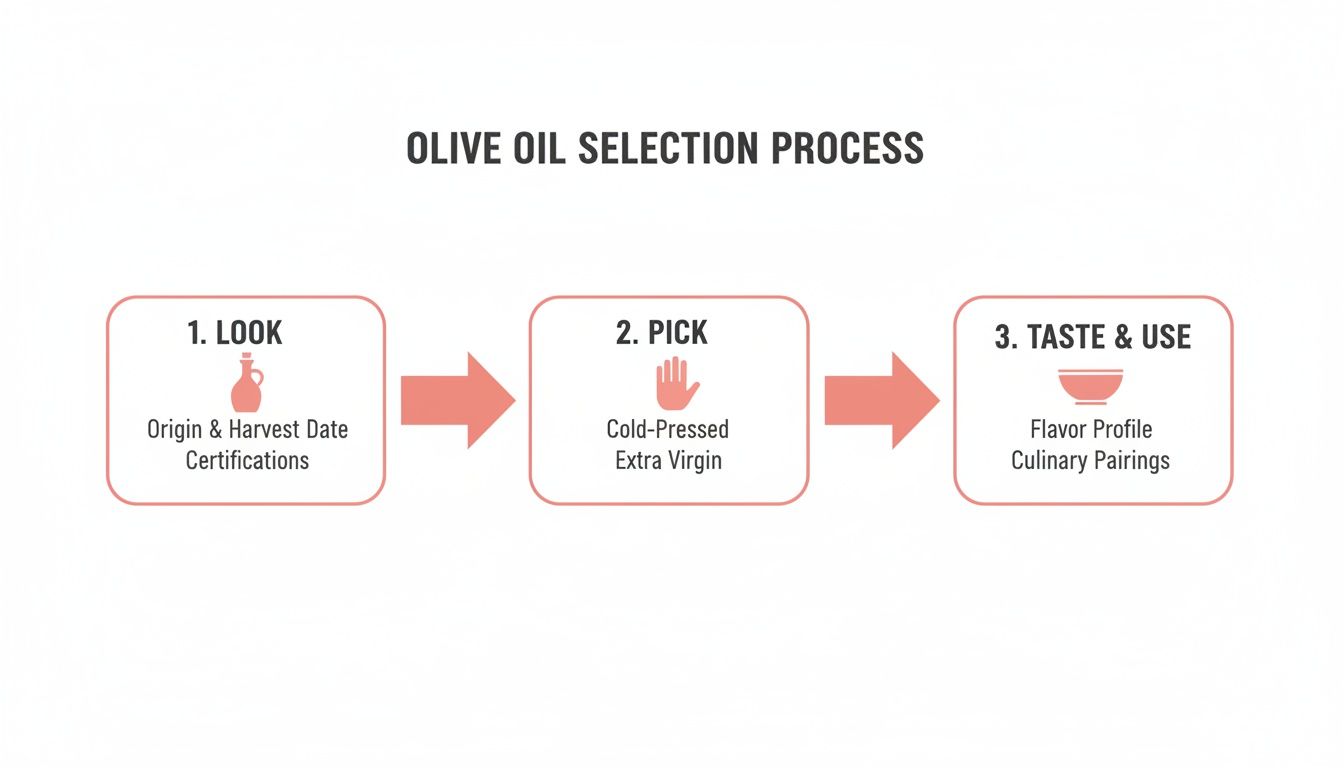
It’s a great reminder that the process is straightforward: look for quality, pick the right bottle, and introduce it to your dog mindfully.
The Step-by-Step Introduction Plan
Ready to get started? Here’s a simple, safe plan for introducing olive oil into your dog’s meals. This slow and steady method is your best bet for avoiding any digestive upset.
- Start Extremely Small: I mean tiny. For a small dog, start with just a few drops. For a larger dog, don't go over a quarter of a teaspoon.
- Mix It In Well: Drizzle the starting amount over their regular food and give it a good stir. This keeps them from just licking the oil off the top and ignoring their kibble.
- Monitor Closely for 48 Hours: This is the most critical step. After that first small dose, keep a close eye on your dog for the next two days. You’re mainly watching for any changes in their bathroom habits or general behavior.
- Gradually Increase (If All Is Well): If you don’t see any negative signs after a few days, you can bump up the amount just a little bit. Continue this slow, gradual process over a couple of weeks until you reach the right maintenance dose for their weight, making sure you never go over the maximum guideline.
What to Watch For
As you start adding olive oil, your dog will tell you if the amount is right for them. You just have to know what to look for.
Be on the lookout for these signs, which are your cue to stop and check in with your vet:
- Loose Stools or Diarrhea: This is the most common red flag. It usually means the dose is too high or was introduced too quickly.
- Vomiting or Regurgitation: Any sign of nausea is a clear signal their stomach isn't a fan of the new addition.
- Stomach Gurgling or Discomfort: If your dog seems restless, bloated, or you hear a lot of tummy rumbles, it could be a sign of digestive distress.
- Lack of Appetite: If they suddenly turn their nose up at their food, the oil might be the reason.
If you spot any of these symptoms, stop giving them olive oil right away. Once their system is back to normal, you could try again with a much smaller amount, but it’s always a good idea to chat with your vet first.
Let's Talk About the Risks and Side Effects
While olive oil can be a great addition for some dogs, it's not a miracle cure-all. To make the best choice for your pup, you have to be honest about the potential downsides. It's definitely not the right fit for every dog, and giving too much can quickly do more harm than good.
The biggest thing to watch out for is its high calorie count. Just one tablespoon of olive oil packs about 120 calories. For a smaller dog, that's a huge chunk of their daily diet and can easily lead to unwanted weight gain.
That extra weight puts a lot of stress on their joints, which is a big deal for breeds already prone to issues like hip dysplasia or arthritis. What starts as a well-intentioned health boost could accidentally contribute to serious mobility problems down the road.
When to Avoid Olive Oil Completely
For some dogs, olive oil is a hard no. Certain health conditions make the high-fat content too risky, and their safety has to come first.
You should definitely skip the olive oil if your dog:
- Is overweight or obese. Adding what is essentially pure fat to their meals will only make it harder to manage their weight.
- Has a history of pancreatitis. This condition is a painful inflammation of the pancreas, and it's often triggered by high-fat foods. Even a tiny bit of oil could be dangerous for these pups.
- Has a sensitive stomach. If your dog is already prone to an upset tummy, the richness of olive oil might be too much, leading to diarrhea or vomiting.
The bottom line is simple: If your dog falls into any of these categories, the risks of giving them olive oil almost certainly outweigh the rewards. Always check with your vet if you have any concerns about your dog’s specific health needs.
Is It Always the Best Choice?
Being transparent about what works—and what doesn't—is key. While olive oil is great for some things, it isn't the best tool for every job. Sometimes, other oils are just more effective for a specific goal.
Take skin conditions, for example. The science actually points in a different direction here. One clinical study looked at dogs with atopic dermatitis and found that when their supplements were switched to only olive oil, eight out of 10 dogs (80%) saw their skin condition get worse.
These results don't mean olive oil is "bad," but they do show that it's not a one-size-fits-all remedy. The best oil really depends on what you're trying to achieve. You can read the full research about canine skin conditions to see just how nuanced this can be.
Still Have Questions About Olive Oil for Your Dog?
Alright, even after covering the good, the bad, and the how-to, you probably have a few more specific questions floating around. That’s completely normal! Let's get into some of the practical, everyday scenarios that pop up.
Think of this as your quick-reference guide for those "what if" moments. We'll clear up any lingering confusion so you can feel totally confident.
Can I Give My Dog Olive Oil Every Day?
While a healthy, active dog might handle a tiny bit of olive oil daily, it's usually not necessary and can pack on the calories surprisingly fast. A much better approach for most pups is offering it just a few times a week instead of with every meal. This keeps their calorie intake in check and avoids the risk of gradual weight gain.
When in doubt, always chat with your vet. They can look at the big picture—your dog's age, weight, activity level, and overall health—and help you figure out a schedule that makes olive oil for dogs a helpful boost, not a problem.
You don't need to give it daily to see the benefits. A moderate, consistent schedule is often safer and just as effective for supporting your dog's wellness without the extra fat and calories.
Can Olive Oil Help if My Dog is Constipated?
For a mild, one-off case of constipation, a small dose of olive oil can sometimes help get things moving. Its natural lubricating effect can ease the passage of stool. But, and this is a big but, it's not a long-term fix or a treatment for chronic digestive trouble.
If constipation keeps happening, it's a sign that you need to see your vet. There could be something else going on, like dehydration, not enough fiber in their diet, or a more serious health issue that needs professional attention. Relying on olive oil too often can easily swing the pendulum the other way and cause diarrhea.
What If My Dog Licks Up a Spill in the Kitchen?
First off, take a deep breath. If your dog gets to a small puddle of olive oil on the floor, it’s almost certainly not a big deal. The amount they lick up from a typical kitchen spill is usually too small to cause any real harm for a healthy dog.
Just keep an eye on them for the next 24 hours. Watch for any signs of tummy trouble like vomiting, acting sluggish, or having loose stools. Of course, if your dog is tiny, has a history of pancreatitis, or managed to get into a significant amount, a quick call to the vet is always a smart move.
Are There Better Oils I Could Be Using?
That really comes down to what you're trying to achieve. Olive oil is fantastic for its monounsaturated fats and antioxidants, but other oils shine in different areas.
- Fish Oil: This is the undisputed champ for omega-3 fatty acids (EPA and DHA). These are powerhouses for fighting inflammation, supporting joint health, and even boosting brain function.
- Flaxseed Oil: A solid plant-based source of omega-3s, although dogs can't convert it into the most usable forms as easily as they can with fish oil.
- Coconut Oil: Famous for its medium-chain triglycerides (MCTs). Some holistic vets and owners believe these can help with brain health and energy, especially in senior dogs.
Each oil brings something different to the table. If your main goal is to soothe achy joints or combat inflammation, fish oil is probably your best bet. The "right" oil is simply the one that best matches your dog's individual needs.

Karolis is the Founder of FORMA, a pet wellness brand focused on longevity and daily nutrition for dogs. Writes about supplements, canine health, and helping pets live longer, healthier lives
Join thousands of pet parents getting science-backed health insights and natural care advice