Why Your Dog Keeps Barking at Night and How to Fix It
Is your dog keeping you awake? Understand why your dog keeps barking at night and find practical, vet-approved methods to restore peace in your home.
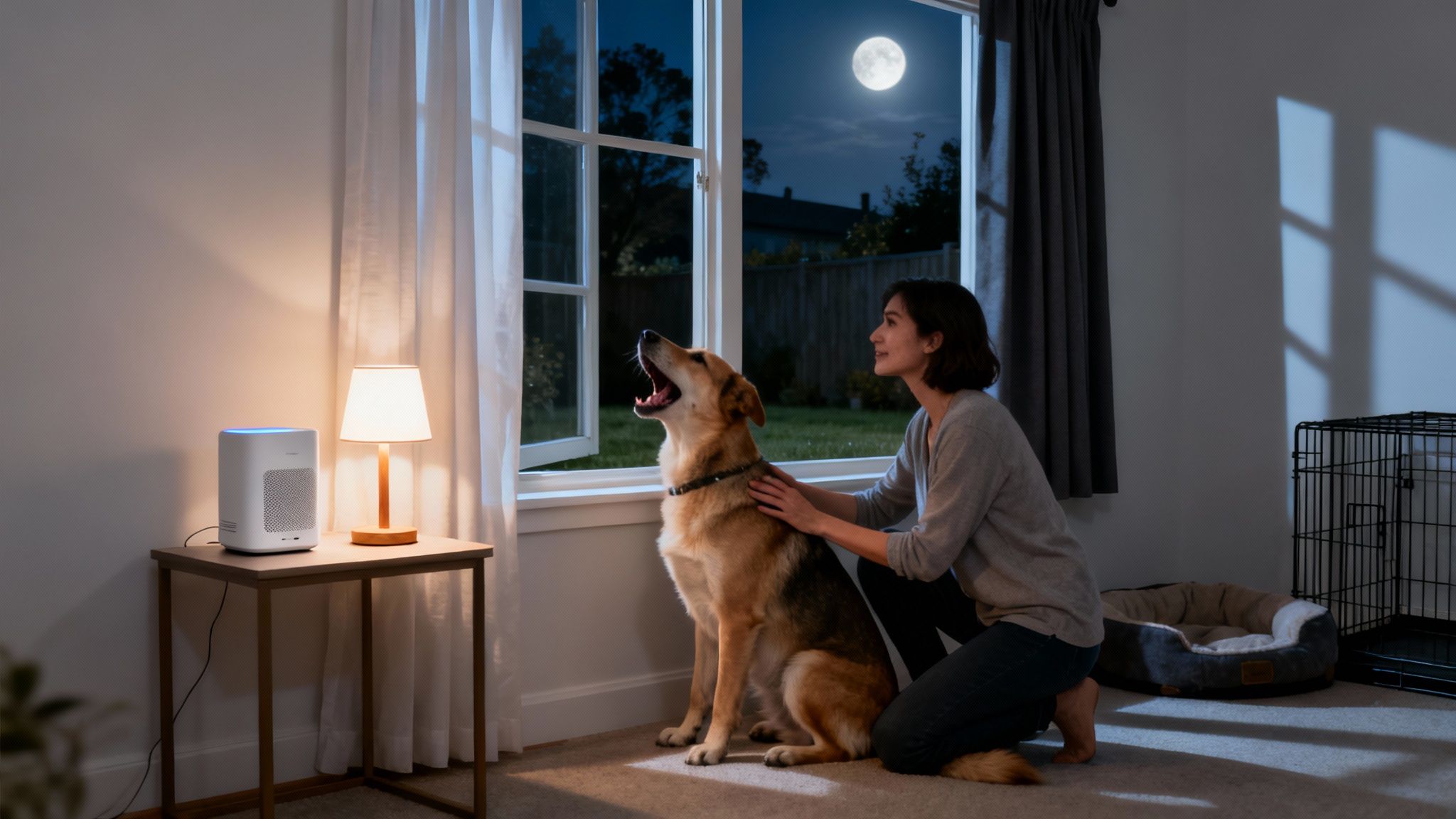
When your dog won't stop barking at night, it’s almost always because of loneliness, boredom, territorial instincts, or some sound you probably can't even hear. It's their only way to tell you something's wrong—whether they feel insecure, need something to do, or just want some comfort. Before you can fix it, you have to figure out what's actually triggering it.
Decoding Your Dog's Nightly Barking
That late-night racket isn't just random noise. It's communication. To solve the problem, you have to play detective and figure out the "why" behind the woof.
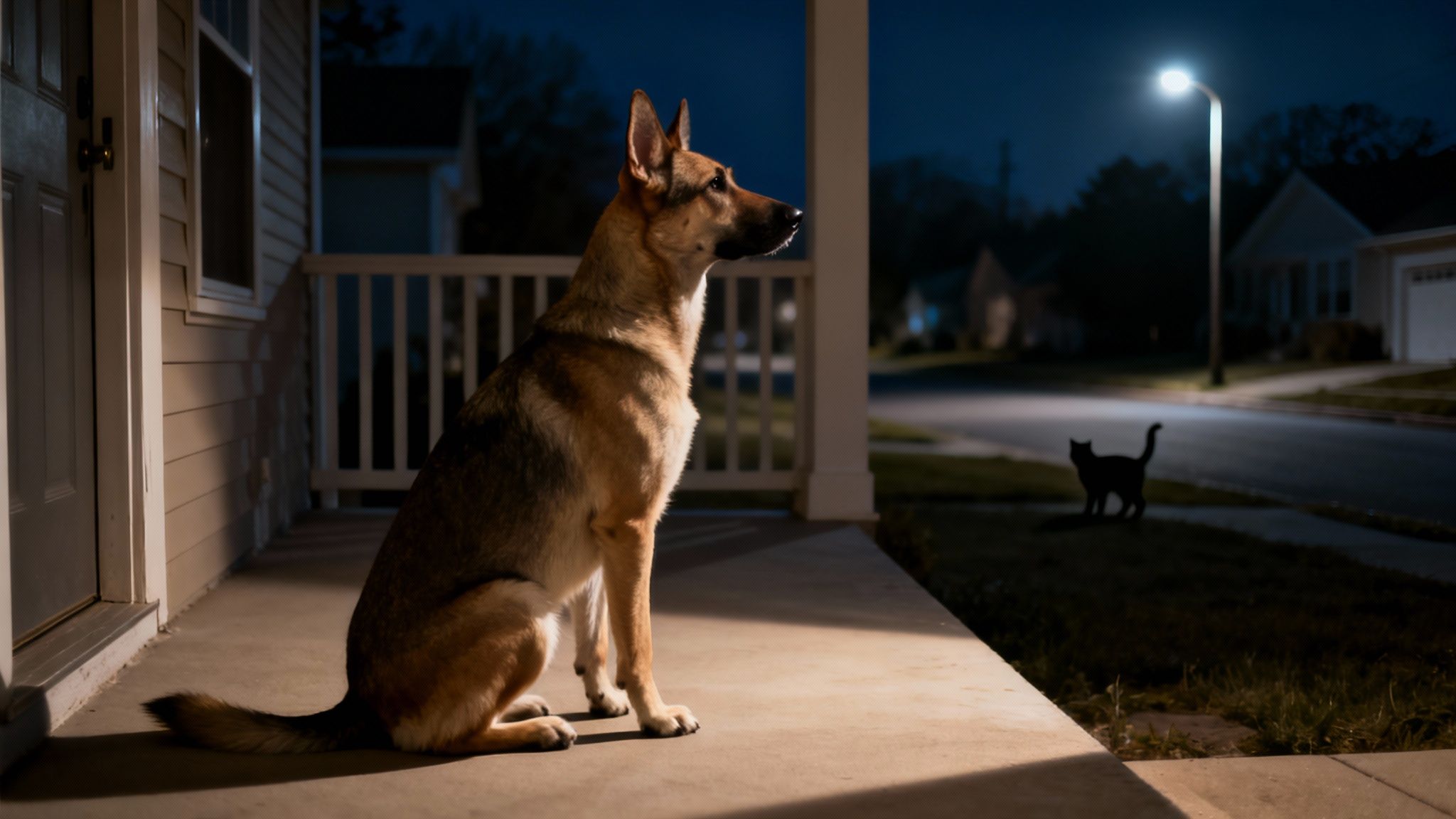
When a dog keeps barking long after you've gone to bed, it usually boils down to a few core reasons deeply ingrained in their nature.
Territorial Instincts
Many dogs take their job as head of home security very seriously. That car driving by, the neighbor's cat slinking across the lawn, or even just the wind rustling leaves can feel like a major threat that needs a loud announcement. This is especially true at night when every little sound seems amplified.
Boredom or Loneliness
Think about it: if your dog didn't get enough exercise or mental stimulation during the day, they have a ton of pent-up energy by bedtime. Barking becomes their go-to outlet for that frustration. Sometimes, it's simply a plea for your attention.
Environmental Triggers
Dogs have incredible hearing. That siren you can barely hear a few miles away? To them, it's front and center. Other dogs barking down the street or the garbage truck making its late-night rounds are common culprits that can easily set them off.
Nuisance barking is a huge issue, affecting about 1 in 3 dogs around the world. Research has shown that isolation can make this behavior much worse. In one study, confined dogs were way more likely to bark excessively—68.5% of them started vocalizing compared to just 48% of dogs who weren't confined. You can dig into these findings on canine barking behaviors to get a better sense of the patterns.
Common Night Barking Triggers at a Glance
Use this quick reference guide to identify the potential cause behind your dog's nighttime barking.
Ultimately, your goal is to connect the dots. Does the barking start at a specific time every night? Does it happen when you hear a certain sound? Paying close attention to these patterns is the first real step toward getting a peaceful night's sleep for everyone.
How to Create a Calmer Sleep Environment
Think about where your dog sleeps. Their surroundings have a massive impact on how they behave through the night. If your dog keeps barking at night, making a few smart adjustments to their sleeping area can transform it from a source of stress into a peaceful den.
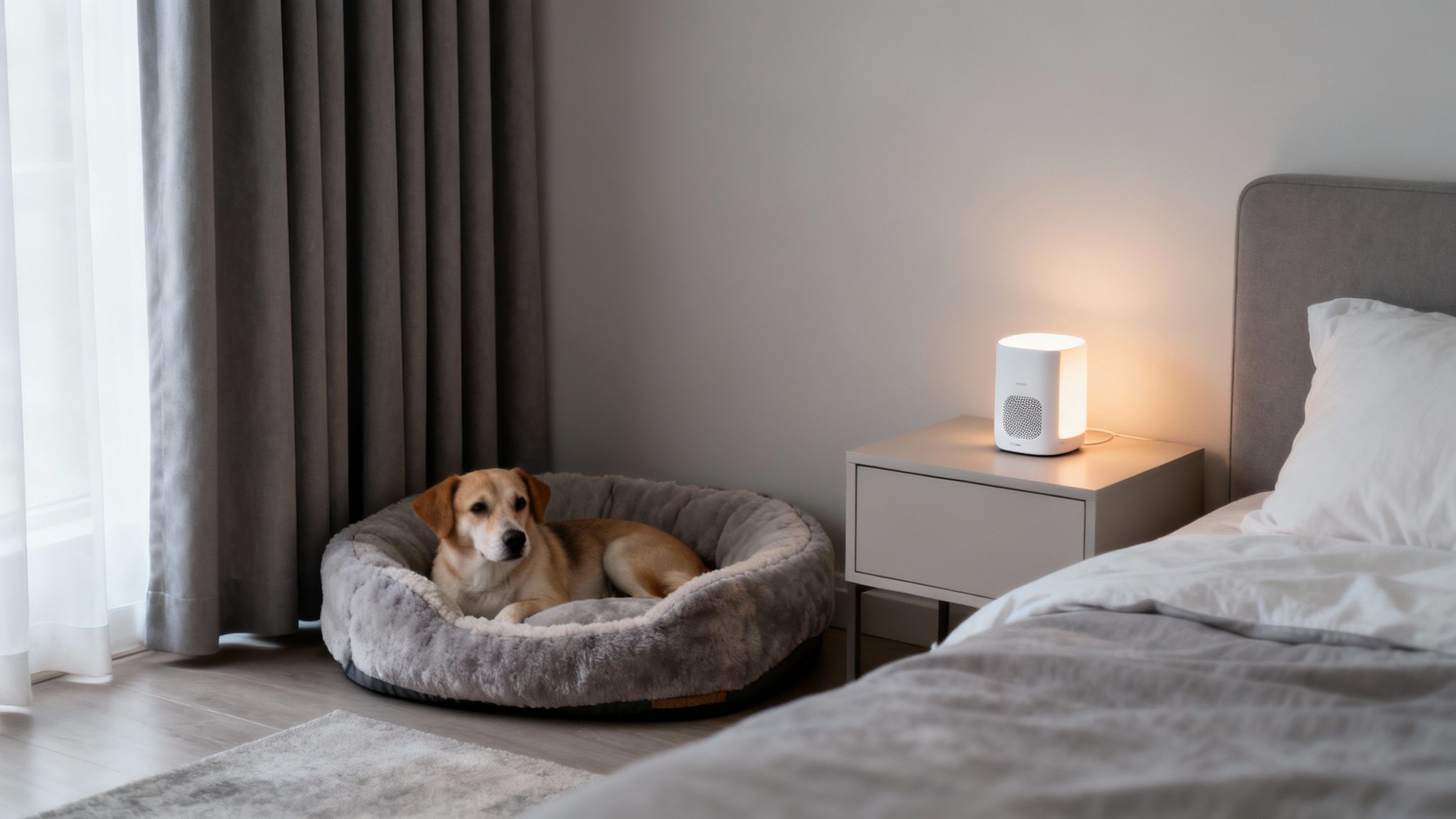
It all starts with their bed. Is it actually comfortable? Make sure it's supportive and located in a quiet, draft-free spot. This isn't just a bed; it's their safe space—a predictable retreat where they know they can relax without being disturbed.
Minimize Sensory Overload
Dogs have super-senses. They pick up on sounds and sights we barely notice, and at night, those little things can seem like a big deal. The trick is to manage these external triggers before they lead to a barking fit.
Here are a couple of simple but effective tricks I've used for years:
- Mask Disturbing Noises: A white noise machine is fantastic for this. Even a simple fan can create a consistent, soothing hum that helps drown out sudden noises like a neighbor's car door or a distant siren. It creates a sound buffer that keeps them from being startled awake.
- Block Visual Triggers: I swear by blackout curtains. They're a game-changer. They stop car headlights from sweeping across the room and prevent your dog from spotting every cat or raccoon that wanders past the window. No visual trigger, no territorial barking.
These small changes make a huge difference. They reduce the odds of your dog being jolted from sleep by something outside, letting everyone get a much deeper rest.
A predictable and secure environment signals safety to a dog. When their surroundings are consistent and calm, they are less likely to be hyper-vigilant, which can reduce anxiety-driven behaviors like excessive barking.
The Power of Routine and Security
Consistency is everything. A solid bedtime routine is one of the best tools in your toolbox because it tells your dog, "Okay, it's time to wind down." This doesn't have to be complicated. It could be a short, calm walk, one last potty break, and a few minutes of quiet cuddling.
For a lot of dogs, a crate can also be an incredible source of security. When you introduce it the right way, a crate isn't a cage—it's their own personal den. Make it cozy with soft bedding and maybe a special chew toy they only get at night. This gives them a secure, enclosed space where they feel protected, which goes a long way toward a quiet night for the whole house.
Getting to the Root of Anxiety and Fear
Sometimes, a dog's nighttime barking has nothing to do with boredom or guarding the house. For some dogs, the quiet and the dark can make underlying anxiety or fear feel ten times worse, turning small worries into a full-blown barking fit.
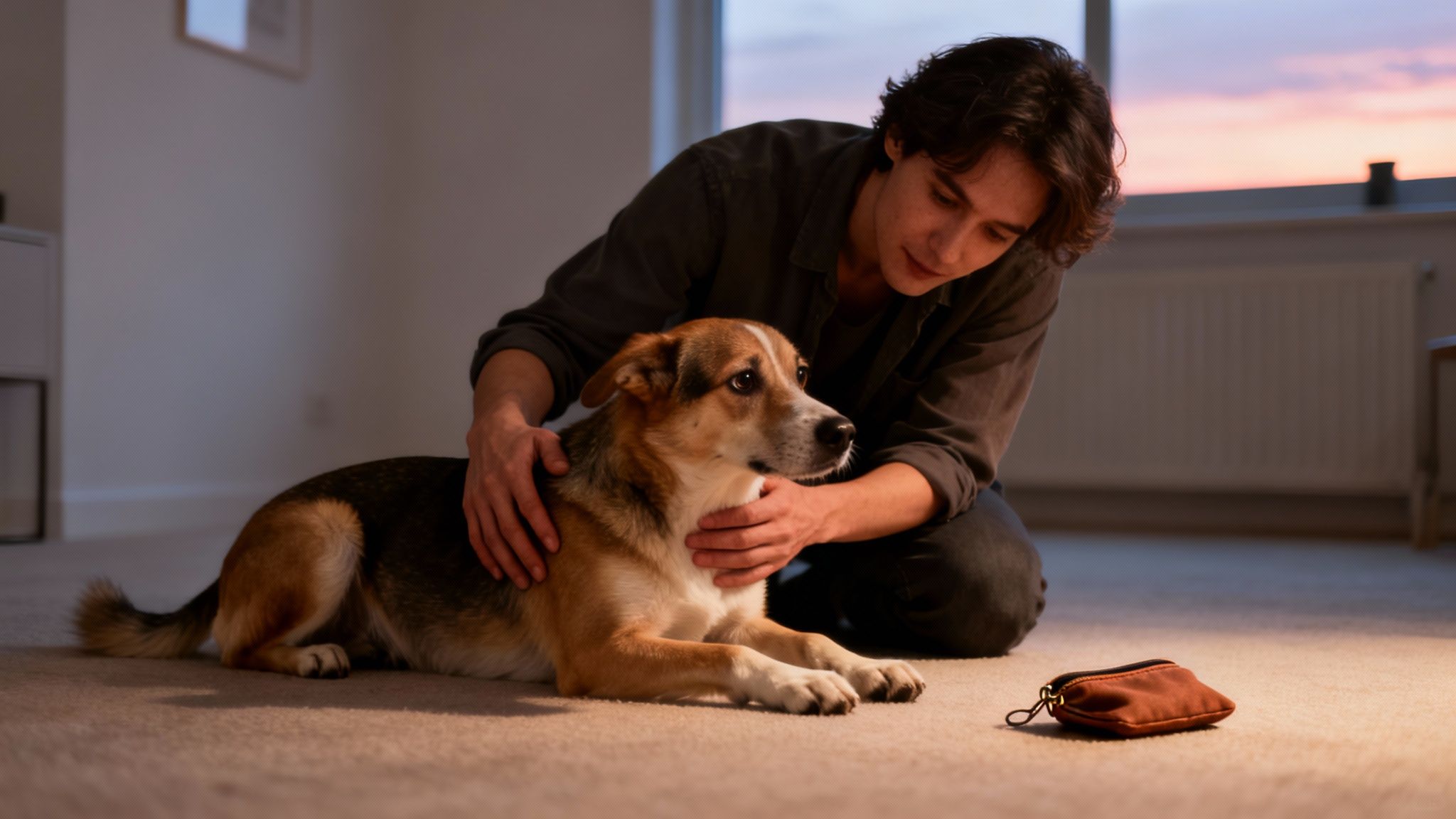
Separation anxiety is a classic example, and it can happen even when you're just in the next room. If your dog is your shadow all day, being left alone at night can feel like you've completely abandoned them. Those barks are their way of saying, "Hey, are you still there? I need you!"
Noise phobias are another common trigger that really ramps up after sundown. A distant car backfiring or the low rumble of a far-off storm can be genuinely terrifying for a sensitive dog. Without all the usual daytime distractions, those sounds become the only thing they can focus on.
Rebuilding Their Confidence
The key here is to change how your dog feels about the things that scare them at night. It’s not about punishment; it’s about building their confidence with a two-pronged approach.
- Desensitization: This is just a fancy word for getting your dog used to something scary, but in a controlled, safe way. If your dog hates thunder, you might play a recording of a storm at a super low volume—so low they barely notice it—while they’re calm. Over many sessions, you gradually turn it up.
- Counter-Conditioning: This is where the magic happens. While you're playing that quiet storm sound, you give them something they absolutely love, like a high-value treat or a quick game of tug. The goal is to create a new, positive connection in their brain. Instead of "that sound is terrifying," it becomes "that sound means I get cheese!"
A dog barking at night is often just acting on pure instinct. It’s a behavior wired deep from their wild ancestors. In fact, research shows that dogs in yards or enclosures are more likely to join in a barking chorus, with up to 68.5% vocalizing at night compared to just 48% of dogs who aren't confined. You can dig into the details in these fascinating canine vocalization studies.
Supporting Their Overall Well-Being
Training is crucial, but you also want to support your dog’s emotional health from the ground up. This is where looking at the bigger picture really pays off.
A predictable daily routine, plenty of exercise, and things to keep their mind busy are non-negotiables for an anxious dog. Think of it as building a strong foundation of calm. For an extra boost, you might consider a daily superfood chew with ingredients specifically chosen to promote a sense of well-being. By nurturing your dog's emotional state, you're helping them feel more secure in their own skin, which makes them far less likely to panic at every little bump in the night.
Managing Night Barking in Senior Dogs
When your once-quiet older dog suddenly starts barking all night, it’s more than just a new, frustrating habit. It's often a sign that something deeper is going on. This kind of abrupt change in a senior dog’s behavior is a signal to pay close attention, as it can point to serious, age-related health issues.
One of the most frequent culprits is Canine Cognitive Dysfunction (CDS), a condition much like dementia in humans. For a dog with CDS, the world can become a confusing and frightening place, especially after dark. They might be barking at shadows, at nothing at all, or simply because their internal clock has gone haywire.
This behavior is sometimes compared to "sundowner's syndrome" in people, where confusion and agitation get worse as the day ends. Research shows that CDS disrupts a dog's natural sleep-wake cycles, leading to those confusing late-night barking sessions. Before assuming it's just old age, though, a trip to the vet is non-negotiable. Hidden pain is another common reason for nighttime vocalizing. You can find more details about these changes in senior dog behaviors on the Tractive blog.
Supportive Care for Your Aging Friend
Your first stop should always be the veterinarian's office to rule out or manage pain. Conditions like arthritis can make it impossible for an older dog to get comfortable enough to sleep soundly.
Once you’ve addressed any medical concerns, the focus shifts to making their environment feel safer and more predictable.
- Add Nightlights: A few soft nightlights can make a world of difference. Placing them along the path to the water bowl or a potty pad helps reduce that scary, in-the-dark disorientation.
- Maintain a Strict Routine: For a dog with CDS, predictability is pure comfort. Keep feeding times, walks, and bedtime as consistent as you possibly can, day in and day out.
- Ensure Easy Access: Make sure their water bowl is always full and they don't have to navigate an obstacle course to get to it.
Creating a safe, predictable environment is the kindest thing you can do for a senior dog. Their world might feel confusing, but a consistent routine and a little extra light can make all the difference in their comfort and your sleep.
Building a Better Day-to-Night Routine
A peaceful night often starts with a busy day. If you're wondering why your dog barks all night, the answer is often found in the hours before you even go to bed. The old saying is true: a tired dog is a quiet dog. Getting them there is all about the right kind of activity.

Think beyond just physical exercise. Sure, a good walk is essential, but for many dogs—especially smart, energetic breeds—it’s just not enough to burn off that extra steam. You have to engage their brain, too.
Mental stimulation can be just as tiring as a run in the park. Working puzzle toys, playing scent games, or even running through a 5-minute training session gives their mind a serious workout. This is your secret weapon against the kind of boredom that so often turns into late-night barking.
Crafting a Wind-Down Ritual
As evening rolls in, it’s time to shift gears from high-energy play to calm, quiet time. This transition is key to signaling that the day is wrapping up and it’s time to settle. A predictable routine here works wonders.
Try building a simple, repeatable sequence of events:
- Final Potty Break: Take them out on a leash for one last calm sniff-and-go about 30 minutes before you plan to turn in. This makes sure they're comfortable for the night.
- Quiet Cuddle Time: Spend a few minutes giving gentle pets or belly rubs on their bed. Now is not the time for an exciting game of fetch or tug-of-war.
- A "Bedtime" Cue: Give them a special, low-calorie treat or a safe chew toy that they only get at night. This builds a powerful and positive signal that it's time to chill out.
By making your dog's day engaging and their evening predictable, you create a natural rhythm that encourages rest. They learn that nighttime is for sleeping because all their needs—both physical and mental—were met during the day. It’s a proactive strategy that’s way more effective than just trying to quiet them down at 2 AM.
Common Questions About Nighttime Barking
Even with the best game plan, some specific situations can pop up and leave you scratching your head. Let’s tackle some of the most common questions I hear from dog owners dealing with a noisy night.
Can I Use a Bark Collar to Stop Nighttime Barking?
This is a tempting quick fix, but honestly, I almost never recommend it. Most professional trainers will tell you to steer clear of bark collars for nighttime barking, and for good reason.
These collars work by punishing the dog with a spray, vibration, or shock. Instead of solving the problem, this often ramps up a dog’s anxiety and fear, especially if they’re already barking because they're scared or lonely. You risk making the root issue so much worse.
Tackling the source of the behavior is always more effective than simply punishing the symptom. A fearful dog doesn't learn to be quiet with a corrective collar; they just learn to be more afraid.
My Puppy Just Started Barking in Their Crate at Night
First off, take a deep breath—this is an incredibly common phase! Puppies are still learning the ropes of a new home and routine. Before you do anything else, make sure all their basic needs are met. Did they have a potty break right before bed? Is their crate comfy?
The golden rule here is to avoid letting them out of the crate while they are barking. If you do, they’ll learn a simple, powerful lesson: barking gets me what I want. Instead, work on making the crate a wonderful place with special toys they only get at bedtime. It can also be a huge help to move the crate into your bedroom for a while, just so they don’t feel so alone.
Should I Ignore My Dog When They Bark at Night?
Ah, the age-old question. The answer is a classic "it depends."
If you are 100% certain your dog is just barking to get your attention, a strategy of planned ignoring can eventually work. But you have to be incredibly consistent.
However, you should never, ever ignore barking that might signal real distress. Fear, pain, or a desperate need for a potty break are not things to ignore. That can seriously damage your bond with your dog. Your first move should always be a quick, calm check to make sure they're okay. Once you know it’s not an emergency, you can decide how to handle the behavior without accidentally rewarding it with a big, fuss-filled reaction.

Karolis is the Founder of FORMA, a pet wellness brand focused on longevity and daily nutrition for dogs. Writes about supplements, canine health, and helping pets live longer, healthier lives
Join thousands of pet parents getting science-backed health insights and natural care advice