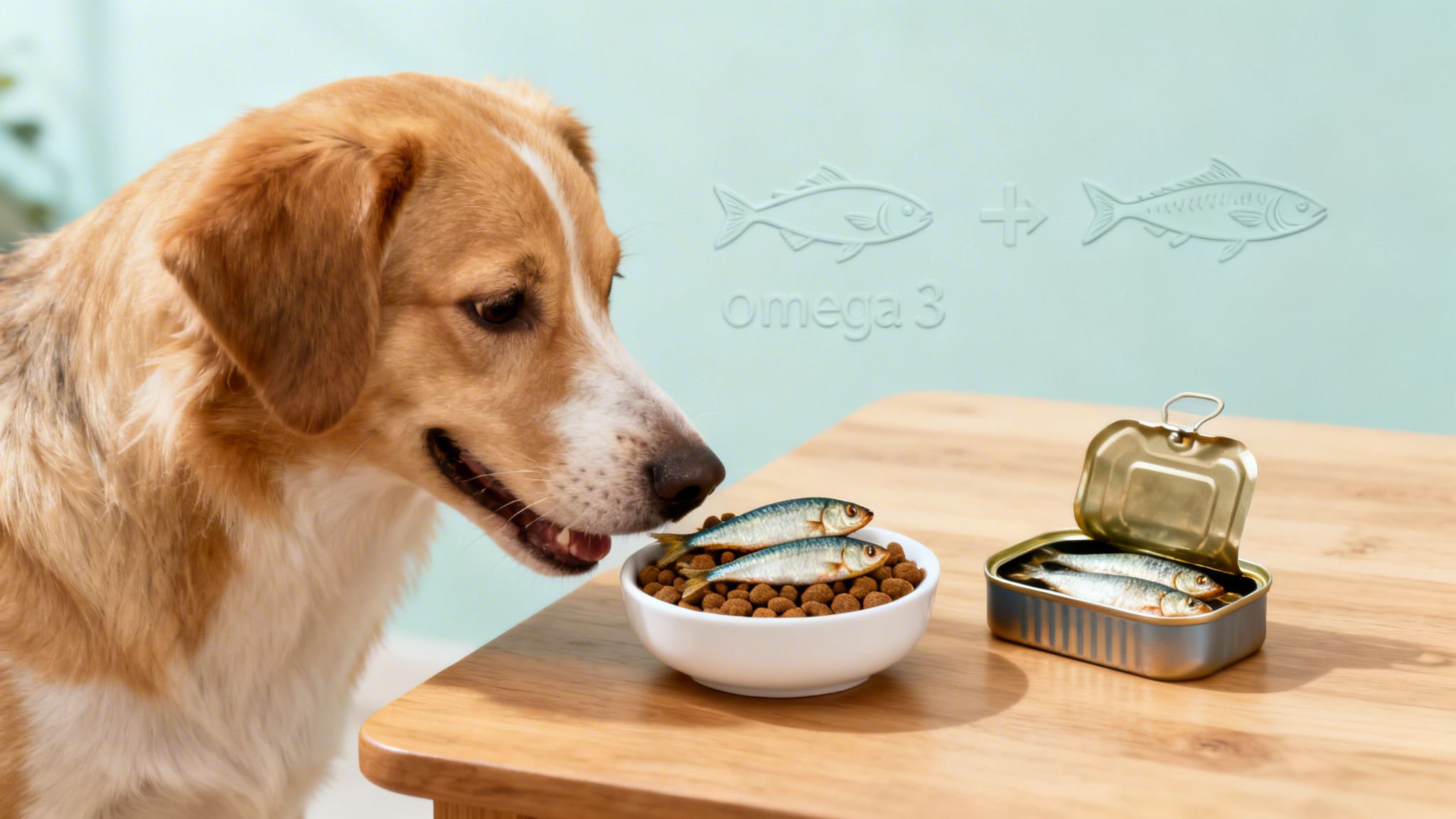
Dog Not Pooping? A Worried Owner's Guide to What to Do
Is your dog not pooping? Learn the common causes, safe at-home remedies, and critical warning signs that mean you need to call the vet right away.

It’s a familiar worry for any dog owner: you realize you haven’t seen your dog poop all day. Is it just an off day, or is something more serious going on? Usually, a single missed bowel movement isn't an emergency, but if your dog is straining, seems to be in pain, or has gone more than 48 hours without pooping, it’s time to pay closer attention.
Your first move is to stay calm and play detective. Let's figure out what's really happening.
What to Do First When Your Dog Is Not Pooping
That knot of worry you feel when your dog’s bathroom schedule is off is completely normal. Most of the time, it's just a minor backup, but it's always smart to investigate. Think of it like a minor traffic jam on a highway—sometimes things just get a little slow.
Our job is to help you tell the difference between a small slowdown and a total roadblock. Here’s how you can assess the situation without panicking.
Assess the Timeline and Symptoms
First thing's first: how long has it actually been? A dog who hasn't pooped for 24 hours is one thing; a dog who is pushing the three-day mark is another story entirely. Time is your most important clue.
While you're tracking the hours, watch your dog's behavior closely. Are they still their happy-go-lucky self, or are they showing signs of distress? Keep an eye out for these specific red flags:
- Straining: Is your dog hunching over and trying to go, but nothing’s coming out? Or are they only managing to pass tiny, rock-hard pellets?
- Vomiting: Throwing up can be a sign that things are seriously backed up, and it’s a much bigger deal than simple constipation.
- Lethargy: If your normally playful dog is suddenly sluggish and uninterested in anything, that's a major warning sign.
- Pain: Does your dog cry out, whine, or seem painful when you gently press on their belly?
A dog who is actively straining to poop but can’t produce anything is a much more urgent concern than a dog who just hasn't tried. Straining often points to a painful blockage that needs a vet's help.
This flowchart is a great visual guide for deciding your next steps based on how long it’s been.
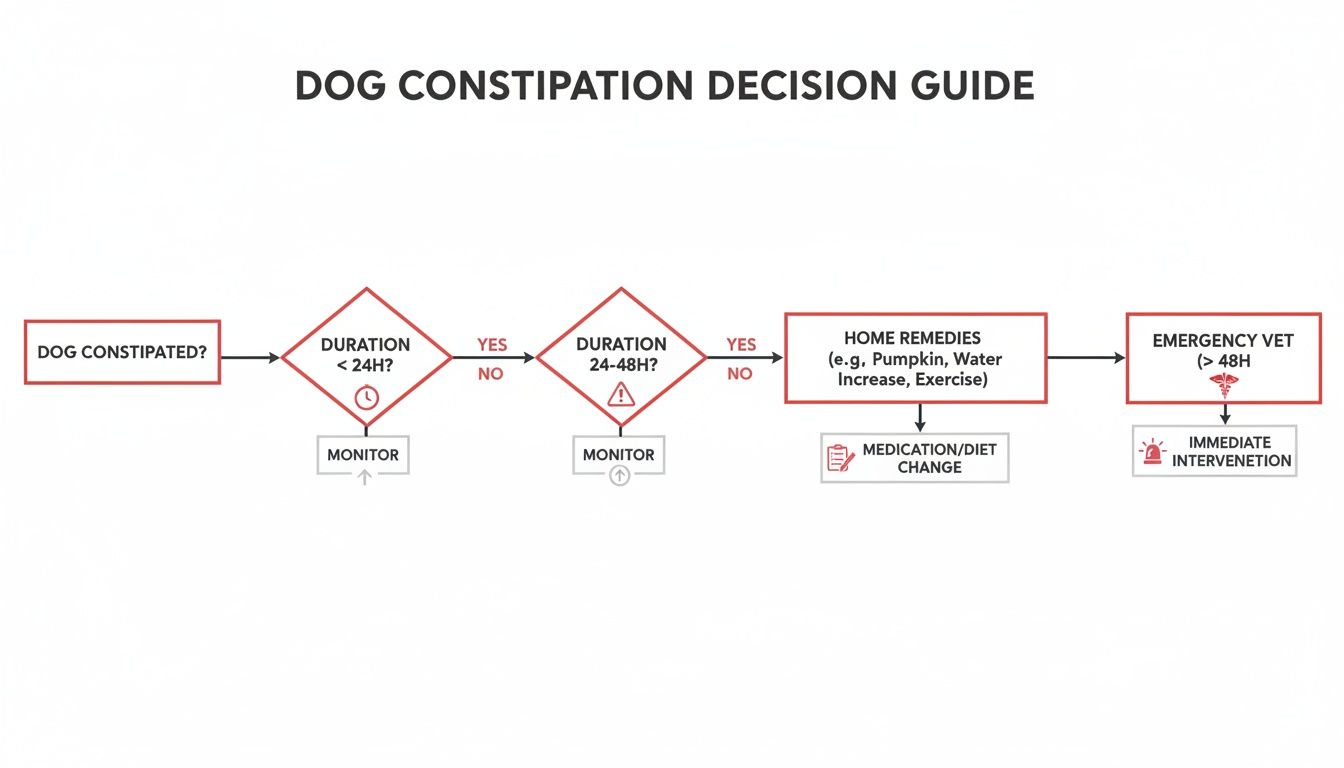
As you can see, once you pass the 48-hour mark, the situation shifts from "watch and wait" to "call the vet."
Your Initial Action Plan
To help you make a quick, clear-headed decision, we've put together this simple table. Use it to gauge how serious the situation is and what you should do next.
Dog Constipation Severity At a Glance
By quickly sorting the symptoms into one of these categories, you can respond appropriately without overreacting. Now, let’s get into what might be causing the problem and how you can help.
Understanding Why Your Dog Stopped Pooping
Okay, so you've checked your dog and the situation doesn't seem like a five-alarm fire just yet. Now we can dig into the 'why'. When a dog stops pooping, it’s almost always a sign that something else is off. The cause can be anything from a simple tweak needed in their dinner bowl to a serious internal traffic jam.
Think of your dog’s digestive system as a busy highway. If everything is running smoothly, traffic flows. But one little disruption can cause a major backup. Getting to the bottom of it means playing detective and looking at your dog's whole routine.
Dietary and Hydration Issues
More often than not, the reason for constipation is sitting right in your dog’s food or water bowl. It's usually the easiest thing to fix, too.
Dehydration is a classic culprit. Water is crucial for making stool soft enough to pass easily. If your dog isn't drinking enough, their body will literally steal water from the colon to use elsewhere. This leaves behind dry, hard-to-pass stools, a common issue for older dogs and those on a strictly dry-kibble diet.
A low-fiber diet is the other big one. Fiber is the street sweeper for the intestines, gathering up waste and moving it along. Without enough fiber, the whole digestive process slows to a crawl.
Think of it this way: Fiber provides the "bulk" for the stool, and water acts as the "lubricant." You need plenty of both to keep the assembly line moving, otherwise, things just get stuck.
Lifestyle and Environmental Factors
Your dog's day-to-day life has a much bigger impact on their bathroom habits than most people realize. For instance, a lazy day on the couch can lead to a sluggish gut.
Movement gets the bowels moving. Exercise helps kickstart peristalsis, which are the wave-like muscle contractions that push waste through the digestive tract. A dog that just lies around all day isn’t getting that physical nudge their intestines need to stay active. Those daily walks are about more than just sniffing and burning energy; they're essential for gut motility.
Stress and anxiety can also put the brakes on pooping. Moving to a new house, a sudden change in their schedule, or even a loud thunderstorm can make a dog "hold it in." It’s an instinctual thing—feeling anxious or unsafe makes them hesitant to get into the vulnerable pooping position.
Blockages and Obstructions
This is where things can get serious. Sometimes the issue isn't with the poop itself, but with a roadblock in its path. An intestinal blockage is one of the most critical reasons a dog might not be pooping.
Ingested Foreign Objects
We all know dogs can eat the craziest things. Socks, toys, rocks, corn cobs—you name it. If swallowed, these items can create a partial or complete foreign body obstruction, which is a true medical emergency that stops anything from getting through.
Grooming and Hairballs
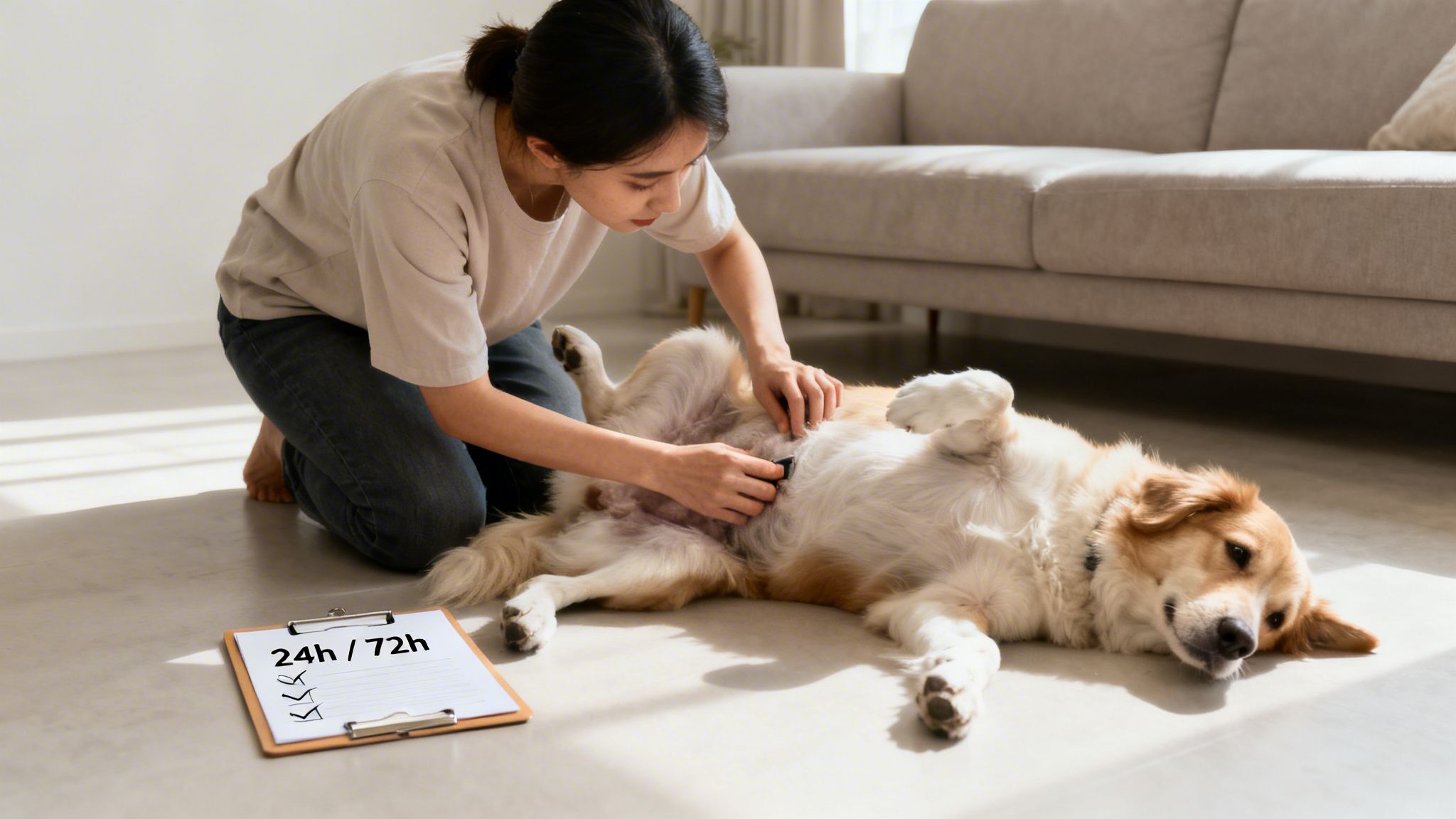
For some dogs, especially long-haired breeds, the problem comes from their own fur. Too much self-grooming can lead to a big clump of hair forming in the gut. This matted ball of hair, called a trichobezoar, can become large enough to cause a blockage. This is why regular brushing is so important.
Other Physical Blockages
A few other issues can physically get in the way:
- Enlarged Prostate: In male dogs that haven't been neutered, an enlarged prostate can swell and press on the colon, making it painful and difficult to defecate.
- Matted Fur: Sometimes the blockage is external. Severe mats of fur around the anus can physically prevent stool from passing. This is a common problem in long-haired dogs who aren't groomed regularly.
- Anal Gland Issues: If your dog's anal glands are impacted or abscessed, it can be incredibly painful to poop. A dog in this much discomfort will actively avoid going, and you might see them scooting their butt on the floor or licking the area constantly.
By looking closely at your dog's diet, activity level, and recent behaviors, you can start connecting the dots and figure out what’s really going on.
Safe At-Home Remedies to Help Your Dog Poop
If your dog is just a little backed up but is otherwise still eating, drinking, and acting like their usual happy self, there are a few simple and safe things you can try at home. Think of these as the first steps to help get their system moving again and provide some gentle relief.
The key here is to gently nudge their body back on track. We're not trying to force a result, just create the right conditions for things to happen naturally.
Boost Hydration and Moisture
Nine times out of ten, a bit of constipation comes down to dehydration. When your dog doesn't get enough water, their body will pull it from the colon. This leaves behind dry, hard stools that are tough and painful to pass.
Simply topping off the water bowl might not cut it. Here are a few clever ways to sneak more moisture into their day:
- Add Water to Their Food: This is the easiest trick in the book. Just mix a quarter-cup of warm water or, even better, some low-sodium bone broth into their regular kibble. It makes the meal more hydrating and a whole lot tastier.
- Offer Ice Cubes: For many dogs, an ice cube is a fun, crunchy treat. It’s a super simple way to get a little extra water into them without them even realizing it.
- Use a Water Fountain: The constant movement and sound of a pet water fountain can often tempt a picky dog to drink more frequently than they would from a still bowl of water.
Introduce the Right Kind of Fiber
A little extra fiber can work wonders. It helps by adding some much-needed bulk to the stool, which helps push everything through the intestines more smoothly.
Pure canned pumpkin is a classic, vet-approved remedy for a reason. It's packed with both soluble and insoluble fiber. One softens the stool by absorbing water, and the other adds bulk to get things moving. It’s a perfect combination.
CRITICAL TIP: Please make sure you buy 100% pure canned pumpkin and NOT pumpkin pie filling. The pie mix is full of sugar and spices, and often contains xylitol, which is extremely toxic to dogs. Always, always check the label.
How Much Pumpkin to Give Your Dog:
- Small Dogs (under 15 lbs): 1-2 teaspoons per meal
- Medium Dogs (15-40 lbs): 1-2 tablespoons per meal
- Large Dogs (over 40 lbs): 2-4 tablespoons per meal
Start on the low end of the recommended amount and see how your dog does. Giving too much fiber too fast can sometimes cause gas or an upset stomach.
Get Things Moving with Gentle Exercise
Movement is nature's laxative. A dog who has been lying around all day is bound to have a sluggish digestive system. A bit of gentle, consistent exercise helps wake up the intestinal muscles that are responsible for pushing waste along.
You don't need a strenuous run. A brisk, 20- to 30-minute walk is usually perfect. The steady activity is often all it takes to encourage a bowel movement. Plus, the simple act of walking and sniffing helps your dog relax, which is a huge help if stress might be part of the problem.
As you explore these gentle options, a good guide to natural remedies for gut health can give you more ideas for supporting your dog's digestive wellness in the long run.
When to Stop Home Remedies
It's important to remember that these are for mild, short-term issues. If you don't see any improvement within 24 hours, or if your dog starts to get worse, it's time to stop what you're doing and call your veterinarian.
Never continue with home treatments if you see red flags like vomiting, acting tired and weak, or showing any signs of pain. Your dog is telling you that something more serious is going on and they need professional medical help.
When to Call the Vet About Dog Constipation

While a little pumpkin or extra water can work wonders for a mild backup, it's absolutely essential to know when to step back and call in a professional. Sometimes, constipation isn't just an inconvenience—it’s your dog's way of telling you something more serious is going on under the hood.
This is where you have to put on your detective hat. It’s not just about counting the hours since they last pooped. It’s about looking at the whole picture and knowing how to spot the red flags that mean it's time to get your vet on the phone.
Critical Warning Signs That Need a Vet
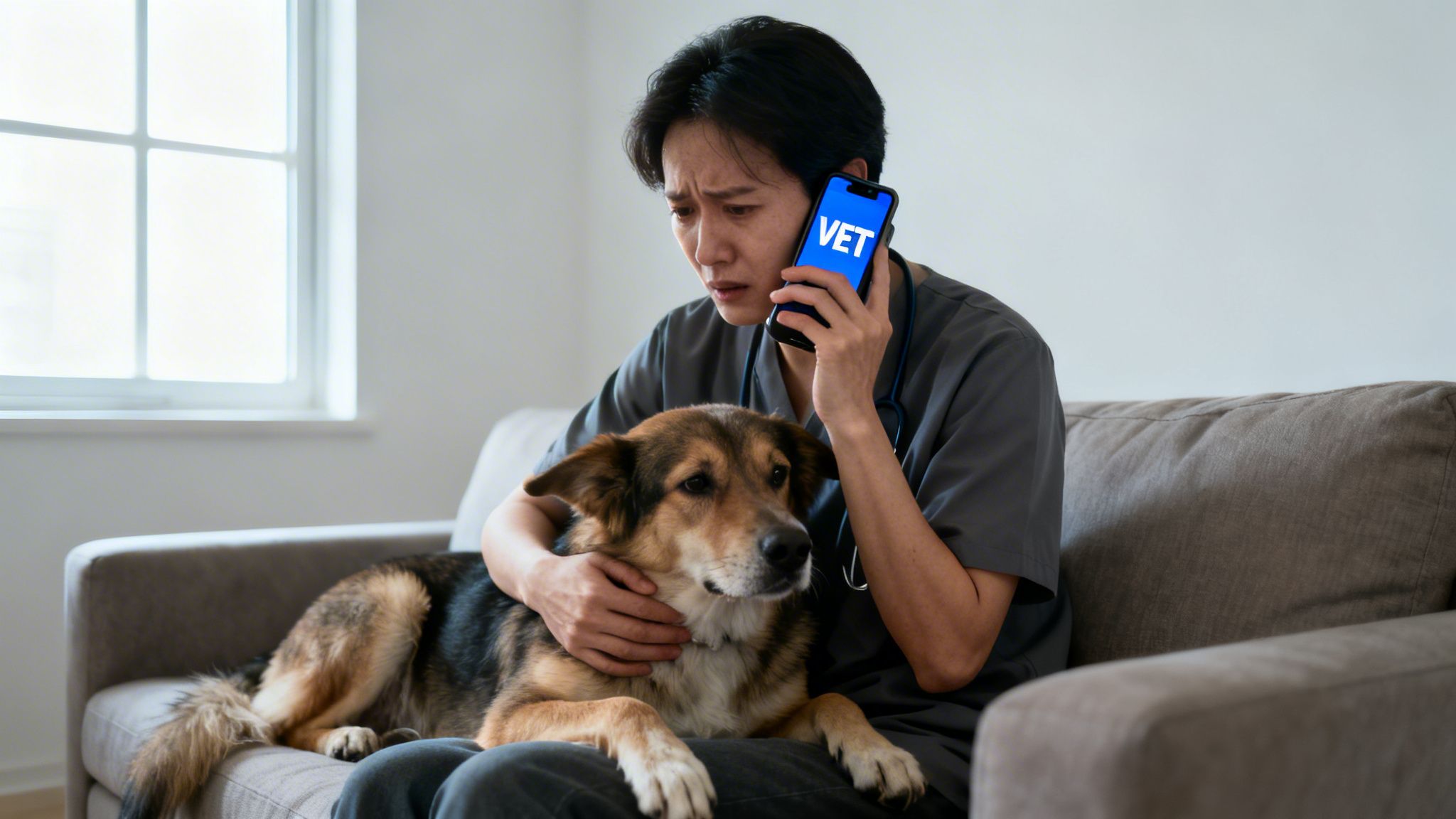
If your dog hasn’t been able to poop and you notice any of these symptoms, stop all at-home remedies and call your veterinarian immediately. These are clear signs that this is likely more than just a simple case of constipation.
1. Repeated Vomiting or Loss of Appetite
A dog that is vomiting, especially after trying to eat or drink, is a huge red flag. This combination can point to a complete intestinal blockage, which is a life-threatening emergency. Even just a lack of appetite is a big deal, as it shows your dog is feeling truly unwell.
2. Extreme Lethargy or Weakness
Is your normally bouncy pup suddenly refusing to play, move, or even get out of bed? A sharp, dramatic drop in energy is a clear signal that their body is in distress. This kind of profound weakness means the problem is affecting their entire system and needs a professional diagnosis.
3. Signs of Obvious Pain
Pain is one of the most urgent clues. Keep an eye out for:
- Crying or whimpering when they try to squat and poop.
- A tense, bloated, or hard belly that’s painful when you gently press on it.
- Restlessness or being unable to lie down and get comfortable.
Think of it like this: If the digestive "highway" is completely blocked by a major accident (like an ingested sock), all the traffic (food and waste) gets backed up. This pile-up causes pain, bloating, and vomiting—all signs that you need to call in the emergency services.
4. Blood in Stool or from the Rectum
Seeing blood is always a reason to call the vet, no exceptions. Whether it's bright red, fresh blood or a dark, tarry stool (which indicates digested blood), it points to an internal injury or condition that needs immediate attention.
At-Risk Dogs Need Faster Intervention
Any dog can get into serious trouble with constipation, but some are definitely more vulnerable. You'll want to be extra quick to call your vet if your constipated dog is in one of these groups:
- Senior Dogs: Older dogs naturally have weaker intestinal muscles. They may also have underlying issues like arthritis that make the act of squatting painful, leading them to avoid it.
- Specific Breeds: Pugs, Bulldogs, and Dachshunds are known for back problems that can physically interfere with their ability to poop. Long-haired breeds can also suffer from painful fur matting and blockages around their rear end.
- Dogs with a History of Eating Non-Food Items: If you know your dog has a habit of swallowing things they shouldn't, an inability to poop should be treated as a potential blockage until a vet proves otherwise.
It’s interesting to note that while constipation is a huge worry for us owners, it’s not actually one of the most common digestive issues vets see. One study found it only accounted for about 0.5% of digestive problems in a large group of dogs.
However, that statistic doesn't make it any less serious for the dogs that are affected, especially seniors or at-risk breeds. For them, the risk is much higher. You can learn more about how different dogs are impacted by constipation on Purina's health blog. At the end of the day, don't let statistics make you complacent—your individual dog’s symptoms are what truly matter.
Proactive Strategies for Healthy Digestion
When it comes to your dog's potty habits, the old saying "an ounce of prevention is worth a pound of cure" has never been more true. Instead of scrambling for a fix when things go wrong, the best approach is to build a lifestyle that keeps their digestive system running smoothly from the start.
This isn't just about avoiding constipation. A healthy gut is the foundation for a vibrant, resilient dog. It plays a massive role in their immune response, energy levels, and even their mood. Think of it as investing in your dog's long-term health and happiness.
The Four Pillars of a Healthy Gut
Long-term digestive wellness really boils down to four simple, yet powerful, habits. When you consistently support each of these areas, you're building a system that’s less likely to run into backups or discomfort. It all comes down to diet, hydration, exercise, and the right supplements.
Making these pillars part of your dog’s daily routine creates a powerful synergy. Each one supports the others, keeping their gut—and by extension, their whole body—in fantastic shape.
- A Balanced Diet: Provides the essential fuel and fiber.
- Proper Hydration: Keeps everything lubricated and moving.
- Regular Exercise: Gets the intestinal muscles working.
- Targeted Supplementation: Fills any nutritional gaps and gives the gut an extra boost.
Fueling the Gut with a High-Quality Diet
What goes into your dog’s bowl is arguably the biggest piece of the digestive puzzle. A diet made with high-quality, fiber-rich ingredients is the cornerstone of preventing constipation.
A good way to think about fiber is as the "cleanup crew" for your dog's intestines. You need two types, and both are critical for regularity:
- Soluble Fiber: This type dissolves in water and creates a gel, which helps soften stool so it can pass without straining. Pumpkin, sweet potatoes, and apples are excellent sources.
- Insoluble Fiber: This is the "bulking" agent. It doesn't dissolve, but instead adds mass to the stool, which helps trigger the intestines to push waste along. You'll find it in ingredients like brown rice and many green vegetables.
A well-formulated commercial dog food should have a healthy balance of both. If you suspect your dog’s food is falling short, have a chat with your vet about formulas designed specifically for digestive support.
The Importance of Hydration
Water is the engine oil for the entire digestive system. Without enough of it, even a perfect high-fiber diet can cause a jam. When a dog is dehydrated, their body will pull water from the colon, leaving behind dry, hard stools that are tough to pass.
A good rule of thumb is that most dogs need about one ounce of water per pound of body weight each day. To encourage them to drink up, you can try a few things:
- Mix a splash of warm water or low-sodium bone broth into their dry food.
- Keep several fresh, clean water bowls in different spots around your home.
- Consider a pet water fountain; the moving water often entices even picky drinkers.
Movement for a Healthy Gut
Regular exercise is essential for kickstarting peristalsis, the natural, wave-like muscle contractions that move food and waste through the digestive tract. A dog who spends most of their day lying around is much more likely to have a sluggish gut.
Daily walks, a good game of fetch, or even a training session all help keep these internal muscles toned and active. This simple, consistent movement is a powerful tool for maintaining regularity and making sure nothing gets stuck.
A healthy gut is the first line of defense against countless health issues. By prioritizing digestive wellness, you are actively supporting your dog’s immune system, energy levels, and long-term vitality.
The Role of Targeted Supplementation
Even with a great diet and lifestyle, some dogs just need a little extra gut support. Gastrointestinal issues are more common than you might think; a recent survey from the Dog Aging Project found that around 30% of dogs in the U.S. deal with GI-related problems. The study highlighted infectious diseases as most common (17%), but chronic diarrhea (3%) and swallowing foreign objects (2%) were also significant problems. You can explore the full findings from the survey to see the full picture of canine gut health challenges.
This is where a high-quality daily supplement can make a real difference. A product like FORMA, a daily superfood chew, is formulated to support both gut health and immunity in one simple step. By delivering a blend of prebiotics, probiotics, and other gut-fortifying ingredients, it helps nurture a balanced microbiome.
A healthy gut microbiome is crucial for breaking down food, absorbing nutrients, and keeping harmful pathogens in check. Adding a science-backed supplement to your dog's daily routine is an easy, proactive way to empower their digestive system, ensuring it has everything it needs to function at its best, day in and day out.
The Hidden Dangers Lurking in Your Dog's Gut
Even with a perfect diet and plenty of exercise, your dog’s gut is never completely safe. It’s a simple fact of life for a dog: their digestive system is constantly coming into contact with invisible threats, especially parasites. These microscopic freeloaders can disrupt their gut, causing everything from minor tummy troubles to severe health problems.
Think of your dog’s gut as a thriving garden. Parasites are the aggressive weeds that pop up uninvited, stealing nutrients and throwing the whole system off balance. And this isn't some rare problem—it's a real, year-round risk every time your dog goes to the park, plays in the yard, or even just sniffs around on your daily walk.
The Constant Threat of Parasites
Parasites are far more widespread than most dog owners think, posing a serious and ongoing risk to digestive health. It's not just a problem "somewhere else"; it's right in our own neighborhoods. One environmental study found parasite evidence in a shocking 44.4% of dog poop samples collected from public spaces.
The risk isn't just a summer thing, either. The study found that infection rates ranged from 40% in the fall to 48.4% in the spring, which tells us there’s really no "safe" season. The most common parasite found was Trichuris vulpis (whipworm), appearing in 27.2% of all the positive samples. You can learn more about the environmental prevalence of canine parasites to see just how common these threats are.
Building a Resilient Internal Defense
This is exactly why a strong internal defense is non-negotiable. A gut fortified with the right nutrition is much better prepared to fend off these unavoidable environmental threats. It’s like adding another layer of security to your dog’s wellness plan.
Your dog's gut is their first line of defense against the outside world. Strengthening it helps protect them from environmental invaders they encounter every single day.
When a dog's gut is struggling, it can lead to chronic straining. This isn't just uncomfortable; it has broader health consequences. We know that in humans, for example, chronic straining can lead to painful conditions like the constipation and hemorrhoids cycle.
Adding a daily superfood supplement like FORMA gives your dog’s gut the prebiotics and other vital ingredients it needs to cultivate a healthy microbiome. A balanced gut makes it much tougher for harmful organisms to take hold, bolstering your dog's natural defenses. It's a simple, proactive way to help build a truly resilient dog from the inside out.
Frequently Asked Questions About Dog Constipation
When your dog's bathroom routine is off, a million questions can start running through your head. Let's tackle some of the most common ones I hear from concerned dog owners to give you a bit more clarity.
How Often Should a Healthy Dog Poop?
Most healthy adult dogs will poop once or twice a day. But "normal" isn't a one-size-fits-all number. A young puppy chowing down on three meals daily might go more often, while a less active senior dog could be on a slower schedule.
What really matters here is consistency. If your dog has a predictable rhythm and produces well-formed stool without a struggle, that's their normal. It’s the sudden, unexplained break from that pattern that should really get your attention.
Can I Give My Dog a Human Laxative?
Please, don't. You should never give your dog a human laxative unless your veterinarian has explicitly told you to. Medications that are perfectly safe for us can be toxic to dogs, and the dosages are completely wrong for their size and metabolism.
Giving your dog a human product could lead to severe diarrhea, dangerous dehydration, or other serious health issues. It's much safer to stick with proven, dog-friendly remedies like a spoonful of pure canned pumpkin or to call your vet. It's simply not worth the risk.
A dog's body processes medications very differently than a human's. What offers gentle relief for you could cause a medical emergency for your furry friend, so always err on the side of caution.
Can Stress Cause My Dog to Stop Pooping?
Absolutely. Just like in people, stress and anxiety can throw a dog's digestive system completely out of whack. A dog might "hold it" if they feel unsafe, are in a new place like a boarding kennel, or are dealing with a big change at home, like a new baby or another pet.
This is often called behavioral withholding, and it's a direct path to constipation. The longer stool sits in the colon, the harder and drier it gets, making it much more difficult to pass. Keeping your dog’s world calm, stable, and predictable is a huge part of supporting their digestive health and their emotional well-being.

Karolis is the Founder of FORMA, a pet wellness brand focused on longevity and daily nutrition for dogs. Writes about supplements, canine health, and helping pets live longer, healthier lives
Join thousands of pet parents getting science-backed health insights and natural care advice