Dog Throwing Up Clear Liquid A Guide for Worried Owners
Is your dog throwing up clear liquid? Learn what it means, from an empty stomach to more serious issues, and get clear, step-by-step advice on what to do next.
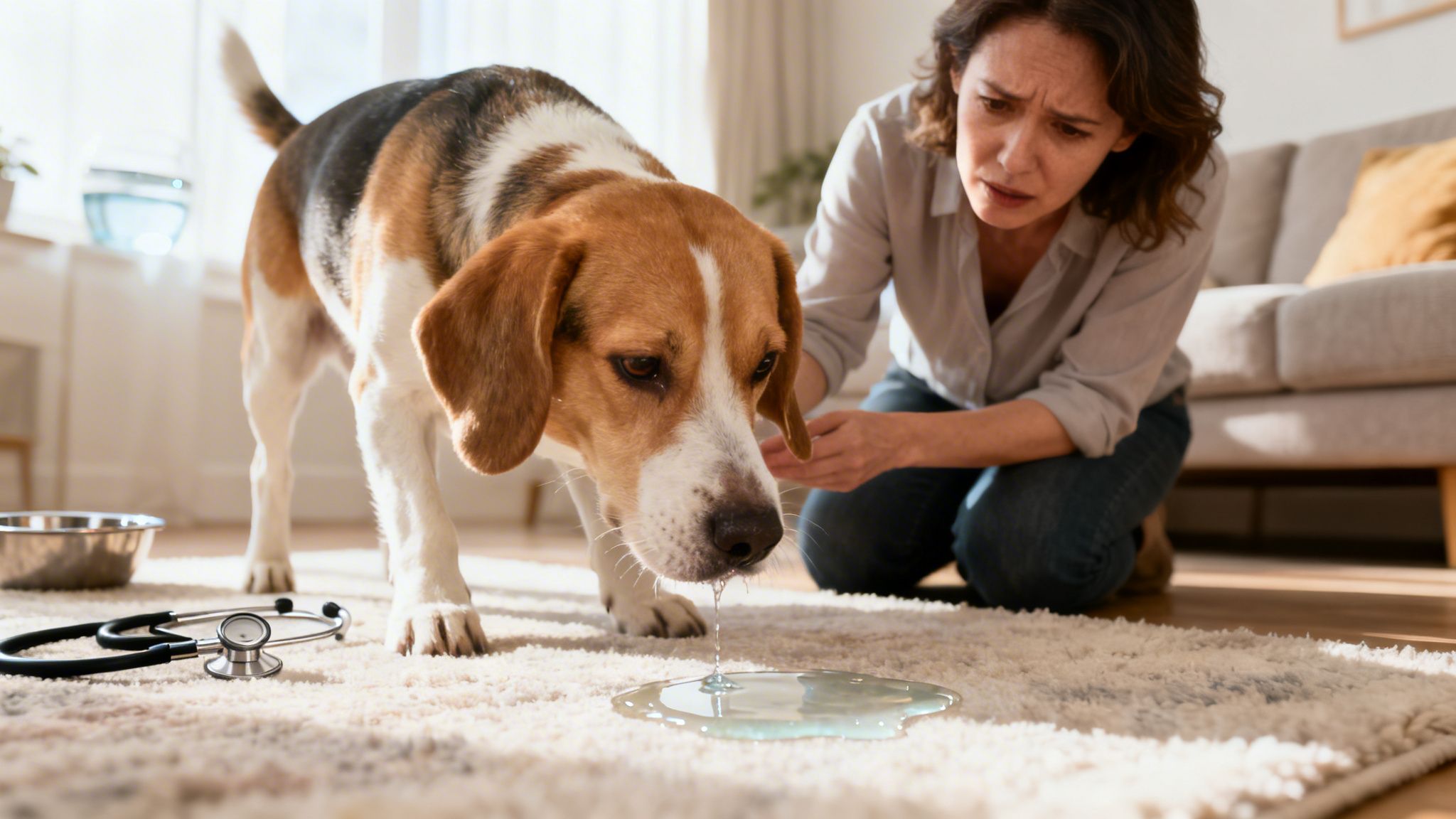
It’s a sight no dog owner wants to see: that unmistakable heaving, followed by a puddle of clear liquid on the floor. Your first reaction is probably worry, and that’s completely normal.
In many cases, a dog throwing up clear liquid isn't a sign of a major crisis. It can be caused by something as simple as an empty stomach producing a bit too much acid or your dog gulping down water too fast after a vigorous play session. But while it's often a minor issue, it's definitely a signal from your dog's body that you shouldn't ignore.
What Your Dog's Vomit Is Trying to Tell You
As unsettling as it is, vomiting is an incredibly common experience for dogs, especially when they're young and their bodies are still figuring things out. A major UK study of over 6,000 Labrador Retrievers showed that vomiting incidents hit their peak when the pups were between three and six months old.
What's really interesting is that owners only sought vet care for 37.4% of these tummy troubles. This suggests that most of the time, these are mild upsets that can be managed right at home. You can learn more about the study's findings on gastrointestinal issues in dogs if you're curious about the data.
Our goal here is to help you feel confident in telling the difference between a small digestive hiccup and something more serious. We'll walk through the most common reasons for clear vomit, what that liquid actually is (hint: it's rarely just water), and give you an immediate action plan. We’ll also cover the crucial red flags that mean "call the vet now" and explore simple ways to support your dog's gut health for the long haul.
Knowing the 'why' behind the vomit is the first step. It empowers you to stop worrying and start taking confident, practical steps to help your best friend feel better.
To get started, let’s look at some of the usual suspects. This table breaks down the most frequent reasons a dog might throw up clear liquid.
Quick Guide to Common Causes of Clear Vomit
These three scenarios are incredibly common and often resolve on their own with a little bit of observation and care from you.
What Is the Clear Liquid Your Dog Is Vomiting?
Finding a puddle of clear liquid can be confusing. Did your dog just throw up the water they just drank? While that's a common assumption, it's usually not the case. More often than not, that clear fluid is a mix of saliva and gastric juices from an empty stomach.
A good way to picture it is to think of your dog's stomach like an engine left running. It’s always producing powerful acids, ready to break down the next meal. But when no food shows up for a while, all that acid just sits there with nowhere to go.
Eventually, this buildup of fluid can start to irritate the stomach lining. The body's natural response is to get rid of the irritant, which triggers the vomiting you see. The result is that clear, watery, and sometimes foamy liquid. This is often linked to a surprisingly common issue called Empty Stomach Bilious Vomiting Syndrome, which is a leading reason for dogs throwing up clear liquid. In fact, it's seen in up to 20% of dogs in the US. It almost always happens after a long stretch without food—like overnight—which is why so many dog owners find these little puddles first thing in the morning. You can get more insights on how an empty stomach leads to vomiting on thepetlabco.ca.
Vomiting Versus Regurgitation
To get to the bottom of things, you first need to know if your dog is actually vomiting or if they're regurgitating. They can look similar, but they are two very different actions that point to very different problems.
- Vomiting: This is an active and forceful event. You’ll notice your dog’s whole body get involved, especially their stomach muscles contracting as they heave. They often look nauseous beforehand—drooling, licking their lips, and pacing around.
- Regurgitation: This is a passive process. It’s quiet and seems to happen without any effort at all. The food or liquid just sort of… falls out. It comes from the esophagus, not the stomach, so it’s usually undigested and doesn’t have that sour smell of stomach acid.
Recognizing the difference is a key first step. Active heaving points to an issue in the stomach or intestines, while passive spitting up suggests a problem with the esophagus.
Figuring out which one is happening helps you and your vet narrow down the list of potential causes much faster. If you see your dog's abdomen heaving, you’re dealing with vomit, and it's likely being caused by that stomach irritation we just talked about.
It’s a sight that can make any dog owner’s heart skip a beat: your dog heaving, and then a puddle of clear liquid on the floor. It’s natural to immediately worry, but before you rush into panic mode, take a breath. More often than not, the culprit is something minor and easily managed.
Let's walk through the most common, everyday reasons for that clear vomit and what they mean for your pup.
Dietary Indiscretion
Let's be honest—dogs explore the world with their mouths. This curiosity often leads them to eat things they absolutely shouldn't, a habit vets call dietary indiscretion. It’s one of the top reasons we see dogs for an upset stomach.
Maybe they nibbled on some grass, snuck a questionable snack out of the trash, or decided to taste-test a mystery item in the backyard. If their stomach is irritated but mostly empty, all that's left to come up is clear liquid or some foamy saliva. In most cases, they'll feel much better within 24 hours once the offending item is out of their system.
Drinking or Eating Too Quickly
Do you have a four-legged vacuum cleaner who inhales their food in seconds? Or one who gulps down an entire bowl of water after a game of fetch? This is another classic cause of vomiting.
Think about pouring water into a bottle too quickly—it just overflows and spills right back out. When a dog chugs a lot of water, their stomach gets stretched out fast, triggering a reflex to get rid of the excess. You'll usually find a puddle of clear water almost immediately after they drink.
Pro Tip: If you've got a speedy eater or drinker, a slow-feeder bowl is a game-changer. These bowls have little mazes and obstacles inside that force your dog to slow down. This gives their stomach time to adjust and prevents that sudden, overwhelming intake.
Bilious Vomiting Syndrome
What if you’re noticing a pattern? Specifically, finding a puddle of clear or yellowish liquid first thing in the morning or late at night. If so, you may be dealing with Bilious Vomiting Syndrome.
The name sounds a lot scarier than it is. This is incredibly common and happens simply because your dog's stomach is empty. During long stretches without food (like overnight), stomach acid and bile can build up. With no food to digest, these juices irritate the stomach lining, leading to vomiting.
A few simple tweaks to your dog’s feeding schedule can make a huge difference:
- Split their meals: Instead of one or two big meals, try feeding three or four smaller portions throughout the day.
- Give a late-night snack: A small biscuit or a little bit of their regular food right before bed can give their stomach something to do overnight, preventing that acid buildup.
For many dogs, these simple scenarios are the root cause of the problem. By paying attention to when and how it's happening, you can often solve the mystery without needing to call the vet.
When Clear Vomit Signals a Serious Health Problem
It’s one thing for your dog to throw up once and then go right back to chasing their tail. Most of the time, an isolated episode of clear vomit is just a minor hiccup—their stomach was a little too empty, or they drank water too fast.
But what happens when it’s not just a one-off event? A single vomit is like a fire alarm's low-battery chirp. It’s annoying, sure, but usually not a crisis. Repeated vomiting, especially when other symptoms tag along, is a different story. That’s the full-blown alarm, signaling a potential emergency that needs your immediate attention.
Clear vomit can absolutely be a sign of a more dangerous underlying condition. Knowing how to spot the difference between a minor upset and a major problem is one of the most important things you can learn as a dog owner.
This chart can help you start connecting the dots between what you're seeing and the most common causes.
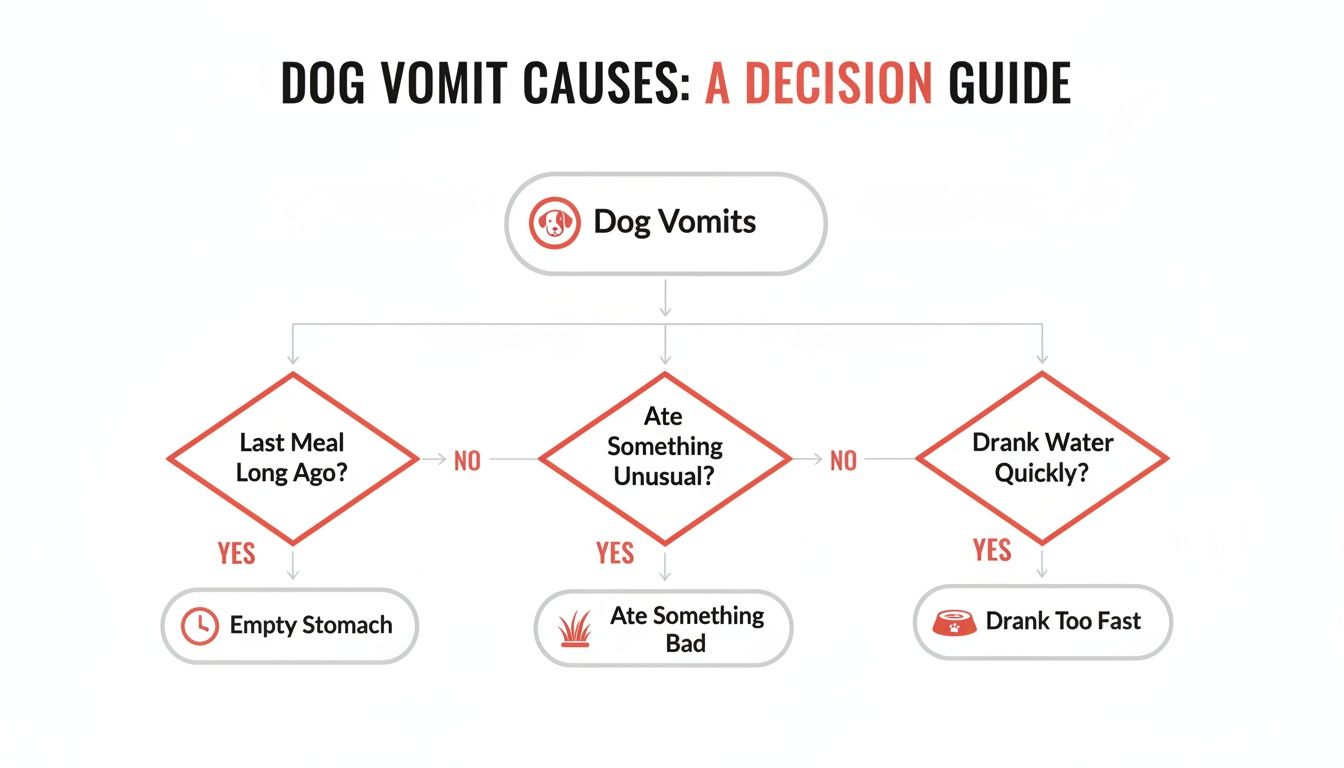
As you can see, the real trouble starts when vomiting becomes a pattern or is joined by other worrisome signs.
Red Flag Conditions to Watch For
Vomiting is an incredibly common reason for a vet visit. In fact, studies show that various gastrointestinal troubles affect 15-20% of dogs in the US annually, with vomiting leading the pack as a primary symptom. If you'd like to dive deeper into the data, you can explore research on vomiting prevalence in dogs on pmc.ncbi.nlm.nih.gov.
When your dog is throwing up clear liquid repeatedly or just seems off, you need to be on high alert for one of these serious issues.
Here’s what should set off alarm bells:
- Pancreatitis: This is an extremely painful inflammation of the pancreas, which can sometimes be triggered by a very fatty meal (like getting into the trash). Beyond the clear vomit, look for a hunched back, which indicates intense abdominal pain. Other signs are repeated vomiting, extreme lethargy, and a complete loss of appetite.
- Gastrointestinal Blockage: This is a true emergency. If your dog has swallowed something they shouldn’t have—a sock, part of a toy, a corn cob—it can create a life-threatening blockage. You’ll see persistent vomiting of both liquid and food, an inability to even keep water down, straining to poop, and obvious signs of pain or weakness.
- Kidney or Liver Disease: When these vital organs aren't working properly, toxins can build up in your dog’s system, causing chronic nausea and vomiting. This is usually more gradual. Look for other clues like a major increase in thirst and urination, unexplained weight loss, and just a general decline in their overall health and energy.
- Poisoning: Ingesting a toxin is another all-hands-on-deck emergency. This could be anything from antifreeze and household cleaners to certain plants or human medications. The vomiting is often sudden and severe. The biggest red flags are neurological symptoms: seizures, stumbling, collapse, or extreme drooling. Get to a vet immediately.
If you see repeated vomiting accompanied by symptoms like extreme tiredness, signs of pain, refusal to drink, or a swollen belly, it is no longer a "wait and see" situation. These are clear signals to contact your veterinarian or an emergency clinic right away.
It can be a lot to remember in a stressful moment. This table helps summarize the most urgent scenarios and what to look for.
When Clear Vomit Is a Red Flag
Look for these serious conditions and their accompanying symptoms if your dog is vomiting clear liquid.
When you see these clusters of symptoms, your dog is telling you they need professional help. Don't hesitate to make that call.
Your Step-by-Step Action Plan After Your Dog Vomits
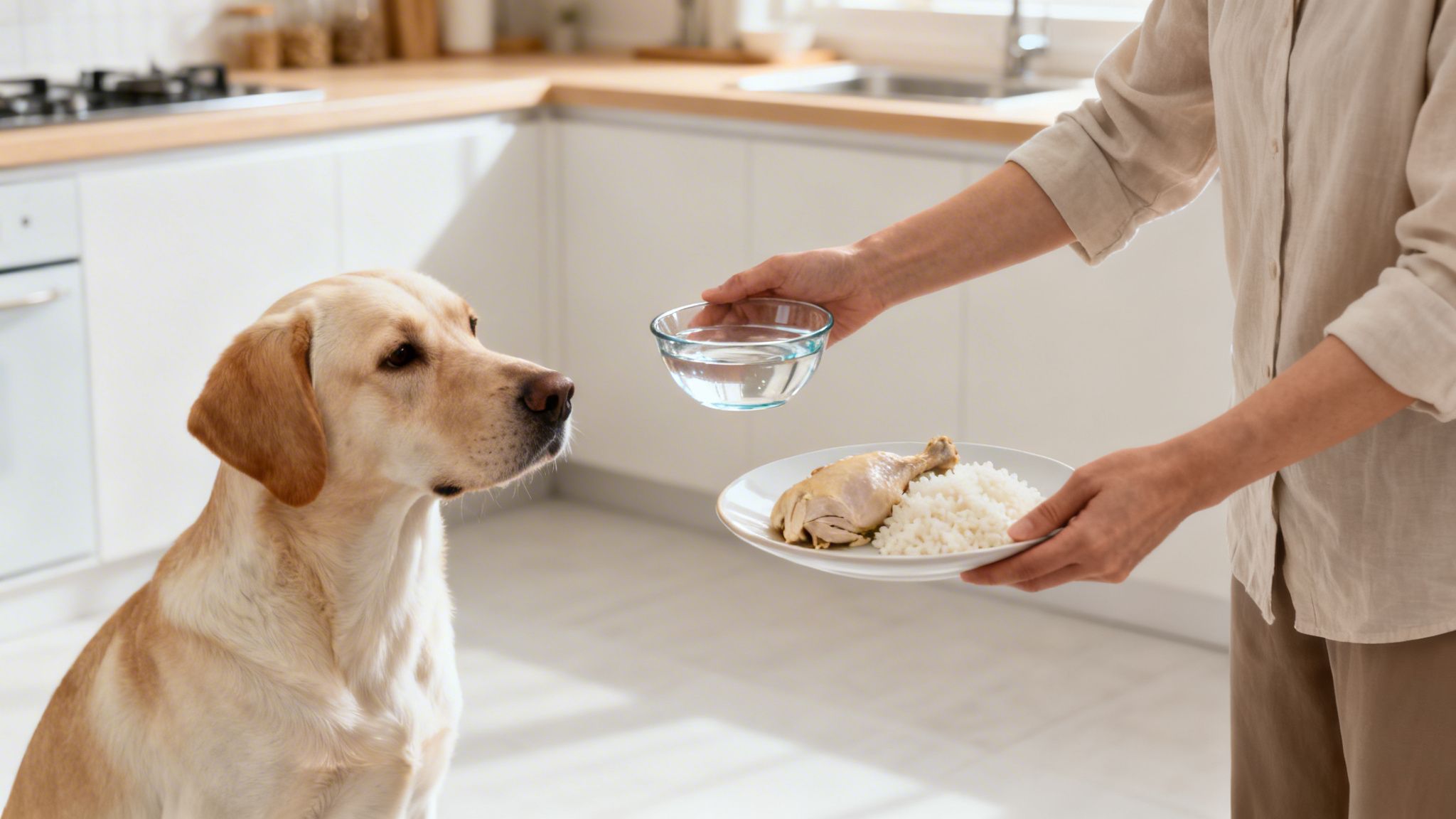
It’s always a little jarring when your dog gets sick, but having a game plan can help you stay calm and focused. When you find that puddle of clear liquid, the very first thing to do is take a breath. Don't panic. A one-off vomit is often just a minor hiccup.
Your next move is to play detective. How is your dog acting now that it's over? Is their tail wagging as they look to you for a reaction, or are they hiding, looking weak, or acting like their tummy hurts? A dog that bounces right back is a really good sign.
Then, take a closer look at the vomit itself. I know, it’s not pleasant, but check for anything that isn't just clear fluid. Are there specks of blood, bits of a toy they shouldn’t have eaten, or anything else that looks off? This is all valuable information if you end up needing to call your vet.
Immediate At-Home Care
If your dog seems perfectly fine after a single, uncomplicated bout of vomiting, the best thing you can do is give their digestive system a break.
Withhold Food: The standard vet recommendation is to hold off on feeding your dog for about 8-12 hours. Think of it as hitting the reset button. This short fast gives their irritated stomach lining a chance to settle down without the stress of digesting a meal.
Offer Small Sips of Water: Dehydration can become a concern, so make sure fresh water is available. The key is to stop them from gulping down the whole bowl at once. Offer just a little bit at a time to see if they can hold it down. If even small sips of water trigger more vomiting, it's time to call the vet.
Of course, while you’re focused on your dog’s well-being, there’s also the mess to consider. If you’re wondering how to clean vomit off carpet, getting it handled quickly and correctly can save you a headache later.
Once the fasting period is over and there’s been no more vomiting, it's time to gently reintroduce food. You can’t go straight back to their regular kibble; you need to start with a bland diet to ease their gut back into action.
A time-tested, vet-approved option is a simple mix of plain, boiled, skinless chicken and some plain white rice. Start with just a tiny portion—a spoonful or two. If that stays down for a few hours, you can offer another small meal. Keep this up for the next 24-48 hours, then you can slowly start mixing their regular food back in with the bland diet.
How to Proactively Support Your Dog's Gut Health
Instead of waiting for vomiting to happen, a proactive approach to your dog's wellness can make a huge difference. A healthy, resilient gut is your dog’s first line of defense against all sorts of issues, including many of the things that cause them to throw up clear liquid.
The cornerstone of good gut health is always a high-quality, balanced diet. Feeding your dog food made with whole, real ingredients—and without a bunch of fillers or artificial junk—helps keep their digestive system stable. This kind of steady, quality nutrition can prevent the stomach acid spikes that often lead to problems like Bilious Vomiting Syndrome. Think of it as giving their internal engine a clean, reliable fuel source that keeps it humming along smoothly.
The Power of Daily Gut Support
On top of a great diet, adding a daily supplement can be a game-changer, especially for dogs with sensitive stomachs. The right products deliver human-grade ingredients that work together to build a strong, healthy gut environment. For many dogs, this simple daily step is all it takes to put an end to frequent stomach upset.
A multi-pronged approach usually works best:
- Probiotics add good bacteria to the gut, helping to balance the internal ecosystem and improve how the whole digestive system works.
- Prebiotics are essentially food for those good bacteria, making sure they have what they need to thrive and maintain a healthy gut lining.
- Calming Adaptogens can help dial down the gut-brain connection, which is a fancy way of saying they reduce stress-related GI issues—a very common trigger for vomiting.
Adding a daily supplement is like giving your dog a daily shield. It proactively strengthens their system from the inside out, making them less susceptible to the triggers that lead to vomiting.
This proactive strategy helps stop problems before they even start. For instance, keeping the gut balanced can minimize the irritation caused by excess stomach acid, which directly helps prevent that classic morning-time vomiting on an empty stomach. It's a simple way to help your dog feel their best every single day.
Of course, it’s not just about what goes into their bowl. Making sure your dog has a clean and safe space to play outside is also a key part of preventive care. You can learn more about creating a safe yard in this Artificial Turf for Dogs: A Pet Owner's Ultimate Guide. A well-kept outdoor area means they’re less likely to eat something irritating or pick up bacteria that could cause an upset stomach. When you combine a supportive diet, targeted supplements, and a safe environment, you're building a truly comprehensive wellness plan for your best friend.
Common Questions About Dog Vomiting
When your dog starts heaving, a million questions probably run through your mind. It’s a stressful situation for any pet owner. Let's tackle some of the most common concerns I hear from dog parents when their buddy is throwing up clear liquid.
How Can I Tell Vomiting from Regurgitation?
This is a great question, and figuring this out is the first step. Vomiting is an active, whole-body event. You'll probably see their belly tense up and hear some pretty dramatic heaving before anything comes out. It’s forceful.
Regurgitation, on the other hand, is completely passive. It often happens quietly and without any warning—the food or liquid just seems to spill out of their mouth. What comes up is undigested stuff from the esophagus, not the stomach.
Is It an Emergency If My Puppy Throws Up Clear Liquid?
With puppies, the rules change a bit, and it’s always smart to err on the side of caution. A single, tiny spit-up might not be a five-alarm fire, but puppies are incredibly vulnerable to dehydration and dangerous drops in blood sugar.
Key Takeaway: If your puppy vomits more than once, seems extra sleepy, or isn't interested in drinking water, please call your vet right away. Their little bodies can get into trouble much faster than an adult dog's.
Can My Dog's Anxiety Cause Clear Vomit?
Yes, absolutely. Think about how your own stomach can get tied in knots when you're nervous—it's the same for our dogs! Stress and anxiety can ramp up the production of stomach acid, which irritates the stomach lining and often leads to vomiting that clear, foamy liquid.
This is a classic sign we see with separation anxiety, car rides, or a dreaded trip to the vet.
How Long Should I Wait to Feed My Dog After Vomiting?
Alright, so your adult dog had one episode of vomiting but seems perfectly fine now. What's the plan for dinner? The best approach is to give their stomach a break. My general recommendation is to withhold food for about 8-12 hours.
This short fast gives the irritated stomach lining a chance to calm down. After that, you can offer a tiny meal of something super bland, like a spoonful of boiled chicken and white rice. If that stays down, you can continue offering small, frequent bland meals for the next 24 hours before slowly transitioning back to their regular food.

Karolis is the Founder of FORMA, a pet wellness brand focused on longevity and daily nutrition for dogs. Writes about supplements, canine health, and helping pets live longer, healthier lives
Join thousands of pet parents getting science-backed health insights and natural care advice