Why Is Your Dog Throwing Up Yellow Foam?
Is your dog throwing up yellow foam? Our expert guide explains the common causes, what signs are serious, and how to support your dog's digestive health.
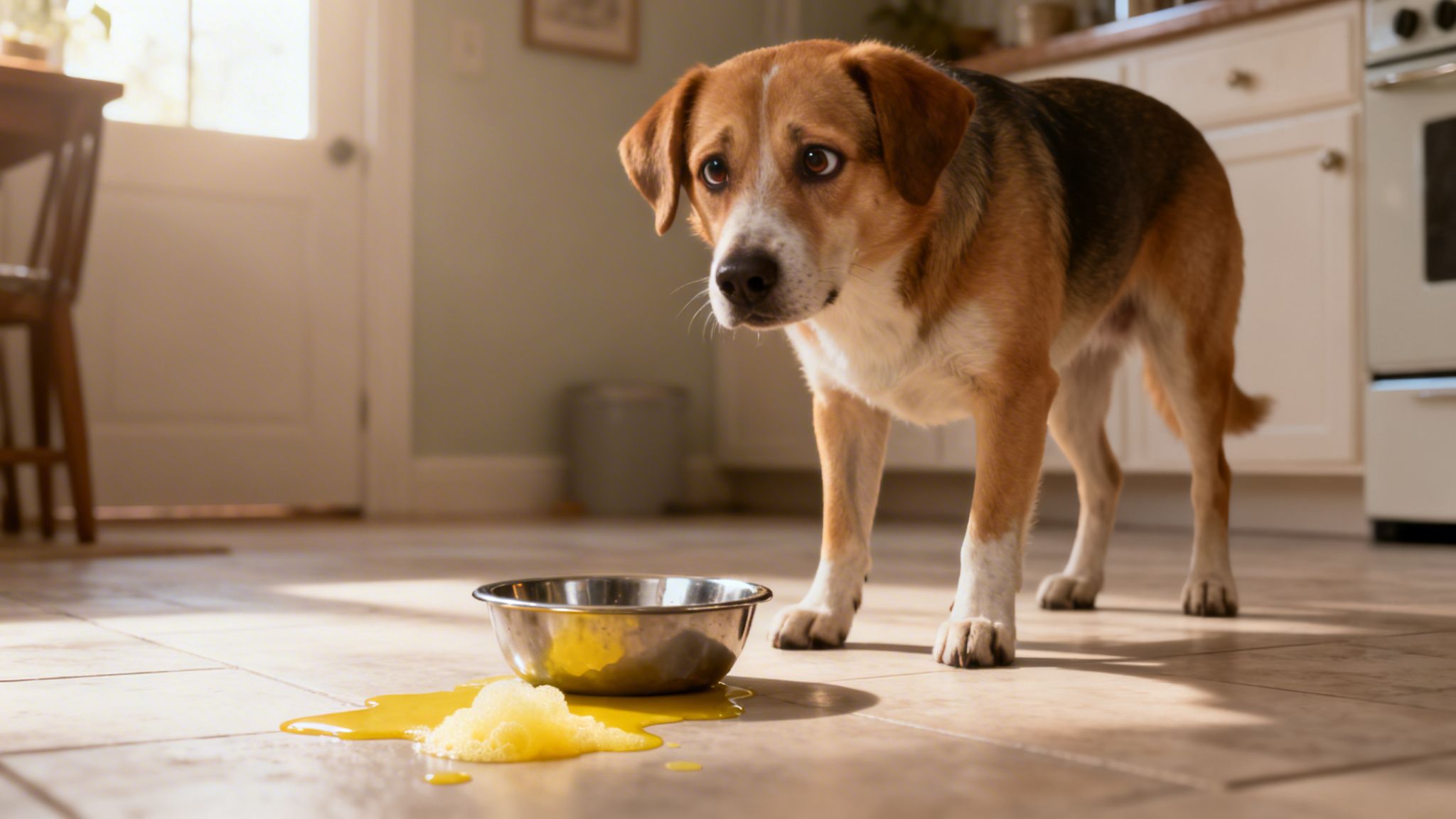
Waking up to find your dog has thrown up a puddle of yellow foam can be startling. Most of the time, this just means your dog's stomach was empty, and what you're seeing is bile. It often happens right before breakfast, and if your dog is acting perfectly normal otherwise, a single incident usually isn't cause for panic.
What It Means When Your Dog Throws Up Yellow Foam

Let's be honest, finding that bright yellow, foamy mess is unsettling for any dog owner. That liquid is bile, a digestive fluid that the liver produces to help break down fats. It's normally stored in the gallbladder and released into the small intestine right after a meal.
Think of it like a perfectly timed relay race. As food leaves the stomach, the gallbladder passes the bile baton to the small intestine to continue the digestive process. But what happens when there's no food?
The Empty Stomach Problem
If your dog's stomach is empty for too long (like overnight), the digestive system gets its signals crossed. The gallbladder might still release bile in anticipation of a meal that isn't there.
Without any food to work on, that bile can sometimes slosh backward from the small intestine into the stomach. Bile is pretty harsh, and it doesn't take much to irritate the sensitive stomach lining, triggering your dog to vomit. The result is that pile of foamy, yellow liquid. This whole scenario has a name: Bilious Vomiting Syndrome (BVS).
It’s incredibly common, especially in the early morning or late at night. Often, a dog with BVS will throw up and then immediately act fine, wagging their tail and ready for their meal as if nothing happened. This is the classic, textbook presentation of BVS.
Is It Always Just an Empty Stomach?
While BVS is the most frequent reason, it’s not the only one. Yellow foam vomit can sometimes signal more serious issues, so it's important to know what to look for.
The key is context. A single episode of yellow foam in an otherwise energetic dog is very different from repeated vomiting accompanied by lethargy, pain, or a refusal to eat.
To help you quickly sort through the possibilities, here’s a table that breaks down the common signs.
Quick Guide to Interpreting Yellow Foam Vomit
This table is a starting point, not a substitute for a vet's advice. If you see any signs in the "Potential Red Flag" column, it's always best to be safe and call your veterinarian.
Bilious vomiting is a frequent complaint in vet clinics. In fact, studies show that of all dogs brought in for vomiting, a significant number are dealing with this issue. For a deeper dive, the AKC offers more details on Bilious Vomiting Syndrome and its prevalence.
Our goal here is to help you understand what's happening with your pup, so you can move from worry to a clear plan of action.
Common Reasons for Vomiting Yellow Foam
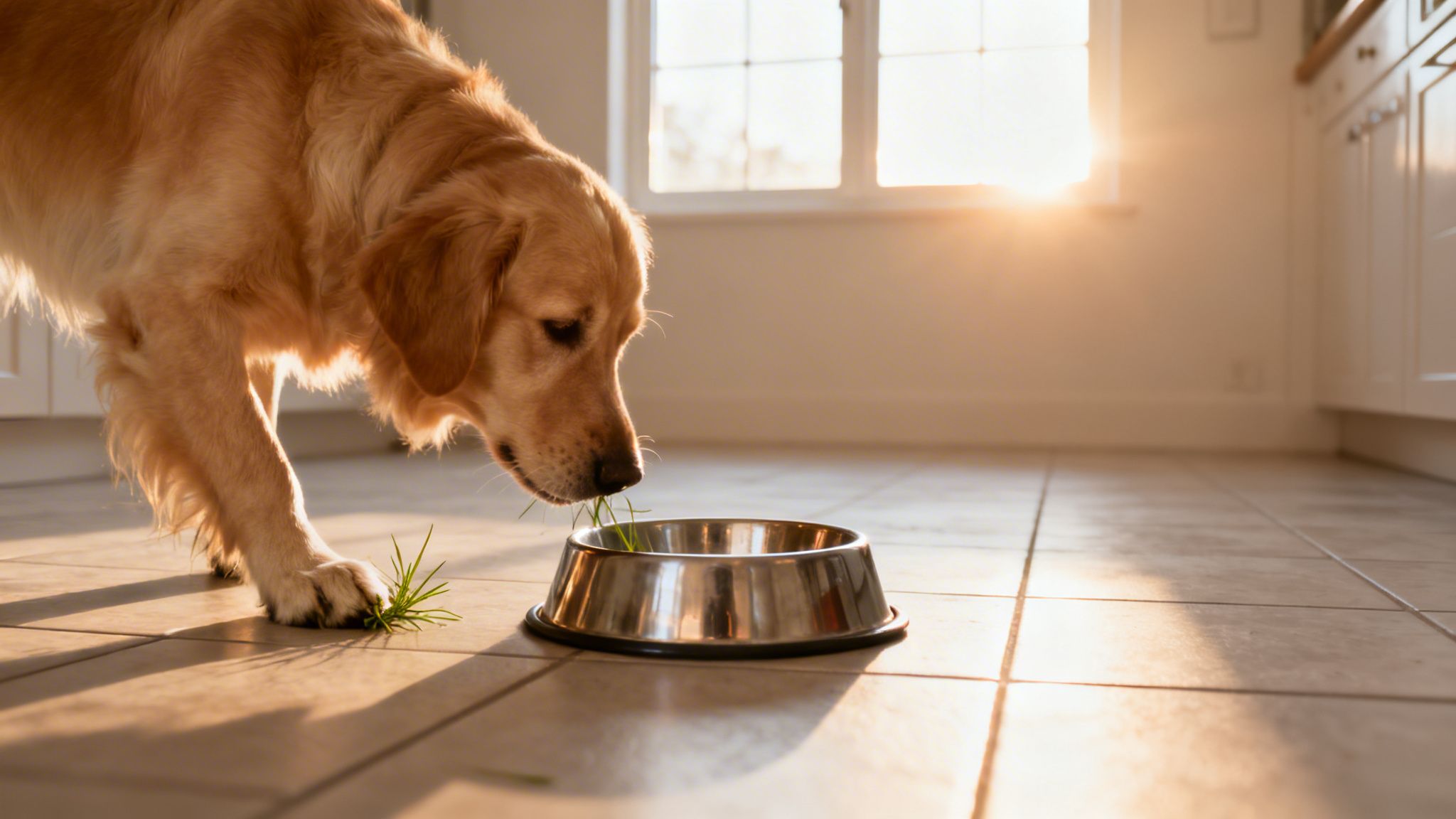
It’s a sight that can send any dog owner’s heart into their throat: a puddle of bright yellow, foamy vomit on the floor. While it looks alarming, this is often less about a serious illness and more about simple timing.
The most common reason by far is an empty stomach. Vets have a name for it: Bilious Vomiting Syndrome (BVS). But what's really going on inside your pup?
Think of it this way. Your dog’s digestive system is primed to receive and break down food. As part of that process, the liver produces bile—that yellow-green stuff—to help digest fats in the small intestine. This usually happens right on cue when food arrives.
But when your dog's stomach is empty for a long stretch (like overnight), the system can get its signals crossed. The body might still release bile in anticipation of a meal that isn't there yet. With no food to work on, that bile can slosh back up into the stomach, where it's a major irritant. The stomach’s only defense is to get rid of it, which results in that foamy, yellow puddle.
The Pre-Breakfast Purge
Many owners know this scene all too well. Your dog wakes up, seems totally happy, and then, just before you can scoop their breakfast into the bowl, they throw up a little bit of yellow foam.
This classic "pre-breakfast purge" happens because the 8 to 12 hours since their last meal is a long time for their stomach to be empty. All night, bile has been building up and irritating the stomach lining. It's a lot like the discomfort humans feel with acid reflux. Once they vomit, the irritant is gone, and they often feel immediate relief—and are suddenly very ready to eat, tail wagging and all.
If your dog is only throwing up yellow liquid in the mornings or between meals but is otherwise his happy, energetic self, an empty stomach is almost certainly the culprit.
Other Manageable Causes
While BVS is the front-runner, a few other simple, and usually manageable, issues can also lead to yellow, foamy vomit.
Serious Hunger Pangs: Just like us, some dogs get very strong stomach contractions and extra acid when they're hungry. For sensitive dogs, this can be enough to trigger a small amount of bilious vomit.
Eating Grass on an Empty Stomach: We've all seen our dogs graze on the lawn. If they do this when their stomach is already empty, the grass blades can tickle the stomach lining and cause them to vomit a mix of bile and grass.
Mild Motion Sickness: A car ride can make some dogs nauseous, especially if they haven't eaten in a while. This can easily lead to them throwing up bile. It's usually a one-off event directly connected to the travel.
Key Insight: These common causes—BVS, hunger, grass, and mild car sickness—all share one thing: an irritated, empty stomach. They are almost always isolated incidents and aren't accompanied by other scary symptoms.
Once you understand these common triggers, that puddle of yellow foam becomes a lot less mysterious. It’s not always a sign of disaster, but often a predictable reaction from your dog’s digestive system. By recognizing the pattern, you can start making small, simple changes to their routine—which we'll get into later—to help keep their stomach happy.
Serious Health Issues That Can Cause Yellow Vomit
Most of the time, that puddle of yellow foam is just a sign of an empty, irritated tummy. But sometimes, it's a smoke signal for a much bigger fire. If the vomiting won't stop, or if your dog just seems off, you need to consider that something more serious is going on.
These aren't "wait and see" situations. They're complex medical problems where foamy yellow vomit is just one piece of a much larger, more worrying puzzle. Knowing what to look for can help you decide when it's time to stop monitoring and start calling the vet.
Pancreatitis: Inflammation of the Pancreas
Think of the pancreas as a tiny but powerful factory that makes digestive enzymes. In a healthy dog, these enzymes stay switched off until they reach the small intestine, where they get to work breaking down food.
With pancreatitis, that factory goes haywire. The enzymes turn on inside the pancreas itself, causing the organ to start digesting its own tissue. As you can imagine, this is incredibly painful. The digestive chaos it creates often leads to repeated vomiting, which will look like yellow foam once the stomach is empty.
One of the most telling signs of pancreatitis is when a dog takes a "praying position"—stretching their front legs out with their rear end in the air. This helps relieve some of the intense abdominal pain. Other red flags include:
- Forceful, repeated vomiting
- A hunched-over posture or yelping when you try to pick them up
- Extreme tiredness and weakness
- No interest in food, often paired with diarrhea
Pancreatitis can be acute (sudden and severe) or chronic (milder and ongoing). Either way, it’s a true medical emergency that needs immediate veterinary care for pain control and hydration.
Intestinal Blockage from Foreign Objects
Dogs love to explore the world with their mouths, which unfortunately means they sometimes swallow things they shouldn’t. A sock, a piece of a toy, a corn cob—any of these can get stuck and create a dangerous intestinal blockage.
When something gets lodged, it acts like a dam in the digestive tract. Nothing can get through. Food, water, and digestive fluids (like bile) have nowhere to go but back up, resulting in forceful vomiting. Once the stomach is empty, all that's left to come up is yellow, foamy bile.
A dog with a blockage might try to eat or drink, only to throw it right back up. You might also notice:
- Retching or heaving with nothing coming out
- A painful, bloated belly
- Severe lethargy and dehydration
- No bowel movements, or straining to go
An intestinal blockage is a life-threatening emergency. It almost always requires surgery to remove the object, and every minute counts. If you even suspect your dog swallowed something, don't wait.
The cost of treatment for these conditions really underscores why acting fast is so important. A simple case of gastroenteritis might run about $800, but treating pancreatitis can average $2,200. An intestinal blockage is even more serious, with surgery and aftercare averaging $3,000. You can find a deeper dive into these costs and why early vet care is critical on WagWalking.com.
Liver Disease or Dysfunction
The liver is the organ that produces bile. So, it makes sense that if the liver is sick, it can throw off the whole digestive process and lead to an upset stomach and yellow vomit.
Liver disease has many causes, from infections and toxins to genetic issues or even cancer. Because the liver does so many jobs in the body, the symptoms can be all over the map. Besides vomiting yellow foam, a dog with liver problems might have:
- Jaundice: A distinct yellowing of the gums, skin, or the whites of their eyes.
- Drinking and urinating a lot more than usual.
- A swollen, fluid-filled abdomen.
- In severe cases, neurological signs like confusion or even seizures.
Seeing any of these signs along with yellow vomit is a major warning that your dog’s liver needs help, and you should head to the vet right away.
Inflammatory Bowel Disease
Inflammatory Bowel Disease (IBD) isn't one specific illness but a group of disorders that cause chronic irritation in a dog’s gut. This constant inflammation makes it difficult for them to digest food and absorb nutrients properly.
For a dog with IBD, their stomach and intestines are almost always upset. This can easily lead to chronic vomiting, including yellow foam, especially on an empty stomach between flare-ups. IBD symptoms tend to come and go, but they often include:
- Chronic vomiting that happens intermittently
- Diarrhea that just won’t go away
- Gradual weight loss
- An appetite that is unpredictable
Managing IBD is a long-term commitment that usually involves special diets, medication, and regular vet check-ups. Getting a proper diagnosis is the essential first step toward making your dog feel better.
Knowing When to Call the Vet Immediately
It's one thing for your dog to throw up yellow foam once and then go right back to chasing their tail. It's another thing entirely when that vomit is paired with other symptoms that just don't feel right. As a dog owner, learning to tell the difference between a simple upset stomach and a true emergency is one of the most important skills you can have.
Your dog relies on you to be their advocate. When they can't tell you they're in pain, you have to learn to read the signs. A single instance of a dog throwing up yellow foam and then acting perfectly normal can usually be watched at home. However, things change quickly. Most vets agree that if your dog vomits multiple times within 24 hours, it’s time for a same-day visit. In fact, when vomiting and diarrhea happen together, studies show nearly 50% of those cases require a professional look. You can find more details in these veterinary guidelines for GI issues at CherryCreekVet.com.
This chart is a great way to visualize the decision-making process.
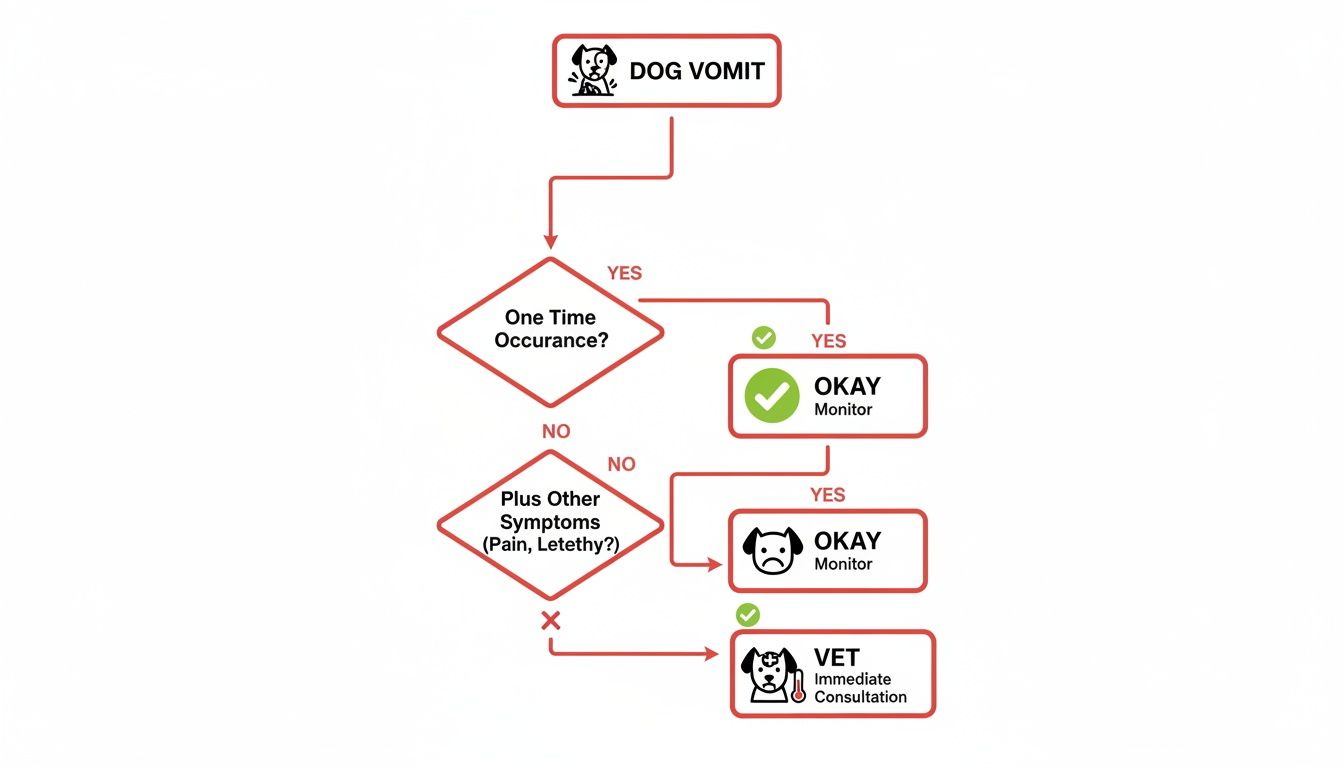
Ultimately, if your dog seems otherwise happy and healthy, a one-off vomit isn't a panic moment. The real trouble starts when other signs of distress show up.
Urgent Symptom Checklist When to Call the Vet NOW
Sometimes, you don't have time to "wait and see." If you notice any of the symptoms in the table below along with the vomiting, it's a signal that something could be seriously wrong. This checklist is designed to help you quickly identify a crisis.
When you see any of these signs, the time for home monitoring is over. These are clear indicators of a medical emergency that requires immediate professional help.
Other Serious Symptoms to Watch For
The signs above are absolute, drop-everything emergencies. But other symptoms, while maybe not as immediately life-threatening, still demand a prompt call to your veterinarian. Don't hesitate if you see:
Diarrhea: When vomiting and diarrhea team up, your dog can get dehydrated incredibly fast. It can also point to infections or inflammatory bowel disease (IBD).
Refusal to Eat or Drink: An appetite that's gone for more than a day is a big deal. If your dog won't even drink water, dehydration becomes a very real and immediate danger.
Your gut feeling is your best guide. You know your dog better than anyone. If they just seem "off" or you have that sinking feeling that something is seriously wrong, trust your instinct. It is always better to call the vet and be told it's nothing than to wait and wish you had.
How to Prevent Yellow Vomit and Support Gut Health

Knowing what to do when your dog throws up yellow foam is one thing, but preventing it from happening in the first place is the real goal. Thankfully, you can often sidestep these unpleasant episodes by focusing on proactive, daily care that keeps their digestive system happy and stable.
Most of the time, a dog throwing up yellow foam is simply a dog with an empty stomach. The solution, then, is usually found in a few simple tweaks to their meal schedule and a focus on overall gut health. These small adjustments can truly make all the difference.
Think of it this way: your dog's digestive tract operates on a rhythm. When it sits empty for too long—especially overnight—that rhythm gets disrupted, and bile can cause irritation. Let's look at a few practical ways to get things running smoothly again.
Fine-Tune Your Dog's Feeding Schedule
The single most effective way to stop that morning bile vomit is to manage when and how you feed your dog. The long gap between dinner and breakfast is almost always the culprit behind Bilious Vomiting Syndrome (BVS).
The fix is surprisingly simple: instead of two big meals, try breaking up their daily food into smaller, more frequent ones. This keeps a little something in their stomach to soak up that bile and prevent irritation.
- Morning Meal: The moment you wake up, give them breakfast to end the overnight fast.
- Midday Meal: A small lunch can bridge the long stretch between breakfast and dinner.
- Dinner: Keep their evening meal at a consistent, regular time.
- Bedtime Snack: This is the secret weapon for most dogs with BVS. A small, carbohydrate-heavy snack right before bed absorbs stomach acid overnight.
A simple handful of kibble or a dog-safe biscuit before you turn out the lights can be a game-changer. It provides just enough substance to keep their stomach occupied overnight without being a heavy meal that could disrupt their sleep.
The key here isn't just about adding meals; it's about consistency. When you feed your dog at the same times every day, their body actually learns to anticipate food, which helps regulate the release of digestive juices more efficiently.
Focus on High-Quality, Digestible Nutrition
What your dog eats is every bit as important as when. A diet loaded with hard-to-digest ingredients, cheap fillers, or potential allergens can create low-grade inflammation in the gut, making them much more prone to digestive upset.
Opting for a food made with high-quality, easily digestible ingredients is a cornerstone of a healthy gut. On the label, look for things like:
- Named Meat Sources: You want to see "chicken" or "beef," not vague terms like "meat by-product meal."
- Whole Foods: Ingredients like sweet potatoes, carrots, and peas are gentle on the digestive tract.
- No Artificial Additives: Steer clear of artificial colors, flavors, and preservatives, which can be common irritants.
If you have a hunch that a food allergy or sensitivity is part of the problem, it's time to talk to your vet. They can guide you through a food elimination trial or suggest a switch to a limited-ingredient diet. Just remember to transition to any new food slowly over 7-10 days to avoid causing more stomach issues.
Support Their Gut Microbiome
Your dog's gut is an entire ecosystem, home to trillions of bacteria known as the microbiome. When the good and bad bacteria are in balance, digestion, nutrient absorption, and even their immune system function properly.
When that balance is off, it can open the door to all sorts of digestive problems. So, supporting this delicate ecosystem is a fantastic long-term strategy.
A great way to do this is with a quality supplement. Probiotics, for example, introduce beneficial bacteria to the gut to help restore that healthy balance. A daily supplement chew can make this incredibly easy. For instance, FORMA is a daily wellness chew with human-grade ingredients designed to support gut health as part of a complete routine.
By combining a smart feeding schedule with quality nutrition and a little extra gut support, you're building a solid foundation for digestive wellness. This proactive approach does more than just stop your dog from throwing up yellow foam—it boosts their overall health and happiness.
Common Questions About Dogs Vomiting Yellow Foam
You’ve learned a lot about why dogs throw up that unsettling yellow foam, but you probably still have some specific “what-if” questions. Let’s tackle some of the most common ones I hear from dog owners to help you feel confident in what to do next.
Should I Feed My Dog After They Throw Up Yellow Foam?
This is a great question, and there's no single right answer. It really comes down to how your dog is acting besides vomiting.
If it was a one-and-done vomit—maybe first thing in the morning before breakfast—and your dog is now wagging their tail and acting totally normal, you can usually go ahead and feed them a small meal. In fact, this often solves the problem by giving that stomach bile something to work on.
On the other hand, if your dog has thrown up several times or seems sick (think lethargic, no appetite, or has diarrhea), it's much better to withhold food for a few hours. Trying to feed an already upset stomach can just make things worse. You can offer a little water, but let their gut rest. If the vomiting stops after a few hours, try offering a tiny bit of bland food, like plain boiled chicken and rice, to see how they handle it before going back to their regular diet.
Key Takeaway: For a one-off morning vomit in a happy dog, a meal is usually the fix. For a sick-acting dog or repeated vomiting, hold the food and give your vet a call.
Can Stress Cause My Dog to Vomit Yellow Foam?
Oh, absolutely. Never underestimate what stress and anxiety can do to a dog's system. The digestive tract is often one of the first places to show trouble when a dog is overwhelmed.
Think about it—when a dog gets stressed, their body is flooded with cortisol, the stress hormone. This can throw their whole digestive rhythm out of whack.
This can happen in a couple of ways:
- More Stomach Acid: Stress can kick acid production into overdrive, which irritates an empty stomach lining.
- Slower Digestion: Anxiety can also slow down how quickly the stomach empties. This means the stomach stays empty for longer, giving bile more time to cause irritation.
If you start connecting the dots and notice the yellow foam appears during thunderstorms, fireworks, car trips, or when you leave the house, stress is a very likely culprit. Working on your dog’s anxiety with calming routines, training, or creating a "safe space" can often make these vomiting episodes disappear.
Is It Normal for My Dog to Vomit Yellow Foam Every Morning?
While a single morning vomit can happen, vomiting every single morning is not normal. If you can set your clock by it, you're likely dealing with a chronic issue that needs your attention. This classic pattern almost always points to Bilious Vomiting Syndrome (BVS).
It’s a clear sign that the long fast overnight is consistently irritating your dog's stomach. While BVS is very common, you shouldn't just let it continue. Your first move should be to chat with your vet to get a proper diagnosis and make sure nothing else is going on.
Once it's confirmed, the fix is usually surprisingly simple: adjust their feeding schedule. The whole goal is to make sure their stomach doesn't sit completely empty for so many hours. Most owners have great success with one of these two tricks:
- Split the evening meal. Give them half of their dinner at the normal time, and the other half right before everyone goes to bed for the night.
- Offer a bedtime snack. Just a small, carb-based snack, like a few pieces of kibble or a simple dog biscuit, can be enough to keep their stomach acids busy overnight.
These easy tweaks are often all it takes to stop the daily morning clean-up.
What Is the Difference Between Yellow Foam and Yellow Chunks?
The texture of the vomit can give you some really good clues. It's helpful to know if you're looking at foam or something more solid.
Yellow Foam: This is almost always bile mixed with saliva and stomach fluids. When you see foam, it’s a strong signal the stomach was empty. The foamy, frothy texture simply comes from air being churned up with the liquid.
Yellow Chunks: This means you're seeing partially digested food in the vomit. The yellow color might come from the food itself or from being mixed with bile after the fact. It tells you the dog's stomach rejected a meal after they had already eaten.
So, while foam points to an empty-stomach issue like BVS, chunks point to a problem with digesting food. That could be anything from a food sensitivity to eating way too fast. Both are worth keeping an eye on, but if you're consistently seeing chunky vomit, it’s definitely time for a vet visit.

Karolis is the Founder of FORMA, a pet wellness brand focused on longevity and daily nutrition for dogs. Writes about supplements, canine health, and helping pets live longer, healthier lives
Join thousands of pet parents getting science-backed health insights and natural care advice