Hip and Joint Supplement for Dogs: Your Ultimate Guide to Mobility
Discover the hip and joint supplement for dogs that supports mobility and comfort. Learn ingredients, dosing tips, and vet guidance.

If you've ever looked into supplements for your dog, you've almost certainly come across "hip and joint" formulas. At their core, these supplements are designed to support your dog's cartilage, reduce inflammation, and keep them moving freely, especially as they get older or if they're a particularly active or large breed.
Many of these formulas are built around key ingredients like glucosamine and chondroitin, which act as the building blocks for healthy joint structures. Getting ahead of potential issues with proactive support can make a huge difference in your dog's comfort and quality of life down the road.
Why Your Dog's Joint Health Matters

Think of your dog's joints like the well-oiled hinges on a door you use every single day. When everything is working right, the movement is silent and smooth. But after years of opening and closing, those hinges can start to wear down, leading to squeaks, stiffness, and eventually, trouble moving at all. That’s a pretty good picture of what happens with your dog's joints.
The two most important parts are cartilage—the spongy tissue that keeps bones from grinding against each other—and synovial fluid, the natural lubricant that keeps everything gliding smoothly. As dogs age or put a lot of stress on their bodies, that cartilage thins out and the fluid decreases. That's when pain and mobility problems start to set in. Grasping this simple concept really helps you understand the quiet ways a pet reshapes your life and why their physical well-being is so central to their happiness.
Breeds and Life Stages at Higher Risk
While any dog can develop joint problems, some are definitely more prone to it than others. If your dog falls into one of these categories, it’s smart to be extra vigilant:
- Large and Giant Breeds: Think German Shepherds, Labradors, and Great Danes. Their sheer size puts a ton of daily strain on their hips and joints.
- Active and Working Dogs: From agility stars to farm dogs, any canine athlete experiences more wear and tear from a high-impact life.
- Senior Dogs: Just like with people, aging naturally leads to cartilage breakdown, making older dogs prime candidates for stiffness and arthritis.
- Overweight Dogs: Every extra pound is a constant burden on their skeletal system, which can dramatically speed up joint decline.
It's no surprise that hip and joint support is the biggest slice of the pet supplement pie. Arthritis and hip dysplasia are incredibly common. In fact, some studies suggest that as many as 1 in 5 large-breed dogs may show signs by age seven, and dogs over seven face an 80% chance of developing mobility issues. You can see more about these pet health market trends on precedenceresearch.com.
Joint health isn't just about managing pain; it's about preserving freedom. A dog that can comfortably run, jump, and play is a dog that can fully engage with the world and its family.
Ultimately, the best approach is a proactive one. Starting a quality hip and joint supplement for dogs early gives their body the raw materials it needs to maintain healthy cartilage and proper lubrication. It’s all about protecting those vital "hinges" to ensure your best friend can live a vibrant, active, and comfortable life for as long as possible.
Spotting the Subtle Signs of Joint Discomfort
Dogs are masters at hiding pain. It’s a survival instinct left over from their ancestors, where showing any sign of weakness could make them a target. Because of this, they often won’t show you they’re hurting until their discomfort is pretty serious.
That’s why learning to read the early signs is so important. The obvious clues, like a heavy limp or struggling to get up, usually mean the problem has been brewing for a while. The real tells are much quieter and easier to miss.
You might chalk them up to your dog just "getting older" or having an off day, but these subtle shifts are their way of telling you something's wrong. Catching them early means you can step in with support before a little stiffness snowballs into chronic pain.
Changes in Movement and Activity
The first clues are usually in how your dog moves. A dog with sore hips or knees will naturally start to avoid anything that puts a strain on those joints, even if it's just a little bit.
Keep an eye out for these little adjustments:
- A New Hesitation: Does your dog pause at the bottom of the stairs before starting the climb? Or maybe they size up the couch for a moment before jumping up, when they used to clear it in a single bound? That brief pause is often them bracing for discomfort.
- "Bunny Hopping": This is a classic tell. When a dog with hip pain runs, you might see them use both back legs together in a sort of hop. This little trick shifts the workload onto their stronger front legs.
- Running Out of Gas Sooner: If your normally tireless walking buddy starts lagging behind or wants to head home early, it’s probably not laziness. The same goes for a dog who loses interest in a game of fetch halfway through. The activity itself might be getting painful.
Think of it this way: If your knees were achy, you’d probably take the elevator instead of the stairs. Your dog makes the same kinds of choices, just in their own world. They start avoiding things they've learned will hurt.
Behavioral and Mood Shifts
Pain isn’t just physical—it's draining, and it can absolutely change a dog's personality. Even the sunniest, most easy-going dog can become a bit grouchy when they're dealing with constant aches.
Watch for these changes in their mood:
- Newfound Irritability: A dog who used to love being petted might suddenly grumble or even snap if you touch a sore spot over their hips or back. They might also have less patience for other dogs or rowdy kids.
- Excessive Licking or Chewing: You might notice your dog obsessively licking or chewing at a specific joint, like their wrist or hip. This is a self-soothing behavior, almost like they're trying to massage the ache away.
- Odd Postures: Pay attention to how they stand and sit. They might consistently shift their weight onto one side or sit in a strange, tucked position to take pressure off a painful joint.
Catching these signs is the best thing you can do for your dog. It gives you the chance to start a new routine with something like a hip and joint supplement for dogs, helping them feel better long before the problem gets out of hand.
The Powerhouse Ingredients in Joint Supplements
Flipping over a bottle of hip and joint supplements can feel a bit like reading a chemistry textbook. The ingredient list is long, the names are scientific, and it's tough to know what actually matters. But you don't need a PhD to figure it out.
Think of a well-made supplement like a skilled construction crew for your dog's joints. You have workers laying the foundation, others reinforcing the structure, and a team dedicated to keeping everything running smoothly without friction. Each ingredient has a specific job, and the best formulas bring them all together.
Let’s break down the most common and effective ingredients you’ll see on the label so you know exactly what you’re giving your best friend.
The Foundation Builders: Glucosamine and Chondroitin
Glucosamine and chondroitin are the true dynamic duo of joint health. You’ll almost always find them working together, and for good reason—they are the literal building blocks for healthy cartilage.
Imagine the cartilage in your dog's joints is like a cushy, shock-absorbing pillow. Glucosamine is the "stuffing" for that pillow. It’s a compound that helps the body create and repair cartilage, keeping that protective cushion thick and healthy.
Chondroitin sulfate acts like a "waterproof cover" for the pillow. It’s a master at helping cartilage soak up and hold onto water, which is essential for shock absorption. It also does double duty by blocking certain enzymes that try to break down cartilage.
When they work in tandem, they're not just patching up old damage; they're actively protecting the joints from future wear and tear.
The Inflammation Fighters: MSM and Omega-3s
While the foundation builders are busy with repairs, another team is on-site to handle the real source of pain and stiffness: inflammation. This is where MSM and omega-3s come into play.
MSM (Methylsulfonylmethane) is a natural sulfur compound that’s fantastic at calming things down. Think of it as a soothing balm for sore, irritated joint tissues. It’s known for its anti-inflammatory and pain-relieving properties, which can make a real difference in your dog's day-to-day comfort.
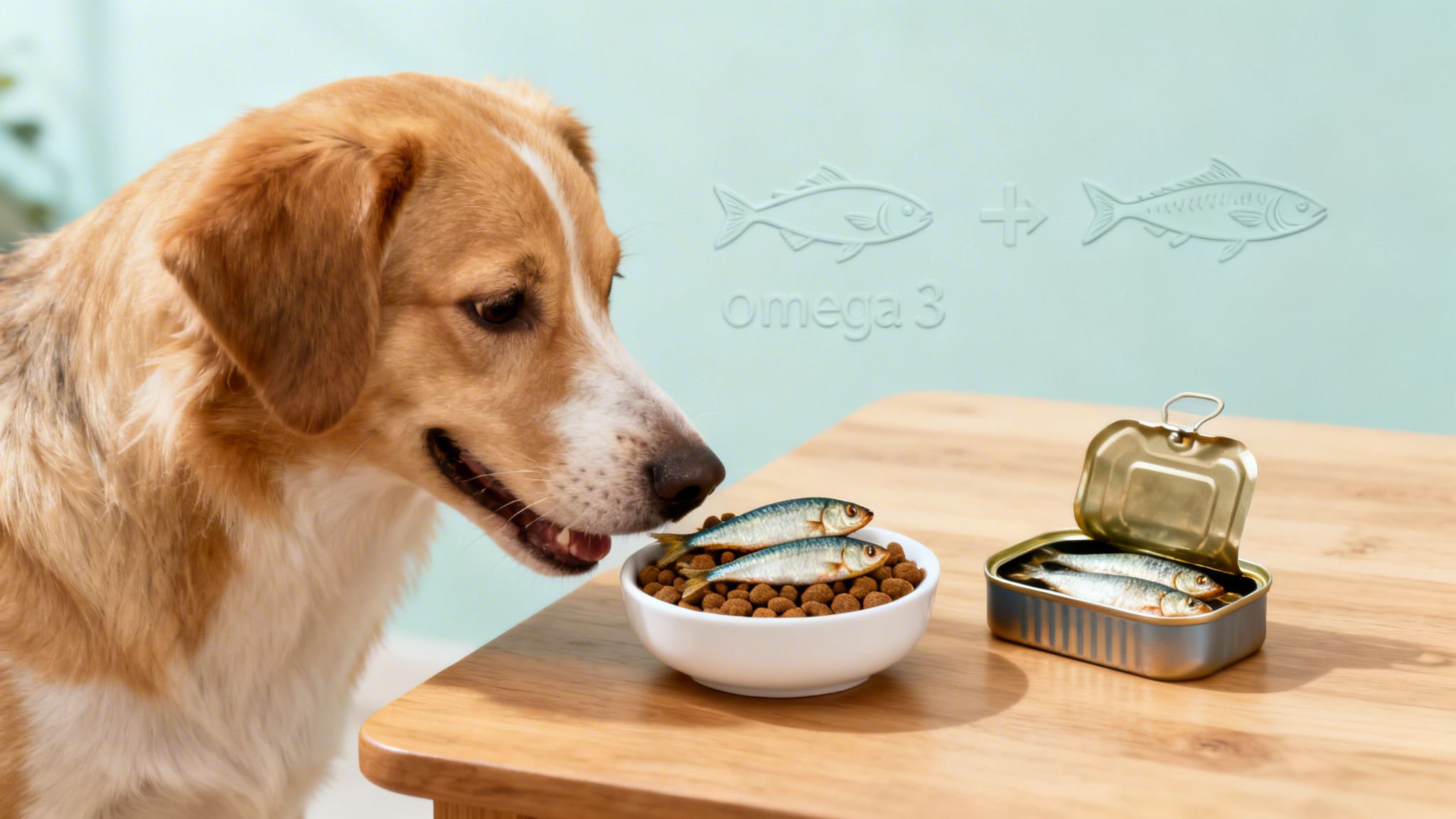
Omega-3 fatty acids are some of the most powerful natural anti-inflammatories out there. Usually sourced from fish oil or green-lipped mussels, they work throughout the body to dial down the inflammatory response at a cellular level. This provides relief not just for the joints, but for the skin, heart, and brain, too.
Sometimes the signs of joint discomfort are subtle. This infographic highlights a few common red flags that these inflammation-fighting ingredients can help address.

Small changes like hesitation on stairs or a bit of grumpiness can be early signals that your dog could use some extra support.
To make these concepts even clearer, here's a quick-reference table that breaks down the role of each key player.
Key Joint Supplement Ingredients and Their Functions
This table is a quick-reference guide to understand the role of each primary active ingredient in supporting your dog's hip and joint health.
These ingredients don't work in isolation—their combined effect is what provides comprehensive, well-rounded support for your dog's mobility.
The Joint Lubricator: Hyaluronic Acid
If glucosamine and chondroitin are the structural parts, hyaluronic acid (HA) is the "motor oil" that keeps the whole system running smoothly. HA is the main ingredient in synovial fluid—the thick, slippery liquid that lubricates the joints so bones can glide past each other without grinding.
As dogs get older, their bodies produce less HA. This makes the joint fluid thinner, leading to more friction and discomfort. Adding hyaluronic acid back into their diet helps replenish this vital lubricant, making every step, jump, and run more comfortable.
The industry data backs this up. The combination of glucosamine, chondroitin, and MSM is found in 70% of formulations because of its track record. Studies have shown this trio can lead to a 40% pain reduction in arthritic dogs in just eight weeks. It’s no surprise these ingredients hold a 52% global market share. And with soft chews now making up 61% of the market, it's easier than ever to give these to our pets. You can dig into more of this data by checking out the dog joint care market report from MetaTech Insights.
Other Key Supporting Ingredients
Beyond the big names, a few other ingredients act as powerful boosters, enhancing the overall formula.
- Turmeric (Curcumin): Curcumin is the active compound in turmeric and a potent natural anti-inflammatory. It works in a similar way to MSM to help ease joint pain and stiffness.
- Collagen: As the primary protein in connective tissues, collagen is crucial for maintaining the strength and elasticity of cartilage, tendons, and ligaments.
- Green-Lipped Mussel: This shellfish from New Zealand is a true superfood for joints. It naturally contains a unique blend of omega-3s, glucosamine, and chondroitin all in one package.
When you spot these on a label, you're looking at a formula designed for robust, long-term support.
How to Choose a High-Quality Supplement
Walking down the pet aisle can feel like navigating a maze. With so many bottles and bags all promising to make your dog feel better, how do you know what actually works? Choosing the right hip and joint supplement for dogs isn't about falling for flashy marketing—it's about knowing what to look for on the label.
Think of it like shopping for your own family. You don’t just grab the most colorful box off the shelf. You flip it over, scan the ingredients, and look for real signs of quality. Applying that same mindset here will give you the confidence that you're making a smart choice for your dog's health.
Look for Third-Party Testing and Quality Seals
First things first: how do you know the product is safe and the label is honest? Since the FDA doesn’t regulate pet supplements the same way it does drugs, it’s up to the manufacturer to prove their product’s integrity. The best companies don’t shy away from this; they welcome outside scrutiny.
The most trustworthy stamp of approval you can find is the NASC Quality Seal. The National Animal Supplement Council (NASC) is a non-profit group that sets incredibly high standards for pet supplement makers. To earn that little yellow seal, a company has to pass a rigorous, independent audit of its entire operation.
When you see the NASC Quality Seal on a package, you can breathe a sigh of relief. It’s a clear signal that the manufacturer is serious about quality control and transparency, making it an easy first filter to weed out questionable products.
This seal essentially guarantees that the product:
- Actually contains what the label says it does, in the right amounts.
- Is free of contaminants like heavy metals, salmonella, or other nasty stuff.
- Was made following strict quality control procedures from start to finish.
Prioritize Bioavailability Over High Dosages
It’s easy to get wowed by big numbers on a label. A product boasting thousands of milligrams of glucosamine might seem like the most powerful option, right? Not necessarily. That high dose doesn't mean a thing if your dog’s body can’t actually absorb and use it.
This is where a concept called bioavailability comes into play. Think of it as the "usability" of an ingredient. It’s the percentage of a nutrient that actually makes it into the bloodstream to get to work on the joints. A supplement with a lower dose of highly bioavailable ingredients is far more effective than a high-dose one that just passes straight through your dog.
What makes an ingredient more "bioavailable"?
- Ingredient Sourcing: It starts with pure, high-quality ingredients from the get-go.
- Smart Formulas: Some ingredients help others get absorbed. A classic example is adding a little black pepper extract (piperine) to make turmeric far more potent.
- Delivery Method: Soft chews and liquids are often easier for a dog’s system to break down and absorb than hard, compressed tablets.
Consider the Rise of Multi-Benefit Formulas
The way we care for our pets has changed. We see them as family, and we want the same quality for them that we’d expect for ourselves. This mindset has driven huge innovation in the pet wellness world. The global market for dog joint supplements is predicted to reach USD 1.1 billion by 2025, and that number is expected to keep climbing.
This boom is why we’re seeing a shift away from single-purpose pills toward tasty soft chews (which already make up 61% of the market) and all-in-one formulas. You can dig into more of these market trends on Fact.MR.
Instead of just focusing on joints, these smarter supplements pack multiple benefits into a single, simple treat. This not only makes your life easier but provides more holistic support for your dog's well-being. A modern formula will often blend core joint support with ingredients for other common issues.
For example, you might find combinations that also support:
- Calmness and Anxiety: Ingredients like L-theanine or chamomile can be a huge help for older dogs who are both stiff and anxious.
- Gut Health: Probiotics are often included because a healthy gut is the foundation for everything, including absorbing nutrients properly and managing inflammation.
- Immunity: Antioxidants and vitamins help keep your dog’s natural defenses strong.
This "all-in-one" philosophy is exactly what products like FORMA are built on. The goal is to offer a single daily chew that supports joint longevity right alongside gut health, immunity, and a sense of calm. It takes the guesswork out of your dog’s routine and ensures they get consistent, well-rounded support for a long, happy, and active life.
Introducing Supplements and Managing Expectations
You've done the research and picked out a great hip and joint supplement for your dog—that’s a huge step in supporting their mobility for years to come. Now for the real-world part: getting it into their daily routine and knowing what to expect. This isn’t about instant fixes; it's about patient, consistent care.
Think of it like starting a toddler on a new, healthy food. You wouldn’t just plop it on their plate and hope for the best. You'd want to make it a positive, stress-free experience. The same goes for your dog.
Making It a Welcome Treat
Let's be honest, some dogs—especially older or anxious ones—can be suspicious of anything new. A little creativity can turn supplement time from a chore into the highlight of their day.
Here are a few simple tricks that work for even the pickiest eaters:
- Pair with a Meal: The easiest approach is to just pop the chew into their regular breakfast or dinner. The familiar smells of their food often do the trick.
- The "Treat Sandwich": For the truly skeptical pup, try sandwiching the supplement between two of their absolute favorite high-value treats. The excitement for their usual snack often overrules any hesitation.
- Crumble and Mix: Soft chews are perfect for this. You can easily break them up and mix the pieces into a spoonful of wet food, plain yogurt, or even some pumpkin puree.
The goal here is to build a positive routine. If you make it a rewarding experience from day one, you're setting up a simple, sustainable habit that pays off for both of you.
Finding the Right Dosage
Dosage isn't a one-size-fits-all deal. It's carefully matched to your dog's needs, mainly their weight. The first place to look is always the manufacturer's instructions on the package—those guidelines are there for a reason.
You'll often see a recommendation for a "loading dose" for the first 4-6 weeks. This just means giving a slightly higher amount to help the good stuff build up in your dog's system faster. After that initial period, you’ll drop down to a long-term "maintenance dose."
It’s really important to follow these directions. Giving too little might not deliver any real benefits, while giving too much won’t speed up the results and could lead to an upset stomach. If your dog's weight is right on the line between two sizes, a quick call to your vet is the best way to get a clear answer.
The Art of Patience: A Realistic Timeline
This is probably the most important thing to remember: joint supplements are not a quick fix. They aren't like a pain reliever that works within hours. A hip and joint supplement for dogs works slowly, on a structural level. It takes time for the ingredients to build up in the joints, soothe inflammation, and help support cartilage.
So, don't get discouraged if you don't see your dog bouncing off the walls overnight. This is a marathon, not a sprint.
Most vets and manufacturers suggest a pretty consistent timeline for what to expect:
- First 4-8 Weeks: This is when your consistency really matters. During this phase, the ingredients are getting to work calming inflammation and starting to support the joint structures.
- After 8 Weeks: By now, many owners start to notice real, positive changes. Maybe it's a little less stiffness after a nap, more fluid movement on walks, or even a renewed interest in their favorite toy.
Sticking with it every single day, even before the results are obvious, is what allows these powerhouse ingredients to make a real, lasting difference in your dog's comfort and mobility.
A Holistic Approach to Strong and Healthy Joints

A great hip and joint supplement for dogs is an incredible tool, but it's just one piece of the puzzle. Think of it as a star player on a team—it's powerful, but it can’t win the championship all by itself. To truly protect your dog's joints for the long haul, that supplement needs backup from a complete wellness strategy.
This kind of supportive lifestyle creates an environment where those hard-working ingredients can do their job most effectively. By managing the other factors that put stress on your dog's joints, you amplify the benefits and set them up for a more comfortable, active life.
Let's break down the key pillars of this approach.
The Critical Role of Weight Management
If there's one thing you can do for your dog's joints, it's keeping them at a healthy weight. Seriously. Every extra pound your dog carries puts a constant, amplified strain on their hips, knees, and spine. It’s just basic physics.
Imagine strapping on a heavy backpack and never taking it off. Eventually, your back and knees would start to scream. That's what an overweight dog feels every single day, and that relentless pressure dramatically speeds up the wear and tear on their cartilage.
Keeping your dog lean is non-negotiable. It reduces the daily burden, which in turn helps keep inflammation in check and allows their joints to move with more freedom. A balanced diet and careful portion control are your best friends here. A chat with your vet to figure out your dog's ideal body condition score is the perfect place to start.
It’s not just about their joints. Studies have shown that lean dogs can live up to two years longer than their overweight littermates and suffer from far fewer chronic diseases. It’s a game-changer for their overall health.
Gentle Movement is Your Friend
When you see your dog is sore, the gut reaction is often to stop all activity to prevent more pain. But that can backfire. The right kind of movement is actually essential for joint health—it’s like oil for a rusty hinge. Motion helps lubricate the joints and, just as importantly, strengthens the muscles that support them.
The trick is to focus on low-impact exercises that build strength without jarring their frame.
- Controlled Leash Walks: Nice, steady walks on soft surfaces like grass or a trail are fantastic. They keep the joints moving and muscles engaged without the harsh impact of pounding on pavement.
- Swimming: This is the gold standard of joint-friendly exercise. The water’s buoyancy supports your dog's body weight, letting them get a great cardiovascular and muscle-building workout with zero impact on their joints.
Simple Home Adjustments Make a Big Difference
Finally, a few small tweaks around your home can dramatically reduce the daily stress on your dog's body. These simple adjustments can head off the exact kinds of painful movements that aggravate sore joints.
Consider adding a few of these to your home:
- An Orthopedic Bed: A high-quality foam bed that doesn't flatten out will cradle your dog’s joints. It helps distribute their weight evenly while they rest, preventing the stiffness that can set in after a long nap.
- Ramps and Stairs: A ramp to get into the car or a small set of pet stairs to get onto the couch means your dog doesn't have to make those jarring, high-impact jumps that can be so painful.
When you combine a top-tier supplement with these simple lifestyle habits, you create a powerful, 360-degree plan to protect your dog’s mobility and keep them comfortable for years to come.
Common Questions About Dog Joint Supplements
Stepping into the world of canine wellness can feel a little overwhelming. When it’s about something as crucial as your dog’s mobility, you need clear, straightforward answers. Let’s tackle some of the most common questions dog owners have about hip and joint supplements.
At What Age Should I Start?
This is a fantastic question, and the answer isn't a one-size-fits-all magic number. It really comes down to your dog's breed, size, and lifestyle. But we can follow some solid guidelines.
- For Large or Giant Breeds: Vets often recommend starting a preventative supplement as early as one year old. For breeds like German Shepherds, Labs, and Great Danes that are genetically prone to joint problems, giving them a head start can make a world of difference later on.
- For Most Other Dogs: A good rule of thumb is to start thinking about it around middle age, which is usually between 5 to 7 years old. This is all about getting ahead of the natural wear and tear that comes with a happy, active life.
- At Any Age with Signs: Forget the calendar. If you see your dog getting up a little slower, hesitating at the stairs, or not wanting to play fetch as long, it’s time to talk to your vet. Those are the clearest signs they could use some support, no matter their age.
Can I Give My Dog Human Glucosamine?
It’s tempting to just share what you have in your own medicine cabinet, but this is a hard no. Giving your dog human supplements is a bad idea, and here’s why.
The formulas are designed for our bodies, not theirs. Human products can contain ingredients that are perfectly safe for us but toxic to dogs, like the artificial sweetener xylitol. Plus, the dosages are calculated for a much larger human body, making it nearly impossible to get the right amount for your dog. Always stick with a high-quality supplement made specifically for canines.
The right supplement is one made with your dog’s biology in mind. Canine-specific formulas ensure correct dosing and avoid harmful additives, providing targeted support where they need it most.
How Long Until I See Results?
Patience is the name of the game here. Joint supplements aren't like pain medication; they don't offer a quick fix. Instead, they work behind the scenes to help rebuild cartilage, lubricate joints, and soothe inflammation. It's a gradual process.
Most owners start to see a real difference in their dog’s comfort and get-up-and-go within 4 to 8 weeks of consistent daily use. The key word there is consistent. Giving the supplement every single day is what allows the active ingredients to build up in their system and do their job effectively.

Karolis is the Founder of FORMA, a pet wellness brand focused on longevity and daily nutrition for dogs. Writes about supplements, canine health, and helping pets live longer, healthier lives
Join thousands of pet parents getting science-backed health insights and natural care advice