How long do mutts live: Secrets to Longer, Healthier Mixed-Breed Dogs
Curious how long do mutts live? Learn key factors from size and genetics to diet and daily care that affect your mixed-breed dog's longevity.

On average, a mixed-breed dog will be your companion for about 14 years. Of course, this isn't a hard and fast rule—their lifespan can swing anywhere from 10 to 18 years, largely depending on their size and overall health.
What's fascinating, though, is that they almost always live longer than purebred dogs. Let's dig into why that is.
The Mutt Advantage in Lifespan Explained
When you bring a mixed-breed dog home, you're getting more than just a unique-looking friend; you're often getting a dog with a built-in genetic advantage. This phenomenon is called “hybrid vigor,” and it's the secret sauce behind their impressive longevity.
Think of the purebred gene pool like a small, isolated town where everyone is related to each other. Over generations, certain hereditary health problems can pop up more and more frequently because there isn't much genetic variety.
Mutts, on the other hand, have parents from completely different genetic backgrounds—it's like their ancestors came from all over the world. This genetic lottery significantly dilutes or even weeds out many of the inherited diseases that can plague purebreds and shorten their lives.
A wider gene pool reduces the chances of inheriting two copies of a problematic gene, leading to a naturally hardier dog. This is nature’s way of building resilience from the inside out.
The Science Behind Hybrid Vigor
This isn't just an old wives' tale; there's solid science to back it up. One massive study looked at mortality data from over 23,000 dogs and found something pretty telling. The median age at death for mixed-breed dogs was 8.5 years, while for purebreds, it was only 6.7 years.
That's a significant difference, and it really drives home how much a diverse genetic makeup matters. If you're curious, you can discover more about the fascinating findings on mongrel genetics and what they mean for your own dog's health.
This genetic head start gives your mutt a fantastic foundation for a long and healthy life. But remember, it's not the whole story. Genetics might be the blueprint, but you're the builder. The choices you make every day—from what you put in their food bowl to how often you play fetch—are what truly build a long, happy life on that strong foundation.
Why Your Mutt's Size Matters for Longevity
Even with the genetic boost from "hybrid vigor," one of the most reliable predictors of your mutt's lifespan is surprisingly simple: their size. It's a pattern we've seen for years in the dog world—smaller dogs almost always outlive their larger friends, sometimes by a significant margin.
Think of it this way: a compact car versus a semi-truck. The truck's engine is constantly working overtime, its parts wear out faster, and it burns through fuel just to keep moving. Large dogs are a bit like that. Their bodies grow at an incredible rate, which puts a ton of strain on their entire system right from the start.
This rapid-fire growth can set the stage for health problems down the road, potentially shortening their time with us.
The Large Dog Dilemma
So, why does a Great Dane mix seem to age faster than a little Chihuahua mix? It really comes down to how quickly their cells have to multiply. For a dog to go from a tiny puppy to a gentle giant in just a year or two, their cells are working in overdrive. That accelerated growth can unfortunately increase the risk of age-related diseases.
For larger mixed-breed dogs, some of the most common challenges we see are:
- Joint and Mobility Issues: Conditions like arthritis and hip dysplasia are much more common simply because their frames have to carry so much more weight.
- Heart Conditions: A bigger body requires a harder-working heart, and over a lifetime, that can lead to cardiovascular strain.
- Increased Cancer Risk: Some theories suggest the rapid cell turnover needed for their massive growth spurt might raise the odds of abnormal cell development.
This chart gives a great visual of the general lifespan advantage that mixed-breed dogs have.
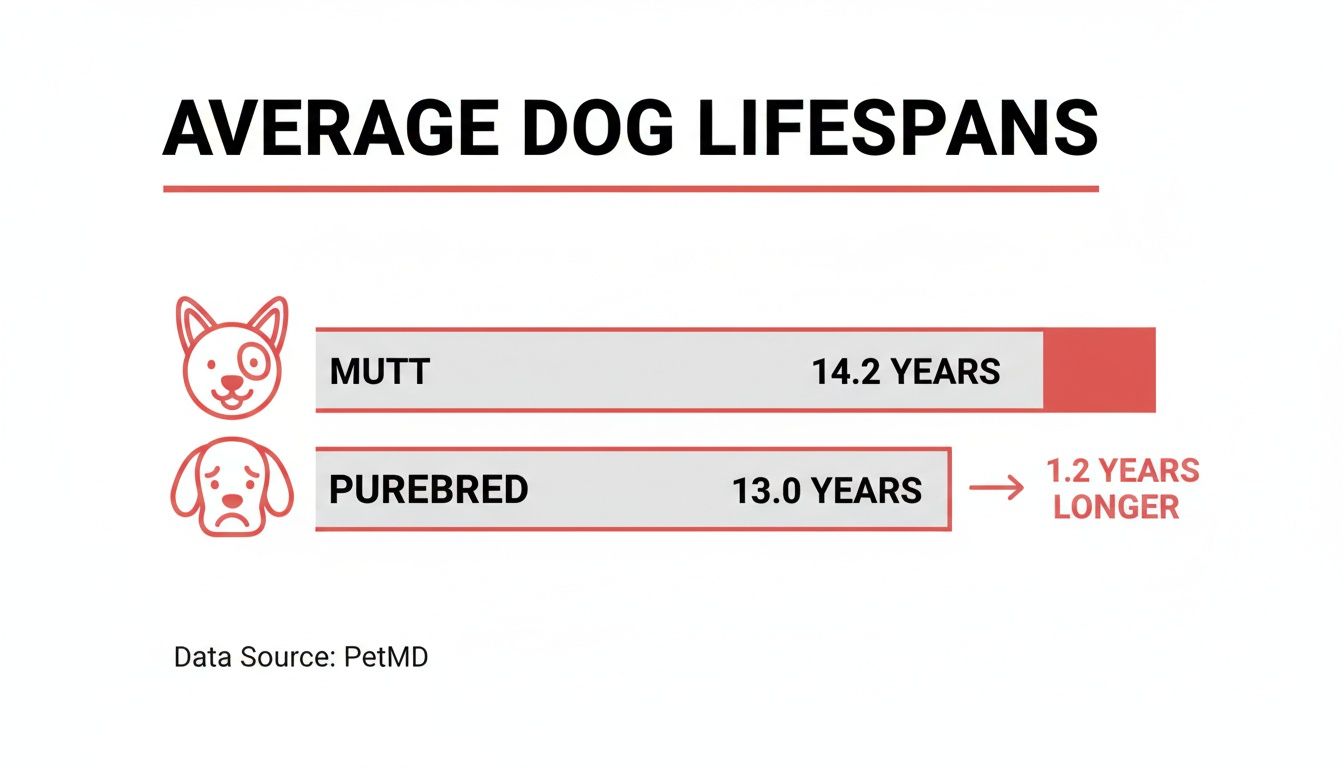
While mutts do tend to live longer overall, this just goes to show how much other factors, especially size, can influence their individual journey.
Size and Lifespan: A Realistic Look
Knowing this helps us set more realistic expectations for our dogs. A massive UK study that looked at over 584,000 dogs drove this point home, finding an average mixed-breed life expectancy of 12.71 years. But when they broke it down by size, giant breeds averaged just 9.76 years while toy breeds hit 12.28 years. You can read the full research on dog longevity if you want to dive into the details.
This doesn't mean your big, lovable mutt is doomed to a short life! It just means we need to be extra proactive with their care, paying close attention to their weight and joint health from day one.
No matter your dog’s size, keeping them at a healthy weight is one of the most powerful things you can do for them. Extra pounds put more stress on their joints, heart, and organs—and that's especially tough on larger dogs who are already prone to these issues. With the right nutrition and exercise, you can help offset these risks and give your best friend the best shot at a long, happy, and vibrant life.
Building a Longer Life Through Daily Habits

While good genes give your mutt a great head start, it's the daily routines you build together that really stack the deck for a long, happy life. Think of their genetic potential like a well-built car. It has the capacity to go far, but it still needs premium fuel, regular maintenance, and a careful driver behind the wheel.
Every choice you make, from the food you pour into their bowl to the games you play in the yard, adds up. These small, consistent actions create a powerful foundation for wellness, turning everyday habits into powerful tools that help your best friend thrive for years to come.
The Three Pillars of Canine Wellness
So, where do you start? The best way to make a real impact is to focus on three core pillars: nutrition, exercise, and proactive care. Nailing these areas gives your dog the absolute best shot at living well beyond the average.
- Balanced Nutrition: The food your dog eats quite literally builds them from the inside out. A diet packed with high-quality protein, healthy fats, vitamins, and minerals fuels everything from their immune system to their joints.
- Consistent Exercise: Movement is medicine. Regular physical activity keeps their heart strong, their muscles lean, and their weight in check, which is one of the most important things you can do to prevent a whole host of diseases.
- Proactive Vet Care: Think of regular check-ups as your early warning system. They help your vet catch small issues before they snowball into major, life-shortening problems.
When these three pillars are in sync, they work together to create a powerful effect, supporting your dog's total health in a way no single pillar could alone.
From Diet to Dental Health
Let's get practical. When it comes to nutrition, it’s about choosing a food that fits their age, size, and energy level. Just as importantly, it's about portion control. Preventing obesity is a game-changer for how long mutts live.
And exercise? It's more than just a quick walk. You also have to exercise their mind. Puzzle toys, training games, and a good old-fashioned game of fetch keep their brain sharp, helping to stave off cognitive decline as they get older.
Proactive care also means looking after their teeth. It's easy to overlook, but poor oral health is directly linked to heart, kidney, and liver disease. A simple daily tooth brushing routine or even a good dental chew can make a huge difference.
By weaving these simple habits into your daily life, you’re doing more than just caring for a pet. You’re becoming their most important health advocate, turning small, consistent efforts into extra years of tail wags and happy memories.
How Advanced Nutrition Can Support Your Mutt's Health
A balanced diet is absolutely the foundation of your mutt’s health, but advanced nutrition is where you can get proactive and build a stronger base for a longer, happier life.
Think of it this way: their daily kibble is the fuel that keeps the engine running. Targeted supplements, on the other hand, are like specialized treatments that protect critical systems, boost performance, and prevent long-term wear and tear.
This isn't just about meeting their basic needs. It’s about strategically supporting the very systems that control longevity. We’re talking about using specific, high-quality ingredients to target key areas like gut health, immunity, and even their mood, helping them build a body that’s more resilient to the stresses of aging.
By adding a carefully formulated supplement, you can fill nutritional gaps that even the best dog foods might miss. It’s a simple addition to their routine that can provide a concentrated dose of wellness from the inside out.
Supercharging Their System from Within
The real magic behind effective nutritional support is using ingredients that work together. A team of specialists can solve a complex problem far better than one person working alone, right? It’s the same idea here—a smart blend of superfoods and nutrients can support your dog’s entire body in a way that single ingredients just can't.
This is where a daily wellness chew like FORMA can make a real difference. It’s designed to provide comprehensive support by focusing on three essential pillars of health:
- Gut Health: With ingredients like pumpkin and probiotics, it helps maintain a healthy microbiome. A healthy gut is mission control for their immune system and nutrient absorption.
- Immune Support: A solid dose of antioxidants and vitamins helps their body fend off environmental stressors and stay strong.
- Calmness and Stress Management: Natural compounds can help ease anxiety, which contributes to a more balanced and happy state of mind.
A well-supported body is simply better equipped to handle the challenges that come with age. Proactive nutritional care isn’t about fixing problems—it’s about building a foundation of health so those problems are less likely to occur in the first place.
Simplifying Wellness for a Longer Life
Let's be honest, one of the biggest hurdles for any dog owner is complexity. Juggling a handful of different supplements can get confusing and expensive fast. A single, all-in-one chew streamlines the entire process, ensuring your mutt gets consistent, science-backed support every single day without any extra hassle.
This simple routine is one of the most powerful ways you can influence their lifespan. You’re not just feeding them; you are actively investing in their future. By choosing a supplement with human-grade ingredients, you’re giving them the same quality of care you’d want for any family member, helping them feel their best for as many years as possible.
How to Estimate Your Own Mutt's Lifespan

It’s one thing to talk about averages, but what about your dog? Bringing these concepts home and applying them to your own best friend is what really matters. While nobody has a crystal ball, you can get a pretty good sense of their potential by taking an honest look at the biggest factors in their life.
This isn’t about calculating a final number. Think of it more as a check-in—a powerful way to see what you're already doing right and spot the opportunities that could add more healthy, happy years to your time together.
Let's walk through how to create a personalized scorecard for your dog's health.
Your Mutt's Longevity Scorecard
This simple tool helps you evaluate your dog's lifestyle from a longevity perspective. It’s a practical checklist to see which habits are setting them up for a long, vibrant life and which areas might need a little extra attention. Just be honest with yourself to get a clear picture.
Once you've filled this out, you'll have a much clearer idea of where to focus your efforts.
The point of this scorecard isn't to get a perfect grade. It's about building awareness. Simply recognizing that dental care could be better, for example, is the first step toward taking action that directly supports their long-term health.
Turning Insights into Action
With your scorecard complete, you now have a personalized road map.
If you rated their diet as "average," maybe it’s time to research a better quality food. Or you could introduce a powerful supplement like FORMA to help bridge any nutritional gaps and give them an extra edge.
Did their exercise routine get a "Needs Improvement"? You can set a simple, achievable goal, like adding one extra 15-minute walk or play session to your day.
Every small, positive change you make adds up over a lifetime. By focusing on these core areas, you move from passively wondering "how long do mutts live?" to actively shaping the answer for your own amazing dog. You are their biggest health advocate, and these daily choices are your most powerful tools.
Your Role in Your Mutt's Long and Happy Life
Genetics can give a mixed-breed dog a great head start, but what truly shapes their lifespan isn’t just in their DNA—it’s in your hands. While mutts often have a natural leg up in the health department, you are their biggest advantage when it comes to turning that potential into more happy, healthy years.
Think of it as a partnership. Their genetic makeup is the foundation, but the choices you make every single day are what build the house. The food you choose, the walks you take, and the vet visits you schedule all directly add up, influencing how long and how well your best friend lives.
Making Every Day Count
You don't have to be a pet health guru to have a massive impact. It’s the simple, consistent things that make all the difference. We’ve covered the big ones, but they’re worth repeating because they are the cornerstones of a long life.
- Thoughtful Nutrition: Giving them high-quality food and the right supplements, like FORMA, isn't just about filling their bowl. It’s about giving their body the specific building blocks it needs to repair, defend, and thrive.
- Active Living: This is more than just a walk around the block. Consistent exercise keeps their joints moving and their heart strong, while mental puzzles and playtime keep their brain sharp. It's about a healthy body and a healthy mind.
- Preventative Vet Care: Think of regular check-ups and dental cleanings as your early-detection system. They help you catch small problems long before they can turn into big, life-limiting ones.
Ultimately, your dog’s health is a story you write together, day by day. Your care, your attention, and your love are the most powerful ingredients there are.
That bond you share is what takes good genetics and turns them into a great, long life. When you champion their health, you give them the best possible shot at sticking around long past the averages. Every meal, every game of fetch, every belly rub is a small investment in a longer, happier journey together.
Got More Questions About Your Mutt's Lifespan?
We’ve gone through a lot, but I bet you still have a few questions rattling around. It’s only natural. When it comes to our dogs, we want all the answers we can get.
Let's tackle some of the most common questions I hear from other dog owners to help clear things up.
Do Male or Female Mutts Live Longer?
Generally speaking, female dogs do seem to have a slight edge, often living about six months to a year longer than males.
Why is that? Well, the science isn't completely settled, but spaying a female dog provides some major health boosts. It dramatically reduces her risk for mammary cancer and completely prevents pyometra, a nasty and often fatal uterine infection. Neutering male dogs is also great for their health, but the direct impact on lifespan seems a bit more pronounced in females.
The most important takeaway here is that spaying or neutering your dog, regardless of their sex, is one of the best things you can do for their long-term health. It's a game-changer.
Ultimately, this small gender gap is nothing compared to the big-ticket items like your dog's size, diet, and daily exercise.
Does the Specific Breed Mix Actually Matter?
Oh, absolutely. The cocktail of breeds that makes up your mutt can definitely influence their lifespan. If your dog has a lot of Chihuahua or Poodle in their family tree—breeds known for sticking around for a long time—they might have inherited some of that staying power.
On the flip side, a mutt mixed with breeds prone to specific health problems, like Bernese Mountain Dogs and cancer, might have a higher genetic risk for those issues.
But here’s the good news: that wonderful thing called hybrid vigor often steps in to dilute the genetic risks from any single breed. Getting a dog DNA test can be a really fun and insightful way to understand your mutt's background, helping you stay one step ahead of any potential health concerns.
Could a Vegan Diet Help My Mutt Live Longer?
This is a really hot topic, and the truth is, it’s complicated. It's possible for a dog to be healthy on a plant-based diet, but it’s incredibly difficult to get right. You have to be meticulous about providing all the essential nutrients, especially amino acids like taurine and L-carnitine, which are critical for a healthy heart.
While some people have seen great results, vets have also seen tragic cases where poorly managed vegan diets have led to severe health problems, including fatal heart conditions. This isn't a decision to take lightly, and you should never attempt it without the guidance of a board-certified veterinary nutritionist.
For the vast majority of dogs, a high-quality, balanced diet that includes animal protein is the safest and most reliable way to give them everything they need to live a long, happy life.

Karolis is the Founder of FORMA, a pet wellness brand focused on longevity and daily nutrition for dogs. Writes about supplements, canine health, and helping pets live longer, healthier lives
Join thousands of pet parents getting science-backed health insights and natural care advice