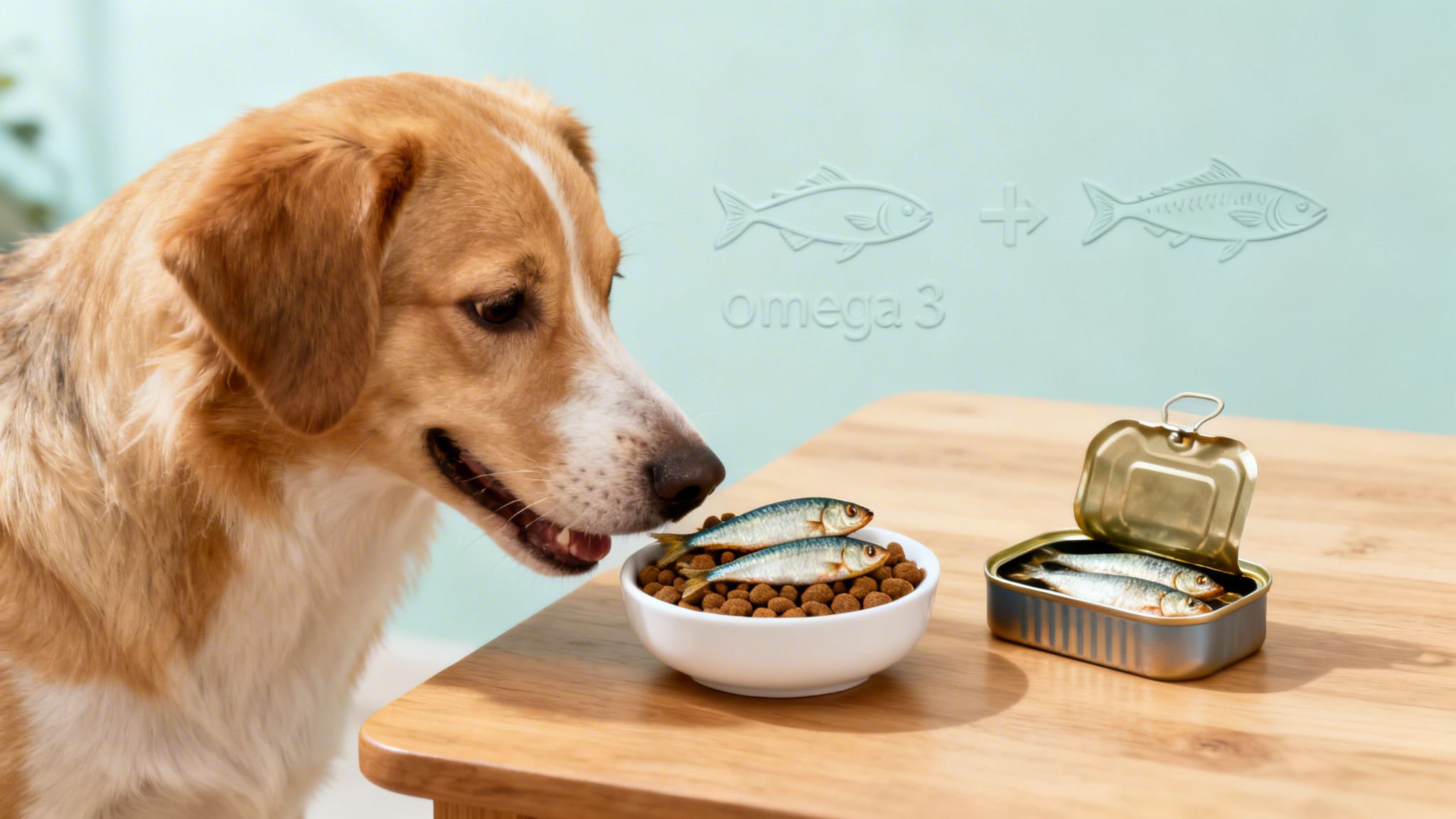
How to Calm Dog Anxiety Naturally Without Medication
Discover how to calm dog anxiety naturally with expert advice on environment, behavior, and nutrition. Find simple, effective ways to soothe your anxious dog.
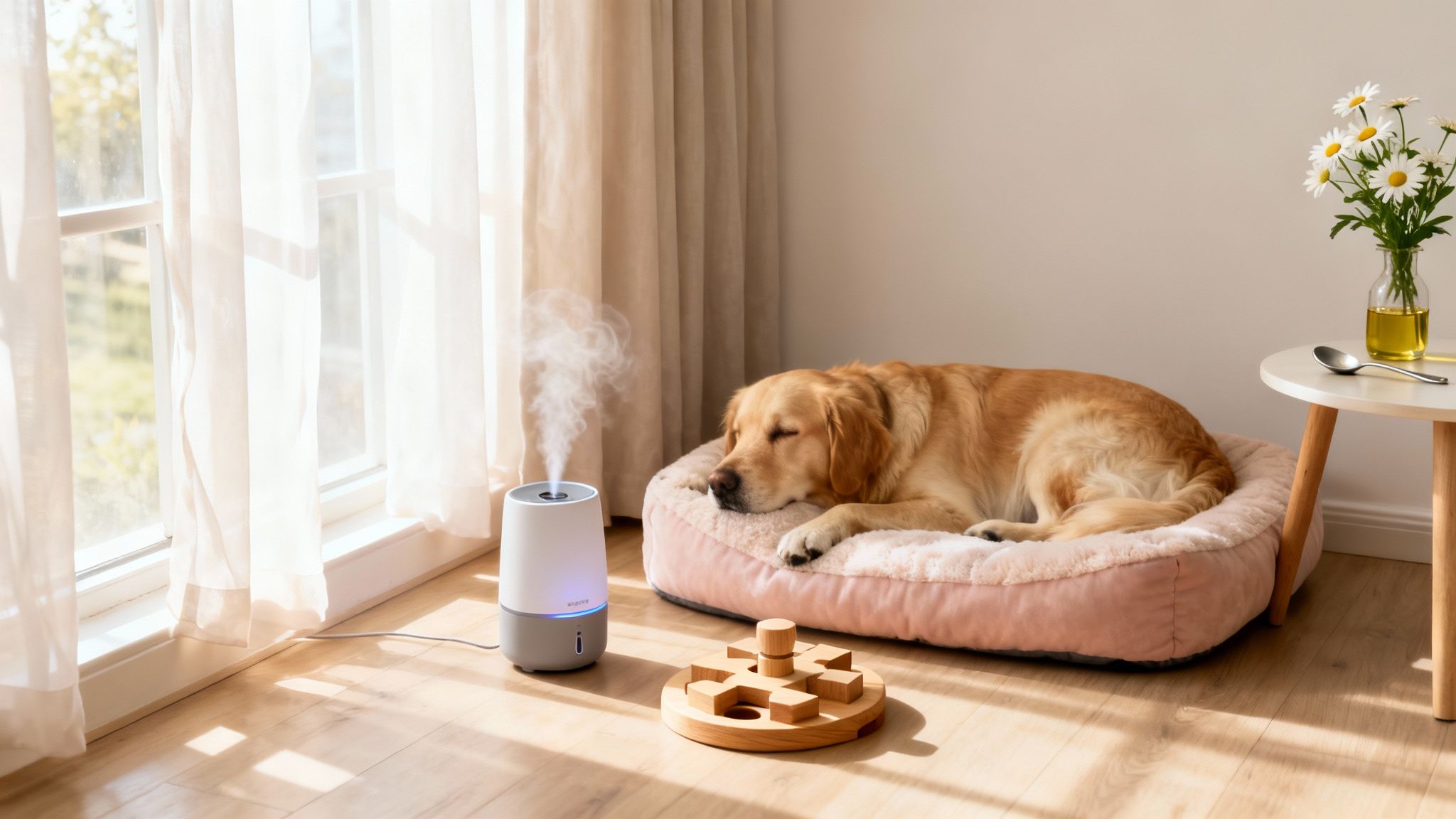
The first step to naturally calming your dog’s anxiety is learning to understand what they’re trying to tell you. It’s about more than just managing behavior; it involves creating a predictable environment, building their confidence through training, and making them feel safe. The best approach is always a combination of a secure home life, mental enrichment, and nutritional support that gets to the root of their fear.
Learning to Read Your Dog's Anxiety Signals
Before you can help your dog, you have to learn to speak their language. Anxious behaviors aren't always dramatic like chewing up the couch or barking nonstop. Often, the first signs are incredibly quiet and easy to miss if you aren't looking for them.
When you can spot these subtle cues, you can step in before their stress boils over. That’s the real secret to calming your dog naturally—providing comfort right when they need it most.
Beyond the Obvious Signs
Most of us know the big signs of fear, like a dog trembling during a thunderstorm. But anxiety usually whispers long before it ever shouts. Keep an eye out for these less obvious signals that your dog is feeling uneasy:
- Persistent Lip Licking: If there’s no food around, constant lip licking is a classic sign of discomfort.
- Frequent Yawning: A yawn when they aren't tired is often a dog's way of dealing with nervousness.
- Whale Eye: This is when a dog shows the whites of their eyes. They might turn their head away from something but keep their eyes locked on it.
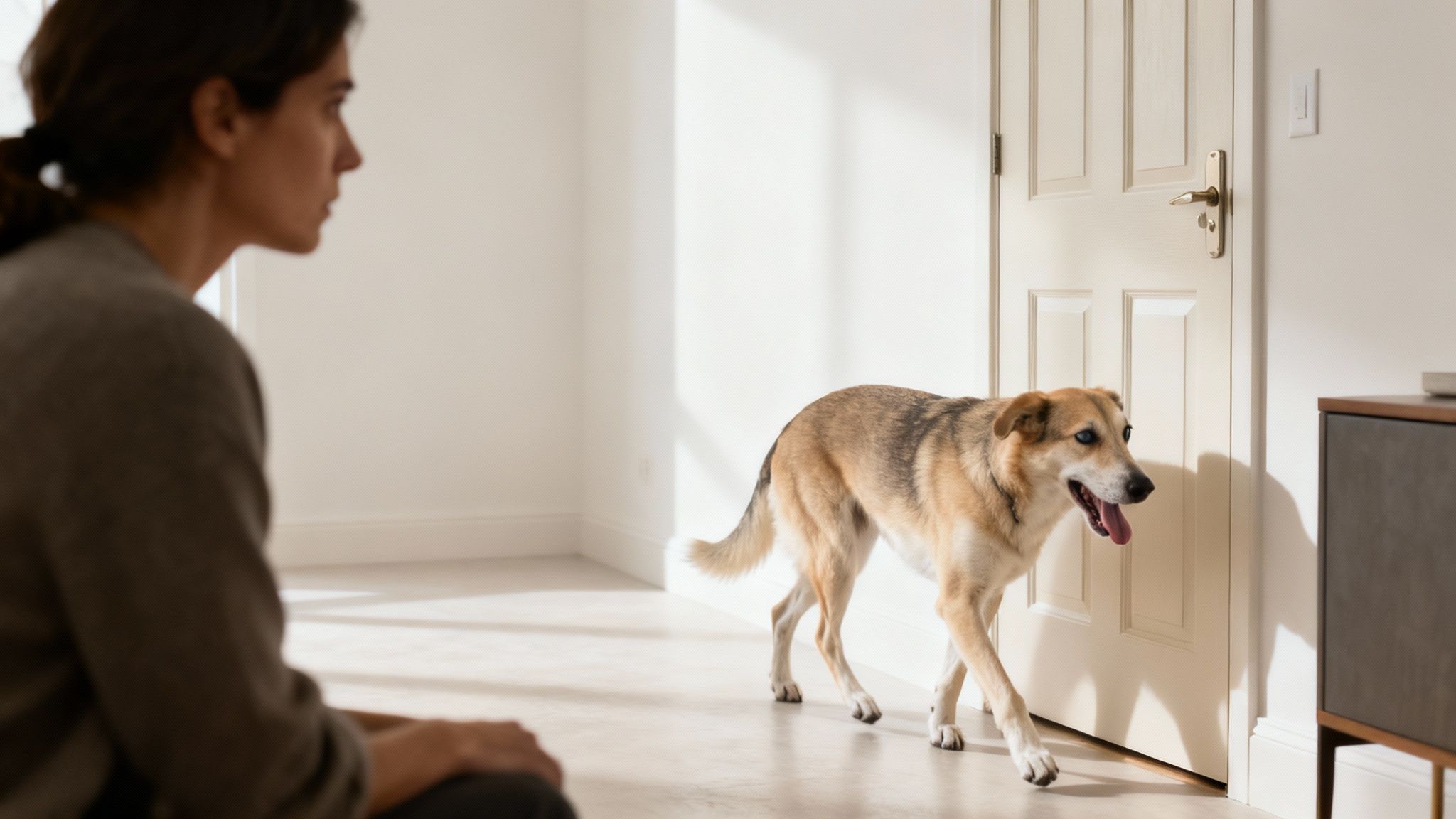
- Pacing or Restlessness: If your dog just can't seem to settle down, something is bothering them. I once had a dog who would pace by the door for ages, and I initially just thought he needed to go out. Turns out, it was his tell-tale sign of stress.
Understanding these silent signals transforms you from a confused owner into a supportive advocate for your dog's well-being. It’s about catching the small flickers of worry before they become a wildfire of panic.
This is a bigger issue than many people think. Recent studies have found that nearly 49.9% of dogs in the U.S. show moderate-to-severe anxiety, making it a major concern for owners. With 72% of pet caregivers worried about their pet's stress levels, it's no surprise there's a huge demand for practical, non-medical solutions. You can read more about these findings on canine anxiety and owner preferences to get the full picture.
This is exactly why recognizing those early triggers—whether it's a new person at the door or the faint sound of fireworks—is the key to providing immediate, natural comfort.
Building a Predictable and Calming Home Environment
Just like people, dogs get a lot of comfort from knowing what’s coming next. When their world is unpredictable, they can feel like they're constantly on high alert. But a stable, predictable home? That's one of the most powerful natural tools you have for calming an anxious dog. The goal is to make their environment feel safe and dependable, which brings their overall stress level way down.
This isn’t about turning your house into a library or never having friends over. It’s about creating pockets of predictability that your dog can count on. These small, consistent efforts build a huge foundation of security, helping them feel more at ease in their own skin.
Establish a Dependable Daily Routine
A consistent schedule is one of the best things you can do for an anxious dog. When they know when to expect meals, walks, and playtime, it takes a massive amount of "what if?" out of their day. A dog who isn't worried about when they'll eat or go outside is a much calmer dog.
Try to anchor their day with a few key activities at roughly the same time:
- Morning Ritual: Wake up, potty break, breakfast. Keep the order the same every single day.
- Exercise Times: A walk or play session in the morning and another in the evening provides a reliable outlet for their energy.
- Feeding Schedule: Two set mealtimes are much better for their nerves (and digestion) than leaving food out all day.
- Bedtime: A clear signal that the day is winding down helps them settle for the night.
This structure gives their day a comforting rhythm. For dogs who struggle with separation anxiety or are just generally a bit jumpy, this kind of predictability is a game-changer.
Create a Dedicated Safe Zone
Every dog deserves a personal retreat—a spot that is 100% theirs, where they know they can go and nothing bad will ever happen. This is never a place for time-outs. It's a sanctuary they can choose to go to when they feel overwhelmed, giving them a much-needed sense of control.
A crate with a cozy bed and the door always open works great. So does a quiet corner in the living room with their favorite blanket. To make it extra special, you can randomly leave a fantastic chew toy in there for them to discover. The most important rule is that this space is always respected. No one, especially kids, should ever bother the dog when they're in their spot.
Think of this safe zone as your dog's personal decompression chamber. It's where the world goes quiet and they can reset without being bothered. This simple concept is a cornerstone of managing anxiety.
Use Sensory Tools to Soothe the Nerves
Beyond just routine, you can use your dog’s powerful senses to create a calmer atmosphere. Certain sounds and smells can have a real, noticeable effect on their mood, helping to dial down their stress during tough times like thunderstorms or when you have company over.
Here are a couple of easy things to try:
- Calming Pheromone Diffusers: These plug-ins release a synthetic copy of the pheromone a mother dog produces to calm her puppies. It's odorless to us but can be very reassuring for them.
- Soothing Music or White Noise: Studies have actually shown that certain types of classical music can reduce stress in dogs. Playing some calming tunes or a white noise machine can help drown out scary noises from outside.
By making these simple tweaks, you transform your home from just a place they live into a true haven that actively supports their emotional well-being.
Using Behavior and Enrichment to Build Confidence
A predictable routine is a great start for a nervous dog, but it's only one piece of the puzzle. To really help your dog move past their fears, you have to actively show them a better way to react to whatever sets them off. This is where we can use behavior modification and mental enrichment to do more than just manage anxiety—we can build real, lasting confidence.
The idea is to gently change how they feel, moving them from a place of fear and uncertainty to a state of curiosity, or even excitement. It’s about empowering your dog so they feel more in control of their world.
Reshaping Emotional Responses
Two of the best tools we have for this are desensitization and counter-conditioning. They might sound a bit clinical, but the concepts are actually quite simple and incredibly effective if you have a little patience. You just slowly introduce your dog to a less intense version of their trigger and pair it with something they absolutely love.
Let's walk through a common scenario: a dog who's terrified of car rides.
- Start small. Don't even think about turning the key. Just walk with your dog on a leash near the parked car. The moment they glance at it without panicking, give them an amazing treat (like a tiny piece of chicken) and some praise. Then turn around and walk away. Keep it short and sweet.
- Get a little closer. Over the next few sessions, gradually close the distance. Reward them for sniffing the car door or just standing calmly next to it. The goal here is to stay "under threshold"—that means keeping the intensity low enough that they don't get anxious. If you see signs of stress, you've moved too fast.
- Introduce the inside. Once they're relaxed outside the car, open a door and toss a high-value treat inside. Let them decide if they want to hop in for it. Never force them.
- Take short, happy trips. Eventually, you can work up to turning the engine on for just a second, then backing out of the driveway, and finally, taking a super short drive to somewhere fun, like the park down the street.
This whole process literally rewires their brain. Instead of the car meaning "scary vet trip," it starts to mean "chicken and the park!" This infographic breaks down some of the environmental factors you can control to make this kind of training even more successful.

When you combine a predictable routine, a safe zone, and the right sensory tools, you create a stable foundation that makes all your behavioral work so much more effective.
The Power of a Busy Brain
An anxious mind often has way too much free time to dwell on scary things. That’s where mental enrichment comes into play. It’s not just about keeping your dog occupied; it’s about giving them a productive outlet for their energy and a chance to solve problems, which is a huge confidence booster.
A bored dog is very often an anxious dog. Giving their brain a job to do channels that nervous energy into something focused and satisfying.
- Puzzle Feeders: Ditch the plain old food bowl. Making your dog work for their meals with puzzle toys or snuffle mats taps into their natural foraging instincts and can be incredibly calming.
- Scent Work Games: Hide some smelly treats around a room and encourage your dog to "find it." Using their nose is a fantastic, low-impact mental workout that can leave them feeling accomplished and tired.
- Fun Training Sessions: Teach them a new trick, even if it's something silly like "spin" or "high five." Short, positive training sessions not only strengthen your bond but also show them that learning new things is fun, not stressful.
Enrichment isn't just a distraction; it's a form of canine therapy. It teaches your dog how to solve problems, builds focus, and proves to them that they are capable and smart, which directly combats the feelings of helplessness that often fuel anxiety.
To help you decide where to start, here's a quick comparison of some of the natural solutions we've discussed.
Natural Anxiety Solutions Comparison
Each dog is an individual, so what works wonders for one might not be the right fit for another. The key is to observe your dog and find what helps them feel the most capable and secure.
And these aren't just feel-good ideas; they're backed by science. Studies have shown that consistent enrichment and structured exercise can lead to a 25%–50% reduction in problem behaviors like pacing and destructive chewing within just a few months. You can learn more about research on canine behavior problems and see for yourself how effective these natural approaches can be.
Fueling a Calm Mind: The Impact of Diet and Supplements
While creating a safe space and working on confidence-building exercises are huge, they only tell part of the story. What goes into your dog’s food bowl has a direct, powerful impact on their mood, brain function, and ability to cope with stress.
It’s easy to overlook, but this connection between their gut and their brain is often the missing piece of the puzzle when you're trying to help an anxious dog.
Think about it this way: a diet packed with junk food can leave us feeling sluggish, irritable, and on edge. It’s no different for our dogs. A kibble loaded with low-quality ingredients, artificial additives, and starchy fillers can trigger low-grade inflammation. This isn't just about skin issues or joint pain; that inflammation directly affects their nervous system, making them more reactive and prone to anxiety.
Your Dog’s Gut-Brain Connection
There's a constant, two-way conversation happening between your dog’s digestive system and their brain. Scientists call this the gut-brain axis. A healthy gut, teeming with good bacteria, sends calming, feel-good signals up to the brain. An out-of-whack gut, on the other hand, can fire off stress signals, essentially putting their whole nervous system on high alert.
The most important first step you can take is to build their diet around high-quality, whole foods. By getting rid of potential irritants and fueling their brain with the nutrients it needs to thrive, you're laying the groundwork for a more stable, resilient dog. For some dogs with mild anxiety, this simple swap can be enough to take the edge off.
Adding Natural Supplements for Extra Support
Once you have a solid dietary foundation, certain natural supplements can provide targeted support to help soothe the nervous system. These aren't sedatives; they work by gently encouraging the production of calming brain chemicals or by helping the body regulate its own stress response.
Here are a few of the most effective, science-backed ingredients I often recommend:
- L-theanine: This is a fascinating amino acid, naturally found in green tea. It helps boost levels of calming neurotransmitters like GABA and dopamine but without making your dog drowsy. It’s fantastic for encouraging a state of "relaxed alertness."
- Chamomile: It’s not just for sleepy-time tea! This gentle herb has been used for centuries for its calming effects. It contains compounds that can bind to the same brain receptors as some anti-anxiety medications, helping to ease nervousness.
- Omega-3 Fatty Acids: Sourced from things like fish oil, these healthy fats are absolutely critical for brain health. They play a key role in reducing inflammation and supporting healthy nerve function, which is essential for emotional balance.
Think of these supplements as the support crew for your dog's nervous system. A good diet is the manager running the show, but these ingredients provide the specialized help needed to keep everything running smoothly, especially when things get stressful.
An All-In-One Solution to Keep It Simple
Let's be honest, trying to source several different high-quality supplements and figure out the correct dosages can feel like a full-time job. This is where a well-made superfood chew can be a game-changer. It takes the guesswork out of the equation, making sure your dog gets a consistent, effective dose of these key calming nutrients every single day.
For instance, our FORMA superfood chew was created to provide exactly this kind of all-in-one support. We combined human-grade, calming ingredients like L-theanine and chamomile with other powerful nutrients that boost everything from gut health to immunity.
This approach means you're not just putting a band-aid on anxiety symptoms. You're building a stronger, more resilient foundation for your dog's long-term emotional well-being. Giving them that consistent nutritional backup is one of the easiest and most effective ways to help your dog find their inner calm.
Mindful Exercise for a Less Anxious Dog
We all know physical activity is great for burning off a dog's anxious energy, but here’s something many owners miss: not all exercise is created equal. It's easy to think that a tired dog is a calm dog, but that's not always the case.
Sometimes, high-intensity activities can actually wind an anxious dog up even more. They might be physically wiped out, but their brain is still buzzing. The real goal isn't just to drain their battery; it's to find an outlet that genuinely soothes their nervous system. Learning this difference is a huge step in figuring out how to calm dog anxiety naturally.
From Frantic Fetch to Mindful Movement
Take a classic game of fetch. For the right dog, it's great. But for an anxious one, that constant, high-speed cycle of chasing, grabbing, and returning can spike adrenaline and cortisol—the very stress hormones we’re trying to lower. It can end up mirroring the frantic energy of anxiety, leaving them in a heightened state long after the ball is put away.
A much better approach is to focus on activities that engage their brain in a calm, focused way. The trick is to swap those high-arousal, repetitive motions for enriching experiences that let them just be dogs.
Embrace the Power of the "Sniffari"
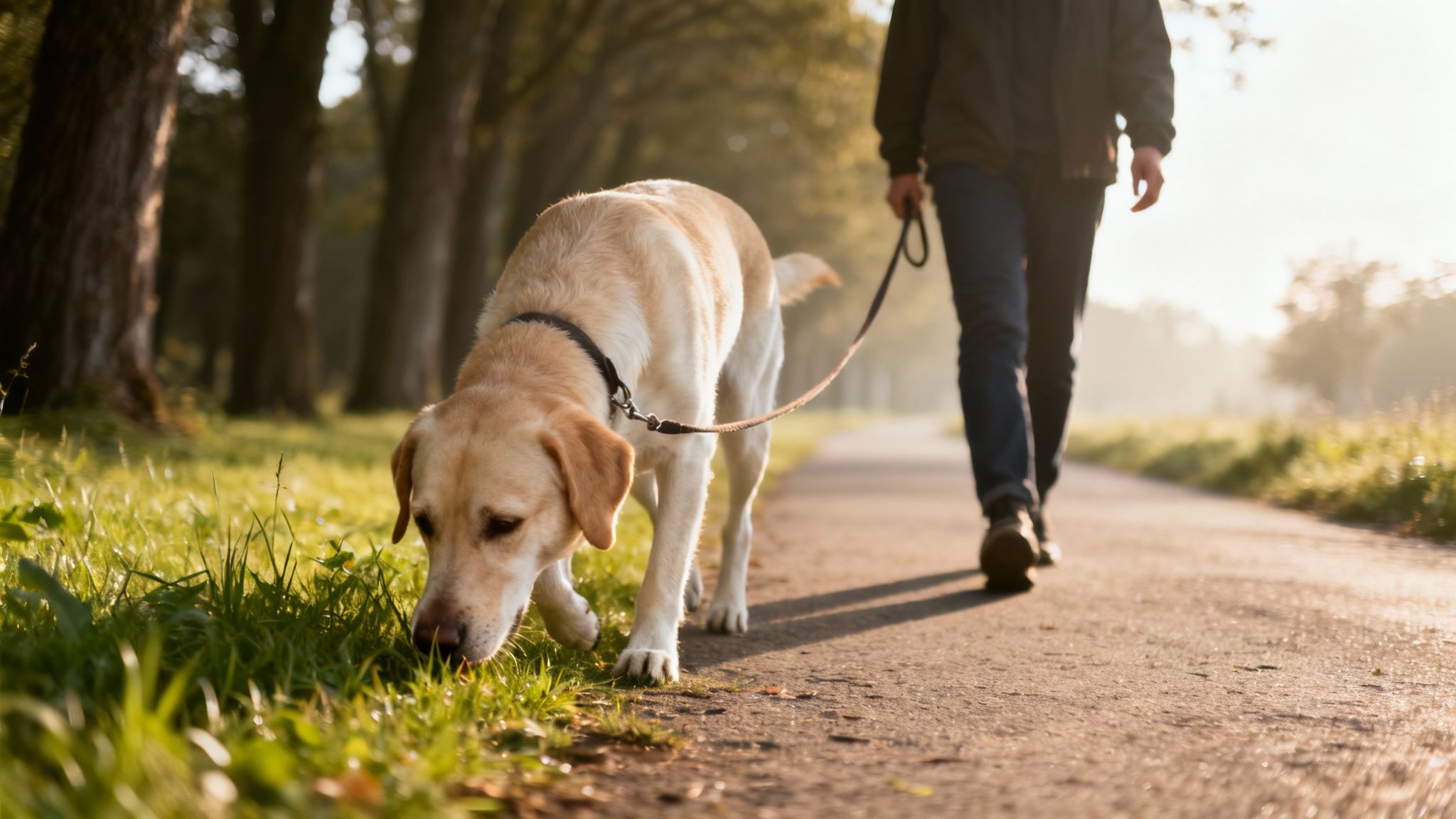
One of the absolute best calming exercises I recommend is the “sniffari.” It’s simple: a walk where your dog is completely in charge of the pace and direction. Forget about distance or speed; the entire point is to let them stop and sniff everything.
A dog’s nose is their superpower. Letting them use it to decode the world is incredibly stimulating mentally and a natural de-stresser.
Here’s how to do it right:
- Get a long lead. A 10- or 15-foot leash gives them the freedom to explore without yanking your arm off.
- Let them lead the way. Seriously. Follow where their nose takes them, even if you stand in one spot for five minutes while they investigate a single blade of grass.
- You need to relax, too. Your calm energy travels right down the leash. Just hang back and enjoy watching them be in their element.
A 20-minute sniffari can be more mentally tiring and calming for an anxious dog than a 40-minute power walk. It taps into a deep biological need, allowing their brain to switch from worry mode to focused curiosity.
Post-Walk Rituals for Deeper Calm
What you do after the walk is just as important. Instead of coming inside and letting your dog tear around the house, create a simple ritual to help them transition back to a state of rest.
This is the perfect time to introduce some gentle, calming touch. Simple canine massage techniques work wonders. Try using long, slow strokes along their back and shoulders, paying attention to their body language and avoiding any tense spots.
Another fantastic tool is TTouch, a method of specific, gentle, circular touches designed to calm the nervous system. You can start by making slow, clockwise circles with your fingertips all over their body, using just enough pressure to move the skin.
These simple practices turn exercise into a complete therapeutic cycle: you expend their physical energy, engage their mind, and then guide them back into a peaceful, settled state.
We Get It, You Have Questions
Diving into your dog's anxiety can feel a bit overwhelming, and it's totally normal to have a few questions. As you start trying these natural approaches, you'll likely wonder about how long it all takes, what you can combine, and when it's time to call in the professionals. Let's tackle some of the most common concerns we hear from dog owners.
How Long Until I See a Change?
This is the big question, isn't it? The honest answer is: it depends entirely on your dog. There’s no magic wand here. Some changes, like creating a more predictable routine, might bring small, noticeable improvements within a few weeks. You might see a little less pacing or whining.
When it comes to the real work of behavioral training—like counter-conditioning—you need to play the long game. We're talking months of patient, consistent effort to see lasting results. The same goes for supplements; they generally need four to eight weeks to build up in your dog's system and really start making a difference.
If there's one thing to remember, it's this: consistency is your superpower. Sticking to a plan that layers environmental stability, behavioral support, and good nutrition is what creates real, lasting change for an anxious dog.
Is it Okay to Mix and Match These Strategies?
Yes, please do! In fact, a multi-pronged approach is almost always the most effective way to help an anxious pup. You're essentially building a safety net for them, tackling the problem from all sides.
For instance, you could absolutely do all of these at the same time:
- Lock in a solid daily routine so your dog knows what to expect.
- Introduce puzzle toys to give their brain a workout and boost their confidence.
- Add a daily calming supplement to their breakfast to support their nervous system from the inside out.
The only piece of advice here is to introduce major new things one at a time. If you start a new supplement, a new training protocol, and a new thundershirt all in the same week, you'll never know what's actually moving the needle. Give your dog (and yourself) a chance to adjust.
When Is It Time to Call the Vet?
Natural methods are an incredible starting point, but they aren't always enough for severe cases. You should absolutely book a vet appointment if your dog's anxiety is escalating, or if it's leading to dangerous behaviors like aggression or self-injury (like licking a spot raw).
Your vet is your first line of defense. They can run tests to make sure there isn’t an underlying medical condition, like a thyroid issue or chronic pain, causing the anxious behavior.
If everything checks out medically, they can refer you to a certified veterinary behaviorist. These specialists are the best of the best and can help determine if prescription medication, in combination with your natural efforts, is the right path for giving your dog the best quality of life.

Karolis is the Founder of FORMA, a pet wellness brand focused on longevity and daily nutrition for dogs. Writes about supplements, canine health, and helping pets live longer, healthier lives
Join thousands of pet parents getting science-backed health insights and natural care advice