How to Reduce Dog Separation Anxiety: Quick, Proven Tips
Discover how to reduce dog separation anxiety with simple, proven steps to a calmer pup.
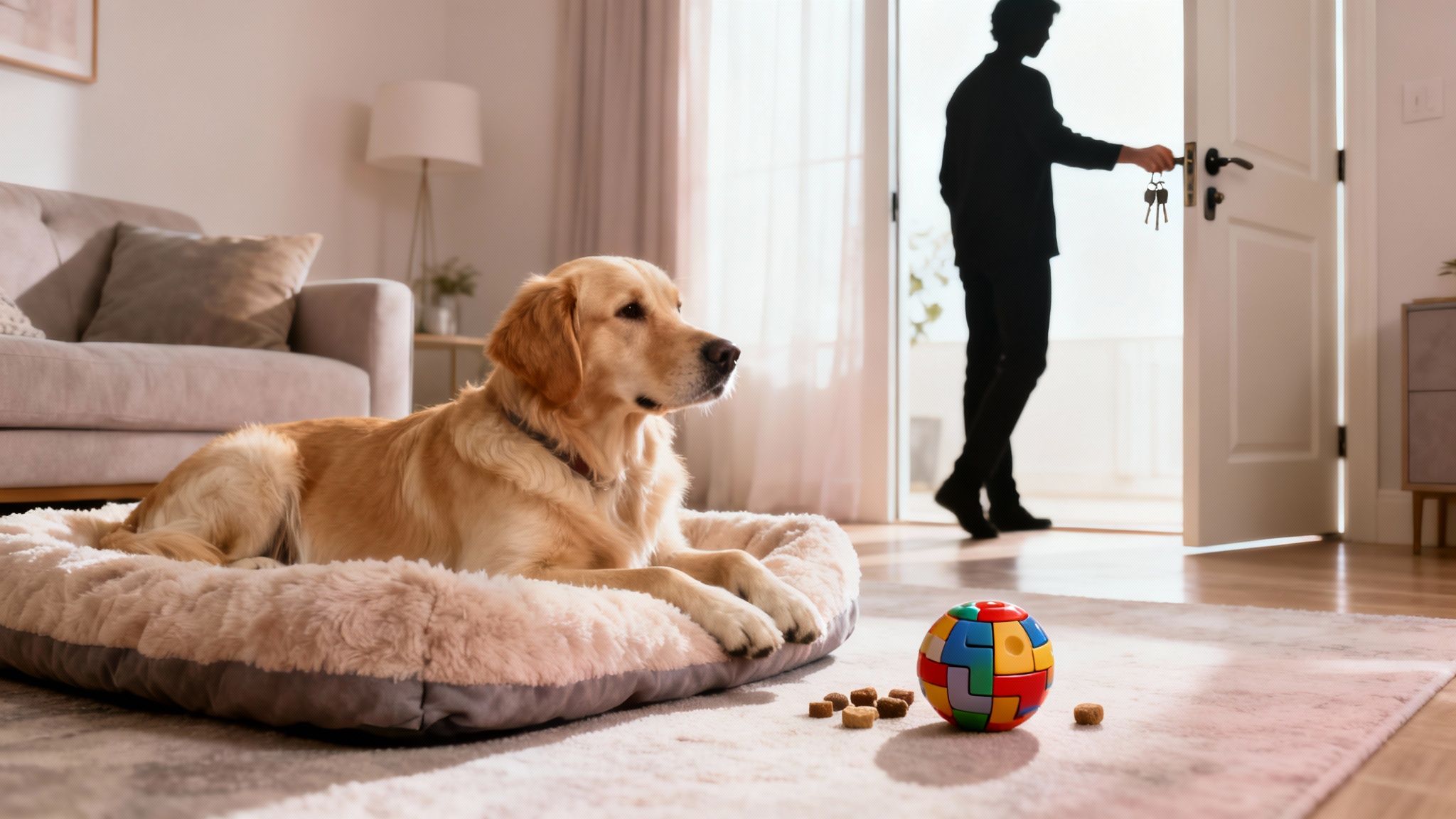
Tackling separation anxiety in dogs is all about patience and a smart approach. It's not a quick fix. Instead, we focus on slowly and surely teaching your dog that being alone is okay—and that you always, always come back. This means using a mix of specific training exercises, creating a calm space for them, and sticking to a predictable routine.
What Separation Anxiety Looks Like in Today's World
Have you ever walked in the door to find your favorite pair of shoes shredded, a puddle on the floor, or a note from a neighbor about nonstop barking? If that sounds familiar, you're definitely not alone. It’s a gut-wrenching experience, and it's a reality for a surprising number of dog owners today.
It's easy to mistake this for a dog just being "bad" or bored, but it's much deeper than that. A bored dog might get into a little mischief. A dog suffering from separation anxiety is experiencing a full-blown panic attack. The destruction, the howling, the frantic scratching at the door—those are desperate cries for help, not acts of defiance. Getting that distinction right is the first real step toward helping them.
A Modern Problem with Deep Roots
So, why does it feel like this is happening more than ever? A lot of it has to do with our changing lifestyles. Think about all the "pandemic puppies" who got used to having their humans around 24/7. They never really had a chance to learn that being by themselves is a normal part of life. For them, solitude isn't just quiet; it's terrifying.
The numbers back this up. A 2025 study from the respected Dog Aging Project found that an incredible 85.9% of dogs in the U.S. show signs of separation and attachment issues. And the trend is only getting worse. Between 2020 and 2022, there was a shocking 760% spike in diagnosed separation-related anxiety. For anyone wanting to dig into the data, you can read the full research about these findings to see just how widespread this has become.
This infographic really puts the scale of the problem into perspective.
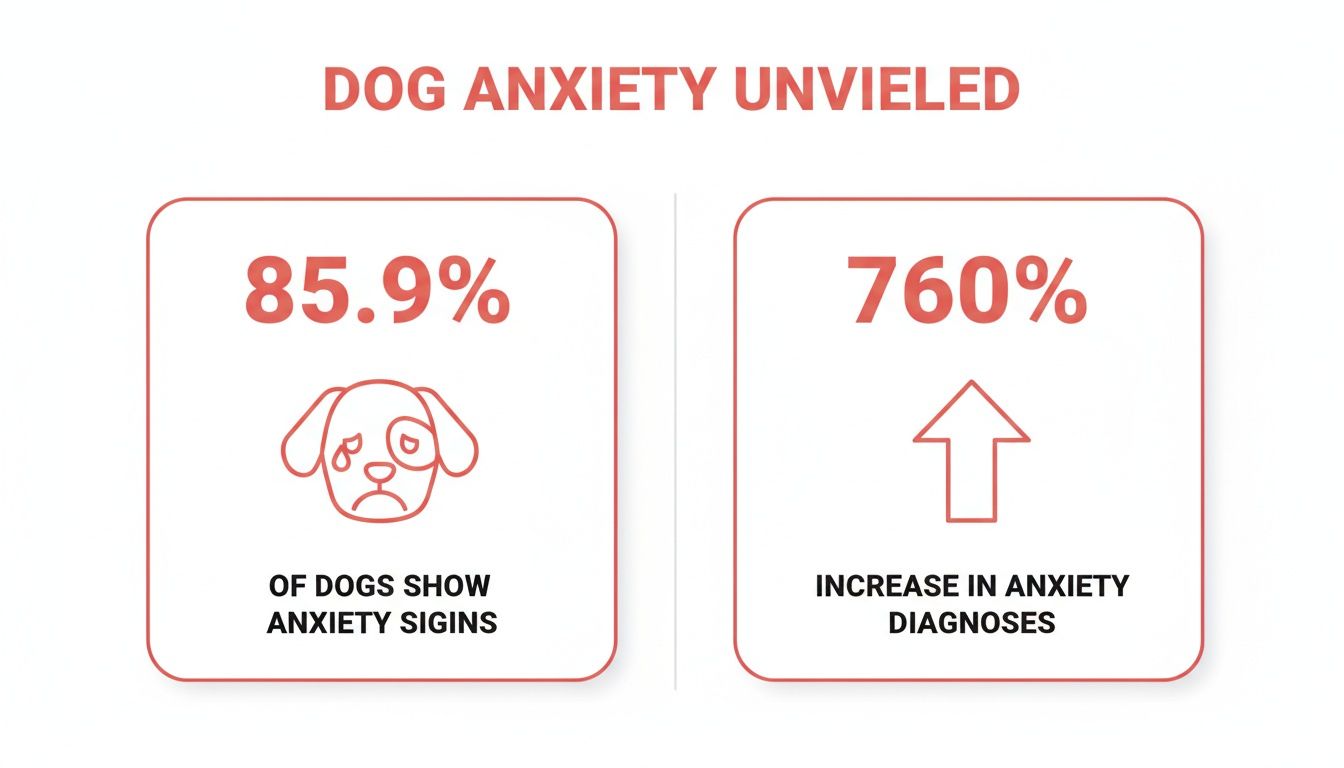
What you're dealing with isn't unique to your dog. It’s a shared struggle for millions.
Identifying True Anxiety vs. Boredom
Before you can fix the problem, you have to know exactly what you're dealing with. Is your dog truly anxious, or just bored and under-stimulated? They can look similar, but the underlying emotions are completely different.
I've put together this quick table to help you spot the differences. Pay attention to when the behavior happens and what your dog is doing.
Quick Guide to Recognizing Separation Anxiety Symptoms
Looking at these signs should give you a much clearer picture. A bored dog needs more puzzles and a good run, but an anxious dog needs a completely different kind of support to feel safe and secure.
Key Takeaway: Separation anxiety is an emotional disorder, not a behavioral one. Your dog isn't trying to punish you for leaving. They are genuinely terrified and feel unsafe when you're gone.
Once you can see the world through their anxious eyes, you can start building a plan that addresses their fear. Empathy is your most powerful tool. From here, we can start putting practical, step-by-step solutions into place.
Building a Foundation of Calm with Routine and Enrichment
Predictability is one of the most powerful tools we have against anxiety. For dogs, a consistent routine is like a security blanket—it tells them what to expect from their day and removes the scary uncertainty that so often fuels their fear. When your dog trusts that their needs for food, exercise, and fun will be met, they can finally relax.
This isn't about a rigid, to-the-minute schedule. It's more about creating a reliable rhythm. A tired and mentally satisfied dog is simply far less likely to panic when you walk out the door. Our goal here is to create a content dog, not just an exhausted one.
Energize the Body to Calm the Mind
Physical activity is absolutely essential for tackling separation anxiety. It’s a direct way to burn off all that nervous energy and get those feel-good endorphins flowing. For anyone looking for a natural approach, exercise and mental stimulation are true game-changers.
You should aim for at least 30-60 minutes of daily aerobic activity—think brisk walks, a good game of fetch, or a run in the park. In fact, research shows that physically fit dogs often have 20-30% lower anxiety rates because those endorphins do such a great job calming the nervous system. If you're interested in the data, you can learn more about these pet anxiety findings and see how other owners are handling it.
But remember, not all exercise is created equal. A leisurely sniff-walk is fantastic for mental health, but a power walk or a solid game of fetch is what really releases that pent-up energy before you need to leave.
- Morning Walk: A brisk 20–30-minute walk before you head out can set a calm, positive tone for the entire day.
- Fetch or Frisbee: Just ten minutes of high-intensity fetch can do more to tire a dog out than a 30-minute casual stroll. It really makes a difference.
- Scent Work: Try hiding some high-value treats around the yard and letting your dog "hunt" for them. This is a fantastic way to engage both their body and their brain.
Pro Tip: I always recommend giving your dog a cool-down period of at least 20-30 minutes after a big workout and before you leave. This lets their adrenaline levels come back down to normal, so you aren't leaving them in a hyper-aroused state.
Engage the Brain with Meaningful Work
Once you've tired out their body, it's time to work their mind. Mental stimulation is just as crucial as physical exercise. It prevents boredom, builds confidence, and gives your dog a "job" to do, which satisfies their natural instincts to problem-solve and work.
This is where enrichment tools become your best friend. Even a simple puzzle toy can turn a boring mealtime into an engaging challenge that keeps their brain humming.
- Puzzle Feeders: Ditch the bowl and feed your dog their meals from a puzzle toy. This makes them work for their food and can easily keep them occupied for 15-20 minutes.
- Snuffle Mats: These are fabric mats where you can hide kibble or treats, encouraging your dog to use their incredible sense of smell to forage.
- DIY Games: You don’t need to break the bank. Hiding treats under some plastic cups or inside a rolled-up towel provides excellent mental work with things you already have at home.
When you combine these physical and mental activities, you create a powerful one-two punch against anxiety. You're fulfilling your dog's core needs, leaving them feeling satisfied and ready for a nice long nap. Suddenly, your absence feels less like a crisis and more like a welcome chance to rest.
Mastering Calm Departures and Happy Returns
The few minutes before you leave and the moments after you walk back in the door are ground zero for a dog with separation anxiety. These windows are incredibly emotionally charged, and how you handle them can either fuel your dog's panic or show them there's nothing to fear. It's a common mistake, born from love, to create a big, emotional scene. We've all done it.
Think about it from their point of view. A long, drawn-out goodbye with lots of "I'll miss you!" and extra cuddles feels like a dramatic countdown to something awful. On the flip side, an over-the-top, excited greeting when you get home only confirms their suspicion: your reunion is a massive, frantic relief from the terrible thing that just happened.
The secret is to turn these high-drama moments into a total non-event.
The Power of Being Boring
This is probably the single hardest piece of advice for loving dog owners to follow, but it's also one of the most powerful. You need to make your comings and goings as uneventful as possible.
- The Pre-Departure Chill: For about 10-15 minutes before you leave, just be cool. Go about your routine without giving your dog extra attention. No frantic petting, no baby talk, not even much eye contact. Just let them exist in a calm space.
- The Low-Key Return: When you walk through the door, fight every urge to drop everything and shower them with affection, especially if they're bouncing off the walls. Instead, ignore them for the first few minutes. Put down your bag, take off your coat, and wait until they’ve settled down. Once they're calm, you can offer a quiet pat.
This isn't about being mean or withholding love. It's a strategic move. You're teaching your dog that your presence isn't the most exciting thing in the universe and your absence isn't the end of it.
Key Insight: By keeping arrivals and departures low-key, you are not withholding affection. You are strategically giving it when your dog is in a calm state of mind, reinforcing calmness instead of frantic excitement.
Desensitizing Departure Cues
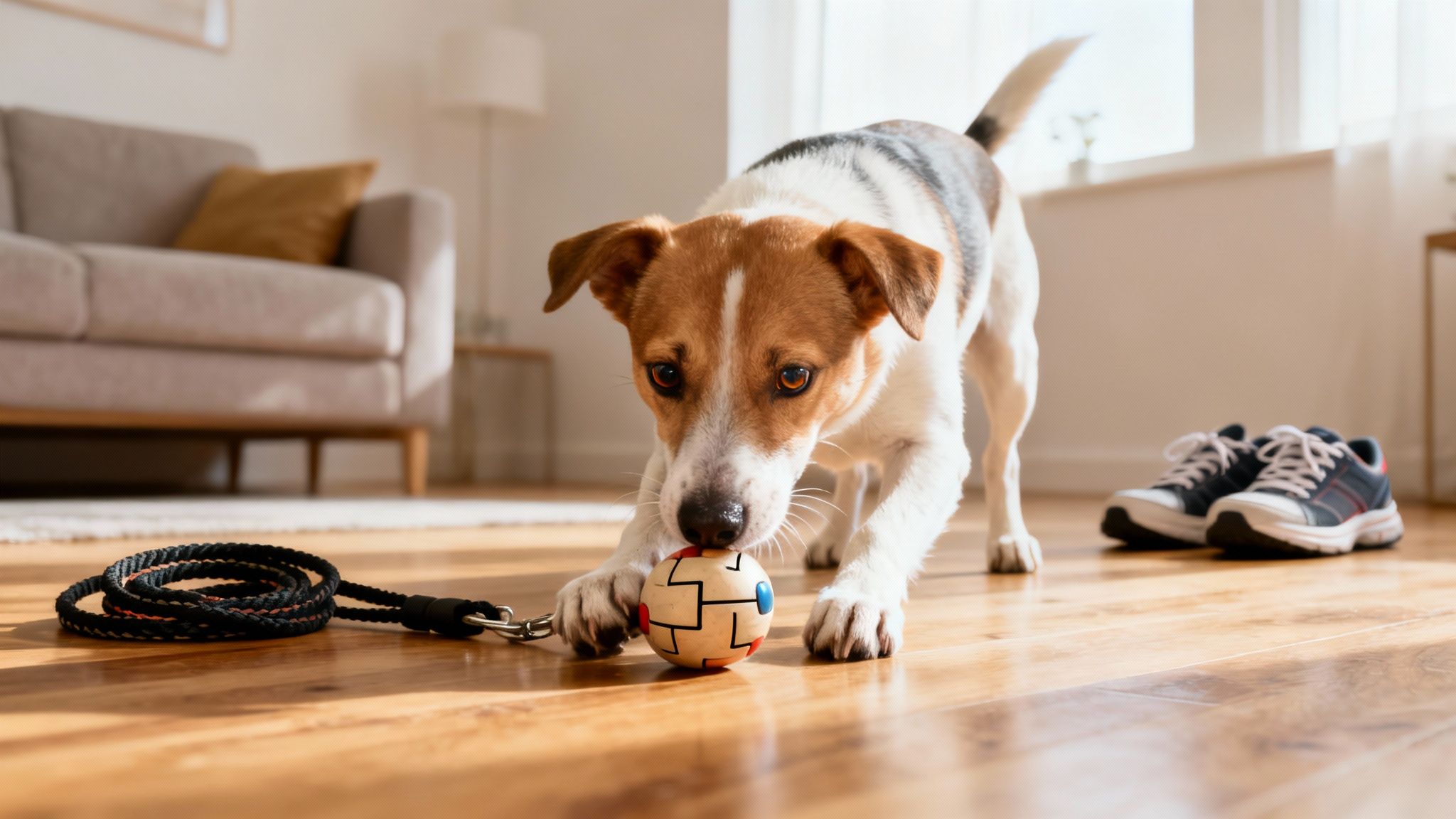
Your dog is a brilliant detective. They know the jingle of your keys, the sight of your work shoes, or the sound of you grabbing your purse means one thing: you're leaving. These little actions, or "departure cues," can trigger anxiety long before you even touch the doorknob.
The fix? Make those cues meaningless. This is a process called desensitization, and it works by breaking the association between the cue and the act of leaving.
Start mixing these actions into your daily life when you aren't going anywhere:
- Pick up your keys and jingle them, then go sit on the couch and watch TV.
- Put your coat on, walk to the door, then take it right off and hang it up.
- Grab your work bag and just carry it into the kitchen with you while you make a snack.
When you do this randomly throughout the day, you strip these cues of their power. The sound of keys no longer signals impending doom; it just becomes background noise. This simple trick can dramatically lower the anticipatory anxiety that starts building up, creating a much better foundation for a peaceful time alone.
Implementing Gradual Alone Time Training
Alright, this is where the real work begins. We're going to teach your dog, minute by minute, that being alone is not a crisis. It's all about gradual exposure, starting with absences so short your dog barely even notices you're gone. The entire point is to show them, over and over, that you always come back. This slowly builds their confidence until a few hours alone feels as normal as a nap in the sun.
I can't stress this enough: patience is everything. Rushing this process is the number one reason it fails. Think of it like building a staircase—you can't just leap to the top. Each successful, short absence is another solid step for your dog's confidence.
Starting with Seconds, Not Minutes
The first phase of this training can feel a little ridiculous, but it's the most important part. Your goal isn't to leave for an hour. It's to leave for five seconds without triggering a meltdown. This is how you start to chip away at separation anxiety in a way that feels safe for your dog.
Pick a time when your dog is already calm and relaxed, maybe after a good walk or once they've had their dinner. Simply walk to the door, step outside, and close it. Before your dog even has a chance to think about panicking, walk right back in. No big reunion, no fanfare. Just calmly return.
Repeat this over and over, slowly stretching out the time you're gone.
- First Few Tries: 5 seconds, 10 seconds, 8 seconds, 15 seconds.
- Keep it Random: Notice how I didn't just list them in increasing order? That's key. If every absence is longer than the last, your dog will start to anticipate the growing challenge. Mixing in shorter departures keeps it unpredictable and much less stressful.
- Read the Room: Watch your dog’s body language like a hawk. If you see signs of stress—whining, pacing, panting—you've pushed a little too far, too fast. No big deal. Just go back to a time they were comfortable with and work from there.
The Pet Camera is Your Best Friend
Honestly, you can't do this training effectively without a pet camera. It’s your eyes and ears when you're not there, giving you real, unfiltered feedback on how your dog is actually feeling. Without one, you're just flying blind.
A camera lets you see the exact moment those subtle stress signals start. That way, you can return before your dog tips over their threshold into a full-blown panic attack. This is the secret sauce to successful training: always ending on a good note. You want to gently stretch their comfort zone, but never so much that they feel overwhelmed.
Expert Tip: Set up your camera so you have a clear view of the door you use to leave and your dog's favorite spot (like their bed or crate). Watch for the early warning signs of anxiety—lip licking, yawning when they're not tired, or a tense body. Those are your cues to make the next absence a bit shorter.
Dealing with the Inevitable Setbacks
Look, you're going to hit a wall at some point. It's totally normal. Your dog might be perfectly fine with five minutes one day and then freak out at two minutes the next. This isn't a failure. It's just part of the messy, non-linear process of rewiring a deep-seated fear.
When you hit a snag, don't get discouraged. Just take a breath and dial it back to the last duration where your dog was completely relaxed. It might feel like you're going backward, but what you're really doing is reinforcing their sense of safety and rebuilding from a place of confidence. Your consistency and positive attitude matter far more than how fast you progress. Remember, every calm second your dog spends alone is a win.
Creating a Safe and Soothing Home Environment
Your home needs to be your dog’s sanctuary, especially when you can’t be there with them. It’s one thing to have a house, but it’s another to create a genuine safe haven that helps them feel secure and relaxed on their own.
Think about it from their perspective. We want to create an environment that gently engages their senses in a calming way. A few thoughtful adjustments can make a world of difference in lowering their stress levels when you head out the door.
The Modern Den and Crate Training
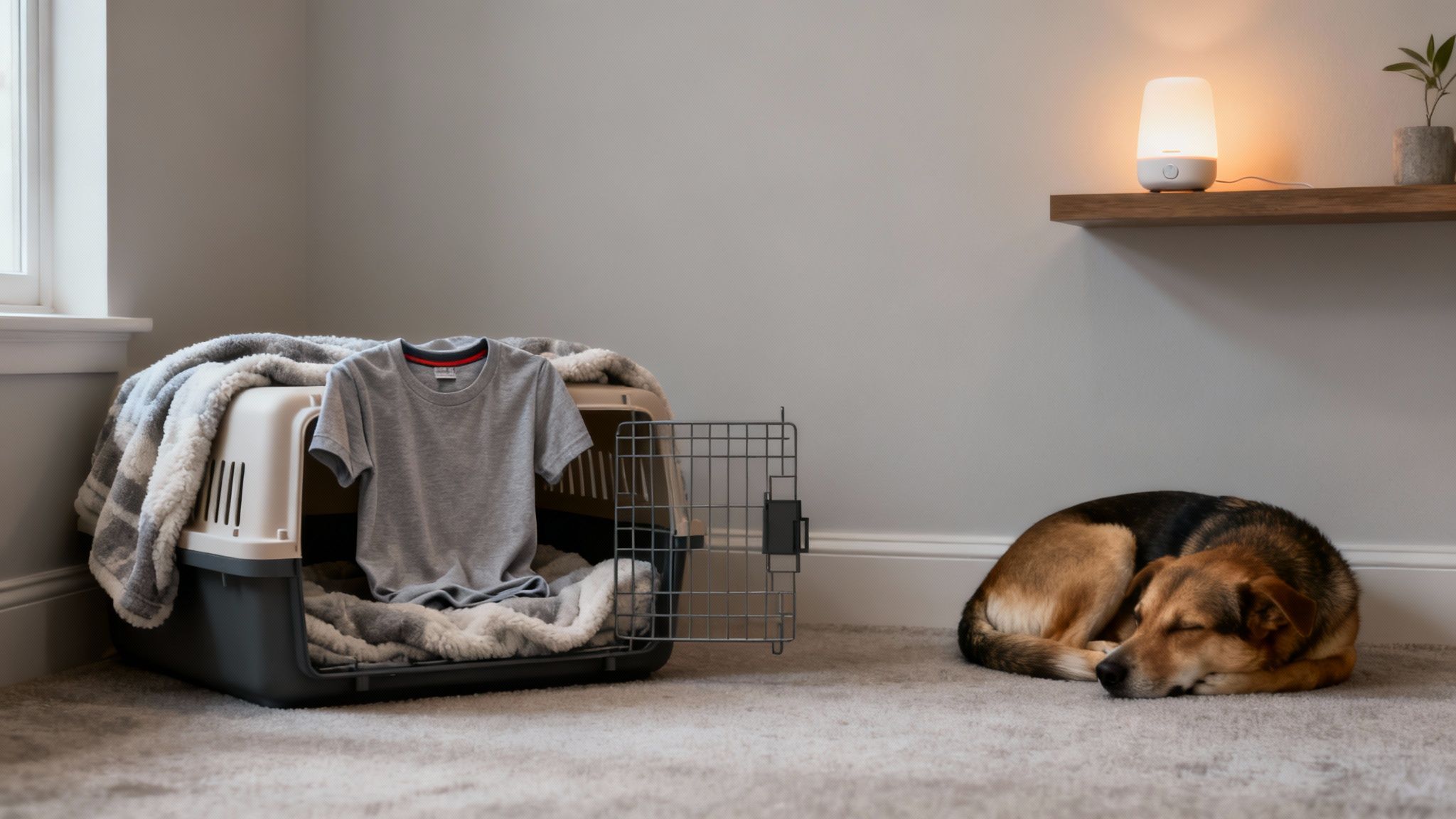
A crate can be an anxious dog’s best friend, but only if we introduce it the right way. Forget the idea of it being a cage; for a dog, it’s a den. Dogs have a natural instinct to seek out small, enclosed spaces where they feel safe. Our job is to make that crate the best spot in the house.
- Make it cozy. A soft bed or some comfy blankets are a must. I always suggest tossing in an old t-shirt you’ve worn (but not washed). Your scent is incredibly reassuring to them.
- Build positive vibes. The crate should never, ever be used for punishment. Instead, make it a place for all the best things. Feed their meals in there. Give them a special puzzle toy or a high-value chew that they only get in their crate.
Your dog's crate should feel like their private bedroom—a predictable, cozy spot where only good things happen. This positive association is crucial for turning it into a genuine sanctuary.
Engaging Their Senses for a Calmer Mind
Beyond the crate, we can use other elements in the environment to soothe an anxious dog. It's about layering different calming signals to create an overall peaceful atmosphere.
Many dog owners I’ve worked with have found success combining pheromone therapy with their other training. Products that mimic the calming pheromones a mother dog produces can be surprisingly effective. They often come in diffusers you plug into the wall or as a collar. In some studies, they’ve been shown to reduce anxious behaviors by up to 70%. You can discover more insights about holistic pet anxiety solutions on greenelementcbd.com to see if it’s a good fit for your dog.
Don't underestimate the power of sound, either. A quiet house can make every little noise—the mail carrier, a car door slamming—feel like a major event. Leaving on some gentle background noise can mask these startling sounds.
I often recommend quiet classical music, a mellow audiobook, or just a simple white noise machine. It creates a steady, predictable soundscape that helps your dog feel like their space is safe and calm, even when you're not there to tell them everything is okay.
Answering Your Questions About Dog Separation Anxiety
When you’re in the thick of it, trying to help an anxious dog, you're bound to have questions. It’s only natural. Understanding what to expect and where the common pitfalls are can make all the difference.
Let's walk through some of the most common questions I hear from owners dealing with this very challenge.
How Long Until My Dog Gets Better?
This is always the first question, and the honest-to-goodness answer is: it really depends on the dog. There's no magic timeline. Every dog's personality, history, and the deepness of their anxiety plays a huge role in how quickly they progress.
If you stick with it, you’ll likely see small, positive shifts in a few weeks. But for a dog to truly feel safe and confident when you're gone, you’re often looking at a commitment of several months.
The most important thing here is patience. It’s a marathon, not a sprint. Celebrate the tiny victories—like when they stay quiet for 10 minutes instead of their usual 5. Don't get discouraged by setbacks; they happen, and it doesn't mean you've failed.
Will Getting a Second Dog Solve the Problem?
It's a really common thought. "Maybe my dog is just lonely and needs a friend!" While it comes from a good place, getting another dog almost never cures separation anxiety. The reason is that the anxiety isn't about being alone in general—it's about being without you.
The new dog might be great company, but it can't replace the unique bond and sense of security your first dog gets from your presence. Worse, sometimes the new pup can actually pick up the anxious habits from the first one. My advice is always to work on resolving the anxiety with your current dog before even thinking about bringing another one home.
When Is It Time to Call a Professional?
Knowing when to ask for help is a sign of a great dog owner, not a sign of failure. You've been patient, consistent, and followed all the steps, but your dog is still struggling.
It's probably time to bring in an expert if you notice any of these signs:
- Your dog is injuring themselves through anxious behaviors, like chewing their paws raw or obsessive licking.
- The destruction in your home is getting out of hand or becoming dangerous.
- You've been working diligently for a few months with little to no real improvement.
Your first stop should be your veterinarian. They can rule out any hidden health issues that might be masquerading as anxiety. After that, they can refer you to a certified animal behaviorist or a veterinary behaviorist who can develop a more intensive plan. This might include medication to help ease your dog's panic, making them more receptive to the training you're already doing. For severe cases, this combination of professional guidance and medication is often the key to a breakthrough.

Karolis is the Founder of FORMA, a pet wellness brand focused on longevity and daily nutrition for dogs. Writes about supplements, canine health, and helping pets live longer, healthier lives
Join thousands of pet parents getting science-backed health insights and natural care advice