Is Rosemary Extract Safe for Dogs An Evidence-Based Guide
Is rosemary extract safe for dogs? Discover the science-backed benefits, safe dosages, and expert advice for pet parents on this common pet food ingredient.

Yes, rosemary extract is safe for dogs when you see it on the ingredient list of commercial pet foods and supplements. It’s used in tiny, carefully measured amounts, primarily as a natural preservative to keep the food fresh without relying on synthetic chemicals. It's important to know this isn't the same thing as highly concentrated essential oils, which can be risky for pets.
Understanding Rosemary Extract in Your Dog's Diet

It’s completely normal to have questions when you spot "rosemary extract" on your dog's food label. Is it just the herb from your kitchen? Not quite. The extract used in pet products is a concentrate made from the plant's beneficial compounds—specifically, its powerful antioxidants.
Think of it as a natural shield for your dog’s kibble. Its main purpose is to stop the fats and oils in the food from spoiling. This extends the shelf life and makes sure every bite is fresh and tasty for your pup. This is how quality brands can skip synthetic preservatives like BHA and BHT, opting for a more natural path to pet wellness.
Key Safety and Usage Points
For any pet owner, getting the facts straight brings peace of mind. Here’s a quick rundown of why rosemary extract is a common and safe ingredient:
- Natural Preservation: It’s a pro at stopping fat oxidation, the chemical reaction that makes food go rancid.
- Antioxidant Support: Besides keeping food fresh, it also offers beneficial antioxidants that help protect your dog's cells from damage.
- Regulated Amounts: The amount used in pet food is incredibly small and stays well within established safety limits.
- Different from Essential Oil: This is a crucial point. The extract is not the same as rosemary essential oil, which is much more potent and should not be ingested.
To help you quickly grasp the most important information, here’s a simple summary of rosemary extract's safety profile.
Rosemary Extract Safety at a Glance
This table highlights that while rosemary extract is a safe and beneficial ingredient for most dogs, context is key.
The safety of rosemary has been confirmed for years by major animal welfare organizations. This gives dog owners confidence when choosing products with natural ingredients designed to support their pet’s health.
Major authorities like the ASPCA officially list rosemary as non-toxic to dogs. This isn't just an opinion—it's based on decades of data. In fact, their 2023 records show rosemary was completely absent from the more than 200,000 annual toxic plant reports they received. Since the ASPCA Poison Control Center was founded in 1978, rosemary has kept a spotless safety record. You can explore their full list of non-toxic plants to learn more.
What Is Rosemary Extract in Your Dog's Food?

When you glance at your dog's food label and spot "rosemary extract," you probably picture the fragrant green sprigs from your garden. But the ingredient in that bag of kibble is a whole different ball game—it’s a highly concentrated and specialized form of the plant.
Think of it like making an incredibly potent tea. Through a precise process, specific compounds are pulled from the rosemary leaves, mainly powerful antioxidants like carnosic acid. The final result is a stable powder or liquid that’s a far cry from both the fresh herb and the volatile essential oils used in aromatherapy.
The main reason you'll find rosemary extract in dog food is because it’s a fantastic natural preservative. Its antioxidant muscle is brilliant at stopping the fats and oils in kibble from going rancid.
Why Natural Preservation Matters
Fats are a vital source of energy for your dog, but they have a major weakness: they spoil. This process, called oxidation, doesn't just make the food taste and smell awful; it also strips away nutritional value and can even make your dog sick. Nobody wants that.
By adding rosemary extract, pet food companies can keep their products fresh and extend shelf life the natural way. This lets them skip the synthetic preservatives that many dog owners are looking to avoid.
- BHA (Butylated Hydroxyanisole)
- BHT (Butylated Hydroxytoluene)
- Ethoxyquin
Opting for a natural preservative isn't just a trend. It's a conscious choice that reflects a more holistic approach to pet health, providing necessary stability while adding something beneficial to the mix.
More Than Just a Preservative
While keeping food fresh is its day job, rosemary extract pulls double duty. The same antioxidants that protect the food from spoiling also offer benefits to your dog after they've eaten their meal.
The extract works first to protect the integrity of your dog’s food, and then its antioxidant compounds can help support your dog's cellular health. This makes it a thoughtful and functional addition to a well-rounded diet.
This next part is crucial: rosemary extract is not the same as rosemary essential oil. The extract is made specifically for safe consumption, packed with antioxidants and none of the highly concentrated compounds found in essential oils. Trusted brands use tiny, carefully regulated amounts that are well within the safety guidelines set by pet food regulators, so you can be confident it's in there for all the right reasons.
What Rosemary Actually Does for Your Dog's Health
So, rosemary isn't just in your dog's food to keep it from going bad. It's a powerhouse ingredient that actively works to keep your dog healthy, and its biggest strength comes from its antioxidant properties. Think of them as a personal security detail for your dog's cells.
Every day, your dog's body produces unstable molecules called free radicals. You can picture them as tiny, chaotic pinballs bouncing around inside the body, causing damage to whatever they hit. This damage, called oxidative stress, is a lot like how a cut apple turns brown or how metal starts to rust. It's a natural process, but too much of it can cause problems.
This is where rosemary's antioxidants come in. They are the "rust-proofers." They go around and neutralize these free radicals, stopping them in their tracks before they can harm healthy cells. It’s a crucial job for keeping your dog feeling good long-term.
A Natural Shield for Your Dog's Cells
This antioxidant protection has some very real, tangible benefits. By guarding cells against the daily grind of oxidative stress, rosemary extract helps bolster your dog's immune system, making it stronger and more resilient. A well-supported immune system is better prepared to fend off everything from seasonal sniffles to more serious issues.
This cellular defense also plays a big part in healthy aging. Over a lifetime, the cumulative damage from free radicals contributes to the wear and tear we see in older dogs. By helping to reduce that damage, the antioxidants in rosemary can support a healthier, more vibrant life for your dog, especially in their golden years.
The real magic behind rosemary comes from compounds like carnosic acid and rosmarinic acid. These aren't just buzzwords; they're the scientifically-proven antioxidants that do the heavy lifting, both in protecting fats in the food and in supporting the cells in your dog's body.
Keeping the Gut Happy and Healthy
On top of its antioxidant firepower, rosemary extract also has natural antimicrobial properties. It’s certainly no substitute for veterinary medicine, but these properties can help maintain a healthy, balanced environment in your dog's gut.
A stable gut is the foundation of good health. It affects everything from how well your dog absorbs nutrients to how strong their immune system is. Rosemary’s gentle antimicrobial touch can help keep the good bacteria in charge and prevent less helpful microbes from taking over.
So, what does this all mean for your dog?
- Serious Antioxidant Power: It helps neutralize free radicals, protecting cells all over the body.
- Immune System Support: By reducing cellular stress, it helps keep the immune system running strong.
- Healthy Aging: It aids in slowing down cellular aging by preventing oxidative damage over time.
- Gut Balance: Its antimicrobial effects contribute to a healthy and stable gut environment.
When a premium brand like FORMA purposefully adds rosemary extract to its supplements, it’s for both of these reasons. It's a smart, two-for-one ingredient: it keeps the product fresh naturally while also giving your dog a meaningful health boost. It’s a clear sign of a thoughtfully crafted formula designed to support your pet from the inside out.
How Much is Safe? What the Experts Say
When you're trying to figure out what's safe for your dog, "don't worry" just isn't good enough. You want hard facts and clear numbers, especially when it comes to the ingredients in their food. Luckily, we have exactly that from regulatory experts who have done the research on rosemary extract.
In the United States, the Food and Drug Administration (FDA) has given rosemary extract its 'Generally Recognized as Safe' (GRAS) seal of approval. This isn't just a casual nod. It’s a formal classification that means a panel of qualified experts has reviewed the scientific evidence and agrees it's safe for its intended use, like preserving pet food.
Putting the Science into Perspective
So, what does that GRAS status actually mean for your dog's dinner? It means the amount of rosemary extract used as a natural preservative is tiny—just a fraction of what studies have shown to be safe. This creates a massive safety cushion, so you never have to worry about your dog getting too much.
Think of it this way: if the scientifically established safe limit was an entire cup of water, the amount actually used in your dog's food would be just a few drops. The formulas are designed to be extremely cautious, guaranteeing safety for dogs of all shapes and sizes. This careful, science-backed approach is what sets high-quality pet products apart.
The Numbers That Give You Peace of Mind
If you want to get even more specific, we can look at what international experts have found. A 2022 evaluation from the European Food Safety Authority (EFSA) set very clear safety limits for rosemary extract in dog food. After digging through all the toxicological data, they determined that a maximum of 300 mg per kg of complete feed is perfectly safe.
For an average 20 kg (that's about 44 lbs) dog, this works out to roughly 12 mg per kg of body weight each day. That's a whole lot more than you'll ever find in commercial pet foods or supplements, including the daily support chews from FORMA. You can dive into the details yourself by reading the EFSA's findings on rosemary extract safety.
This data confirms that the tiny, functional amount of rosemary extract found in well-made products isn't just safe—it's protected by a huge buffer. It’s a deliberate, evidence-based choice, not a random addition.
When you boil it all down, the expert consensus is crystal clear:
- It's Approved: Top food safety agencies like the FDA have officially signed off on it.
- The Dose is Tiny: The amounts used in pet products are nowhere near the established safety limits.
- There’s a Huge Safety Cushion: The gap between what’s used and what’s considered safe is enormous, giving you complete peace of mind.
This is why you can feel confident in the science behind thoughtfully made products. Every ingredient, rosemary extract included, is there for a good reason and at a level that keeps your dog safe.
Busting the Myth: Does Rosemary Really Cause Seizures in Dogs?
If you’ve spent any time on pet forums, you've probably seen the scary claim: rosemary causes seizures in dogs. It's one of those persistent internet rumors that just won't go away. Let's clear the air and separate fact from fear.
This whole concern boils down to a classic case of mistaken identity. The worry is all about rosemary essential oil, not the rosemary extract found in your dog's kibble. These two are worlds apart.
The All-Important Difference: Extract vs. Oil
Rosemary essential oil is a super-concentrated liquid made for aromatherapy. It’s packed with a compound called camphor, which can be toxic to the nervous system if a dog ingests a large, undiluted amount.
Rosemary extract, on the other hand, is a completely different beast. It’s made specifically to pull out the plant's natural antioxidants. The process ensures that compounds like camphor are kept to tiny, harmless levels. The amount that ends up in dog food is minuscule—just enough to act as a safe, natural preservative.
Think of it this way: comparing the extract in food to the essential oil is like comparing a pinch of chili powder in a giant pot of stew to eating a whole ghost pepper. The form, concentration, and effect are totally different.
This flowchart breaks down how ingredients like rosemary extract are rigorously evaluated before they ever make it into your dog's food.
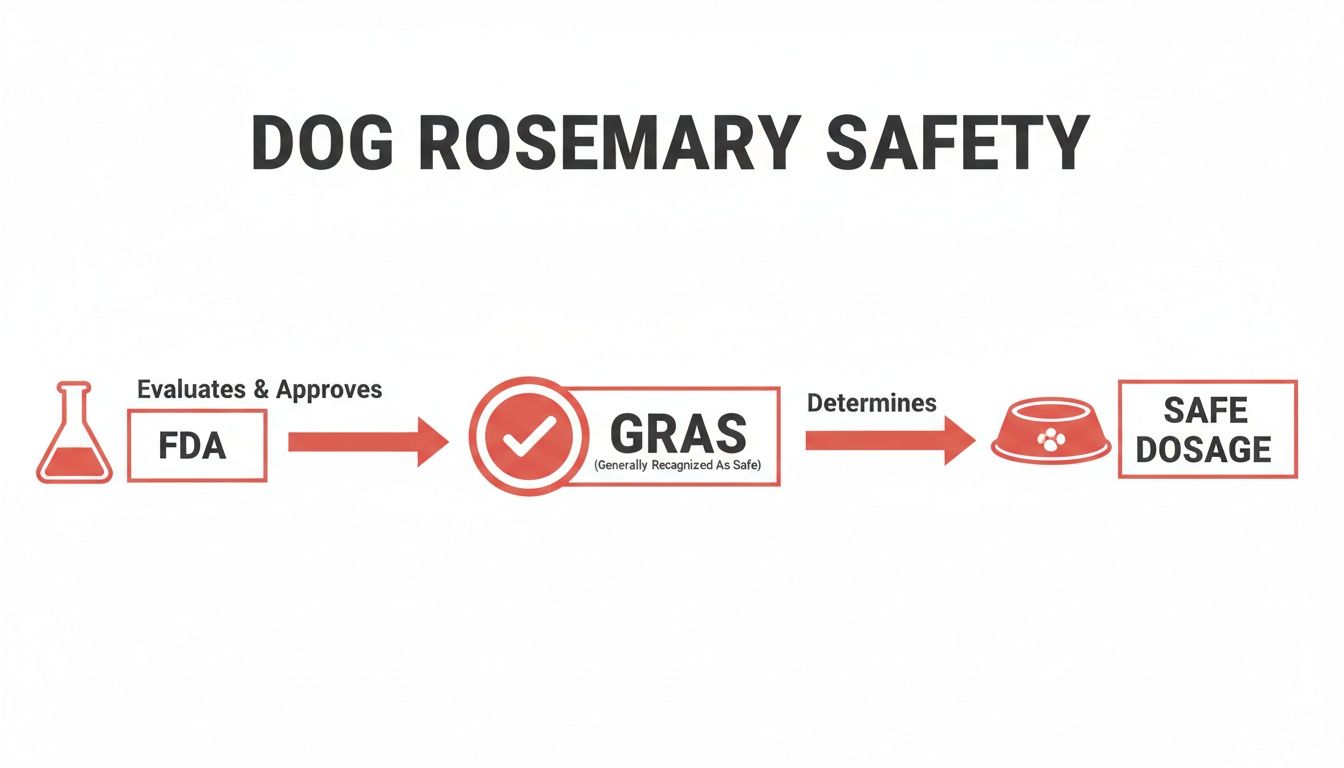
As you can see, there's a clear, science-backed process that ensures its safety long before it gets near your dog’s bowl.
So, What Does the Science Say?
When you dig into the actual research, the myth falls apart. Comprehensive reviews of scientific studies show no credible, peer-reviewed evidence connecting the type of rosemary extract used in pet food to seizures in dogs.
In fact, one deep dive into the available research found zero documented cases of neurotoxicity from food-grade rosemary extract in canines. While it's true that epilepsy affects about 3-5% of dogs, leading veterinary experts and poison control centers are clear: the risk comes from ingesting large amounts of undiluted essential oils, not the tiny bit of extract in food. You can get more details on the research that clarifies rosemary's safety profile for dogs.
The bottom line is simple: The carefully processed rosemary extract in your dog’s food is not the same as potent essential oil. Decades of safe use in the pet food industry, supported by a solid scientific consensus, confirm it is not a cause for neurological concern.
So, the next time you see "rosemary extract" on a food label, you can rest easy. It's there as a safe, natural preservative, not some hidden danger.
How to Choose High-Quality Products with Rosemary
Walking down the pet food aisle can feel like a pop quiz you didn't study for. But once you know what to look for, it gets a lot easier. When it comes to products with rosemary extract, you’re searching for brands that are open about what’s inside and care about quality from top to bottom.
Seeing rosemary extract on the label is often a great sign. It usually means the company is actively choosing to avoid synthetic preservatives like BHA and BHT. That kind of commitment to natural ingredients says a lot about a brand's overall philosophy—they're likely putting real thought into your dog's health.
Reading the Ingredient Label Like a Pro
Think of the ingredient list as your roadmap to a product's true quality; it tells you everything you need to know about the company's priorities. One of the first things to watch out for is vague language.
If you see something generic like "natural flavors," that’s a bit of a red flag. It’s a catch-all term that can hide a variety of substances you might not want for your dog. A trustworthy brand will be proud to list exactly what's in the bag, clearly stating "rosemary extract" because they believe in their ingredients.
The key is to look for a balanced and transparent formula. A product that uses rosemary extract for preservation but is otherwise full of fillers or artificial additives isn't a high-quality choice. Context matters.
A Quick Checklist for Smart Choices
When you’re staring at a wall of options, run through this simple checklist in your head. A truly good product will hit all these marks, showing that the company cares about making something that's both safe and effective.
- Full Transparency: Does the company list every single ingredient clearly? Steer clear of products that use fuzzy terms like "proprietary blends" without telling you what’s in them.
- No Synthetic Preservatives: Scan the label to make sure you don't see cheap chemical preservatives like BHA, BHT, or ethoxyquin.
- Balanced Formula: Look beyond just the rosemary. Is the rest of the list filled with high-quality, recognizable ingredients? A natural preservative should complement an already healthy formula, not prop up a poor one.
- Clear Sourcing Information: The best brands are usually happy to tell you where their ingredients come from. This openness gives you an extra layer of confidence in what you're buying.
By focusing on clarity and the bigger picture of the entire formula, you can feel good about choosing products that use ingredients like rosemary extract to support your dog's health.
Got Questions About Rosemary for Your Dog?
It's smart to ask questions when it comes to your dog's health and diet. I get it. We all want to do what's best for our furry family members. Let's clear up some of the most common questions about rosemary.
Is Rosemary Extract Okay for All Dogs?
For almost every dog out there, the answer is a big yes. The tiny, carefully measured amounts of rosemary extract you'll find in high-quality dog foods are completely safe. It's a standard, FDA-approved ingredient used to keep food fresh naturally.
The only real exception is for dogs with a known history of seizures. While the seizure myth is tied to potent essential oils, not the extract in food, it's still wise to have a chat with your vet. They know your dog's specific health history and can give you advice that's right for them.
What if My Dog Eats Fresh Rosemary from the Garden?
Don't panic! A little nibble on a rosemary plant in the yard is generally harmless. The ASPCA confirms that the plant itself is non-toxic to dogs.
The real issue with any fresh plant is quantity. If a dog decides to eat the whole bush, they're likely to end up with an upset stomach, which could mean vomiting or diarrhea. As with most things, moderation is key.
What’s the Difference Between Rosemary Extract and Rosemary Powder?
This is a fantastic question, and the answer really boils down to how they're made and what they're used for.
- Rosemary Extract: Think of this as the potent, concentrated good stuff. Specific antioxidant compounds are pulled from the plant to create a powerful natural preservative. You only need a tiny amount to keep food from going bad.
- Rosemary Powder: This is much simpler—it's just dried rosemary leaves ground into a powder. It's not nearly as concentrated and is mostly used for flavor, not for its preservative power.
So, when you see rosemary extract on an ingredient list, you can feel confident. When used responsibly by great brands like FORMA, it’s a safe and effective way to keep your dog’s food fresh while adding a little antioxidant punch.

Karolis is the Founder of FORMA, a pet wellness brand focused on longevity and daily nutrition for dogs. Writes about supplements, canine health, and helping pets live longer, healthier lives
Join thousands of pet parents getting science-backed health insights and natural care advice