Is Turmeric Good for Dogs: is turmeric good for dogs - discover benefits, safe dosing, and usage tips
Is Turmeric Good for Dogs? is turmeric good for dogs: explore evidence-backed benefits, safe dosing, and tips for your pup.
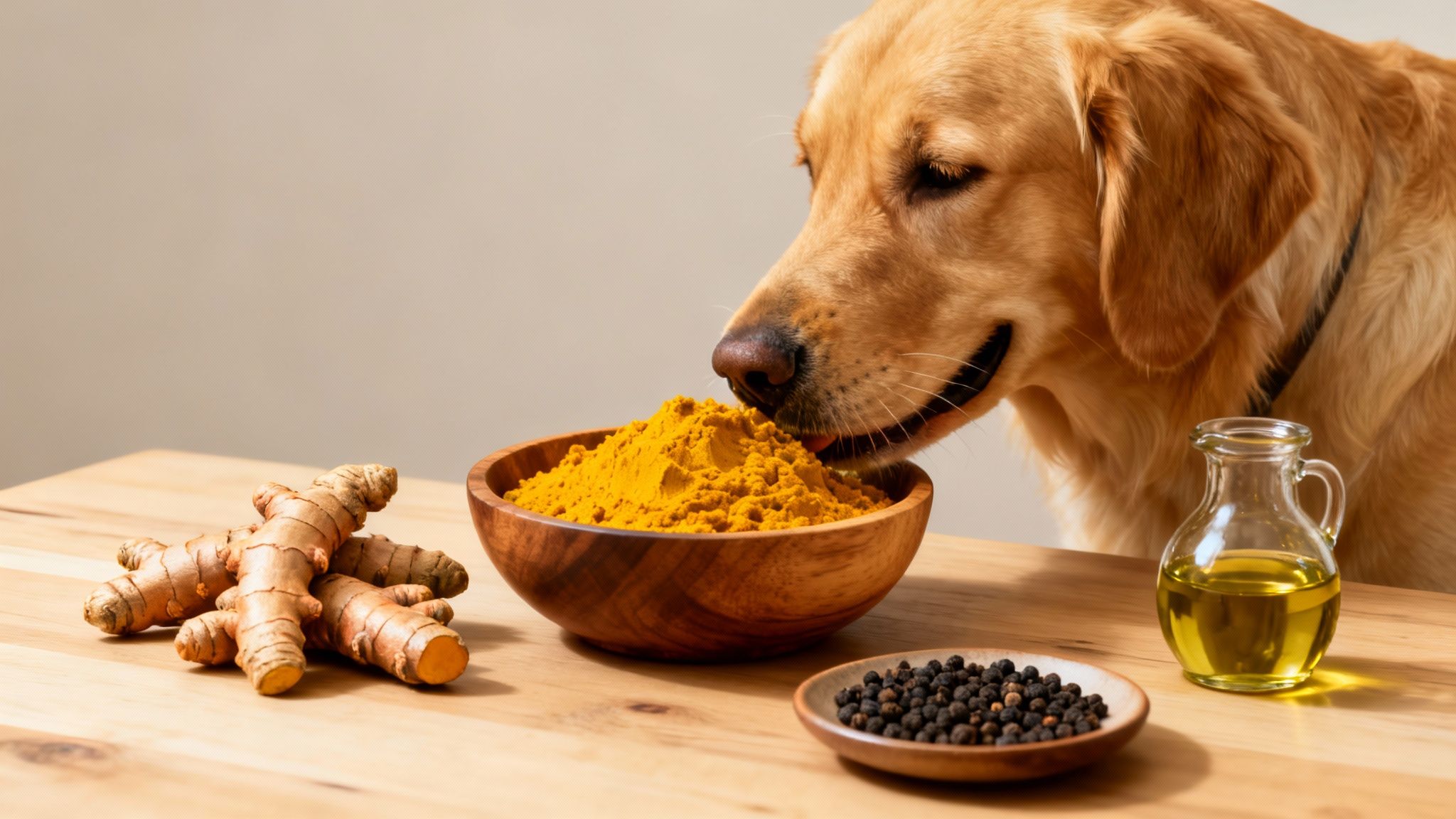
It’s a story I hear all the time. Your dog, who used to tear around the park, is suddenly a bit slower getting up. Maybe they seem stiff after a long nap. You start looking for answers and stumble upon the same question so many dog owners have: “Is turmeric actually good for dogs?”
The short answer is a resounding yes—but with a few important caveats. This ancient golden spice isn't just hype; it packs a real punch, but you have to know how to use it safely and effectively for your best friend.
The Golden Spice for Your Canine Friend
If you're anything like me, you're always on the lookout for natural ways to keep your dog happy and healthy. You've probably seen turmeric pop up in your own life, maybe in a golden milk latte or a curry, and heard all about its anti-inflammatory magic. That same power is what makes it so appealing for our dogs, especially as they get older or start to show signs of joint stiffness.
This guide is your complete roadmap. We're going to cut through the noise and get straight to what works, translating all that information into simple, practical steps for your dog.
What You Will Learn
My goal here is to give you the confidence that comes from having solid, science-backed information. We’ll break down everything you need to know, from the powerhouse compound inside turmeric to exactly how much to give your pup.
Here's what we'll cover:
- The Science Explained: We'll look at curcumin, the active ingredient in turmeric, and I'll explain in simple terms how it actually works to cool off inflammation in your dog’s body.
- The Real-World Benefits: We'll dive into how this spice can do more than just help with achy joints, touching on everything from digestion to their immune system.
- How to Use It Safely: This is the most important part. We’ll talk about proper dosages, what to look for in a quality supplement, and the red flags to watch out for.
By the time you're done reading, you'll know exactly how to decide if turmeric is the right move for your dog. You’ll be able to turn this powerful spice into a trusted part of their wellness routine.
Let’s get into how this humble root can help your dog live their best life.
Turmeric for Dogs at a Glance
Before we dive deep, here’s a quick snapshot of what turmeric can offer and what you need to keep in mind. Think of it as your cheat sheet.
This table gives you the highlights, but the real magic is in the details. Now, let’s explore each of these points so you have the full picture.
Understanding Turmeric, Curcumin, and Why It Matters
Before we dive into whether turmeric is right for your dog, we need to get one thing straight. People use "turmeric" and "curcumin" almost interchangeably, but they're not the same thing.
Think of it like this: turmeric is the whole plant, the bright golden spice you have in your kitchen. Curcumin is the superstar compound inside the turmeric that does all the amazing work. It's the powerhouse behind the anti-inflammatory and antioxidant benefits we're all after.
The catch? Raw turmeric root only contains about 2-5% curcumin. Just sprinkling the spice on your dog’s dinner isn't going to cut it. You'd need to give them a huge amount to get any real therapeutic effect.
The Big Problem: Bioavailability
This brings us to the single most important concept: bioavailability. It’s a fancy term for a simple idea—how much of a substance your dog's body can actually absorb and put to work.
And frankly, on its own, curcumin has terrible bioavailability. For dogs and humans alike.
Giving your dog straight curcumin is like trying to fill a bucket with a giant hole in the bottom. You can pour all the goodness in, but most of it will leak right out before it can do any good. It passes through their digestive system without ever making it into the bloodstream where it's needed.
How to Actually Unlock Curcumin's Power
So, how do we patch the leaky bucket? We need to give the curcumin some helpers. The secret is combining it with a couple of key things that dramatically boost its absorption.
- A Healthy Fat: Curcumin is fat-soluble, not water-soluble. That means it needs fat to be absorbed by the body. Pairing it with something like coconut oil or fish oil gives it a vehicle to pass through the gut wall and into the bloodstream.
- Piperine (from Black Pepper): This is the game-changer. Piperine is a natural compound in black pepper that essentially tells the liver to slow down its process of getting rid of curcumin. The result? Studies have shown piperine can boost curcumin's bioavailability by an incredible 2,000%.
This visual overview really helps tie together the benefits, the science, and the safety factors we're talking about.
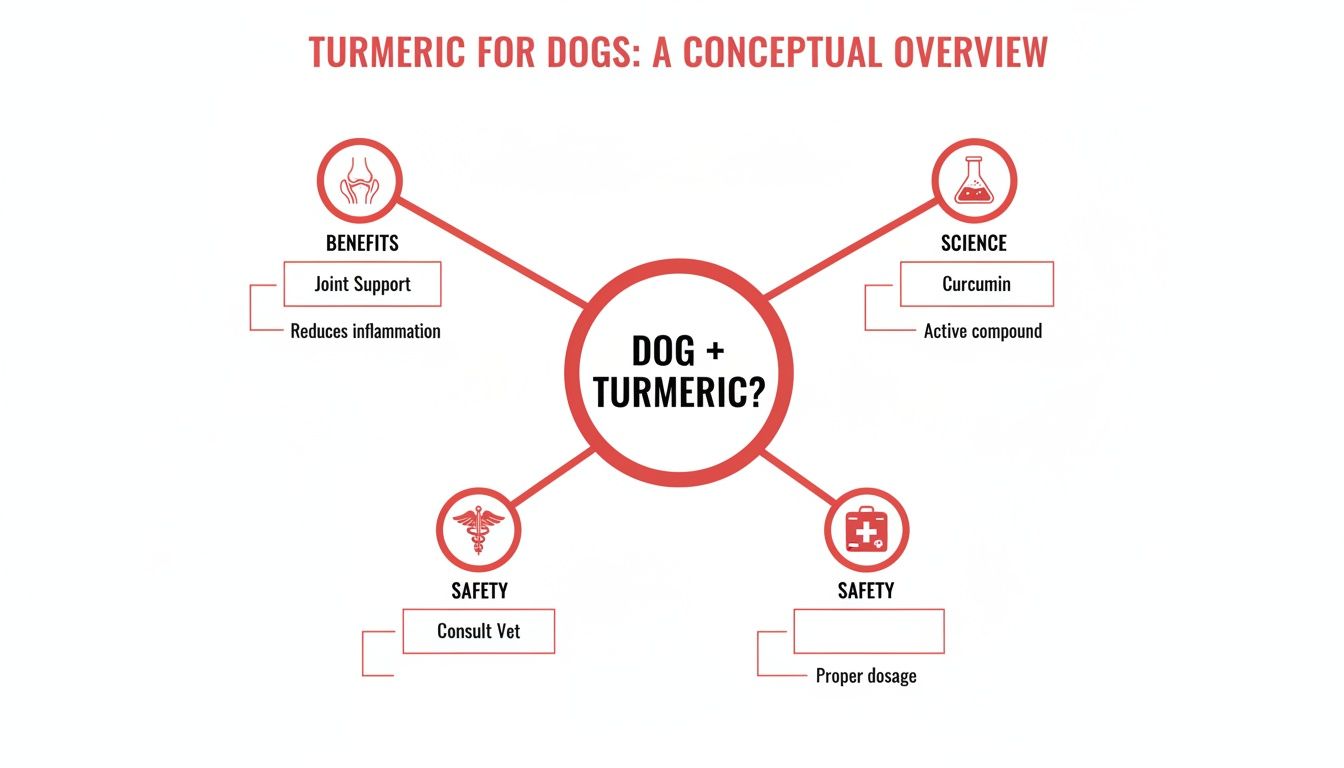
As you can see, it all comes back to understanding how to make curcumin work for your dog's body.
Key Takeaway: The benefits of turmeric are all about the bioavailability of curcumin. If your dog can't absorb it, it doesn't matter how much you give them.
This is exactly why grabbing the spice jar from your pantry isn't the best approach. Professionally formulated dog supplements are designed specifically to solve this absorption problem, ensuring your dog can actually reap the rewards of this golden spice.
What Science Says Turmeric Can Do for Your Dog

Alright, we’ve covered the basics of how curcumin works and why getting it into your dog's system is key. Now for the exciting part: what can it actually do for them? The buzz around turmeric isn't just hype from ancient traditions; modern science is starting to show there's real substance behind the claims.
When you look past the clinical studies and focus on what it means for your dog, you're talking about more comfortable post-play naps, smoother digestion, and just an overall spring in their step. Let's dig into the evidence and see why turmeric might be a great addition to your dog's wellness routine.
Easing Stiff Joints and Discomfort
This is the big one. It's probably the main reason you're here, and for good reason. Joint issues, especially osteoarthritis, are a fact of life for so many dogs, particularly as they get older or if they're a larger breed. The root of all that pain and stiffness? Inflammation.
Curcumin goes right to the source. Think of it as a natural cooling agent for those "hot" and achy joints. It gets to work by blocking some of the specific pathways that trigger the inflammatory response, which can help dial down the swelling and ease the ouch.
A revealing 2017 study, for instance, followed 42 dogs with osteoarthritis. While the lab measurements didn't show huge differences, the owners reported significant improvements in their dogs' pain levels. In fact, a whopping 61.9% of the dogs taking the curcumin supplement showed a positive response. This suggests it helped slow down the progression of their pain. If you're a science nerd, you can read the full research about these osteoarthritis findings yourself.
What This Means for Your Dog: You might notice they're more willing to hop on the couch, they get up from their bed with less groaning, or they have a bit more stamina on your daily walks. It's all about making them more comfortable and mobile.
A Powerful Ally Against Inflammation
Joint pain is a major issue, but inflammation is a body-wide problem. It's not just in the joints; it can be a sneaky, systemic issue that contributes to everything from itchy skin to tummy troubles.
This is where curcumin really shines. It's known for its system-wide anti-inflammatory effects. It doesn’t just put a band-aid on the symptoms; it works on a deeper, cellular level to quiet down those inflammatory signals.
- Allergies and Skin Health: By lowering that overall inflammation, curcumin can help calm irritated, itchy skin and may even lessen the severity of allergic flare-ups.
- Overall Wellness: Keeping that low-grade, chronic inflammation in check is one of the best things you can do for your dog's long-term health and vitality.
This is why turmeric is so much more than just a joint supplement. It offers a foundational level of support by helping your dog's body maintain a healthy inflammatory response from nose to tail.
Supporting a Healthy Gut and Digestion
A happy dog almost always starts with a happy gut. Your dog's digestive system is a finely tuned machine, and inflammation can throw a wrench in the works, leading to discomfort, upset stomachs, and trouble absorbing nutrients.
Turmeric can offer some gentle help here, too. Its anti-inflammatory properties can soothe the lining of the gut, promoting a healthier, more balanced environment. On top of that, some research shows it can encourage the liver to produce more bile.
Why care about bile? It's absolutely essential for breaking down fats in your dog's food. Without enough of it, digestion is inefficient. By supporting healthy bile flow, turmeric helps the whole digestive process run more smoothly. This can be a game-changer for dogs with sensitive stomachs, helping them build a solid foundation for gut health.
Boosting Their Antioxidant Defenses
Every single day, your dog’s body creates unstable molecules called free radicals. They're a natural byproduct of turning food into energy, but they also come from things like pollution and stress. When these free radicals run rampant, they cause damage to cells in a process called oxidative stress.
You can think of oxidative stress as cellular "rust." It's a key driver of aging and many chronic diseases. The heroes in this story are antioxidants—they're the body's rust-proofers.
Curcumin is a fantastic antioxidant that fights this battle on two fronts:
- It directly neutralizes free radicals: It can hunt them down and stop them in their tracks before they cause any harm.
- It boosts your dog's own defenses: Even better, it flips the switch on your dog's own internal antioxidant systems, making their body better at protecting itself.
This one-two punch makes curcumin incredibly effective. It's not just about fire-fighting current problems; it's about proactively protecting your dog's health at the most basic cellular level.
How to Safely Give Turmeric to Your Dog
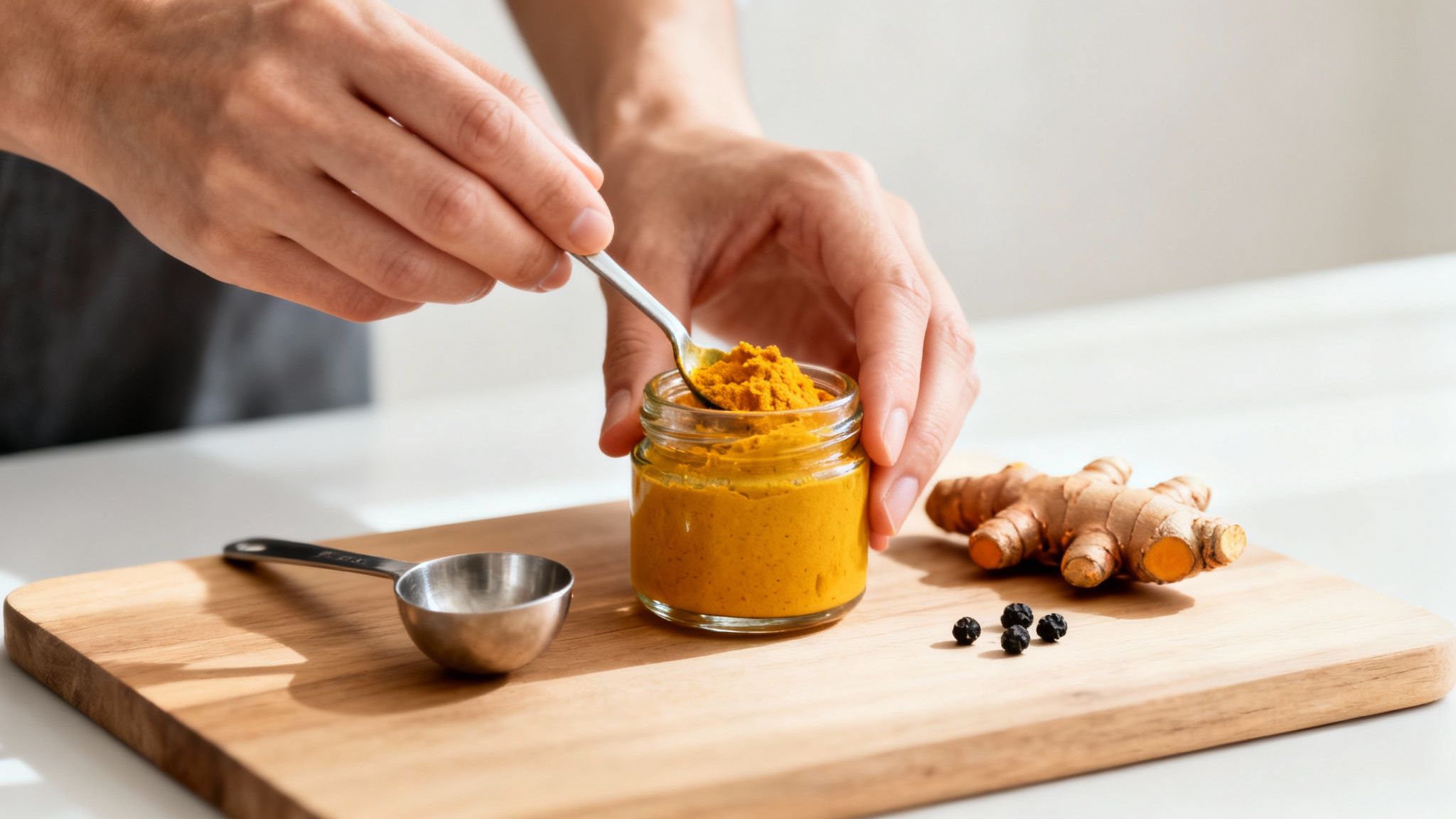
Alright, so you’re sold on the incredible benefits of turmeric. The next big question is: how do you actually get this golden spice into your dog's daily routine safely and effectively? It’s not quite as simple as sprinkling some kitchen spice on their kibble. To really unlock its power, you need to think about the right form and the right amount.
Let's break down the practical side of things, from picking a convenient, ready-made supplement to whipping up a simple DIY paste in your own kitchen. Think of this as your go-to action plan for making turmeric a smart part of your dog's wellness journey.
Choosing the Right Turmeric Product
When it comes to giving your dog turmeric, you've basically got two main paths: buy a supplement made specifically for dogs or create your own "golden paste." Each route has its perks, and the best one for you really depends on your lifestyle and your dog’s specific needs.
1. Formulated Dog Supplements
This is hands-down the easiest and most reliable option. High-quality chews or powders, like our FORMA daily superfood chew, are designed with a dog's digestive system in mind. They tackle the biggest hurdle—absorption—by expertly blending curcumin with a healthy fat and black pepper extract.
- The Upside: You get consistent, accurate dosing every time. Plus, they're formulated for maximum absorption and are incredibly convenient to use.
- The Downside: They naturally come with a higher price tag than a DIY approach.
2. DIY Golden Paste
For the more hands-on dog parent, making your own golden paste is a fantastic and budget-friendly choice. This simple recipe combines the three essential players—turmeric, a healthy fat, and black pepper—into a paste you can easily mix into your dog's meals.
- The Upside: It's very affordable, and you have complete control over every single ingredient.
- The Downside: Dosing isn't as precise, and it does require a bit of prep time.
No matter which path you take, the goal is the same: deliver an effective, bioavailable form of curcumin to your dog. Simply scooping turmeric from your spice rack won’t cut it.
General Daily Curcumin Dosing Guide for Dogs
This table offers a general starting point for daily curcumin dosage based on your dog's weight. Remember, this is a reference guide, not a prescription. It's crucial to consult your vet to find the perfect dose for your individual dog's health needs before you begin.
Getting the dose right is everything. Too little won't do much, while too much can lead to an upset stomach. The numbers above are based on the amount of curcumin, the active compound, not the total turmeric powder.
Always, always start low and go slow. Begin with about a quarter of the suggested dose and gradually work your way up over a week or two. This gives your dog’s system plenty of time to adjust, which is the best way to introduce any new supplement without causing tummy troubles.
Simple DIY Golden Paste Recipe
Ready to roll up your sleeves? Here’s a classic, easy-to-follow recipe for making golden paste at home.
Ingredients:
- 1/2 cup organic turmeric powder
- 1 cup of filtered water (plus a little extra if needed)
- 1/3 cup of unrefined organic coconut oil or olive oil
- 1 1/2 teaspoons of freshly ground black pepper
Instructions:
- Make the Base: In a small saucepan, combine the turmeric powder and water. Stir constantly over low-to-medium heat for about 7-10 minutes until it thickens into a paste. If it gets too dense, just add a splash more water.
- Add the Helpers: Take the pan off the heat. Now, stir in the oil and the freshly ground black pepper, mixing until everything is well combined.
- Cool and Store: Let the paste cool down completely. Spoon it into an airtight glass jar and keep it in the refrigerator.
This homemade paste will stay fresh for about two weeks in the fridge. You can also freeze portions in an ice cube tray to make it last longer. Start by mixing a very small amount (like 1/4 teaspoon for a small dog) into your dog’s food, and watch how they do before slowly increasing the amount.
Potential Risks and When to Use Caution
While turmeric has some incredible benefits, it's not a magic bullet. As responsible pet parents, we need to look at the whole picture. Just like any supplement, it isn't a good fit for every dog, and it’s super important to know the potential downsides before adding it to your pup's bowl.
The good news? Turmeric is generally very safe. When side effects do pop up, they’re almost always a case of mild stomach upset—think a bit of gas, nausea, or loose stool. This usually happens when you give too much, too fast. The trick is to start with a tiny pinch and slowly work your way up. This gives your dog’s gut time to adjust, which almost always prevents any tummy trouble.
When to Hit Pause and Talk to Your Vet
Beyond a little indigestion, there are a few specific health situations where turmeric requires a more careful approach, or should be avoided entirely. Its natural properties can sometimes complicate existing medical issues, making a chat with your veterinarian an absolute must.
Here are the main scenarios where you need to be extra cautious:
- Gallbladder Issues: Turmeric stimulates bile production, which is great for digestion in a healthy dog. But if your dog has gallbladder stones or a bile duct obstruction, this could make things worse.
- Bleeding Disorders: Turmeric is a mild blood-thinner. For a dog with a condition like Von Willebrand disease or one scheduled for surgery, it’s best to skip it to avoid increasing the risk of bleeding.
- Kidney Stones: If your dog is already prone to forming kidney stones, turmeric might increase urinary oxalate levels, which could contribute to the problem.
- Diabetes: Turmeric can naturally lower blood sugar. When used alongside diabetes medications, there's a risk of their blood sugar dropping too low (hypoglycemia).
Your vet has the full picture of your dog's health. They are your best resource for figuring out if turmeric is a safe and smart choice for your individual companion.
Watch Out for Medication Interactions
Never assume that because something is "natural," it can't interact with medications. Turmeric is powerful, and you need to be mindful of what else your dog is taking.
Be especially careful if your dog is on any of these types of drugs:
- Blood Thinners: Combining turmeric with medications like clopidogrel can amplify the blood-thinning effect.
- Anti-inflammatory Drugs (NSAIDs): Using it alongside drugs like Rimadyl or Metacam could raise the risk of stomach irritation or ulcers.
- Stomach Acid Reducers: Turmeric might interfere with how drugs like famotidine (Pepcid) work.
Signs of a Bad Reaction
While serious reactions are rare, it pays to know what to look for. If you've just started giving your dog turmeric and notice any of the following, stop immediately and give your vet a call:
- Vomiting or ongoing diarrhea
- A sudden loss of appetite
- Unusual lethargy or listlessness
- Bruising more easily than usual
Answering the question, "is turmeric good for dogs?" requires looking at both sides of the coin. By understanding the risks and precautions, you can use this amazing spice to safely support your dog’s health, not compromise it.
The Future of Turmeric in Canine Health
While we already love turmeric for its benefits right now, especially for achy joints, its future in veterinary medicine is incredibly exciting. Scientists have moved past asking "is turmeric good for dogs?" and are now tackling a much bigger question: "how can we make it even better?" The next chapter in canine wellness is all about transforming this ancient spice into a modern, high-tech tool.
The biggest hurdle has always been that curcumin, turmeric's star compound, is notoriously hard for a dog's body to absorb. But now, researchers are creating sophisticated delivery systems to solve that problem. This research is unlocking curcumin's potential to help with more complex issues than just general inflammation, cementing its place as a serious scientific subject, not just a folk remedy.
Pushing the Boundaries of Curcumin Science
The real innovation is focused on getting curcumin exactly where it needs to go. Think of it like a guided missile for inflammation, targeting a specific area with pinpoint accuracy. This is the goal of a lot of new technology, and it's completely changing how we view natural compounds in medicine.
One of the most promising fields is nanotechnology. This basically means shrinking curcumin down into microscopic particles that are much easier for the body to absorb and can travel directly to specific tissues. A fantastic example of this comes from a study at Texas A&M University. Researchers there developed a nanoparticle curcumin formula to treat uveitis in dogs, a painful and severe eye inflammation that can cause blindness.
With this advanced formula, the curcumin could finally reach the eye tissue effectively and dial down the inflammation—something that would be impossible with standard turmeric powder. It's a perfect blend of nature and cutting-edge science.
This research, which was backed by the U.S. National Science Foundation, even used data science to prove the nanoparticle tech successfully boosted curcumin's availability to therapeutic levels without causing any side effects. You can read more about these innovative treatment findings to see how science is tackling these tough veterinary problems.
As this kind of research moves forward, we can expect to see highly targeted, powerful, and safe curcumin therapies become a normal part of your vet's toolkit. The future isn't just about giving our dogs turmeric; it's about giving them smarter, more effective versions of it.
Got Questions About Turmeric for Your Dog? We’ve Got Answers.
When you start digging into natural supplements for your dog, it's normal for a bunch of questions to pop up. You get the science, you understand the safety basics, but what about the nitty-gritty, day-to-day stuff? Let's clear up some of the most common questions dog parents ask about giving their pups turmeric.
Can I Just Sprinkle Some Turmeric from My Spice Rack on My Dog’s Food?
This is probably the number one question people ask, and it gets right to the heart of making turmeric actually work. While you could technically use the stuff from your kitchen, it's really not your best bet.
Here’s why: that bright yellow powder in your pantry only contains about 2-5% curcumin. Curcumin is the powerhouse compound that delivers all the benefits we've been talking about. On top of that, it's notoriously hard for the body—human or canine—to absorb on its own. You'd have to feed your dog an impractical amount of the spice to get a therapeutic dose, which would almost certainly lead to a tummy ache.
That's why products made specifically for dogs are the way to go. They use a concentrated curcumin extract and pair it with things like a healthy fat or a pinch of black pepper (piperine) to dramatically boost absorption. This ensures your dog gets a safe, consistent, and effective amount every time.
How Long Does It Take to See a Difference?
With natural supplements, patience is your friend. Turmeric isn't a quick fix like some pharmaceuticals; it works by gradually supporting your dog’s body over time. How long it takes to notice a change really depends on the dog and their situation.
- What are you using it for? If your dog is just a little stiff after a big weekend adventure, you might notice they're a bit peppier within a few days. For more chronic issues, like ongoing joint stiffness, you’ll want to give it at least 4 to 8 weeks of consistent, daily use to see real improvement.
- Are you consistent? Giving it every single day is non-negotiable. The curcumin needs to build up in their system to do its job effectively.
- Is the dose right? Working with your vet to find the right starting dose for your dog’s weight and needs is crucial for getting results.
Look for the small wins first. Maybe they're a little quicker to get out of bed in the morning, or perhaps they seem more interested in that squeaky toy they haven't touched in a while. The goal is slow and steady progress.
Is Turmeric Safe to Give with My Dog’s Other Meds or Supplements?
This is a hugely important question. Because turmeric has real, measurable effects on the body, it can absolutely interact with other things your dog is taking. This is why you must talk to your veterinarian before adding turmeric to their regimen, especially if they’re on any prescription medication.
Turmeric can have mild blood-thinning effects and can also influence blood sugar. Be extra cautious if your dog is taking:
- Anti-inflammatory drugs (NSAIDs): Combining them can increase the risk of stomach irritation.
- Blood thinners: Using both at the same time could create an elevated risk of bleeding.
- Diabetes medications: Turmeric could amplify the medication's effect, potentially causing blood sugar to drop too low.
Your vet is the only one who has the full picture of your dog's health. They can give you a confident "yes" or "no" and make sure adding turmeric will help, not hinder, their overall wellness plan.

Karolis is the Founder of FORMA, a pet wellness brand focused on longevity and daily nutrition for dogs. Writes about supplements, canine health, and helping pets live longer, healthier lives
Join thousands of pet parents getting science-backed health insights and natural care advice