Is Lavender Safe for Dogs? A Complete Guide for Pet Owners
Is lavender safe for dogs? Get a clear answer on the risks of lavender plants and essential oils, plus learn safe ways to use it for calming your pet.
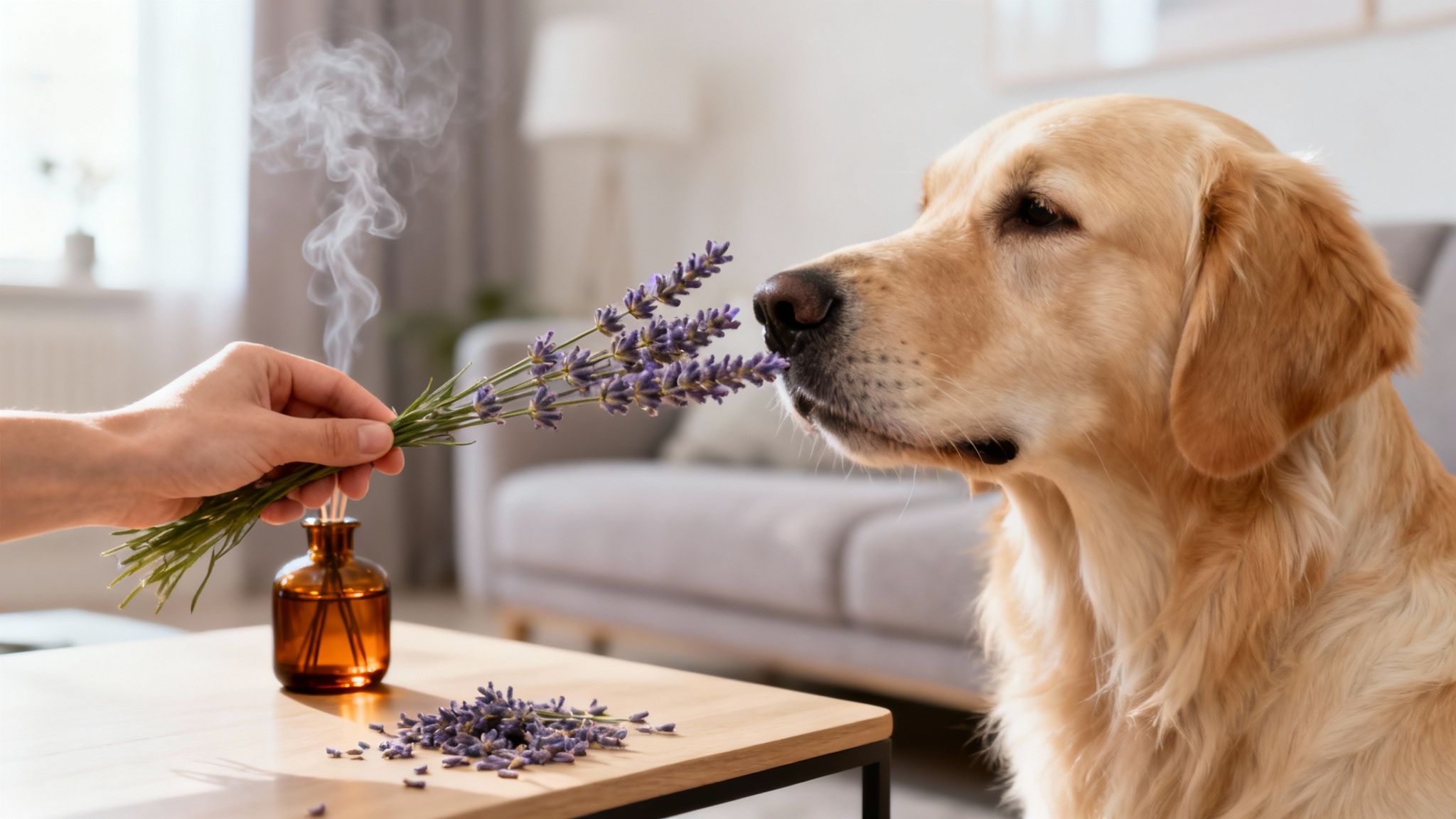
If you've been searching online for answers about lavender and dogs, you've probably found a lot of conflicting advice. It can be frustrating, right? But the answer is actually pretty straightforward: lavender is safe for dogs only when used correctly.
While the plant itself can be mildly toxic if your dog decides to snack on it, the calming scent from a diffuser or a heavily diluted oil in a dog-specific shampoo is a different story entirely.
Finding Clarity on Lavender and Dog Safety
Trying to figure out natural remedies for your dog can feel like a maze. One article praises lavender's calming effects, while the next one flashes a big warning sign about its toxicity. So, what’s the real story?
The truth isn't black and white. It's all about understanding the difference between the lavender plant, its essential oil, and the final products made for dogs.
Think of it like chocolate for humans. A small, shared piece of a brownie is usually fine, but an entire bar of baker's chocolate could be a serious problem. The same idea applies to lavender for your dog. The real danger comes down to the concentration and how your dog is exposed to it. A dog chewing on a lavender plant in the yard is a very different scenario from one relaxing in a room where a diffuser is running.
Understanding the Different Forms
Whether lavender is safe for your dog really depends on what form it's in. The ASPCA classifies the plant as mildly toxic when eaten because it contains compounds like linalool and linalyl acetate. If a dog eats enough of the plant, these can lead to an upset stomach, vomiting, or lethargy in about 70-80% of reported cases. You can find more details on this from sources like gardenia.net.
This is why it’s so important to make sure your dog doesn't treat your garden like a salad bar.
The key takeaway is simple: Ingestion of the plant is risky, while controlled aromatherapy and specially formulated dog products are generally safe. The dose and delivery method make all the difference.
Here’s a quick overview to help you see the difference at a glance.
Lavender Safety Quick Guide for Dogs
This table breaks down the most common forms of lavender and their general safety level for our canine companions.
As you can see, products designed with dogs in mind are by far the safest bet.
This visual guide also does a great job of breaking down the safety levels of common lavender forms.
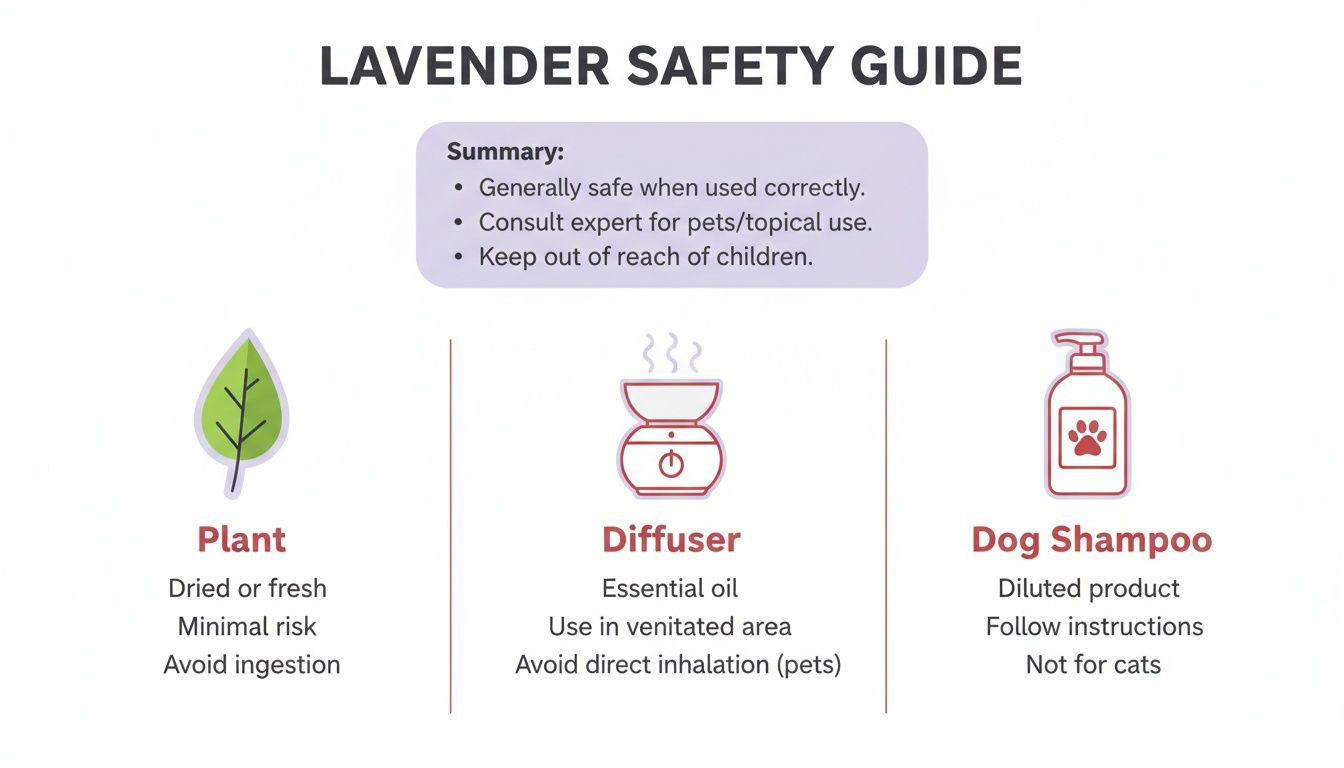
The infographic makes it clear: direct contact with the plant carries the highest risk, while products made just for dogs are your best option. Once you understand these distinctions, you can feel confident using lavender's calming benefits without putting your best friend at risk.
Understanding Why Lavender Can Harm Dogs
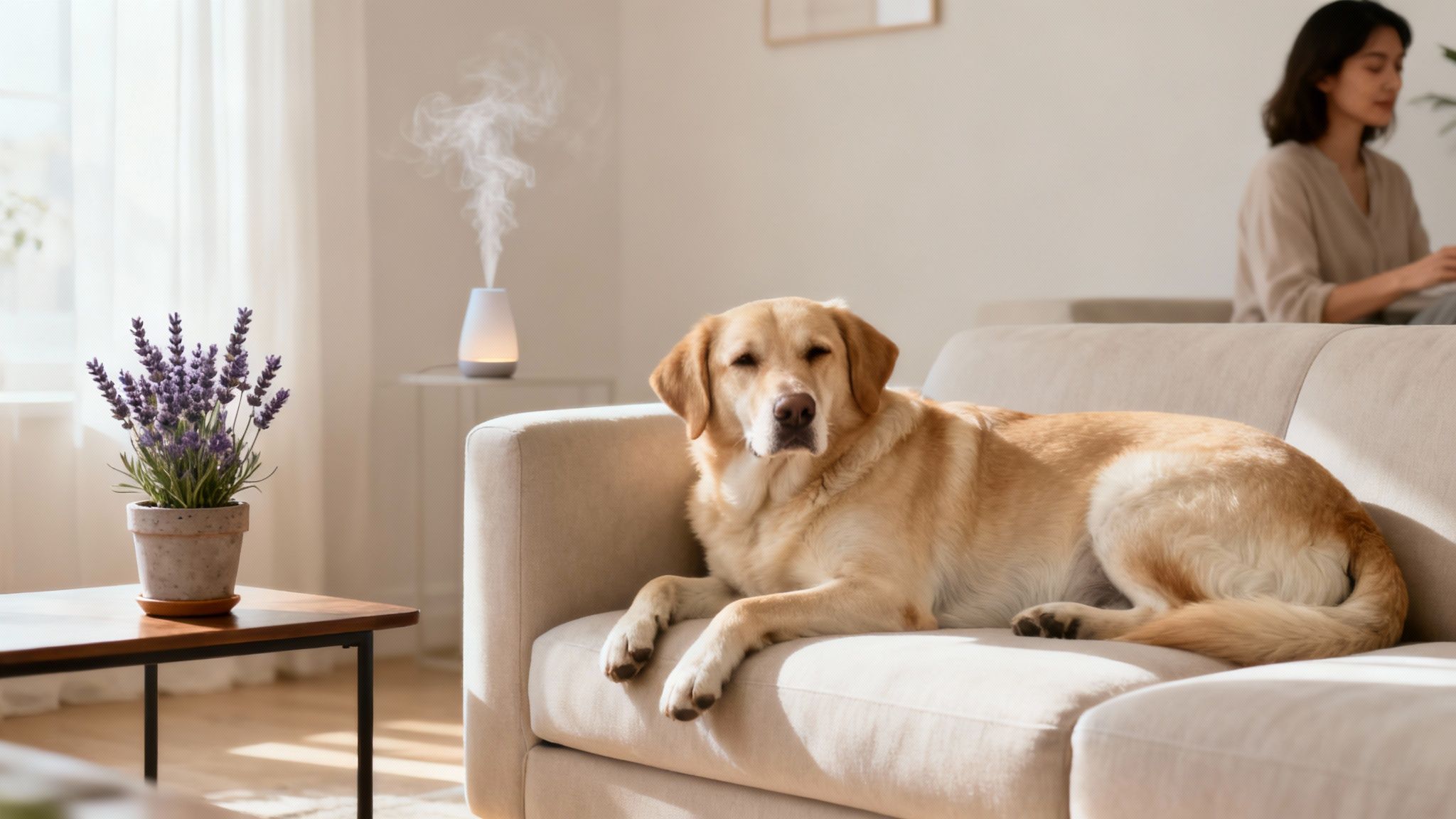
So, what is it about that gorgeous purple plant that can cause problems for our dogs? It all comes down to two natural compounds found inside: linalool and linalyl acetate.
These are the very things that give lavender its famous, soothing scent. And while that aroma is perfectly fine wafting through the air, these compounds can become a problem if your dog eats them directly.
Think of it this way: chocolate is a delicious treat for us, but it’s toxic for dogs. The same idea applies here. A dog’s digestive system just isn't built to process these specific compounds the way a human's can.
When a dog munches on a lavender plant or gets into a bottle of concentrated essential oil, its body can't break down the linalool and linalyl acetate effectively. That struggle is what triggers a toxic reaction.
The Science Behind the Sickness
The real danger is ingestion. While diffusing lavender or using properly diluted topicals can be calming, a dog eating the plant is a whole different ballgame.
In fact, some studies show that consuming just 1-2 ounces of lavender per 10 pounds of body weight can be enough to cause toxicity symptoms in up to 90% of dogs. If you'd like to dig deeper, you can explore more about the safe use of lavender for pets.
The takeaway is simple: it’s not the lavender itself that’s "bad," but how a dog's body reacts when it's eaten. The concentrated dose from ingesting the plant can overwhelm their system, leading to an upset stomach and other serious symptoms.
Knowing what to look for is your best defense. If you think your dog has been snacking on lavender, the signs are usually pretty clear and need to be taken seriously.
Warning Signs of Lavender Poisoning
Keep a close eye out for these specific symptoms if you suspect your dog has eaten lavender:
- Vomiting or Diarrhea: This is usually the first sign their digestive system is in trouble.
- Loss of Appetite: If your dog suddenly turns up its nose at food, it's a huge red flag for nausea or discomfort.
- Lethargy or Weakness: Your pup might seem unusually tired or just not interested in their favorite activities.
- Excessive Drooling: This often points to nausea or irritation in their mouth.
Catching these signs early allows you to act fast and get veterinary help, making sure your dog gets the care they need right away.
How to Use Lavender Safely for Your Dog
So, you want to tap into lavender’s calming vibes for your pup? It’s definitely possible, but the secret is in the approach. Safety isn't about avoiding lavender altogether—it's about controlled exposure and using methods that respect a dog's incredibly sensitive system.
Think of it this way: you wouldn't give a child an adult-sized dose of medicine. The same logic applies here. Proper dilution and the right application are everything. The two most reliable ways to do this are through careful aromatherapy and by using products made specifically for dogs.
Aromatherapy Done the Right Way
An essential oil diffuser can fill a room with a wonderfully relaxing scent, but when a dog is involved, you have to follow a few hard-and-fast rules. The goal is a gentle, background aroma, not a thick, perfumy fog.
For diffusing lavender safely, always stick to these guidelines:
- Ventilation is Key: Only use a diffuser in a large, open area. Never, ever run one in a small, confined space like a crate or a closed-off room. Always leave a door open so fresh air can circulate.
- Give Them an Escape Route: Your dog must always be able to get up and leave the room if the scent is too much for them. Remember, their sense of smell is thousands of times more powerful than ours.
- Keep it Short and Sweet: Limit your diffusing sessions to about 15-30 minutes. Running it constantly can overwhelm their senses and irritate their respiratory tract.
- Quality Over Everything: Only use 100% pure lavender essential oil. Steer clear of cheap synthetic fragrance oils or blends that might contain other essential oils that are toxic to dogs.
When it comes to aromatherapy for dogs, moderation is the name of the game. A light, subtle scent can be soothing; an overpowering one is just stressful and potentially dangerous.
Choose Products Made for Dogs
Honestly, the simplest and safest route is to buy products that have already been formulated for pets by people who know what they're doing. This takes all the guesswork out of dilution ratios and safe concentrations.
Look for calming sprays, paw balms, or shampoos that list lavender as a key ingredient. These products are created with a dog's unique biology in mind, ensuring the lavender is present at a level that’s beneficial, not harmful. Your best bet is always to read the label and stick with trusted, well-reviewed brands.
Lavender Products and Practices You Must Avoid
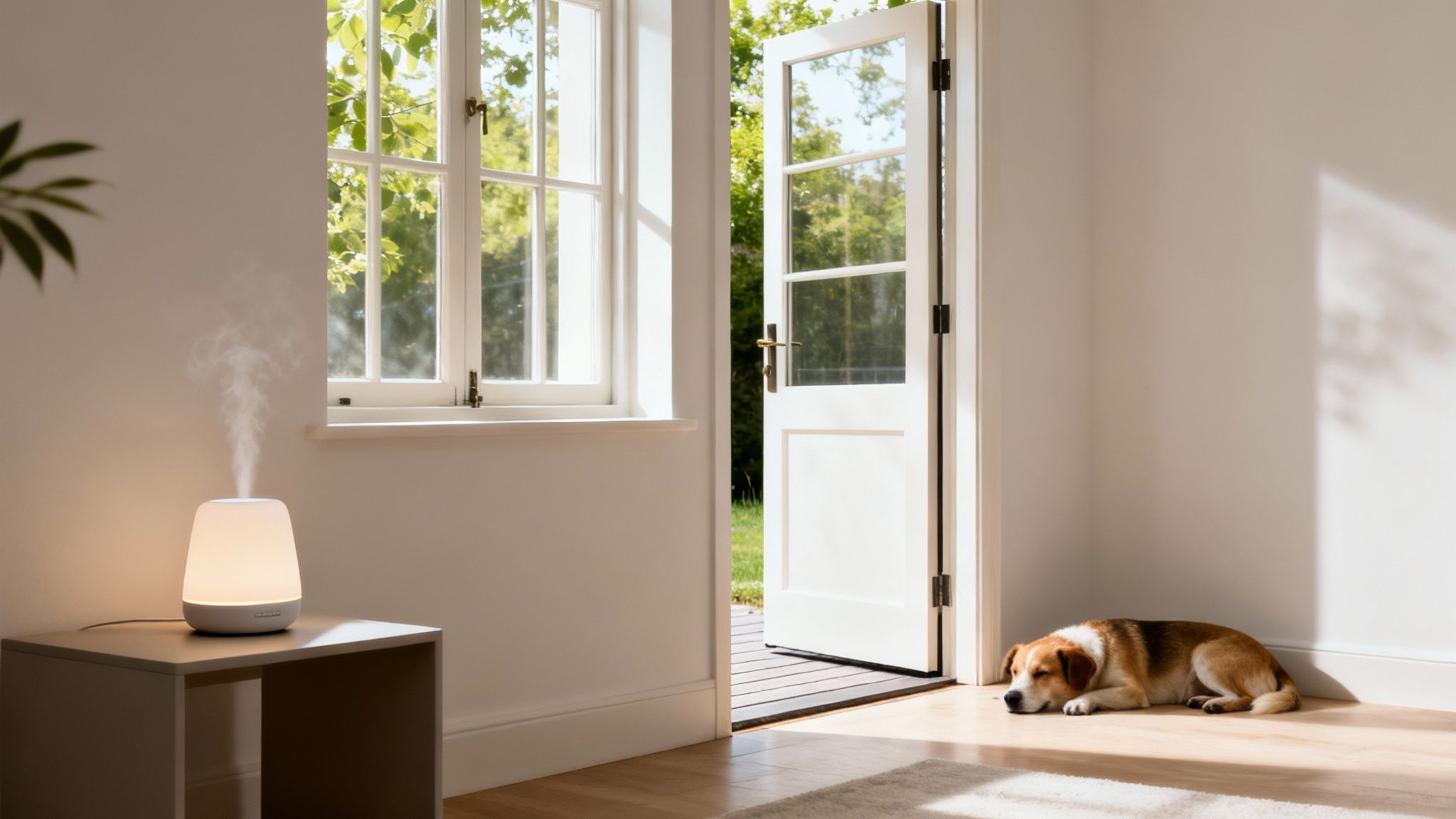
When figuring out how to safely use lavender with your dog, knowing what not to do is just as critical as knowing what's okay. Some common mistakes can quickly turn a calming moment into a dangerous one.
Think of pure lavender essential oil as a highly concentrated chemical, like bleach. You wouldn't let your dog get into that, and the same caution applies here. Never, ever apply undiluted essential oils directly to your dog's skin, fur, or nose. This can lead to painful skin irritation, chemical burns, or even respiratory distress from inhaling the powerful fumes.
The biggest dangers come from direct application and ingestion. A dog's body simply isn't equipped to process concentrated lavender oil, and this is where toxicity becomes a real risk. Sticking to the safety rules isn't optional—it's essential.
Absolute Don'ts for Lavender Use
To keep your best friend safe, there are a few hard-and-fast rules you need to follow. Ignoring them can lead to accidental poisoning and a trip to the emergency vet.
Never Add Oil to Food or Water: This is a huge one. Putting even a drop of essential oil in your dog's food or water bowl is incredibly dangerous. Swallowing concentrated oil can cause severe stomach upset, liver damage, and even central nervous system problems.
Don't Let Them Eat the Plant: While a tiny, curious nibble probably won't hurt, you should discourage your dog from snacking on your lavender plants. Munching on the leaves and flowers can easily lead to vomiting, diarrhea, and an upset stomach.
Avoid Unsupervised Diffuser Time: Never leave your dog trapped in a room with an essential oil diffuser running, especially if it’s a small space without good airflow. Your dog needs to be able to leave if the scent becomes too much for them. Constant, inescapable exposure can irritate their sensitive respiratory system.
Following these guidelines ensures that you're using lavender to help your dog, not harm them. It's all about avoiding those common but preventable mistakes.
A Smarter, Safer Way to Help Your Dog Relax
Look, there's a place for natural remedies like lavender, but let's be honest—they aren't without their headaches. You're constantly worried about proper dilution, making sure the room is well-ventilated, and keeping a close eye on your dog. It can add a whole new layer of stress, which is the exact opposite of what you're trying to achieve.
Thankfully, there’s a much simpler, worry-free way to help your dog feel their best.
FORMA's daily superfood chews offer a solution that’s been scientifically formulated with a precise, effective dose. You get all the calming benefits without any of the risks or guesswork that come with essential oils. Instead of wondering if your lavender is safe, you can give your dog a treat that was made just for them.
These are human-grade chews, built from the ground up to support a dog's specific biology. They do more than just calm your pup; they provide support for multiple body systems, helping your dog live a longer, healthier life.
A More Complete Approach to Their Well-being
Unlike remedies that focus on a single ingredient, FORMA chews are designed to tackle your dog's wellness from every angle. Each chew is packed with ingredients that work in harmony to make a real, positive impact on their health.
This approach gives you a few key advantages:
- Targeted Calming: The ingredients are specifically chosen for their proven ability to soothe anxiety without making your dog groggy.
- A Healthier Gut: A happy gut is directly tied to a stable mood and a strong immune system.
- Stronger Immunity: The chews include nutrients that help build up your dog’s natural defenses against getting sick.
- Longevity and Vitality: By supporting their core systems, these chews help your dog not just live, but thrive for years.
FORMA provides a science-backed chew that supports calmness, immunity, and gut health all at once. It can produce some of the same calming vagal effects as lavender but with zero toxicity. That makes it an ideal choice for the 70% of aging dog owners who are dealing with stress-related issues in their pets.
This all-in-one support system is why experts recommend FORMA to pet parents who just want peace of mind. It’s an effective solution with multiple benefits that takes the anxiety out of caring for your anxious dog.
If you'd like to dive deeper into the science, you can read the full research on how these compounds support canine nervous system health.
Common Questions About Lavender and Dogs

It's completely normal to have a few questions when you start exploring natural options for your dog. Let's clear up some of the most common things pet owners ask about lavender so you can feel confident and prepared.
Think of this as a quick-reference guide to get you the answers you need, fast.
Can My Dog Be in the Room with a Lavender Diffuser?
Yes, but with some common-sense rules. The goal is a gentle, calming atmosphere, not an overwhelming cloud of fragrance.
Always use your diffuser in a large, well-ventilated space, and most importantly, make sure your dog has an easy way to leave the room if they've had enough. You want the scent to be a subtle hint in the air, not a heavy perfume.
To keep things safe and pleasant:
- Keep it brief: Only run the diffuser for 15-30 minutes at a time. A dog's sense of smell is incredibly powerful, so a little goes a long way.
- Go for purity: Use only 100% pure lavender essential oil. This helps you avoid synthetic fragrances or other additives that could be harmful.
- Place it high: Keep the diffuser somewhere your dog can't knock it over or get too close.
What Should I Do If My Dog Eats a Lavender Plant?
First off, take a breath. If your dog just had a little nibble, you'll likely see nothing more than a bit of a tummy ache. Just keep a close eye on them for the next few hours.
The time to worry is if they've eaten a lot of the plant or start showing more serious signs like vomiting, unusual tiredness, or a sudden loss of appetite.
Your best bet is to call your vet or the ASPCA Animal Poison Control Center right away. They can give you specific advice based on your dog’s size and how much lavender they consumed.
Are Lavender Scented Dog Shampoos Safe to Use?
Absolutely, as long as you stick to products made specifically for dogs. Good pet care brands know exactly how to dilute lavender oil so it's safe for a dog’s sensitive skin and powerful nose.
These shampoos are designed to give a subtle, calming scent without causing irritation. Just be sure to read and follow the instructions on the bottle. Never use your own lavender shampoo on your dog—human products are far too strong for their skin.

Karolis is the Founder of FORMA, a pet wellness brand focused on longevity and daily nutrition for dogs. Writes about supplements, canine health, and helping pets live longer, healthier lives
Join thousands of pet parents getting science-backed health insights and natural care advice